Chaetodon auriga
Spot the Threadfin Butterflyfish across the Red Sea, Maldives and Hawaii year-round. Learn its key markings and where divers log it most.
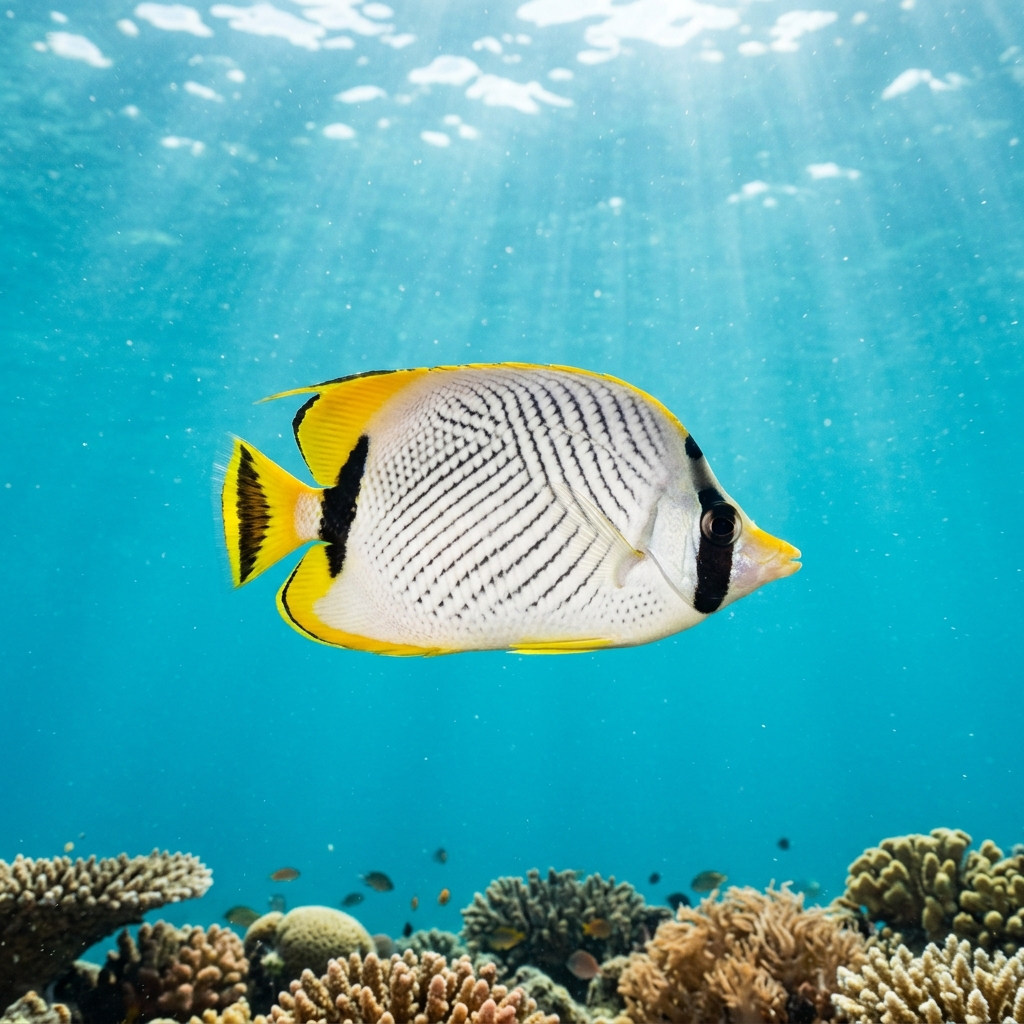
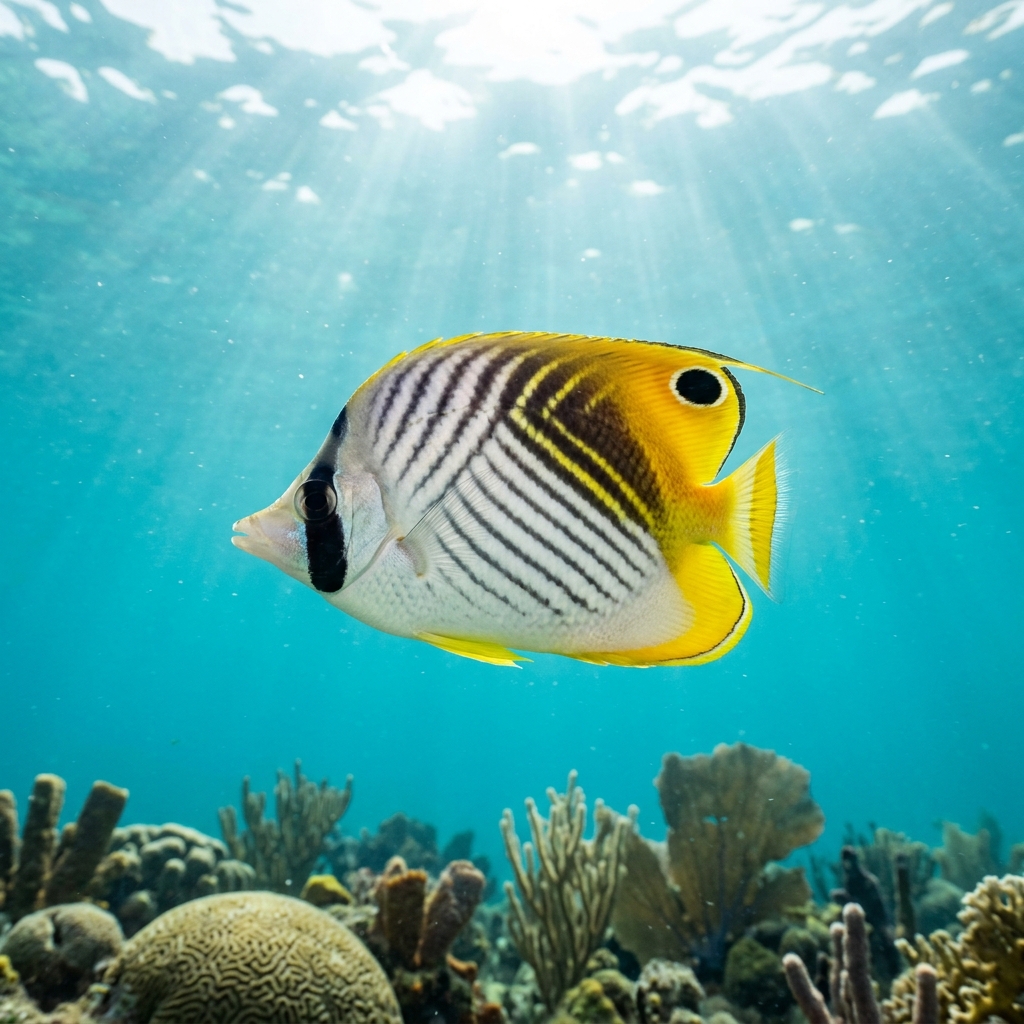
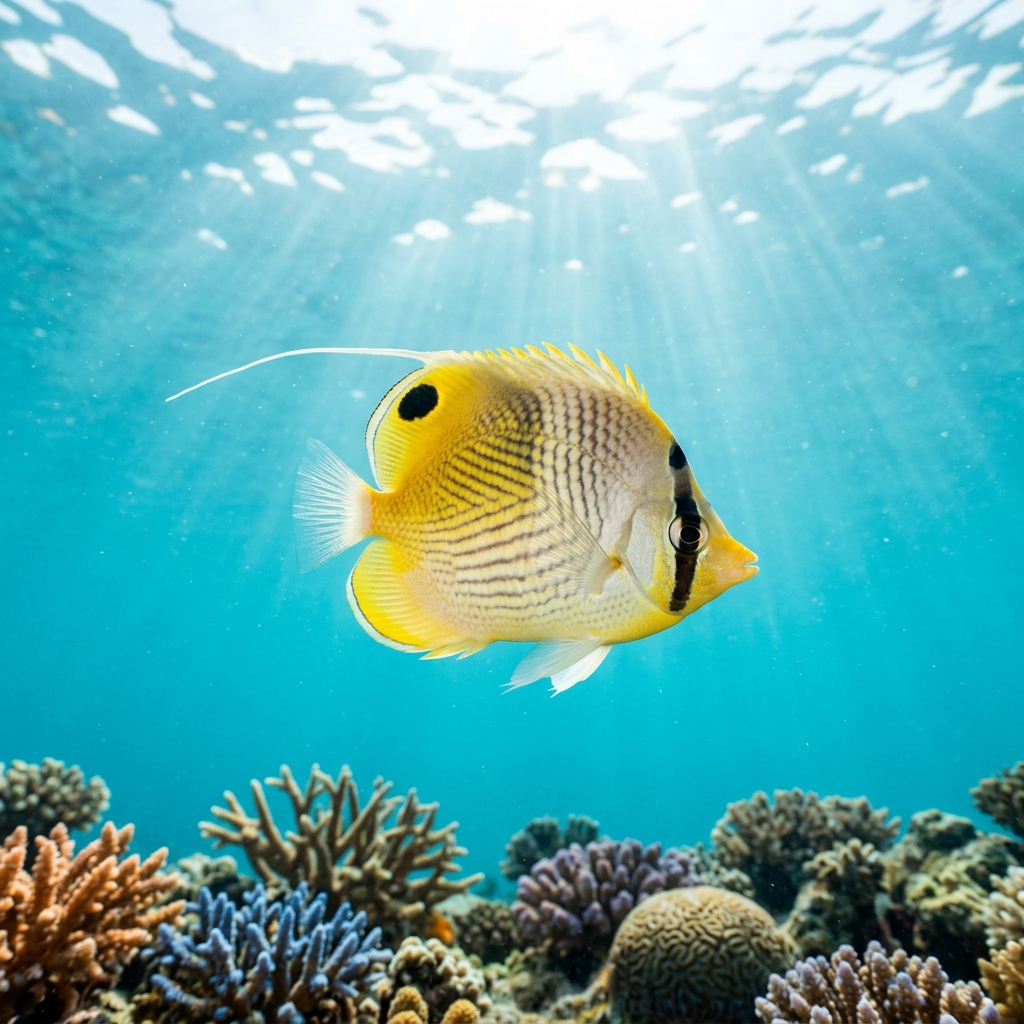
White-bodied and disc-shaped, with fine diagonal chevron lines across the flanks and a bold black bar running through the eye. The clincher is the long trailing filament extending from the rear of the dorsal fin, the feature that gives this species its name. A black spot sits near the tail on the upper rear of the body, and the tail itself is edged in orange-yellow. Juveniles carry a second false-eye spot on the dorsal fin, which fades as they mature.
Usually seen working its way along coral-rich sections of the reef, probing crevices and coral heads with its pointed snout in search of small invertebrates and coral polyps. It is most often encountered singly or in pairs and tends to keep a cautious distance from divers, moving away steadily rather than bolting. Look for it at shallow to mid-reef depths where coral cover is dense.
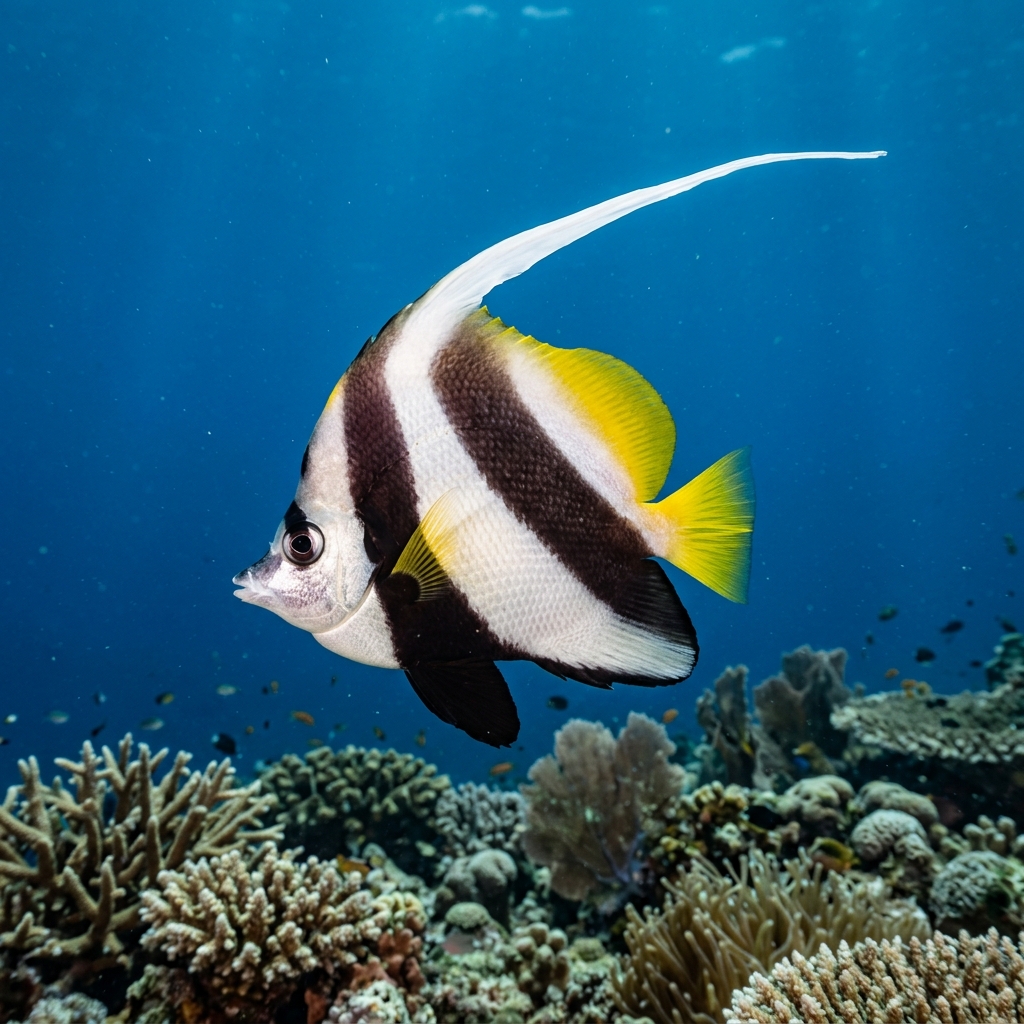
The wispy filament trailing from the dorsal fin is actually an elongated fin ray, a purely visual feature with no known defensive function, which makes it one of the more useful ID anchors in a family full of look-alikes.
Present year-round in both hemispheres with no concentrated season. It settles comfortably in water temperatures between 23 and 29 °C, which covers most Indo-Pacific tropical reefs throughout the calendar year.
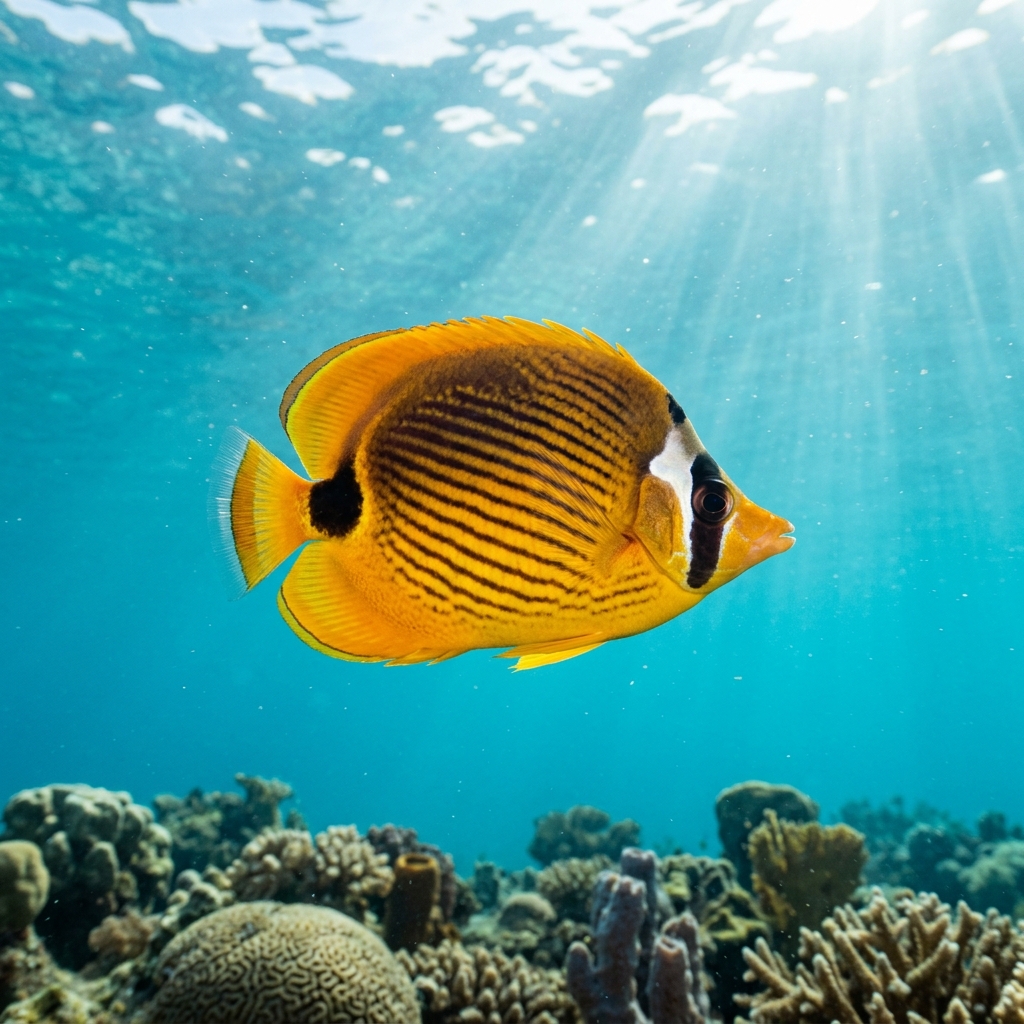
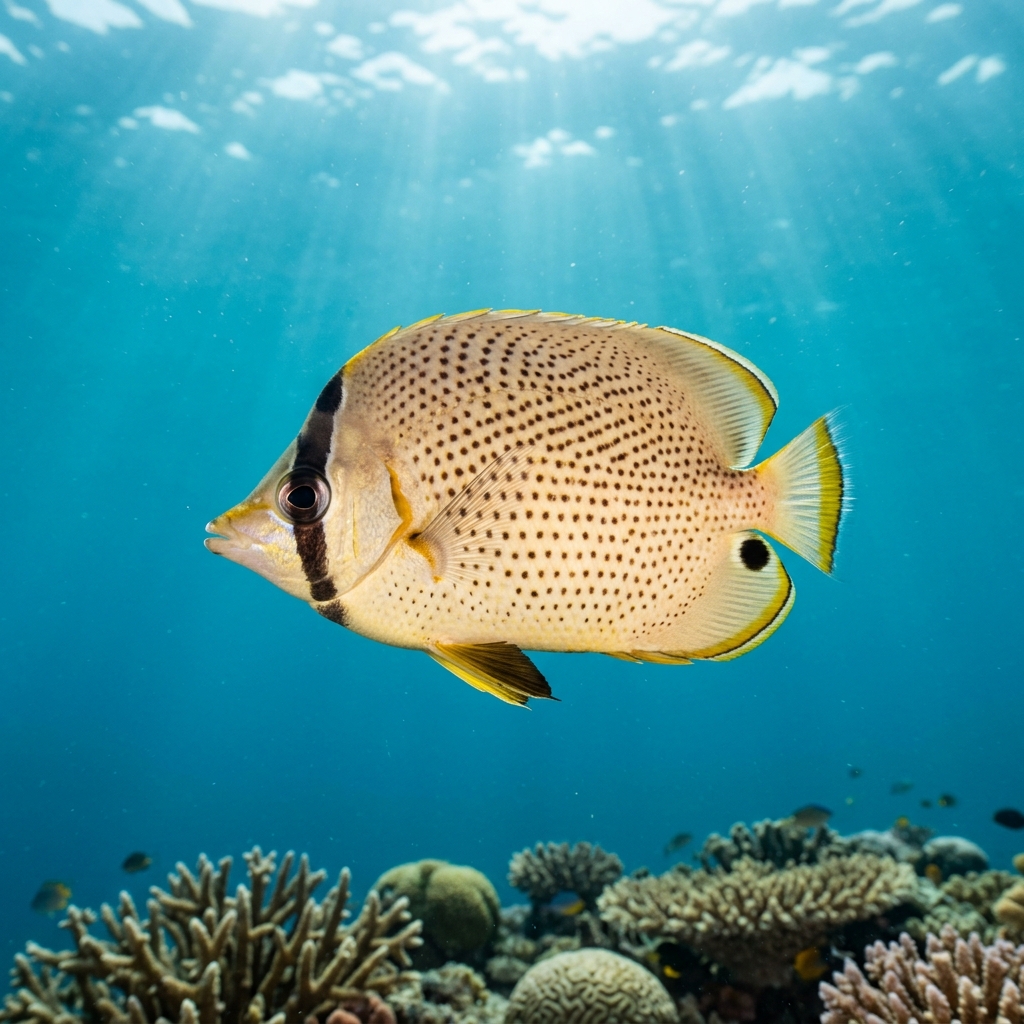
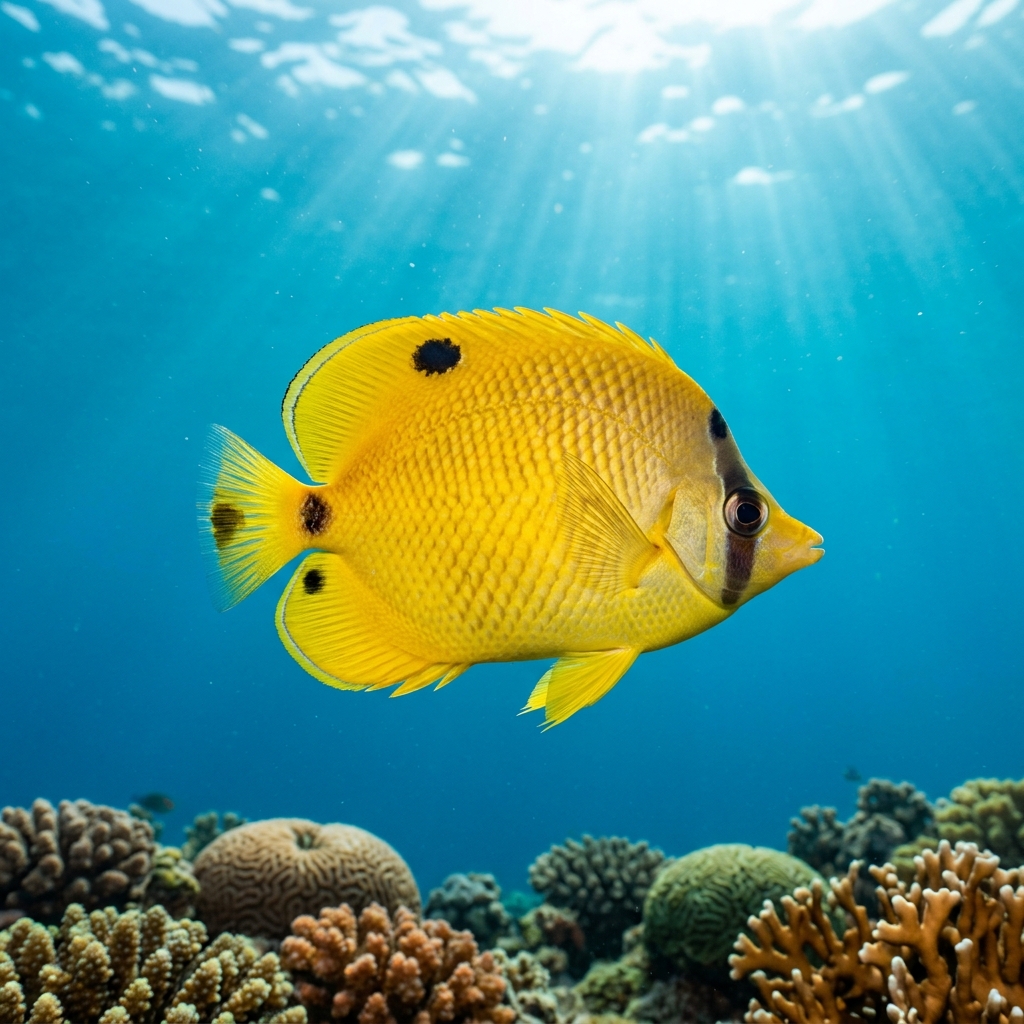
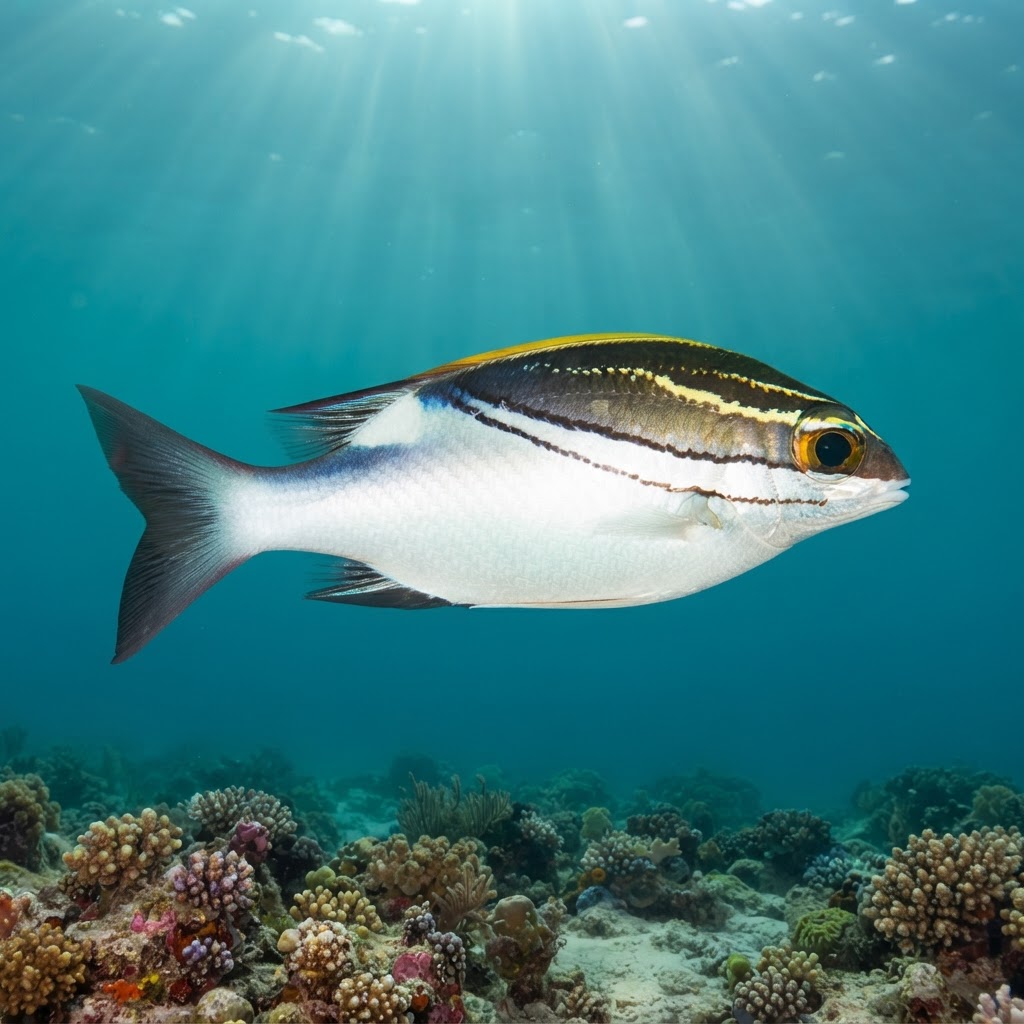
Reef neighbours a diver could mistake it for. Use the identification notes above to tell them apart.
Most commonly logged in Egypt's Red Sea, particularly around Sharm el Sheikh and Marsa Alam, and across the Maldivian atolls of Malé and Ari. Strong sightings are also recorded in Hawaii, Queensland's Great Barrier Reef, Okinawa, French Polynesia and the Seychelles, making it one of the more geographically widespread butterflyfish a diver will encounter.
Mapping where Threadfin Butterflyfish is logged…
Divers log them across a wide stretch of the Indo-Pacific. The Red Sea around Sharm el Sheikh and Marsa Alam is particularly productive, as are the Maldivian atolls and Hawaiian reefs. Queensland, Okinawa, French Polynesia and the Seychelles all have solid records too.
Any time of year. Sighting data from both hemispheres shows no seasonal peak, this species is resident on warm tropical reefs year-round, consistent with its preference for water between 23 and 29 °C.
Look for three things: the fine chevron lines across a white body, a black eye-bar, and the long trailing filament extending from the dorsal fin. That filament is unique among common butterflyfish and removes most ID doubt once you know to look for it.
They typically reach around 20 to 23 cm in length, roughly the size of your spread hand. Underwater they appear as a medium-sized, noticeably disc-shaped fish, which is typical for the butterflyfish family.
No. The species is assessed as Least Concern on the IUCN Red List, reflecting its wide distribution and stable populations across the Indo-Pacific.
Site and sighting data is aggregated from diver logs, iNaturalist and GBIF. For taxonomy and conservation status: