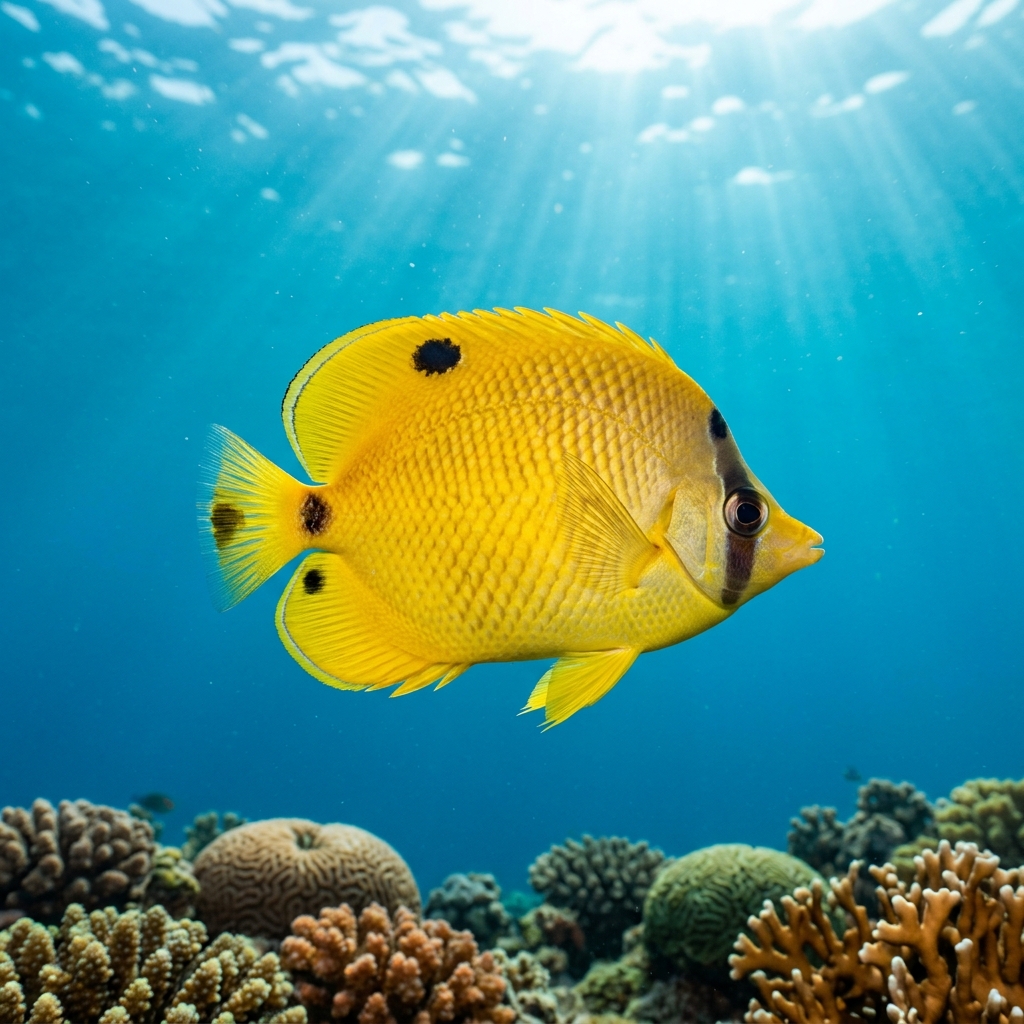
Forcipiger longirostris
That extreme-nosed butterflyfish picking at coral in the Maldives or Sulawesi? Here's how to find and ID it, year-round in warm reef water.
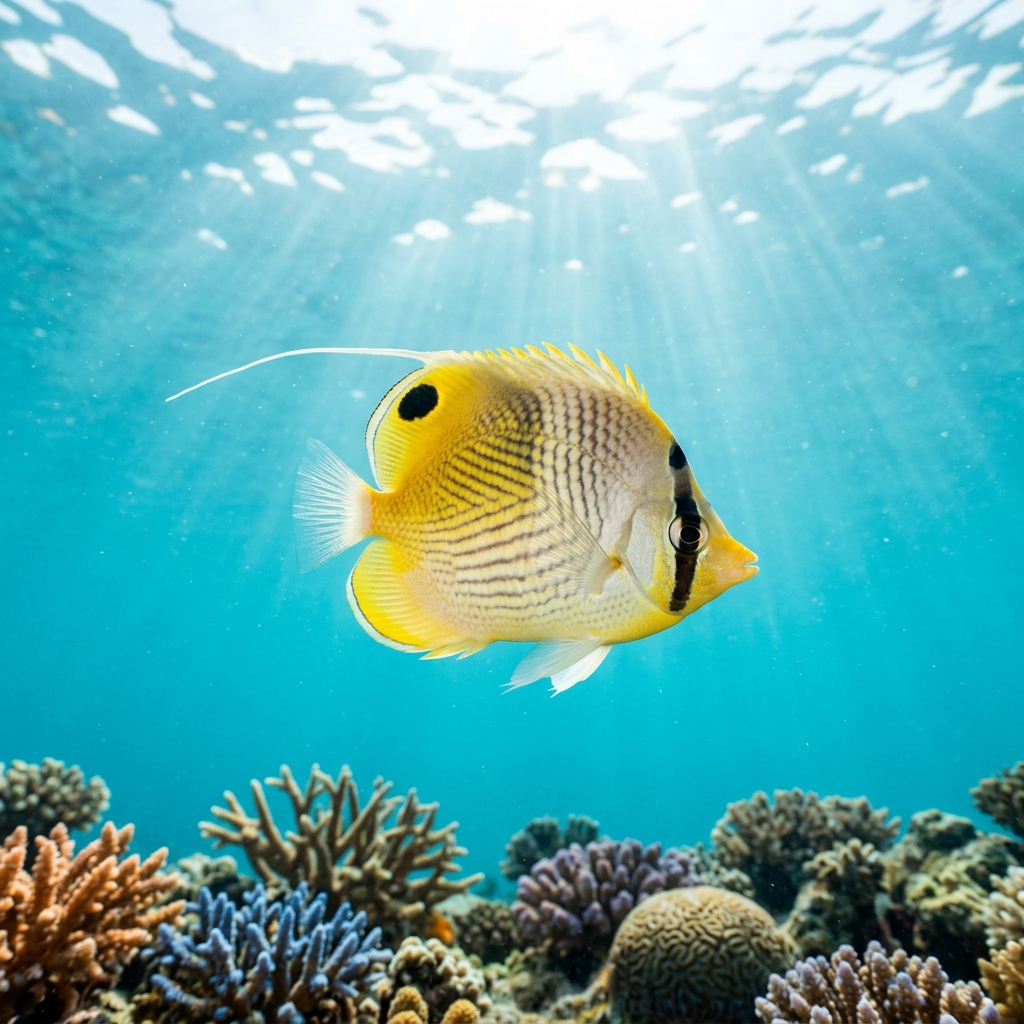
Easy to pick out by its absurdly elongated, tweezer-like snout, built for probing into cracks and coral crevices after small prey. Body is compressed and disc-shaped, roughly 15 cm, with a bold black-and-white head patch and a yellow body running back to the tail. A dark spot near the rear dorsal fin can look like a false eye at a glance, but the giveaway is always that long pointed face.
Usually seen alone or in loose pairs, working slowly over coral heads and into narrow gaps that most reef fish can't reach, using that long snout to pick off small invertebrates. It keeps a cautious distance from divers rather than fleeing outright, drifting off along the reef face if you get too close. Most sightings are on the reef itself during the day rather than in open water.
That extended snout lets it feed on tube feet, small crustaceans and worms tucked deep in crevices that other butterflyfish simply can't access, giving it a feeding niche almost entirely to itself on the reef.
No real seasonal pattern shows up in the data, and with a comfort range of roughly 25 to 29 C this fish sits happily on tropical reefs all year, so any month works.
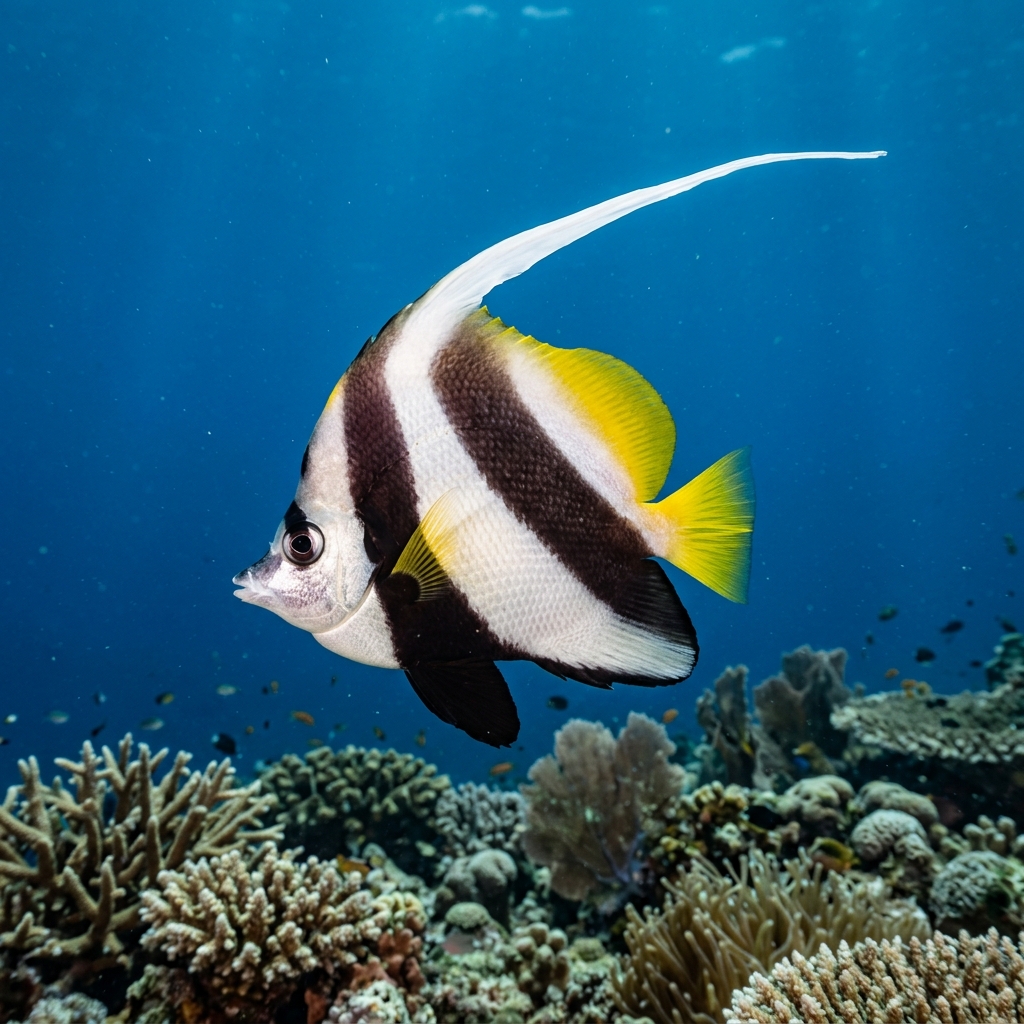
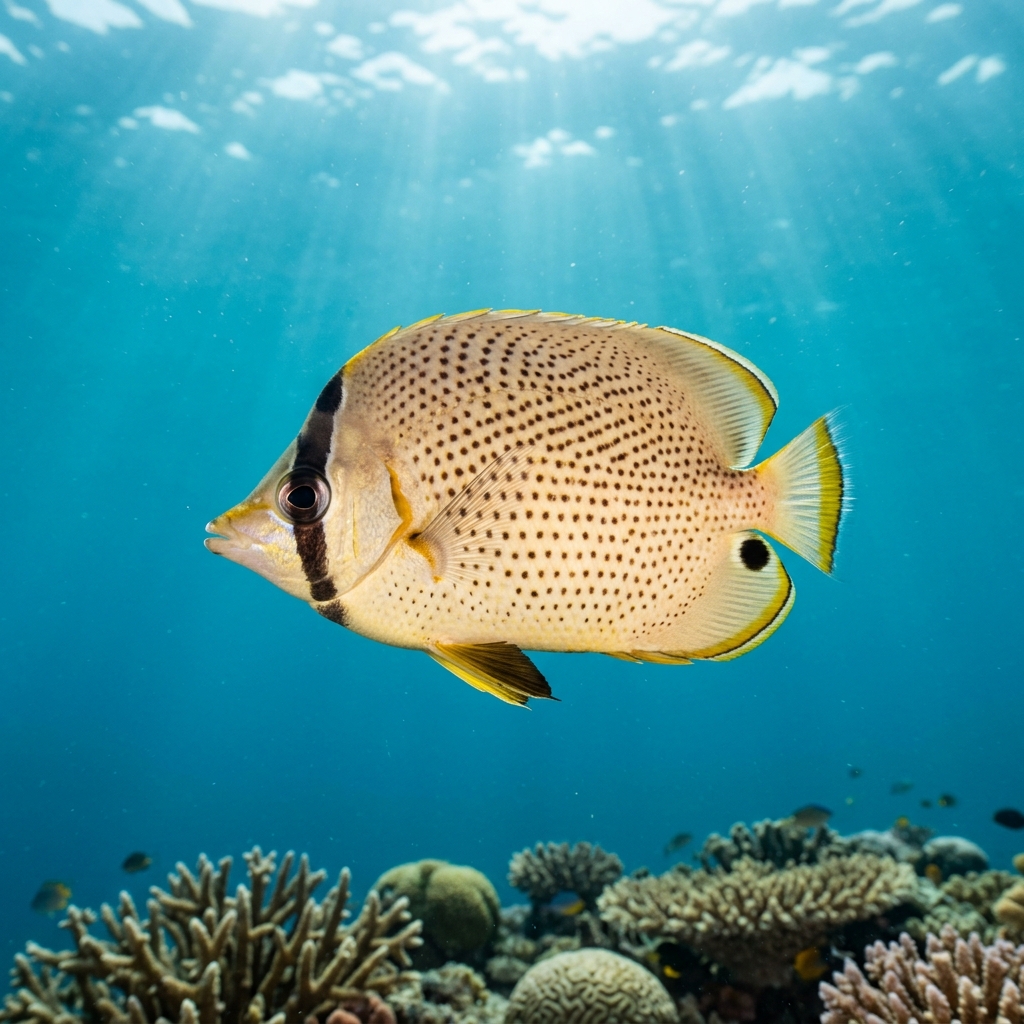
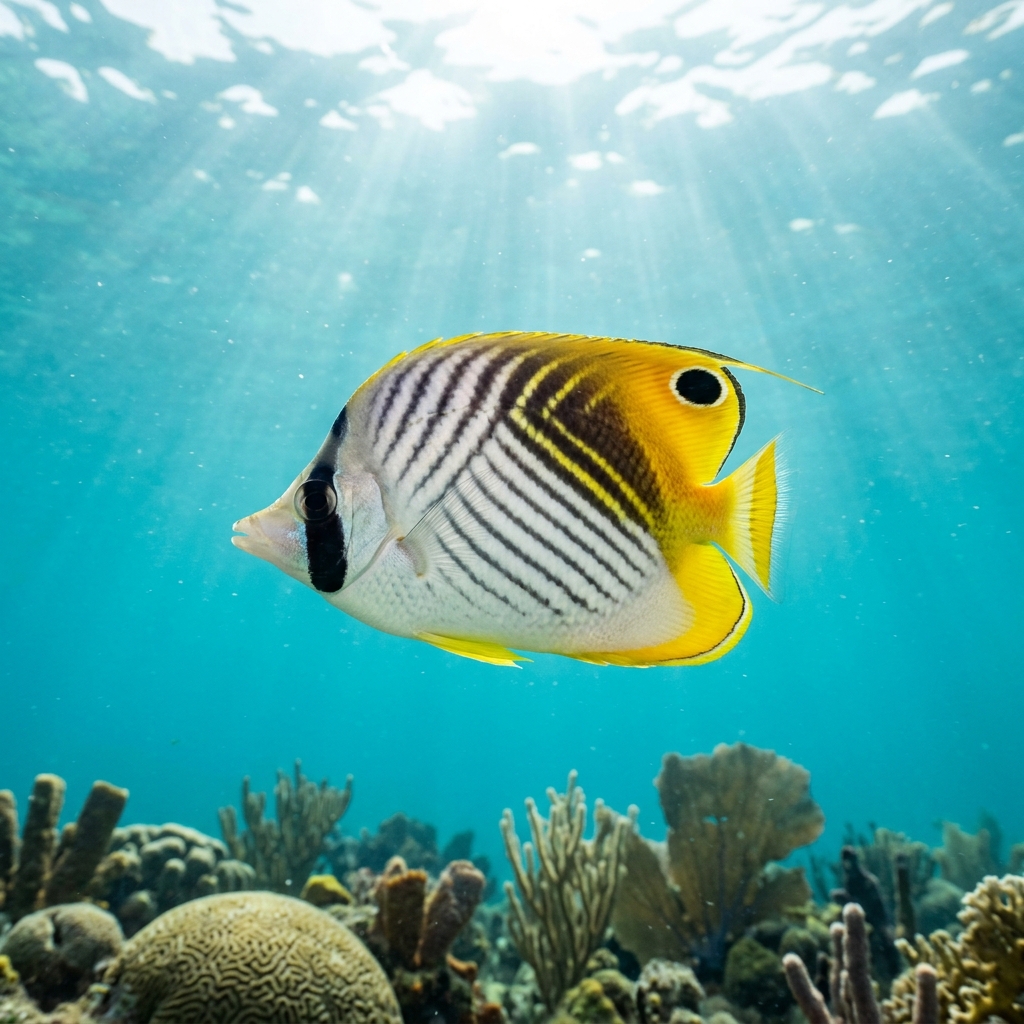
Reef neighbours a diver could mistake it for. Use the identification notes above to tell them apart.
Most reliably logged across the Maldives, especially the Northern and Southern Atolls, and widely reported through Indonesia's Sulawesi and the Philippines' Luzon, Palawan and Visayas regions. Also a steady find on reefs in Queensland, Australia, and further afield in Malaysia, French Polynesia and Micronesia.
Mapping where Longnose Butterflyfish is logged…
Best chances are in the Maldives, particularly the Northern and Southern Atolls, plus Sulawesi in Indonesia and Luzon, Palawan or the Visayas in the Philippines. It also turns up reliably on reefs in Queensland, Australia.
There's no strong season in the sighting data. It lives in water between about 25 and 29 C year-round, so it's a fair bet on tropical reefs in any month.
Look for a yellow and black butterflyfish with an unmistakably long, pointed snout, far longer than any similar reef fish. The head is patched black and white and the body stays yellow to the tail.
They top out around 15 cm, a typical small butterflyfish size, with most of the visual impact coming from the length of the snout rather than the body.
Its snout is drawn out into a long tube that lets it reach prey buried deep in coral crevices, a feeding trick most other butterflyfish on the reef can't match.
Site and sighting data is aggregated from diver logs, iNaturalist and GBIF. For taxonomy and conservation status: