Chaetodon citrinellus
Spot the Speckled Butterflyfish across the Maldives, Hawaii, and French Polynesia. Tips on ID, when to dive, and how to tell it from similar species.
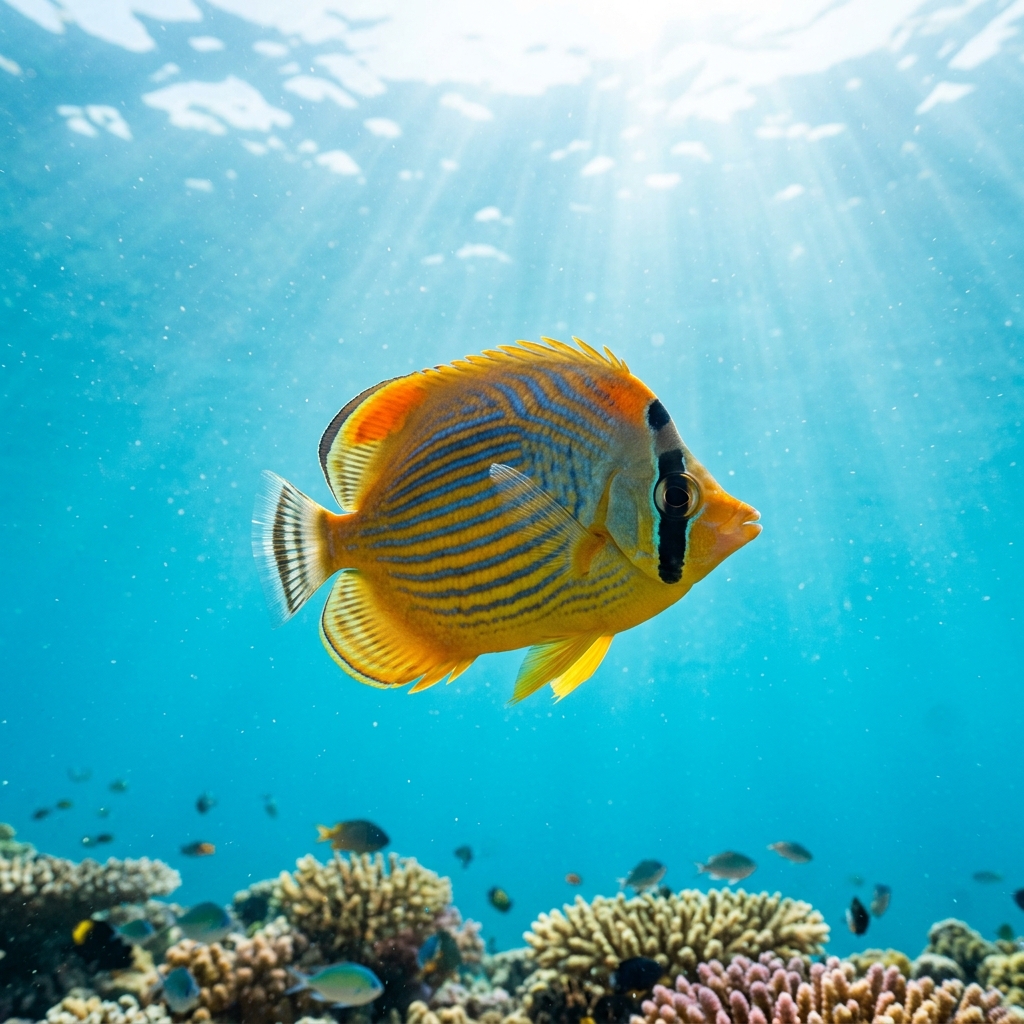
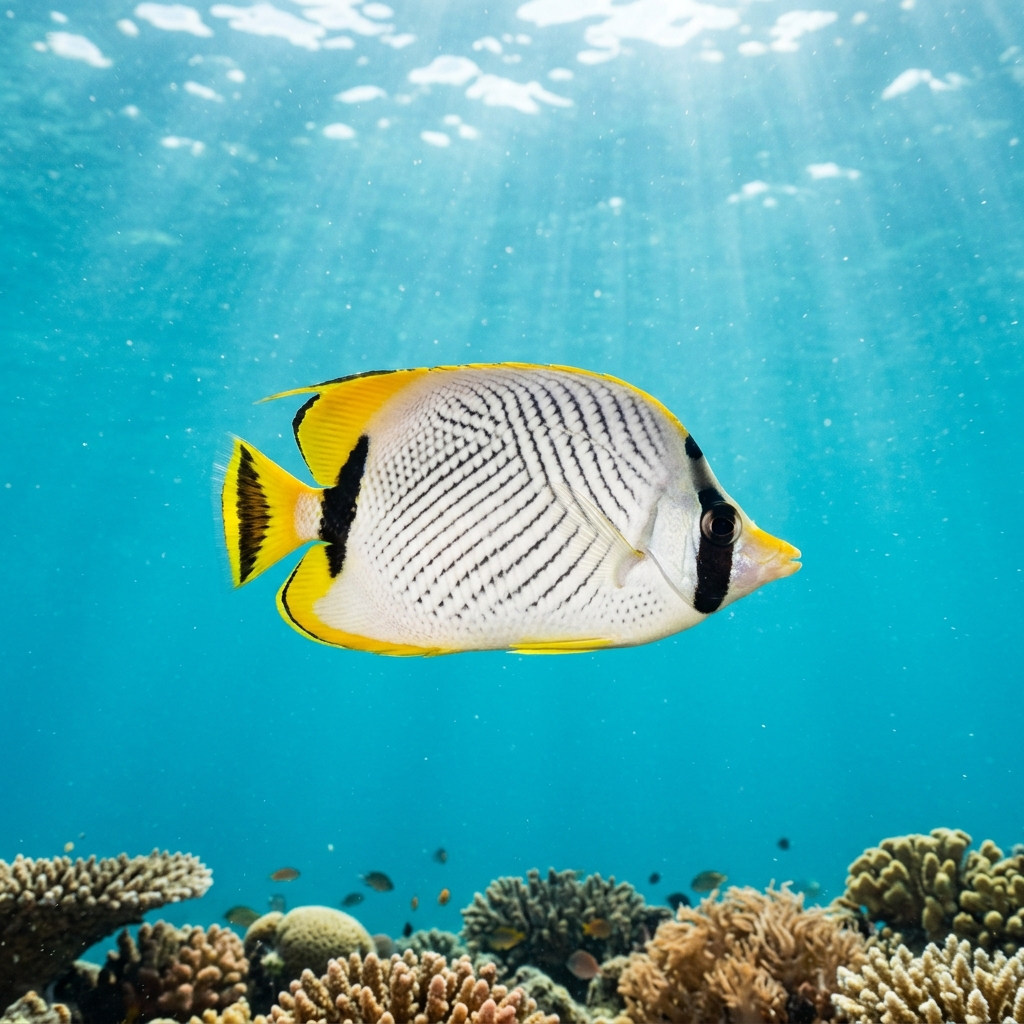
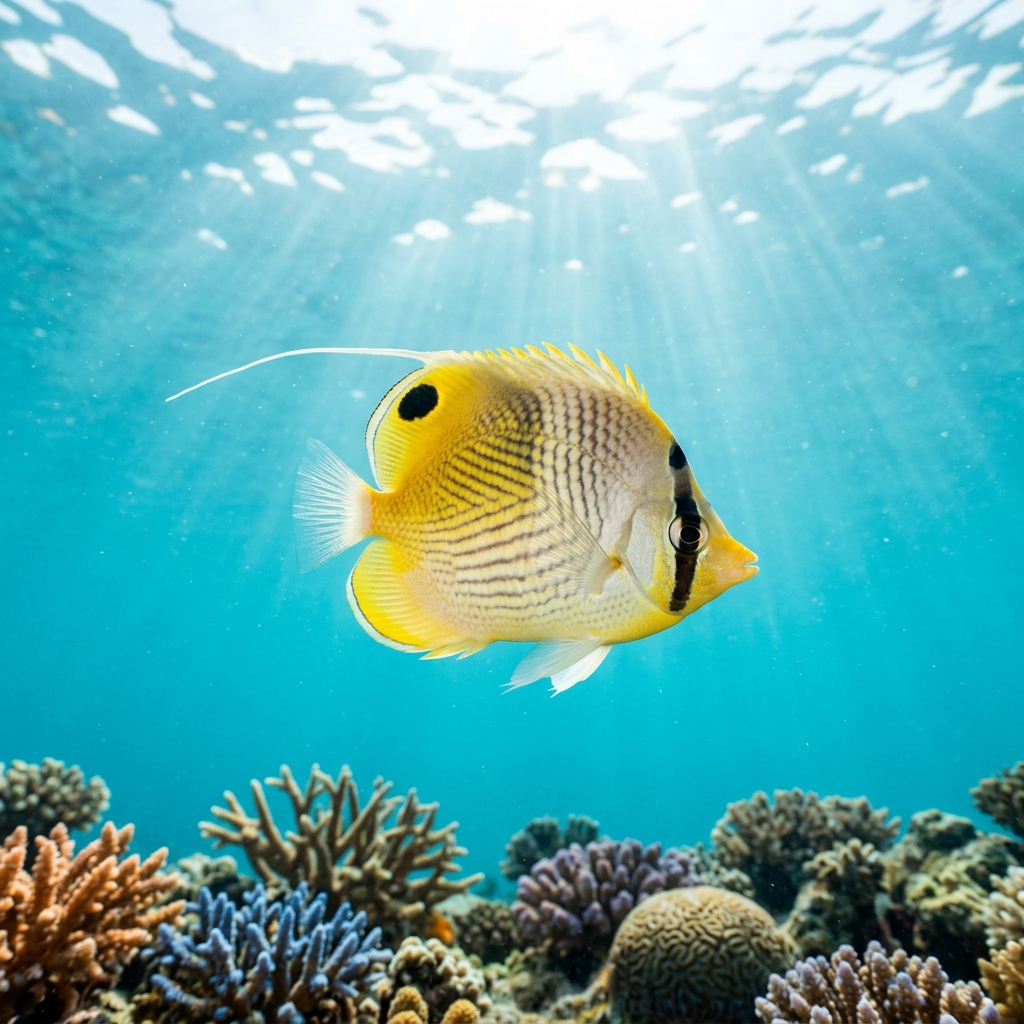
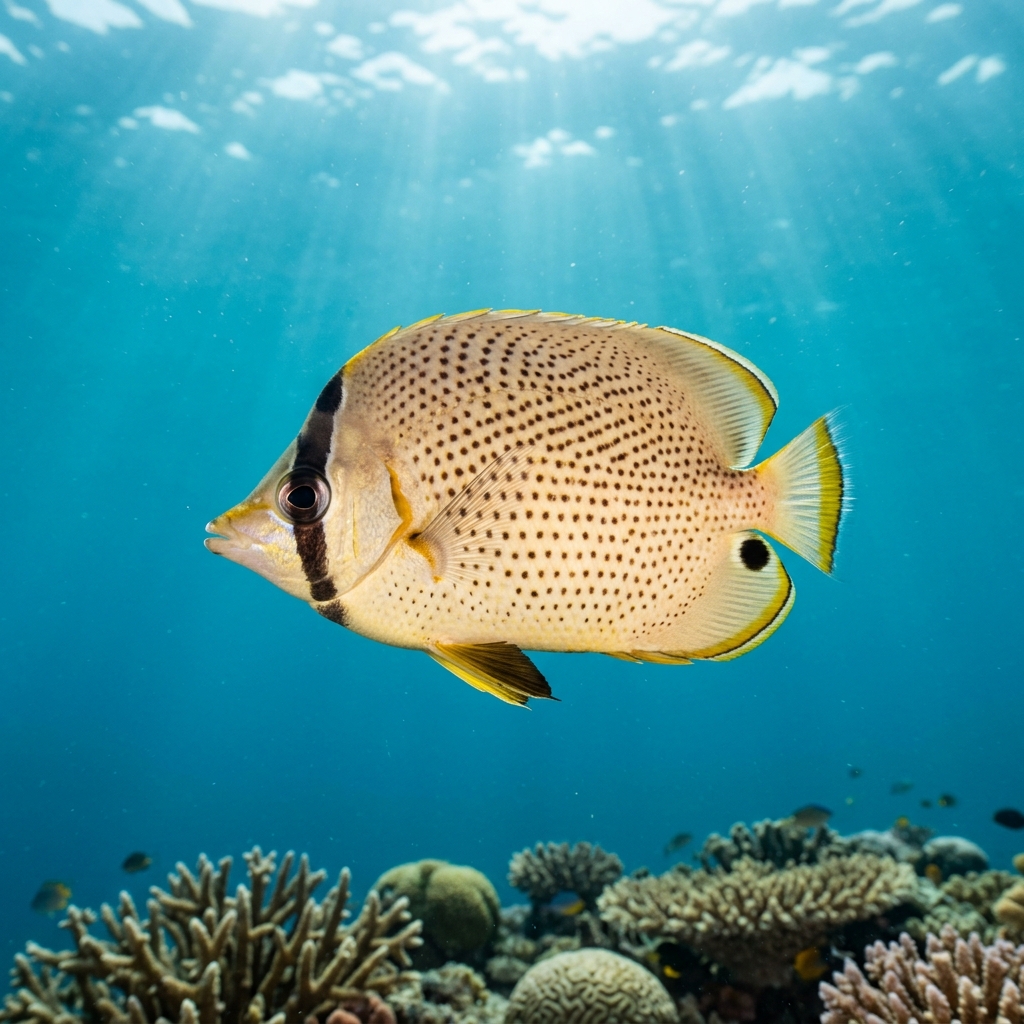
Look for a pale lemon-yellow or whitish body densely covered in small dark spots arranged in diagonal rows, giving the fish its speckled appearance. A bold black bar runs through the eye, and there is a dark spot or smudge near the base of the tail. The body is laterally compressed (flattened side-to-side) and roughly disc-shaped, typical of butterflyfish. Juveniles closely resemble adults, making this one of the more consistent species to identify through life stages.
Speckled butterflyfish are typically seen picking at coral heads and rocky reef surfaces in search of coral polyps, small invertebrates, and algae. They are often encountered alone or in pairs, moving methodically and unhurriedly across shallow reef tops and slopes. They tend to be moderately tolerant of divers, continuing to feed as long as you approach slowly, though they will retreat into coral structure if approached too quickly.
Speckled butterflyfish are one of the few butterflyfish species confirmed to include a meaningful proportion of algae in their diet alongside coral polyps, making them slightly less dependent on hard coral cover than many of their relatives.
In northern hemisphere destinations such as Hawaii, Okinawa, and the Maldives, sightings are reported year-round with no concentrated peak season, reflecting the species' comfort across the 22.8 to 29.0 °C tropical reef temperature range. In southern hemisphere locations such as Queensland and French Polynesia, sightings concentrate from March through January, with February the quietest period.
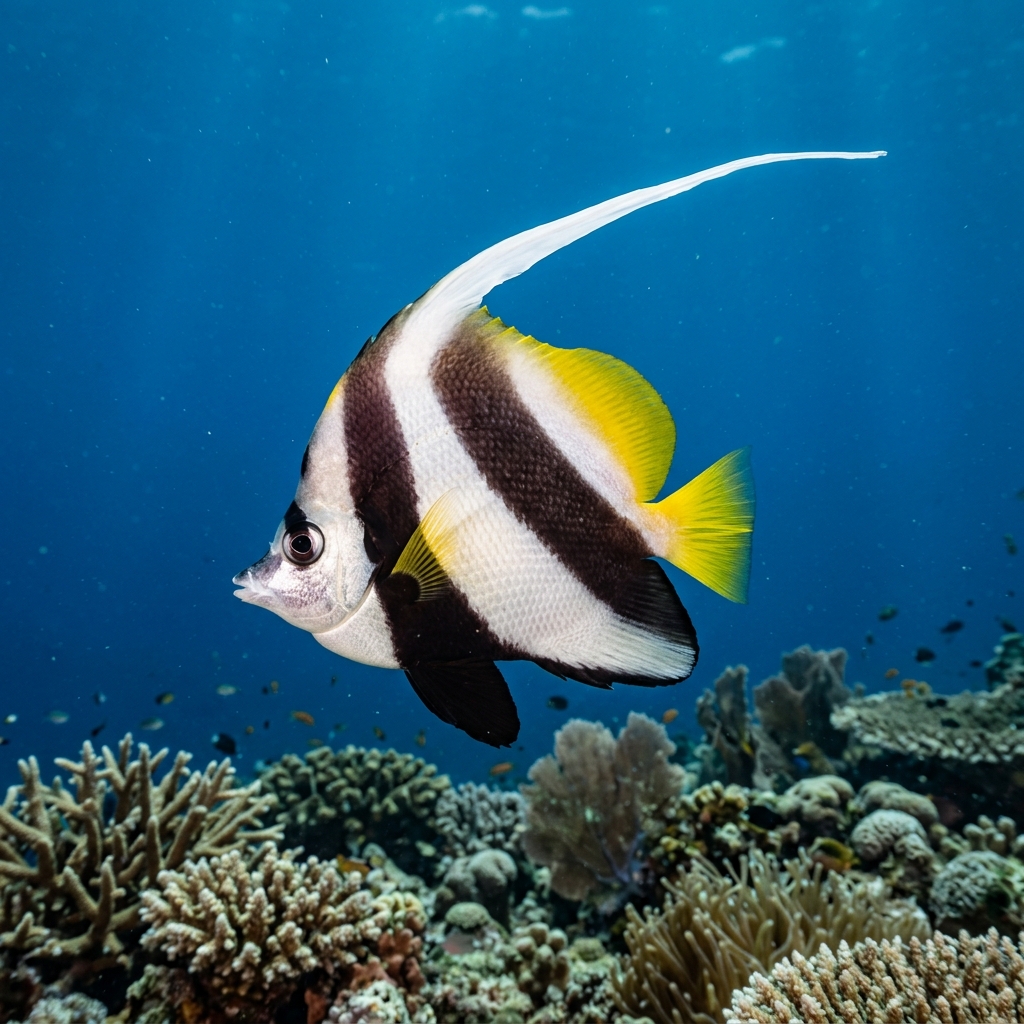
Reef neighbours a diver could mistake it for. Use the identification notes above to tell them apart.
Most commonly logged in the Maldives, particularly across the Male and Ari Atolls, making it one of the top destinations for a reliable encounter. Indonesia (especially Bali and Sulawesi), the Hawaiian Islands, French Polynesia (Tahiti and the Society Islands), and Queensland, Australia all show strong populations. The Philippines, Japan's Okinawa Islands, and Taiwan round out the best options in the Indo-Pacific.
Mapping where Speckled Butterflyfish is logged…
The Maldives, particularly the Male and Ari Atolls, is where divers log them most often. Other strong locations include the Hawaiian Islands, Bali and Sulawesi in Indonesia, Tahiti and the Society Islands in French Polynesia, Queensland in Australia, Okinawa in Japan, and the Philippines. The species is widespread across the Indo-Pacific and tropical Pacific.
In northern hemisphere destinations like Hawaii and the Maldives, they are present all year with no clear peak. In southern hemisphere locations such as Queensland and French Polynesia, sightings concentrate from March through January. The species thrives in water temperatures between roughly 23 and 29 °C, which describes most tropical reef sites year-round.
Key features are the pale yellow or whitish disc-shaped body covered in neat rows of small dark spots, a black bar through the eye, and a dark marking near the tail base. The all-over spotting pattern is distinctive and sets it apart from most other butterflyfish in the same range.
No. The Speckled Butterflyfish is assessed as Least Concern on the IUCN Red List, reflecting its wide range across the Indo-Pacific and relatively stable populations. Like all reef fish it benefits from healthy coral cover, so supporting marine protected areas helps.
Site and sighting data is aggregated from diver logs, iNaturalist and GBIF. For taxonomy and conservation status: