Parupeneus crassilabris
A reef-bottom regular in Raja Ampat and Queensland, this barbel-waving goatfish shows up year-round in 25-29C water.
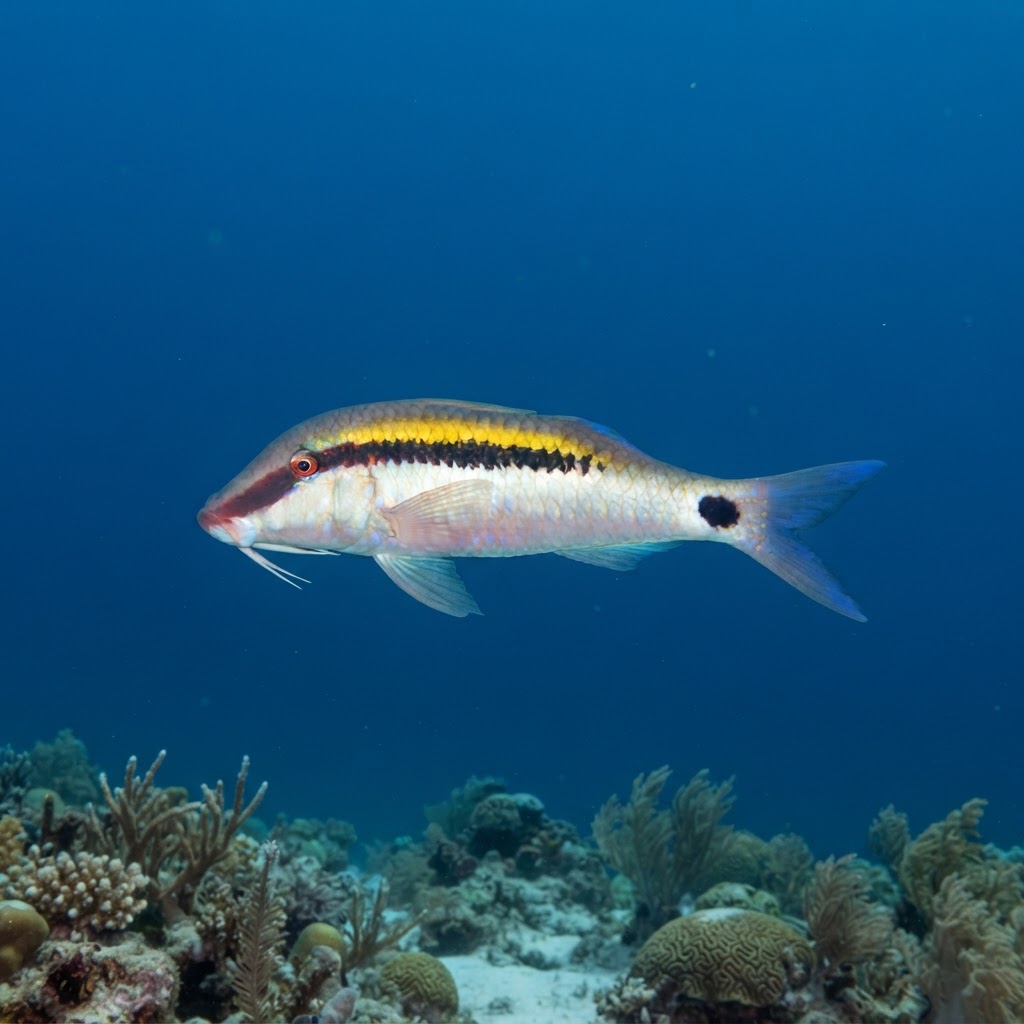
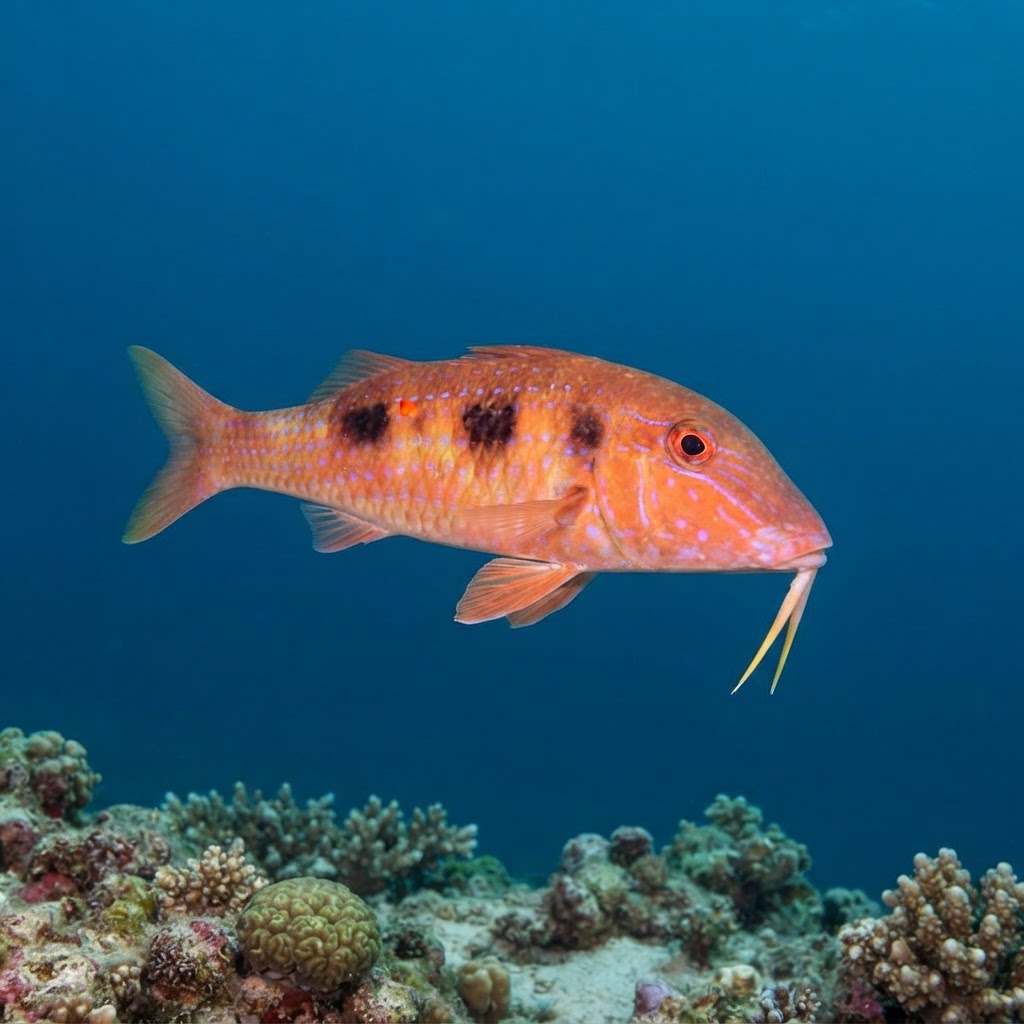
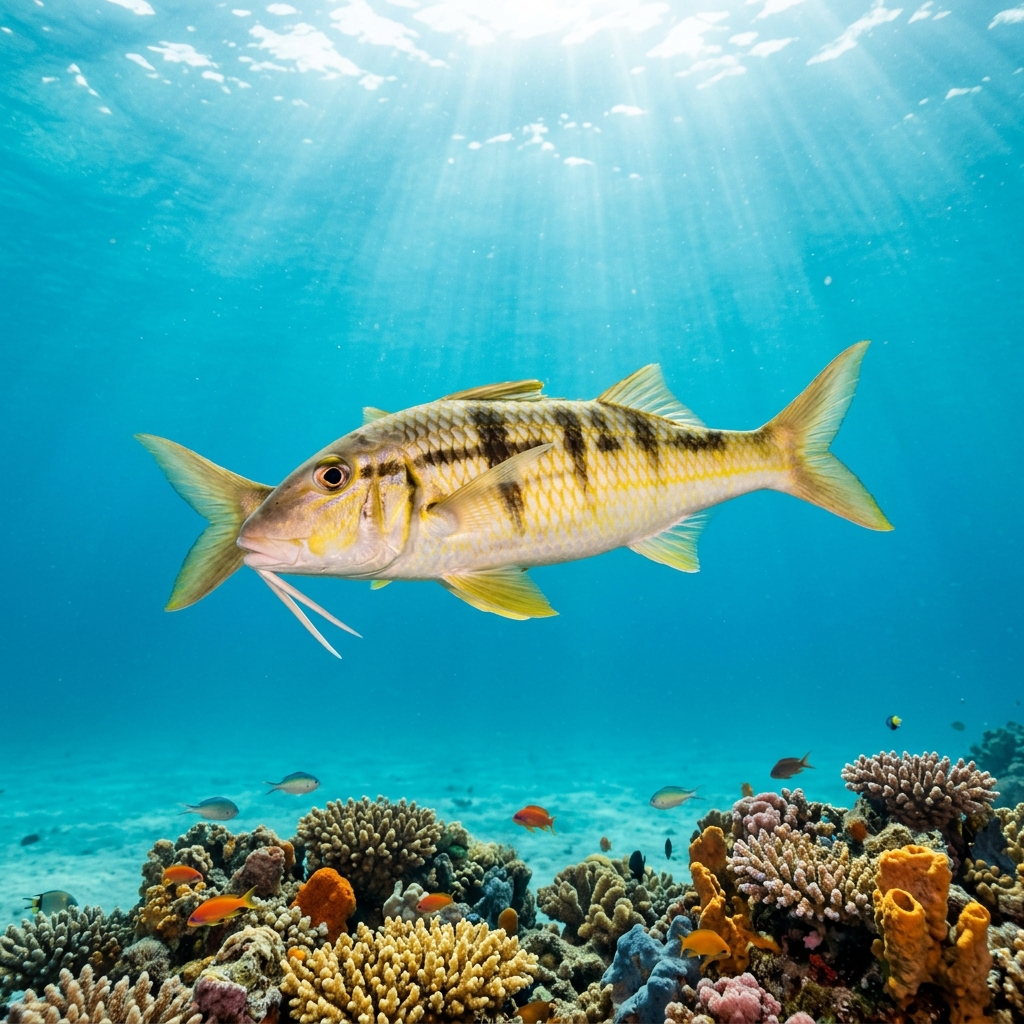
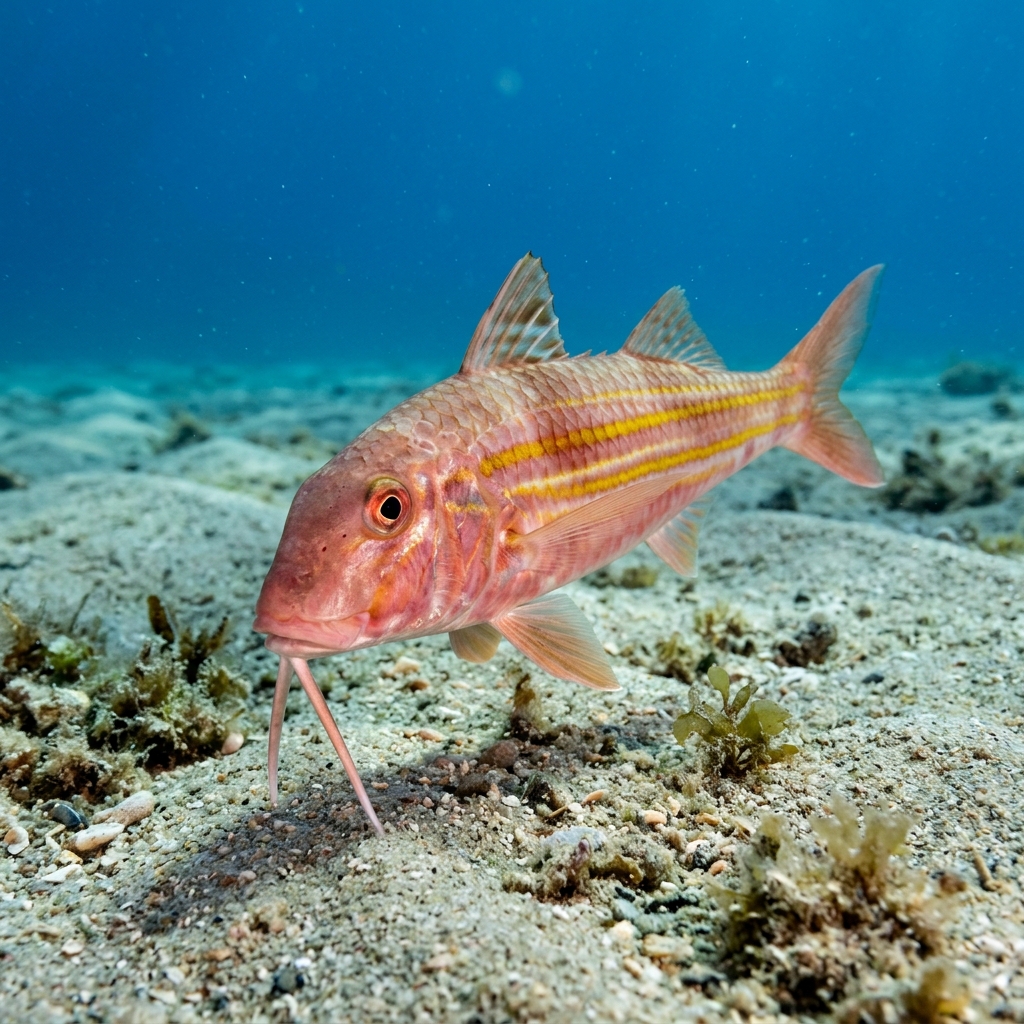
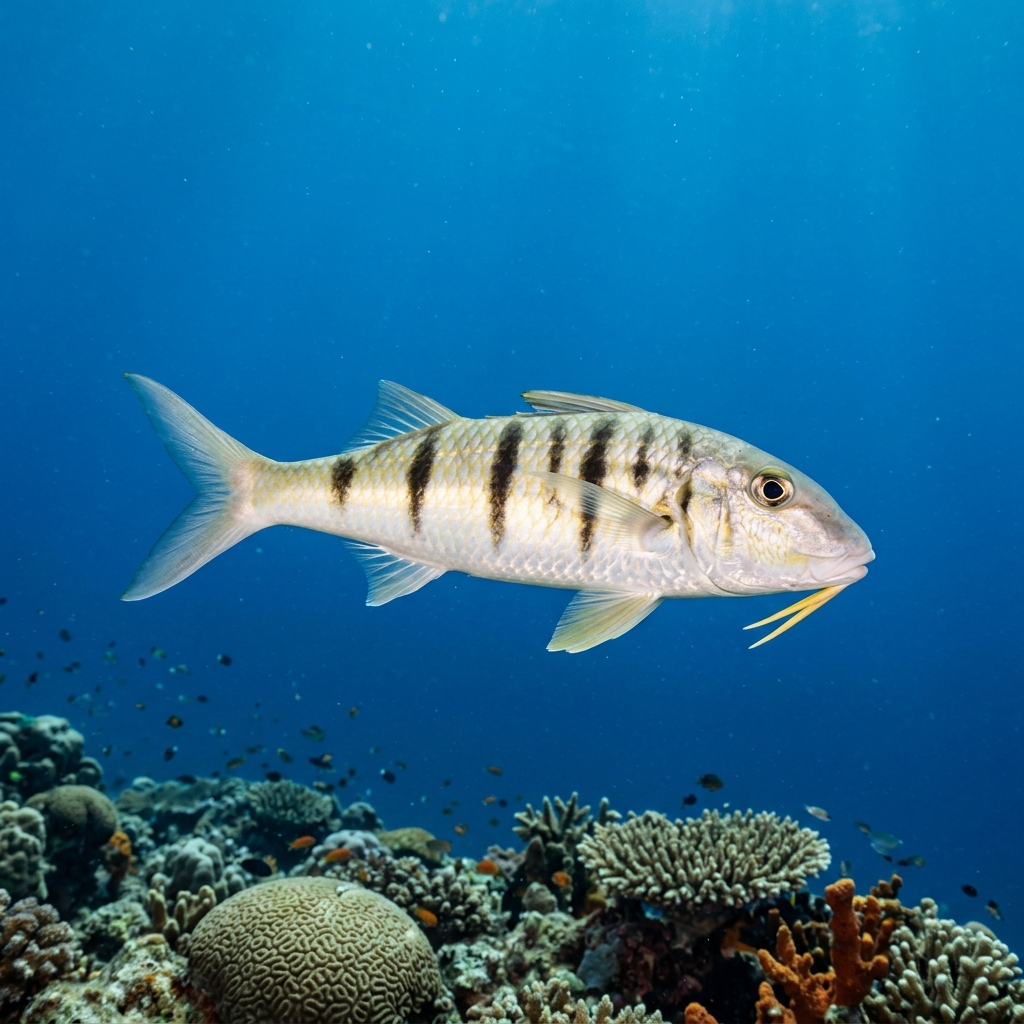
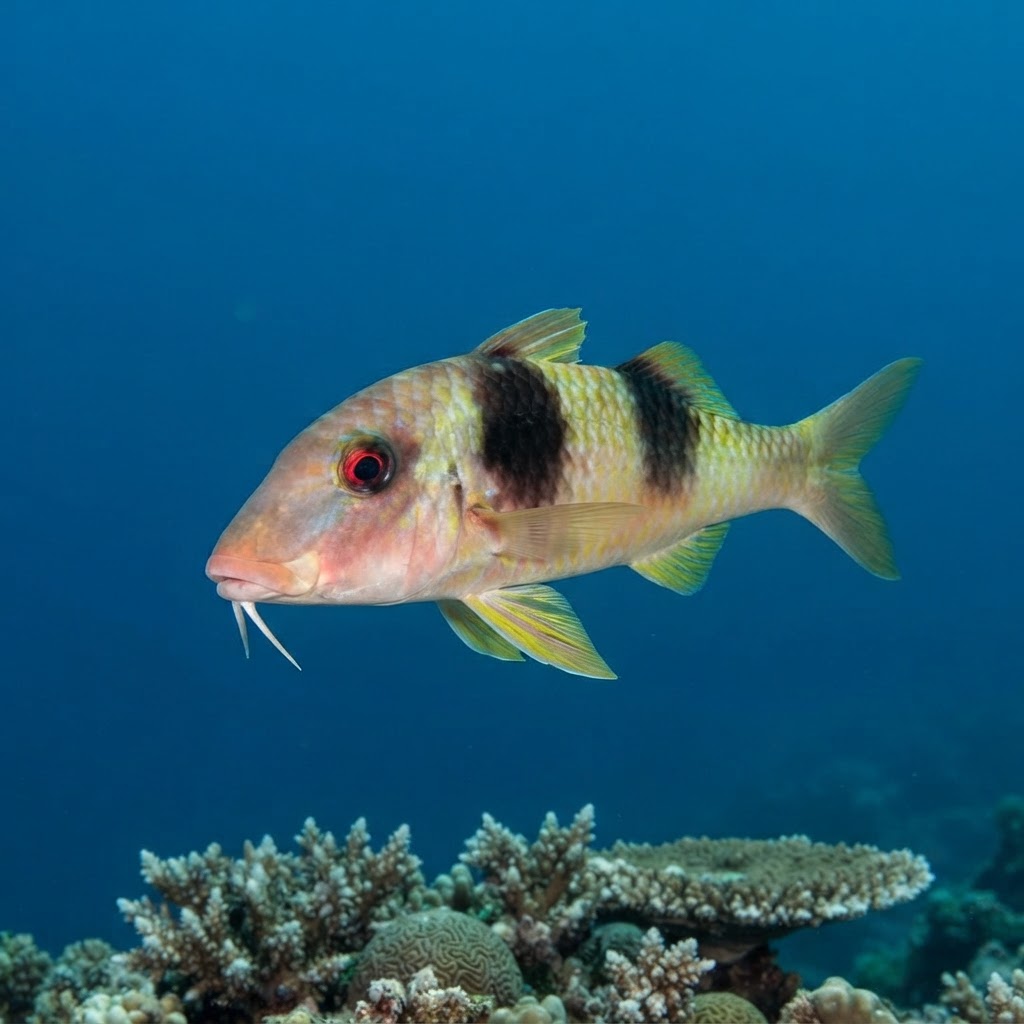
Grows to around 26 cm, with a stocky, tapered body and a pale grey to whitish base colour broken by a dark blotch (saddle) on the upper back near the tail. A pair of long chin barbels, used to probe the sand for food, are usually held tucked away or sweeping the substrate. Look for the sloped, thick-lipped face profile that gives this fish its name, distinguishing it from slimmer, more streamlined goatfish species.
Usually spotted foraging alone or in small loose groups over sand patches and rubble near reef edges, sweeping its barbels through the substrate to flush out hidden prey. It tends to keep a steady, unhurried pace and will tolerate divers at a reasonable distance before drifting off rather than bolting. Most sightings come from daytime dives, on the reef flat or lower slope rather than in open water.
Those chin barbels are packed with chemical sensors, letting it detect buried worms, crustaceans and small molluscs in sand and rubble without ever seeing them.
No clear seasonal pattern shows up in the sightings, and with a comfortable range of 25.3 to 28.9C, it sits on tropical reefs year-round rather than turning up for a particular season.
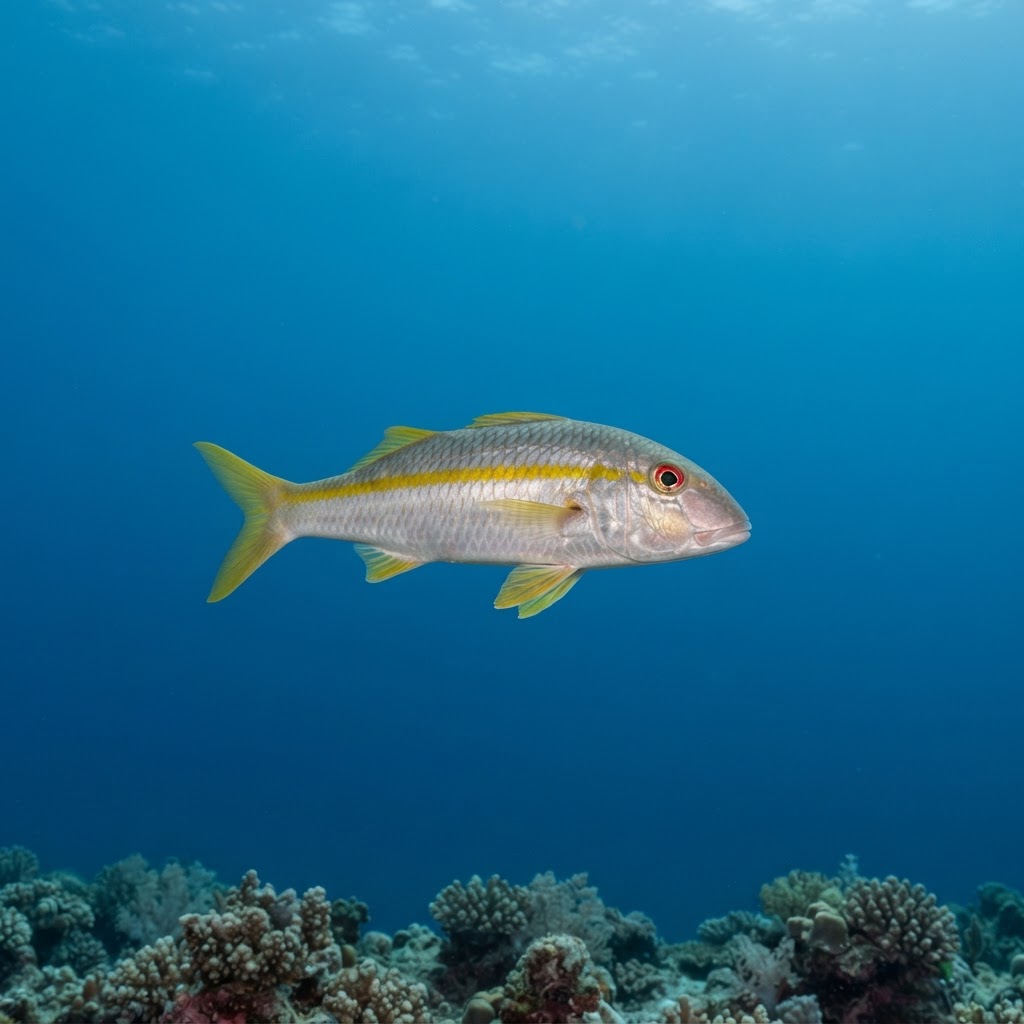
Reef neighbours a diver could mistake it for. Use the identification notes above to tell them apart.
Most reliably logged in Raja Ampat, Indonesia, which accounts for the bulk of sightings, with further strong records across Queensland, Australia and Efate, Vanuatu. Also a regular find on reefs in Sulawesi, the Visayas and Mindanao in the Philippines, and Sabah, Malaysia.
Mapping where Thicklipped Goatfish is logged…
Raja Ampat in Indonesia is the standout location, with further sightings common across Queensland in Australia, Efate in Vanuatu, and reef sites in Sulawesi, the Philippines and Sabah, Malaysia.
There is no strong season in the data. It is present year-round on tropical reefs within its 25.3 to 28.9C comfort range, so timing your trip around the fish specifically is not necessary.
Look for a pale grey body around 26 cm long with a dark saddle patch near the tail base and a thick-lipped, sloped face. Two long barbels under the chin, used for foraging in sand, are a giveaway when visible.
They typically reach about 26 cm in length, a modest size that keeps them easy to overlook against sandy or rubble-strewn reef bottoms.
They hunt using a pair of chemically sensitive barbels under the chin, sweeping them across sand and rubble to detect buried worms and small crustaceans without needing to see them.
No. They are harmless bottom-foraging fish with no venom or aggressive behaviour, and they typically just move off calmly if a diver approaches too closely.
Site and sighting data is aggregated from diver logs, iNaturalist and GBIF. For taxonomy and conservation status:
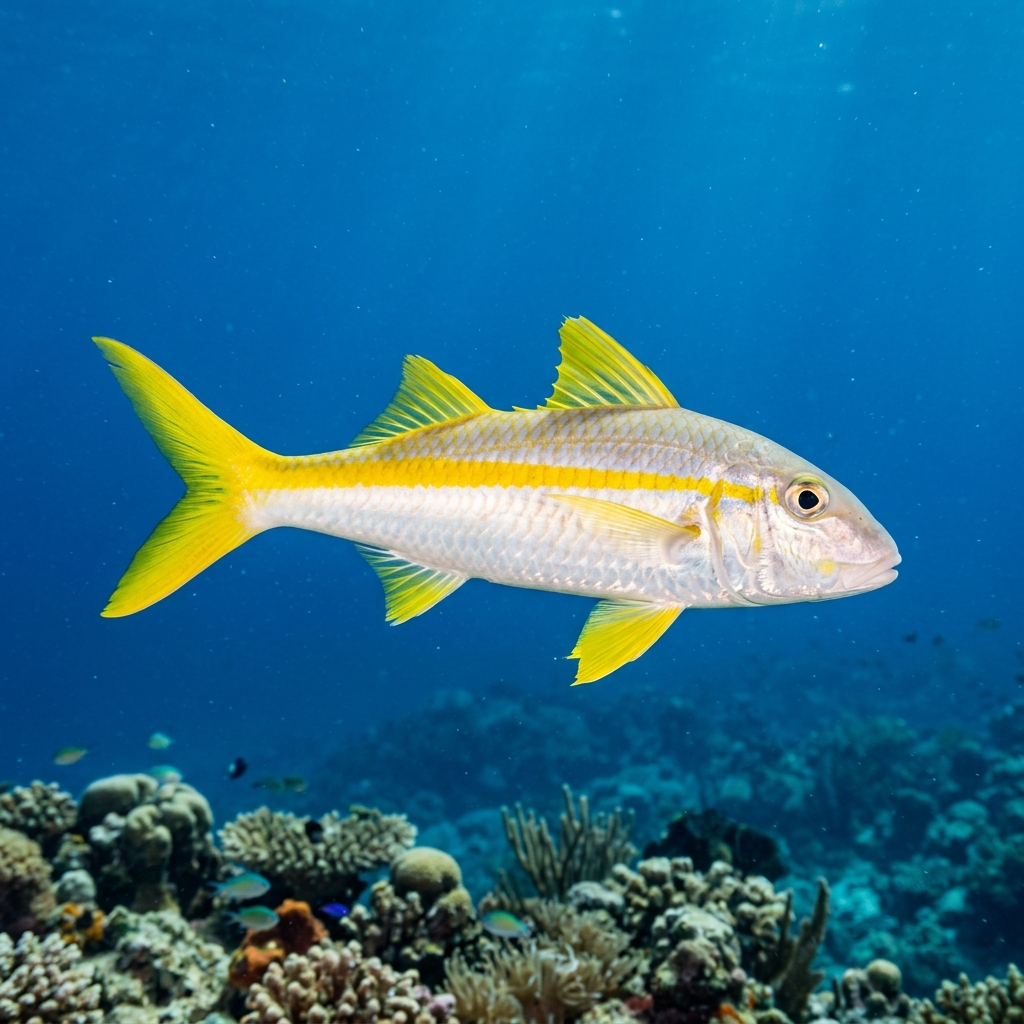
Yellowfin Goatfish
2,241 sites