Thecacera melkyi
An uncommon nudibranch logged at reef sites across Bali, Indonesia, in warm 25.5-31.5C water year-round. Here's how to find and ID it.
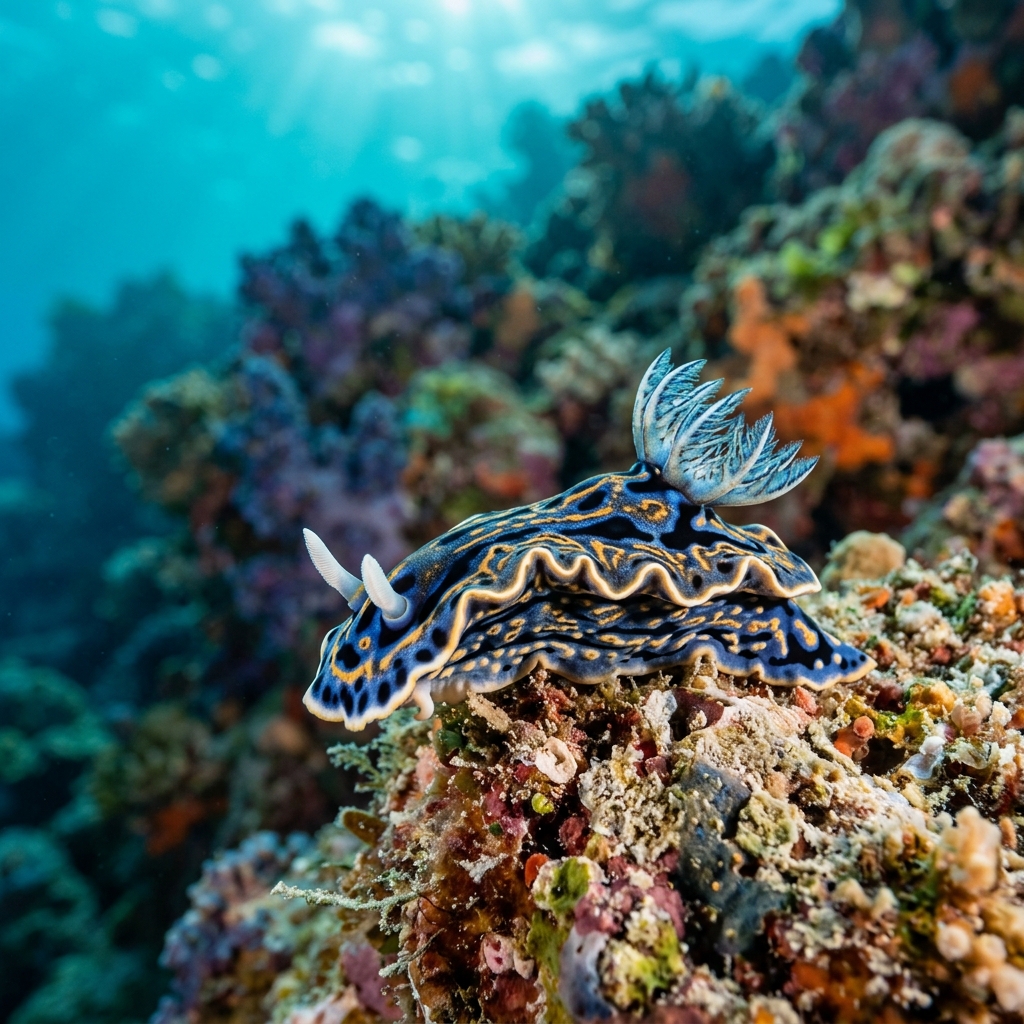
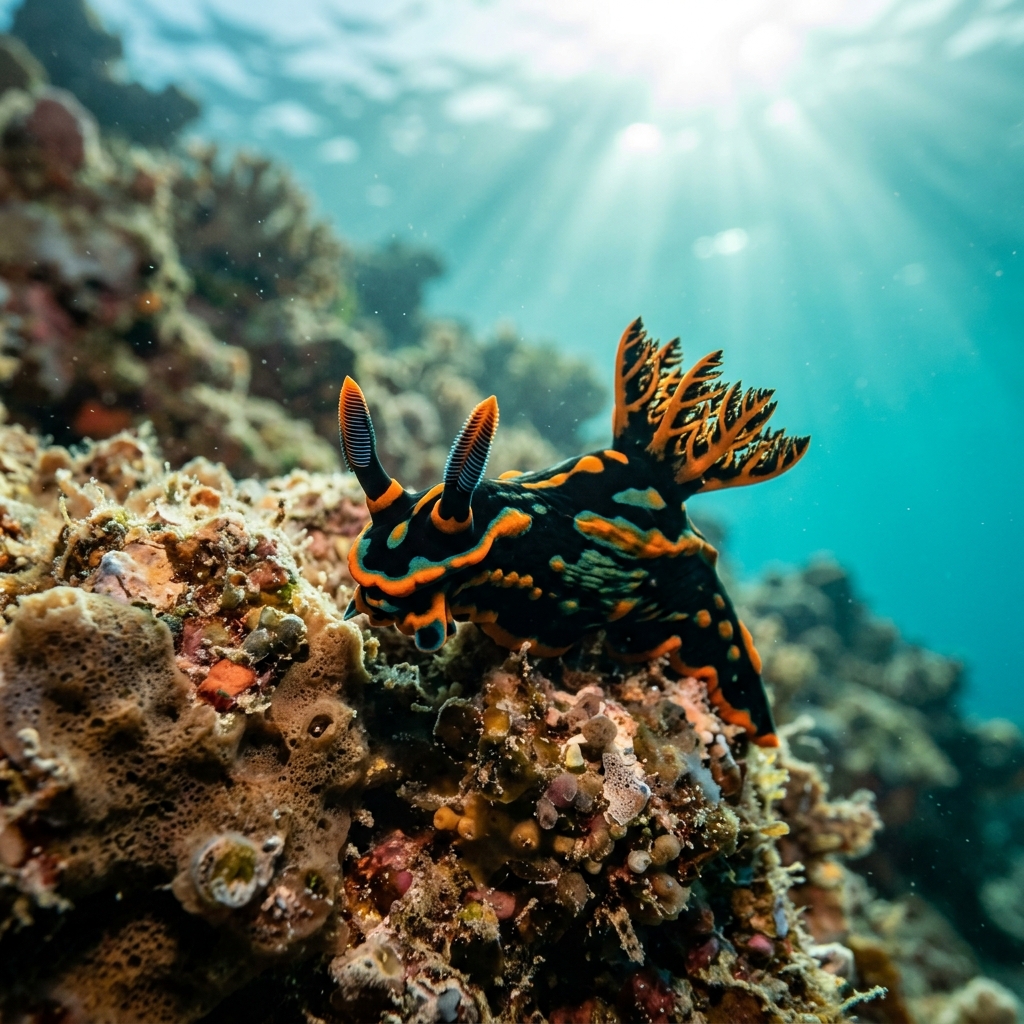
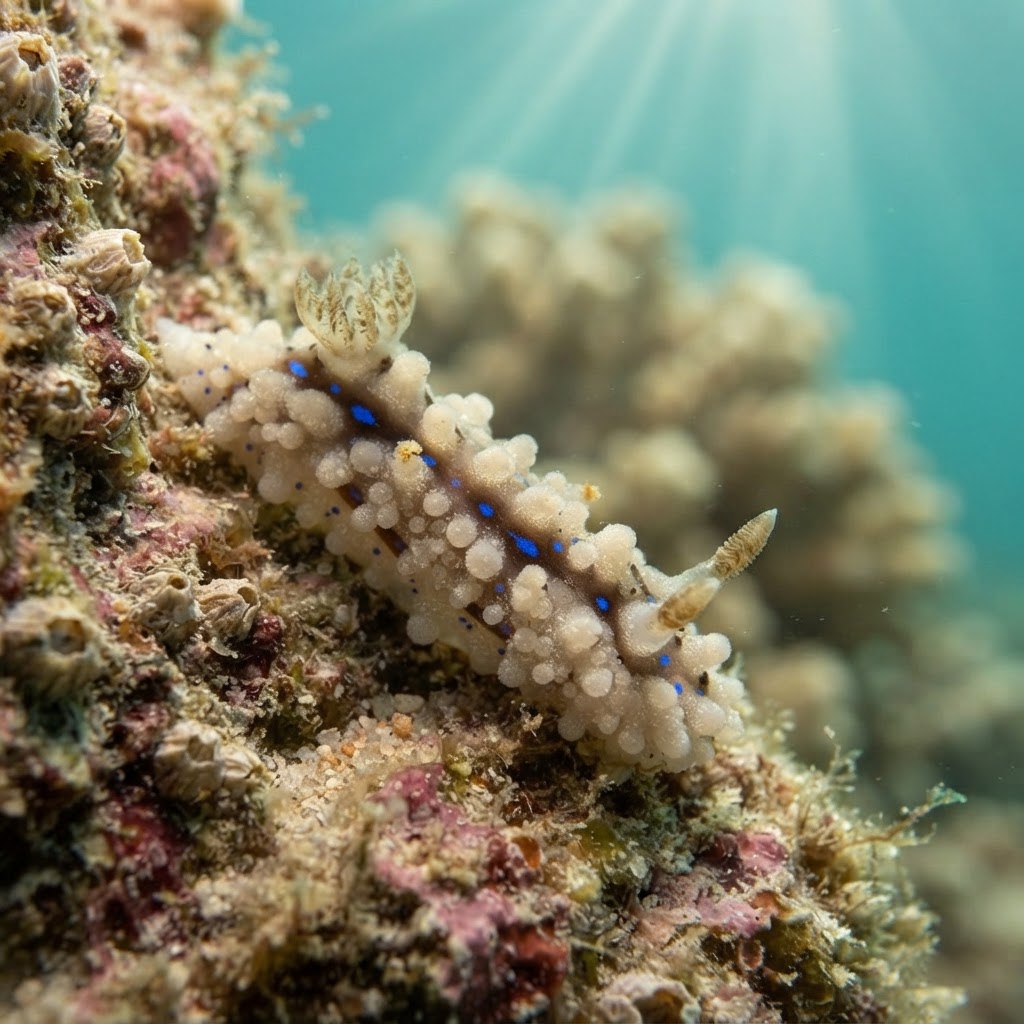
A small, soft-bodied nudibranch with a translucent to pale body and a pair of club-shaped rhinophores (sensory horns) tipped in orange or yellow that stand out against the muted body colour. Look for the bright orange-tipped gill projections (cerata-like structures) along the back, which is the main giveaway against similarly patterned dorids on the same rubble patch. It moves slowly across coral rubble and sponge, staying low and easy to miss unless you are scanning close to the substrate.
Divers find it parked on rubble, sponge, or low reef structure, moving at the unhurried pace typical of nudibranchs as it grazes. It shows no reaction to divers beyond withdrawing slightly if touched, and is most often spotted during a slow, close-focus muck dive rather than a drift or wall dive. Because it is small and uncommonly logged even at its known sites, finding one usually comes down to a guide or diver deliberately searching rubble patches rather than a chance encounter.
Like other dorid nudibranchs, it likely feeds on sponges and derives some of its colouring and possibly chemical defences from that diet, though its specific feeding ecology has not been well documented.
Sightings show no detectable seasonal pattern, and the water it's found in ranges from 25.5 to 31.5C, consistent with Bali's tropical conditions year-round. Treat this as a species you might find on any given dive rather than one tied to a particular month.
Reef neighbours a diver could mistake it for. Use the identification notes above to tell them apart.
Every logged sighting of this species comes from Bali, Indonesia, making it the only region currently confirmed for this nudibranch. Divers looking for it should focus specifically on Bali's muck and rubble sites rather than open reef, where the species has been repeatedly, if sparingly, recorded.
Mapping where Melky's Thecacera is logged…
Bali, Indonesia is the only region with confirmed sightings of this nudibranch, logged specifically at muck and rubble dive sites rather than open reef.
There's no clear season for this species based on current sightings. It has been found in water ranging from 25.5 to 31.5C, which matches Bali's year-round tropical conditions, so any time of year is fair game.
Look for a small, pale to translucent nudibranch with orange-tipped rhinophores and matching orange-tipped projections along its back, resting slowly on rubble or sponge. Its muted body colour with bright orange accents helps separate it from similarly shaped dorids nearby.
No, this nudibranch poses no danger to divers. It is a small, slow-moving mollusk that simply grazes on rubble and sponge and has no means of harming a diver.
It's logged as uncommon at most of its known sites and rare at one, meaning even experienced Bali divers won't spot it on every dive. Finding one usually takes a deliberate, slow search of rubble patches.
Site and sighting data is aggregated from diver logs, iNaturalist and GBIF. For taxonomy and conservation status:
Light-spotted Aegires
3,168 sites