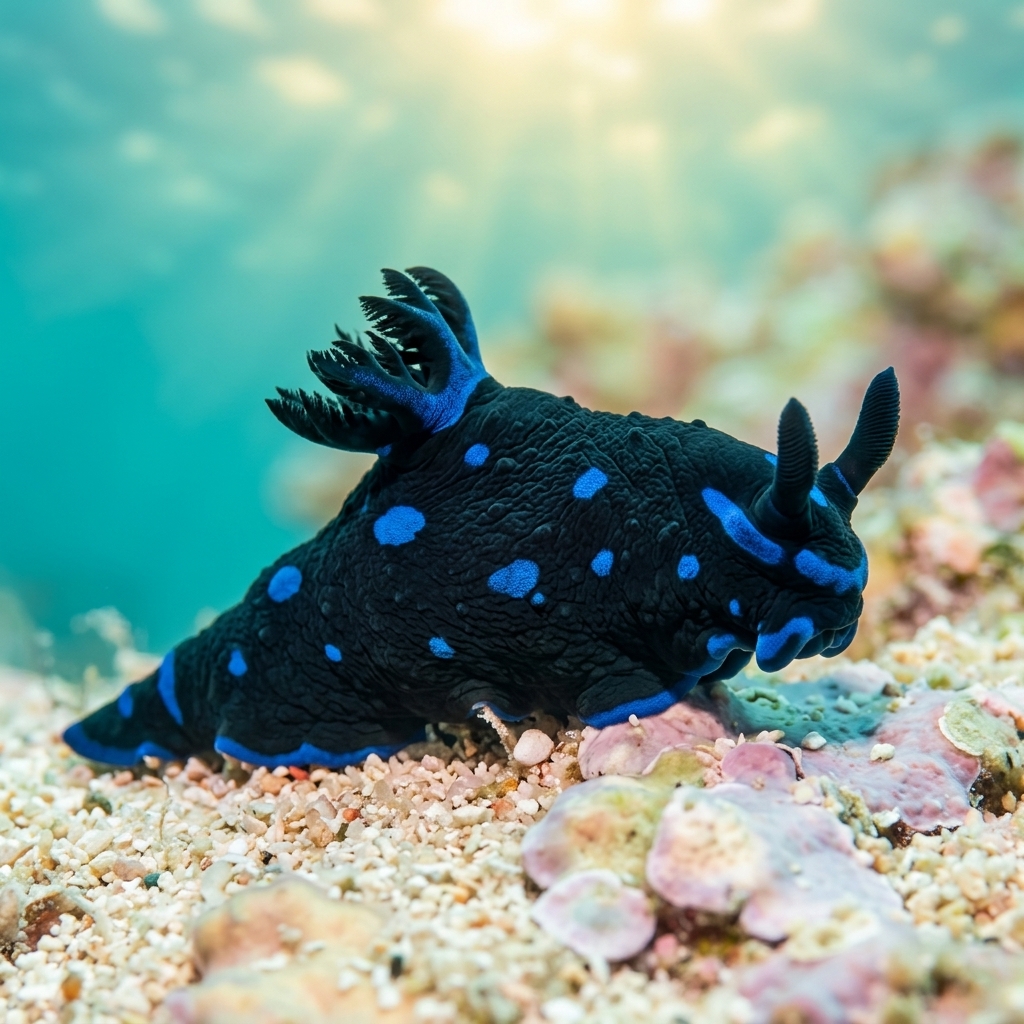
Tambja morosa
Find blue-spotted wrinkle dorids in the Philippines, Bali or Hawaii. Here's when to dive for them and how to tell them apart from similar nudibranchs.
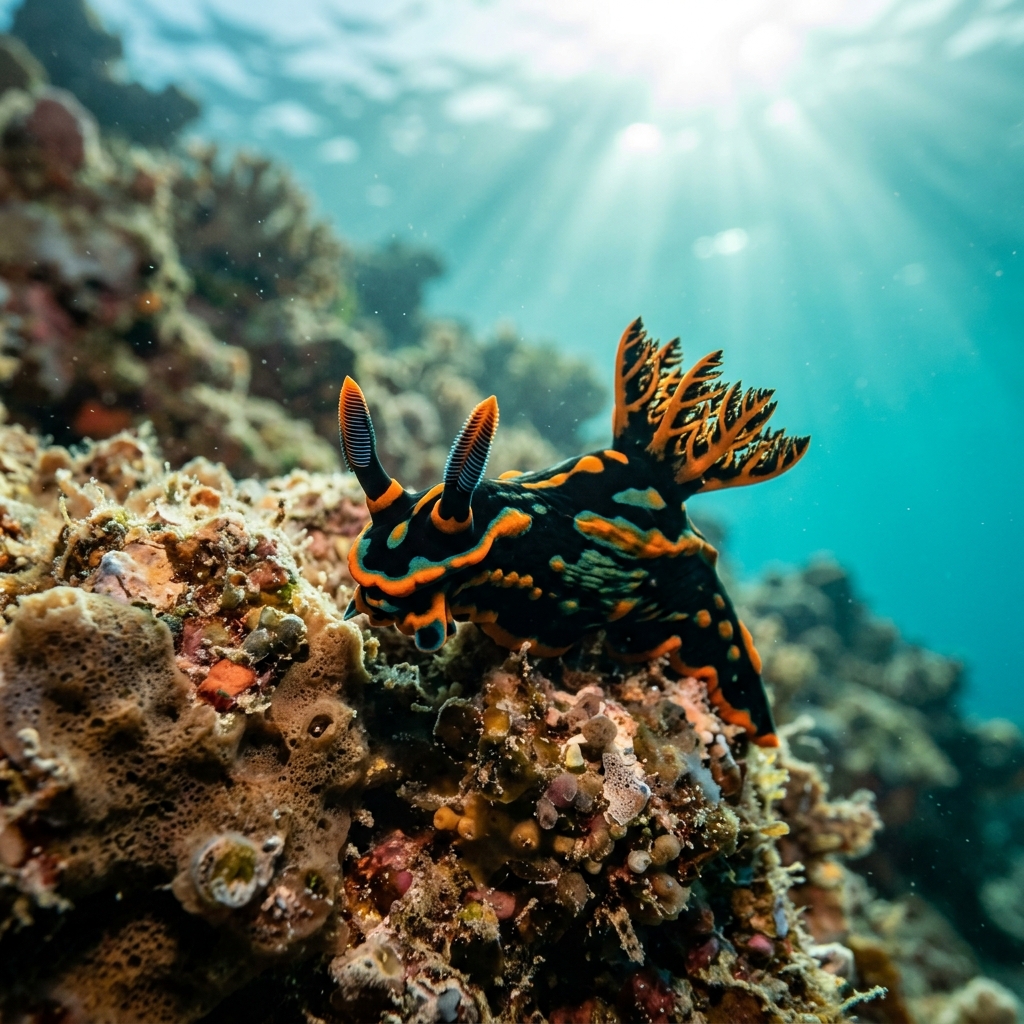
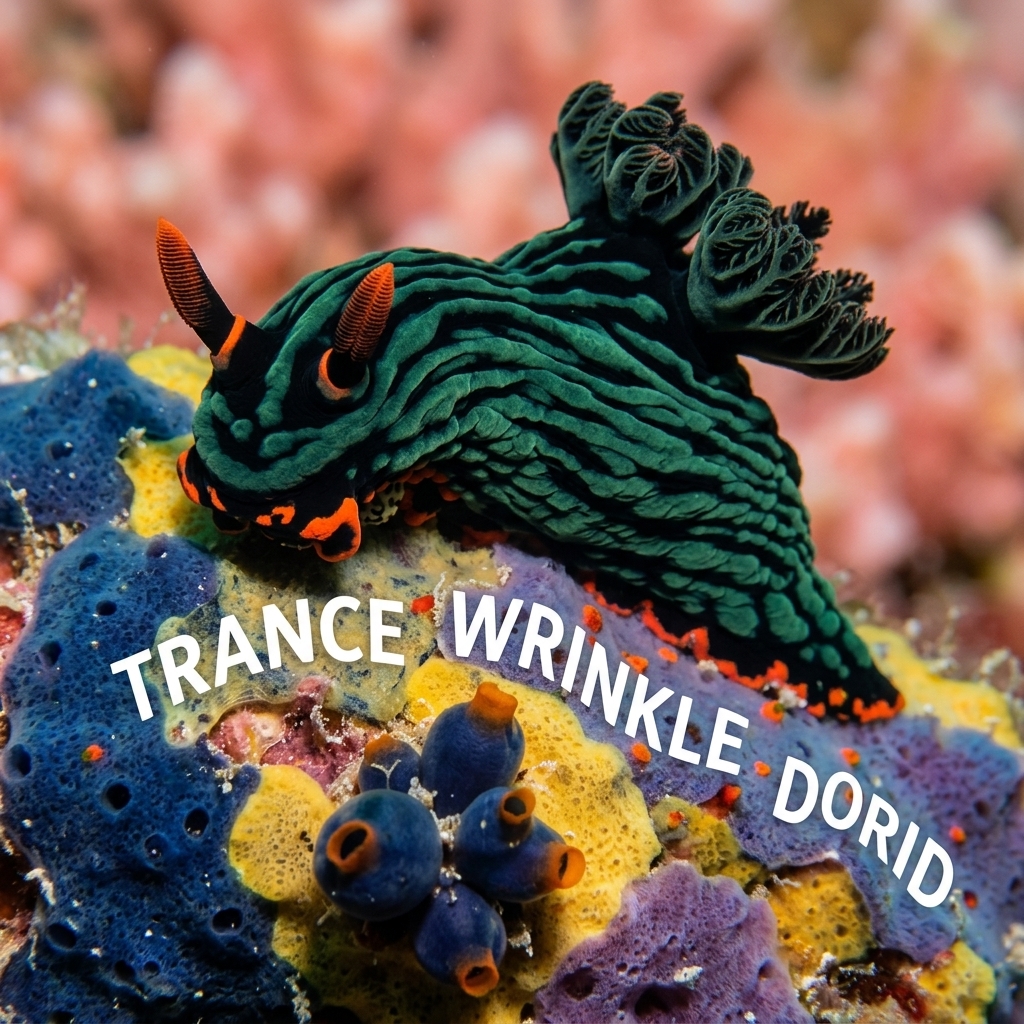
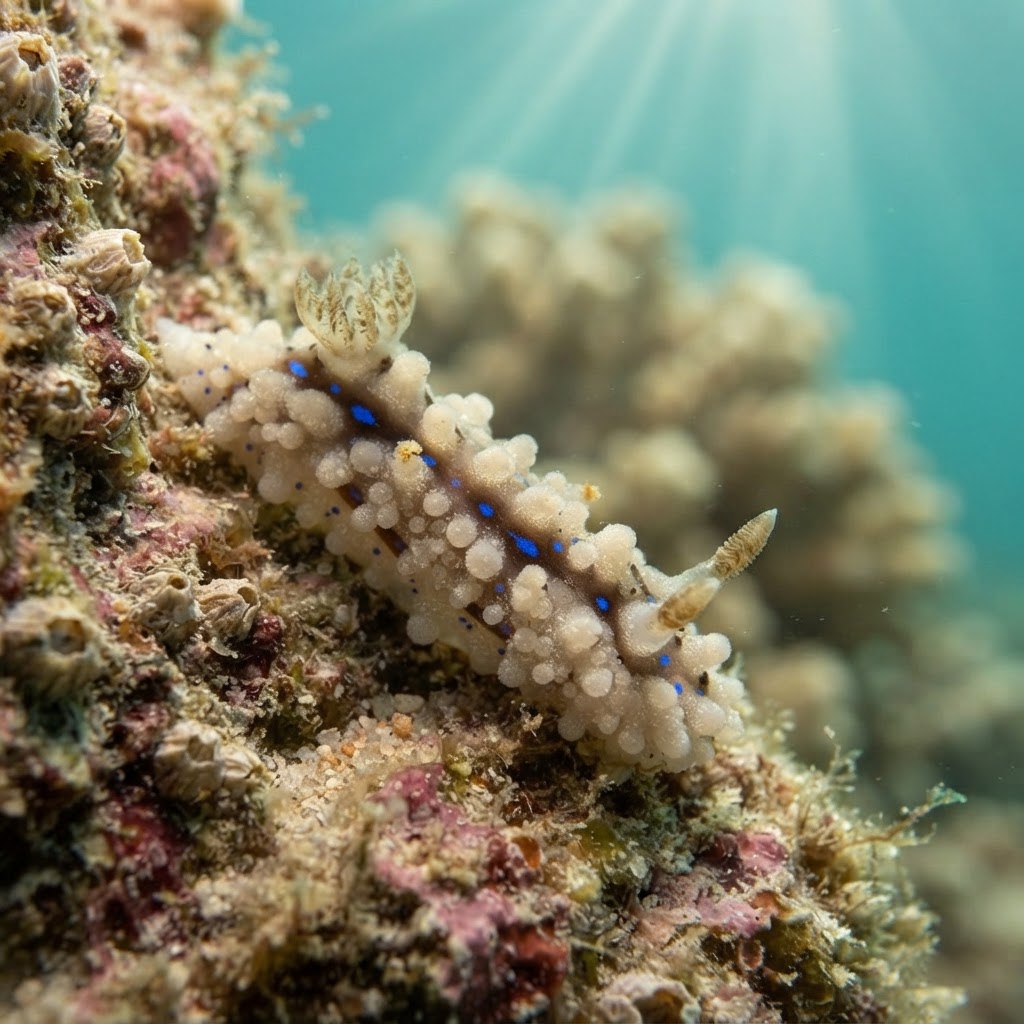
Dark blue-black body covered with scattered vivid blue spots gives this nudibranch a distinctive two-tone look that stands out against reef rubble. The body surface has a distinctly wrinkled or tuberculate (bumpy-textured) appearance, which is the defining trait the name references. Gills and rhinophores (the sensory horns at the head) are typically dark, keeping the whole animal in the same sombre colour family. Small and low-slung on the reef, it tends to blend into encrusting bryozoans unless you slow down and look closely.
You'll most often spot one slowly picking its way across encrusting bryozoans or tunicates, which are the likely food source for members of this family. It moves unhurriedly and shows little obvious reaction to divers, making it possible to observe closely without it retreating. Like most nudibranchs, it is a daylight creature, but its dark colouration means it rewards slow, methodical searching of shaded reef surfaces and rocky overhangs.
Tambja nudibranchs are known to feed specifically on bryozoans and to sequester chemical compounds from their prey, making themselves unpalatable to fish predators. The vivid blue spotting against a dark body is thought to act as aposematic colouration, a warning signal to would-be predators.
In the northern hemisphere, sightings concentrate from November through June, so the northern dry season is prime time across the Philippines, Japan, and Hawaii. In the southern hemisphere, September through February is the productive window, covering the New Zealand summer and the Bali and Sulawesi transition season.
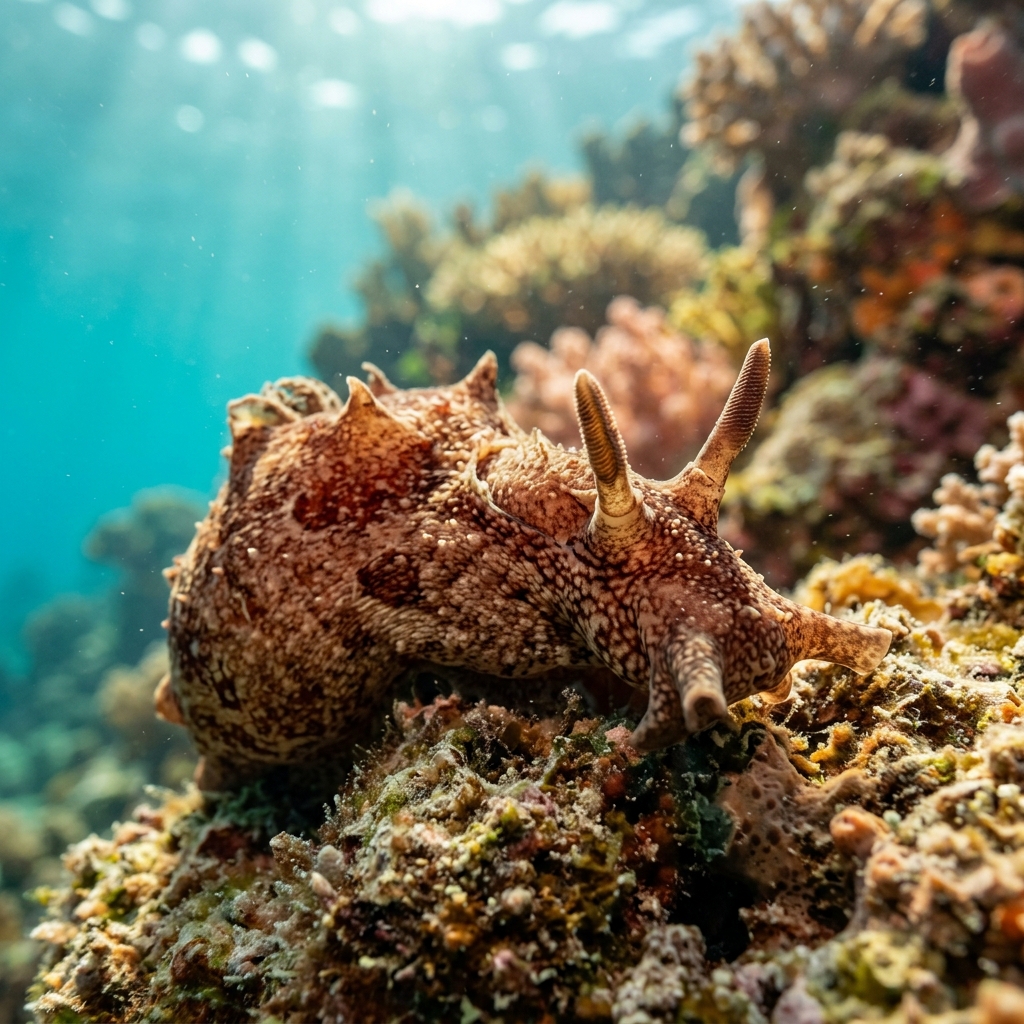
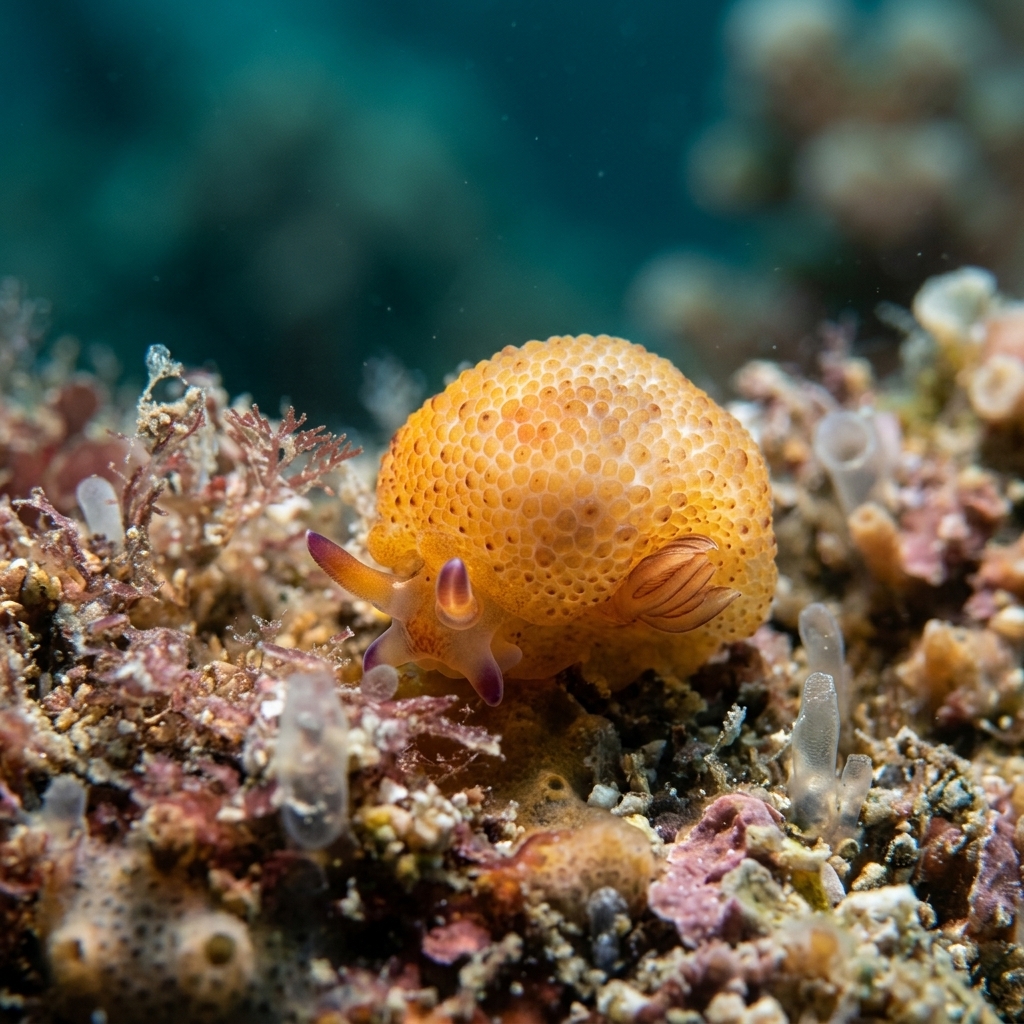
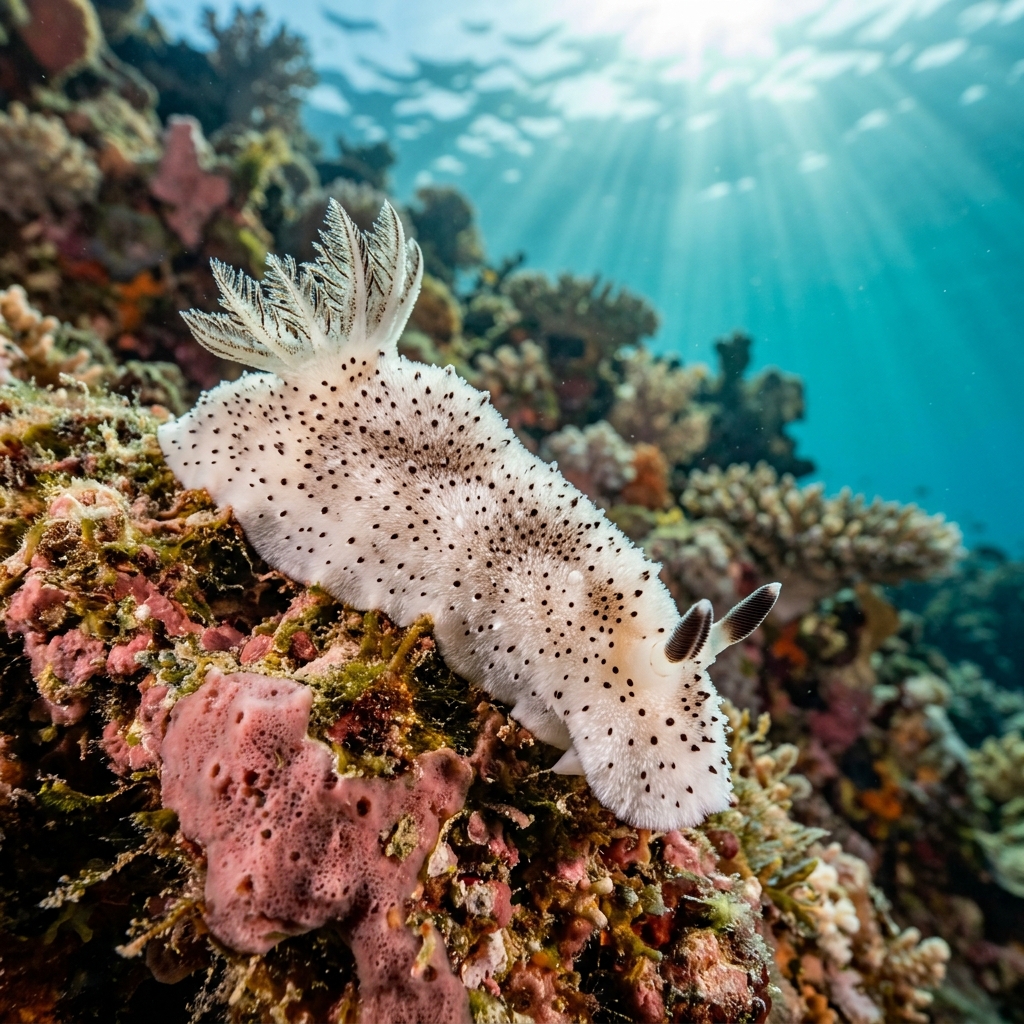
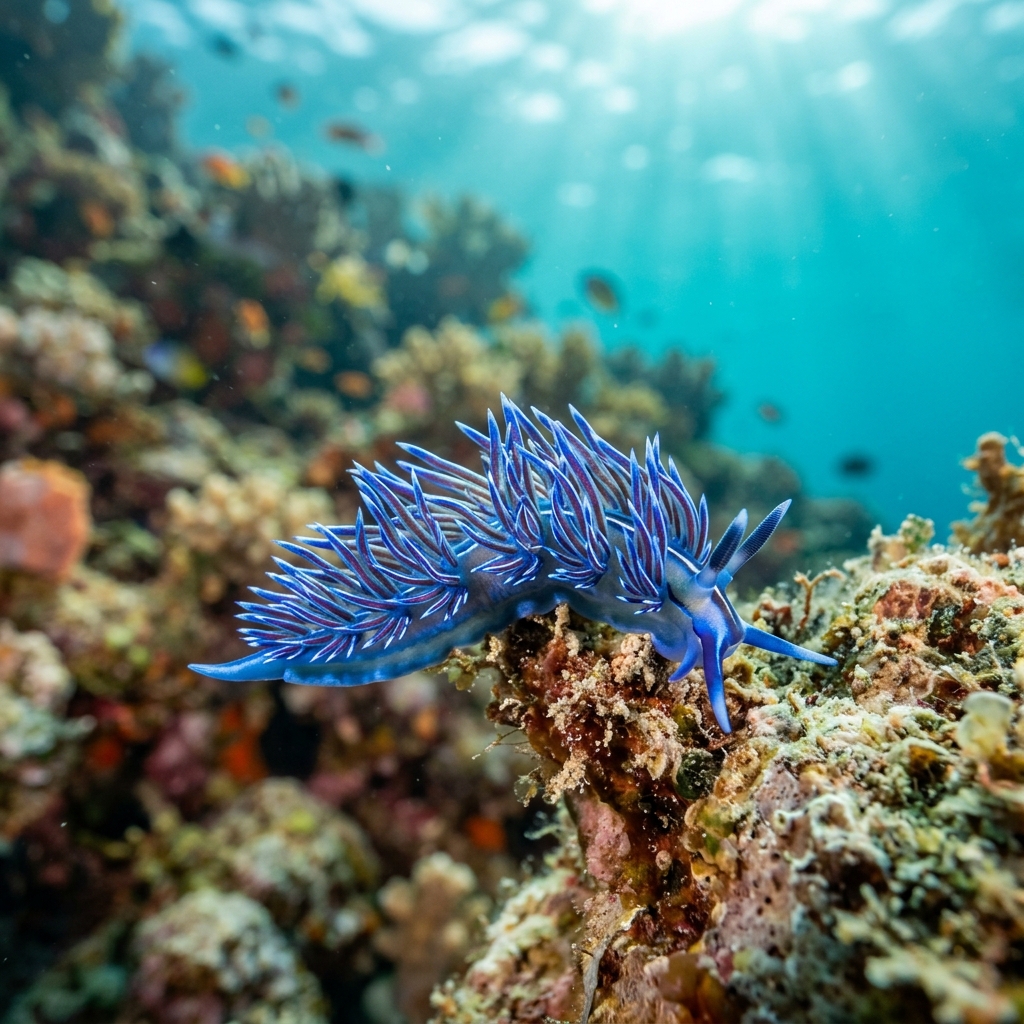
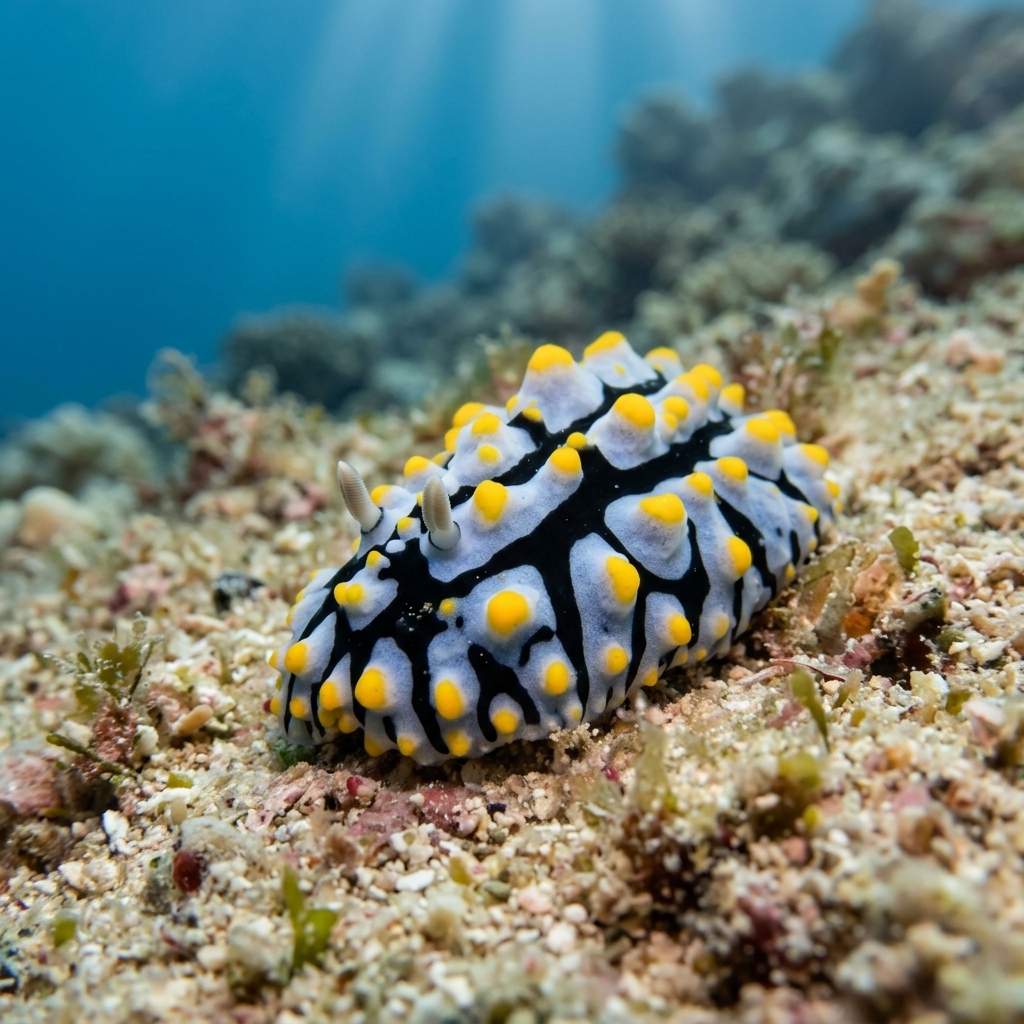
Reef neighbours a diver could mistake it for. Use the identification notes above to tell them apart.
Most consistently logged in the Philippines, particularly around Luzon and the Visayas, and in Bali, Lombok and Java in Indonesia, which together account for the lion's share of recorded sightings. Strong populations are also documented in Hawaii, Okinawa, Taiwan, and Sulawesi, while New Zealand's Northland and Auckland region and Sipadan in East Sabah round out the spread. Ten countries across the Indo-Pacific and Pacific host confirmed sightings, making the Philippines and Indonesia the best starting points.
Mapping where Blue-spotted Wrinkle Dorid is logged…
The Philippines and Indonesia are your best bets, with Luzon, the Visayas, Bali and Sulawesi all producing reliable sightings. Hawaii, Okinawa, Taiwan, Sipadan and New Zealand's Northland region also have confirmed populations logged by divers.
In the northern hemisphere, plan your dive trip between November and June for the highest chance of a sighting across the Philippines, Japan and Hawaii. Southern hemisphere divers in New Zealand, Bali and Sulawesi should target September through February.
Look for a small, dark blue-black nudibranch with scattered bright blue spots and a noticeably textured, wrinkled body surface. The consistently dark gills and rhinophores help separate it from species that have contrasting or colourful head appendages. Slow down on rubble and encrusting growth to spot it.
No, they pose no danger to divers whatsoever. Like most nudibranchs, they are small, slow-moving, and entirely harmless to observe up close. Avoid touching them, both for your own sake and theirs.
Members of the Tambja genus are specialist feeders on bryozoans, the small colonial animals that encrust rocks and reef surfaces. They are thought to absorb defensive chemicals from their prey and store them in their own tissues, which makes them distasteful to fish and may explain their warning colouration.
Site and sighting data is aggregated from diver logs, iNaturalist and GBIF. For taxonomy and conservation status:
Light-spotted Aegires
3,168 sites