Pseudodiploria strigosa
Spot symmetrical brain coral on reefs across the Yucatán Peninsula and Cayman Islands. Year-round sightings in warm Caribbean waters from 0 to 47 m.
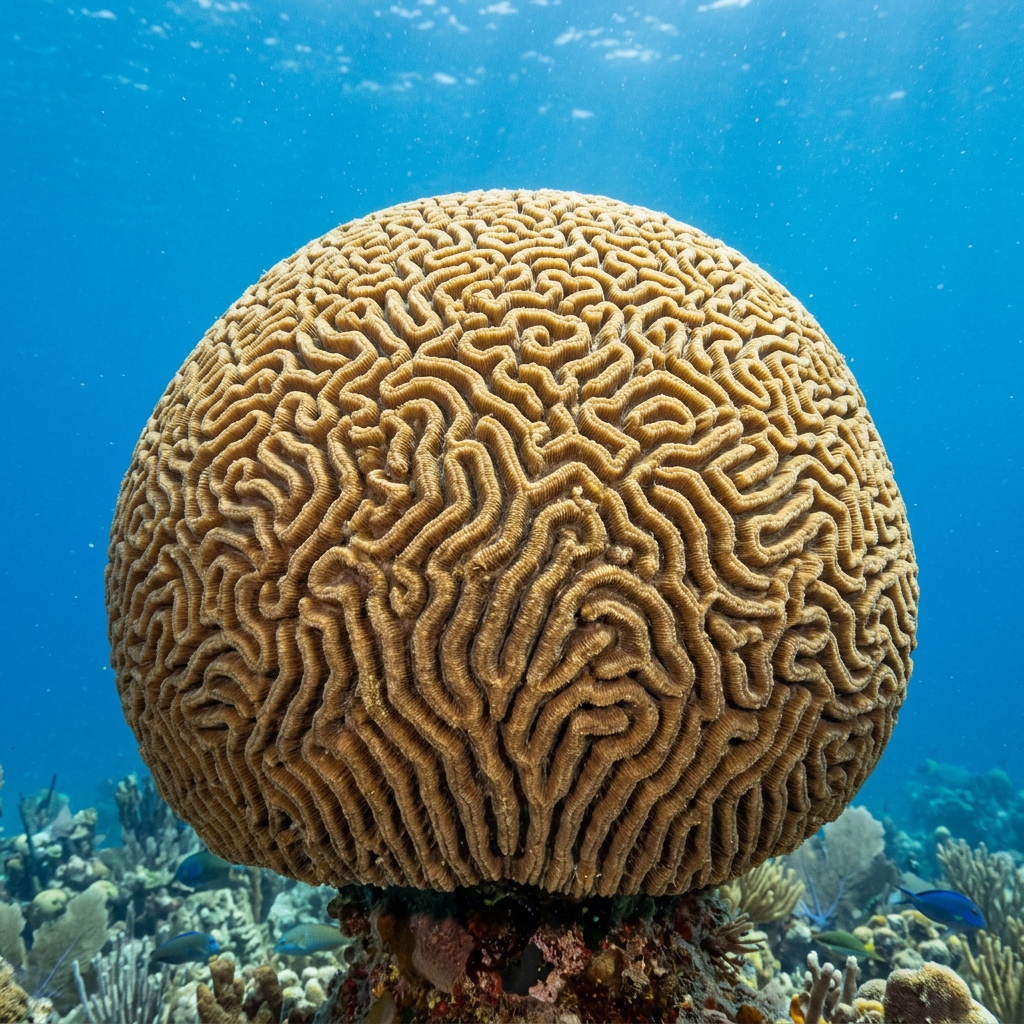
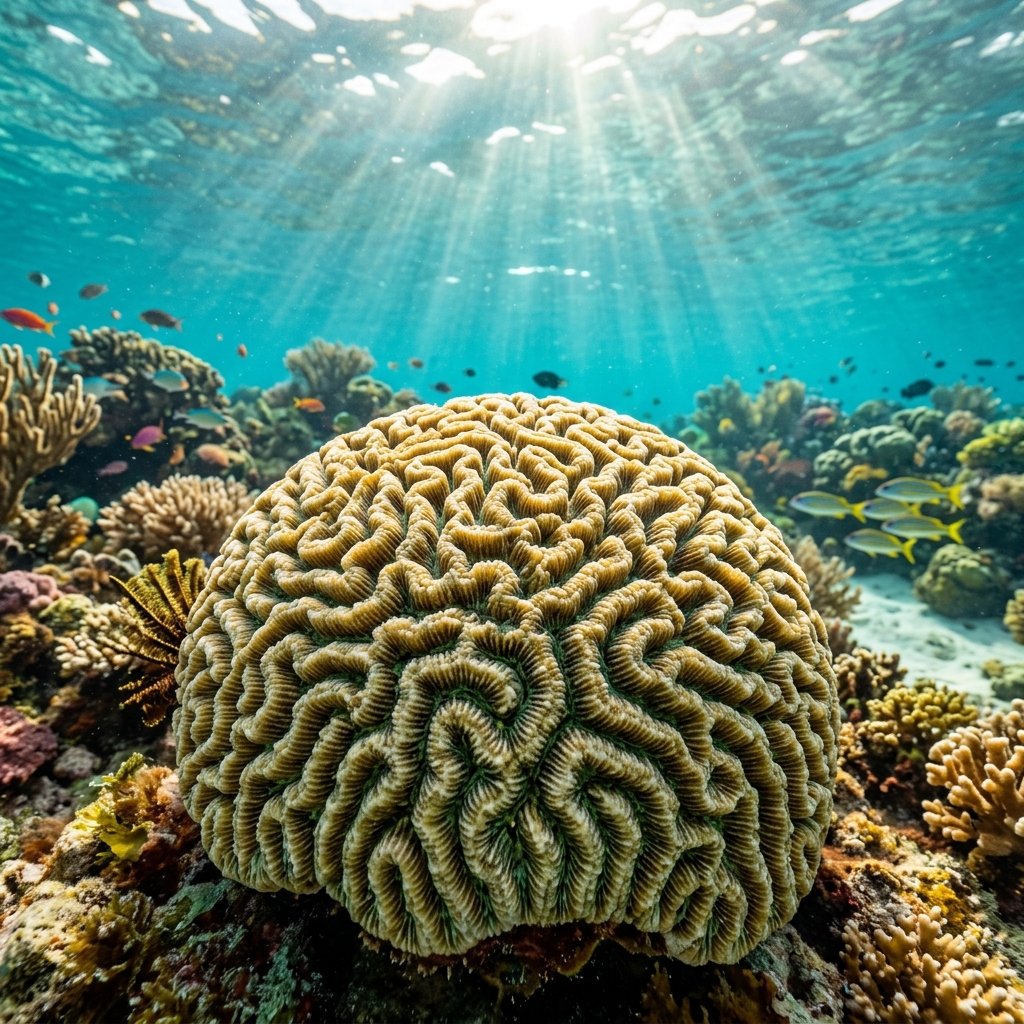
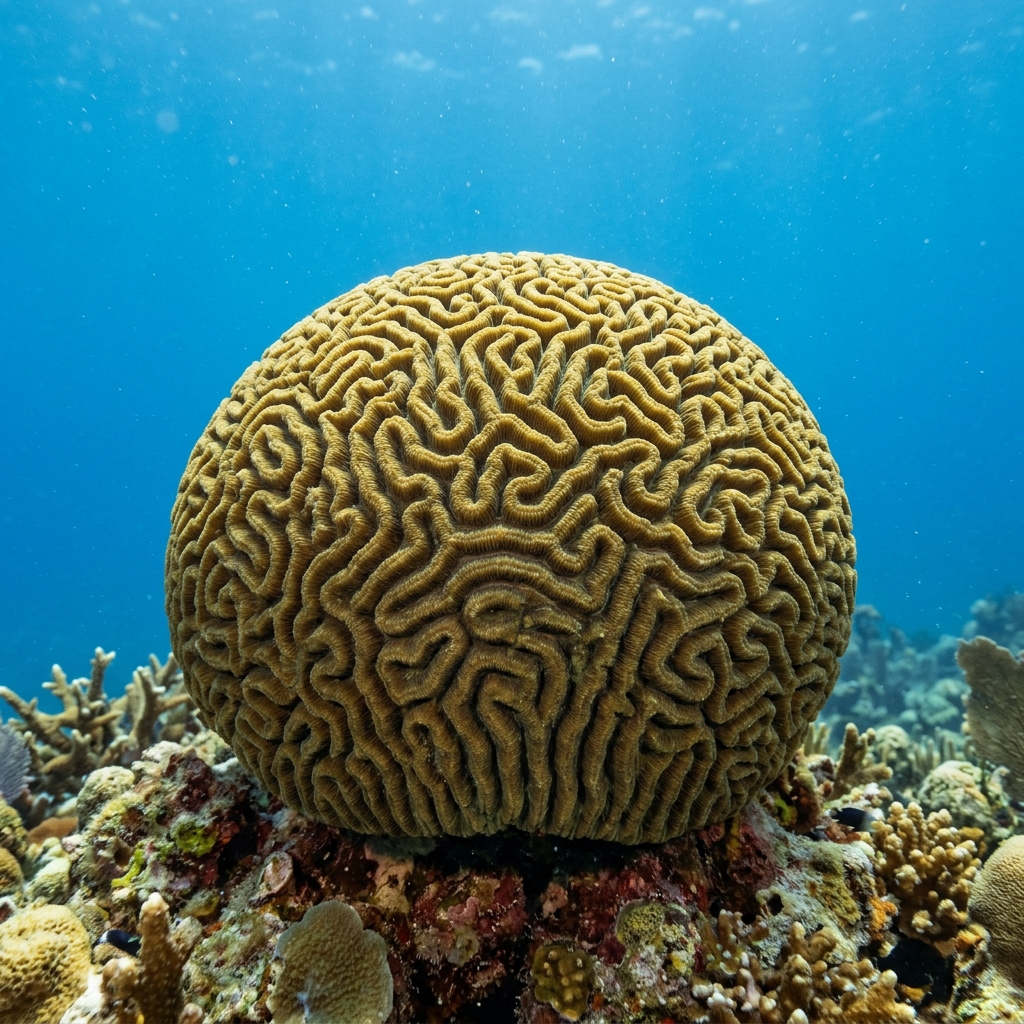
Look for a large, dome-shaped colony covered in continuous, winding ridges separated by deep grooves, the whole surface resembles the folds of a brain. Colouration runs from olive-green and tan to yellowish-brown, sometimes with a slight greenish fluorescence in shallow water. The key distinguishing feature is the symmetry: ridges run in parallel pairs with a single groove down the centre of each valley, giving the surface a more orderly, combed appearance compared to close relatives. Colonies can grow to impressive boulder size, often becoming one of the most physically dominant structures on the reef.
Being a sessile (permanently attached) organism, it simply sits on the reef, but that stillness is worth pausing for. During the day you can observe the surface closely: tiny polyps are usually retracted, leaving the ridge-and-groove architecture fully visible. At night the polyps extend their tentacles to feed on zooplankton, giving the surface a fuzzy, almost soft texture that contrasts sharply with its daytime appearance. It poses no reaction to divers whatsoever, making it an ideal subject for photography or for reading the health of the surrounding reef.
Symmetrical brain coral is a broadcast spawner that releases eggs and sperm into the water column in a synchronised mass-spawning event, typically triggered by lunar cycles in late summer. This brief annual spectacle can fill the water column with spawn and is one of the most coordinated reproductive events on a Caribbean reef.
Present year-round with no concentrated season. The species thrives in the warm, stable waters of the Caribbean basin, where temperatures typically sit between 27 and 29 °C, so there is no single peak window to plan around.
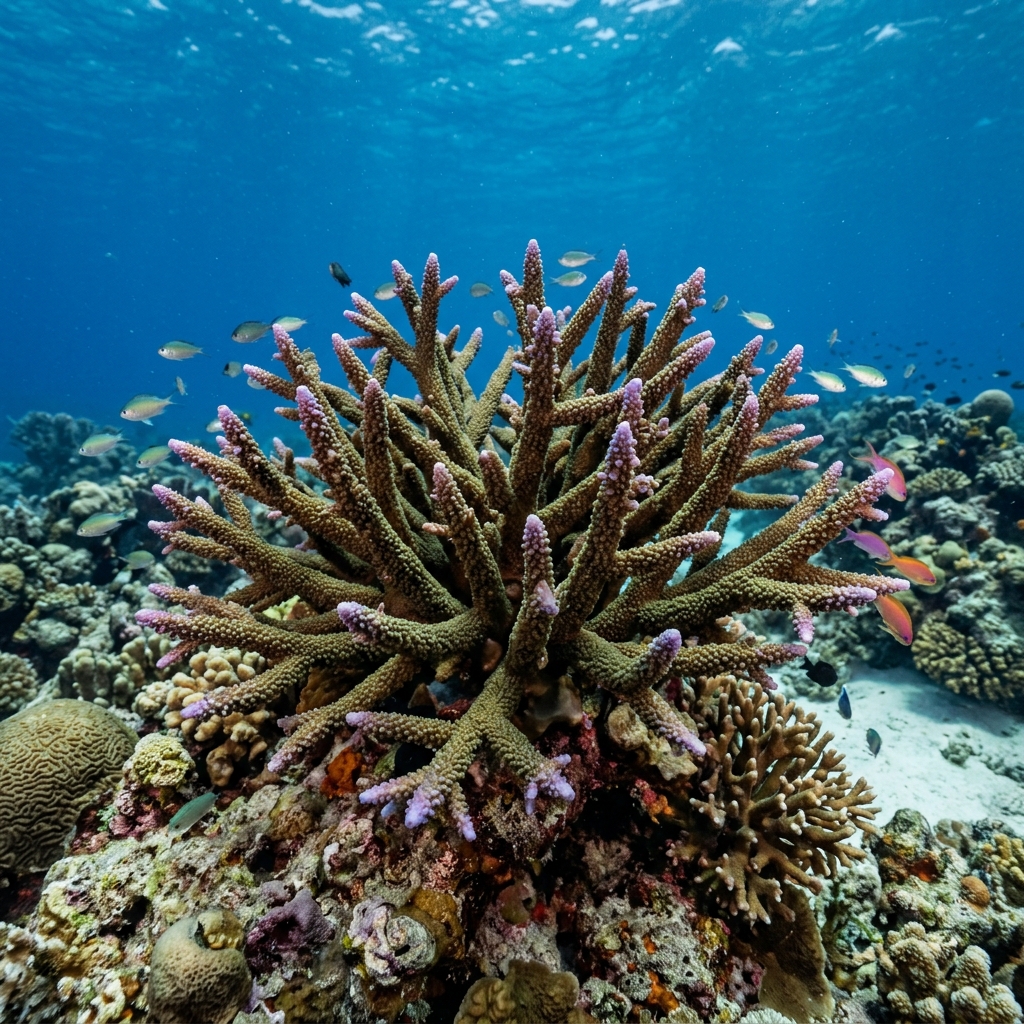
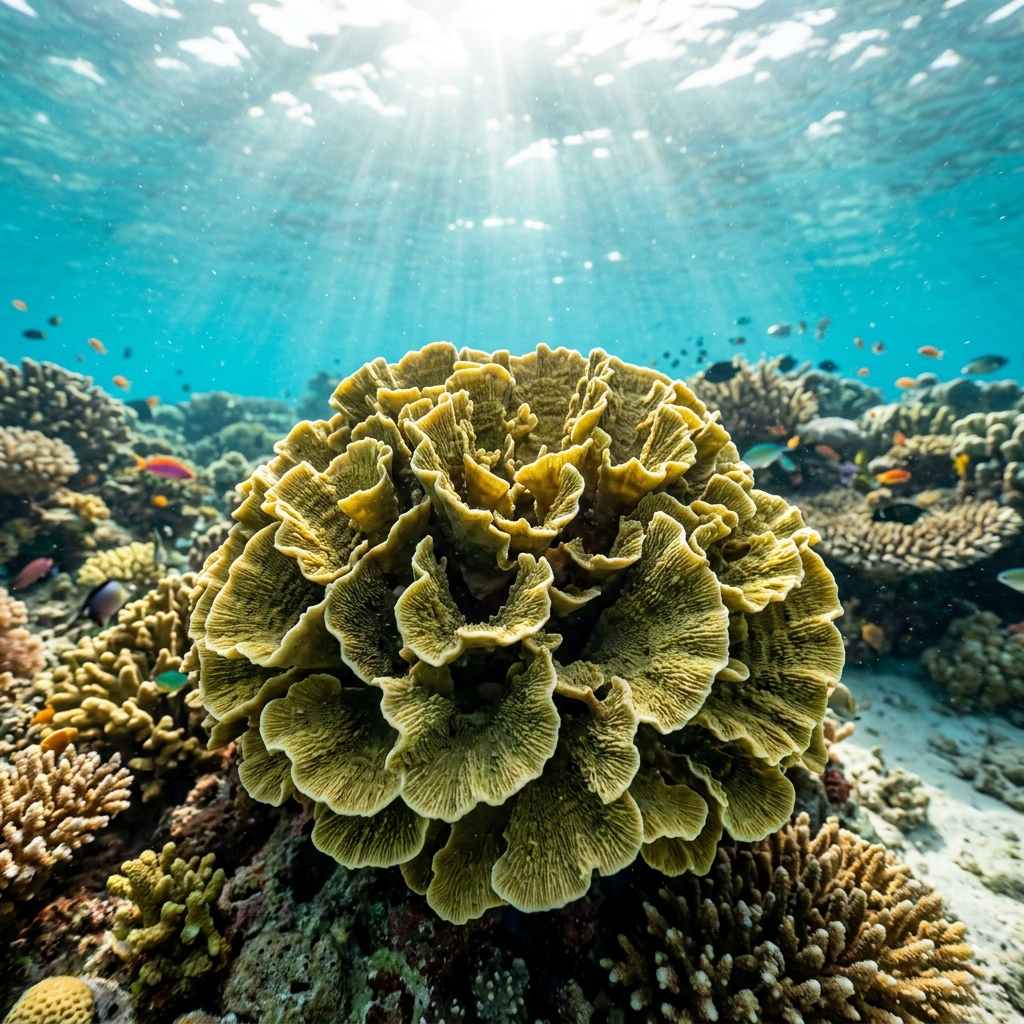
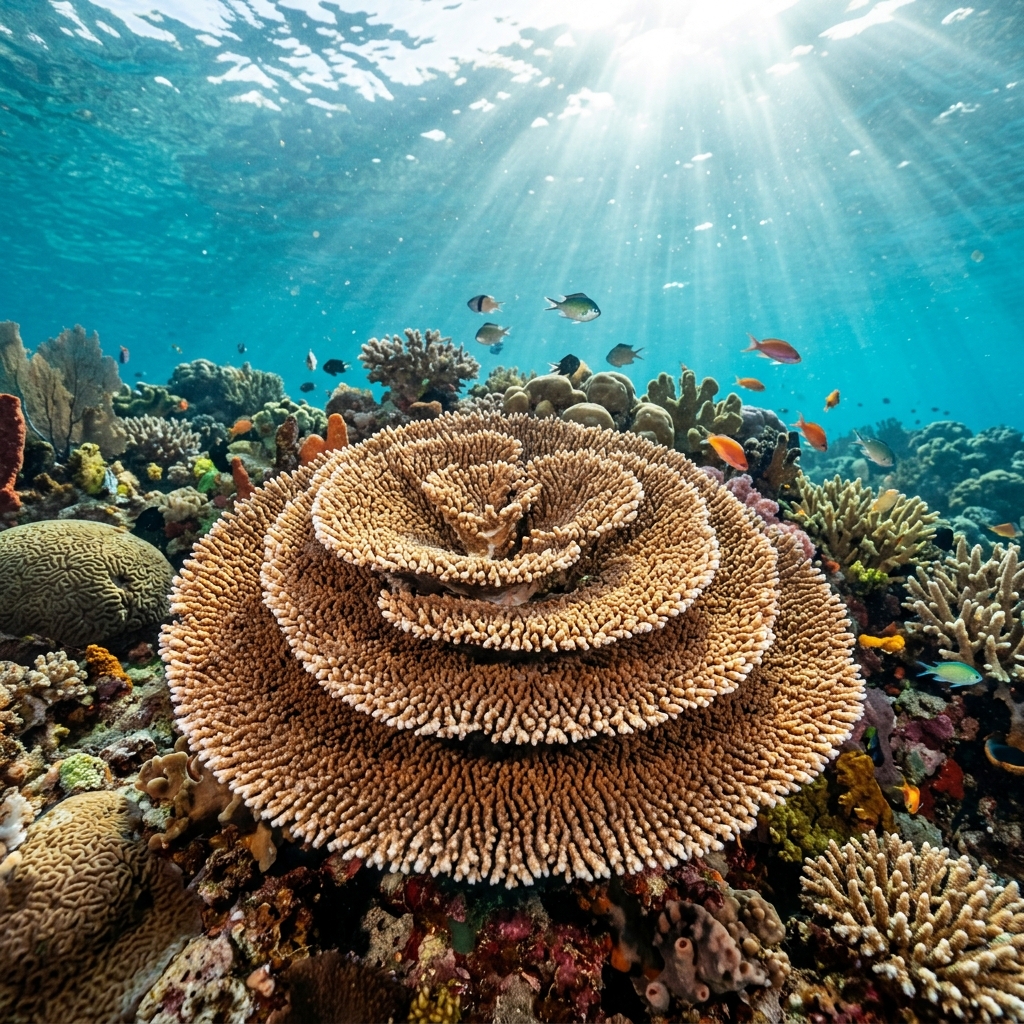
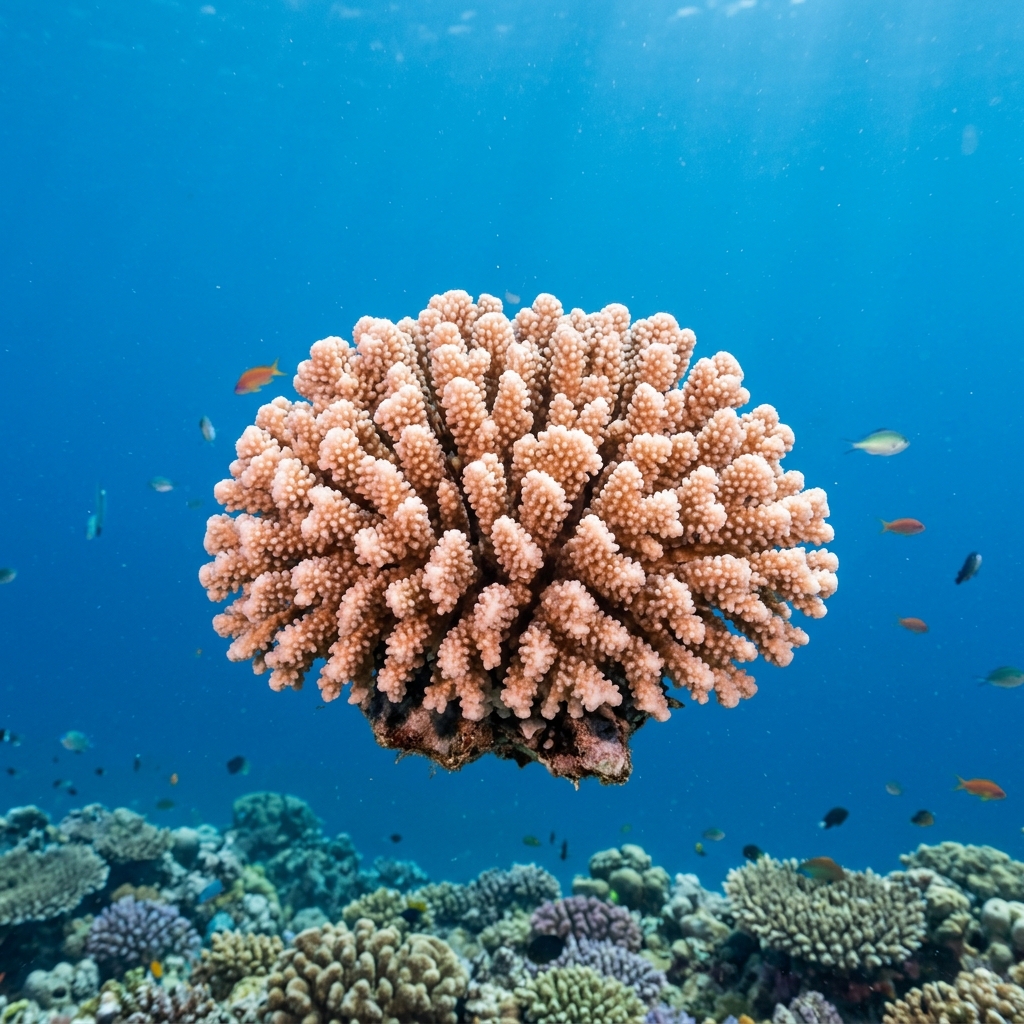
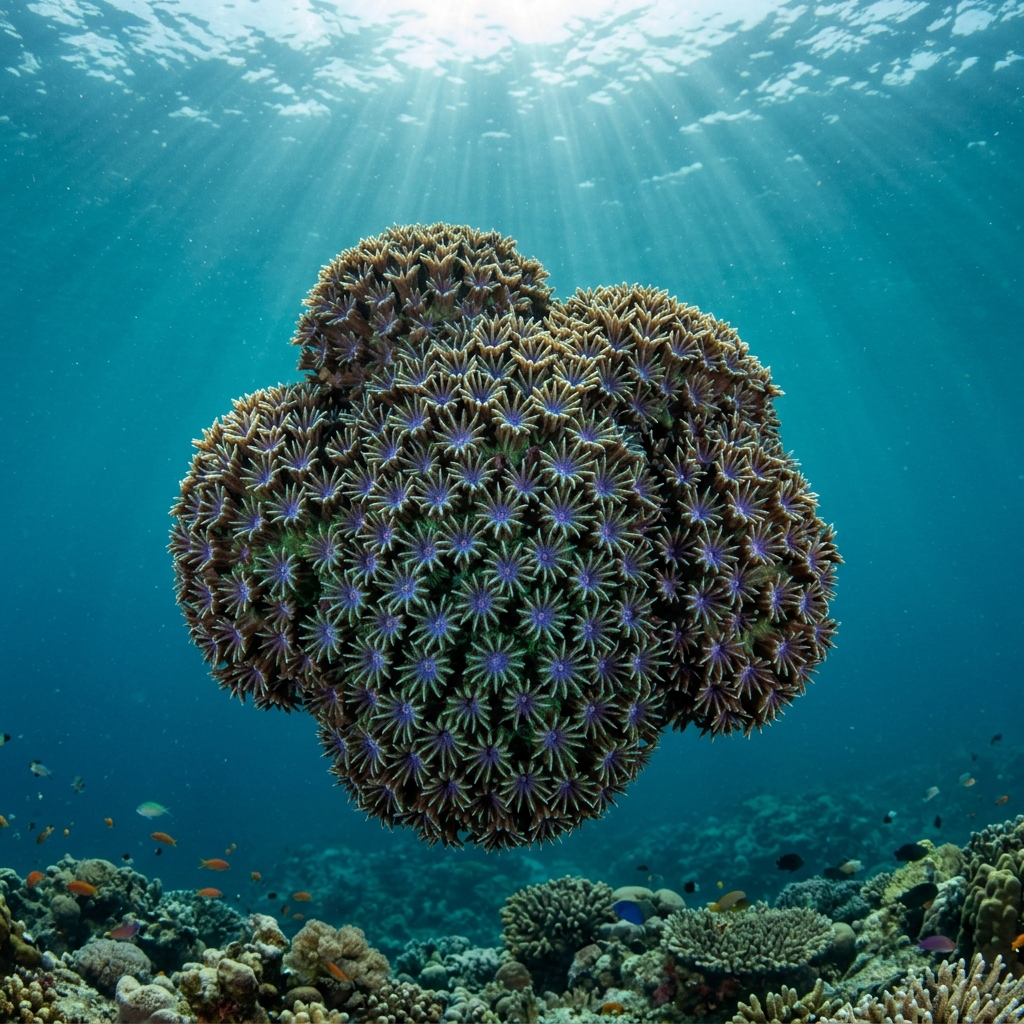
Reef neighbours a diver could mistake it for. Use the identification notes above to tell them apart.
Most commonly logged in Mexico, particularly across the Yucatán Peninsula and its Caribbean reef systems, and in the Cayman Islands, where Grand Cayman stands out as a strong focal point. Bonaire, Curaçao, Honduras (especially Roatán), and Colombia's Caribbean Coast also return reliable sightings. The species has a broad footprint across the wider Caribbean and into Florida, making it a familiar sight on almost any reef dive in the region.
Mapping where Symmetrical Brain Coral is logged…
The strongest diver sightings come from the Yucatán Peninsula in Mexico, Grand Cayman, Roatán in Honduras, Bonaire, Curaçao, and Colombia's Caribbean Coast. Florida also holds notable populations. In short, any healthy Caribbean reef dive is a likely encounter.
There is no single best season. Sightings are recorded year-round across the Caribbean, where stable warm temperatures suit the species at all times. Pick your destination based on dive conditions rather than a calendar window.
Look for a large brown or olive-green dome with continuous parallel ridges and a single central groove running the length of each valley. That orderly, combed symmetry is the key. The grooved brain coral looks similar but has wider, less regular grooves and a rougher overall texture.
Colonies grow as rounded boulders that can reach over a metre in diameter and similar height, though most reef encounters are with smaller, younger domes. Their size makes them one of the more conspicuous structural corals on Caribbean reefs.
Yes. It is currently listed as Critically Endangered by the IUCN. Bleaching events driven by rising sea temperatures and the spread of stony coral tissue loss disease are the primary threats. Divers can help by practising careful buoyancy and logging sightings on citizen-science platforms.
Yes, and it is worth a night dive look. During the day the polyps retract and the surface looks like bare limestone ridges. After dark, tiny tentacled polyps extend to feed on passing zooplankton, giving the whole colony a soft, fuzzy appearance that looks nothing like its daytime state.
The Symmetrical Brain Coral is listed as critically endangered by the IUCN. Observe from a distance, avoid touching or feeding it, and report sightings to local marine research organisations.
Listed as Critically Endangered on the IUCN Red List, this species has suffered significant decline from bleaching events, disease, and habitat degradation. Divers should maintain good buoyancy to avoid contact, never anchor on coral, and report bleached or diseased colonies through citizen-science platforms.
Site and sighting data is aggregated from diver logs, iNaturalist and GBIF. For taxonomy and conservation status:
Plate Coral
2,991 sites