Pocillopora spp.
Bushy branching colonies from Egypt's South Sinai to the Maldives' Northern Atolls, home to tiny shelter fish year-round in 24.7-28.6°C water.
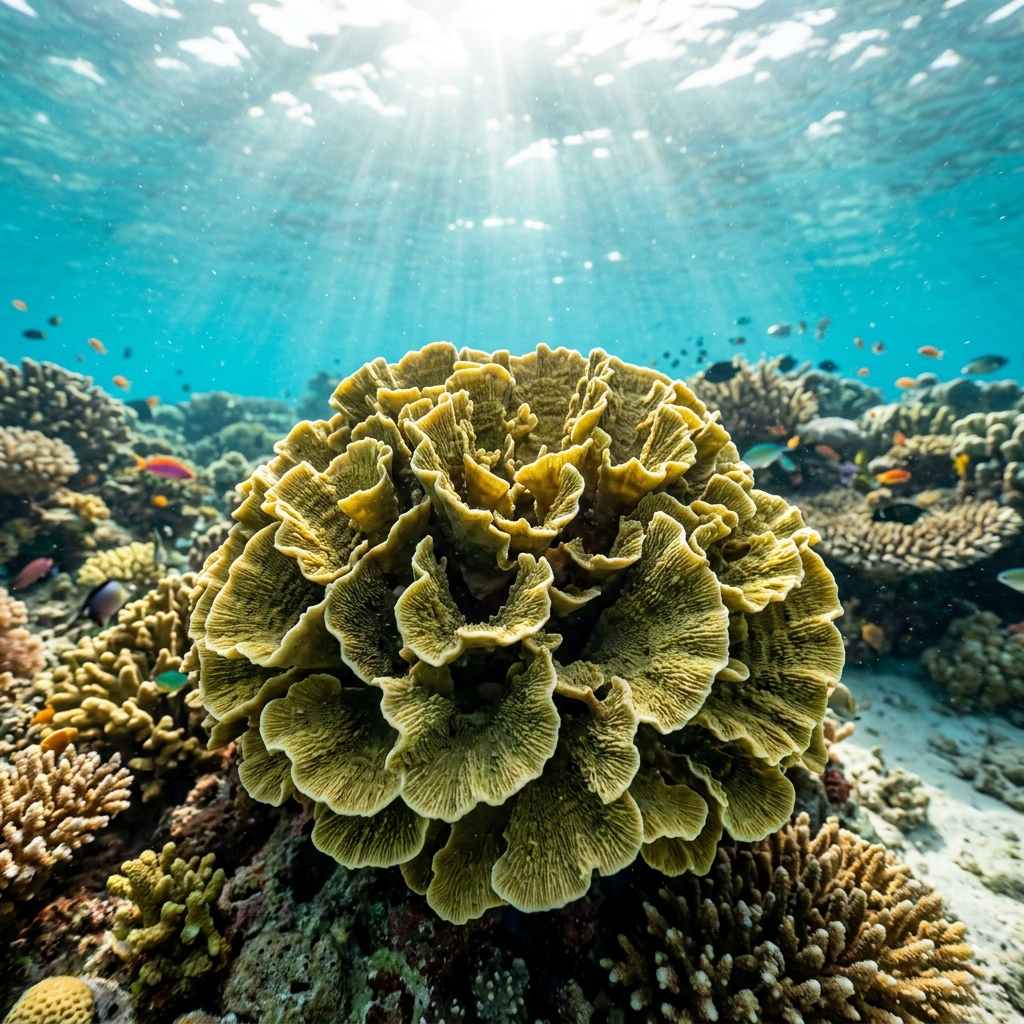
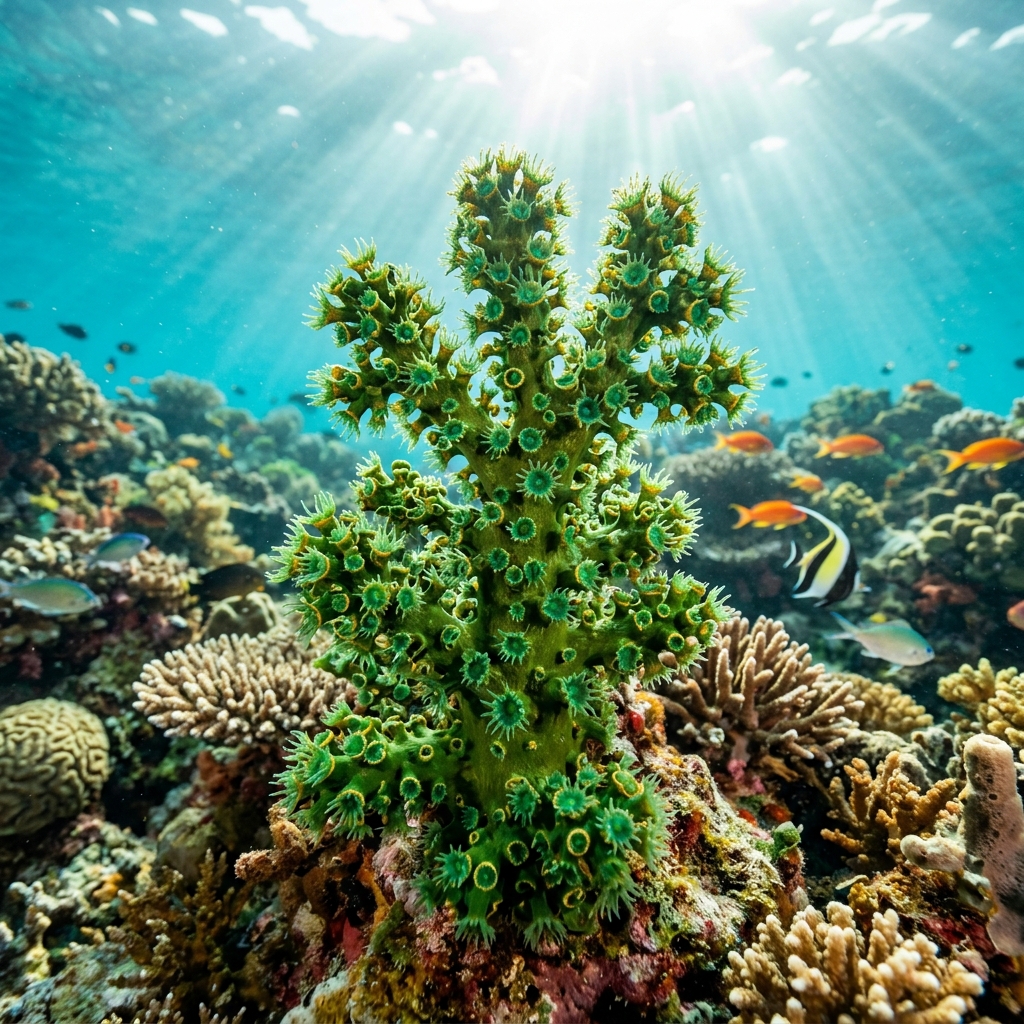
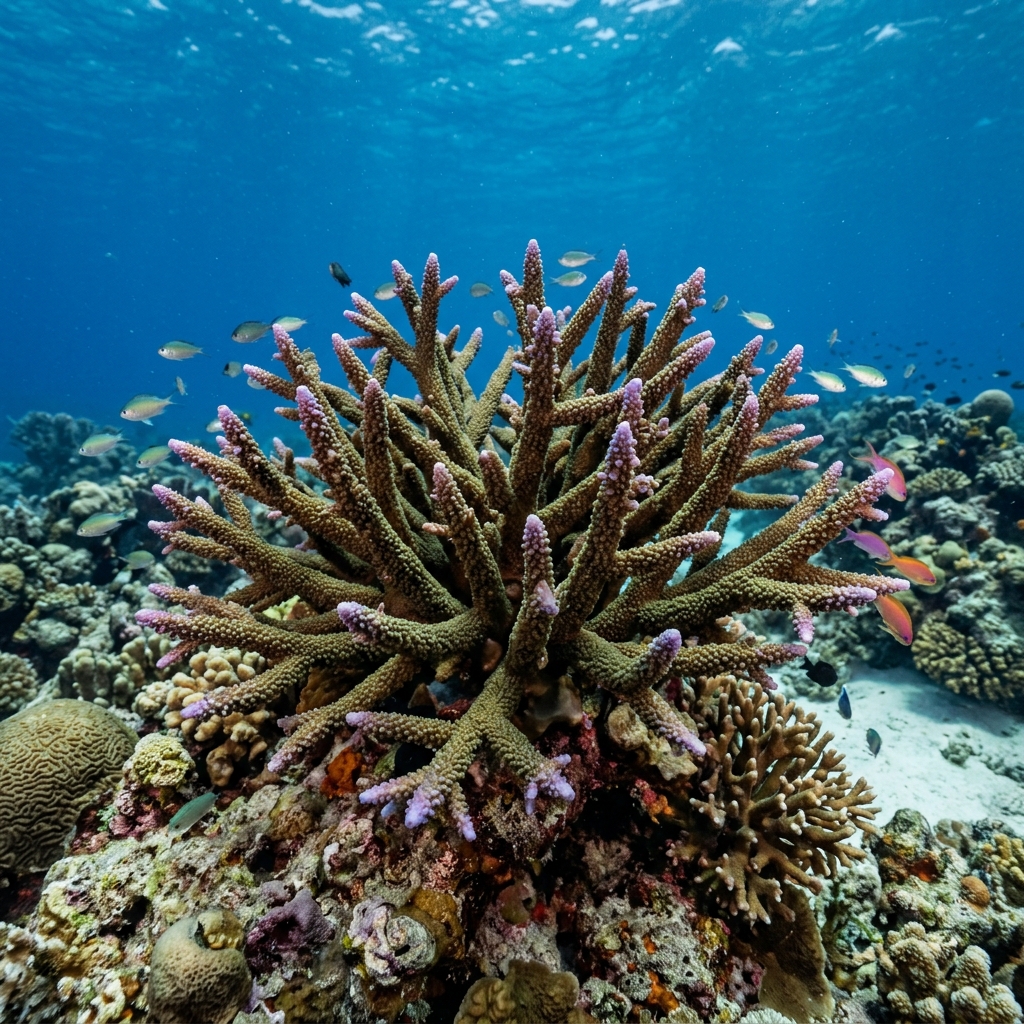
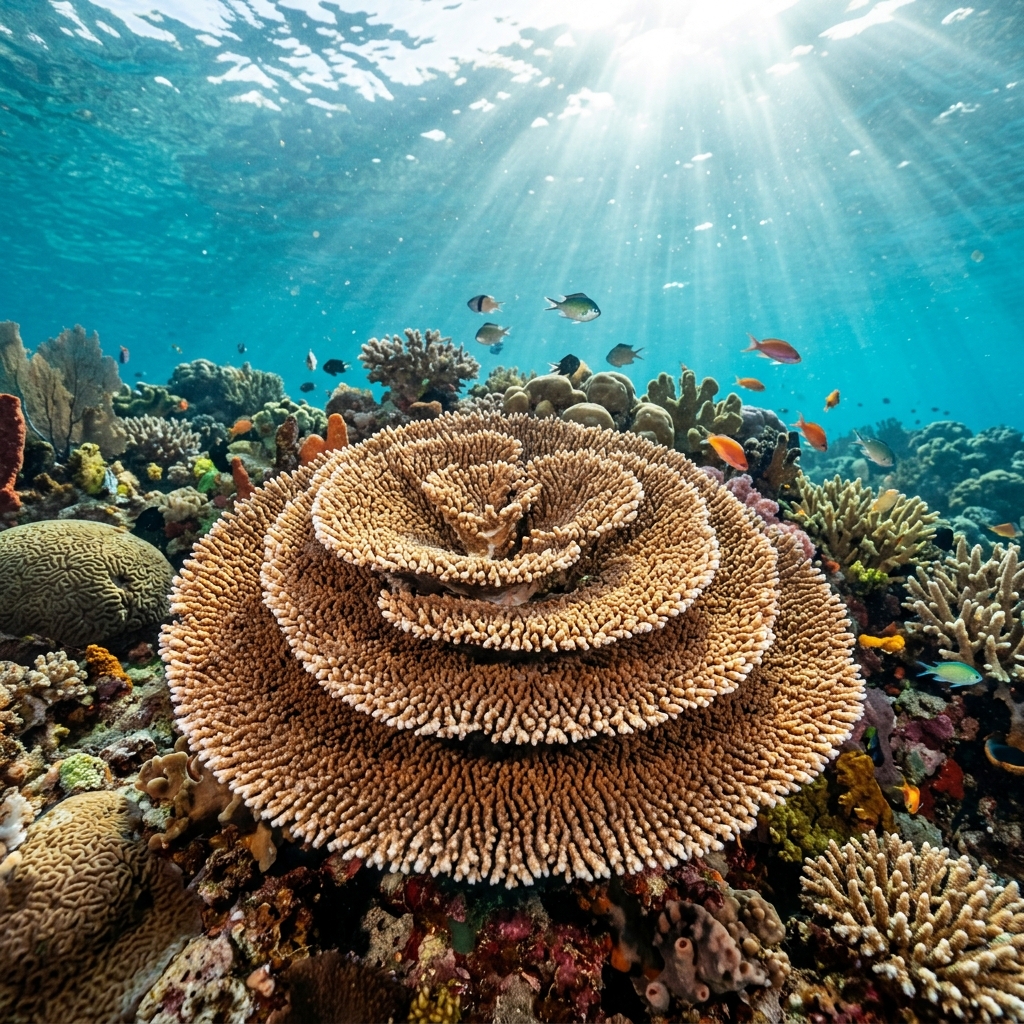
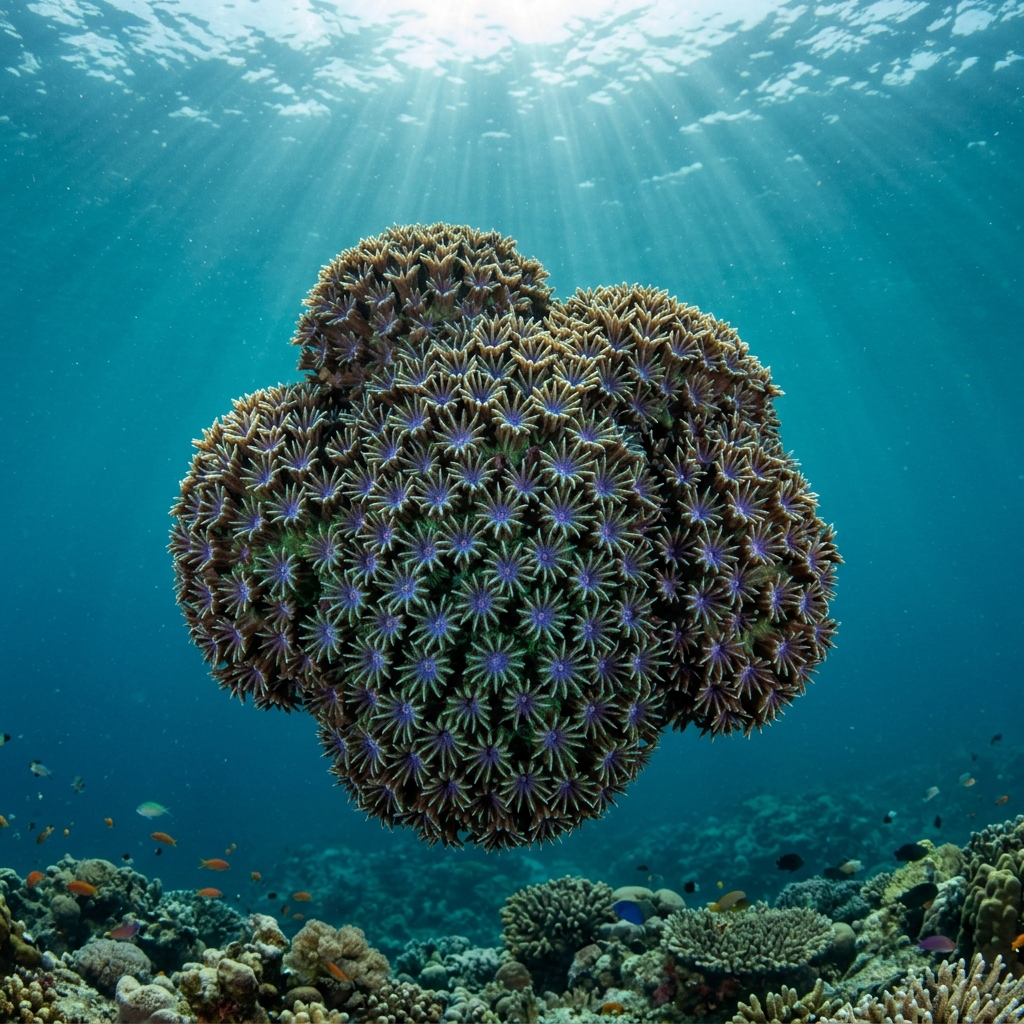
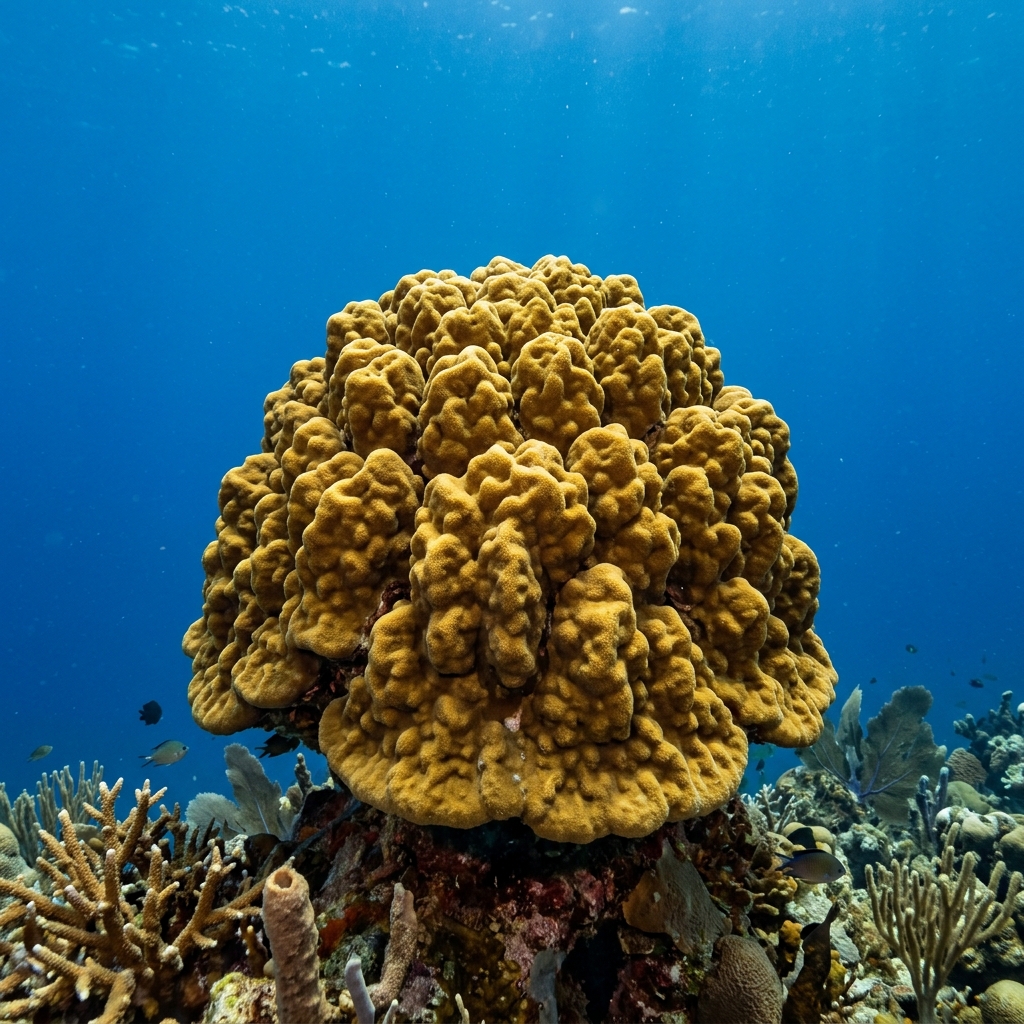
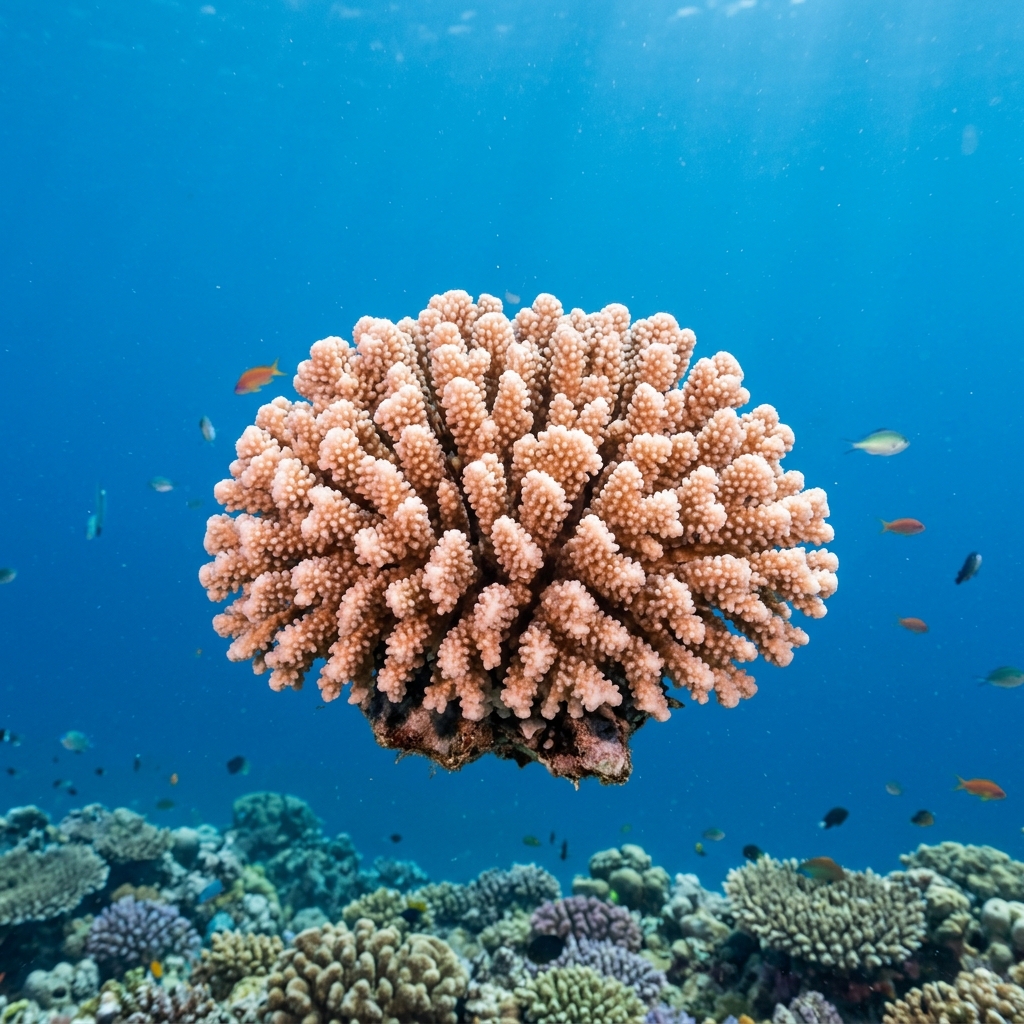
Look for a compact, bushy colony of short, knobby branches, usually no wider than about 21 cm, growing in shades of pink, cream, brown or pale green. The branch tips often look slightly swollen or warty rather than smooth, giving the colony its cauliflower-like texture. It stays fixed to the reef, so the giveaway is the shape and the small fish and shrimp darting through the branch gaps rather than any movement from the coral itself.
Being a stationary colony, the real action is the traffic around it: gobies, tiny wrasses, shrimp and crabs use the branches as both shelter and a feeding station. Move in slowly and hover rather than swim straight at it, since many of the smaller residents bolt for cover if you approach too fast. Daytime dives tend to show the most activity, with small fish feeding actively around the branches.
The branching structure is what makes it valuable real estate on the reef: its tight maze of twigs gives small fish and crustaceans a refuge that flatter coral forms cannot offer.
Sightings show no clear seasonal pattern, and with a comfortable niche of roughly 24.7 to 28.6 C, colonies sit on these reefs year-round, so any month works for a visit.
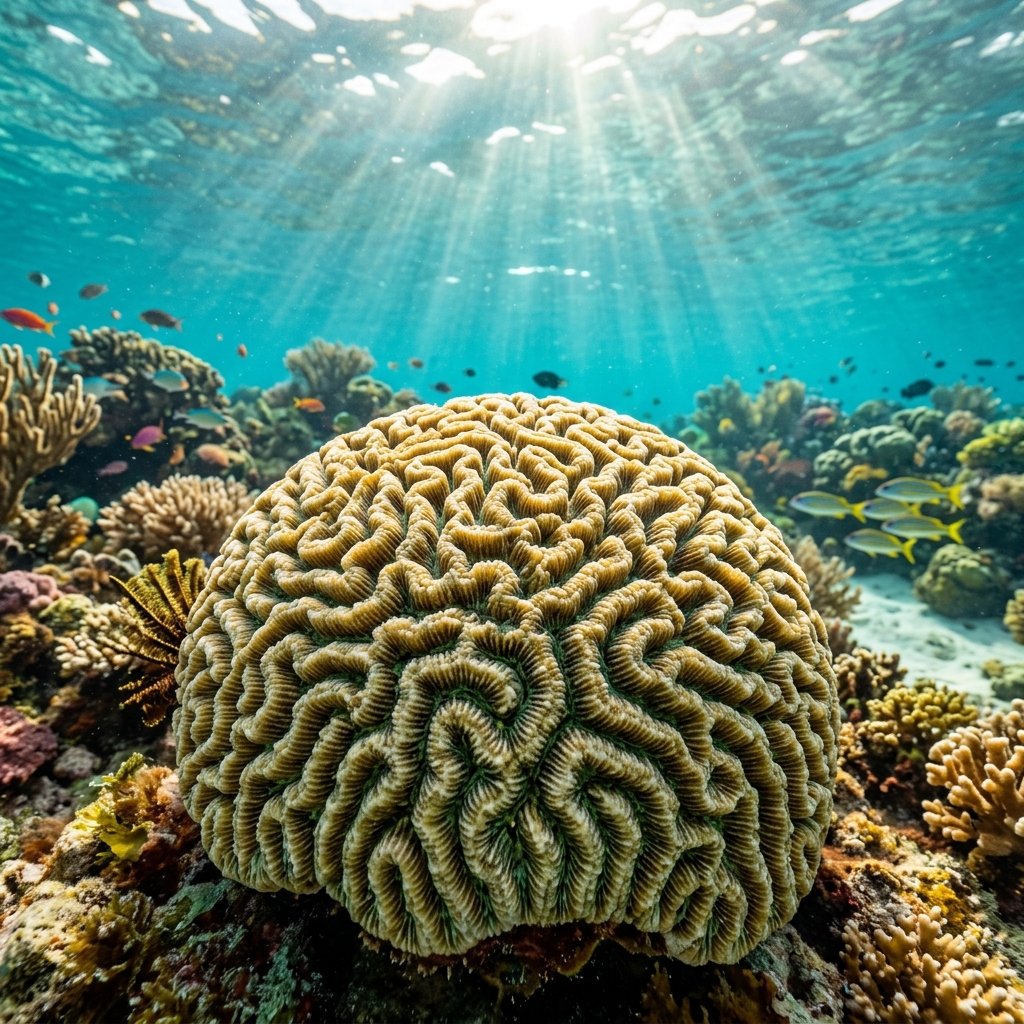
Reef neighbours a diver could mistake it for. Use the identification notes above to tell them apart.
Most commonly logged in Egypt's South Sinai and Marsa Alam & the Deep South, and a reliable find across the Maldives' Northern and Central Atolls. Strong populations also turn up in Queensland, Australia, the Visayas in the Philippines, Hawaii, and the Society Islands in French Polynesia.
Mapping where Cauliflower Coral is logged…
It turns up widely across South Sinai and Marsa Alam in Egypt, the Northern and Central Atolls of the Maldives, Queensland in Australia, the Visayas in the Philippines, and Hawaii. It is usually logged as uncommon to common rather than the dominant coral on a reef.
There is no strong season in the data, and it sits comfortably in water from about 24.7 to 28.6 C, so it is present on tropical reefs throughout the year.
Look for a low, bushy colony of short knobby branches with slightly swollen tips, usually under 25 cm across, in shades of pink, cream or brown. It stays fixed in place, so the small fish and shrimp weaving through its branches are often the easiest clue.
Colonies typically reach around 21 cm across, forming compact bushy clumps rather than large sprawling structures.
No. It poses no threat to divers, though its branches are fragile, so avoid brushing against it or resting gear on it.
Yes, this genus is listed as Endangered, largely due to bleaching and reef habitat decline. Diving carefully around colonies, without fin contact or anchoring gear on them, helps protect what remains.
The Cauliflower Coral is listed as endangered by the IUCN. Observe from a distance, avoid touching or feeding it, and report sightings to local marine research organisations.
Listed as Endangered, reflecting pressure from bleaching events and reef degradation across its range. Divers can help by keeping fins and gear well clear of the branches, since even light contact can snap them and undo years of growth.
Site and sighting data is aggregated from diver logs, iNaturalist and GBIF. For taxonomy and conservation status:
Plate Coral
2,991 sites