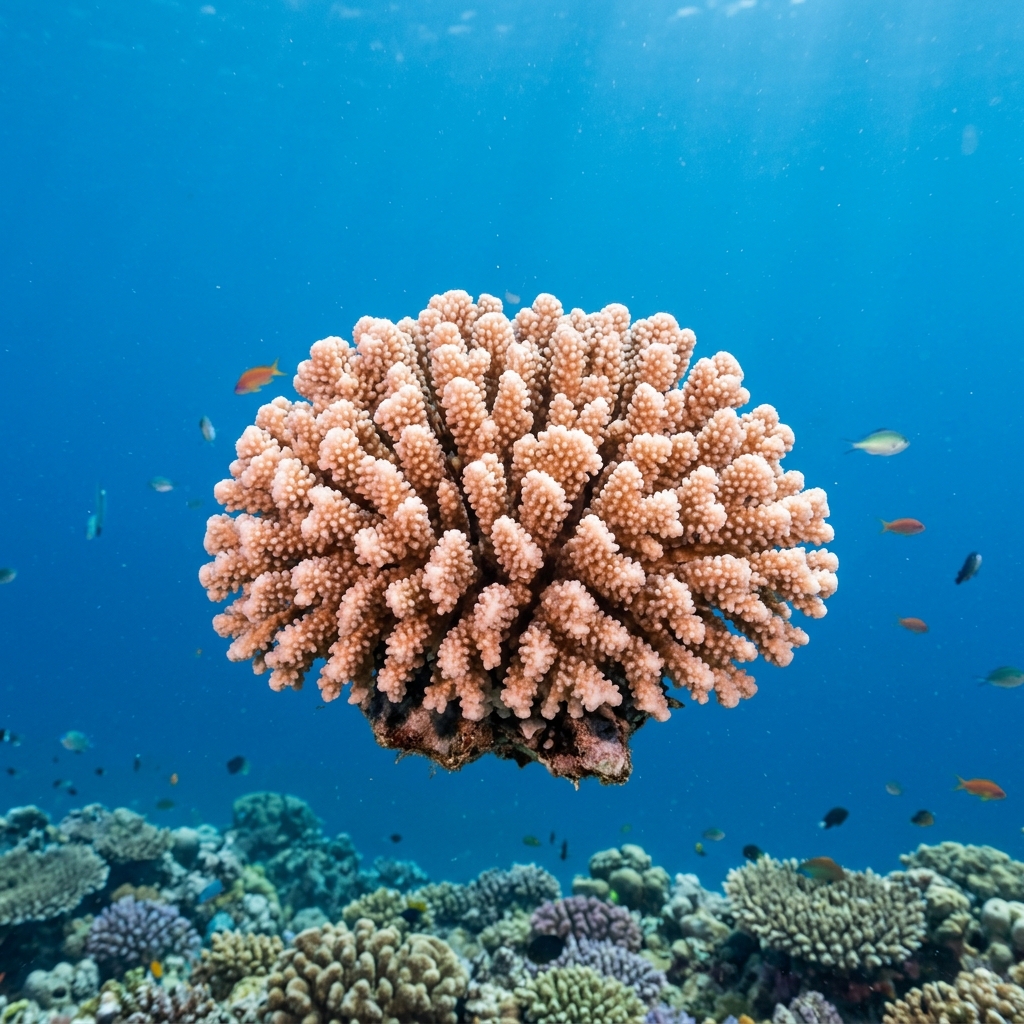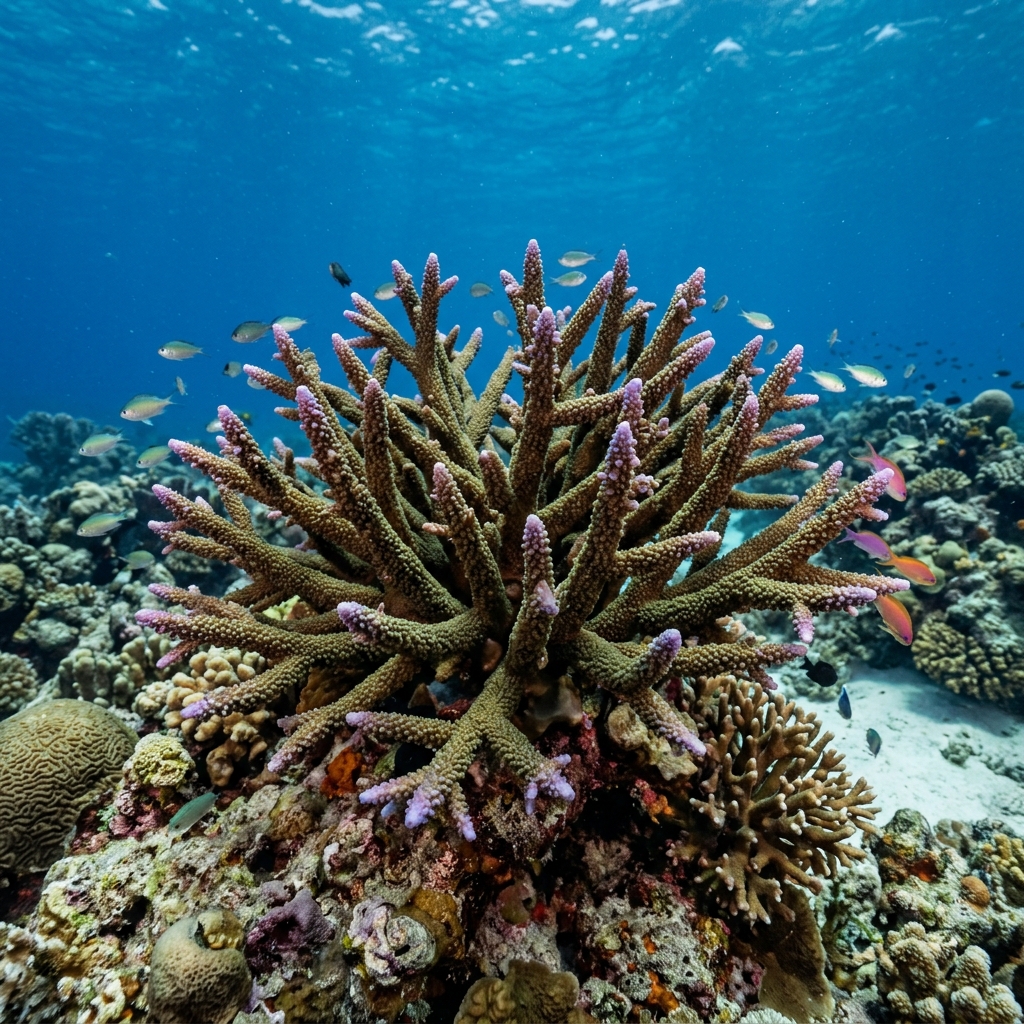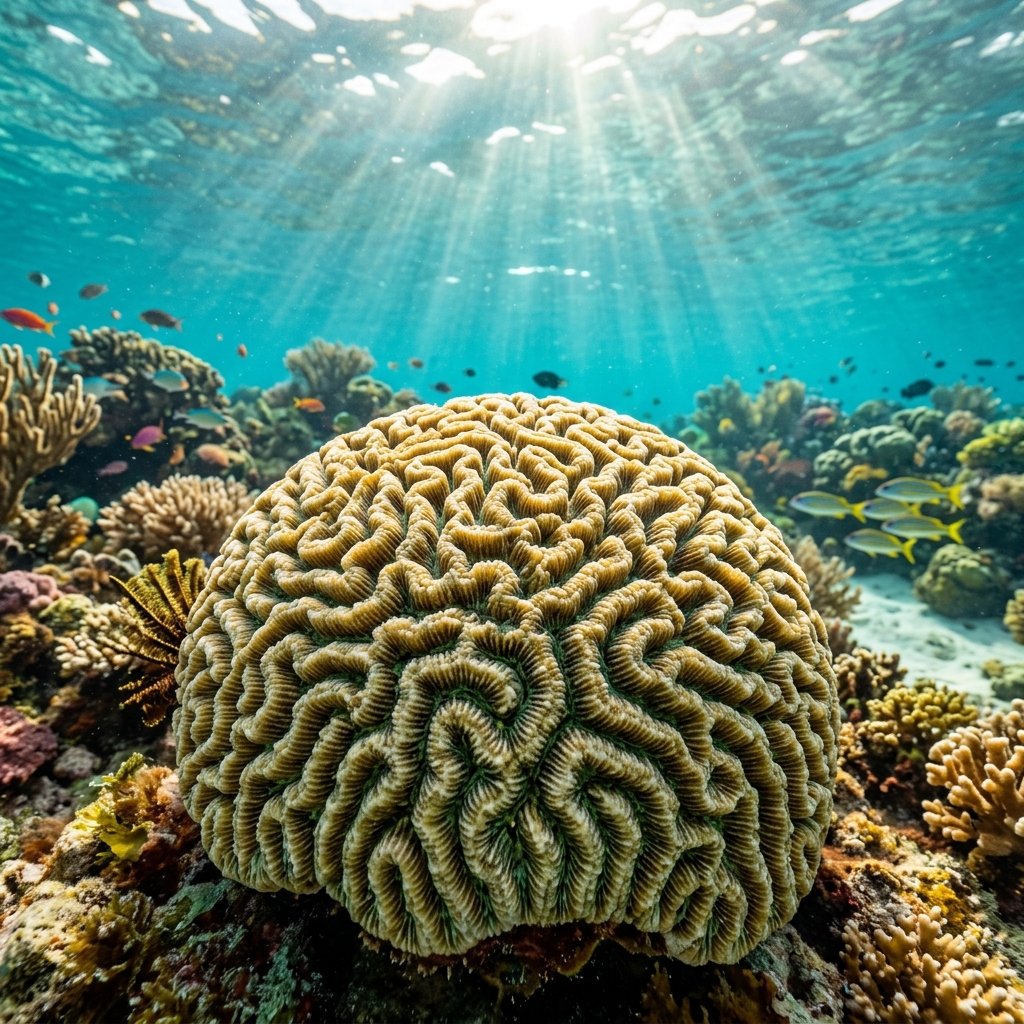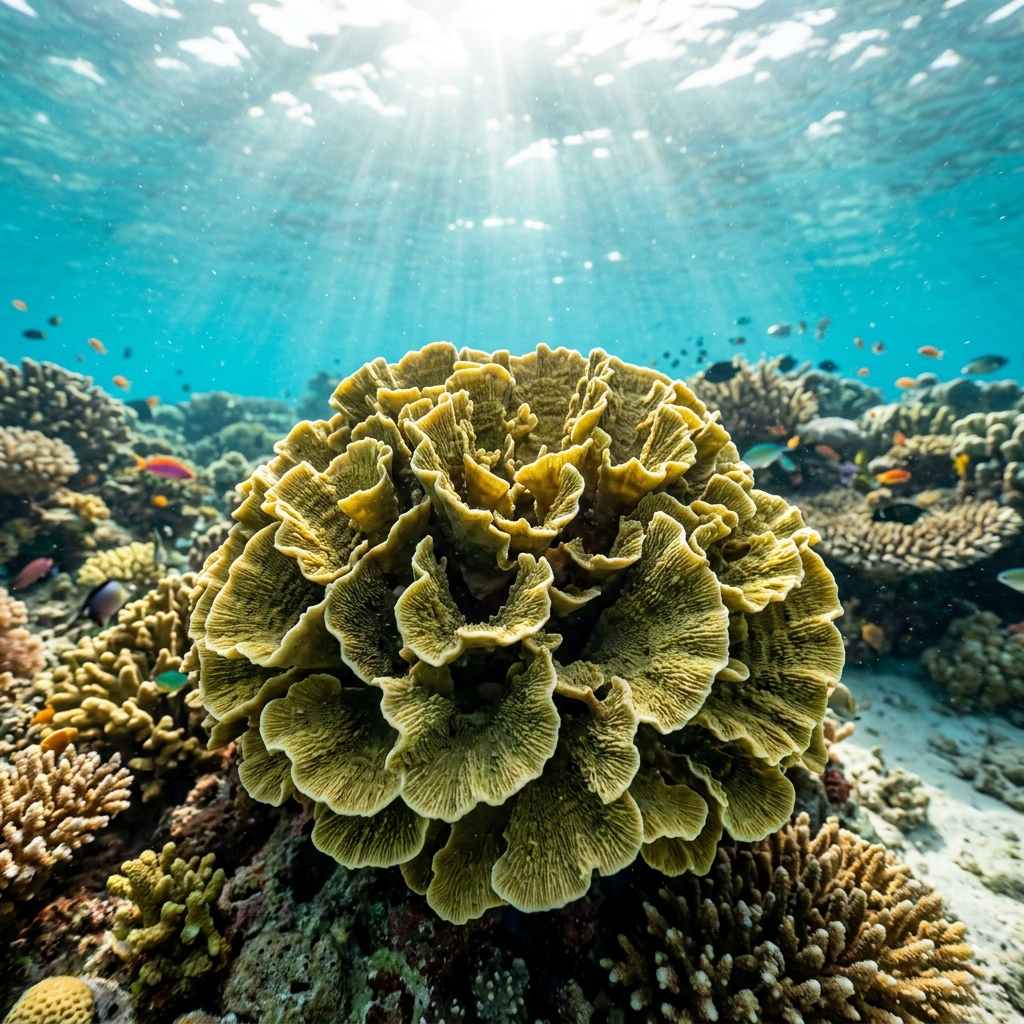
Acroporidae spp.
Spot plate coral across the Indo-Pacific and Caribbean. Strong sightings in the Philippines, Maldives, and Queensland. Water temps 24-29 °C year-round.
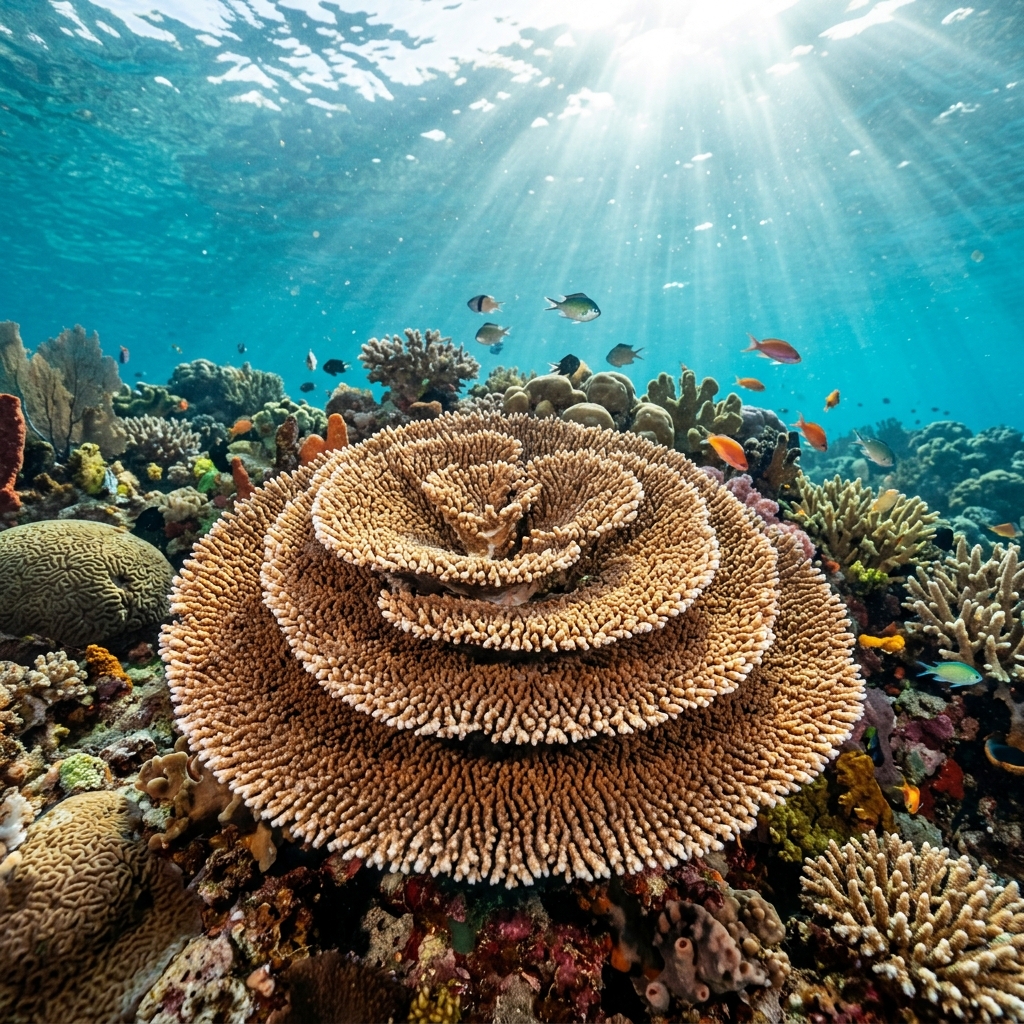
Plate corals form wide, horizontal disc or shelf-like colonies that fan outward from a central attachment point, giving them an unmistakable saucer or dinner-plate silhouette on the reef. Colonies typically appear in shades of tan, brown, or olive-green, occasionally with pale or whitish margins along the growing edge. Up close, the surface is covered in small, tightly packed corallites (the tiny cup-shaped structures housing each polyp), which gives it a finely textured look distinct from branching Acropora. Large colonies can extend to a metre or more across, making them hard to miss on a reef slope.
Plate corals are sessile (fixed to the reef), so there is no movement to watch for. What you notice is their positioning: they orient their broad flat surface toward available light, often angling outward on reef slopes or overhangs to maximise sun exposure. At night the polyps extend their tiny feeding tentacles, giving the surface a fuzzy, almost furry appearance compared to the smooth, retracted look you see during the day.
The flat plate shape is an adaptation to low-light conditions. By spreading growth horizontally rather than vertically, the colony captures as much sunlight as possible to fuel its symbiotic algae (zooxanthellae), which in turn provide the coral with most of its energy through photosynthesis.
Because plate corals thrive in water between roughly 24 and 29 °C, they are present on tropical reefs throughout most of the year wherever those temperatures hold. Northern Hemisphere sightings concentrate from April through January, while Southern Hemisphere records peak from September through January.
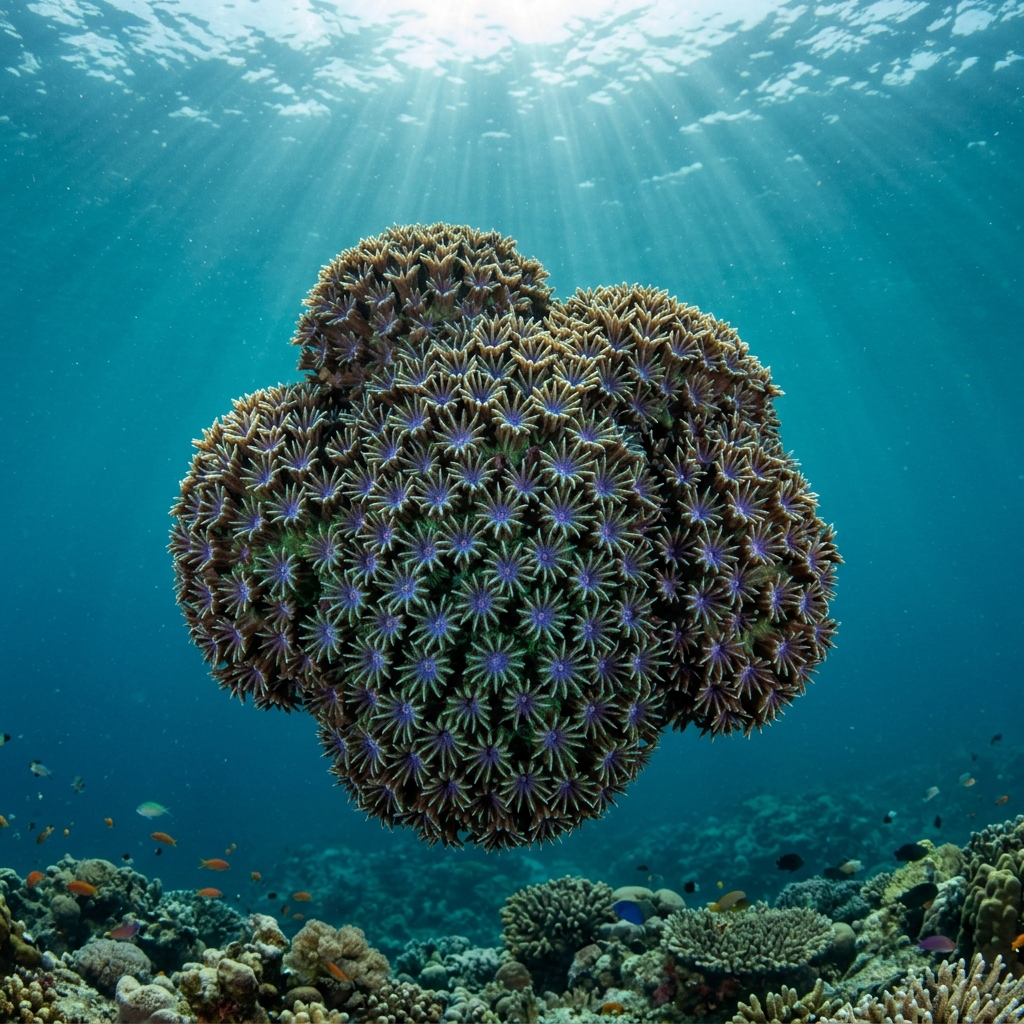
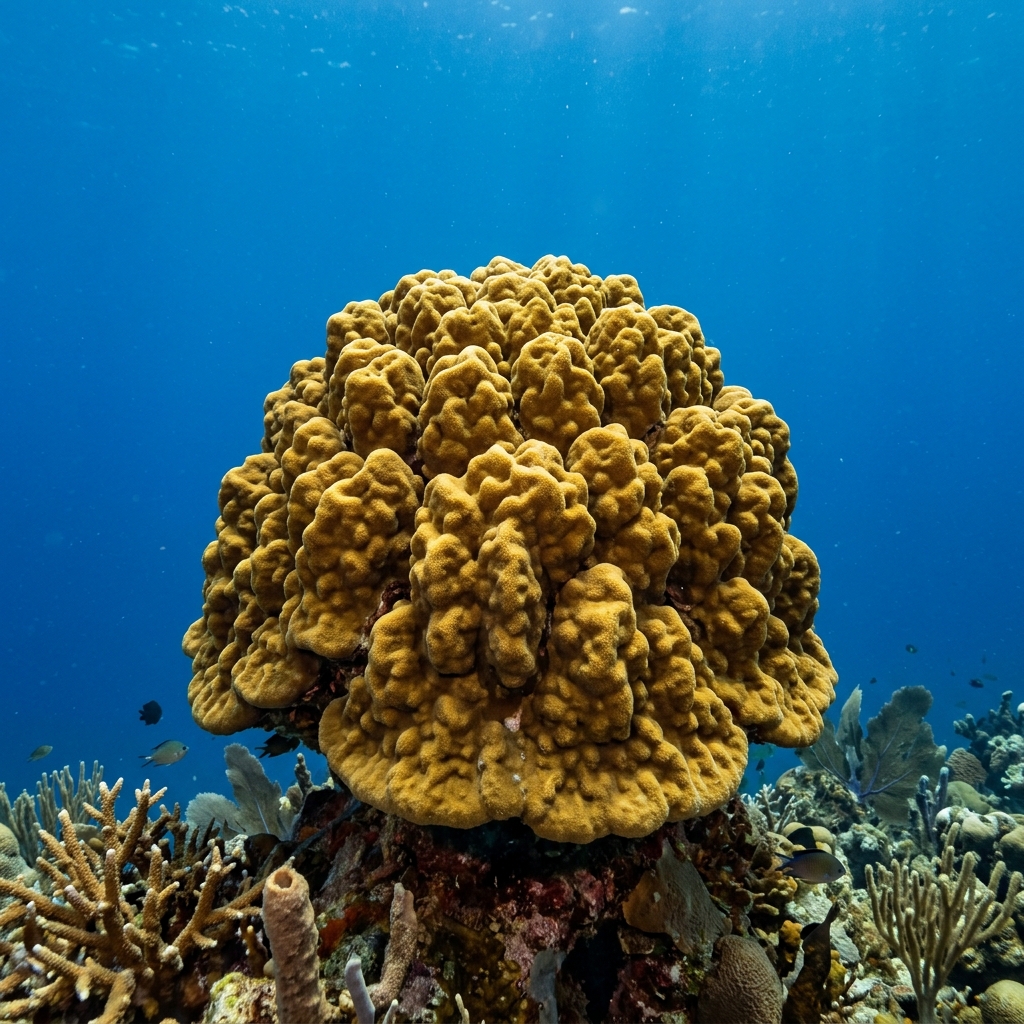
Reef neighbours a diver could mistake it for. Use the identification notes above to tell them apart.
Plate coral is most commonly logged across the Indo-Pacific, with the strongest representation in the Philippines, Indonesia, and the Maldives. Australia's Queensland reefs and the Palawan and Apo Reef area of the Philippines are particularly reliable spots. It also turns up regularly in Thailand, Malaysia, and across the Yucatán Peninsula in Mexico, making it a broadly Indo-Pacific and tropical Atlantic group rather than a narrow regional specialist.
Mapping where Plate Coral is logged…
Plate coral is found on tropical reefs across the Indo-Pacific and Caribbean. The most reliable diving is in the Philippines, Indonesia, and the Maldives, with strong records also from Queensland in Australia, the Yucatán Peninsula in Mexico, and throughout Thailand and Malaysia.
Because plate coral tolerates water temperatures from about 24 to 29 °C, it is present year-round on most tropical reefs. In the Northern Hemisphere, sightings concentrate from April through January. In the Southern Hemisphere, the peak window runs from September through January.
Look for broad, horizontal disc or shelf-like colonies fanning outward from a single attachment point. The surface has a fine, bumpy texture from closely packed corallites, and the colour is usually tan, brown, or olive-green with pale growing margins. The flat plate silhouette is the key clue.
Mature colonies can exceed a metre in diameter, though exact sizes vary by species within the Acroporidae family. Even mid-sized colonies of around 40 to 60 cm across are easy to spot because of their distinctive flat, disc-like form projecting from the reef wall.
The flat plate form maximises the surface area exposed to sunlight. Plate corals rely heavily on zooxanthellae, symbiotic algae living inside their tissue, which photosynthesise and supply most of the coral's energy. On deeper or more shaded reef slopes where light is limited, a wide horizontal disc catches far more light than a branching or dome-shaped colony would.
Site and sighting data is aggregated from diver logs, iNaturalist and GBIF. For taxonomy and conservation status:
Cauliflower Coral
2,946 sites