Galaxea fascicularis
Spot Galaxy Coral across Indo-Pacific reefs from the Maldives to the Philippines. Best seen Mar, Jul in northern waters, 24-29°C.
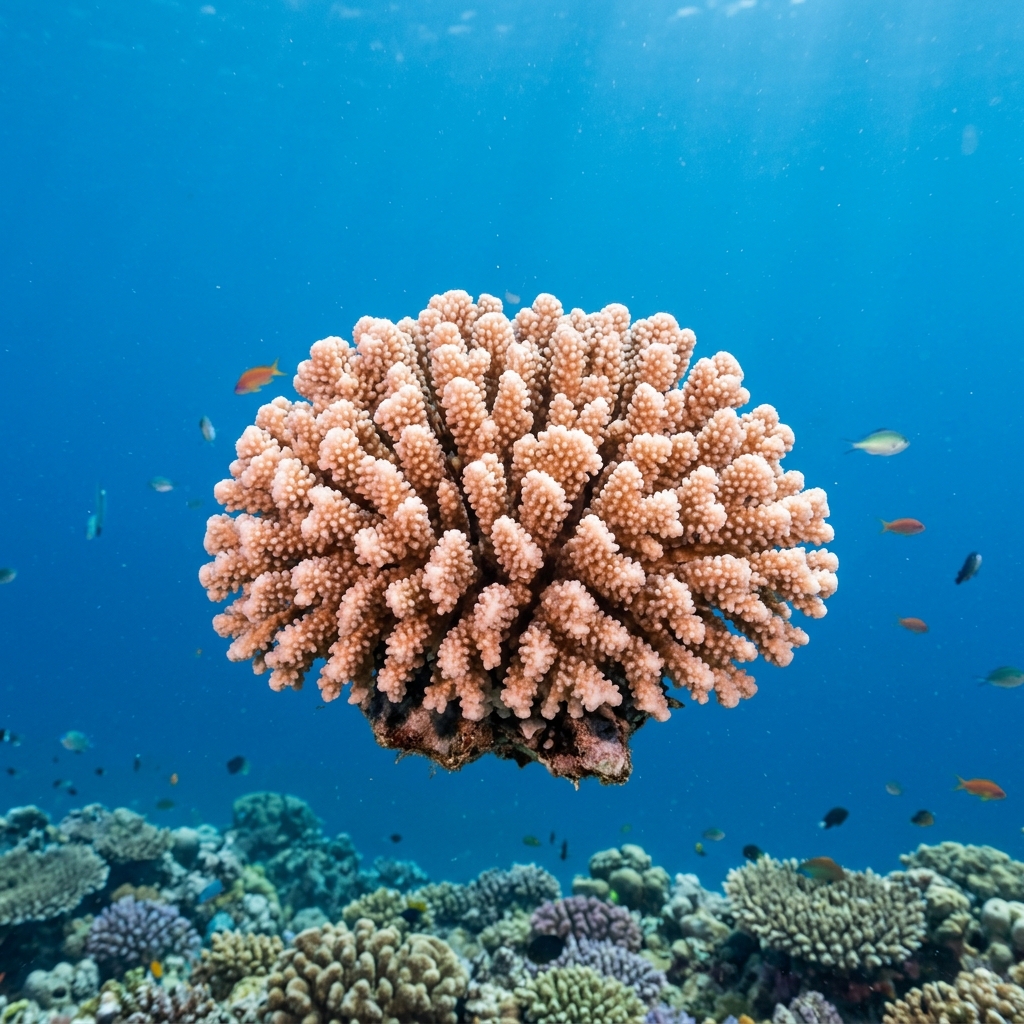
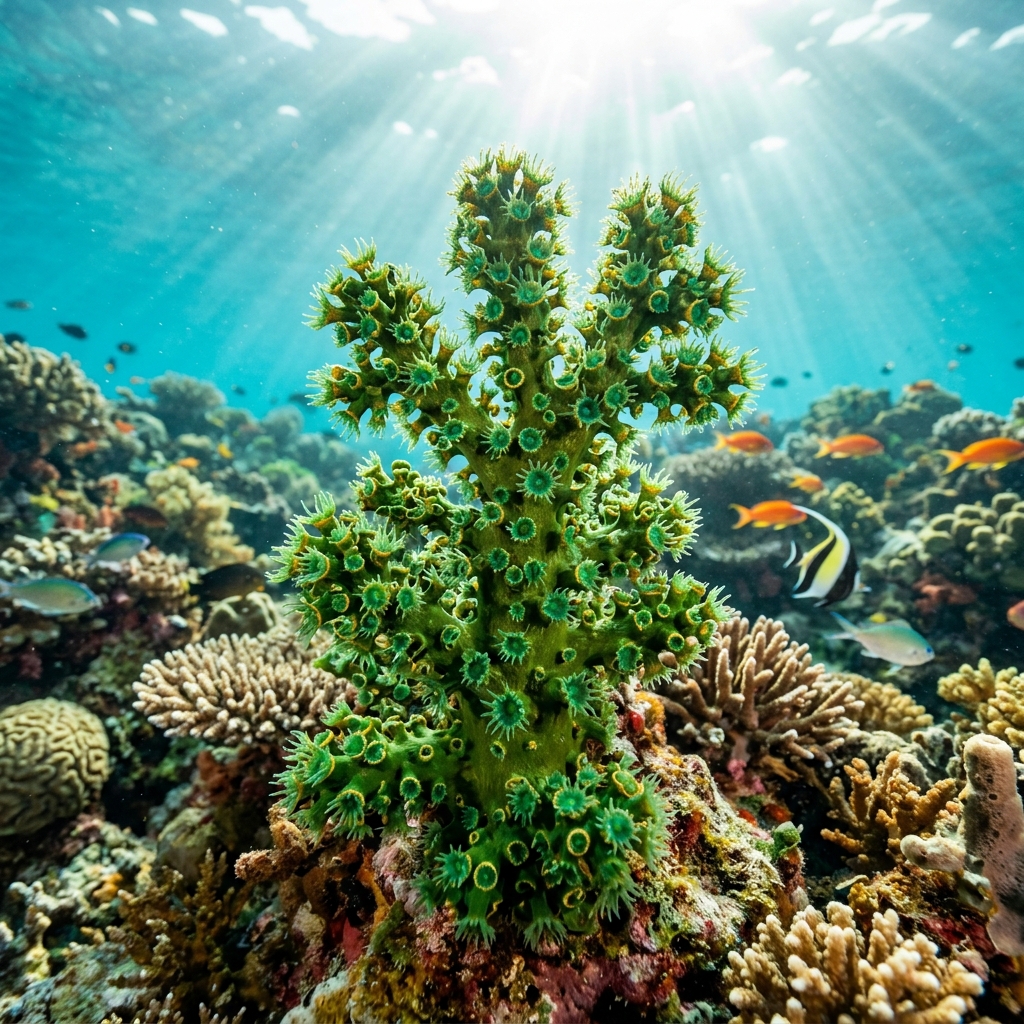
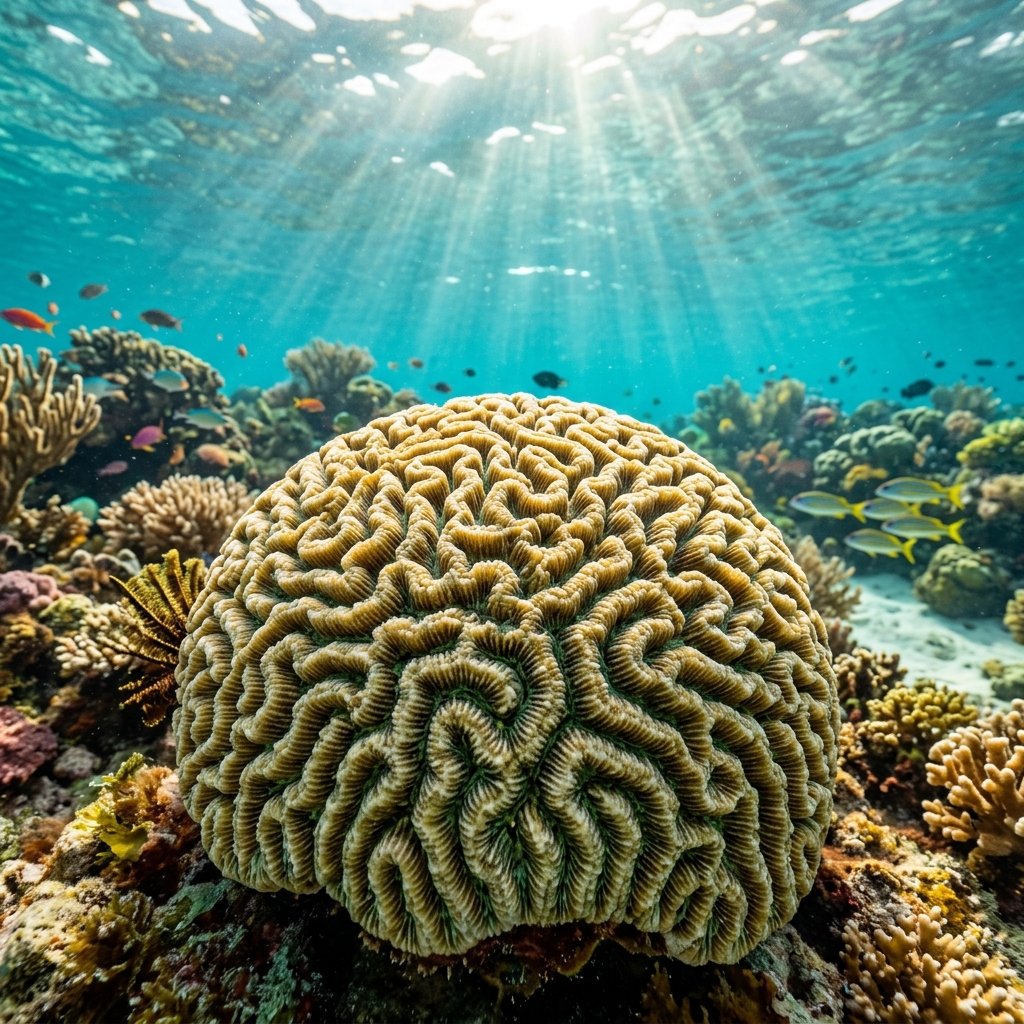
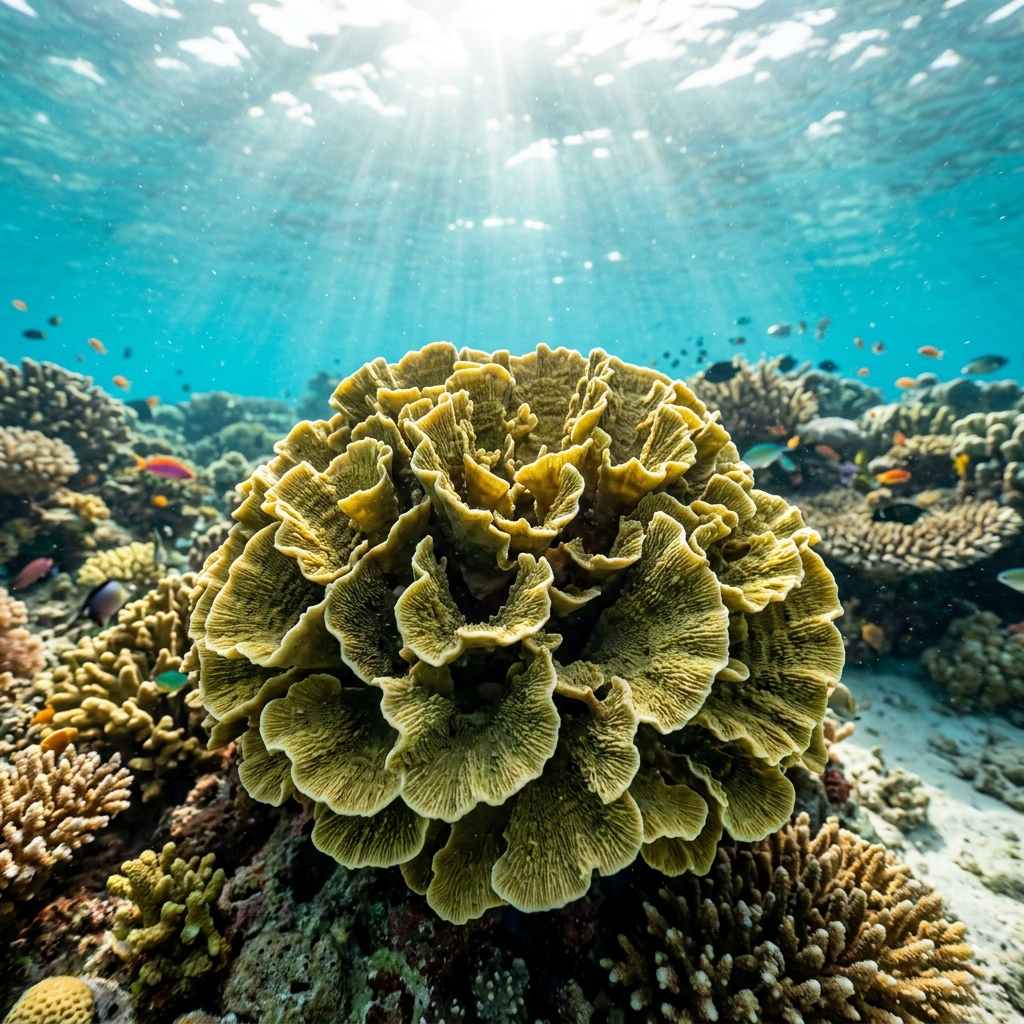
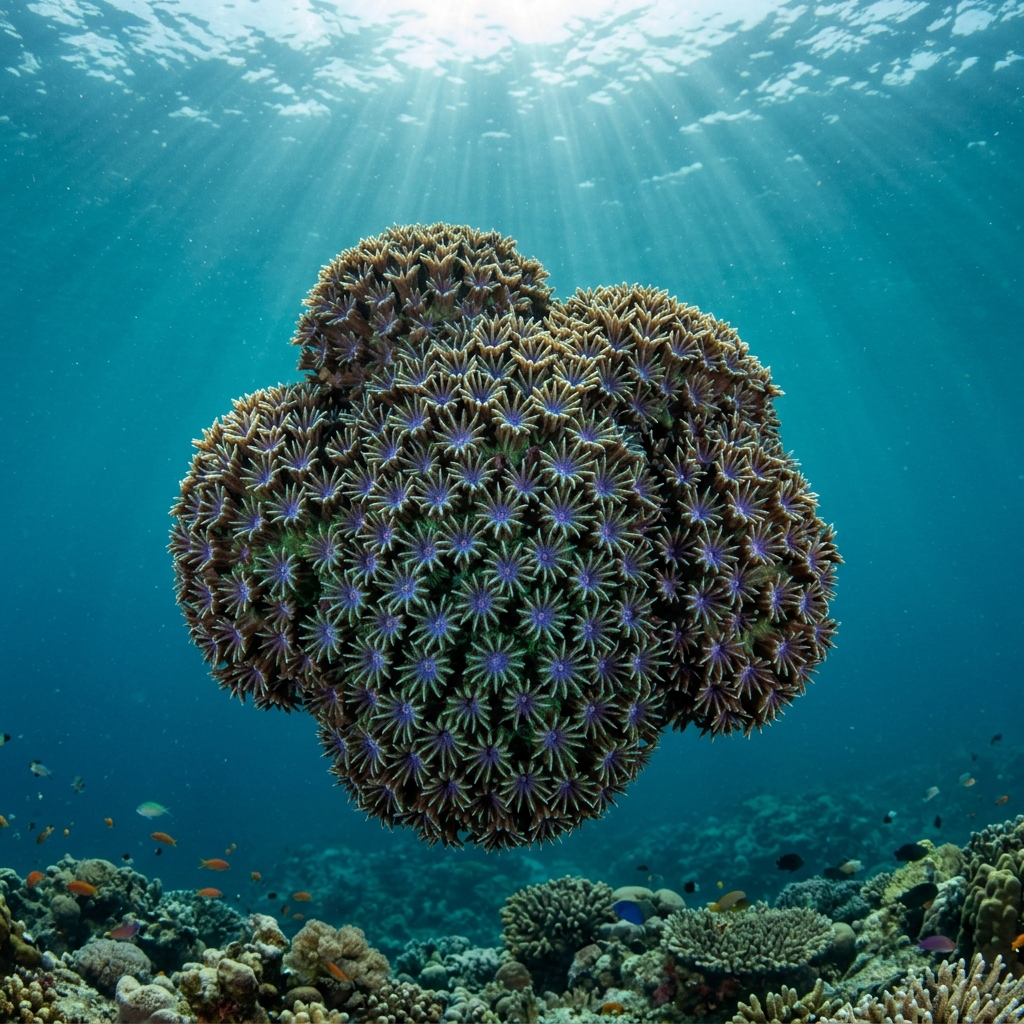
Each polyp sits in its own raised, tube-like skeleton and extends a ring of short, tapered tentacles, giving the colony a distinctive starfield texture that earns it the name. Colonies grow into broad, dome-shaped or encrusting plates that can reach well over a metre across and display colours ranging from dull brown and grey-green through to vivid lime green, depending on water clarity and light. Look for the tightly packed, individually distinct polyp cups rather than the continuous fused surface you see on brain corals. At night the tentacles extend further, showing sweeper tentacles (long, specialised stinging filaments used to defend territory) that can stretch considerably beyond the colony edge.
Being fixed to the reef, galaxy coral simply stays where it is, so encounters are entirely on your terms. During daylight the polyps are partially retracted, and the colony acts as a miniature hub: small reef fish shelter among the raised cups and invertebrates pick across the surface. Look for sweeper tentacles extended at the colony's edge at dusk, when galaxy coral actively defends its patch of reef against encroaching neighbours.
Galaxy coral is one of the more aggressive space-competitors on the reef. Its sweeper tentacles can reach up to 30 cm and deliver a sting capable of killing adjacent coral tissue, carving out a clear buffer zone around the colony.
In the northern hemisphere, sightings concentrate between March and July, making that the peak window for destinations like the Philippines, Maldives, and Thailand. In the southern hemisphere, June through October is the stronger period, which aligns with the cooler end of Queensland's dry season.
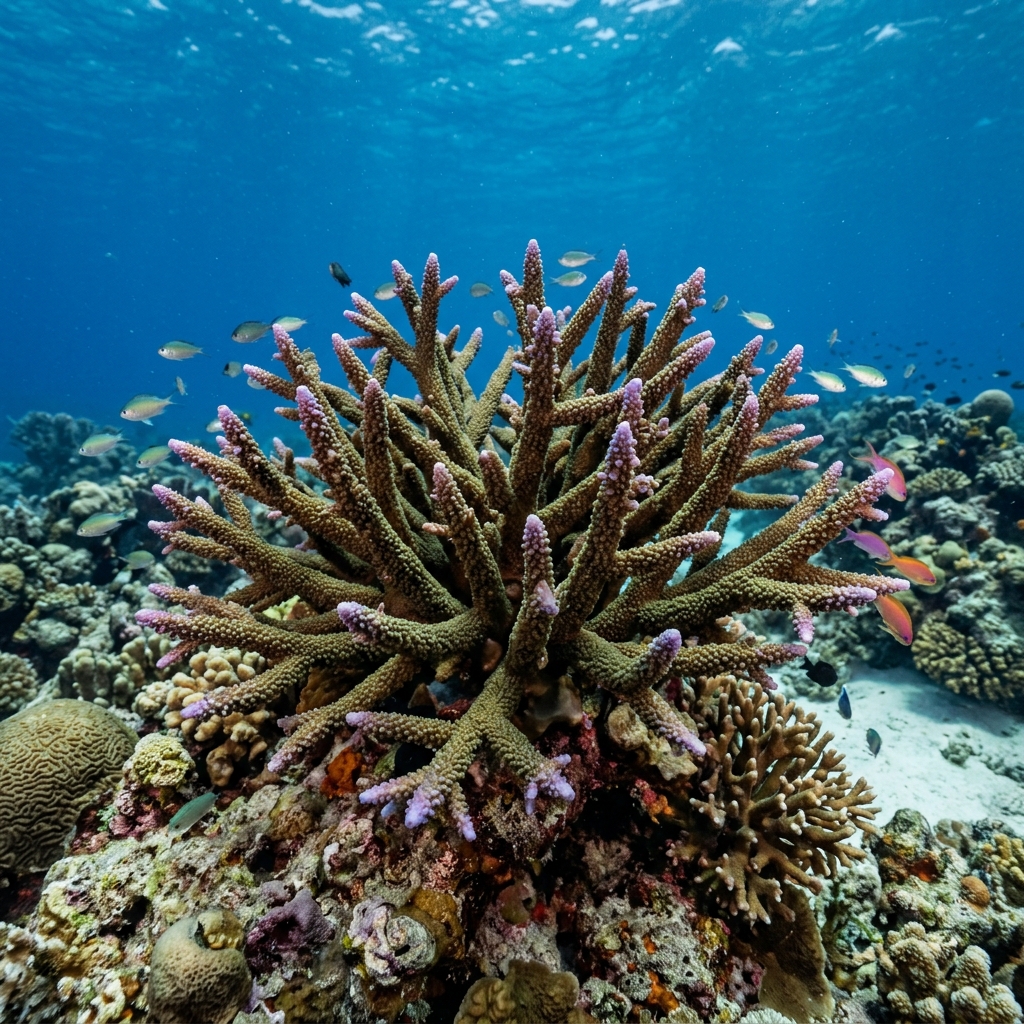
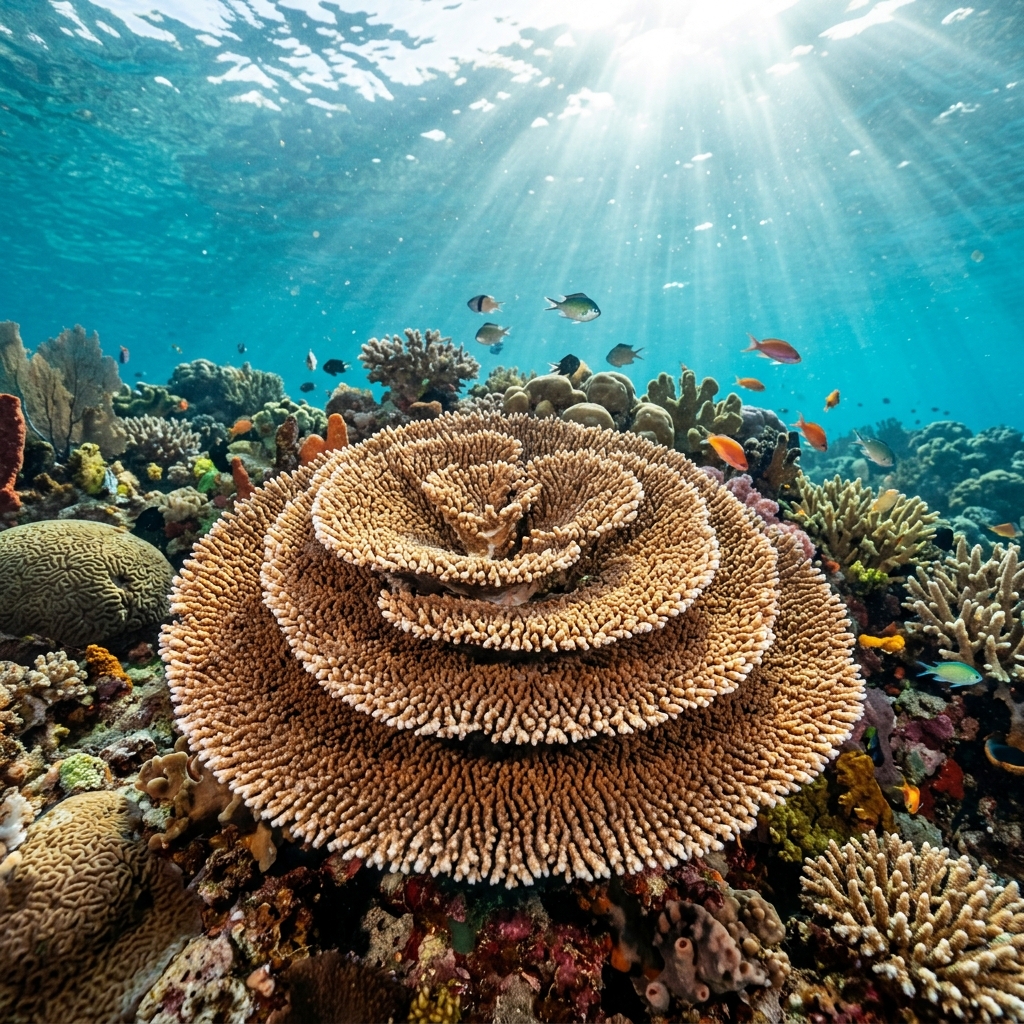
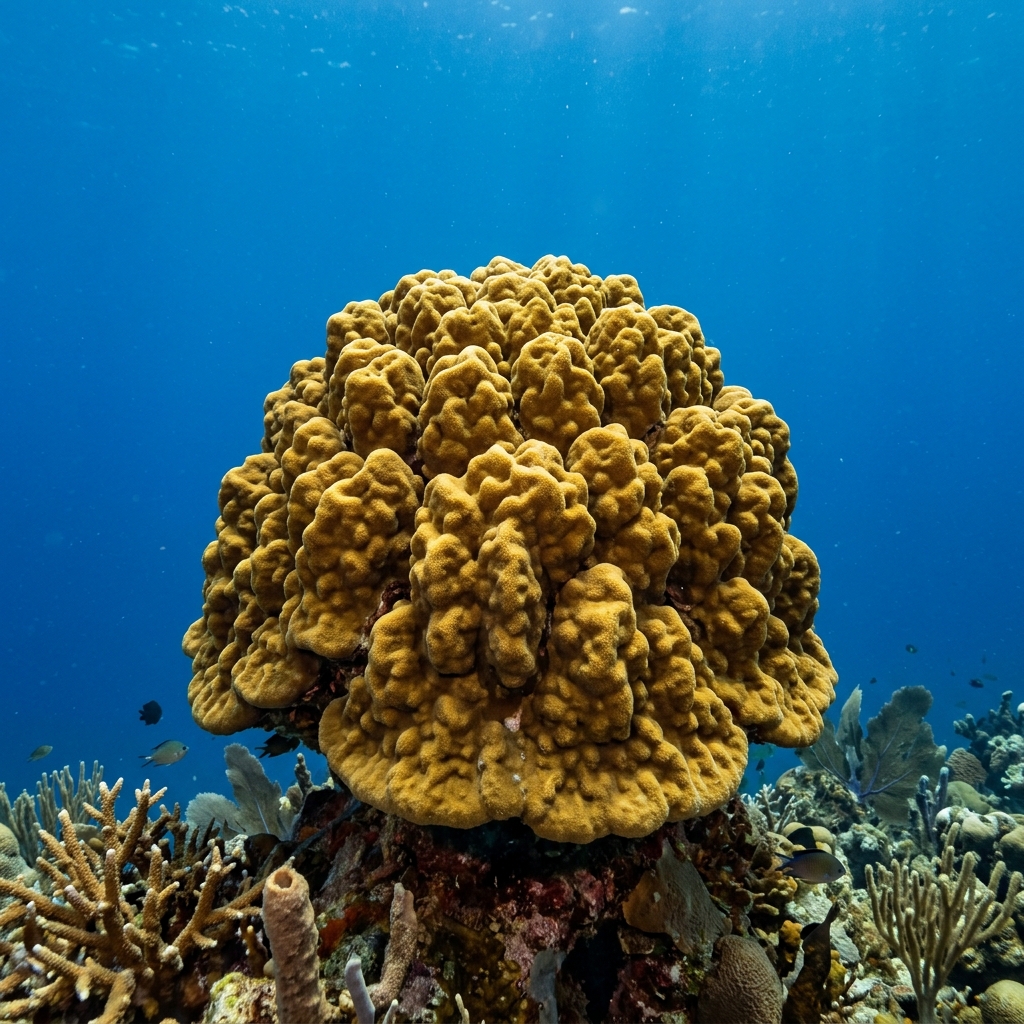
Reef neighbours a diver could mistake it for. Use the identification notes above to tell them apart.
Galaxy Coral is most commonly logged across the Indo-Pacific, with the strongest site concentrations in the Philippines (especially Palawan and the Visayas), the Maldives, and Indonesia (Bali, Lombok and Sumatra). Australia's Queensland reefs and Thailand also hold good records. Beyond those hotspots it appears across a wide band reaching Malaysia, Cambodia, and the Seychelles.
Mapping where Galaxy Coral is logged…
Galaxy Coral is spread across the Indo-Pacific. The Philippines, Maldives, and Indonesia lead the records by number of sites, with particularly reliable sightings in Palawan, the Maldives atolls, and Bali. Queensland's Great Barrier Reef and Thailand's gulf and Andaman sites also feature it regularly.
Northern hemisphere destinations such as the Philippines and Maldives see the most sightings between March and July. For southern hemisphere sites like Queensland, Australia, June to October is the stronger window. The coral itself is permanent on the reef, so the seasonal pattern likely reflects diver visibility and water conditions rather than the coral's presence.
Look for a broad encrusting or dome-shaped colony covered in individually raised, tube-like polyp cups, each with its own ring of short tentacles. The texture looks like a starfield or a cluster of tiny sea anemones packed tightly together. Colour ranges from brown and grey-green to bright lime green. Cauliflower coral can look similar but lacks the distinctly separated, tube-like polyp structure.
Colonies can reach up to around 3.5 metres across, though most you encounter on the reef will be substantially smaller. They grow slowly over many years, so a large dome-shaped colony represents decades of growth.
At sites where divers log it, galaxy coral is typically classed as uncommon rather than common, so a sighting is worth pausing for. It tends to occur as scattered individual colonies rather than carpeting the reef, which is partly a result of its aggressive territorial behaviour keeping competitors at a distance.
Site and sighting data is aggregated from diver logs, iNaturalist and GBIF. For taxonomy and conservation status:
Plate Coral
2,991 sites