Gonioinfradens paucidentatus
Uncommon find on Hawaii reefs, water 24-30C, no clear season - here's how to spot this swimming crab underwater.
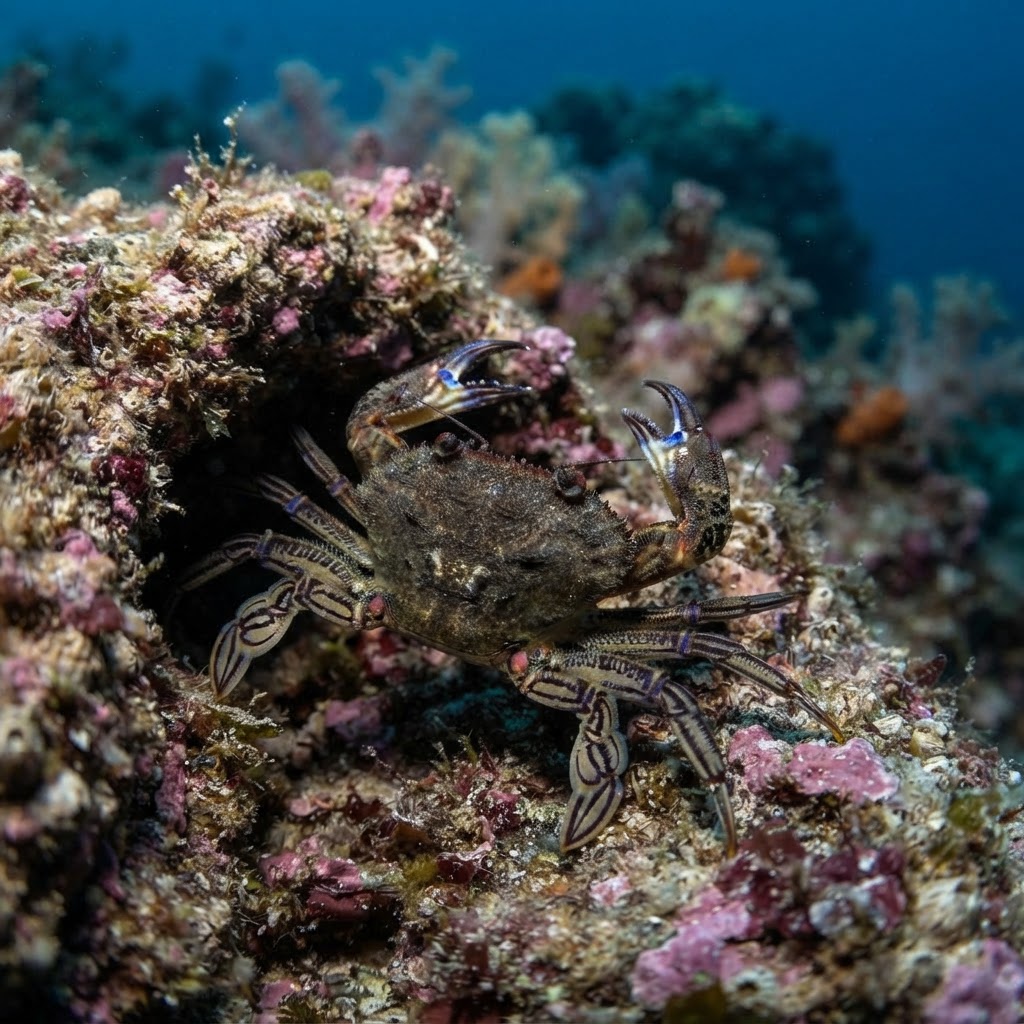
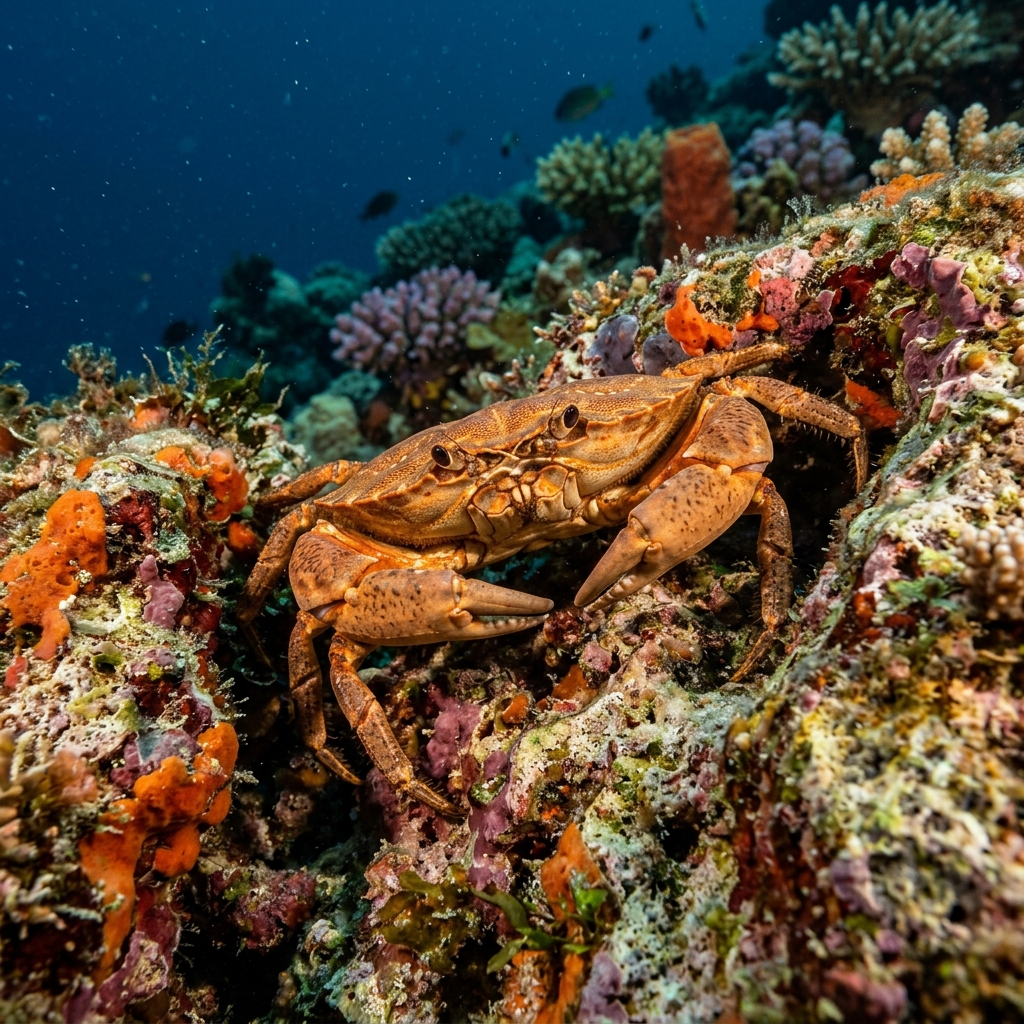
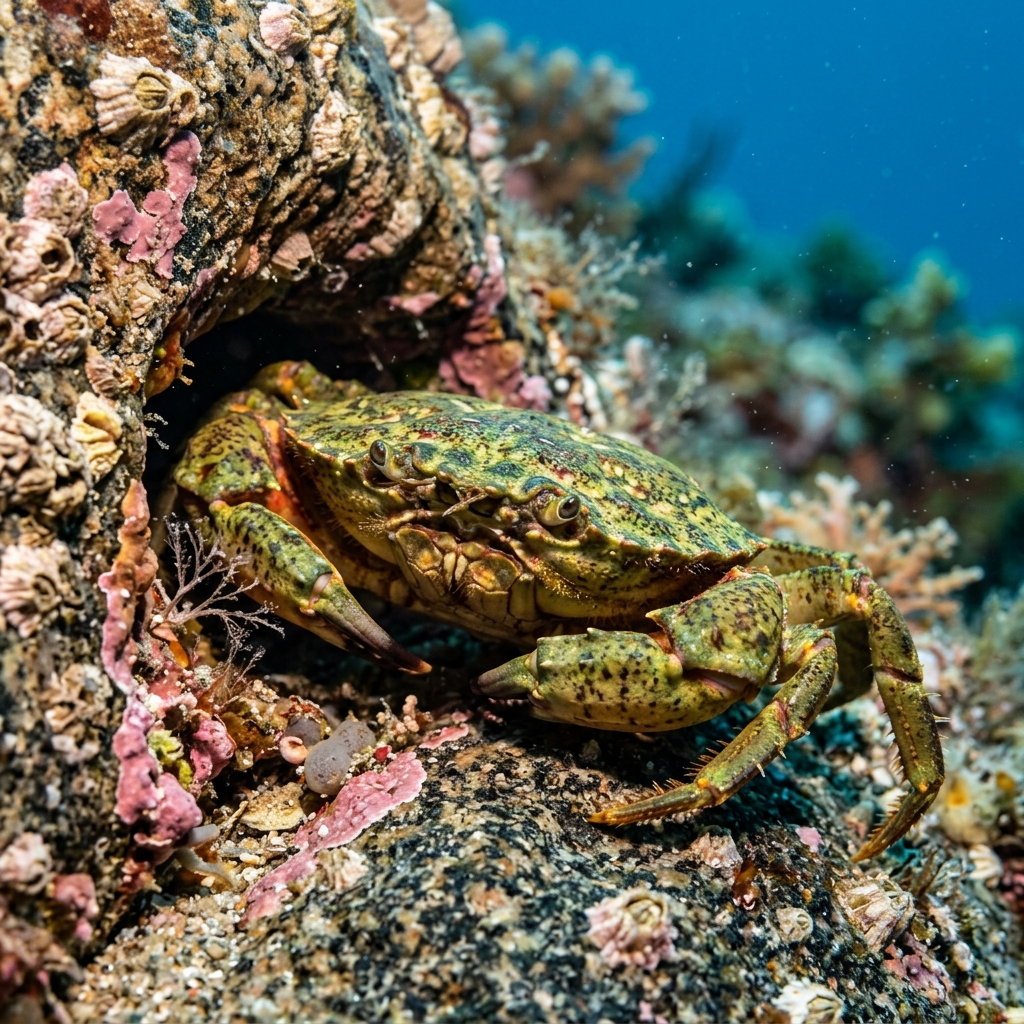
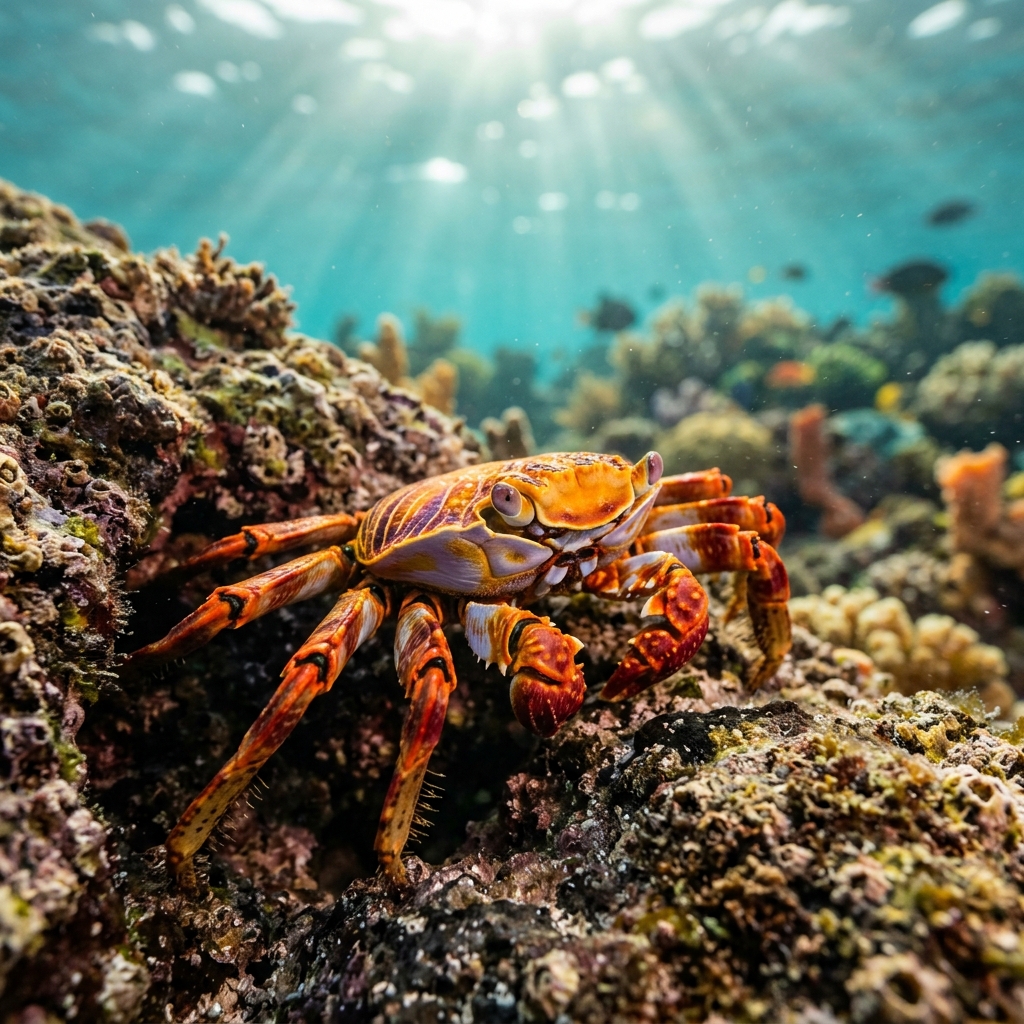
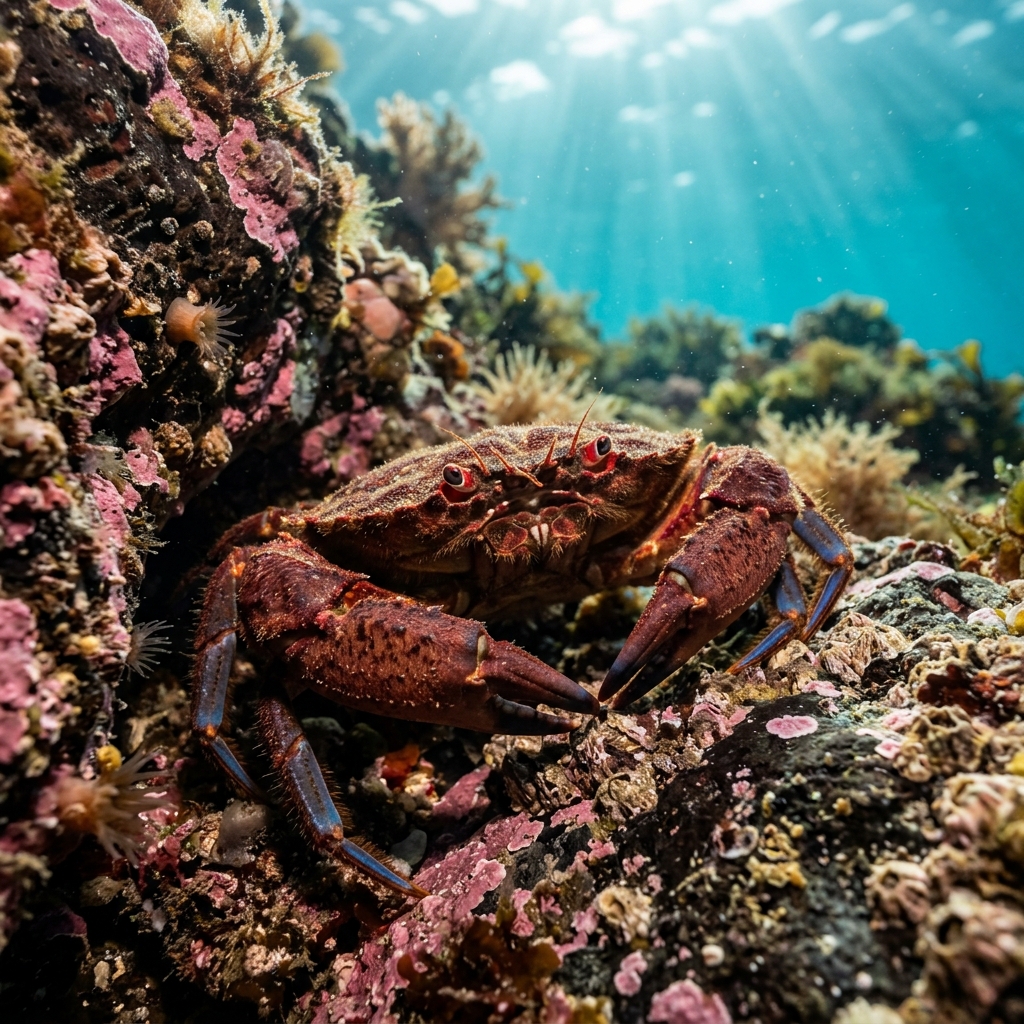
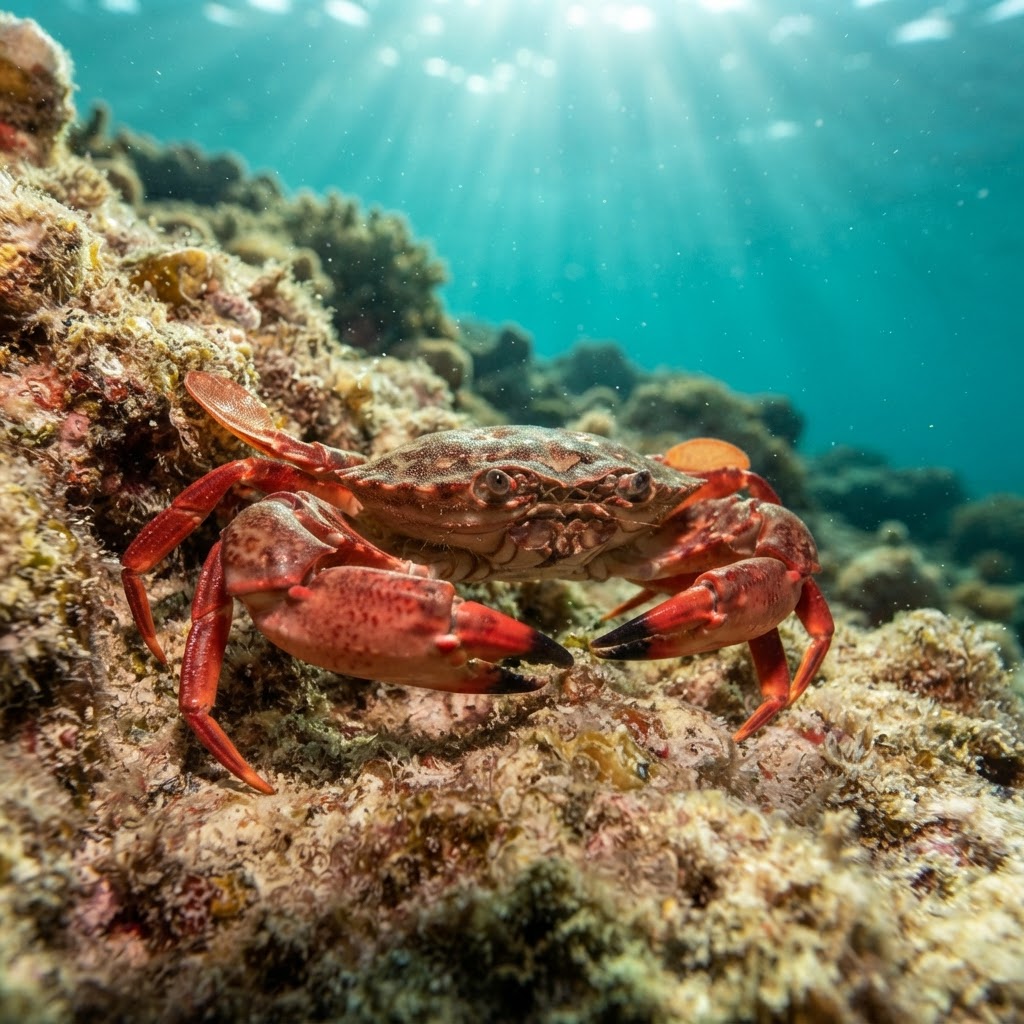
Look for a broad, flattened shell wider than it is long, with the last pair of legs shaped into flat paddles for swimming rather than walking. The shell typically shows a mottled brownish or greyish tone that blends with sand and rubble, making it easy to miss unless it moves. Sharp lateral spines project from the sides of the carapace, a family trait shared with other swimming crabs.
Divers typically find it low on the reef, tucked near sand patches or rubble where its colouring gives it cover. When disturbed it can use its paddle-like rear legs to swim off in short bursts rather than simply scuttling away, which is the moment most divers actually notice it. Otherwise it tends to sit still and rely on blending in.
Those flattened rear legs are the giveaway for the whole swimming crab family (Portunidae) and let them paddle through open water in short bursts, a trick most reef crabs cannot manage.
No clear seasonal pattern shows up in the sighting data, and the water temperature range recorded (23.9 to 29.9C) covers most of the year in Hawaii, so this is a species to watch for on any dive rather than one tied to a season.
Reef neighbours a diver could mistake it for. Use the identification notes above to tell them apart.
Sightings so far come from Hawaii, United States, where it turns up as an uncommon find rather than a guaranteed encounter. There is not yet enough data to point to other regions, so Hawaii is currently the best-documented place to look.
Mapping where Swimming Crab is logged…
Current sightings are concentrated in Hawaii, United States, where it has been logged as an uncommon find at a couple of dive sites. Other regions may host it, but there is not yet enough diver data to confirm that.
There is no detected season in the sighting data, and its recorded temperature range (about 24 to 30C) spans most of the year in Hawaii, so it can turn up on any dive.
Check for a flattened, wide shell with spiny sides and a mottled brown or grey colour that matches sand and rubble. The clearest tell is the back pair of legs, which are flattened into paddles for swimming instead of the pointed walking legs most crabs have.
No. This species poses no danger to divers and is not known to be aggressive or venomous. It will typically try to swim or scuttle away if approached.
Its rear legs are flattened into paddles, letting it swim in short bursts through open water instead of relying only on walking across the reef floor like most crab species.
Site and sighting data is aggregated from diver logs, iNaturalist and GBIF. For taxonomy and conservation status:
Sally Lightfoot Crab
2,422 sites