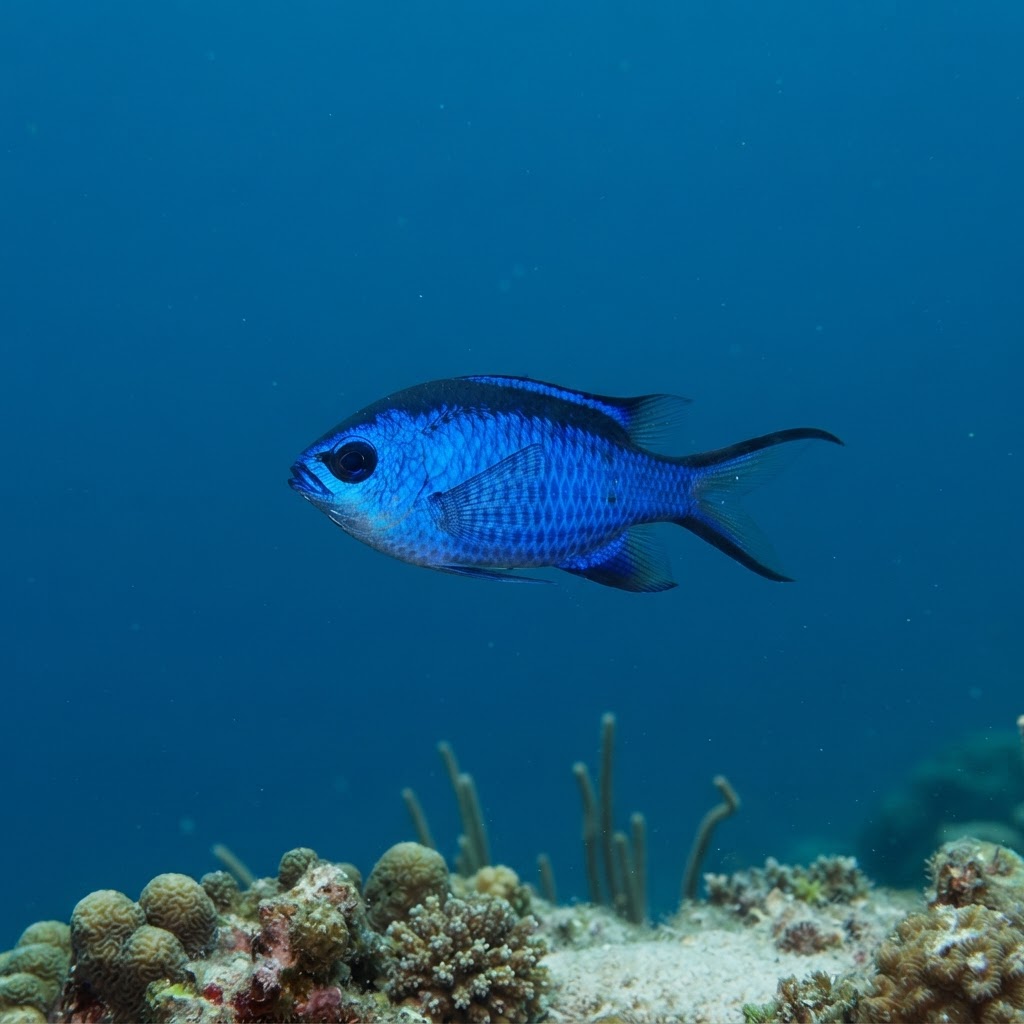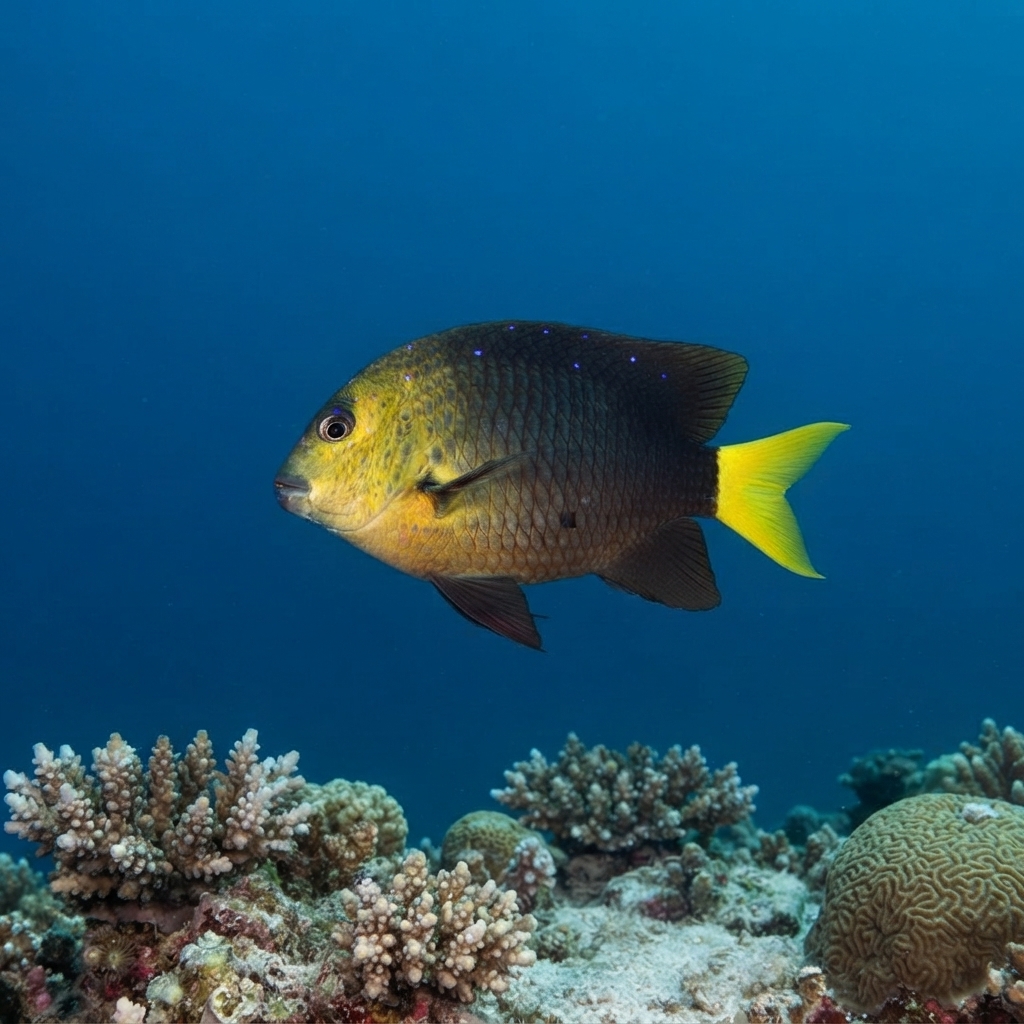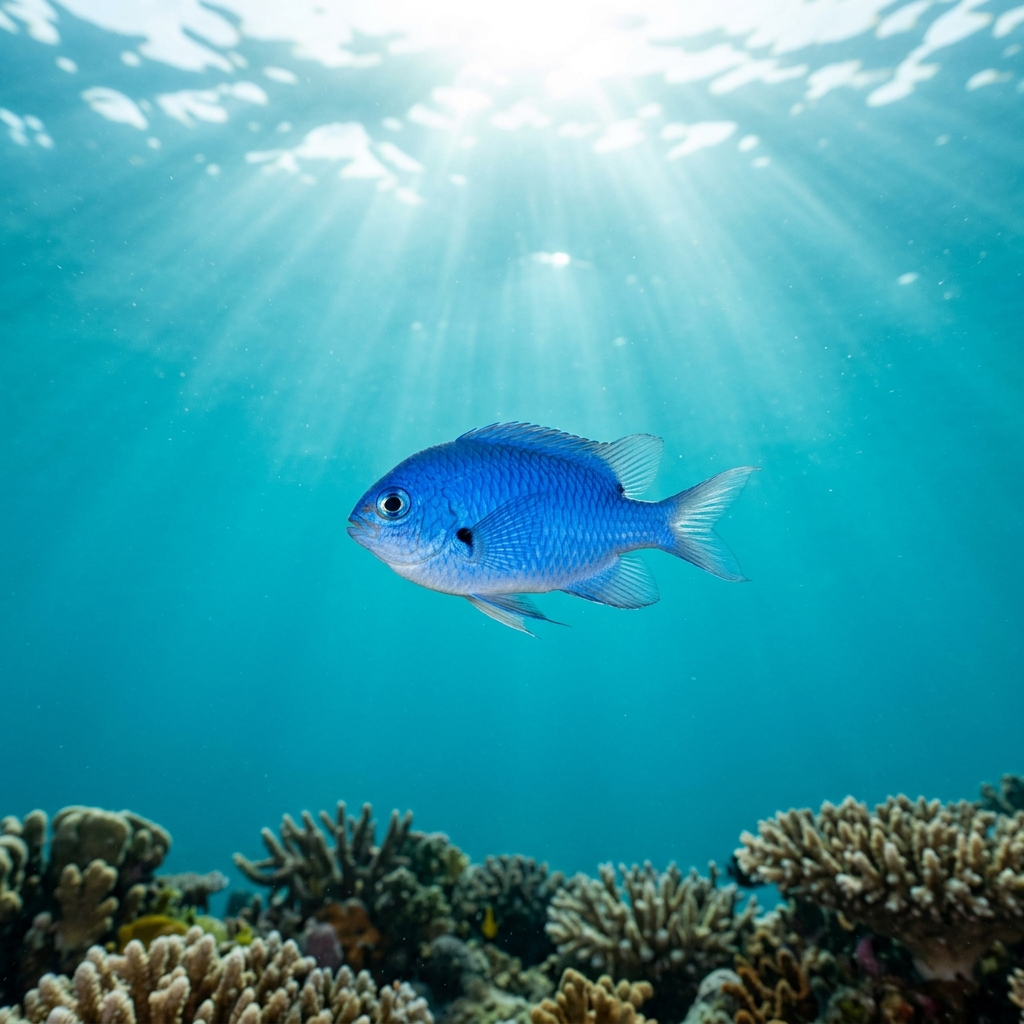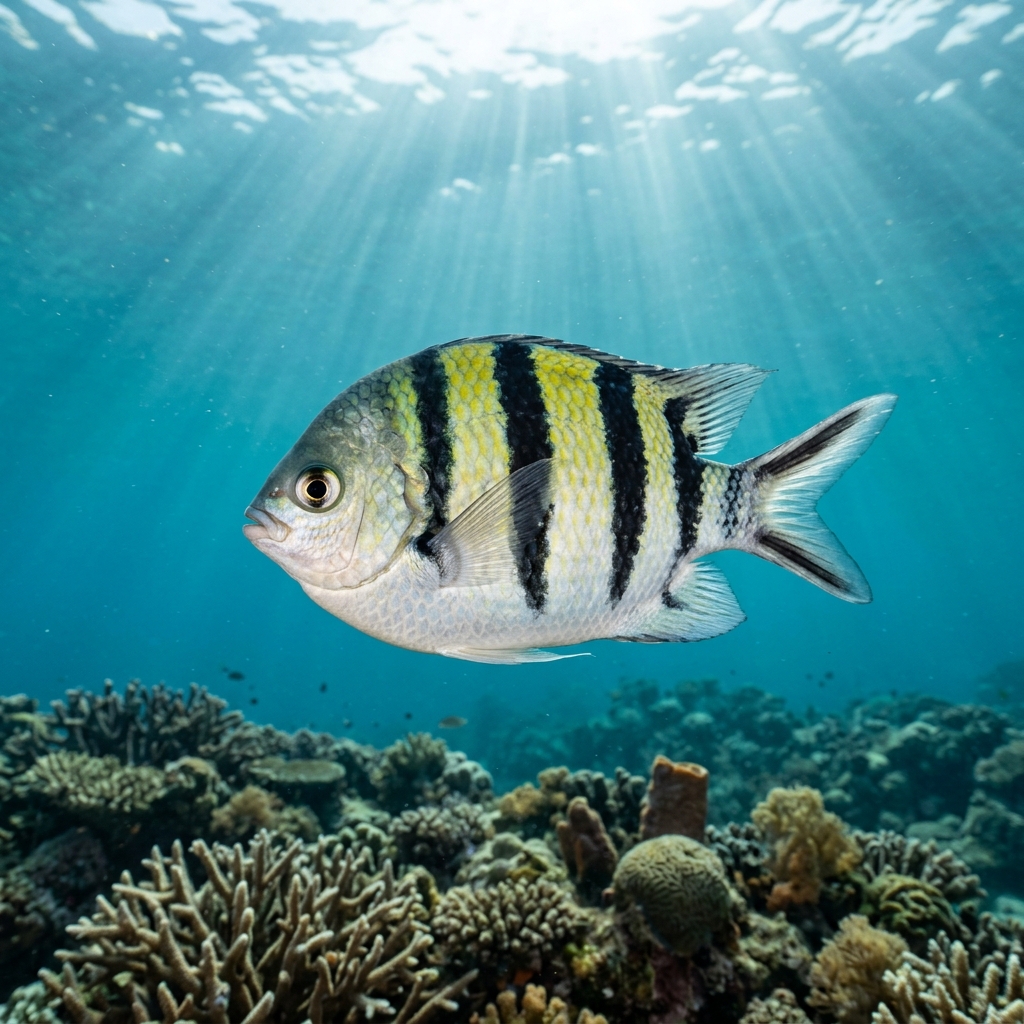
Chromis insolata
Pale gold and blue, uncommon on Caribbean reefs. Best odds off Saint-Pierre, Martinique in 20-27.5C water, year-round.
Small oval-bodied damselfish, around 11 cm, with a soft golden-tan body washed with pale blue flecks along the scale rows. Look for the faint dusky smudge at the base of the pectoral fin and a slightly forked, translucent tail. It holds a compact, upright posture in midwater rather than hugging the reef, which sets it apart from the flatter-swimming damsels around it.
Divers usually find it hovering in loose groups a metre or two off the reef structure, picking at drifting plankton rather than feeding on the bottom. It keeps a cautious middle distance from divers, neither bolting for cover like a blenny nor holding ground like a territorial damsel, so a slow approach is usually needed to get a close look.
It's an open-water plankton feeder among damselfish, which explains why you often spot it hanging in the current above the reef rather than tucked into a bommie like most of its relatives.
No clear seasonal pattern shows up in the sightings, and its comfort range of 20 to 27.5C spans the Caribbean's water temperature year-round, so any month is fair game at these sites.
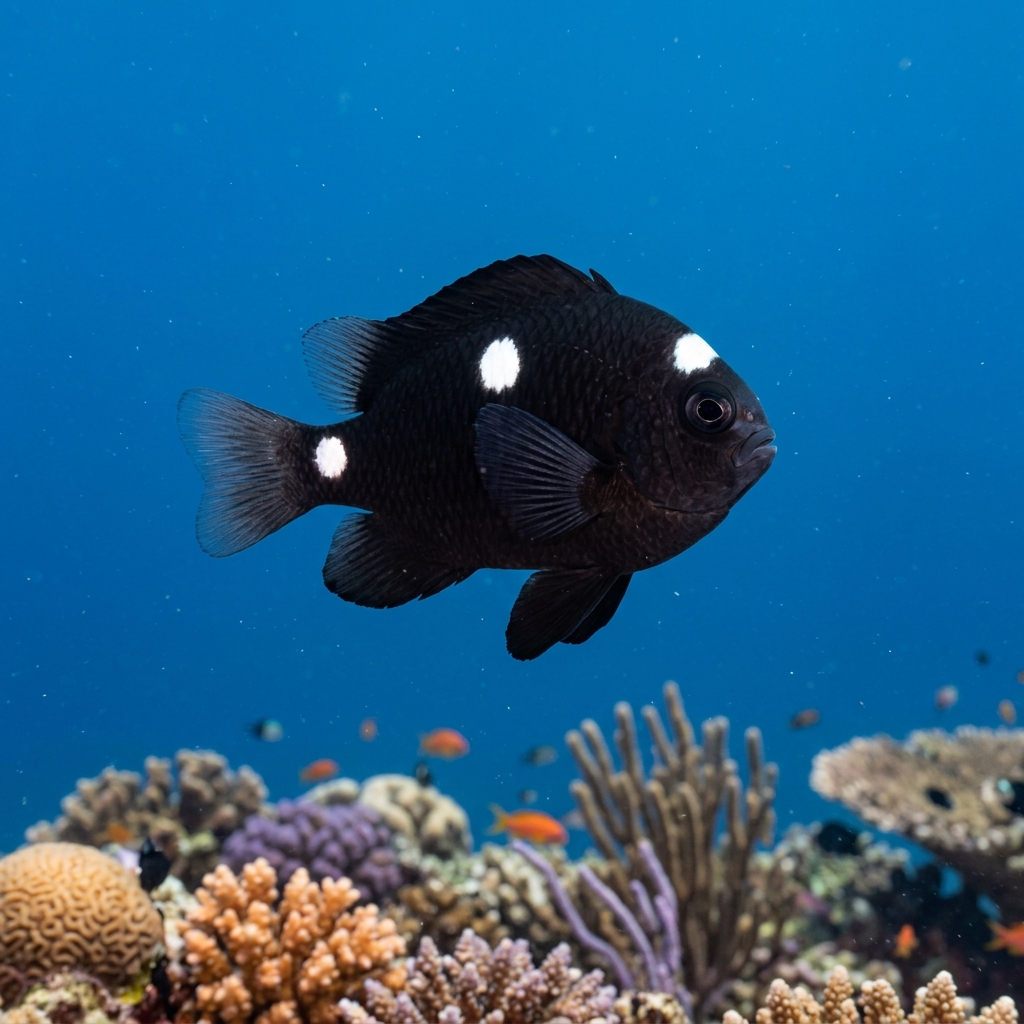
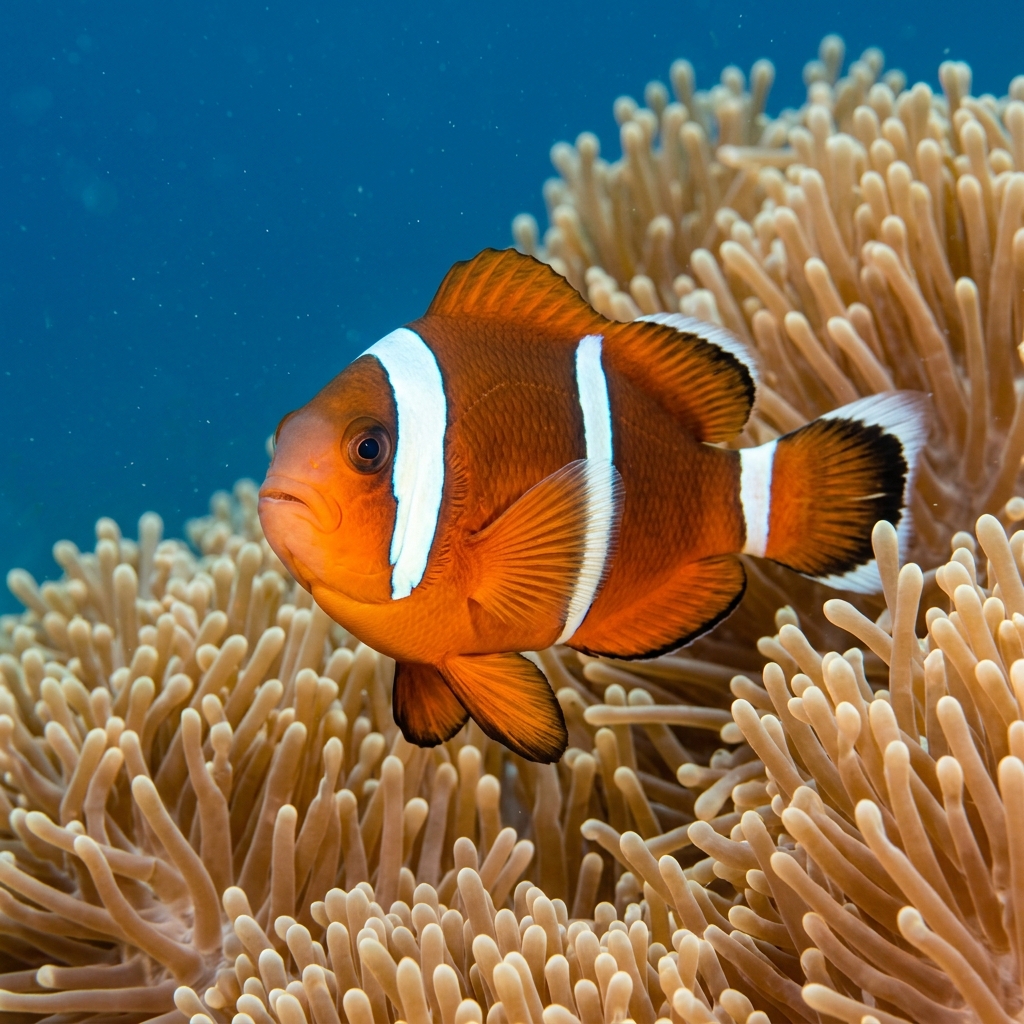
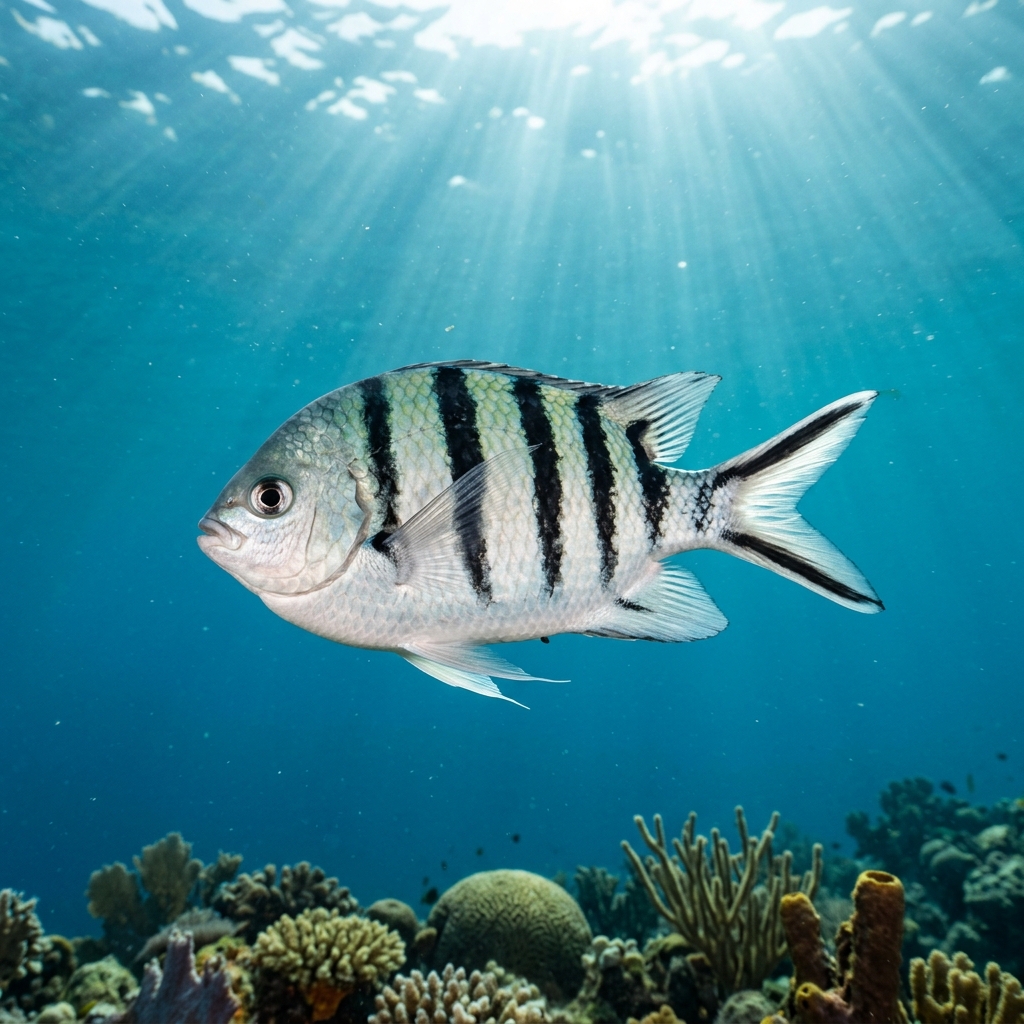
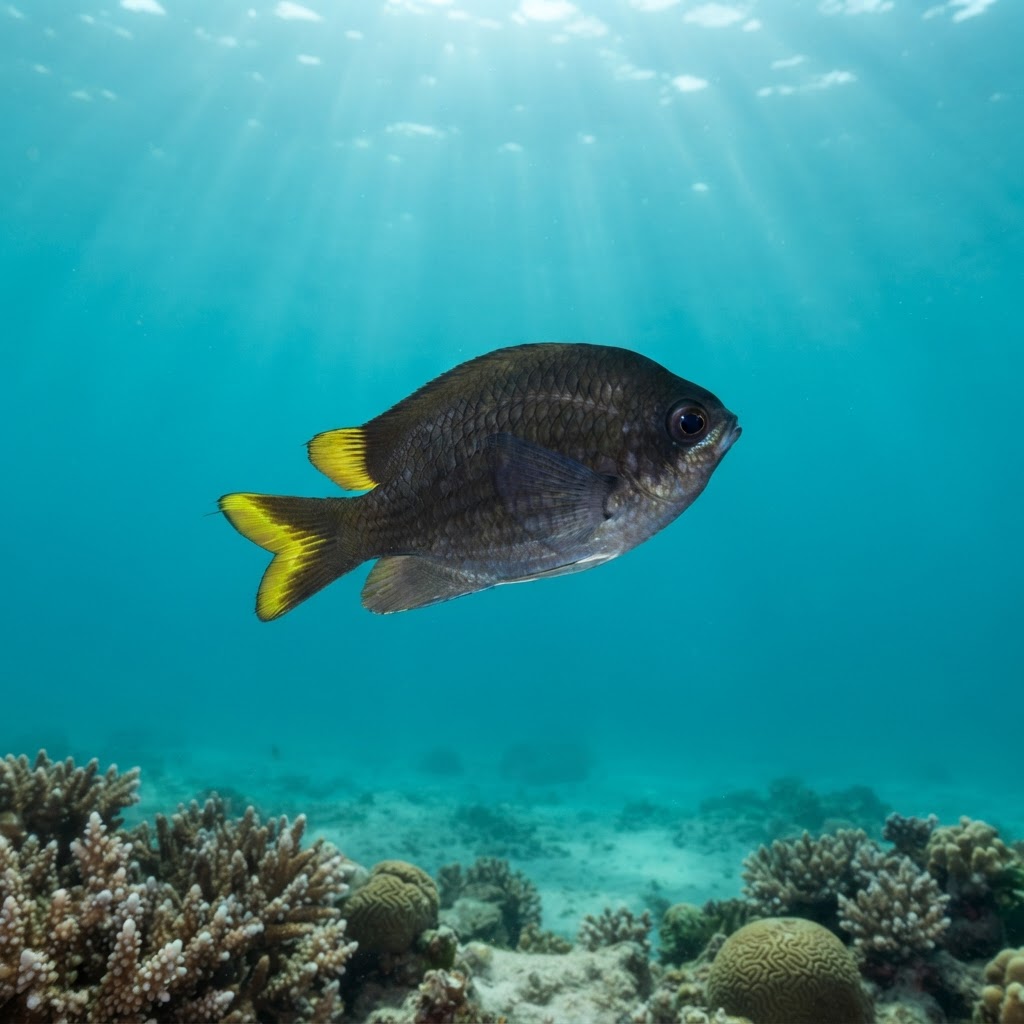
Reef neighbours a diver could mistake it for. Use the identification notes above to tell them apart.
Most reliably logged off Saint-Pierre in Martinique, which carries the bulk of sightings, with a further cluster at the Soufriere-Scotts Head Marine Reserve in Dominica. Smaller numbers turn up in Florida, at Tent Reef in Saba, and off Castries in Saint Lucia, so it's a Lesser Antilles and southern Caribbean species rather than a wide-Caribbean one.
Mapping where Sunshinefish is logged…
The strongest sightings come from Saint-Pierre in Martinique and the Soufriere-Scotts Head Marine Reserve in Dominica, with smaller numbers logged in Florida, Saba, and Saint Lucia. It's a Lesser Antilles specialty rather than something you'll find across the whole Caribbean.
There's no detected seasonal pattern, and the water temperature it favours, 20 to 27.5C, holds across the year in the Caribbean, so sightings are possible in any month.
Look for a small, oval, golden-tan damselfish around 11 cm with pale blue flecking on the scales and a slightly forked tail. It hangs in midwater in loose groups rather than sitting tight against the reef.
They top out at around 11 cm, putting them in the small end of the damselfish family, similar in scale to a blue chromis or yellowtail damselfish.
Most dive sites where it's logged report it as uncommon rather than common, and it's rare at some spots, so treat any sighting as a nice find rather than a given.
Site and sighting data is aggregated from diver logs, iNaturalist and GBIF. For taxonomy and conservation status:
Dascyllus
3,697 sites