Caesio suevica
Slim blue-and-yellow fusiliers streaming over Red Sea reefs, most reliably spotted across South Sinai in warm 24-29C water year-round.
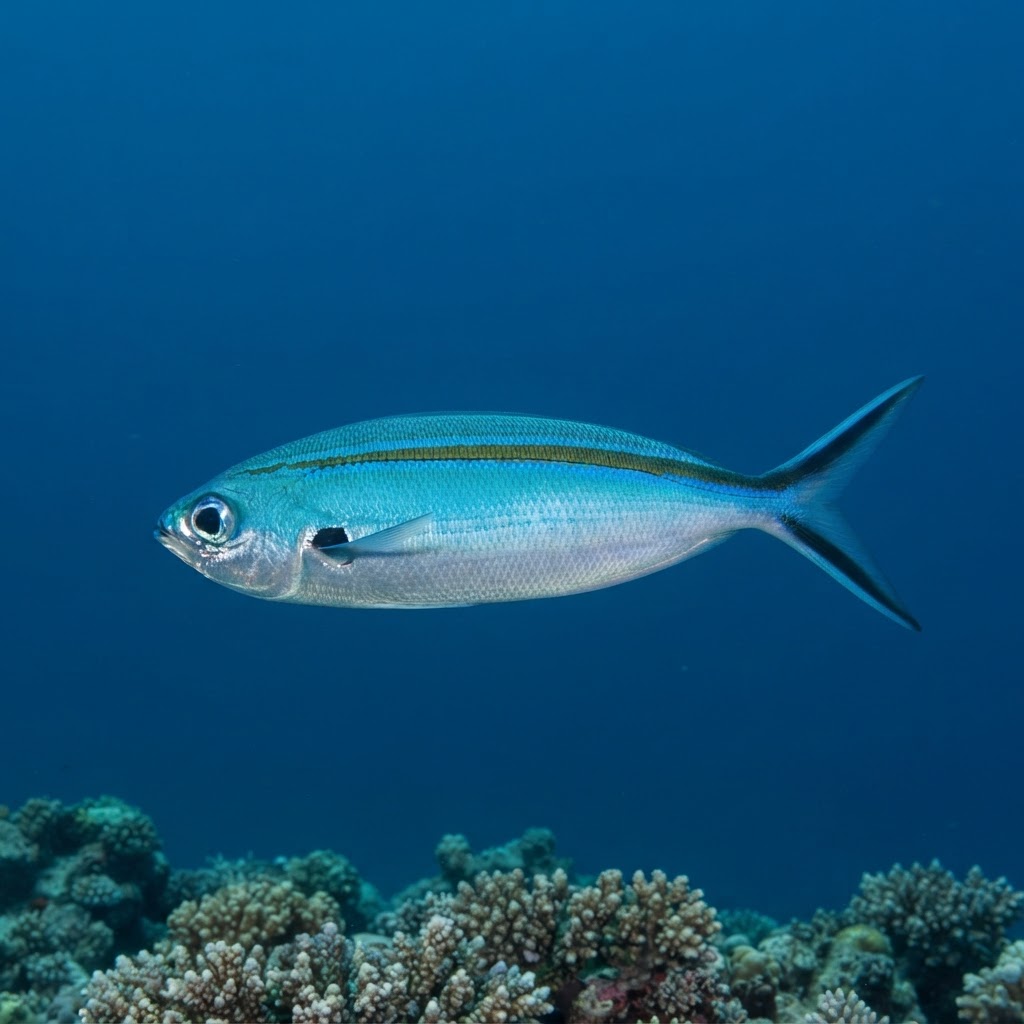
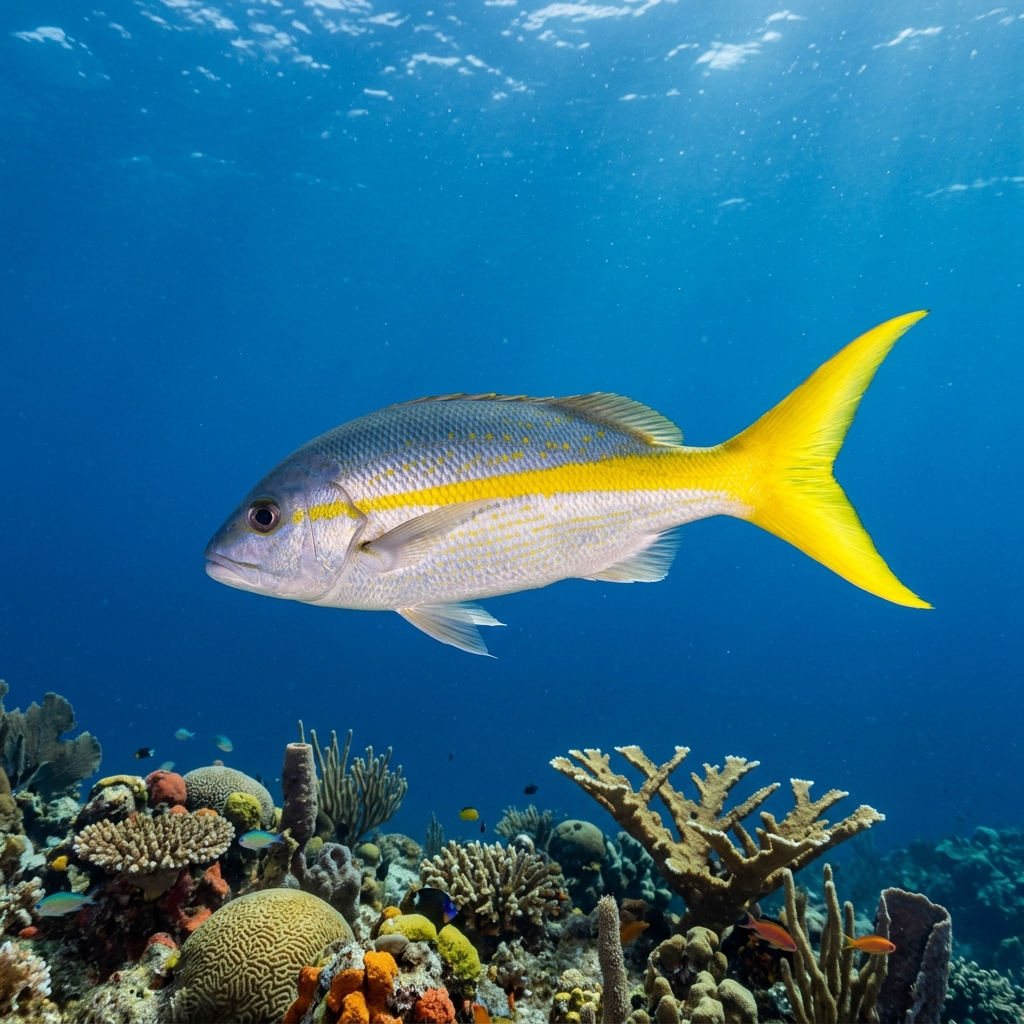
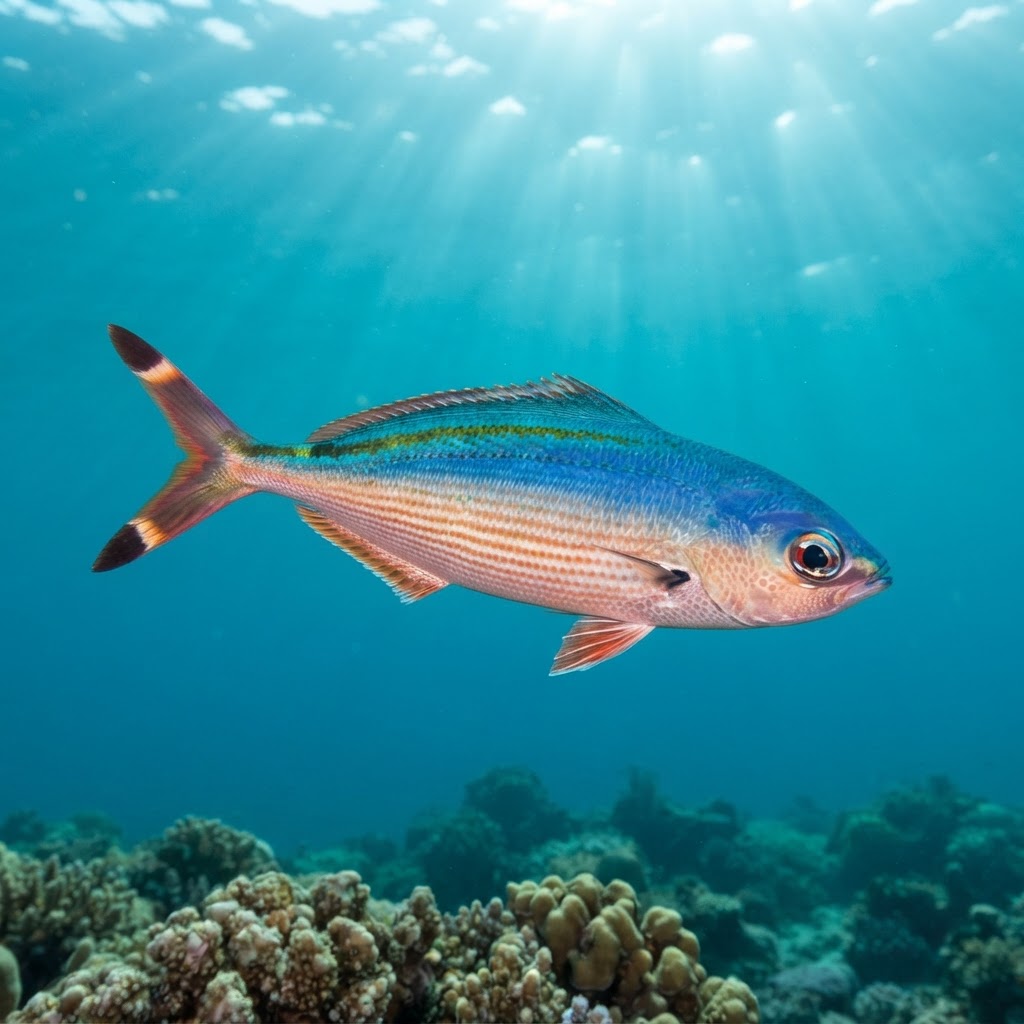
Slender, torpedo-shaped body around 24 cm long with a blue-grey back fading to a silvery white belly and a yellow stripe running along the flank. Look for the deeply forked tail and the way it swims in loose, fast-moving schools just off the reef face rather than hugging the bottom. The mouth is small and slightly upturned, built for picking plankton from the water column rather than the reef itself.
Found cruising in open water just off the reef edge, usually in loose schools that mix with other fusiliers or small snappers rather than sticking rigidly to their own kind. They feed on plankton in the water column, so divers typically see them holding position in current along walls and drop-offs rather than foraging on the substrate. Generally indifferent to divers, they part around a slow approach and reform behind you without much fuss.
Fusiliers like this one often shift colour intensity between active daytime schooling and a paler, more subdued look when settling near the reef at dusk, a change linked to their diel activity pattern.
No clear seasonal pattern shows up in the sightings, and with a comfortable temperature range of roughly 24.5 to 29.3C, this is a fish you can reasonably expect on Red Sea reefs at any time of year.
Reef neighbours a diver could mistake it for. Use the identification notes above to tell them apart.
Almost every logged sighting comes from Egypt's Red Sea coast, with South Sinai the strongest area, followed by the Red Sea Riviera and Marsa Alam and the Deep South further south. A handful of offshore Red Sea sites also report it, so it is worth watching the blue water off drop-offs and reef walls throughout this stretch of coast.
Mapping where Suez Fusilier is logged…
Egypt's Red Sea coast is the reliable place to find them, especially South Sinai, with good numbers also logged along the Red Sea Riviera and around Marsa Alam and the Deep South.
There is no strong seasonal signal in the sightings, and they tolerate a wide temperature band of about 24.5 to 29.3C, so they are a fair bet on Red Sea reefs throughout the year.
Look for a slim, torpedo-shaped fish around 24 cm with a blue-grey back, a yellow lateral stripe, and a deeply forked tail, usually seen schooling in open water off the reef edge.
They reach around 24 cm in length, a modest size that fits their role as fast, agile plankton feeders rather than reef predators.
No, they pose no danger to divers. They are harmless plankton feeders that simply part around a diver and continue schooling nearby.
Site and sighting data is aggregated from diver logs, iNaturalist and GBIF. For taxonomy and conservation status:
Emperor
2,052 sites