Pentapodus vitta
Slim, silver-blue reef fish with a yellow racing stripe, logged mostly around Western Australia in 18-24C water. Here's how to spot one.
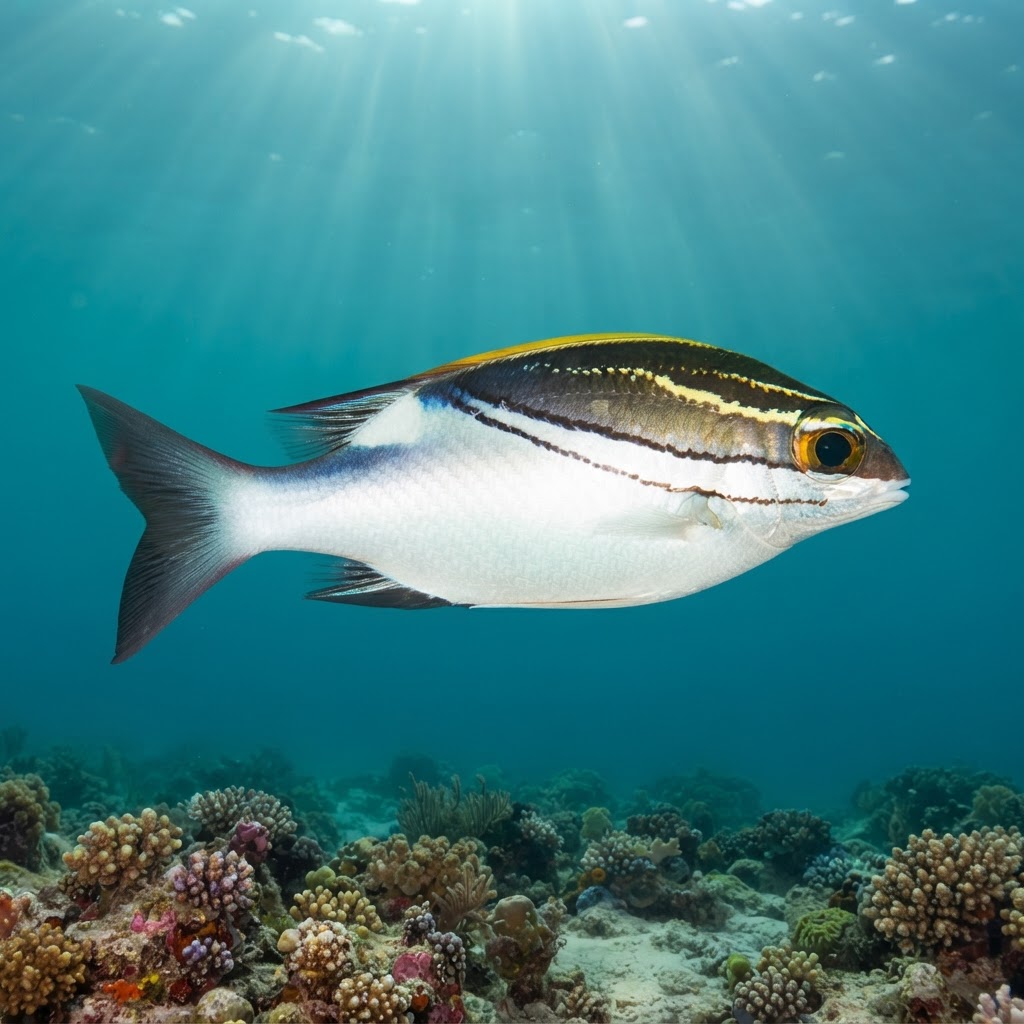
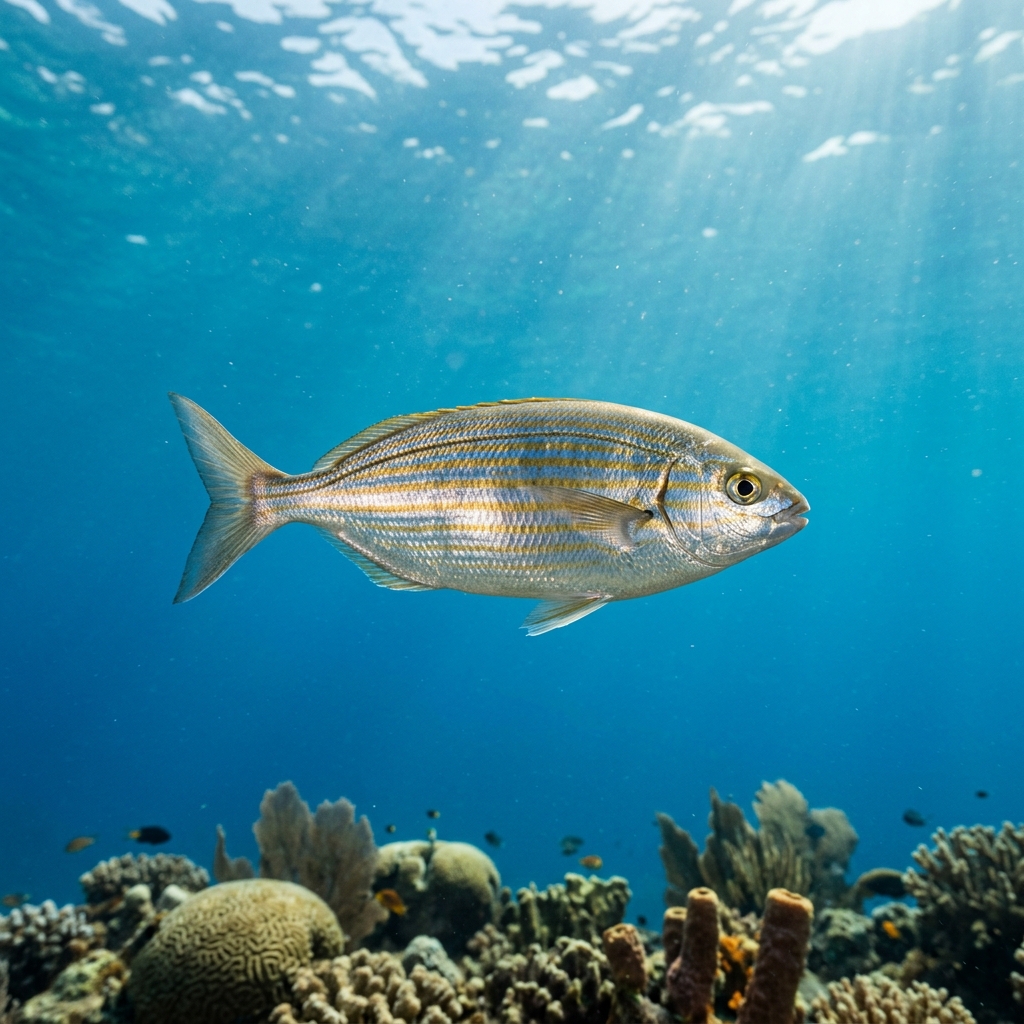
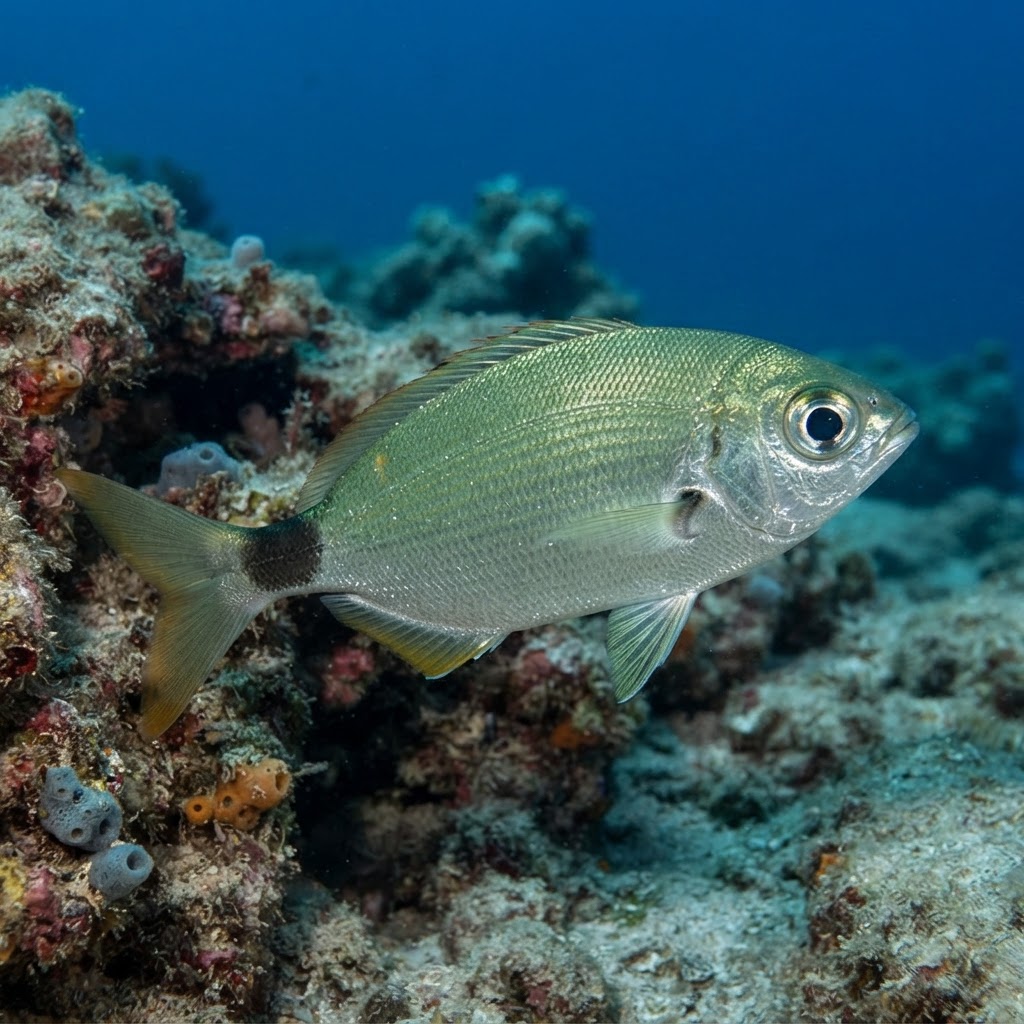
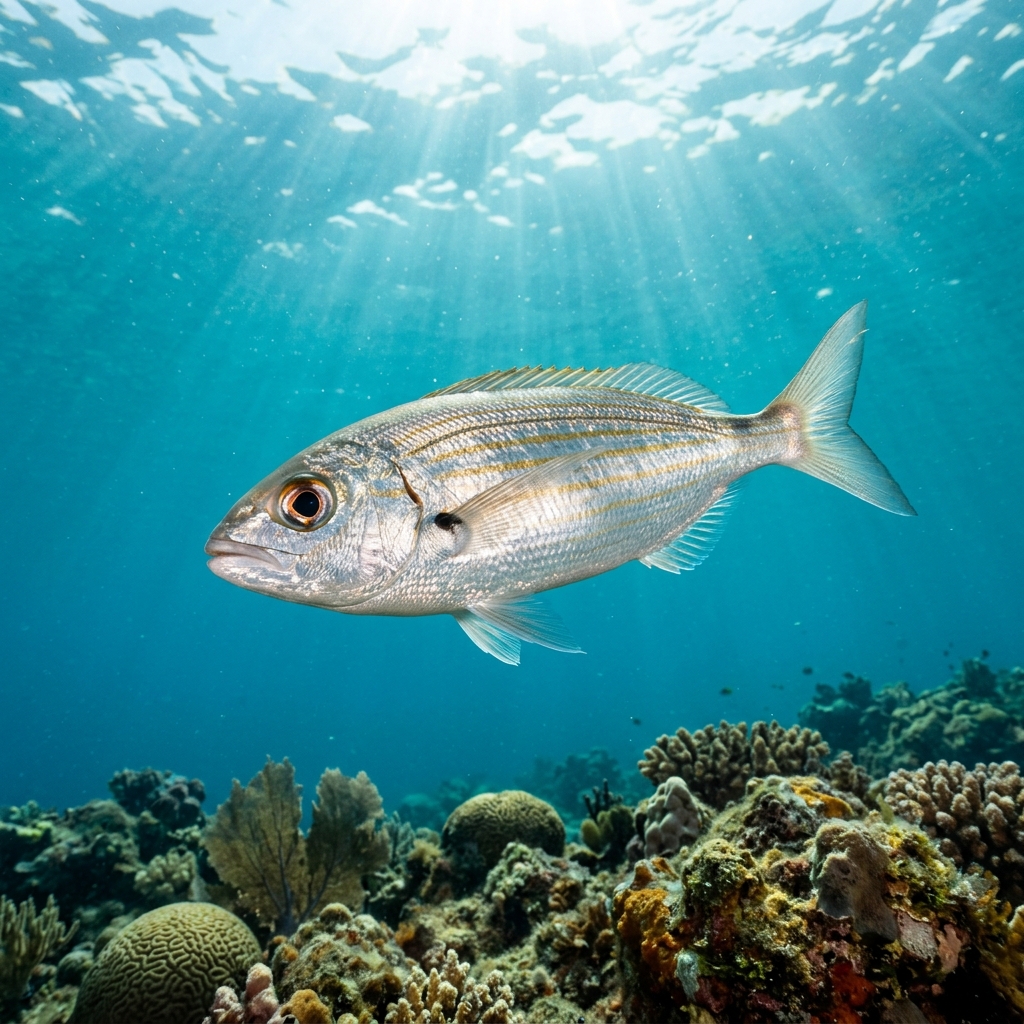
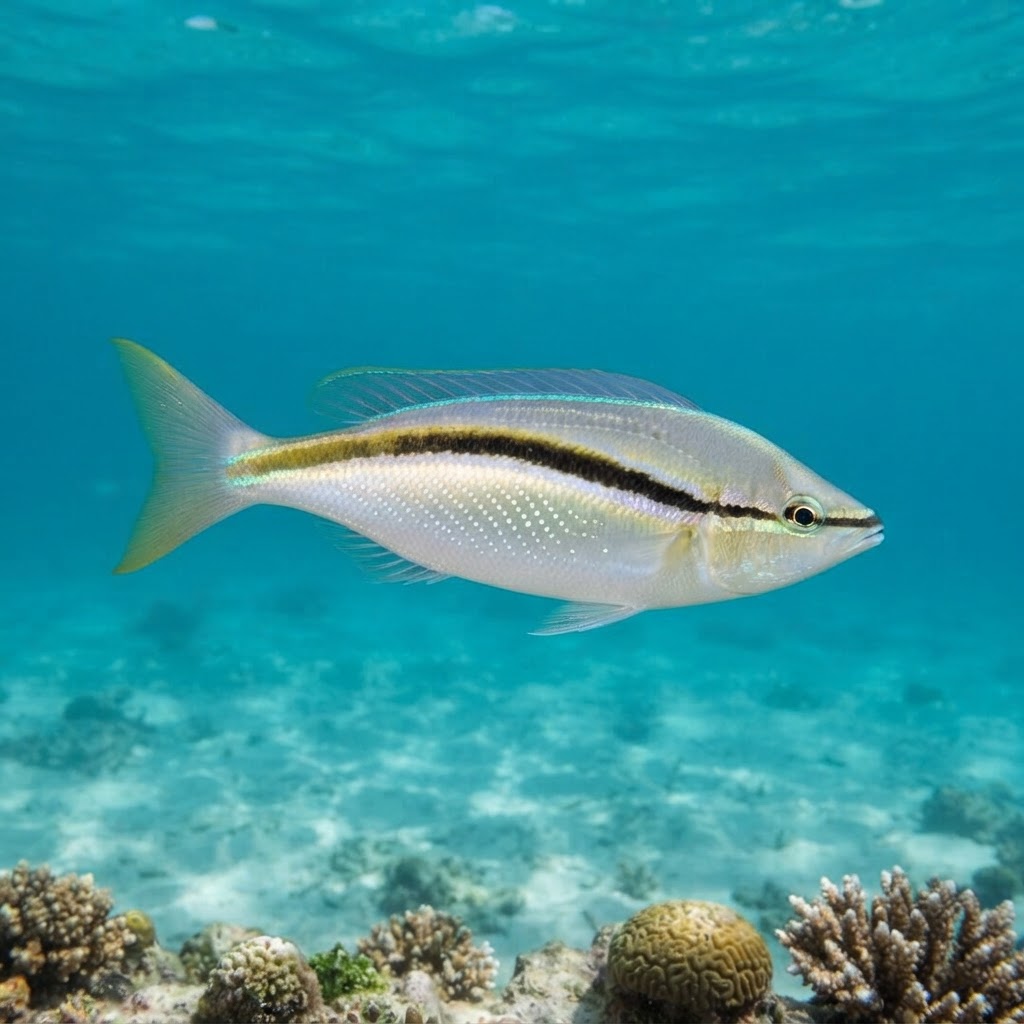
A slender, torpedo-shaped fish around 18cm long, with a silvery-blue body and a row of fine horizontal stripes running head to tail. Look for the namesake tail: a long, whip-like extension trailing off the rear fin, often tipped with yellow. It tends to hover just above the reef rather than tucking into it, which makes that stripe pattern easy to pick out in open water.
Usually seen cruising alone or in loose pairs just above rock and reef structure, moving steadily rather than darting for cover. It keeps a comfortable distance from divers but doesn't bolt, so a slow approach usually gets you a clean look at the stripes and tail filament. Most sightings are on daytime dives over mixed reef and rubble bottoms.
That trailing tail filament is the fish's main visual signature and gives the whole species its common name, a rare case where the everyday name is also the best field guide tip.
Divers log it year-round, and the observed temperature range of 18.4 to 24.4C spans Western Australia's cooler winter and warmer summer readings, so there's no tight seasonal window to chase.
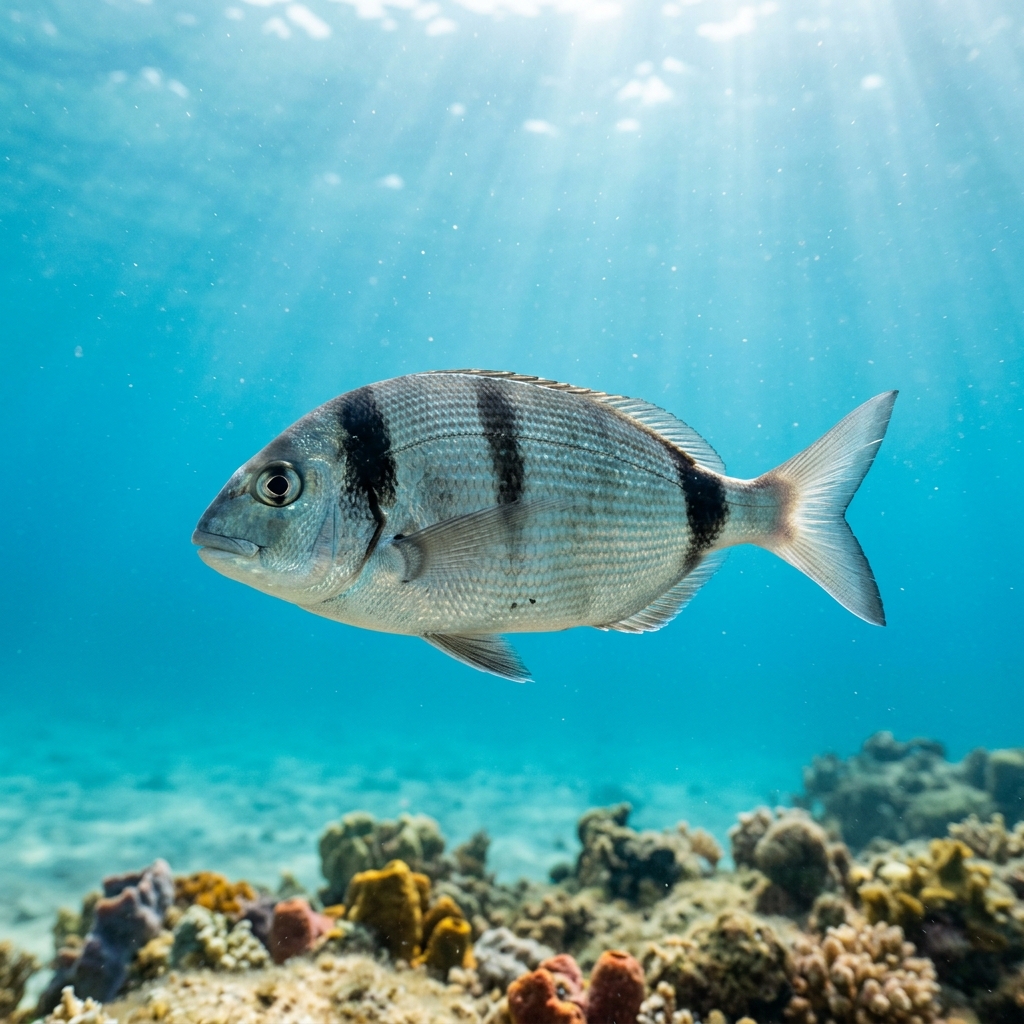
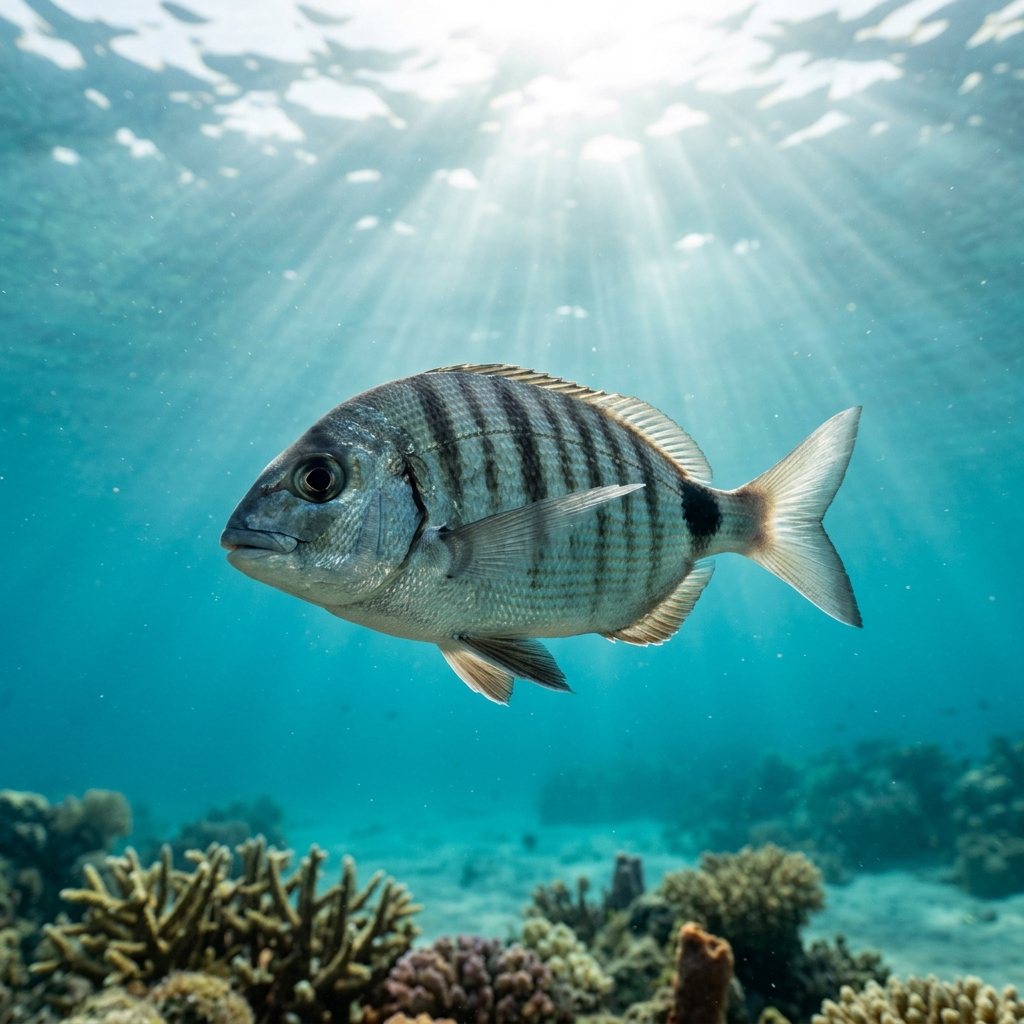
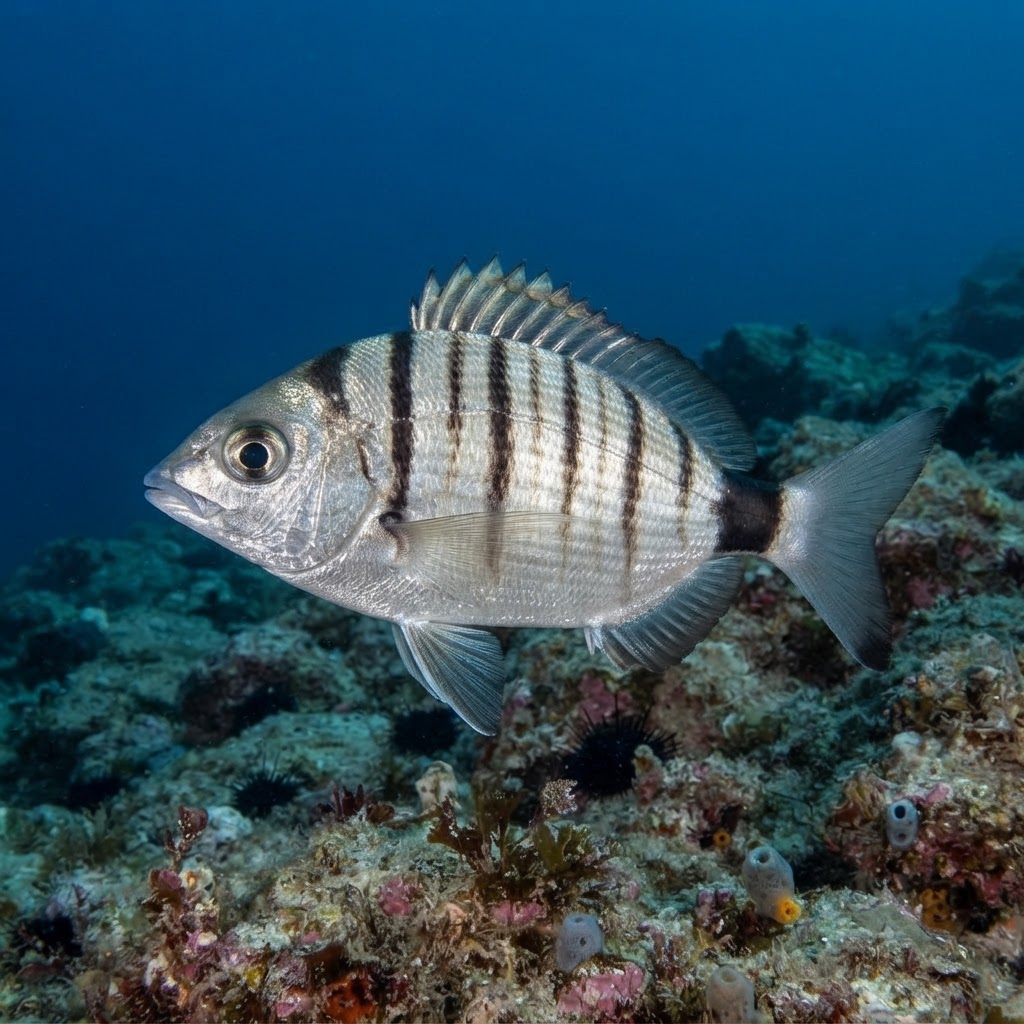
Reef neighbours a diver could mistake it for. Use the identification notes above to tell them apart.
Every logged sighting in the data comes from Australia, and specifically Western Australia, which is the place to plan a dive around this fish. Sites there report it consistently, though usually as one or two individuals rather than a shoal.
Mapping where Striped Whiptail is logged…
Western Australia is by far the strongest region in diver records, with sites there reporting it consistently as an uncommon but reliable find.
There's no strong season in the data. It's recorded across a wide temperature range from 18.4 to 24.4C, suggesting it's around on Western Australian reefs throughout the year.
Look for a slim silvery-blue body about 18cm long with fine horizontal stripes and a long, whip-like tail filament, often edged in yellow. It typically hovers over the reef rather than hiding in it.
They typically reach around 18cm in length, a slim build rather than a bulky one.
Site and sighting data is aggregated from diver logs, iNaturalist and GBIF. For taxonomy and conservation status:
Saddled Bream
3,846 sites