Meiacanthus grammistes
Small black-and-white striped fish common on reefs in the Visayas and Peninsular Malaysia, 26 to 29C water, seen year-round.
Safety warning
A bite from the fangs can happen if you try to handle or corner one, and the venom causes localised pain and swelling rather than anything systemic. Give it space, don't pick up rubble or coral it's sheltering in, and it will not bother you.
If you're bitten
Venomous bite (mild)General first-aid guidance, not a substitute for professional medical care. In an emergency, call your local emergency number.
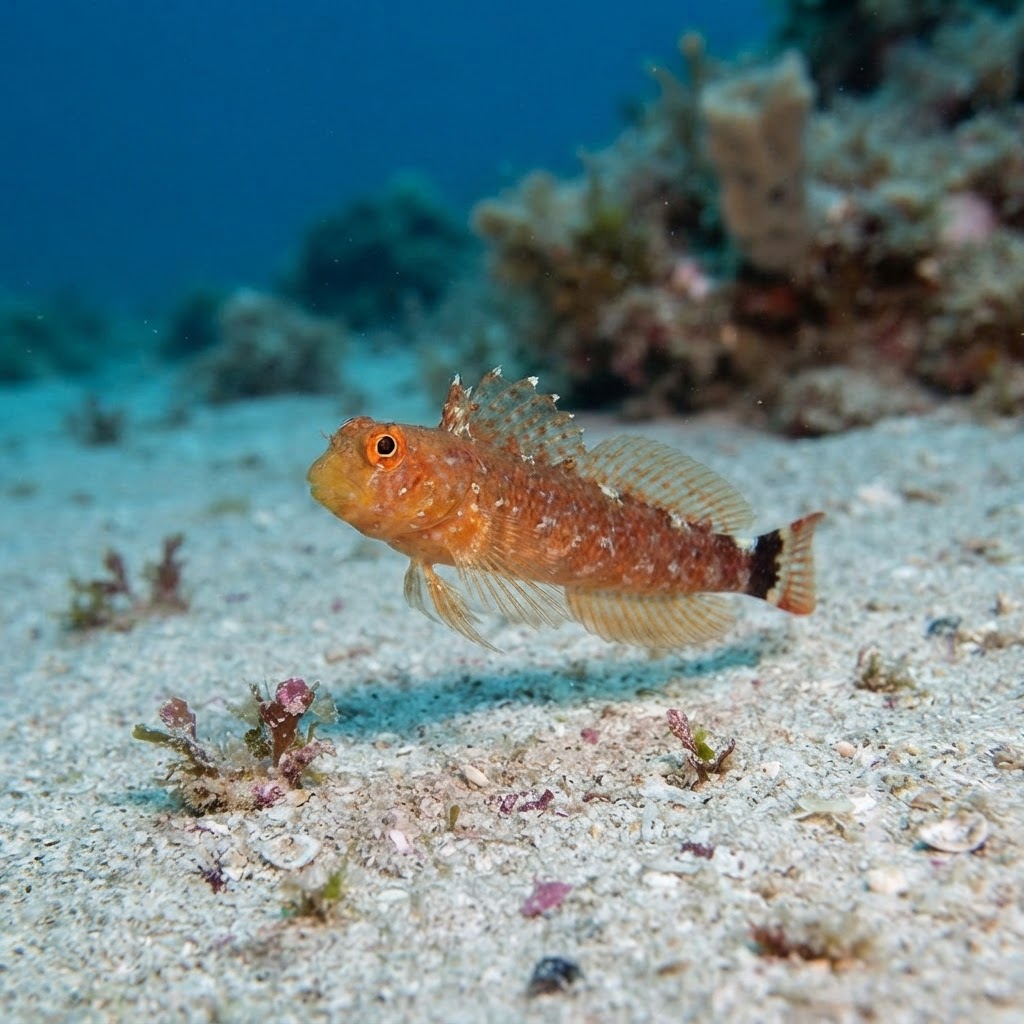
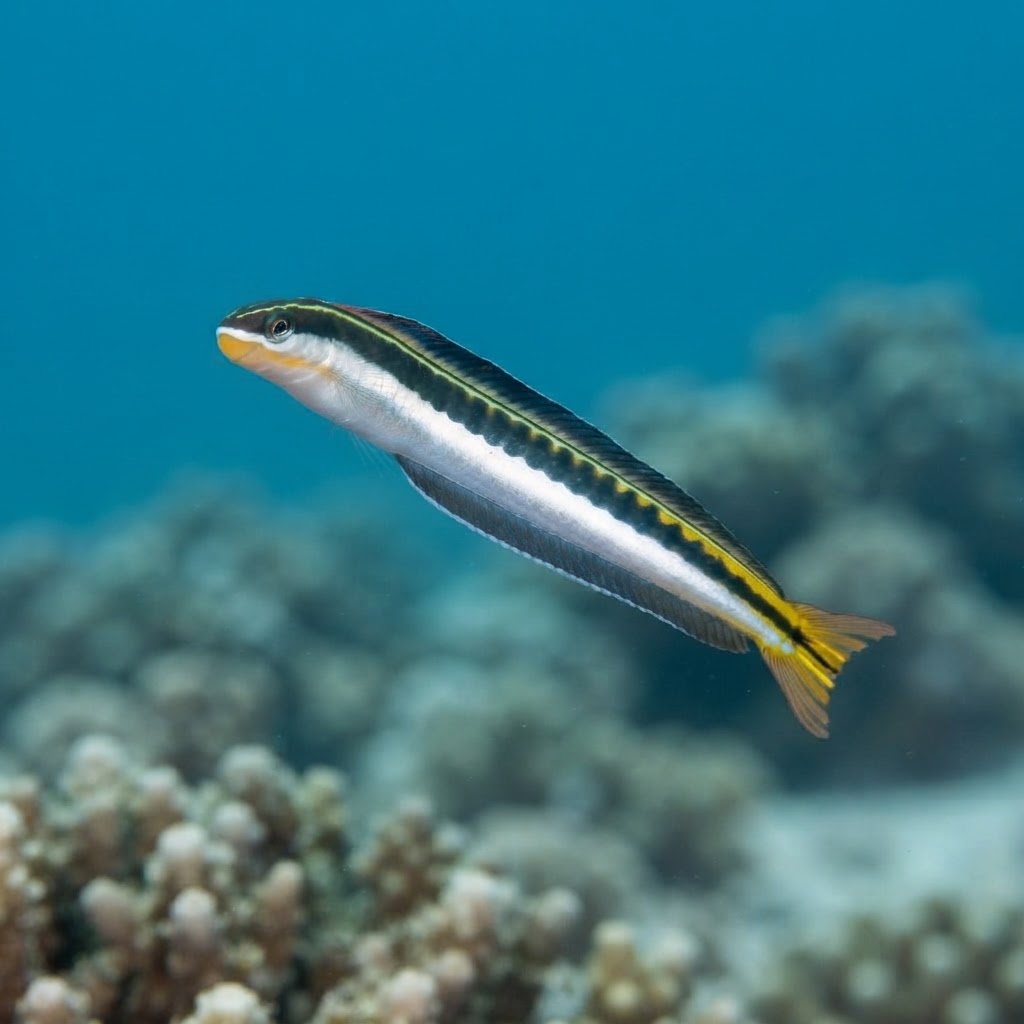
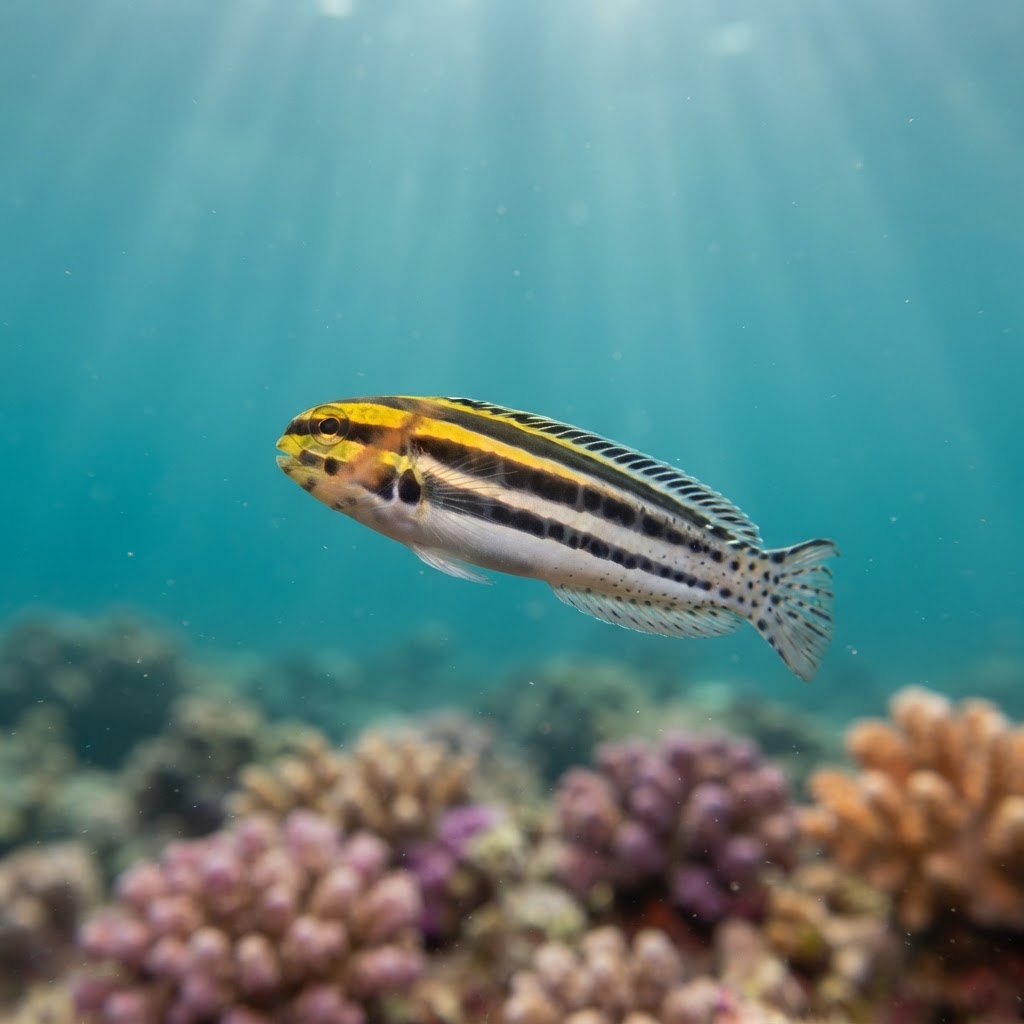
A slim, torpedo-shaped fish around 7 cm long with bold black and white (sometimes yellow-tinged) horizontal stripes running the length of the body. It hovers just above the reef or perches in a burrow entrance rather than swimming in open water, and the stripes stay crisp at any angle, which is the quickest way to separate it from plainer reef blennies. Look closely at the mouth and you may spot the small fangs it uses in self-defence, a family trait shared with other fangblennies.
Spends most of its time hovering close to the reef or resting near a burrow, rock crevice, or old worm hole it can dart into if startled. It is not shy in the way a fish that flees would be; instead it tends to hold its ground and let divers get a good look, occasionally flicking out to snap at passing plankton. Most sightings are casual, one-off encounters rather than the kind of gathering you'd plan a dive around.
Its fangs deliver a venom that, rather than serving predators, seems to act on other fish as a deterrent, and several harmless species have evolved to mimic its stripes to borrow that protection.
No clear seasonal pattern shows up in sightings, and with a comfortable range of 26.4 to 29.3C it stays active on these reefs all year, so any month works.
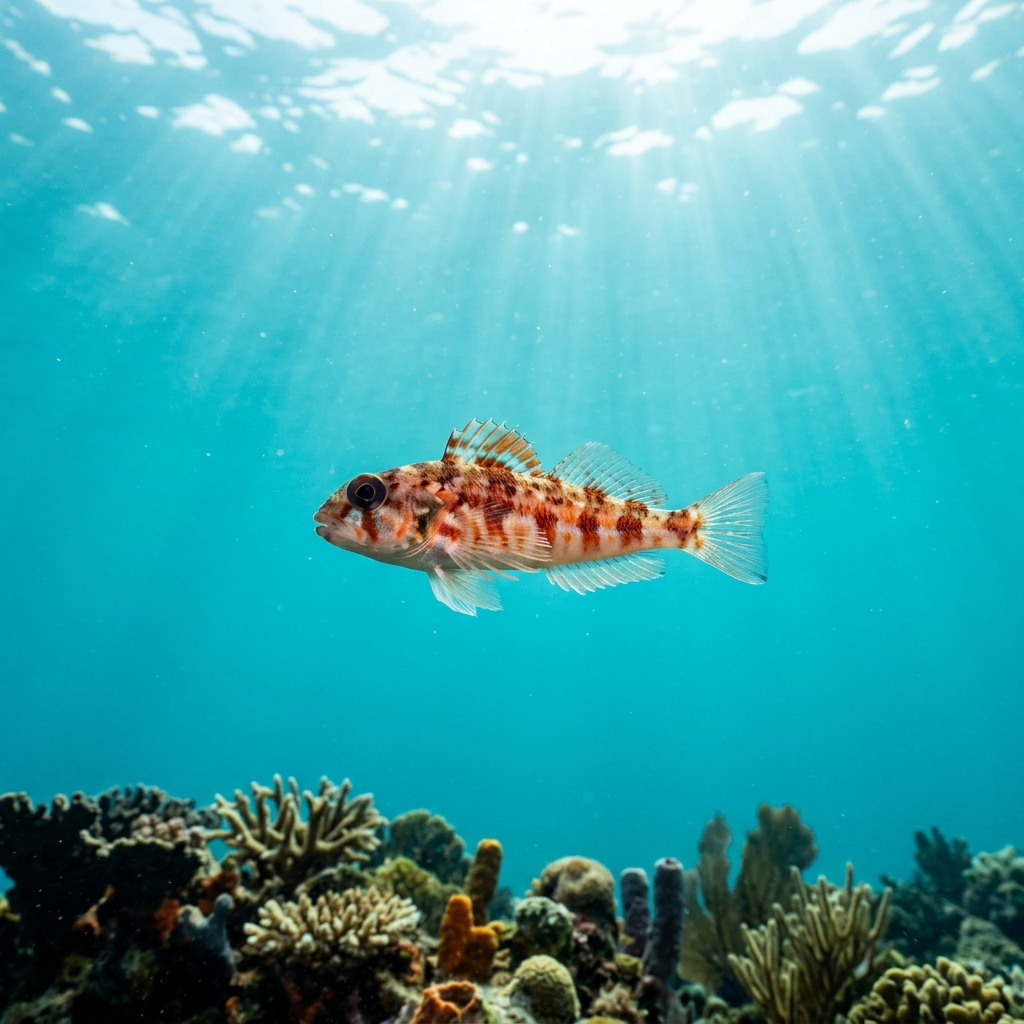
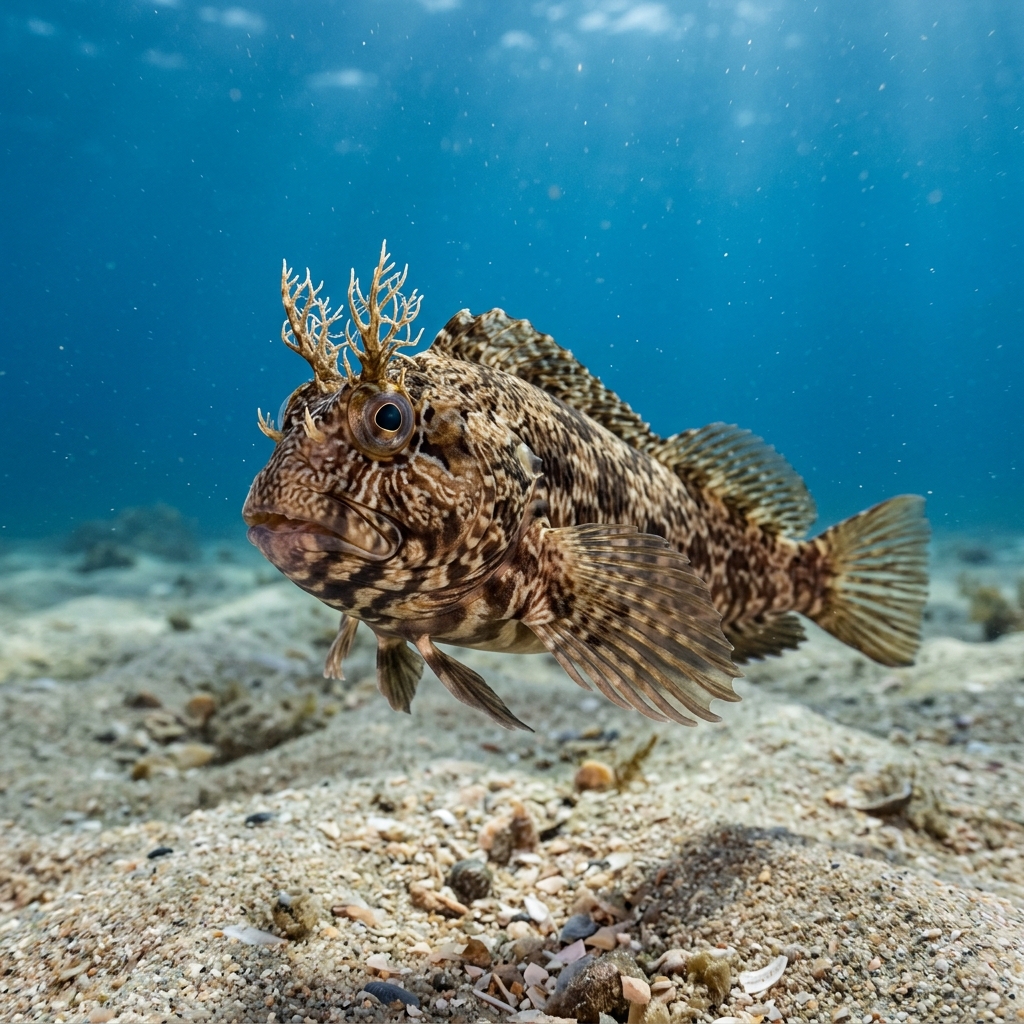
Reef neighbours a diver could mistake it for. Use the identification notes above to tell them apart.
Most reliably logged on reefs along Peninsular Malaysia's east coast and throughout the Visayas in the Philippines, with strong showings in Kenting, Taiwan and Raja Ampat and Sulawesi in Indonesia. Also turns up on Atauro Island in Timor-Leste and on reefs in Western Australia, though usually in smaller numbers.
Mapping where Striped Blenny is logged…
Best chances are on reefs in the Visayas in the Philippines and along Peninsular Malaysia's east coast, with good numbers also reported from Kenting in Taiwan and Raja Ampat in Indonesia.
There's no strong season in the data, and its preferred water temperature of 26 to 29C holds year-round on these reefs, so it's a fair bet on any visit.
They carry venomous fangs and will bite if handled or cornered, causing local pain and swelling. Left alone, they pose no real risk and are commonly photographed at close range.
Look for a small, slender fish with sharp black and white horizontal stripes, usually hovering near a burrow or reef crevice rather than swimming freely.
They stay small, typically around 7 centimetres long, making them an easy fish to overlook unless you're checking crevices and rubble closely.
Its venomous fangs are unusual for a small reef fish, and the striped pattern is convincing enough that several unrelated, harmless species mimic it for protection.
Site and sighting data is aggregated from diver logs, iNaturalist and GBIF. For taxonomy and conservation status:
Rusty Blenny
2,605 sites