Caesio striata
Blue-and-yellow schooling fish common on reefs in South Sinai and Marsa Alam, thriving in 24 to 29 C water year-round.
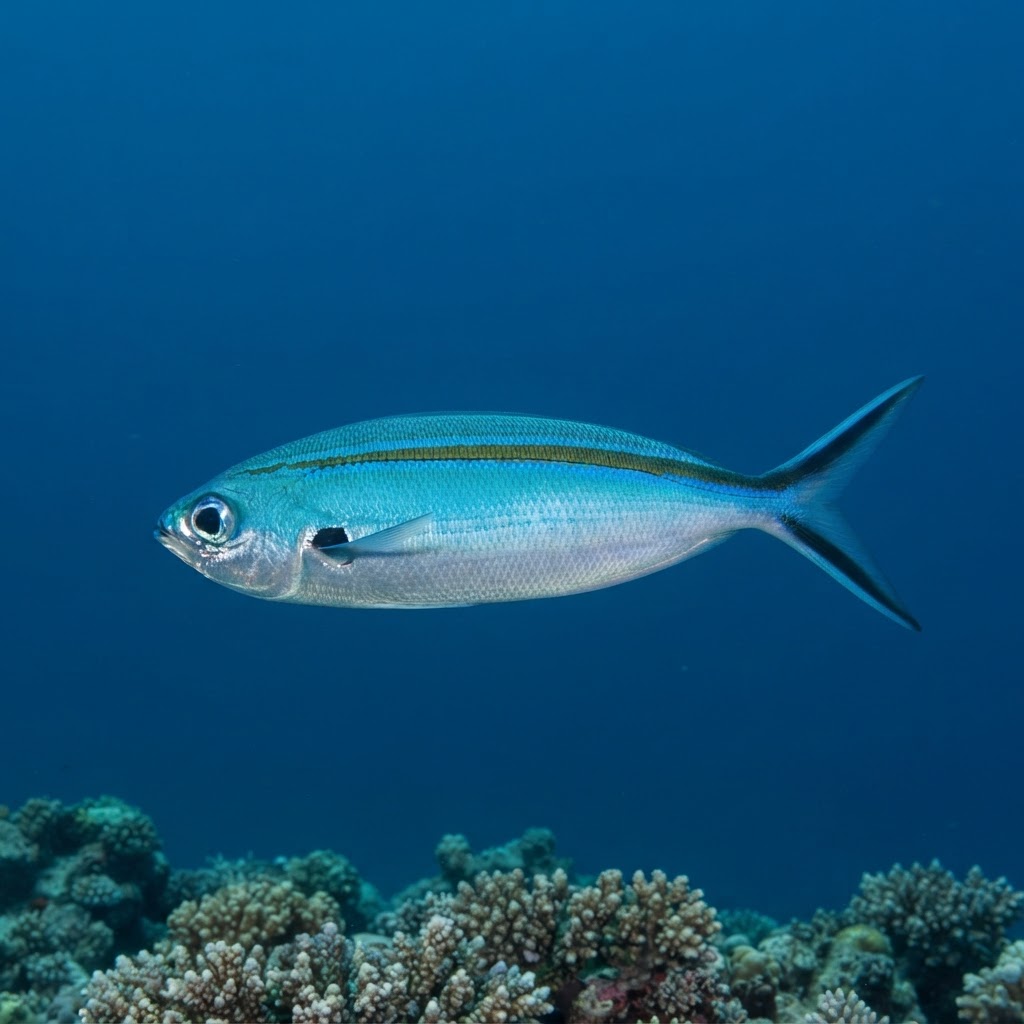
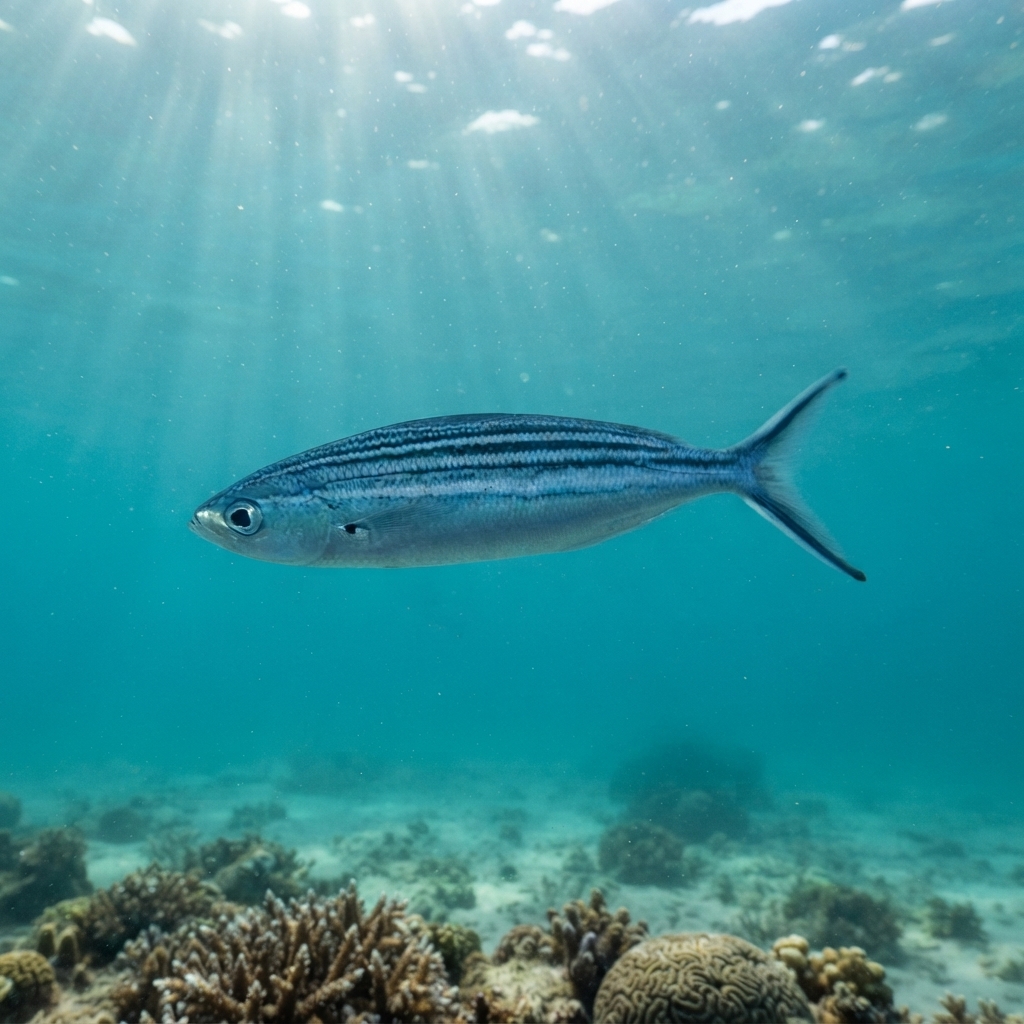
Slim, torpedo-shaped body around 18 cm long, built for holding position in current rather than hugging the reef. Look for a blue-grey back fading to silvery white below, with a yellow to gold stripe running along the upper flank from head to tail. Deeply forked tail, often edged in darker colour, is a quick giveaway when the fish is moving fast in a loose school.
Expect to find it hanging in loose, drifting schools over reef slopes and drop-offs, often picking plankton out of the water column mid-water rather than sticking close to the substrate. Divers usually rate it uncommon rather than common at any single site, though on the sites where it does show strong numbers, it can form sizeable, unbothered schools that barely react to a diver's presence. It tends to hold a fairly constant depth and drift with the current rather than darting for cover.
Fusiliers feed almost entirely on plankton snatched from open water, which is why you'll spot them holding station over reef edges and drop-offs where currents deliver a steady food supply rather than foraging in the reef structure itself.
No clear seasonal pattern shows up in the sightings, and with a comfortable range of 24.5 to 29.3 C, reefs across the Red Sea stay within its preferred temperature band all year. Plan around good general Red Sea diving conditions rather than chasing a particular month for this species.
Reef neighbours a diver could mistake it for. Use the identification notes above to tell them apart.
This is a Red Sea regular, most consistently logged across South Sinai and Marsa Alam & the Deep South in Egypt, with strong numbers along the Red Sea Riviera too. Smaller but reliable populations turn up on the Saudi Arabian side of the Red Sea Coast, making this essentially a Red Sea speciality rather than a wide-ranging Indo-Pacific fish on the dive sites where it has been logged.
Mapping where Striated Fusilier is logged…
It is most reliably seen in the Egyptian Red Sea, especially South Sinai, Marsa Alam & the Deep South, and the Red Sea Riviera, with smaller numbers along Saudi Arabia's Red Sea Coast.
There's no strong season in the sightings data, and water stays within its 24.5 to 29.3 C comfort range year-round, so it's a fair bet on Red Sea reefs in any month.
Look for a slim, torpedo-bodied fish about 18 cm long with a blue-grey back, silvery belly, a gold stripe along the upper side, and a deeply forked tail, usually seen drifting in loose schools over the reef edge.
They typically reach around 18 cm, a modest size that fits their role as a fast-moving, plankton-feeding schooling fish rather than a solitary reef predator.
No. They are harmless plankton feeders that generally ignore divers and pose no threat.
Site and sighting data is aggregated from diver logs, iNaturalist and GBIF. For taxonomy and conservation status:
Emperor
2,052 sites