Istiblennius dussumieri
A shallow-water blenny common on Phuket reef flats and Andaman Islands rock pools, active in water up to 29 C year-round.
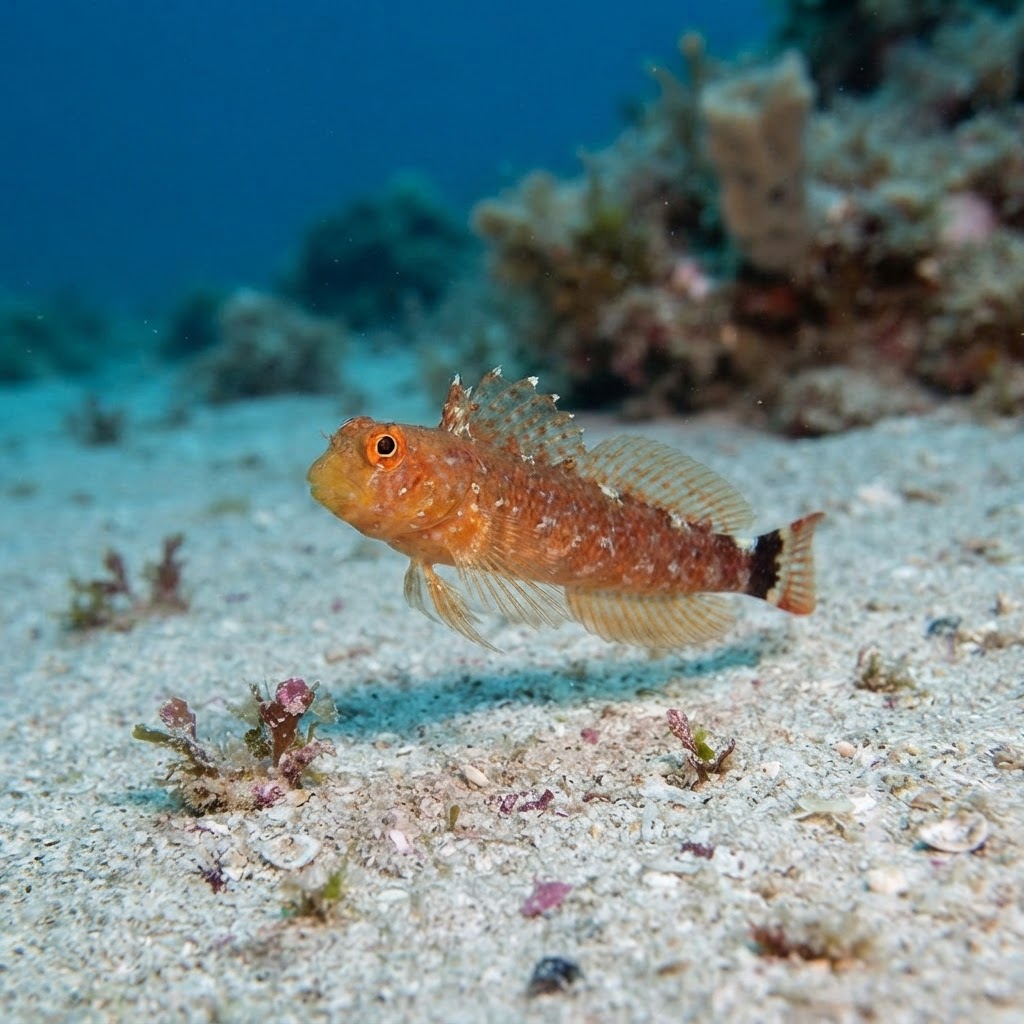
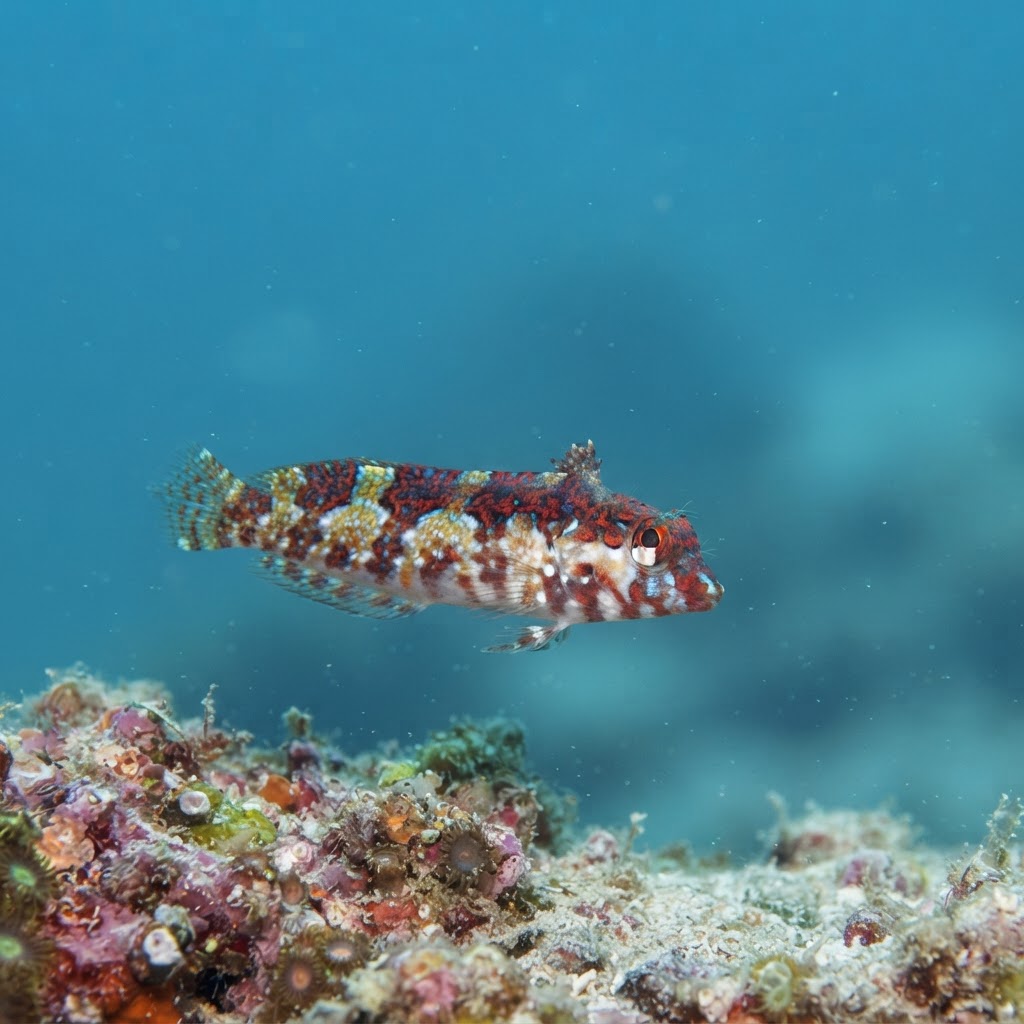
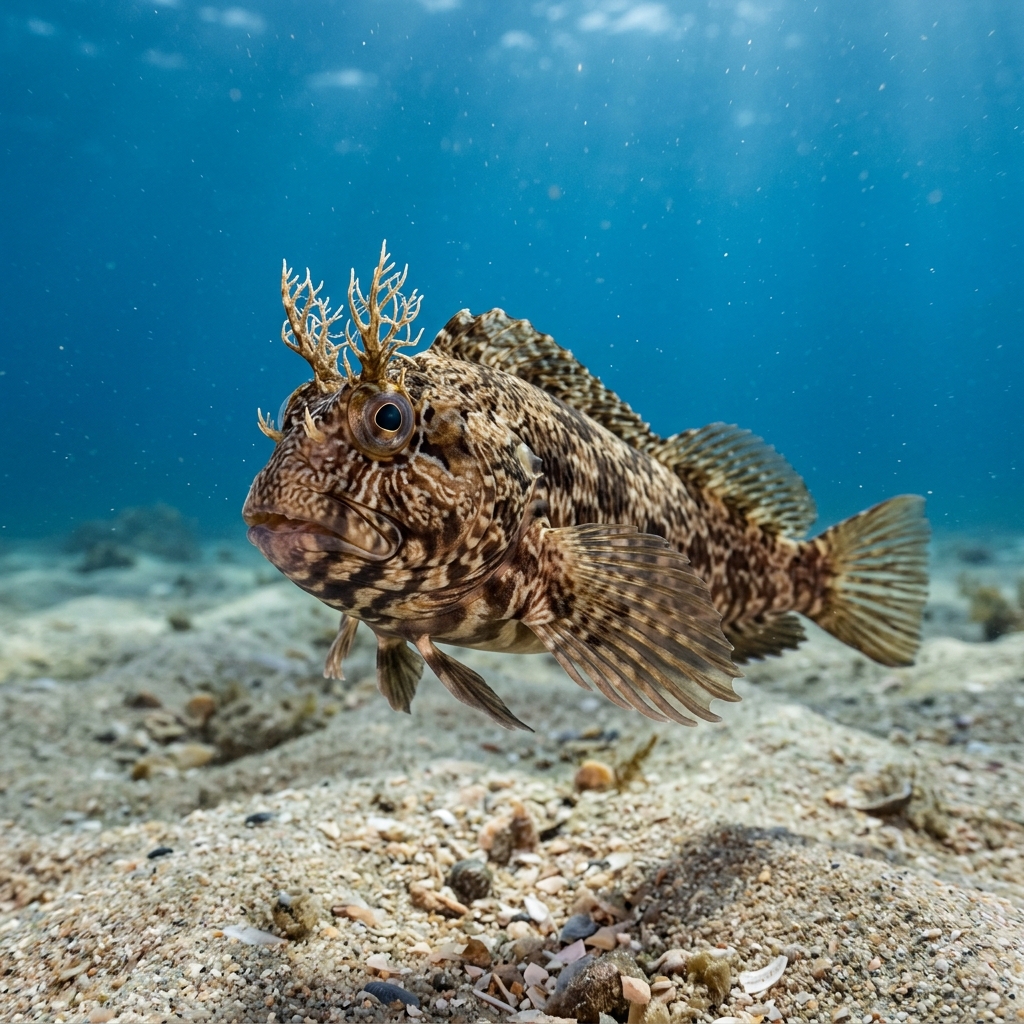
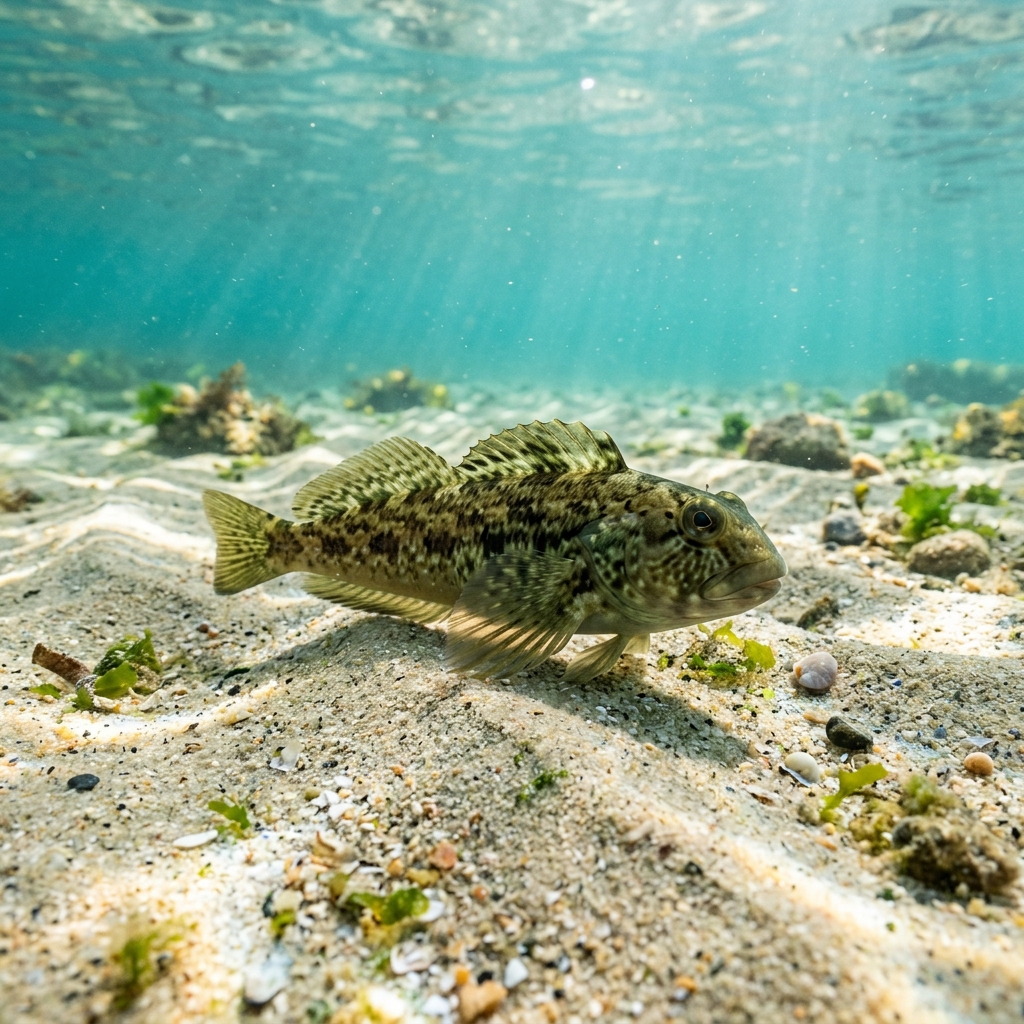
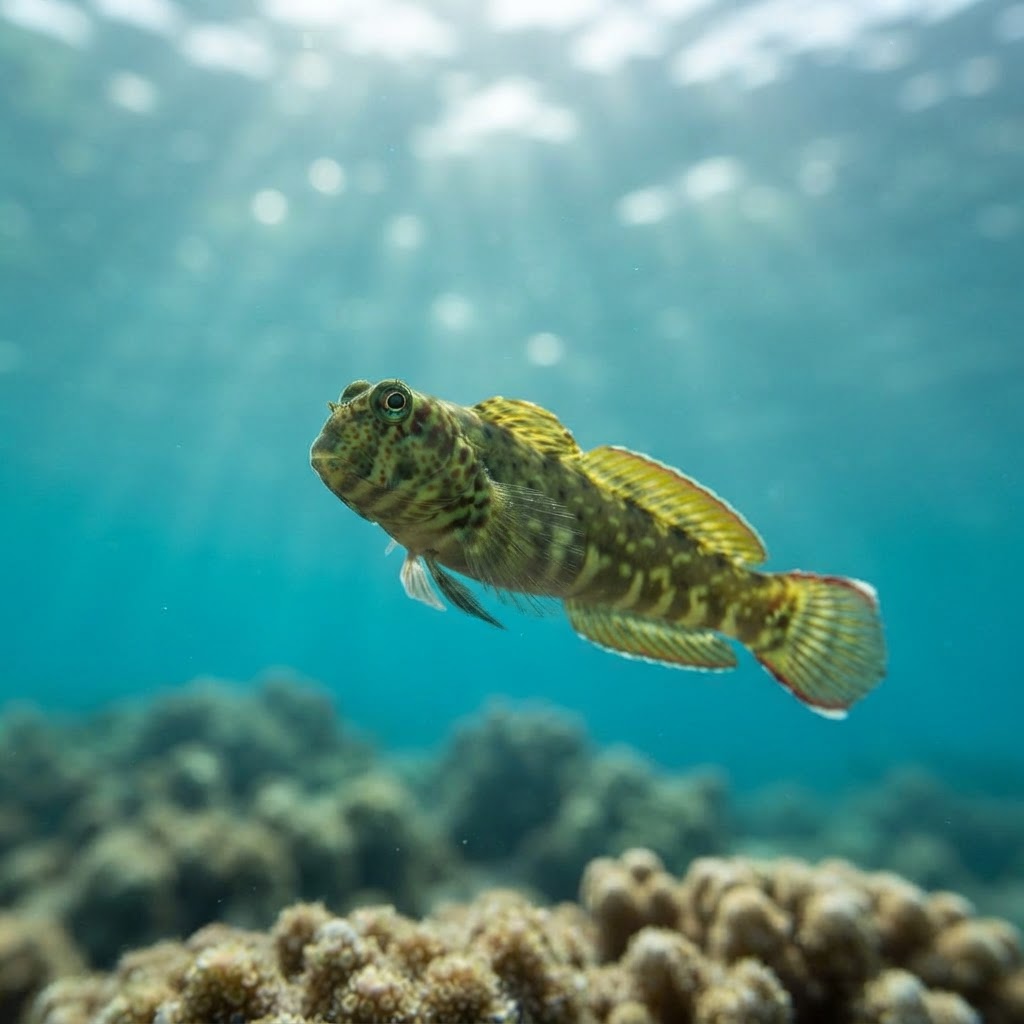
A stubby little fish barely 8 cm long, mottled in streaky brown and olive tones that blend it straight into algae-covered rock. Look for a blunt head with high-set eyes and a slightly humped forehead, and the way it perches propped on its front fins rather than swimming freely. It often sits half out of the water on exposed rock, which is usually the giveaway before the colour pattern is.
Spend most of the dive or snorkel looking down into the shallowest, rockiest stretch of reef, because this is where it perches motionless on algae-covered rock or coral rubble, often in water barely deep enough to cover it. It tolerates a close approach if you move slowly, then skips or flicks itself a short distance across exposed rock rather than swimming off into open water. Most sightings come from the 0 to 3 m zone, so it is as much a snorkel and shore-entry fish as a scuba one.
Its common name comes from an ability shared with other rockskippers: it can survive brief periods stranded out of water on wet rock between waves, breathing air while it waits for the next surge to cover it again.
No clear seasonal pattern shows up in sightings, and with a comfortable range of 23 to 29 C it stays active on shallow reef flats and tide pools all year round.
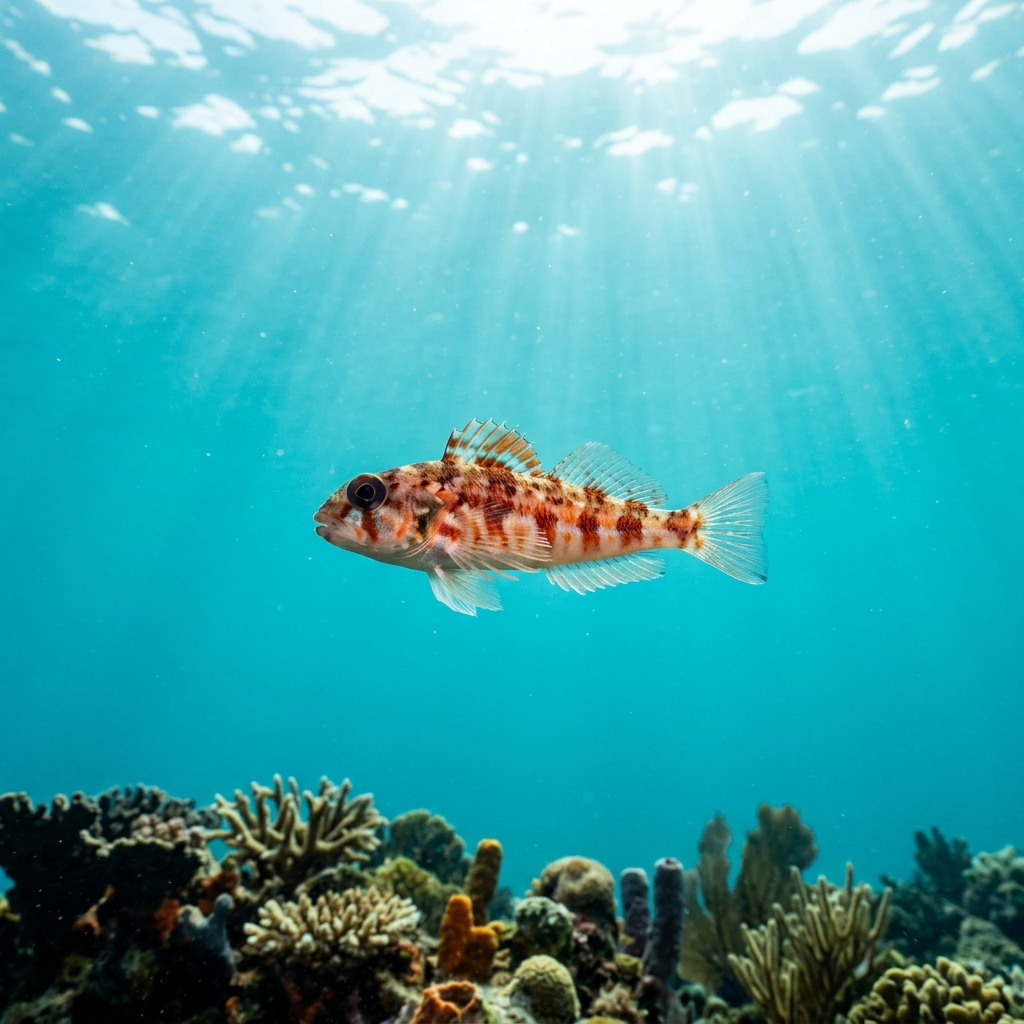
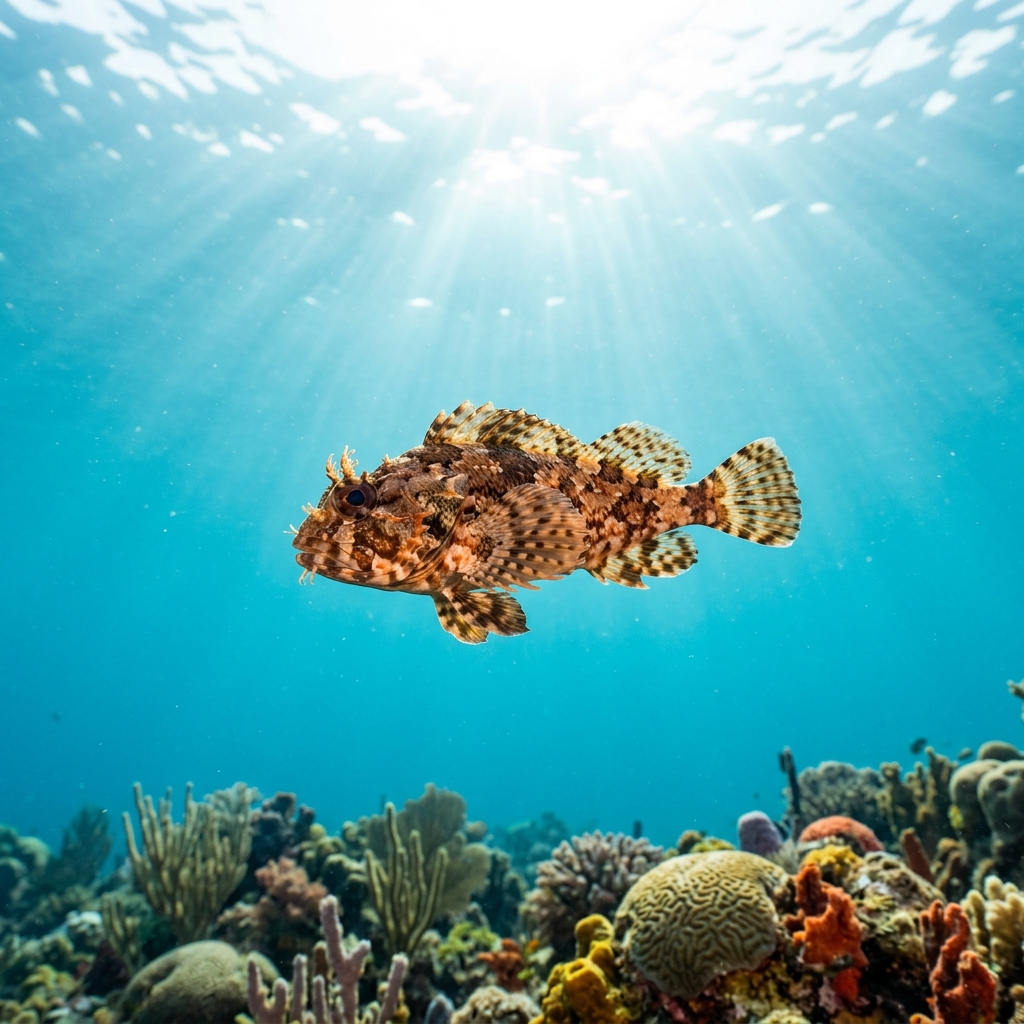
Reef neighbours a diver could mistake it for. Use the identification notes above to tell them apart.
Most commonly logged on the shallow reef flats of Phuket in Thailand, with strong numbers also across Koh Lanta and the Andaman Islands of India. Outside Thailand it turns up reliably in Sulawesi in Indonesia, the Inner Islands of Seychelles, Palawan in the Philippines, and around Nouméa in New Caledonia, plus sites in Taiwan's Longdong and Fiji.
Mapping where Streaky Rockskipper is logged…
Phuket in Thailand is the most reliable spot, followed by Koh Lanta and the Andaman Islands of India. It also shows up in Sulawesi, the Seychelles Inner Islands, Palawan, and around Nouméa in New Caledonia.
There is no strong season in the data, and with a comfortable temperature range of 23 to 29 C it is present on shallow tropical reef flats throughout the year.
Look for a small, streaky brown blenny under 8 cm perched on exposed rock or rubble in very shallow water, propped on its front fins rather than swimming. Its mottled pattern camouflages it against algae-covered rock, and it often sits partly out of the water.
They stay small, typically around 8 cm long, which along with their camouflage is part of why they are easy to swim past unnoticed.
Like other rockskippers, it can survive brief spells stranded out of water on wet rock between wave surges, a trait that lets it hold territory right at the water's edge.
No. They are harmless, tiny herbivores that will skip away across the rock rather than confront a diver or snorkeller.
Site and sighting data is aggregated from diver logs, iNaturalist and GBIF. For taxonomy and conservation status:
Rusty Blenny
2,605 sites