Cephalopholis spiloparaea
Small red grouper logged across Sulawesi, Taveuni and Palau's Rock Islands, tucked into reef crevices in 21-28C water year-round.
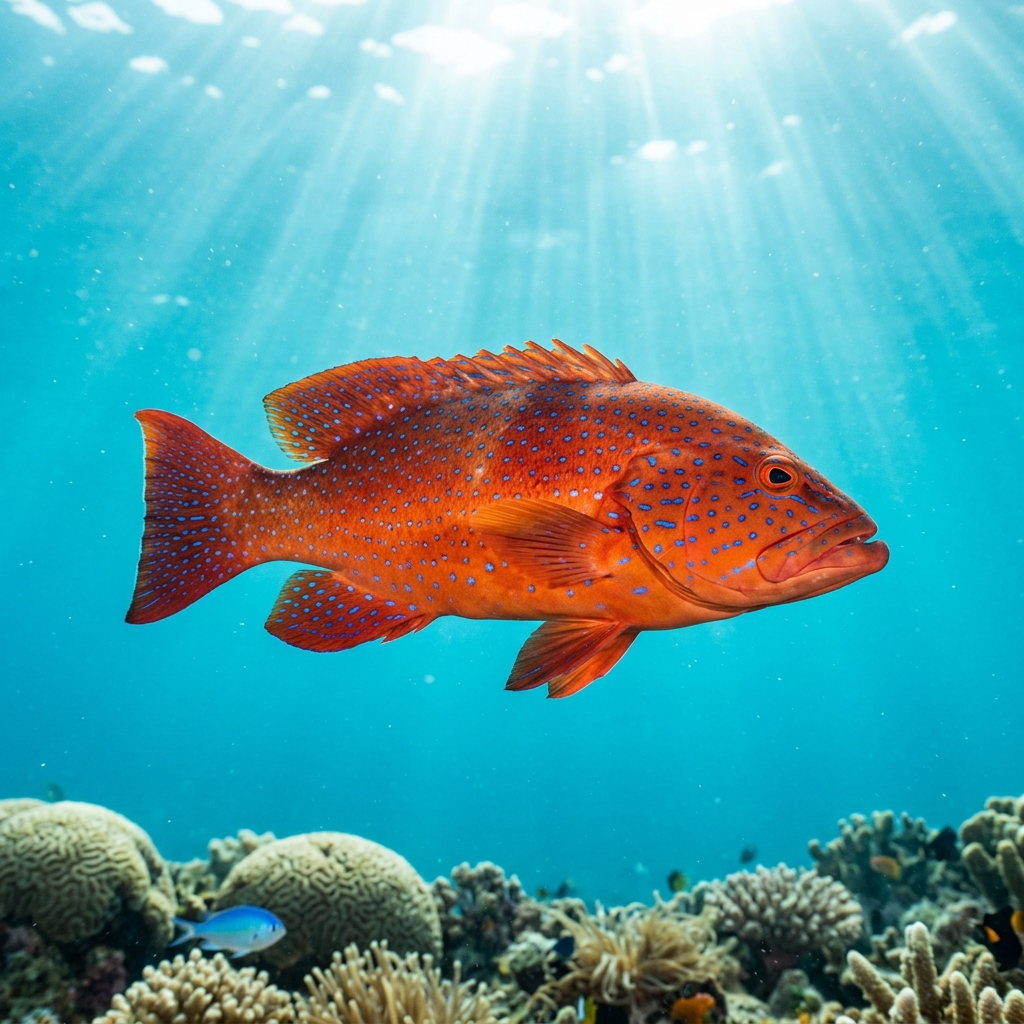
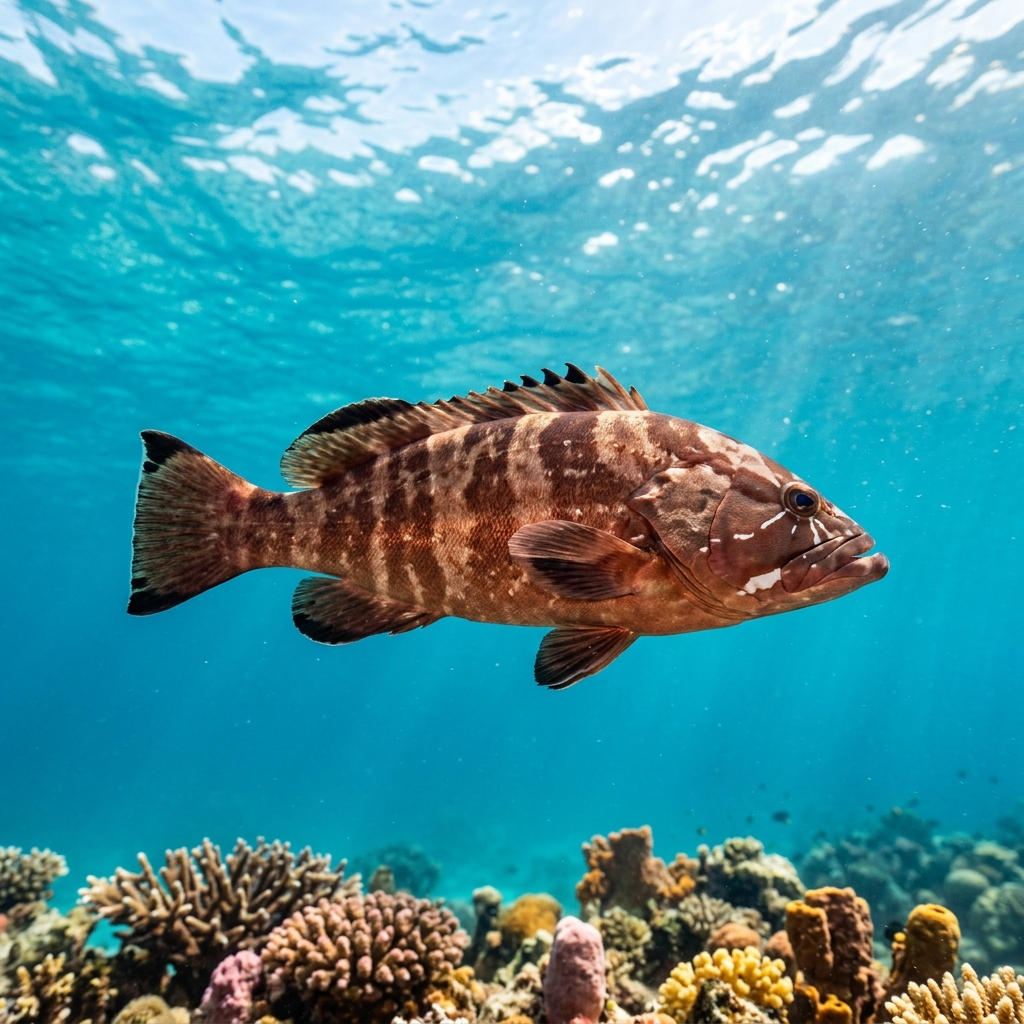
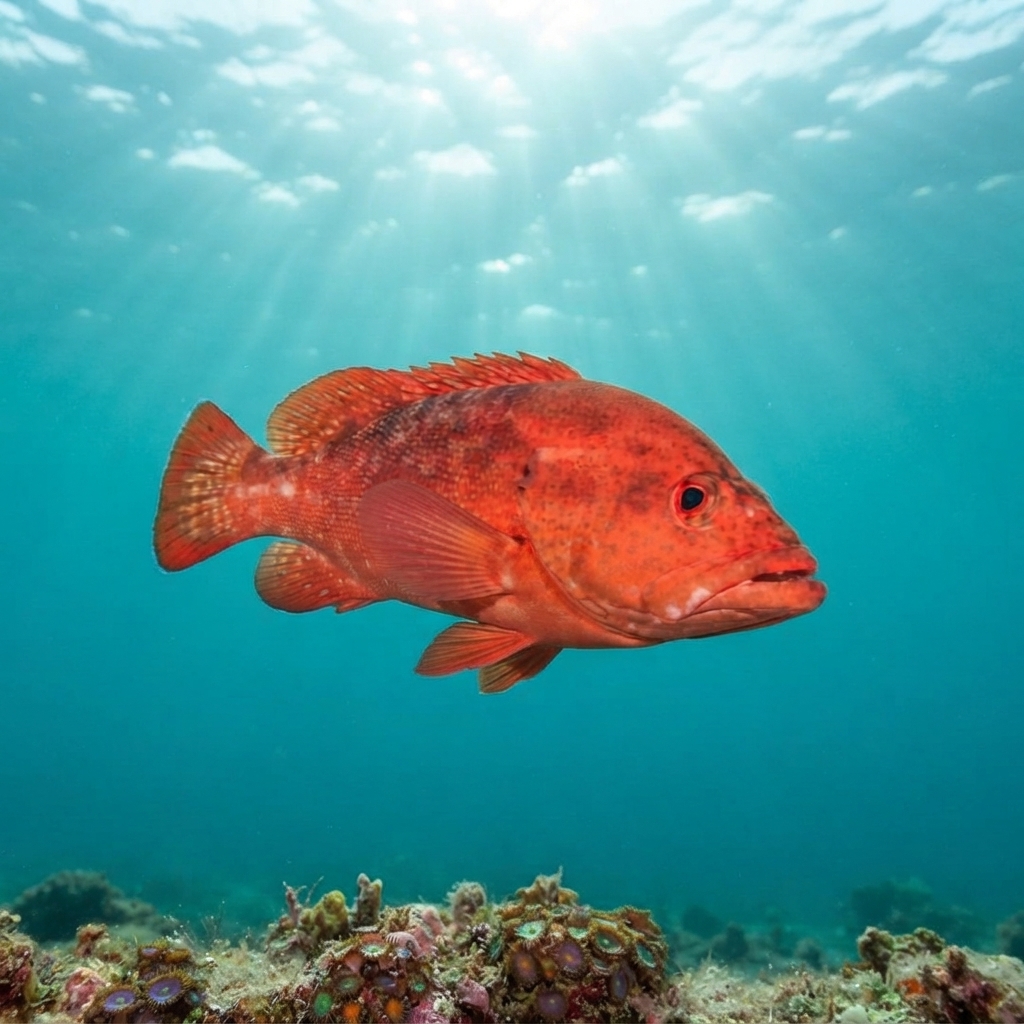
Small, chunky grouper rarely more than 21 cm, coloured strawberry-red to reddish-orange over its whole body. Look for faint pale blue spots scattered across the head and flanks, most visible when a torch or strobe lights it up. It has the classic hind/grouper build: rounded fins, a slightly humped back, and a habit of hovering close to a hole rather than swimming in open water.
Expect to find it perched near a small cave mouth, ledge, or coral crevice rather than out over open reef, usually sitting still or making short darts to grab a passing shrimp or small fish. It tends to hold its ground when a diver approaches slowly, only slipping back into cover if you crowd it, which makes it a good subject for divers who take their time on a reef wall or rubble slope.
Like other Cephalopholis groupers, it's a protogynous hermaphrodite, meaning individuals start life as females and some later change into males as they grow.
No clear seasonal pattern shows up in the data, and its comfort range of 21.2 to 28.1C spans typical tropical reef conditions year-round, so any month is workable at these sites.
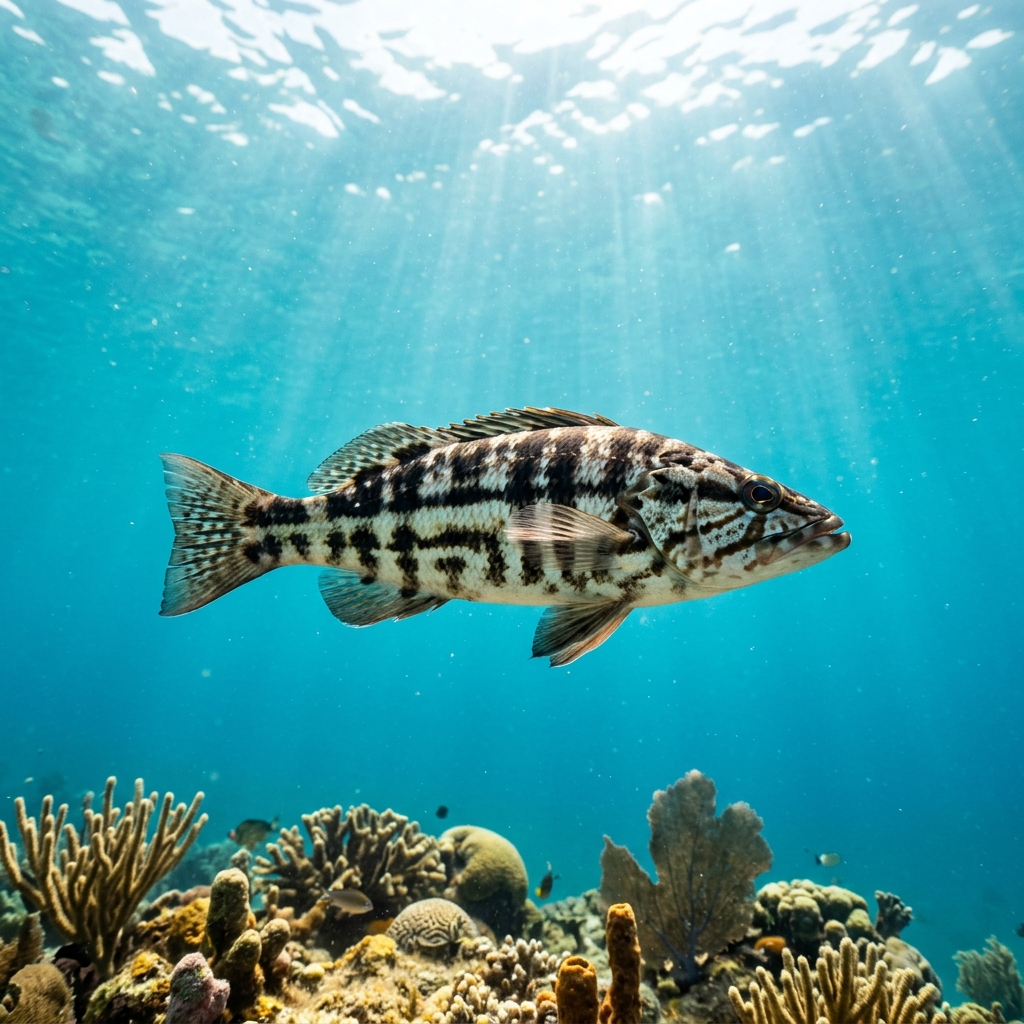
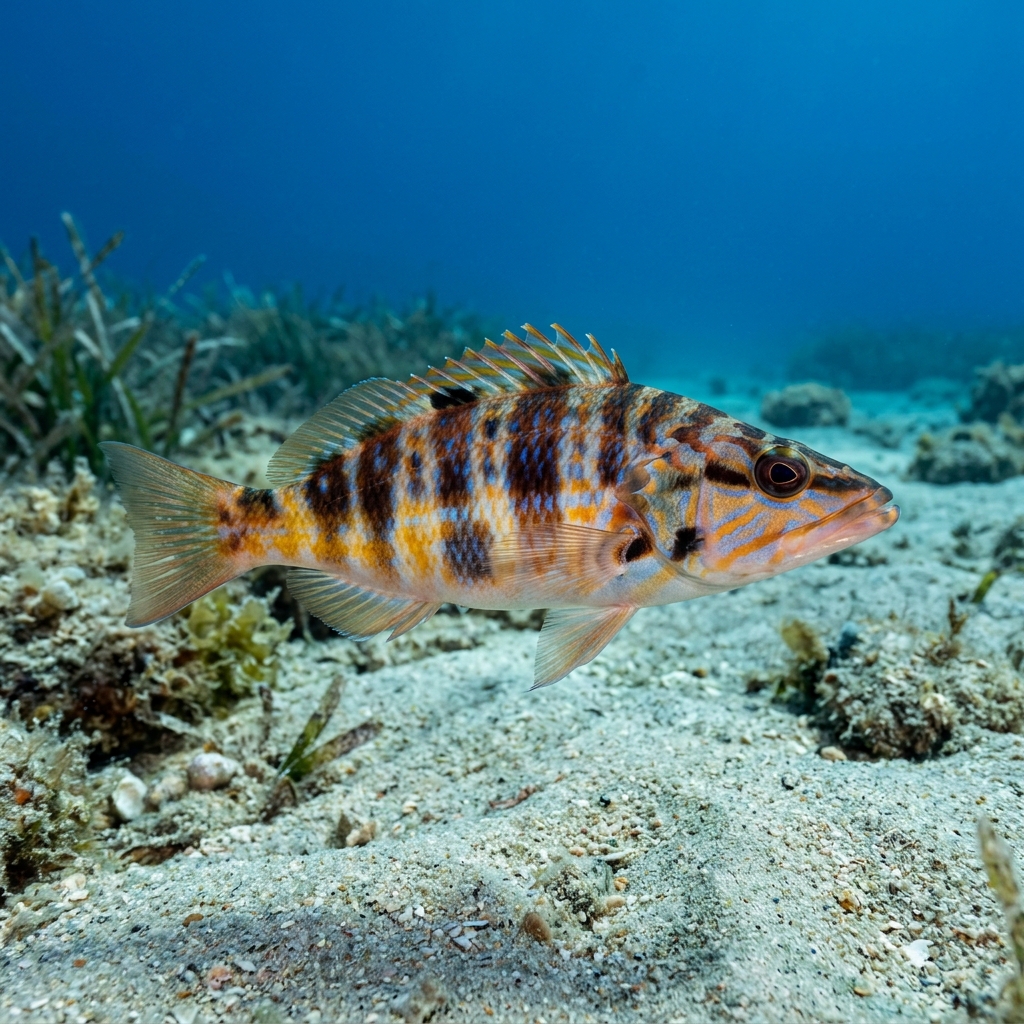
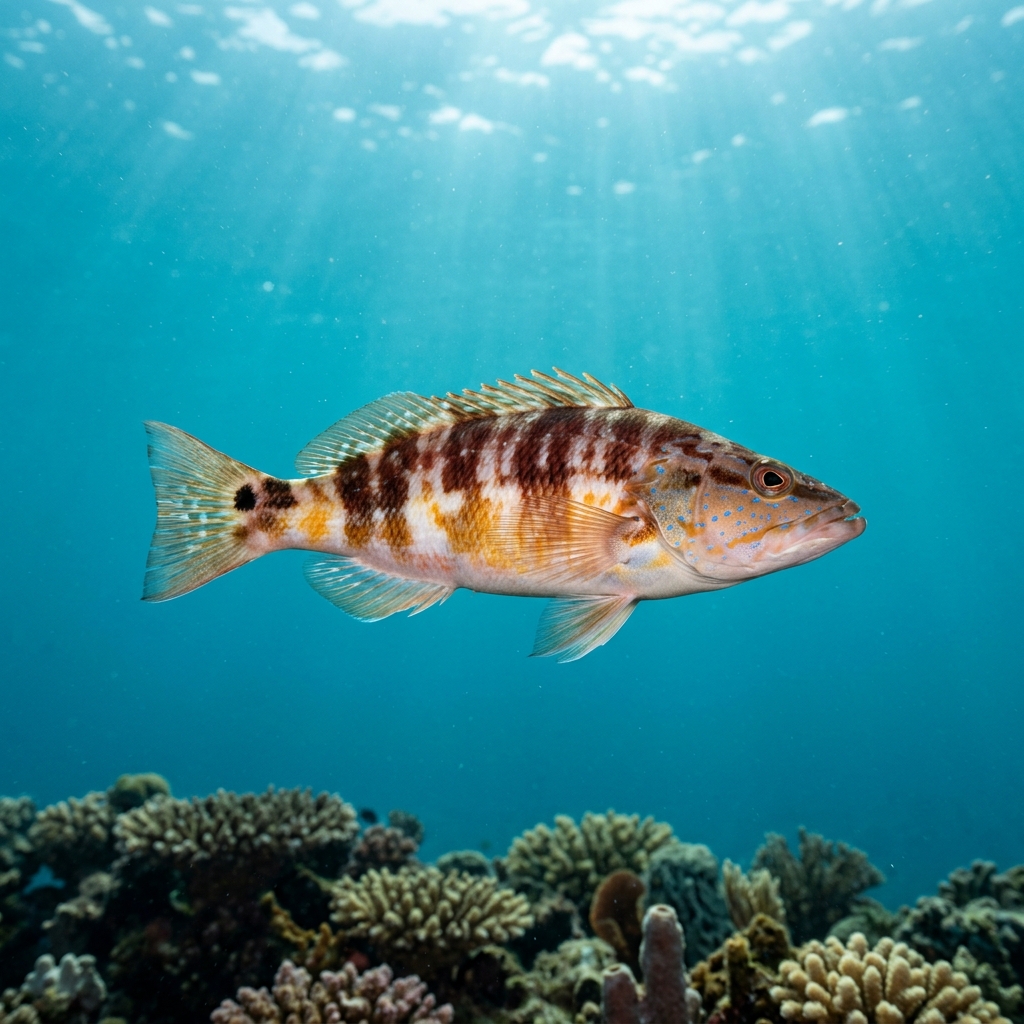
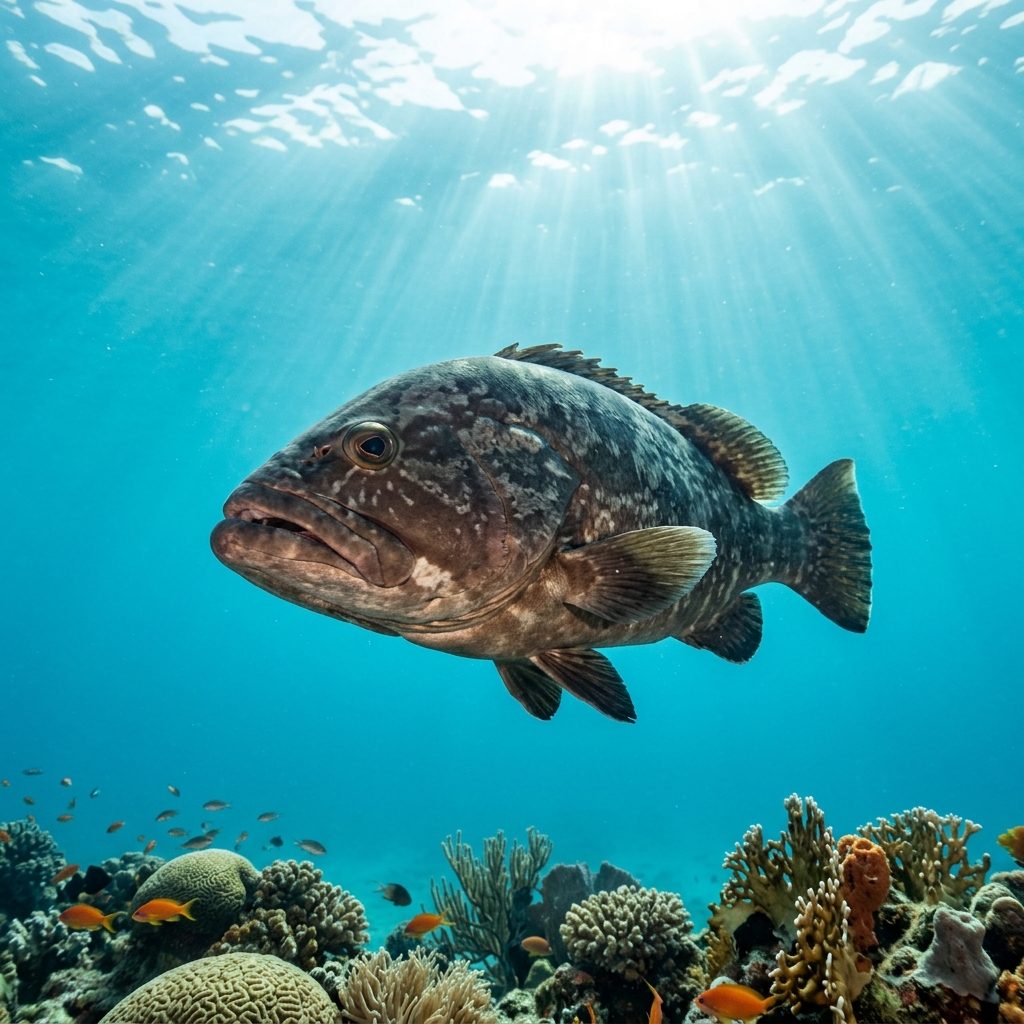
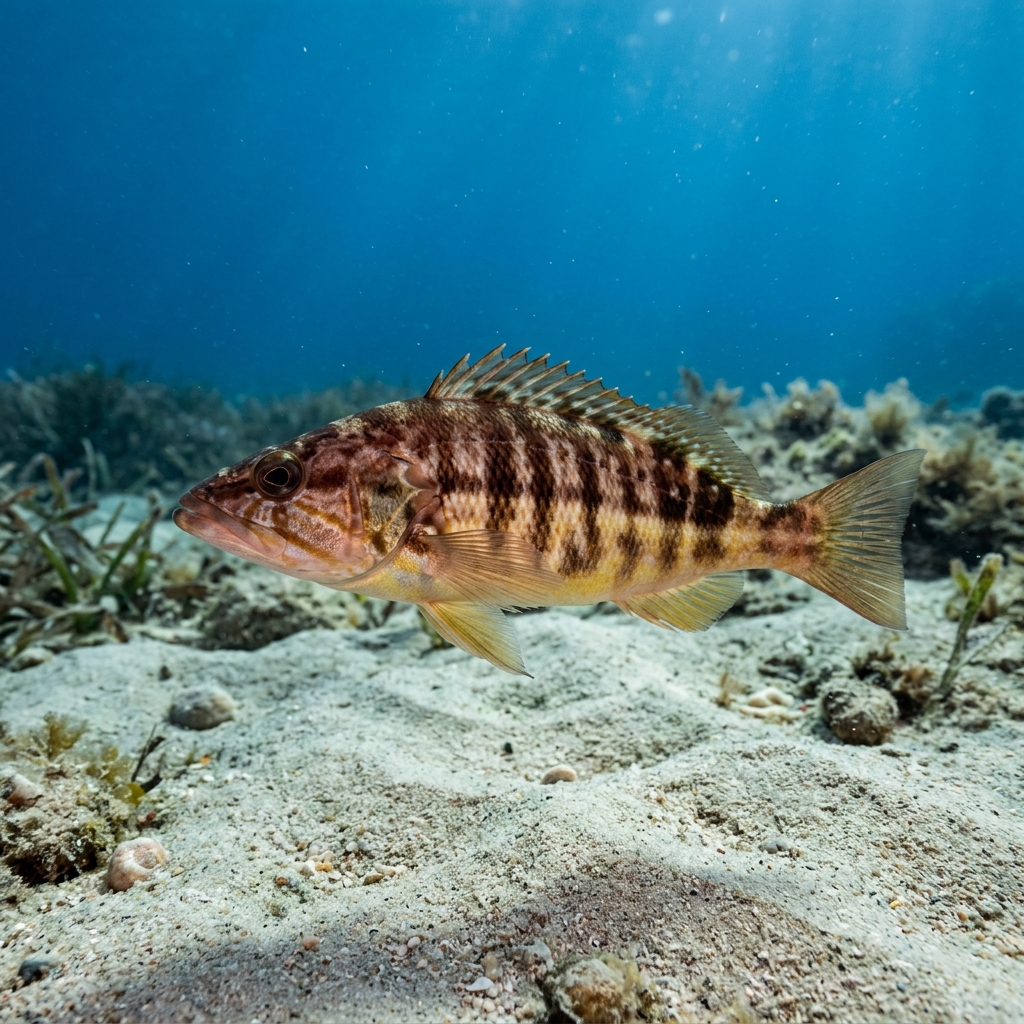
Reef neighbours a diver could mistake it for. Use the identification notes above to tell them apart.
Most reliably found on reefs across Sulawesi in Indonesia, which accounts for the bulk of logged sightings, with further strong pockets in Raja Ampat. Outside Indonesia, it's a regular find around Taveuni in Fiji and the Rock Islands of Palau, with occasional records from Mafia Island in Tanzania, Dili in Timor-Leste, and Kwajalein Atoll in the Marshall Islands.
Mapping where Strawberry Hind is logged…
Sulawesi in Indonesia is the strongest region for it, with further sightings in Raja Ampat, around Taveuni in Fiji, and through Palau's Rock Islands. Smaller numbers turn up off Mafia Island in Tanzania and Dili in Timor-Leste.
There's no strong seasonal signal in the sightings data, and its temperature range of roughly 21 to 28C covers year-round tropical reef conditions, so it's a fair bet on any visit to its range.
Look for a small, stocky reef grouper under about 21 cm, coloured a solid strawberry-red with faint pale blue spots on the head and body. It's usually seen sitting near a crevice or ledge rather than out swimming.
They're a small grouper, typically topping out around 21 cm, which makes them easy to overlook against a red or orange-tinted reef background.
Yes. Like many hinds in the genus Cephalopholis, individuals begin life as females and some transition to male later, a pattern common across grouper species.
Site and sighting data is aggregated from diver logs, iNaturalist and GBIF. For taxonomy and conservation status:
Blacktip Grouper
2,726 sites