Cirrhitus rivulatus
Big, mottled and boulder-still on rocky reefs from Baja to Galápagos, water 22-29C, sightings run year-round.
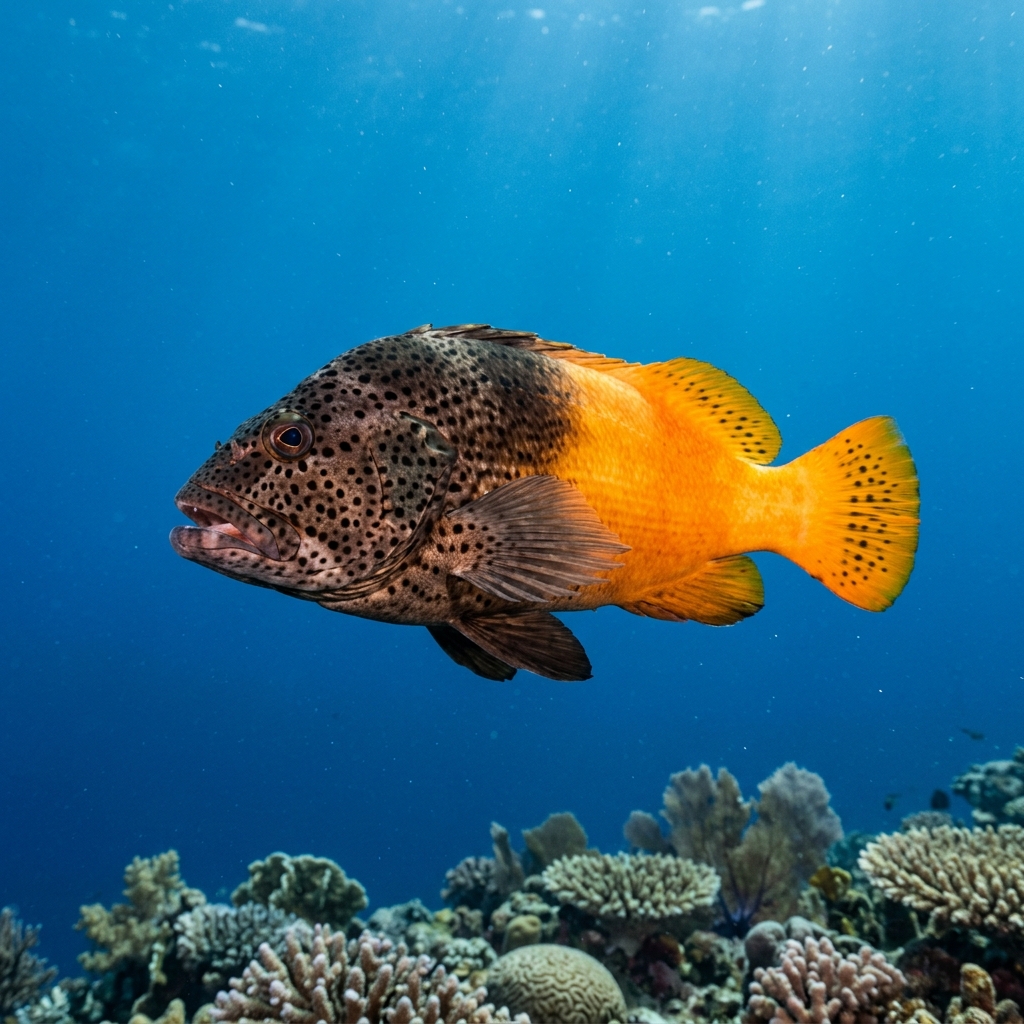
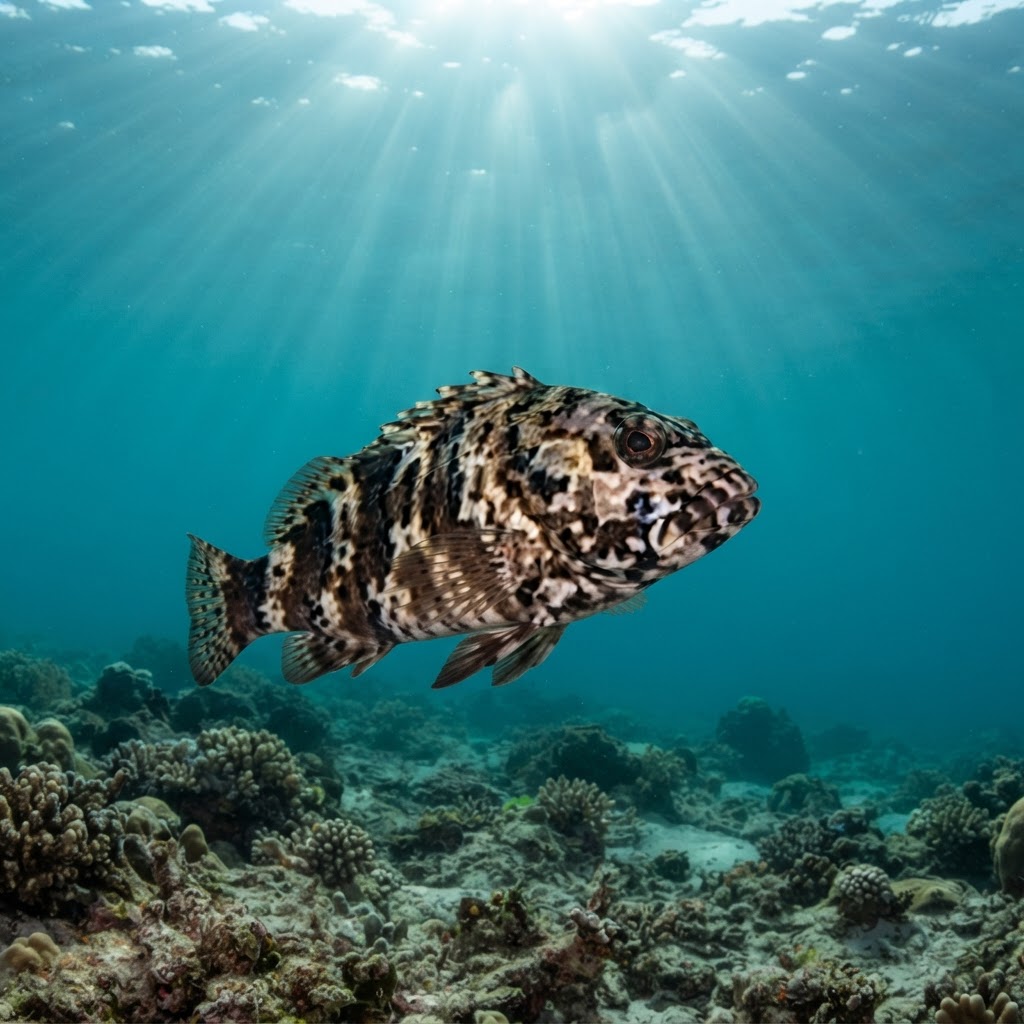
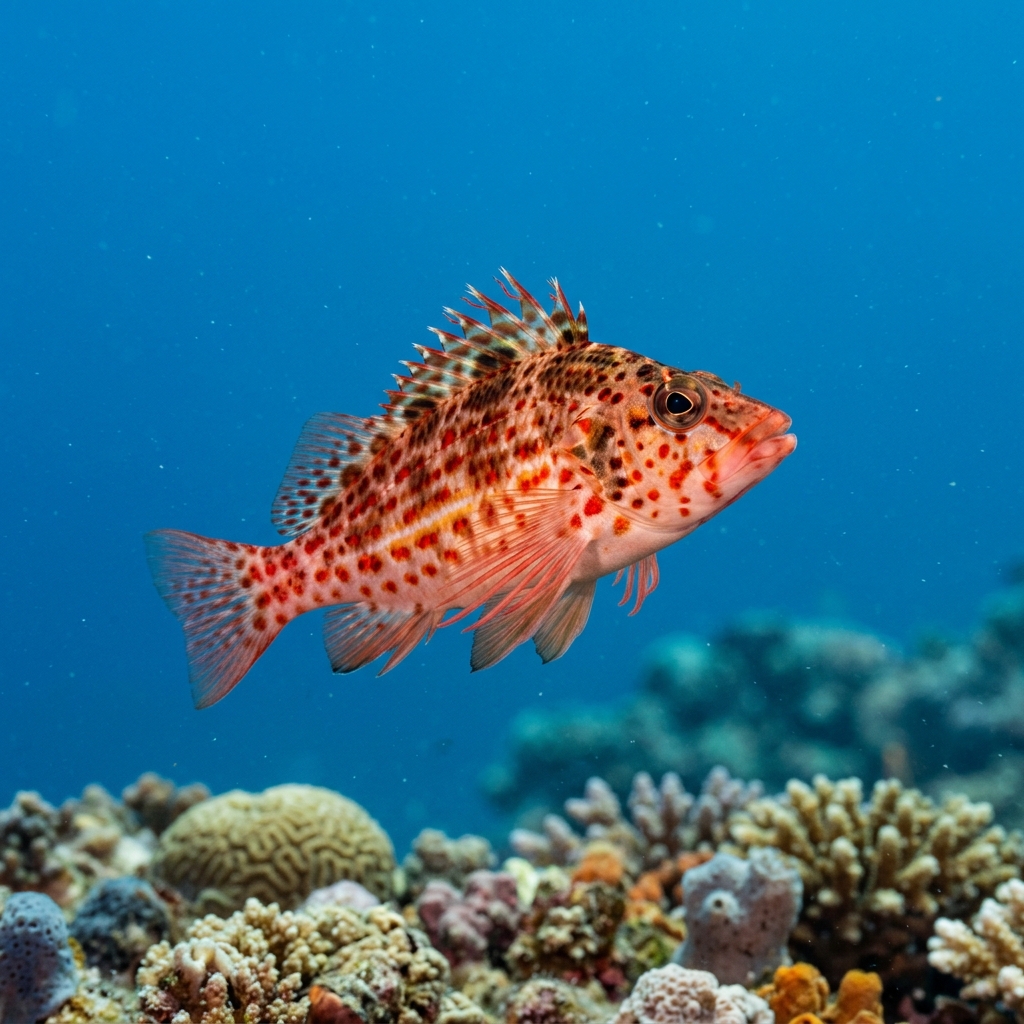
Bulky and thick-bodied for a hawkfish, reaching around 42 cm, with a mottled pattern of grey, brown and cream blotches that breaks up its outline against rock and reef. Look for it perched motionless on a ledge or boulder rather than swimming in open water, propped up on thickened lower fin rays. The head is broad and blunt with a slightly grumpy expression, and the tasselled fin tips typical of hawkfish are visible up close on the dorsal spines.
Spends most of a dive parked on a rock or coral head, using its stiffened lower fins like little props while it watches the water for prey. It is not shy but it is not active either, holding its ground as divers pass rather than fleeing, then making a short, fast lunge if a crab or small fish wanders too close. Most sightings are on rocky and reef-associated bottom in the shallower half of its 5-23 m range, where there is enough structure to ambush from.
It is an ambush predator built for stillness rather than speed, relying on camouflage and a sit-and-wait strategy to snatch crustaceans and small fish that pass within striking range.
No clear season shows up in the data, so treat it as a year-round sighting on rocky reefs. It sits comfortably across a wide 21.6-29.1C range, which matches its habit of staying put on the same ledge through warm and cooler months alike.
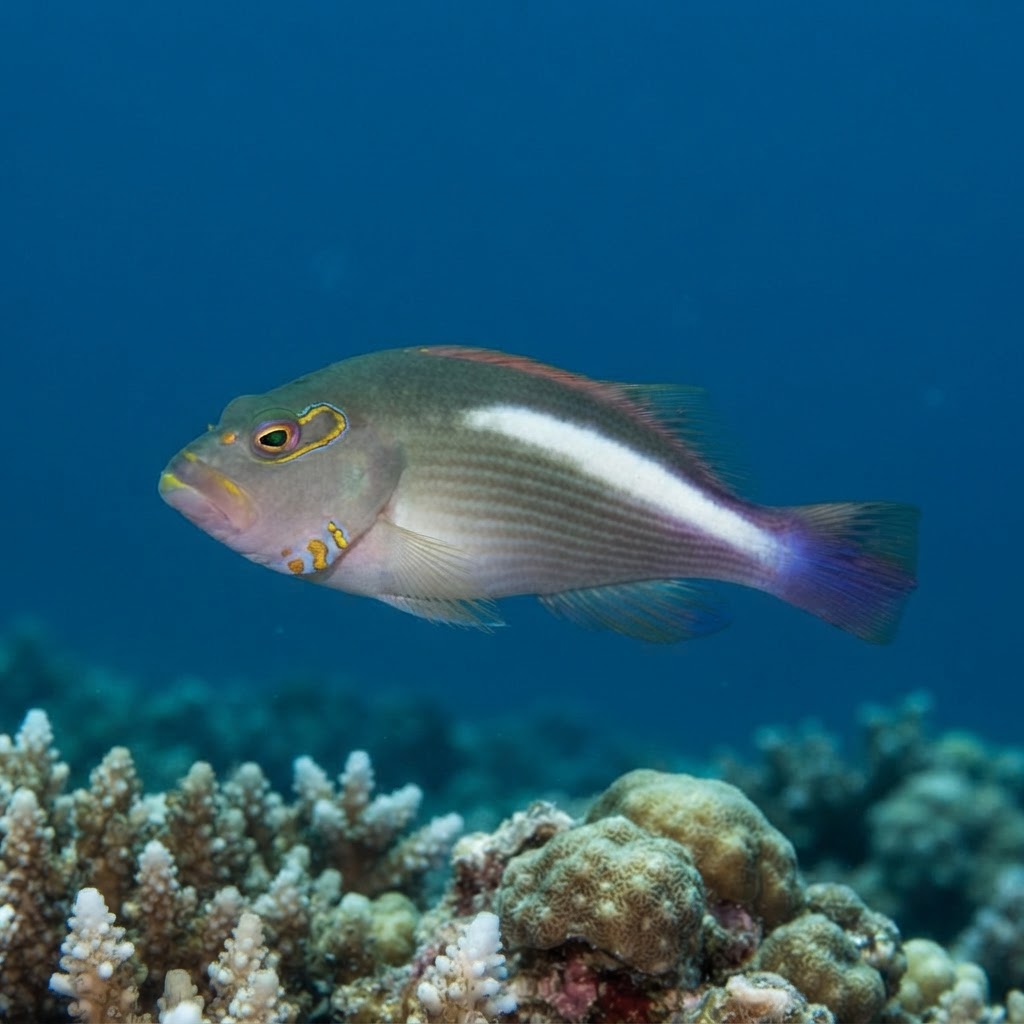
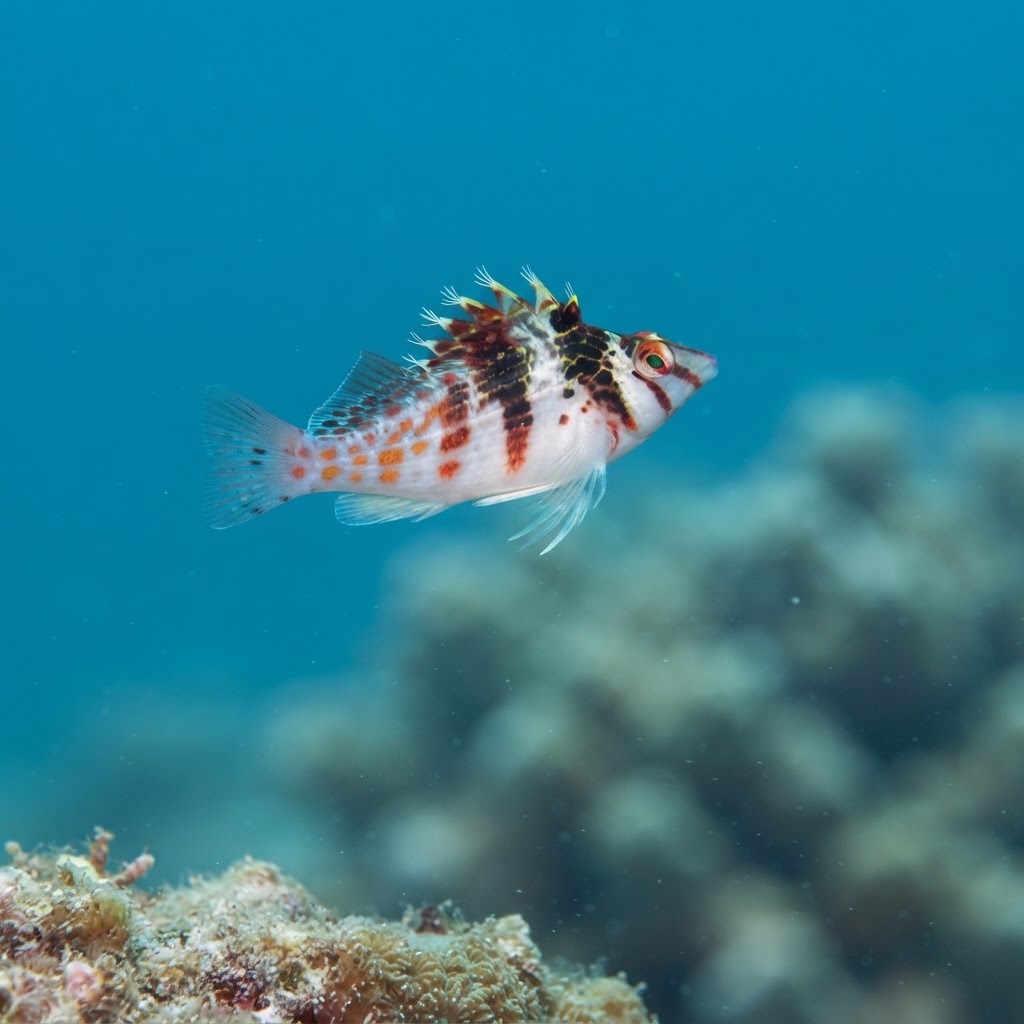
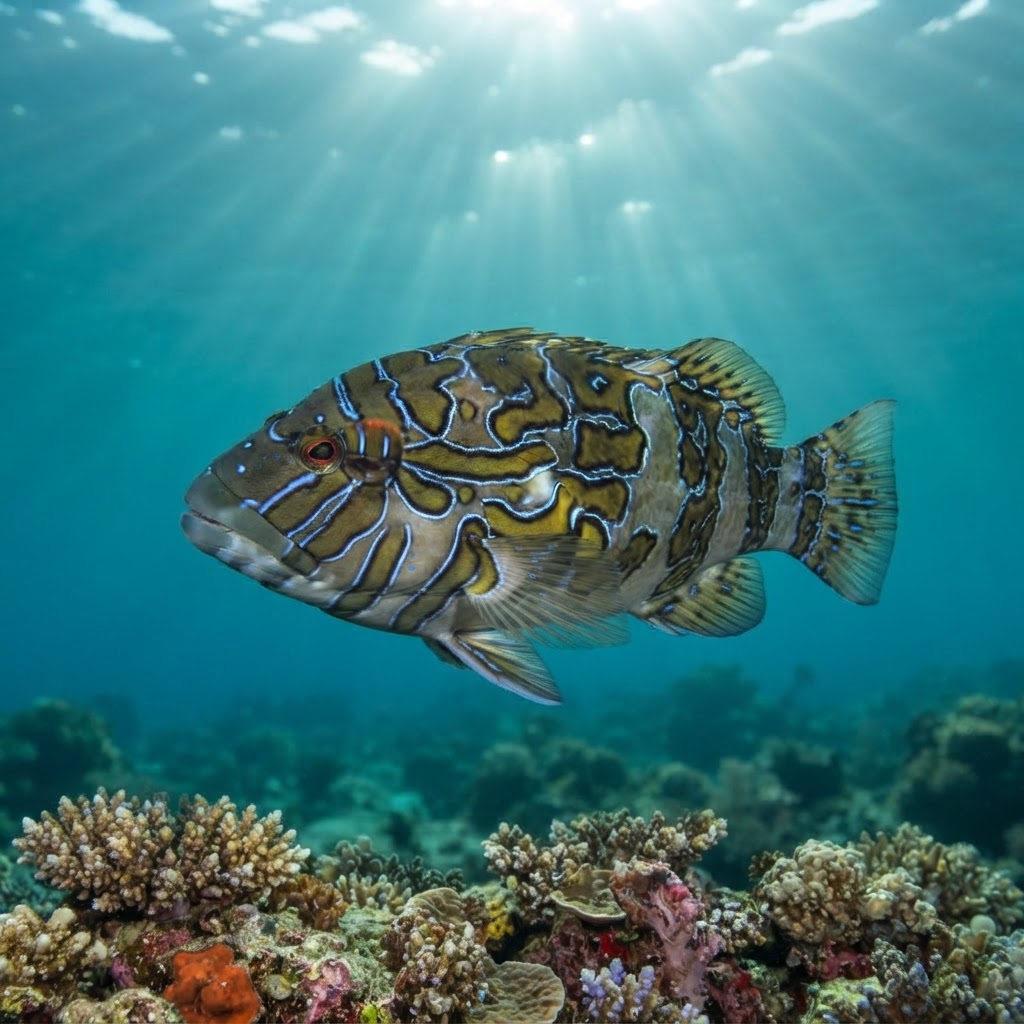
Reef neighbours a diver could mistake it for. Use the identification notes above to tell them apart.
Most reliably logged along Mexico's Baja California and Pacific coast, and a strong presence in Costa Rica's Guanacaste and Central Pacific regions. It also turns up well in Ecuador's Galápagos Islands and at Colombia's Malpelo, with fewer but confirmed sightings in Panama.
Mapping where Giant Hawkfish is logged…
Best chances are on the rocky reefs of Baja California and Mexico's Pacific coast, plus Guanacaste and the Central Pacific in Costa Rica. Ecuador's Galápagos Islands and Colombia's Malpelo also produce regular sightings.
There is no strong season in the sighting data, so it is considered a year-round find. It tolerates water from about 22C to 29C, which covers most of the diving calendar at these sites.
Look for a thickset, mottled grey-brown fish around 40 cm perched motionless on a rock or reef ledge rather than swimming freely. Its blotchy camouflage pattern and habit of propping itself on its lower fins are the giveaways.
They reach around 42 cm, making them one of the larger members of the hawkfish family. That size, combined with their stillness on rock, makes them fairly easy to spot once you know to look at ledges rather than open water.
No, they pose no threat to divers and simply hold their position on the reef as you pass. They may allow a fairly close approach before shifting to a new perch.
Site and sighting data is aggregated from diver logs, iNaturalist and GBIF. For taxonomy and conservation status:
Pixy Hawkfish
762 sites