Brachysomophis cirrocheilos
A rarely-logged eel that buries itself with just its eyes showing in Sulawesi's sandy slopes, in water around 25 to 29 C.
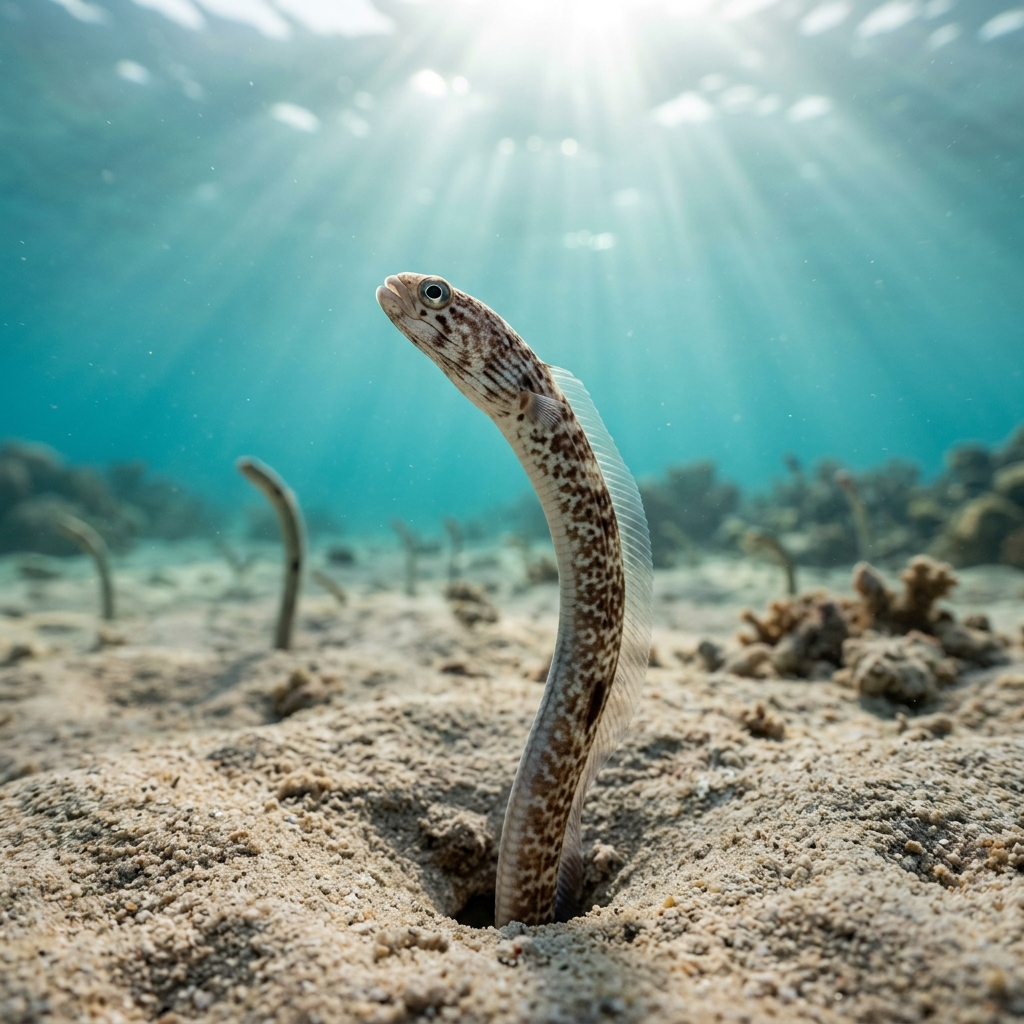
A long, thick-bodied eel that spends nearly all its time buried, so what you actually see is a pair of bulging, upward-facing eyes and sometimes the tip of a blunt snout poking out of sand or rubble. The visible skin is mottled grey-brown, blending closely with the substrate, and the body itself can reach over a metre when fully extended, though divers almost never see that much of it. There's no dorsal fin frill or ribbon-like tail streamer to look for, which is one of the easiest ways to rule out the more showy eels it gets compared to.
Spends its life buried vertically in sand or rubble with only the eyes and sometimes the mouth exposed, ambushing small fish and crustaceans that pass close by. Divers who find one usually do so by slow, careful scanning of sandy patches rather than by the eel moving into view, and it will retreat deeper into its burrow if you get too close or your torch beam lingers. Logged as uncommon even at the one confirmed site, so finding one is a case of a sharp-eyed guide or diver spotting eyes in the sand.
Unlike moray eels that hunt by cruising the reef, this eel almost never leaves its burrow, ambushing prey from a fixed position and relying on camouflage rather than speed or aggression to survive.
No clear seasonal pattern shows up in the sightings so far, and with water in the 25 to 29 C range year-round on Sulawesi's reefs, there's no obvious reason to expect one. Any month diving Sulawesi's sand and rubble slopes gives a shot at it.
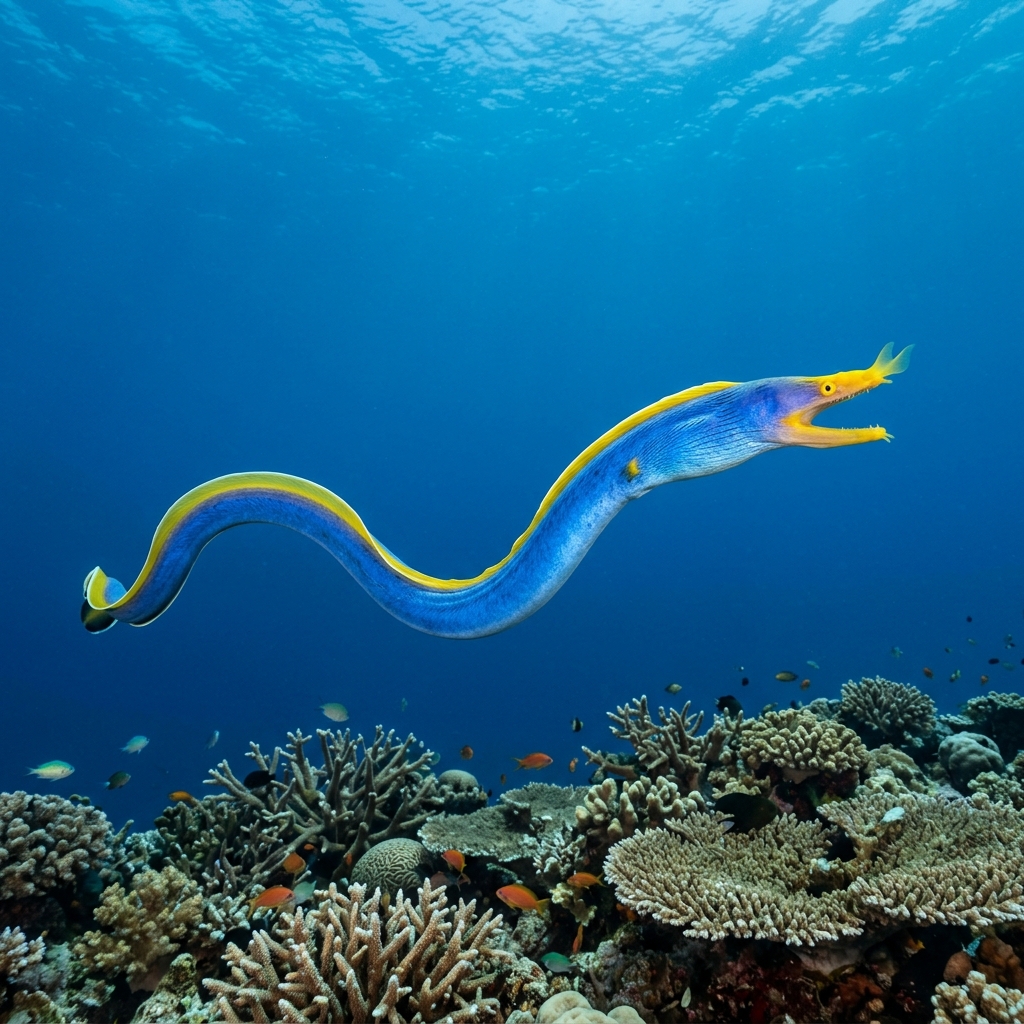
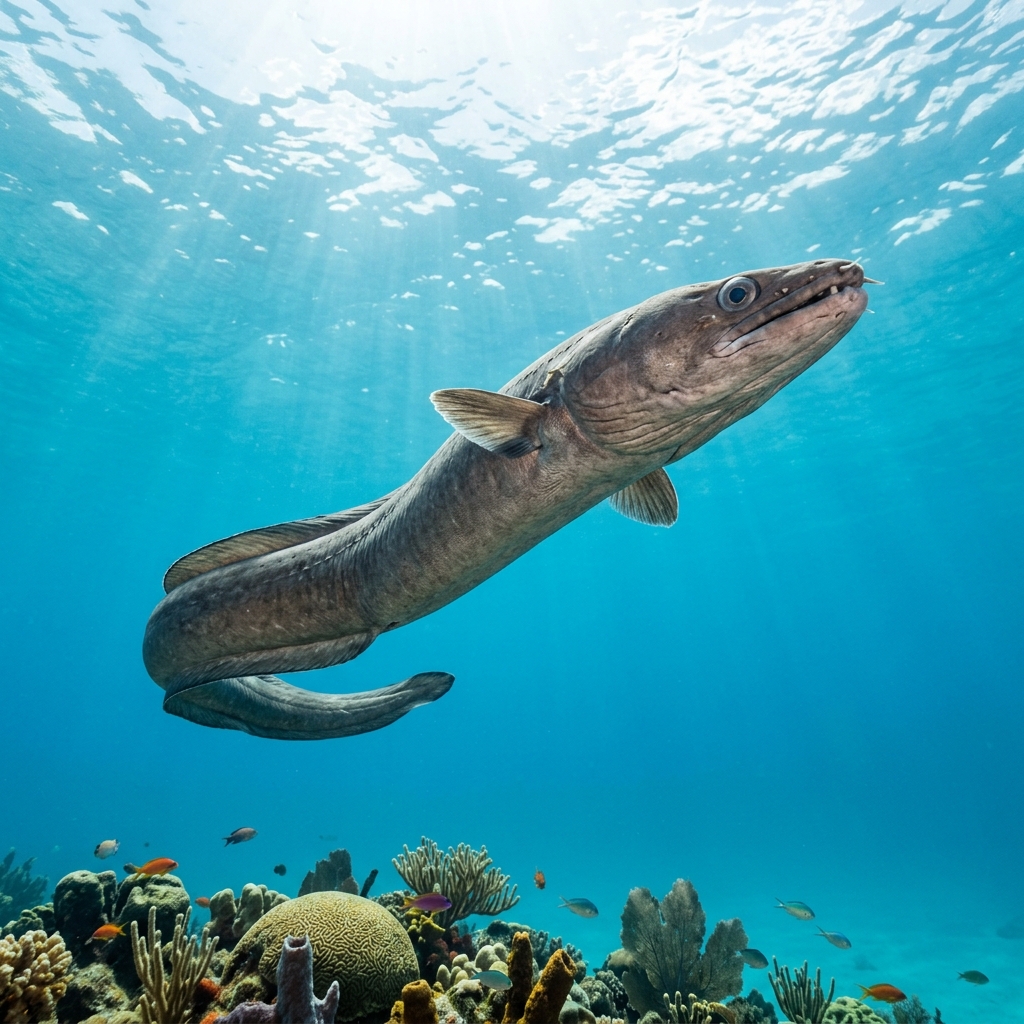
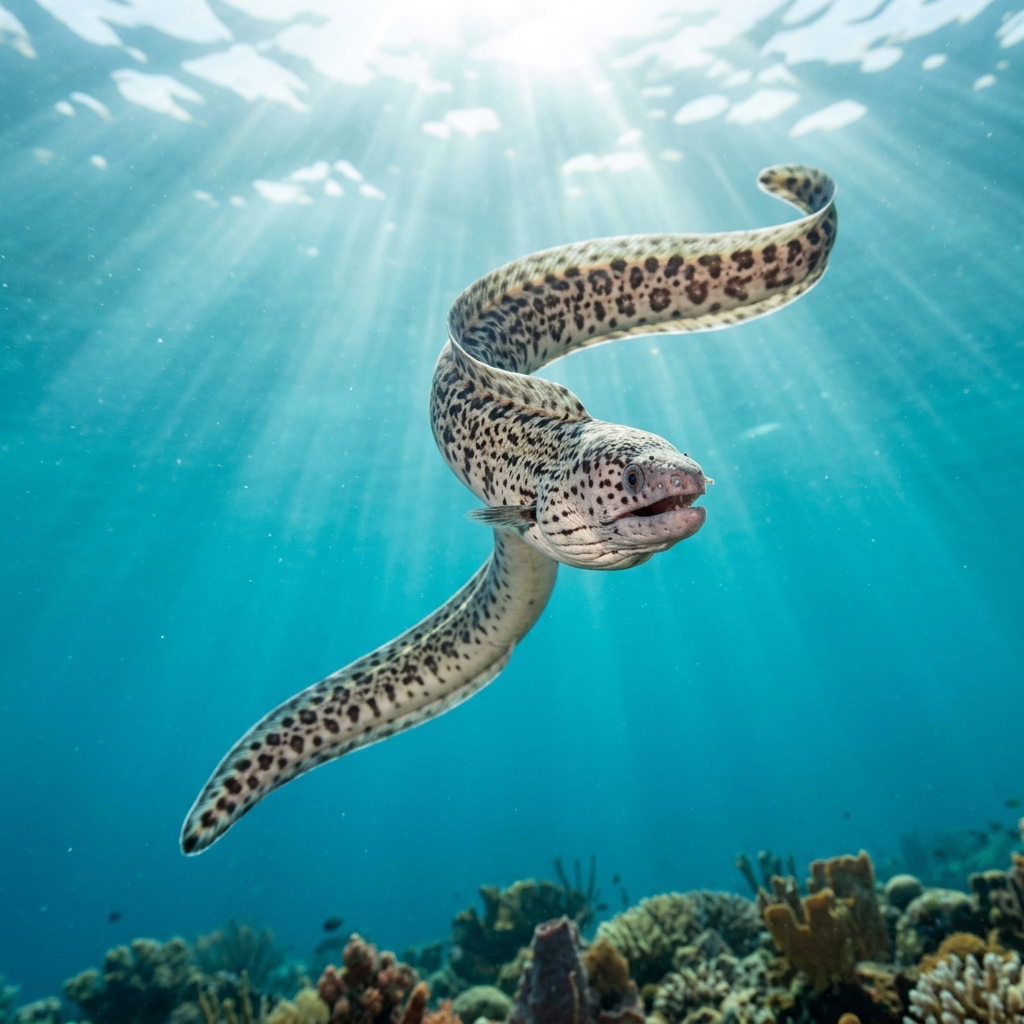
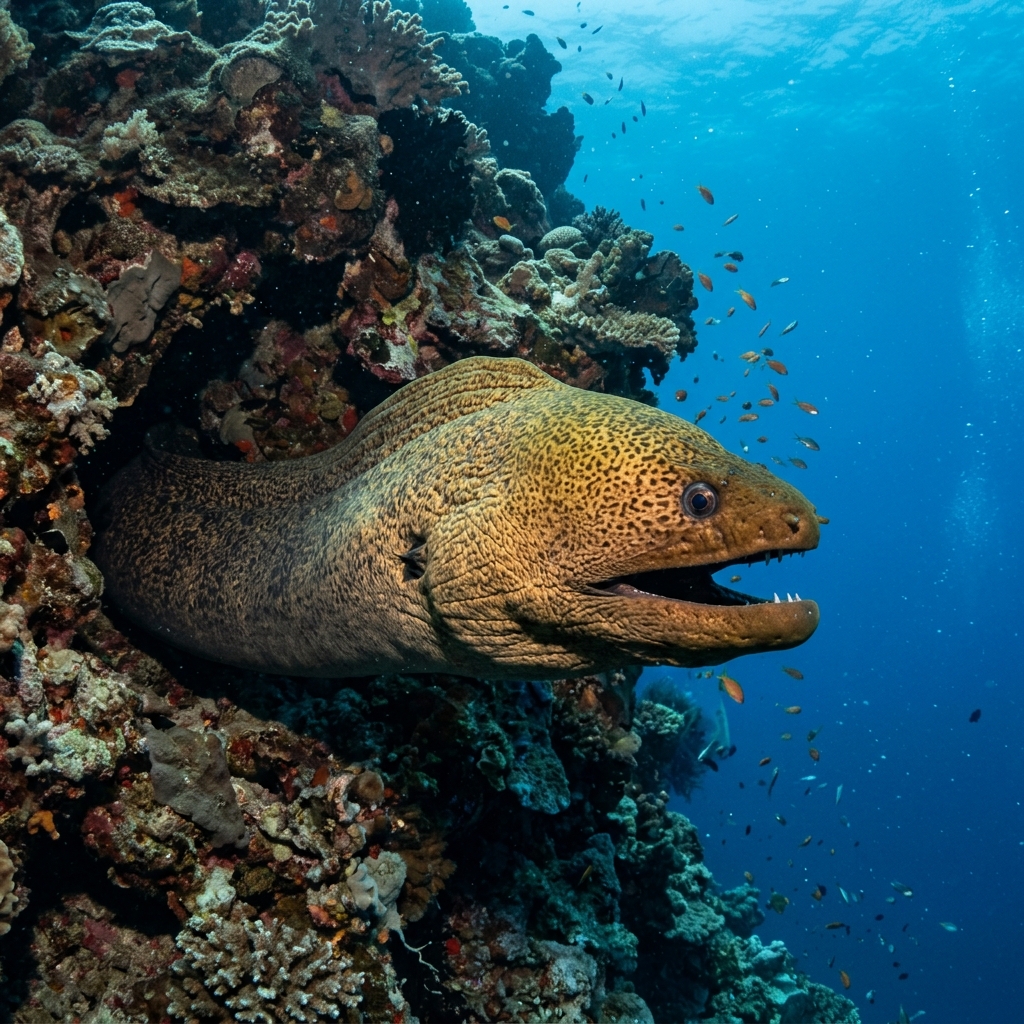
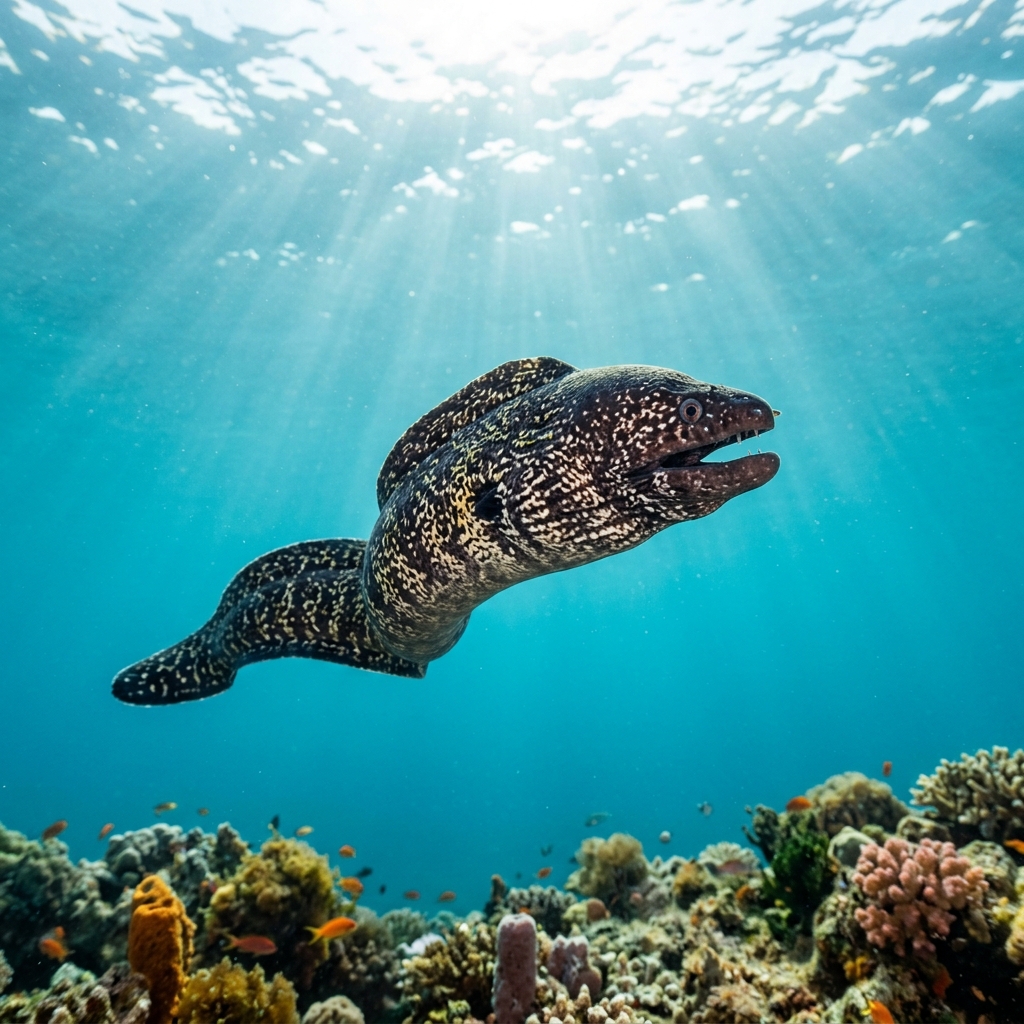
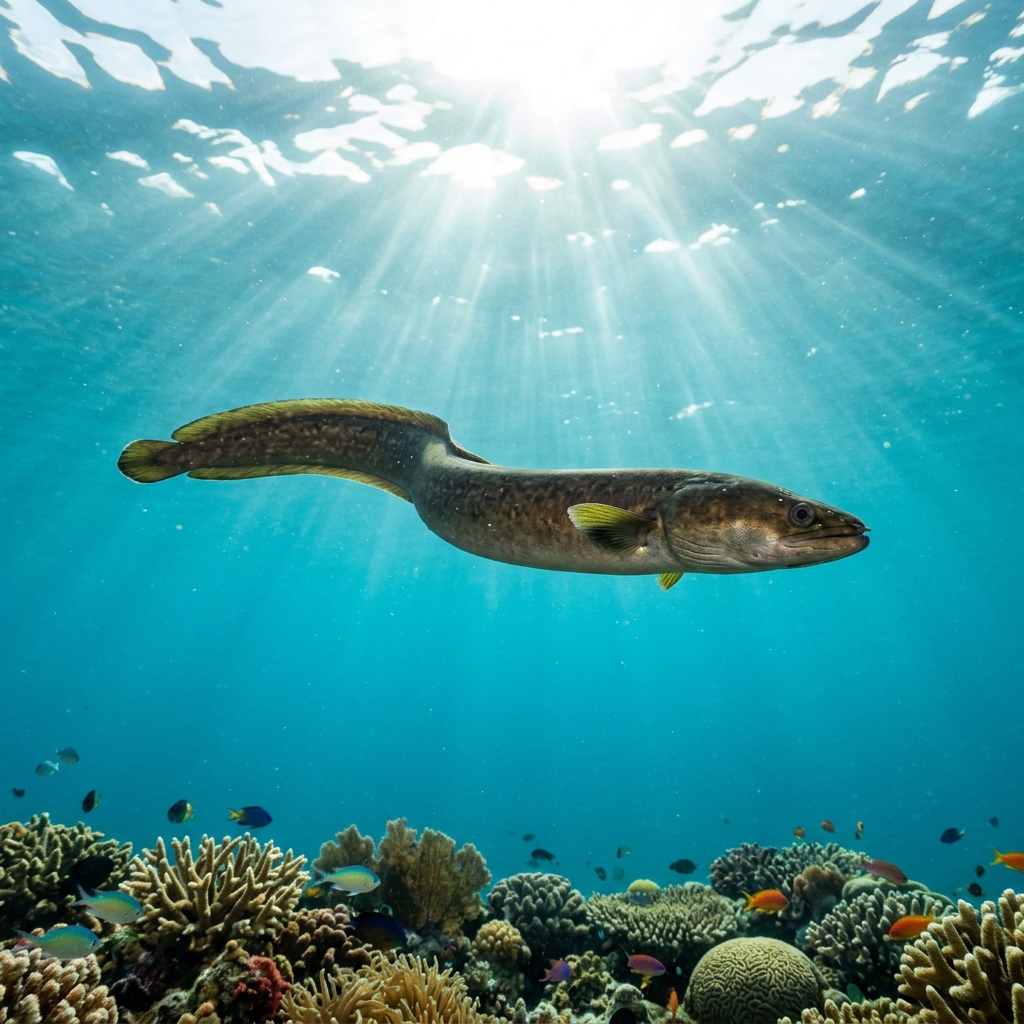
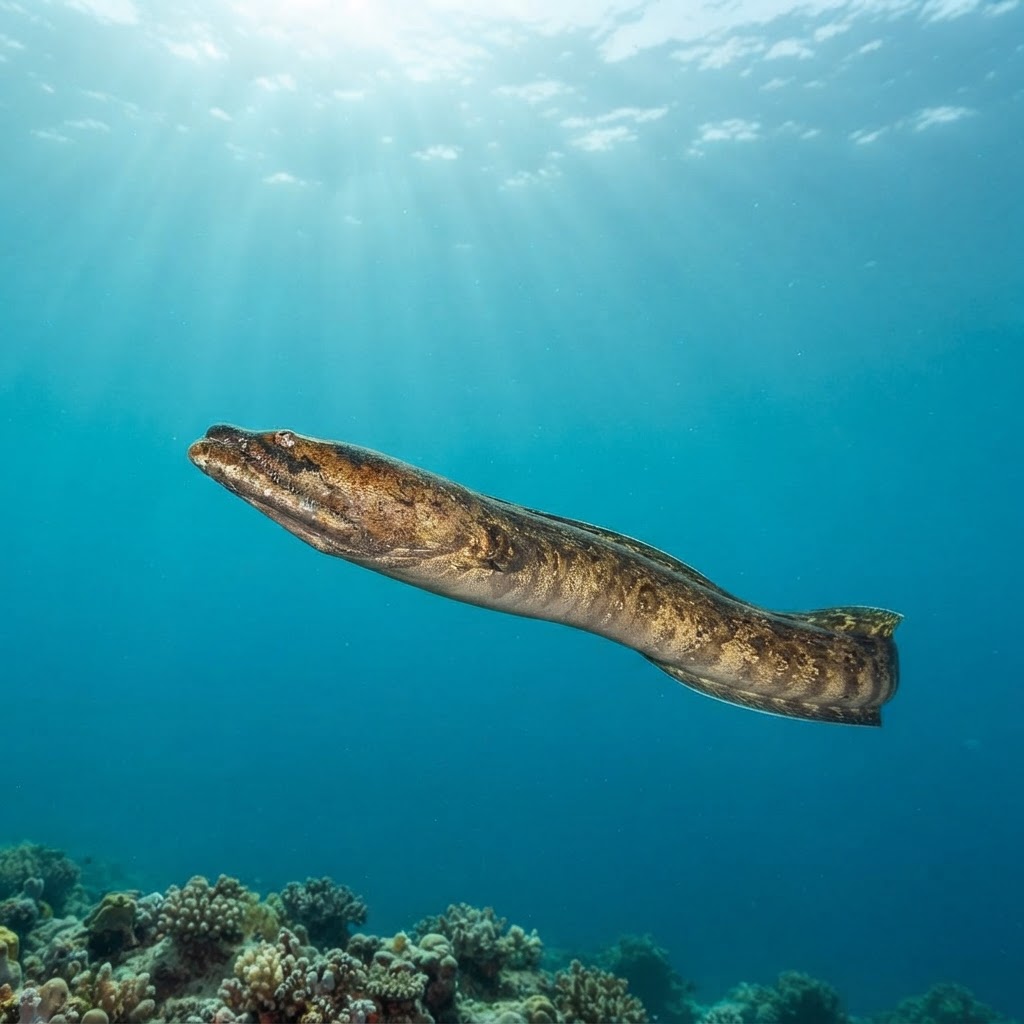
Reef neighbours a diver could mistake it for. Use the identification notes above to tell them apart.
Currently logged from a single dive site in Sulawesi, Indonesia, which is the only confirmed spot in the data for this eel. Treat sightings elsewhere in the Indo-Pacific as possible but unconfirmed until more dives are logged.
Mapping where Stargazer Snake Eel is logged…
The only confirmed sighting in the data comes from a dive site in Sulawesi, Indonesia. It's a uncommon find, so don't plan a trip around it, but keep an eye on sandy slopes there.
There's no detected season, and Sulawesi's reefs stay in the 25 to 29 C range year-round, so sightings don't seem tied to a particular month.
Look for just a pair of eyes and maybe a snout tip poking from sand or rubble, coloured in mottled grey-brown that matches the seabed. It doesn't have the ribbon-like tail or bright colours of showier eels, and you'll rarely see more than the head.
They can reach around 111 cm in length, but because they stay buried with only the head exposed, divers never actually see that full length in the water.
No, they're not considered dangerous. They stay buried and retreat into their burrow rather than approach divers.
They bury themselves vertically in sand and ambush passing prey from that fixed position, rather than actively cruising the reef like moray eels do.
Site and sighting data is aggregated from diver logs, iNaturalist and GBIF. For taxonomy and conservation status:
Garden Eel
2,448 sites