Dendrodoris elongata
A rare nudibranch find in Kwajalein Atoll, Marshall Islands, spotted year-round in warm 26-32C reef water.
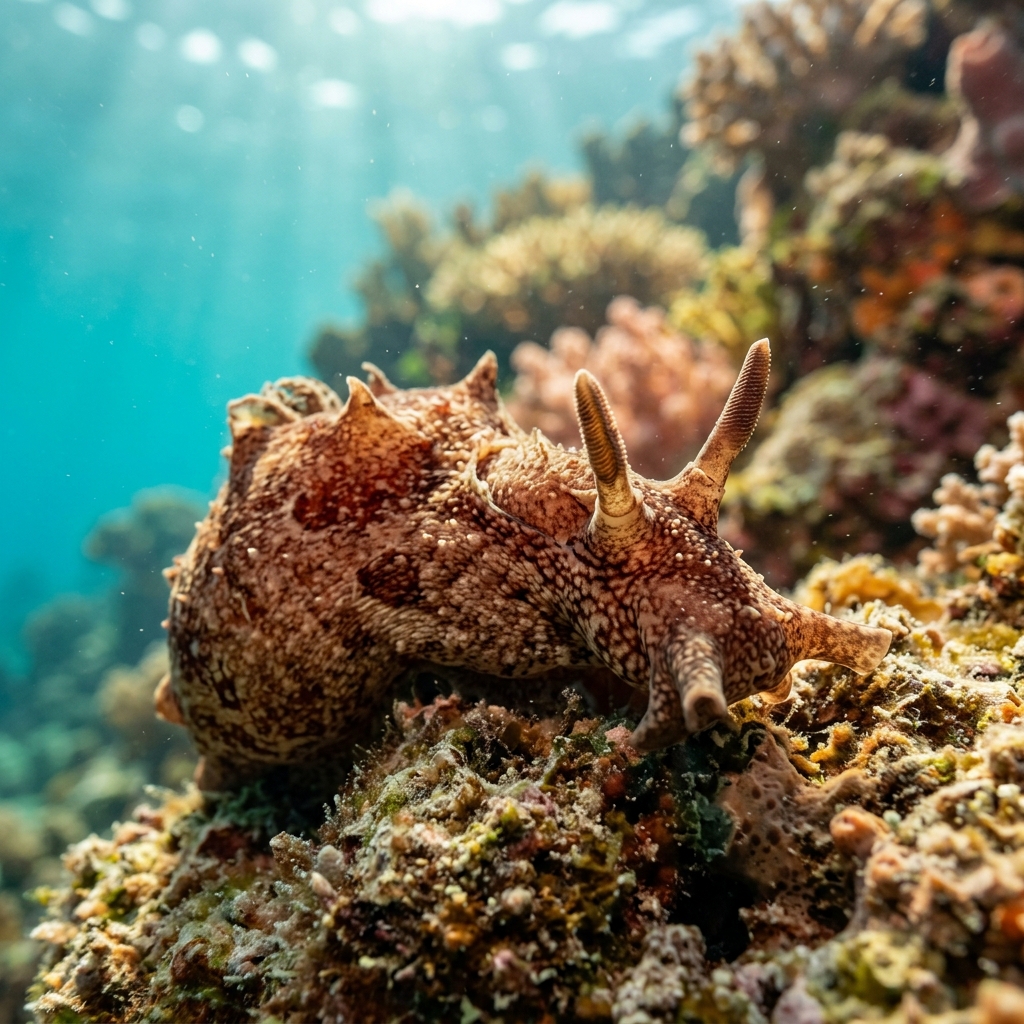
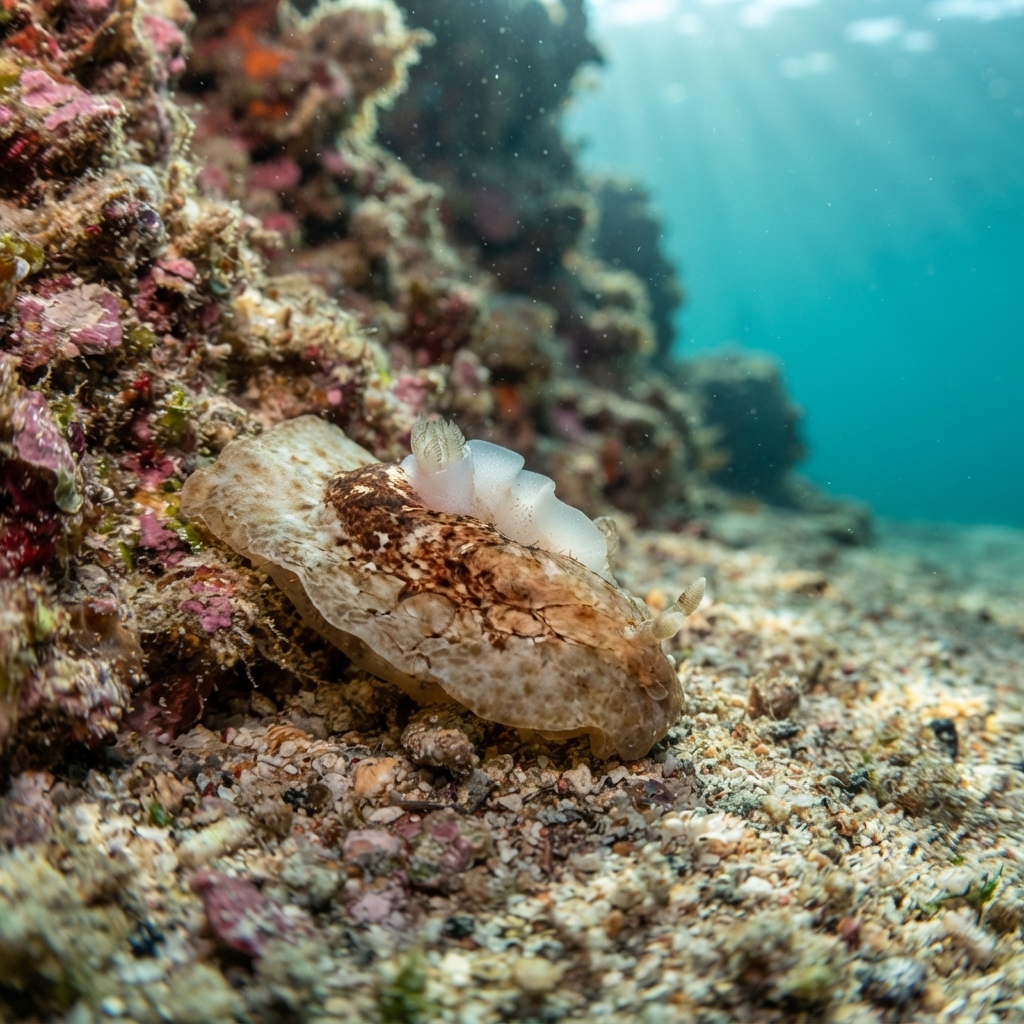
Small, soft-bodied nudibranch with a smooth, glossy mantle rather than the rows of feathery projections seen on many dorids. Colouring runs toward mottled reddish-brown to orange tones, giving it a low-contrast look against sponge-covered rubble. Look for the smooth, almost sucker-like mantle texture and the retractable gill cluster near the rear, which is the giveaway once you get close with a torch.
Divers log this one slowly grazing over sponge-encrusted rubble and reef structure, usually alone rather than in groups. It shows no reaction to divers beyond continuing its slow crawl, so a close, unhurried look with a torch is the best way to pick out its texture and colour. Most sightings are described as rare to uncommon, so expect to search rather than stumble across it.
Like other Dendrodoris species, it almost certainly feeds on sponges, using that diet to build up the chemical defences typical of the genus rather than relying on speed or camouflage alone.
No clear seasonal pattern shows up in the data, and with water sitting comfortably between 25.8 and 31.8C, it is likely present year-round on Kwajalein's reefs. Plan around good visibility and calm conditions rather than a particular month.
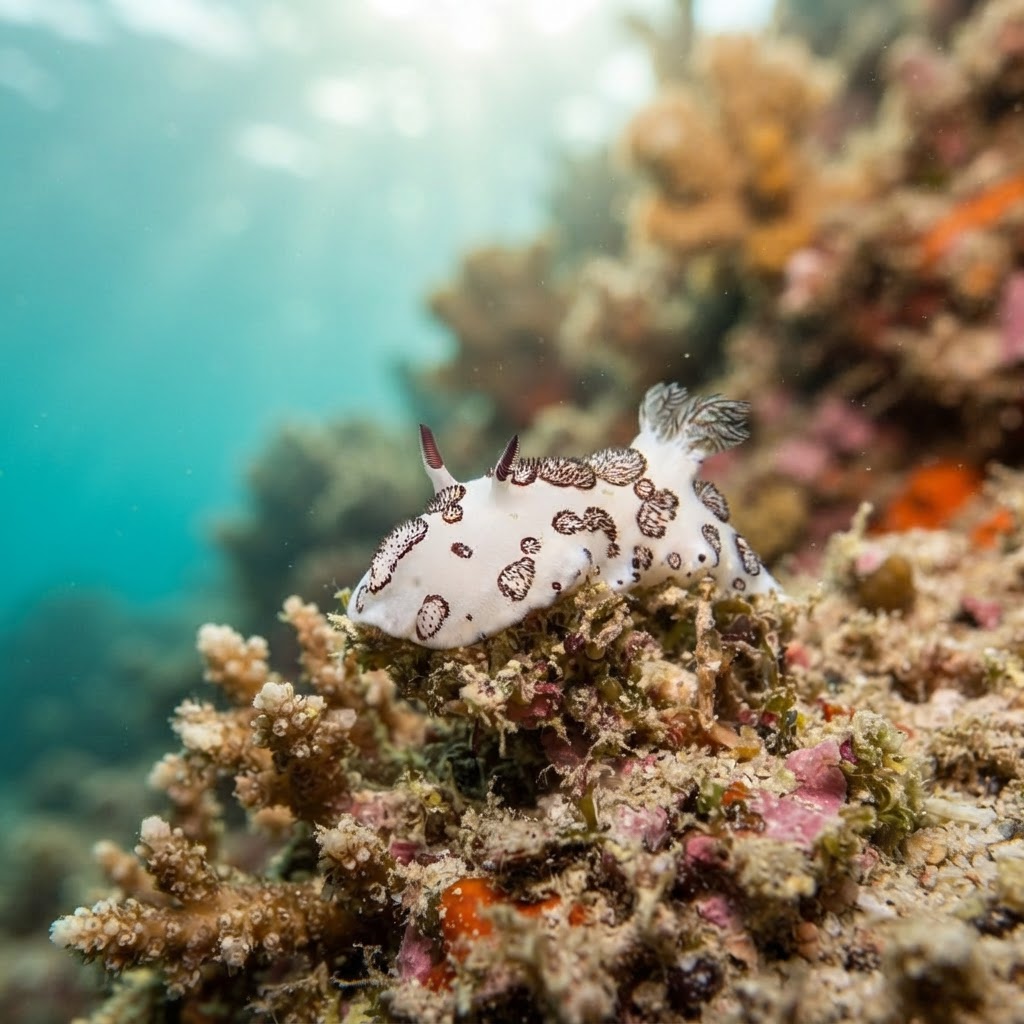
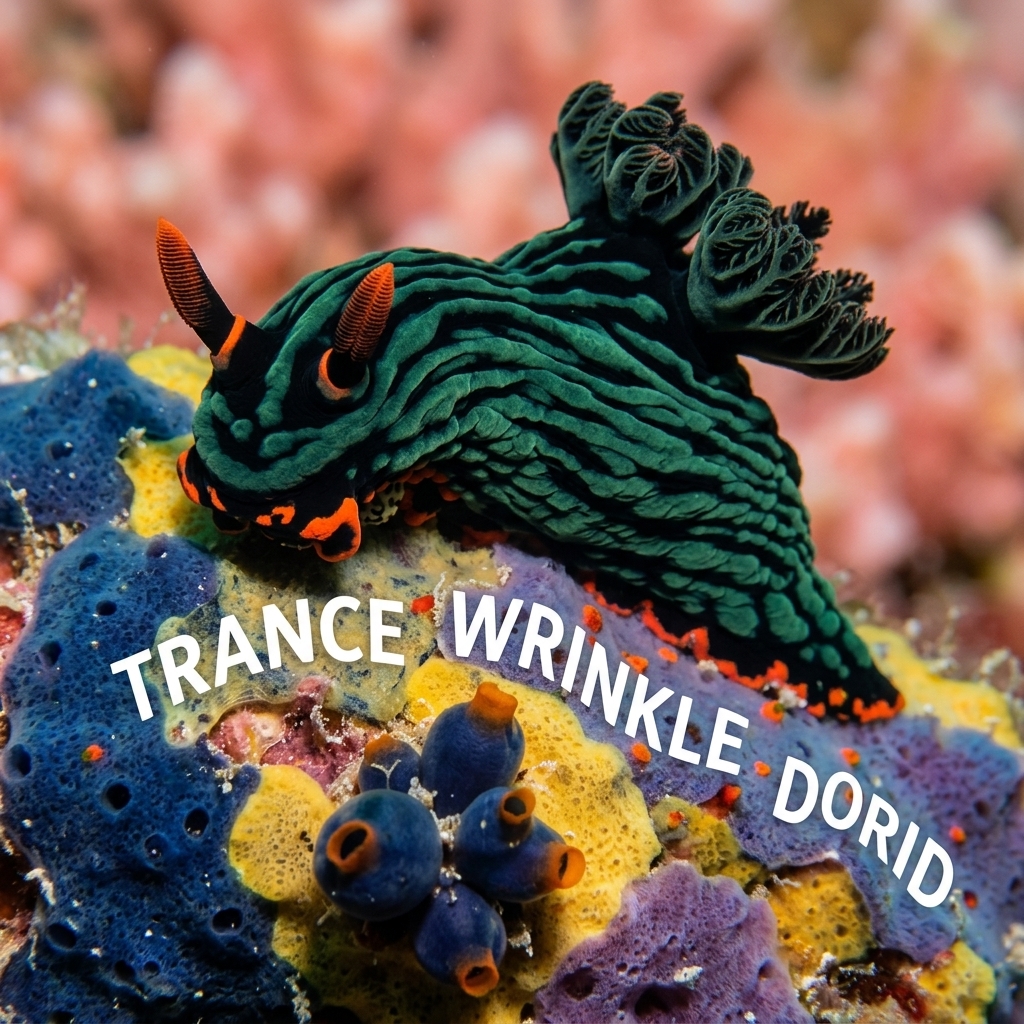
Reef neighbours a diver could mistake it for. Use the identification notes above to tell them apart.
Every logged sighting so far comes from Kwajalein Atoll in the Marshall Islands, making it the only confirmed spot to search for this species. Within the atoll it turns up scattered across a wide spread of sites rather than clustering at one or two, so it is worth checking rubble and sponge patches on several dives rather than one.
Mapping where Starburst Sucking Dorid is logged…
The only confirmed sightings come from Kwajalein Atoll in the Marshall Islands, spread across a range of local dive sites rather than one hotspot.
There is no detected season in the sighting data, and warm water year-round in Kwajalein means it can turn up on any dive, though it stays rare to uncommon.
Look for a smooth-mantled nudibranch in mottled reddish-brown to orange tones on sponge-covered rubble, with a retractable gill cluster near the tail end rather than obvious dorsal projections.
No, this nudibranch poses no danger to divers and can be observed and photographed safely up close.
As a member of the sponge-eating Dendrodoris genus, it almost certainly grazes on sponges, likely absorbing chemical compounds from its diet as a defence against predators.
Site and sighting data is aggregated from diver logs, iNaturalist and GBIF. For taxonomy and conservation status:
Light-spotted Aegires
3,168 sites