Gnathophylloides mineri
A near-invisible shrimp that rides sea urchin spines in Grand Cayman, spotted only in the 25 to 31 C shallows.
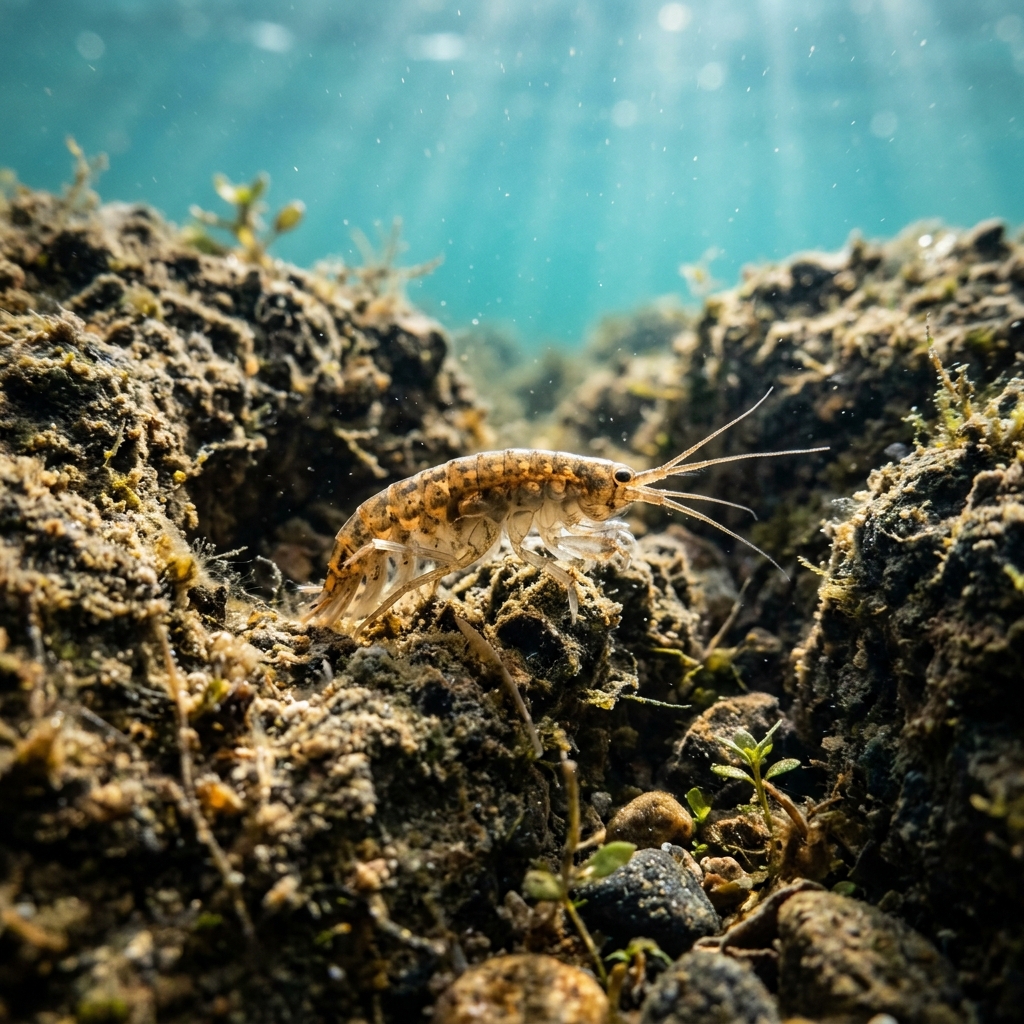
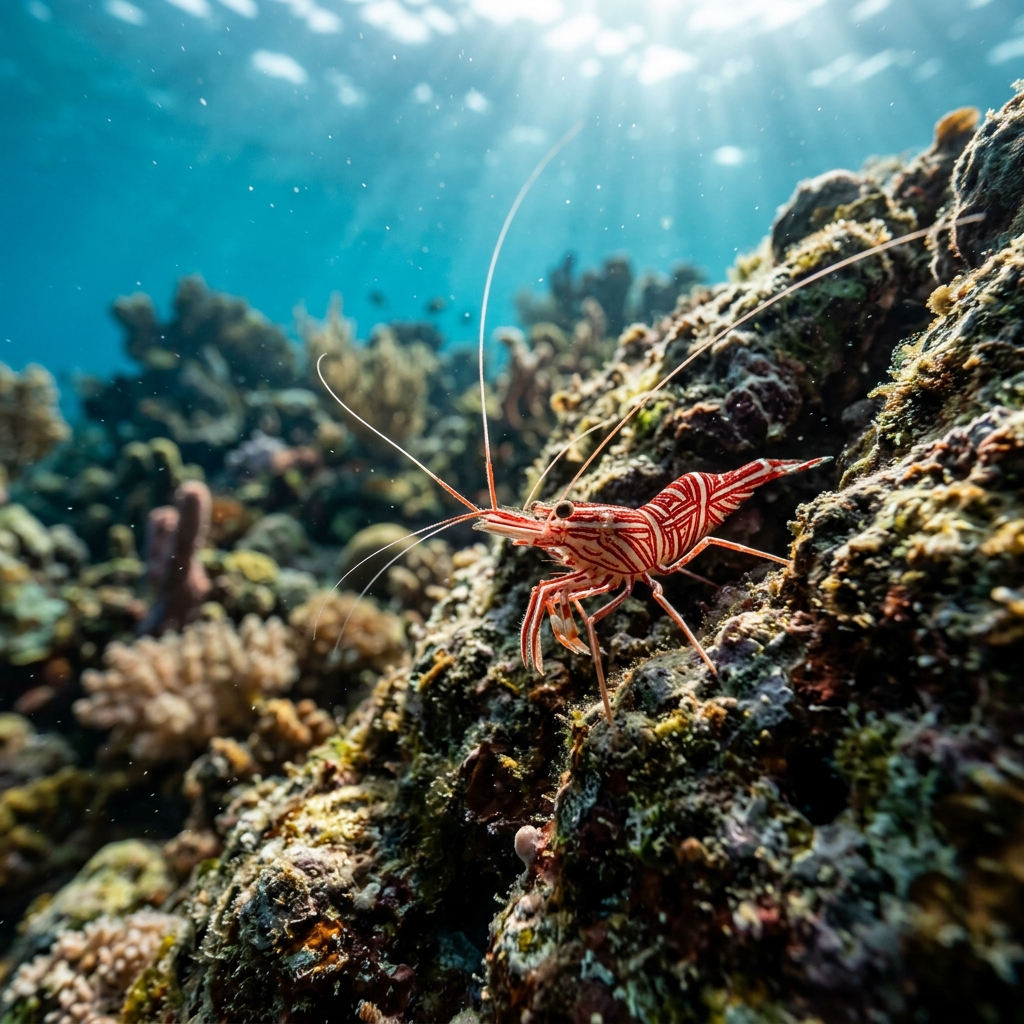
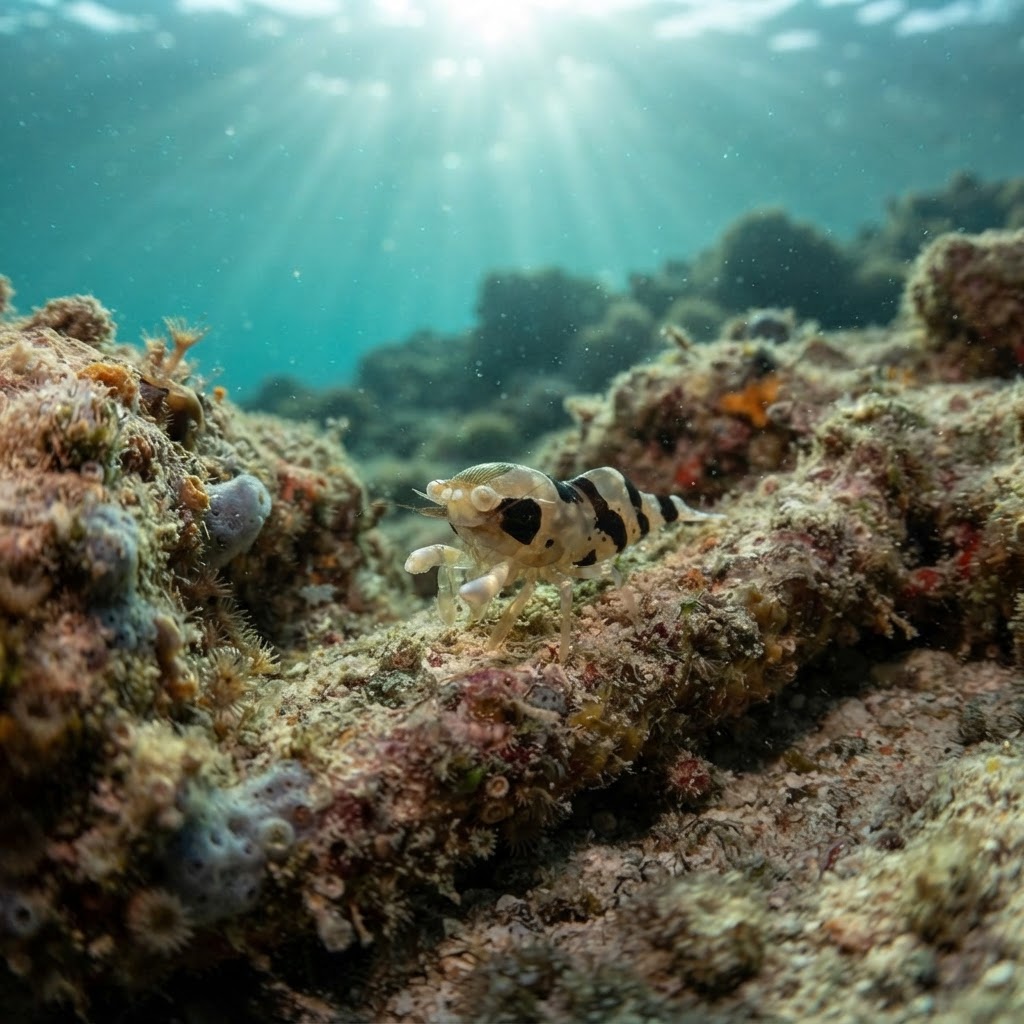
Barely a centimetre long and almost see-through, this shrimp is easiest to spot by the shape it clings to rather than its own body. Look for a small translucent form with faint mottled patterning that matches the spines and test of the sea urchin it lives on, flattened low against the surface to stay hidden. There is no bold colour or pattern here, so divers usually find it by scanning urchins closely rather than the open reef.
This shrimp spends its time riding on the spines and body surface of sea urchins, using the host as cover and a mobile perch rather than foraging openly on the reef. Divers who spot it are usually doing a slow, close inspection of urchins rather than casual reef swimming, since the shrimp stays pressed flat and still when a light or camera approaches. It is not known to react defensively or flee readily, relying instead on its camouflage against the host's spines.
This species lives its whole life closely tied to a single sea urchin host, feeding on organic debris and algae on the urchin's surface rather than hunting independently on the reef.
Sightings show no clear seasonal pattern, and the water temperatures recorded (25.4 to 31.4 C) match warm Caribbean reef conditions year-round, so there is no known best month, just a matter of finding the right urchin.
Reef neighbours a diver could mistake it for. Use the identification notes above to tell them apart.
Logged sightings so far come from Grand Cayman in the Cayman Islands, where divers have picked it out on sea urchins on a couple of dive sites. It is a species you find by searching urchins carefully rather than one associated with a wide spread of dive destinations.
Mapping where Squat Urchin Shrimp is logged…
The only confirmed diver sightings are from Grand Cayman in the Cayman Islands, where it has been found riding sea urchins on a couple of local dive sites. It is not a species with a documented wider range of dive destinations yet.
There is no detected season for this species. Recorded water temperatures span 25.4 to 31.4 C, consistent with warm reef conditions year-round, so timing depends more on finding a host urchin than the calendar.
Look for a tiny, near-transparent shrimp pressed flat against the spines or body of a sea urchin rather than swimming freely on the reef. Its faint mottled colouring blends with the urchin's surface, so it is easier to notice the host first and then scan it closely.
They are extremely small, generally around a centimetre or less in length, which combined with their transparency makes them one of the harder reef crustaceans to spot without a close look.
This shrimp spends its entire life attached to a single sea urchin, using the host's spines as camouflage and grazing on debris from its surface instead of foraging independently on the reef.
Site and sighting data is aggregated from diver logs, iNaturalist and GBIF. For taxonomy and conservation status:
Rockpool Prawn
2,179 sites