Panulirus guttatus
Look for pale-spotted legs tucked in reef crevices around Grand Cayman and Honduras' Bay Islands, year-round in warm Caribbean water.
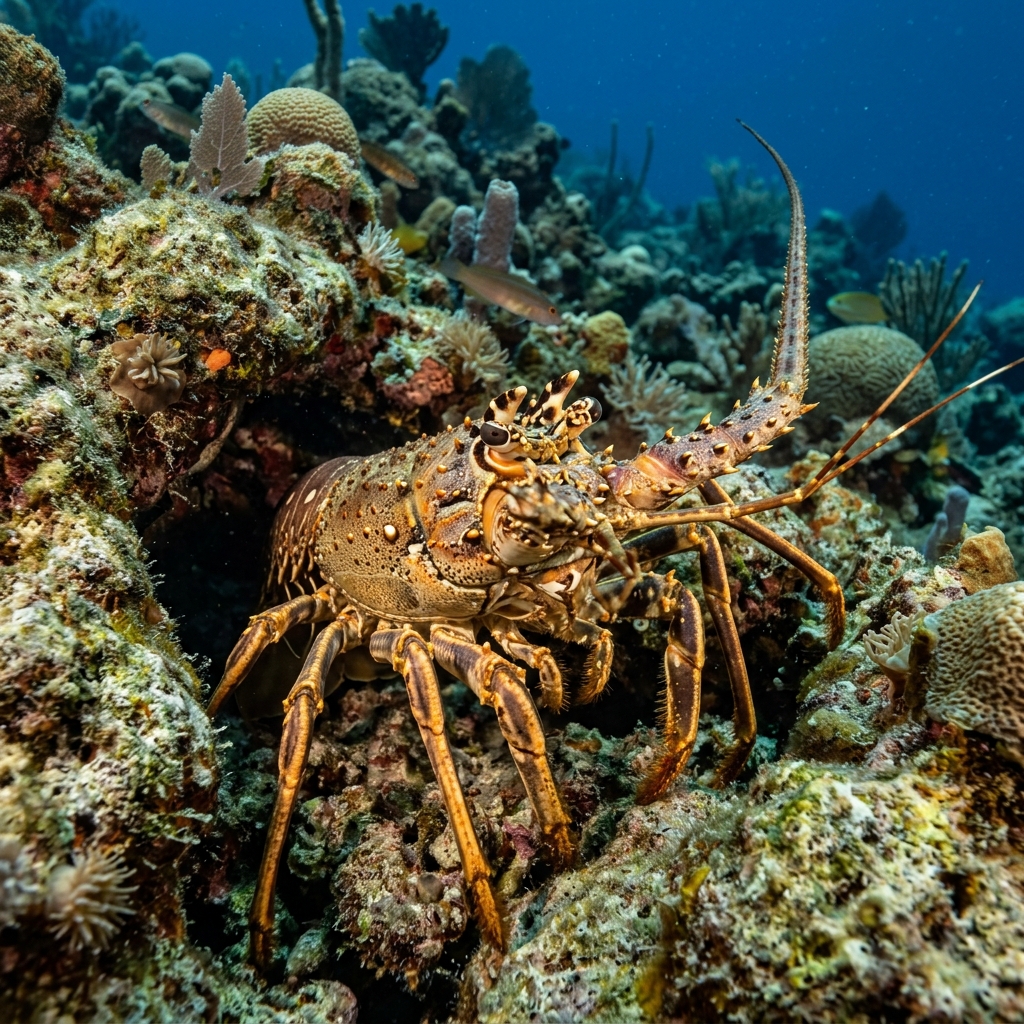
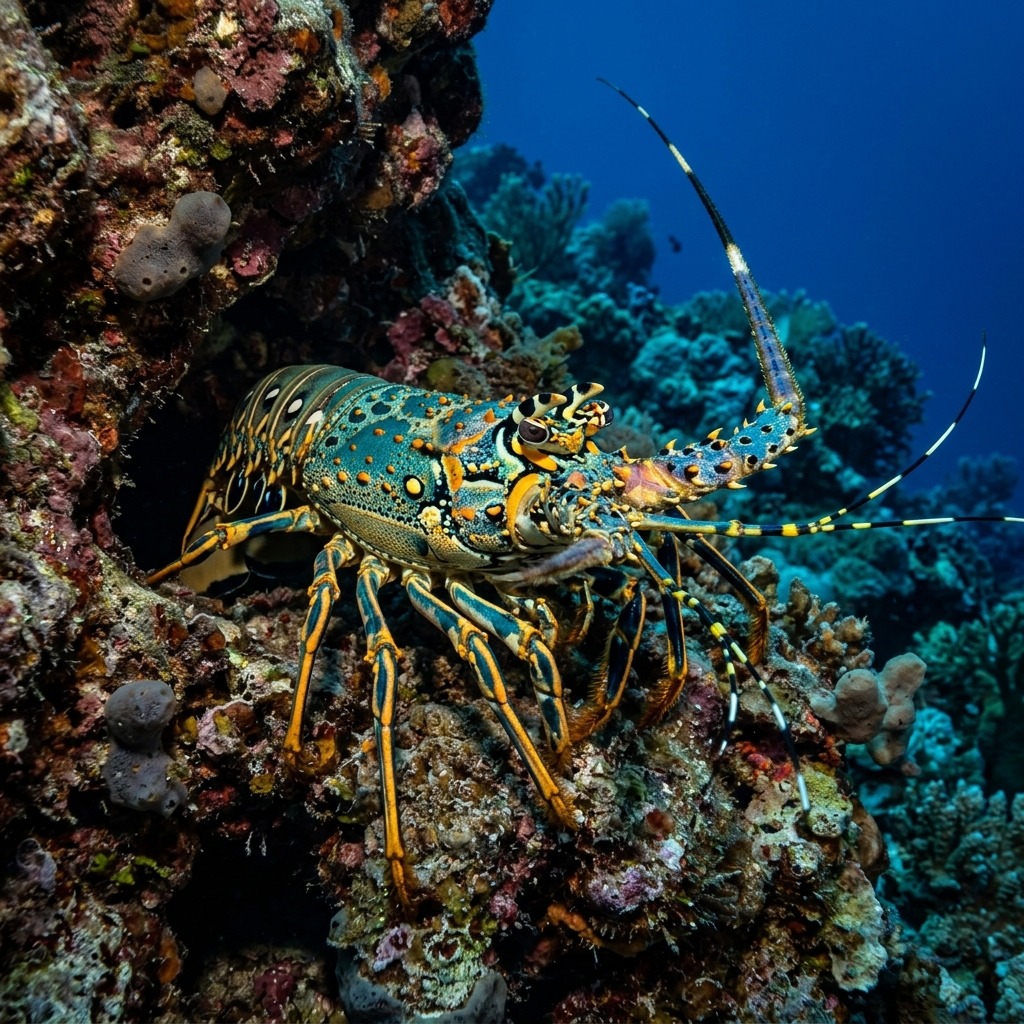
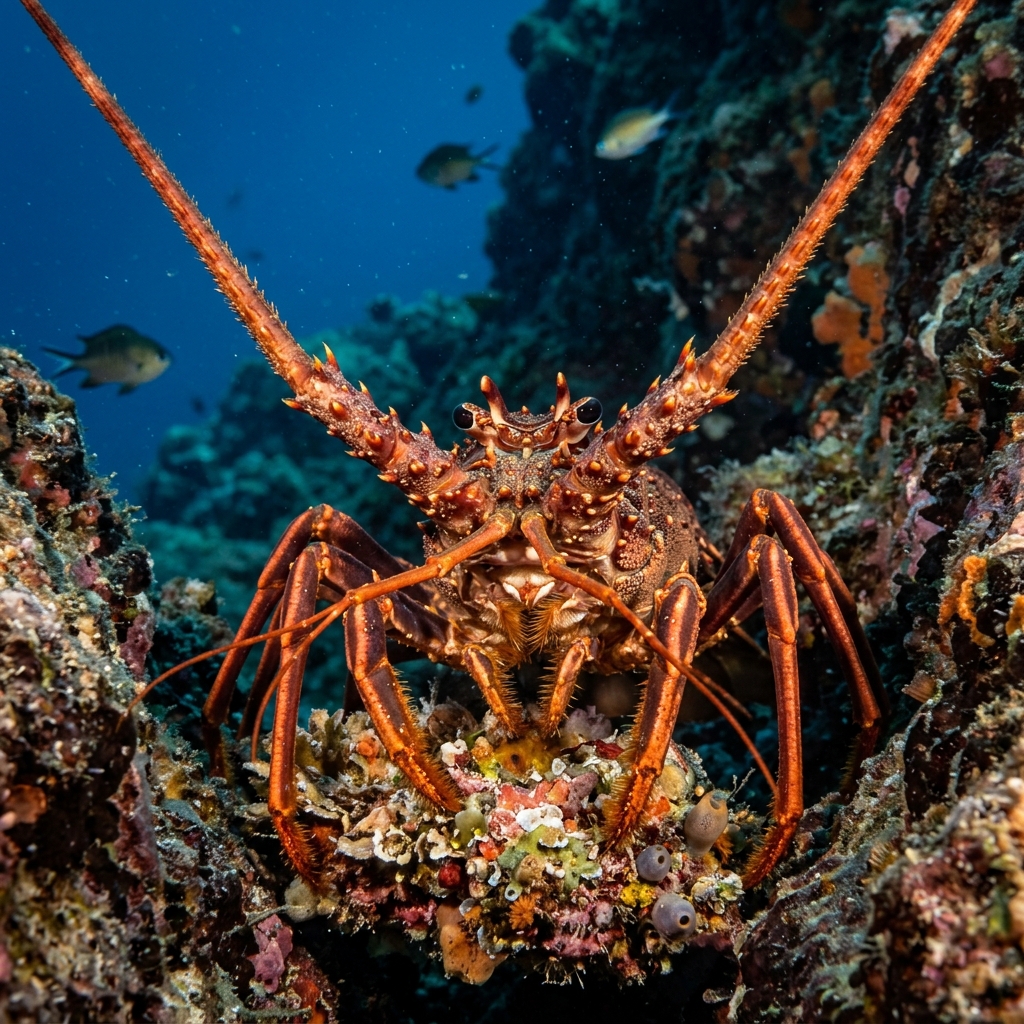
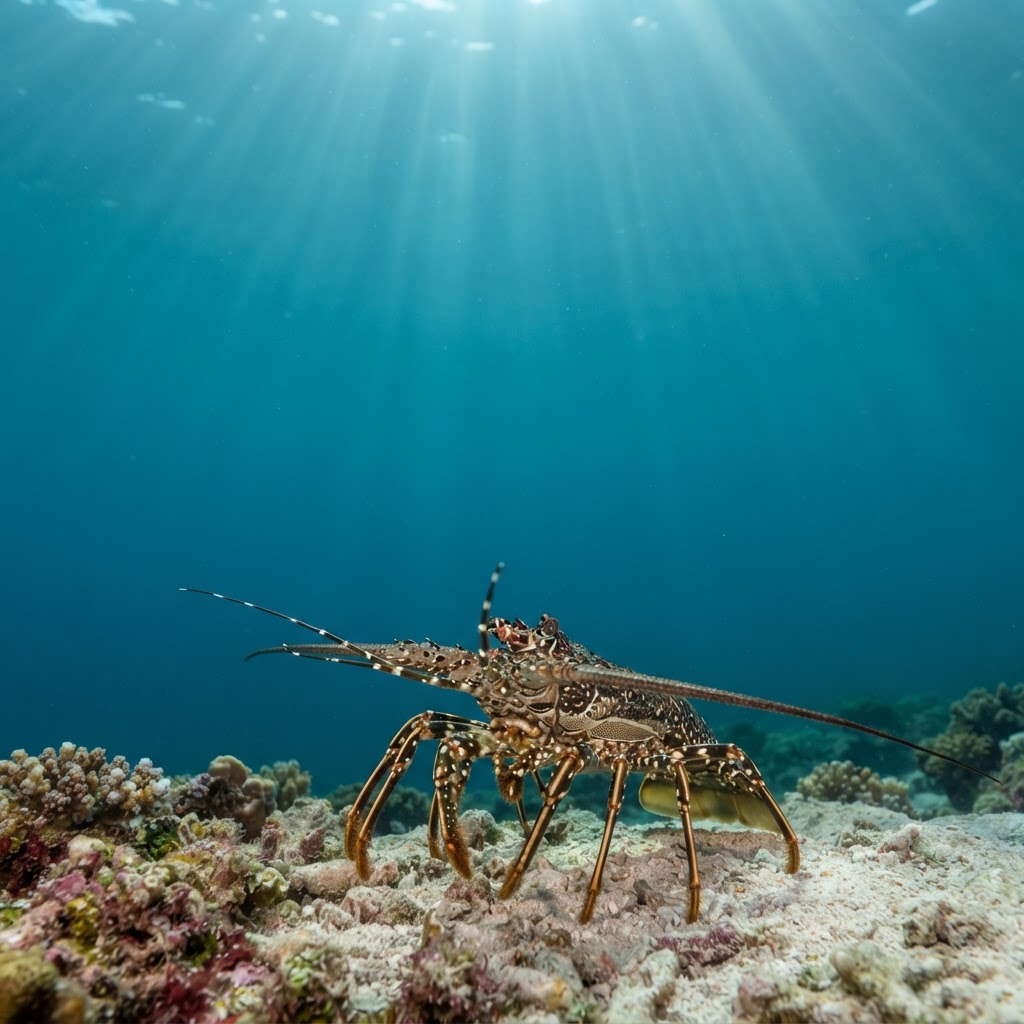
Small for a spiny lobster, rarely more than 14 cm, with a dark brown to purplish body covered in pale cream spots that run down the legs, a pattern no other Caribbean lobster shares. Antennae are banded in white and dark rings, and the tail fan carries a scattering of light spots too. Almost always seen with just the antennae and part of the carapace showing from a hole in the reef, rather than out in the open.
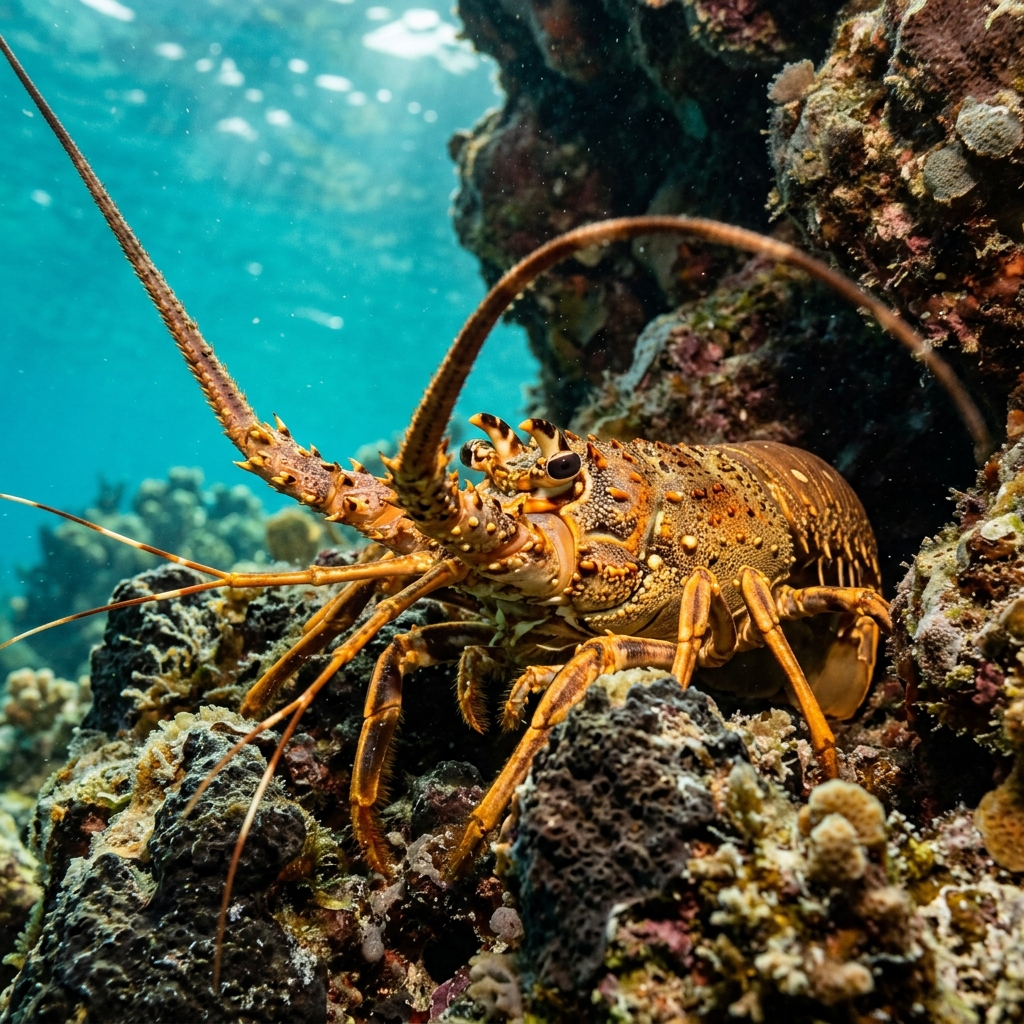
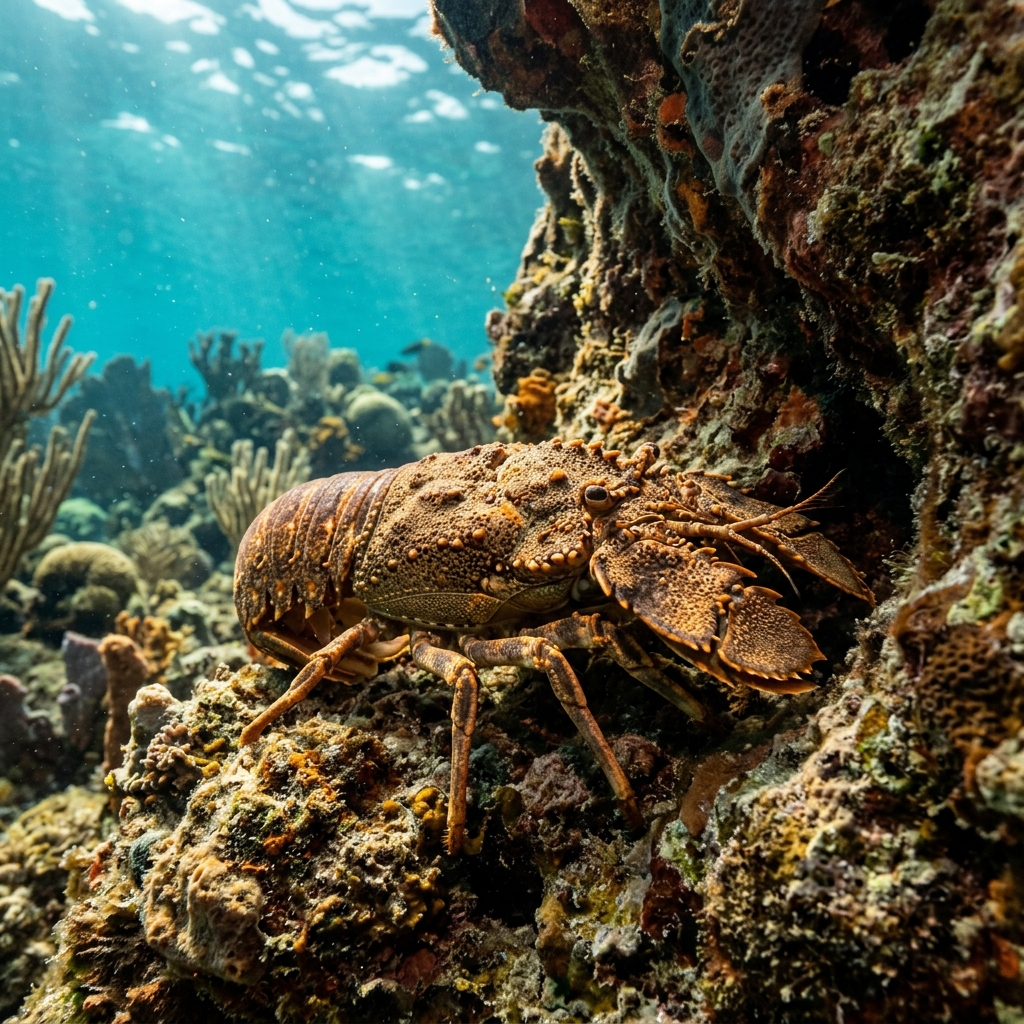
Expect to find it wedged deep into reef holes and under ledges by day, usually with only antennae and eyes visible, and most active after dark when it emerges to forage. It's not a lobster that bolts across open sand like some of its relatives, sticking close to its crevice and shuffling back in if a torch beam lingers too long. Night dives on shallow reef down to about 20 metres are the best bet for seeing one out and moving.
Unlike most spiny lobsters it rarely leaves the reef structure at all, spending its whole life tucked into the same coral holes rather than making the seasonal migrations across open sand that other spiny lobsters are known for.
No clear seasonal pattern in the sightings, and with water in the 25 to 31 C range across its range, it's a year-round find on Caribbean reef dives rather than a species tied to a particular month.
Reef neighbours a diver could mistake it for. Use the identification notes above to tell them apart.
Most reliably logged on reefs around Grand Cayman in the Cayman Islands and the Bay Islands of Honduras, with strong numbers also from Sint Maarten and the Yucatán Peninsula in Mexico. Smaller but consistent counts come from Sint Eustatius, Tobago in Trinidad and Tobago, Belize's Lighthouse Reef, and Anguilla, so it's a fixture of Caribbean reef diving generally rather than one specific hotspot.
Mapping where Spotted Spiny Lobster is logged…
Grand Cayman and Honduras' Bay Islands turn them up most often, with Sint Maarten and Mexico's Yucatán Peninsula also reliable. Belize, Tobago, Sint Eustatius, and Anguilla are worth checking too.
There's no strong season in the sighting data. Warm water year-round across its Caribbean range means it's on the reef every month, most visible on night dives.
Look for a small, dark body covered in pale cream spots, especially down the legs, plus banded white and dark antennae. Usually only the antennae and part of the carapace poke out of a reef hole.
They top out around 14 cm, noticeably smaller than most other Caribbean spiny lobsters, which makes size alone a useful clue underwater.
They're one of the few spiny lobsters that stays put in the same reef crevices year-round instead of migrating across open sand like their larger relatives.
Site and sighting data is aggregated from diver logs, iNaturalist and GBIF. For taxonomy and conservation status:
Caribbean Spiny Lobster
2,209 sites