Stigmatopora argus
Slender and speckled, this pipefish hides in Western Australia's seagrass and reefs at 15-22C, a rare but rewarding find for sharp-eyed divers.
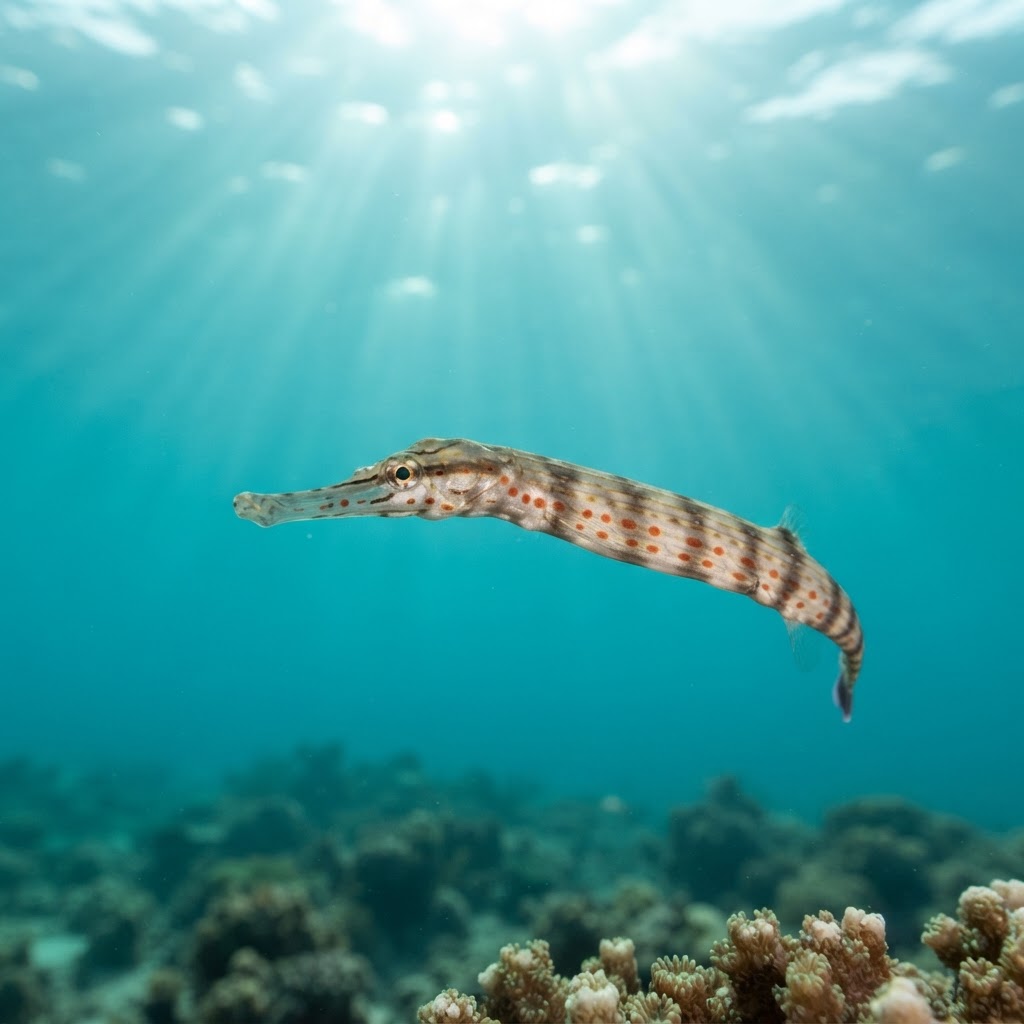
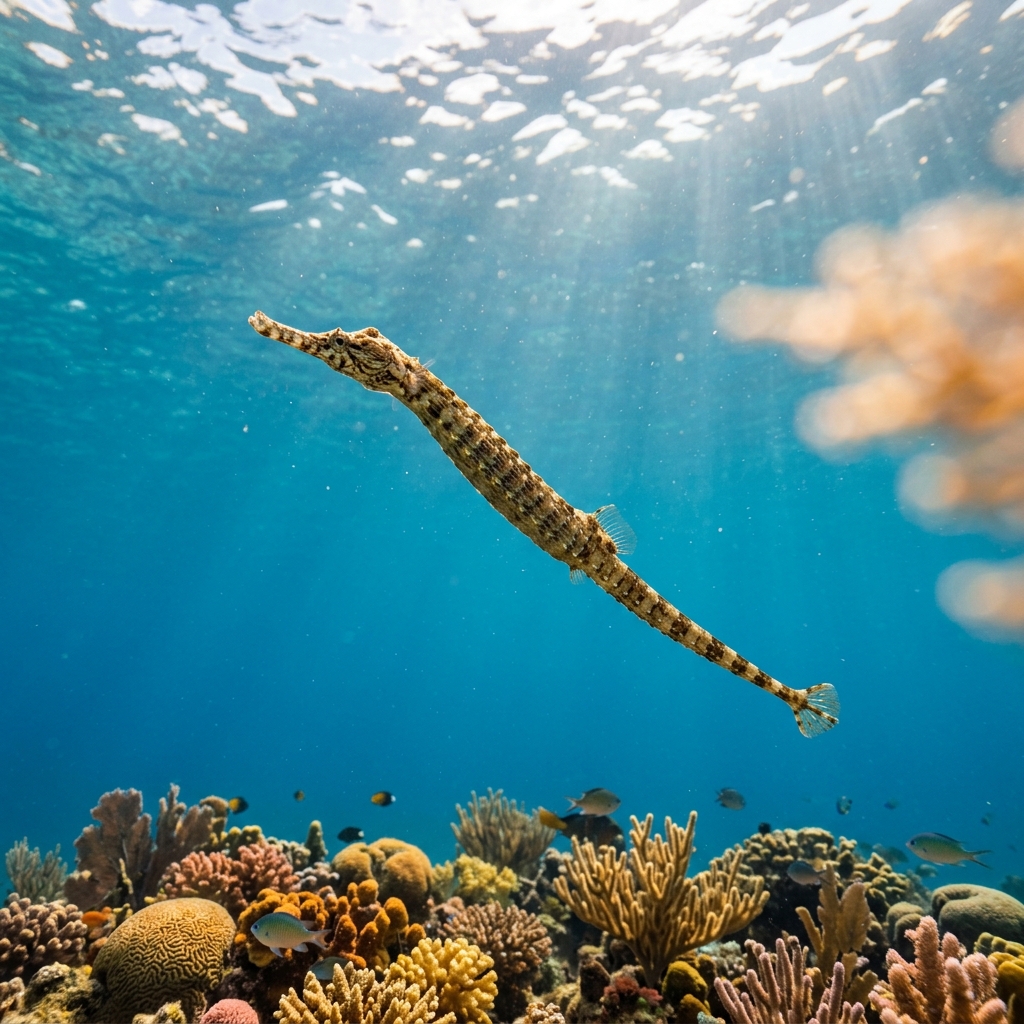
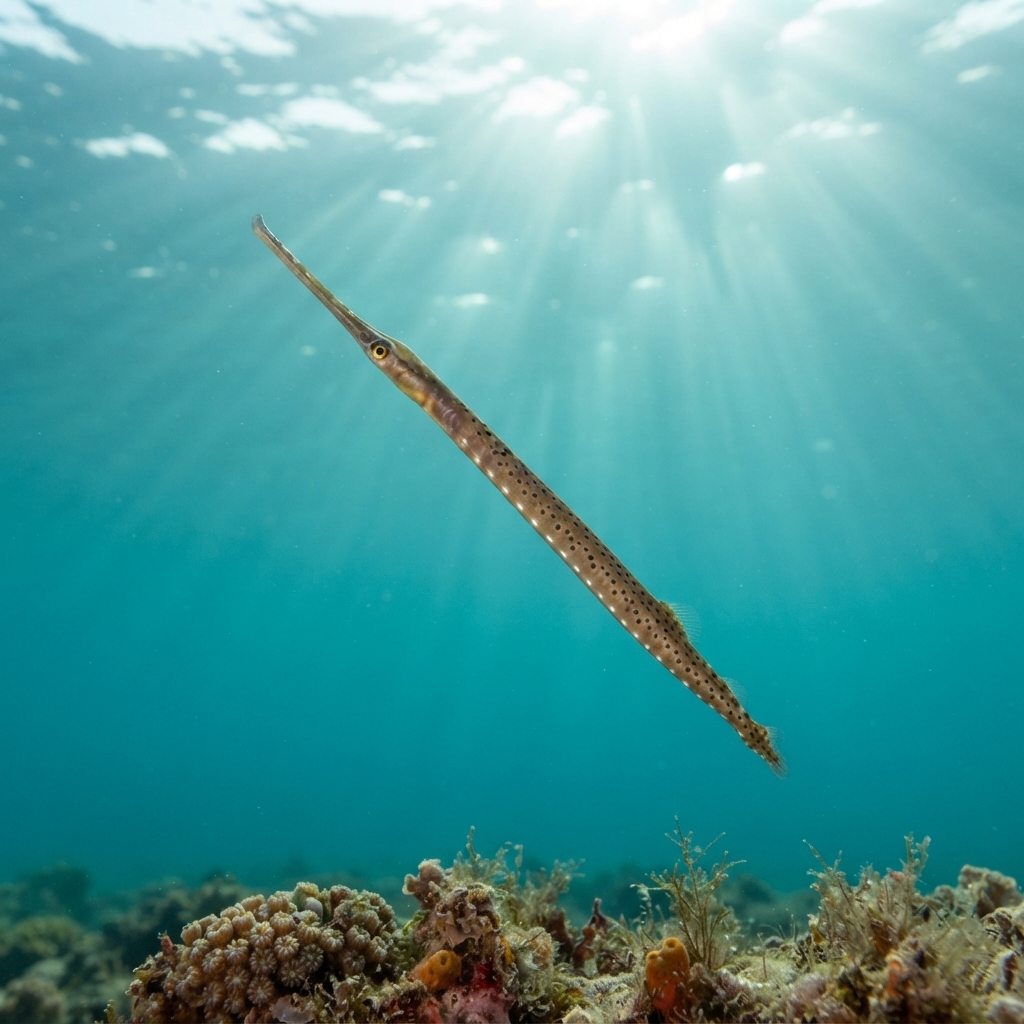
Slender, straight-bodied fish to about 18 cm, built like a stretched-out stick rather than a curled seahorse. Colour runs brown to olive with a scattering of darker spots and mottling along the flanks that breaks up its outline against weed. Look for the fused, tube-like snout and the total absence of a curled tail, it lies straight and stiff, often angled along a blade of seagrass or a strand of algae to disappear into the background.
Divers usually find it holding still among seagrass or fine algae, gripping a blade with its snout pointed up or along the growth to blend in rather than swimming for cover. It shows little reaction to a slow, patient diver and relies almost entirely on camouflage, so most sightings come from divers who stop and scan weed beds closely rather than cruising past. Logged as rare to uncommon even at its best sites, so finding one is a matter of careful looking.
Like other pipefish, males carry the fertilised eggs in a brood pouch on the underside of the tail rather than the female carrying them, so a male spotted with a swollen belly patch is pregnant, not injured.
No clear seasonal pattern shows up in the sightings, so treat it as a year-round possibility. It's been recorded across a fairly cool range of 15 to 21.8C, consistent with temperate Australian waters rather than a tropical warm season.
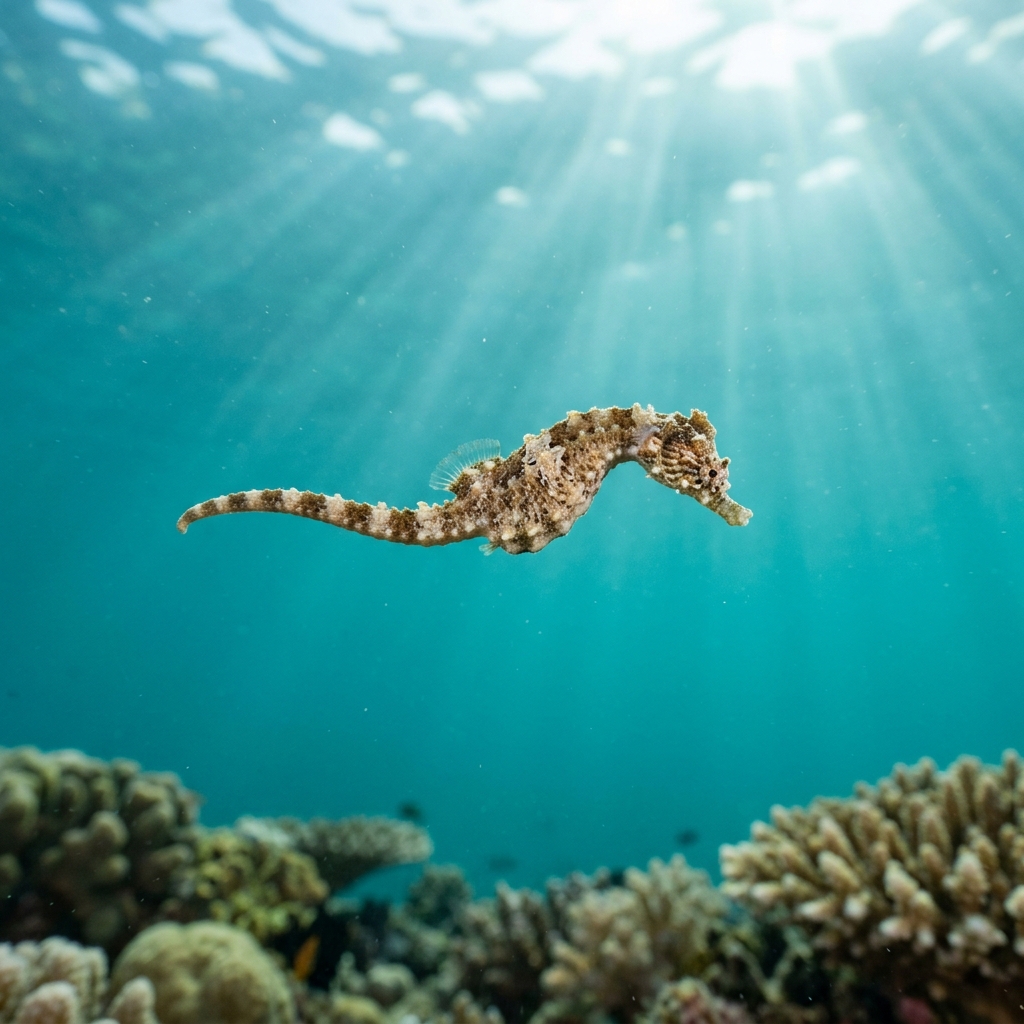
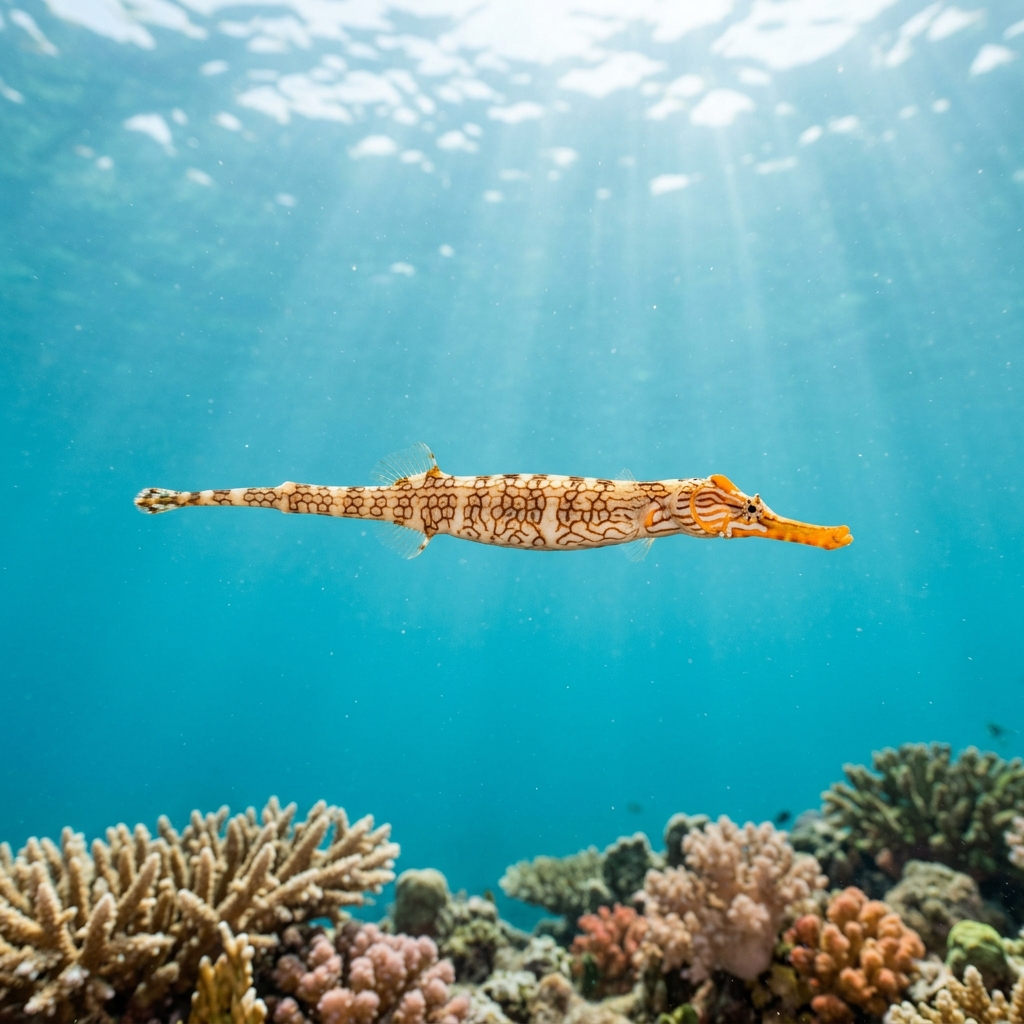
Reef neighbours a diver could mistake it for. Use the identification notes above to tell them apart.
This one is very much an Australian speciality, most commonly logged in Western Australia, with further sightings turning up in Tasmania and Victoria. Sites tend to be sheltered seagrass beds and weedy reef rather than open blue water.
Mapping where Spotted Pipefish is logged…
Best known from Western Australia, with further sightings in Tasmania and Victoria. Look in sheltered seagrass beds and weedy temperate reef rather than open reef slopes.
There's no strong season in the sighting data, so it's a year-round search in the 15 to 21.8C range typical of southern Australian waters.
Look for a slender, straight body around 18 cm long, brown to olive with dark speckling, and a tubular snout. Unlike a seahorse it has no curled tail and usually lies flat along seagrass or weed.
They reach around 18 cm in length, a thin stick-like body rather than a bulky fish.
Sighting logs mark them as rare at most sites and uncommon at a handful of others, so spotting one takes patience and slow, close scanning of weed and seagrass.
Site and sighting data is aggregated from diver logs, iNaturalist and GBIF. For taxonomy and conservation status:
Seahorse
1,346 sites