Diplodus holbrookii
Spot this silvery sea bream with its dark tail smudge on Florida reefs, where it's a year-round, if uncommon, sighting in 23 to 28C water.
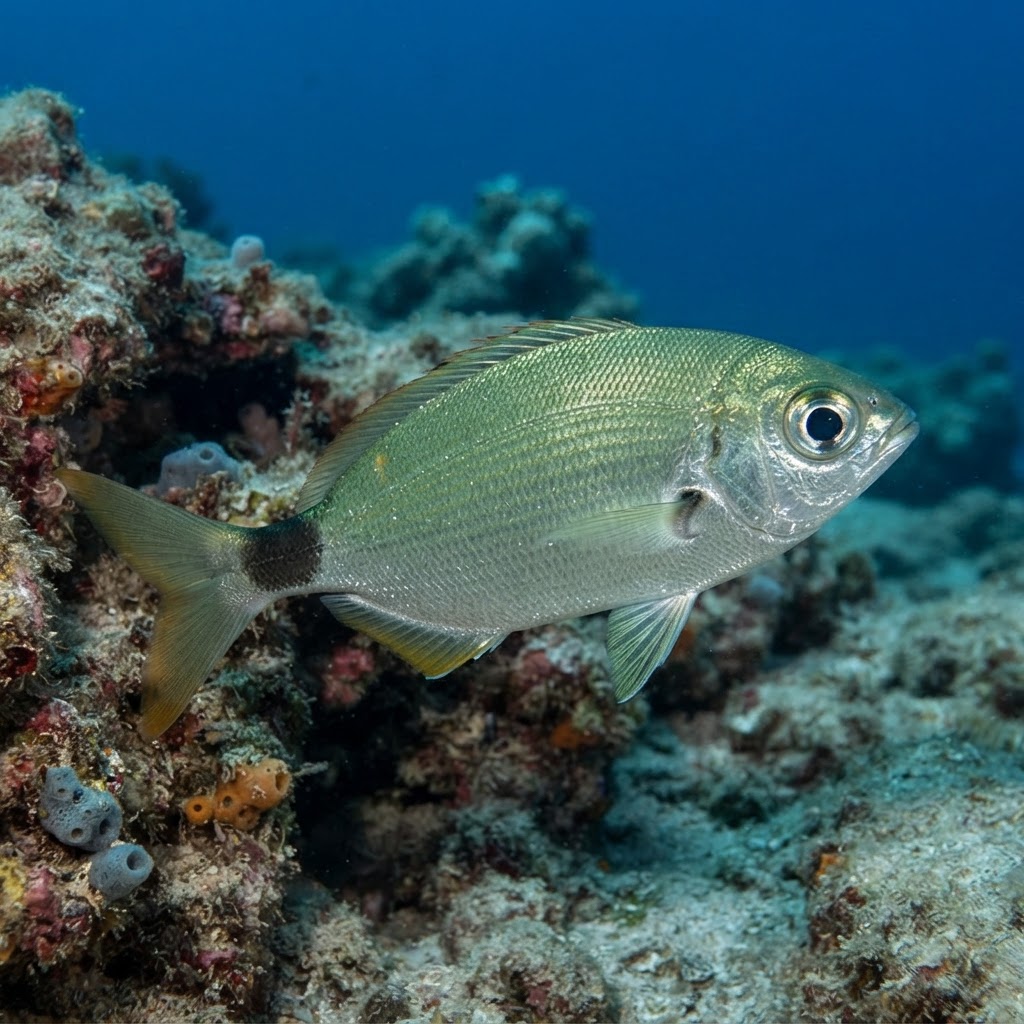
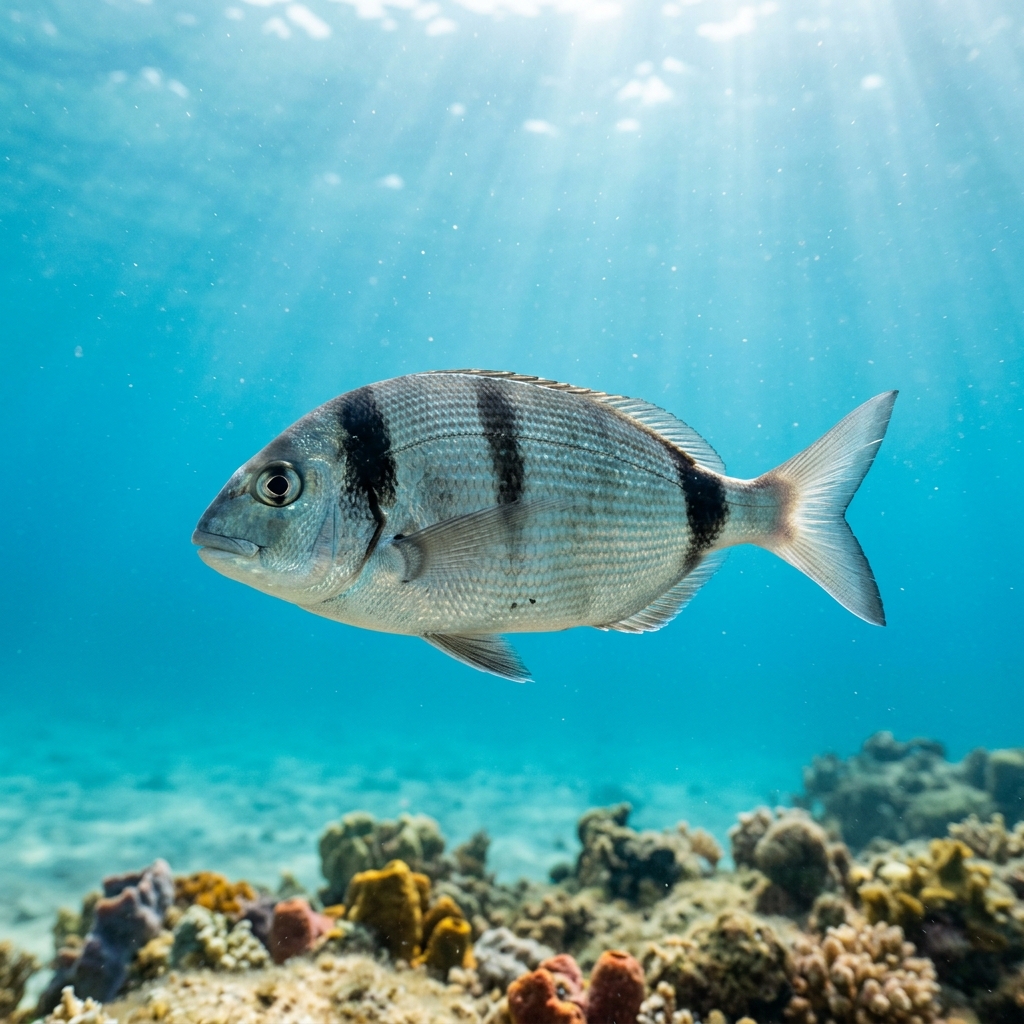
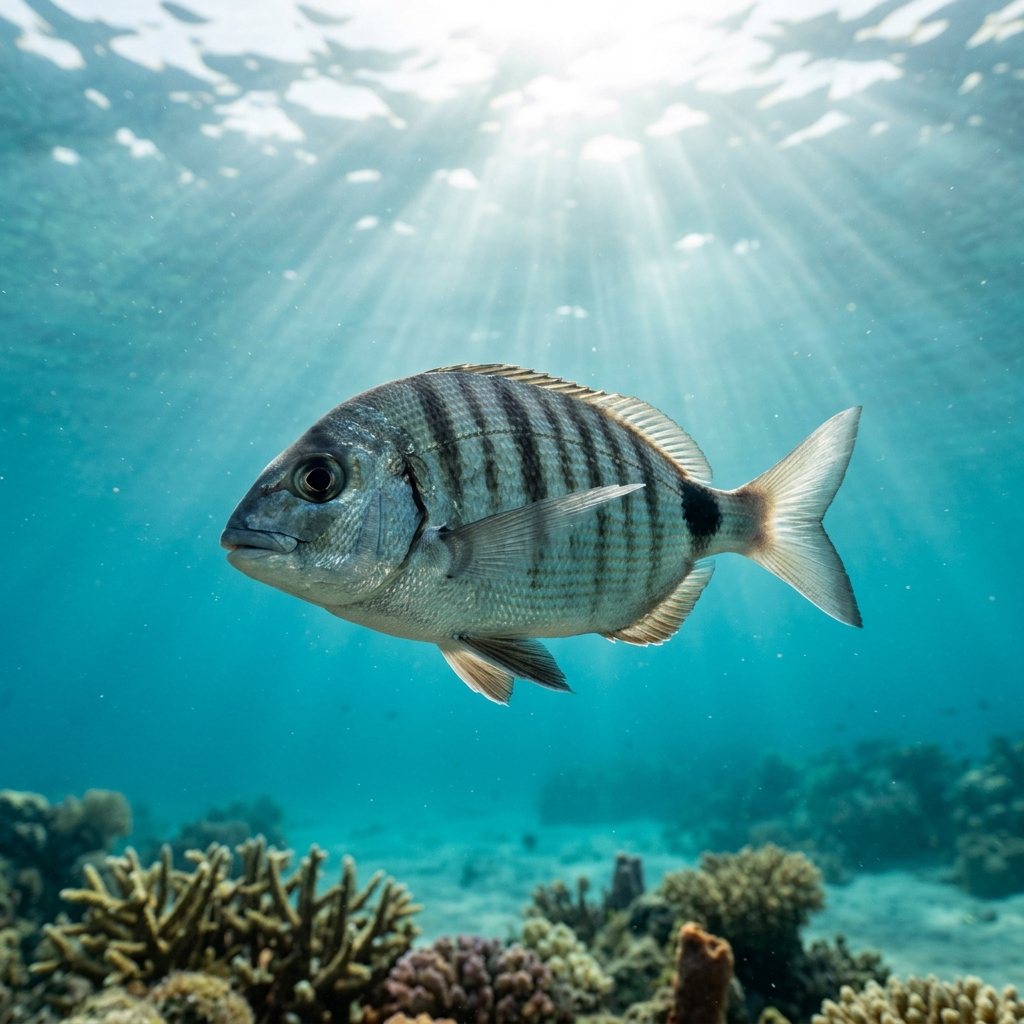
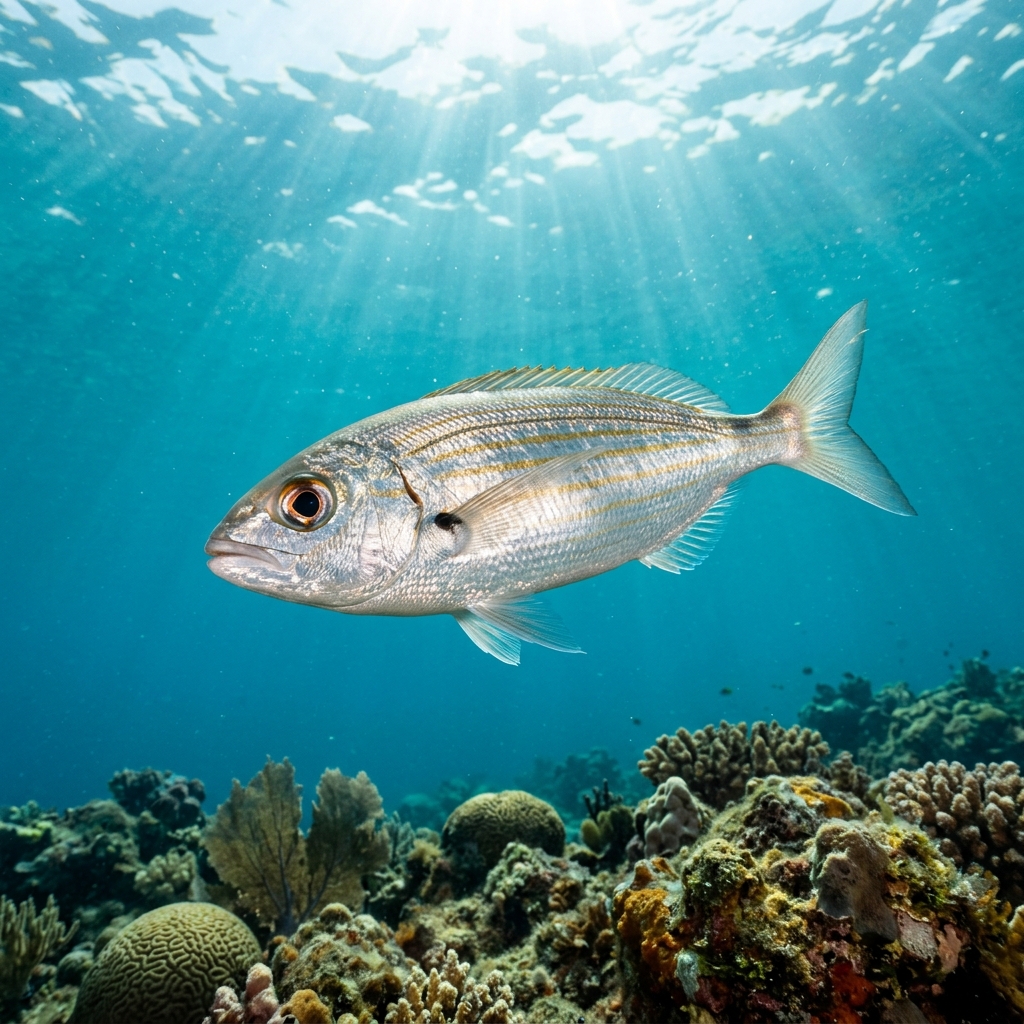
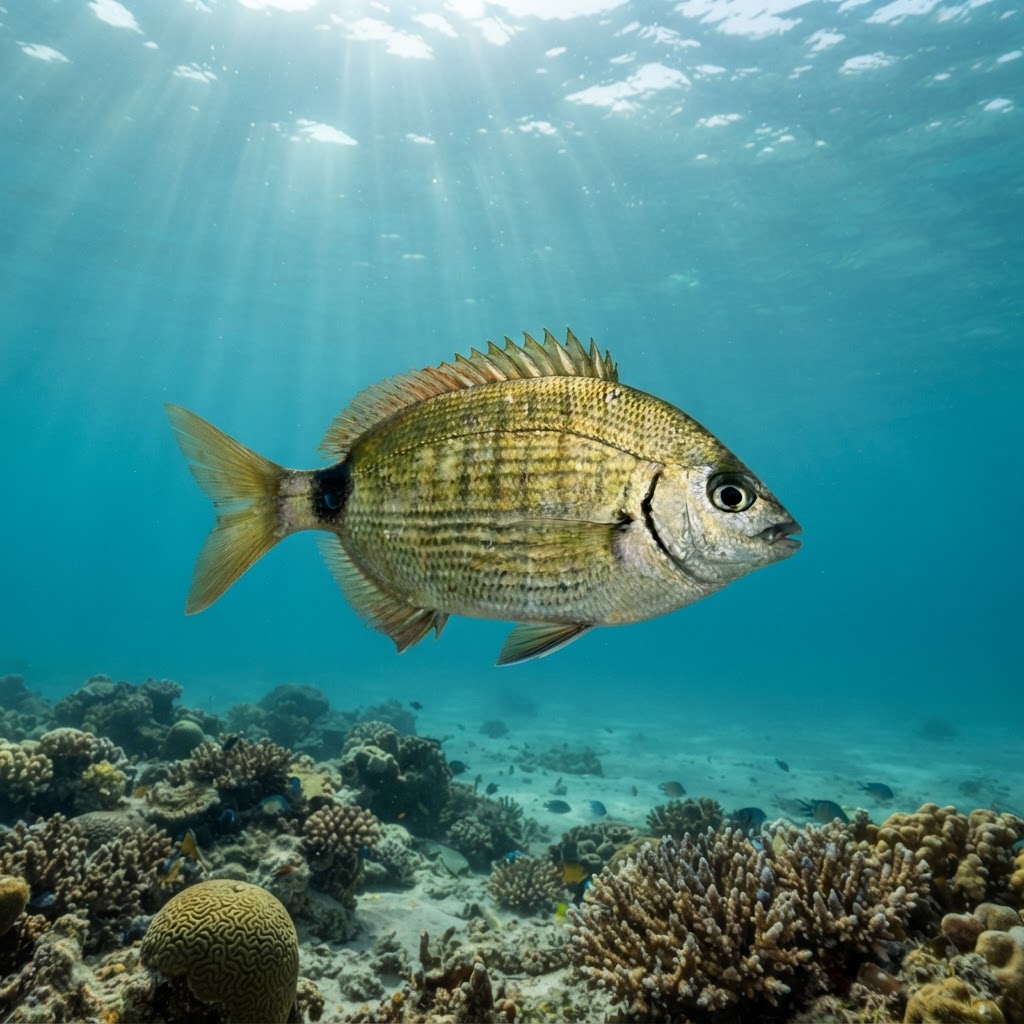
Look for a silvery, deep-bodied fish around 32 cm with faint vertical banding along the flanks, similar in build to other sea breams. The giveaway mark is a dark, saddle-like blotch sitting right at the base of the tail, which is where the common name comes from. The body is laterally compressed with a fairly steep forehead profile typical of the sea bream family.
Divers typically find them hovering alone or in loose small groups over reef and hardbottom structure, picking around the substrate rather than schooling tightly in open water. They're not especially bold but also don't bolt at the first sight of a diver, usually holding station or drifting off at a slow, unhurried pace. Most logs describe them as an uncommon rather than reliable find, so they tend to be a pleasant surprise on a dive rather than a target species.
Like many sea breams, spottail pinfish are believed to shift sex over their lifespan, a trait shared across much of the Diplodus genus.
Sightings don't show a clear seasonal pattern, and the water temperatures logged (23.3 to 27.6C) fall within Florida's typical warm-season to year-round comfort range, so treat this as a fish you can look for on any visit rather than one tied to a specific month.
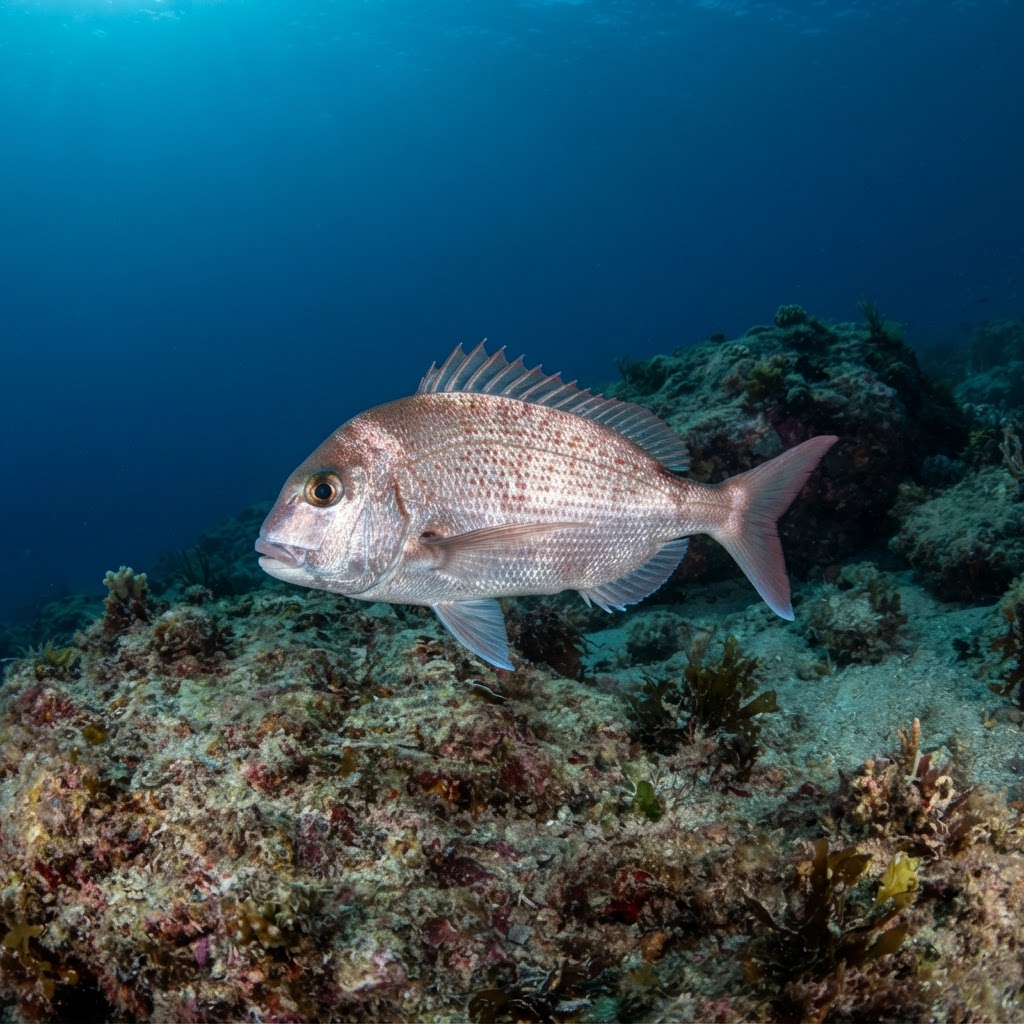
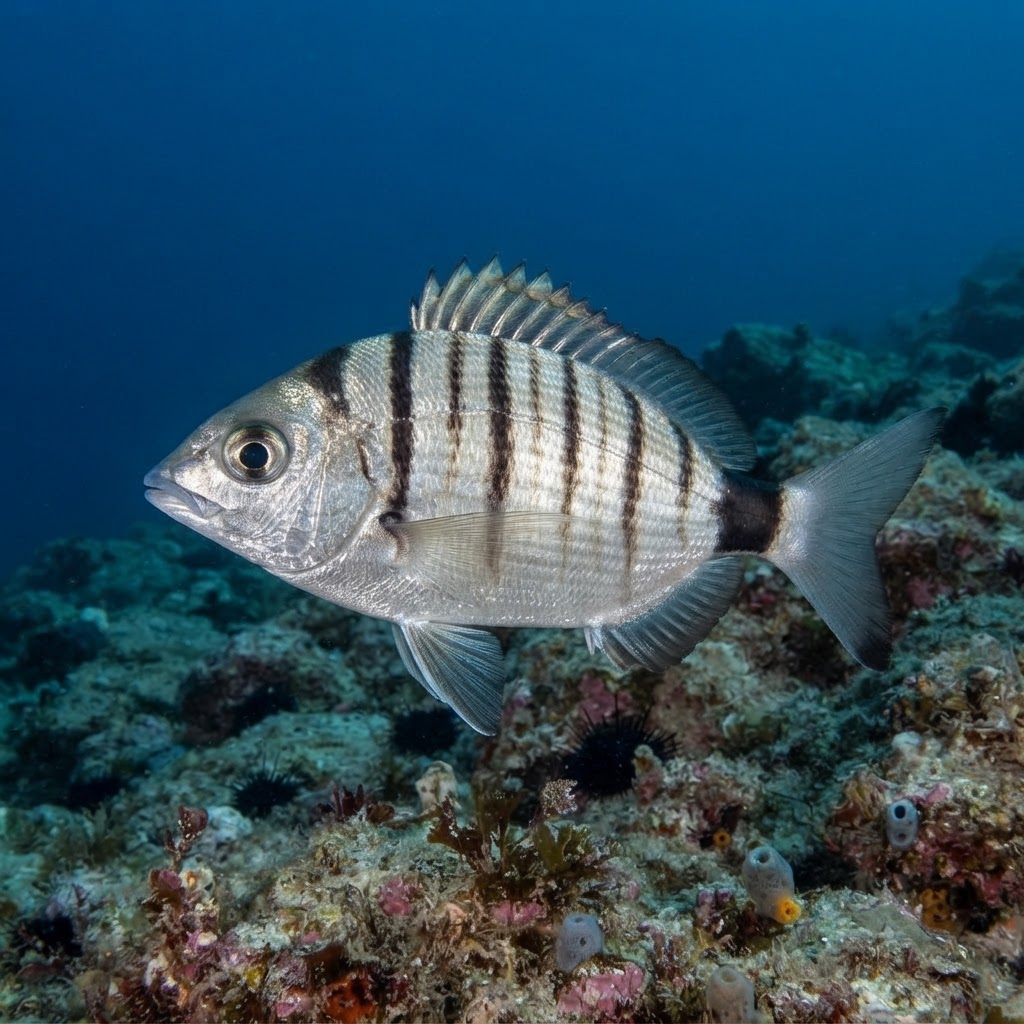
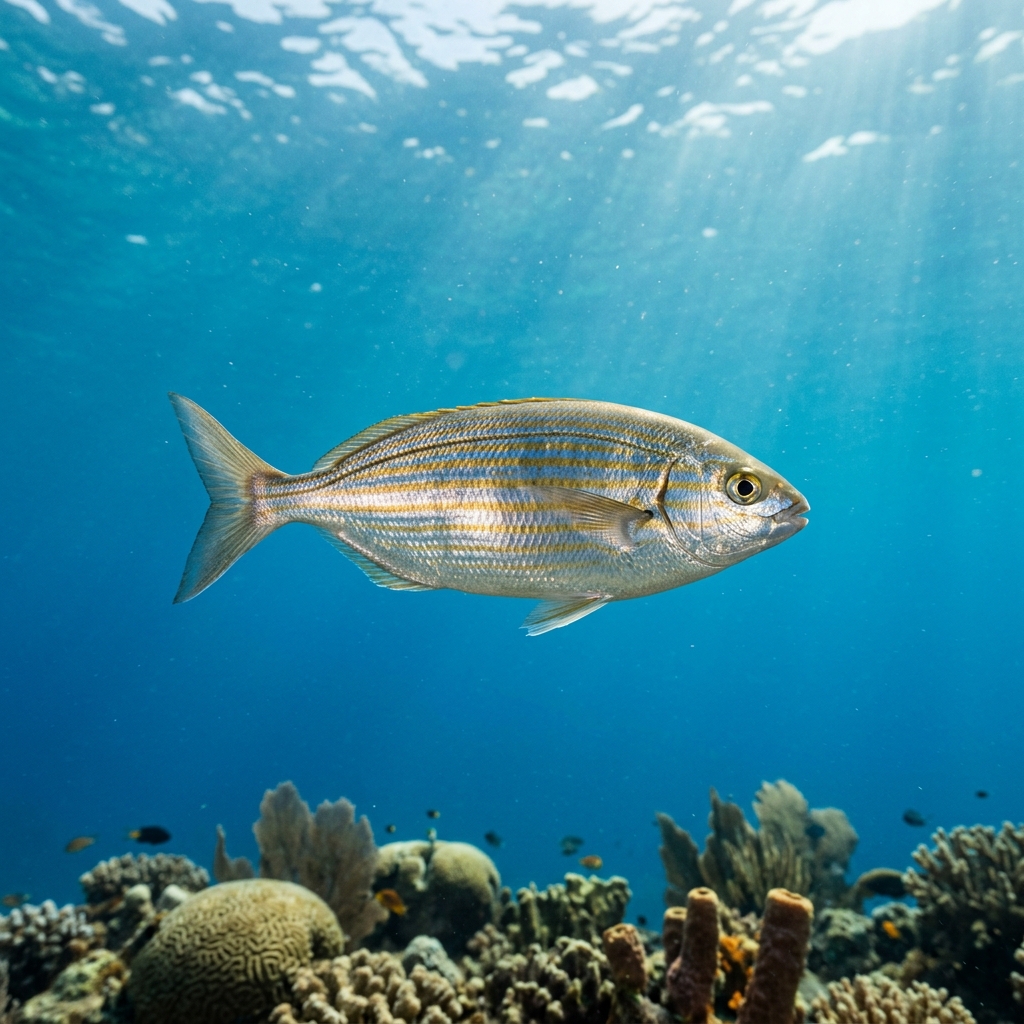
Reef neighbours a diver could mistake it for. Use the identification notes above to tell them apart.
Nearly every logged sighting comes from Florida, particularly reefs and wrecks along the state's coastline, making it a distinctly Florida fish for divers rather than a species with a wide geographic spread in the data. A smaller number of records come from the wider southern United States, but Florida is where you'll actually plan a dive around finding one.
Mapping where Spottail Pinfish is logged…
Florida is by far the most reliable place, with sightings logged across a wide range of its dive sites. Records outside Florida in the wider southern United States are much sparser.
There's no strong seasonal signal in the data, and the recorded water temperatures (23.3 to 27.6C) suggest they're around whenever Florida's reefs sit in that warm range, so any time of year is worth a look.
Check for a silvery, deep-bodied sea bream around 32 cm with faint vertical bars and, most usefully, a dark blotch right at the base of the tail. That tail-base marking is the quickest way to separate it from similar-looking breams.
They typically reach around 32 cm in length, putting them in the mid-size range for sea breams you'll encounter on a reef dive.
No, they pose no danger to divers and are simply worth watching for their tail marking and unhurried reef behaviour.
Yes, it belongs to the Diplodus genus of sea breams, several of which are known to change sex during their lives, a pattern likely shared by this species too.
Site and sighting data is aggregated from diver logs, iNaturalist and GBIF. For taxonomy and conservation status:
Saddled Bream
3,846 sites