Tumidodromia dormia
Sponge-capped and rarely seen: find this odd crab in Okinawa's Ryukyu Islands or Hawaii's reefs, 22-28C, spotted year-round.
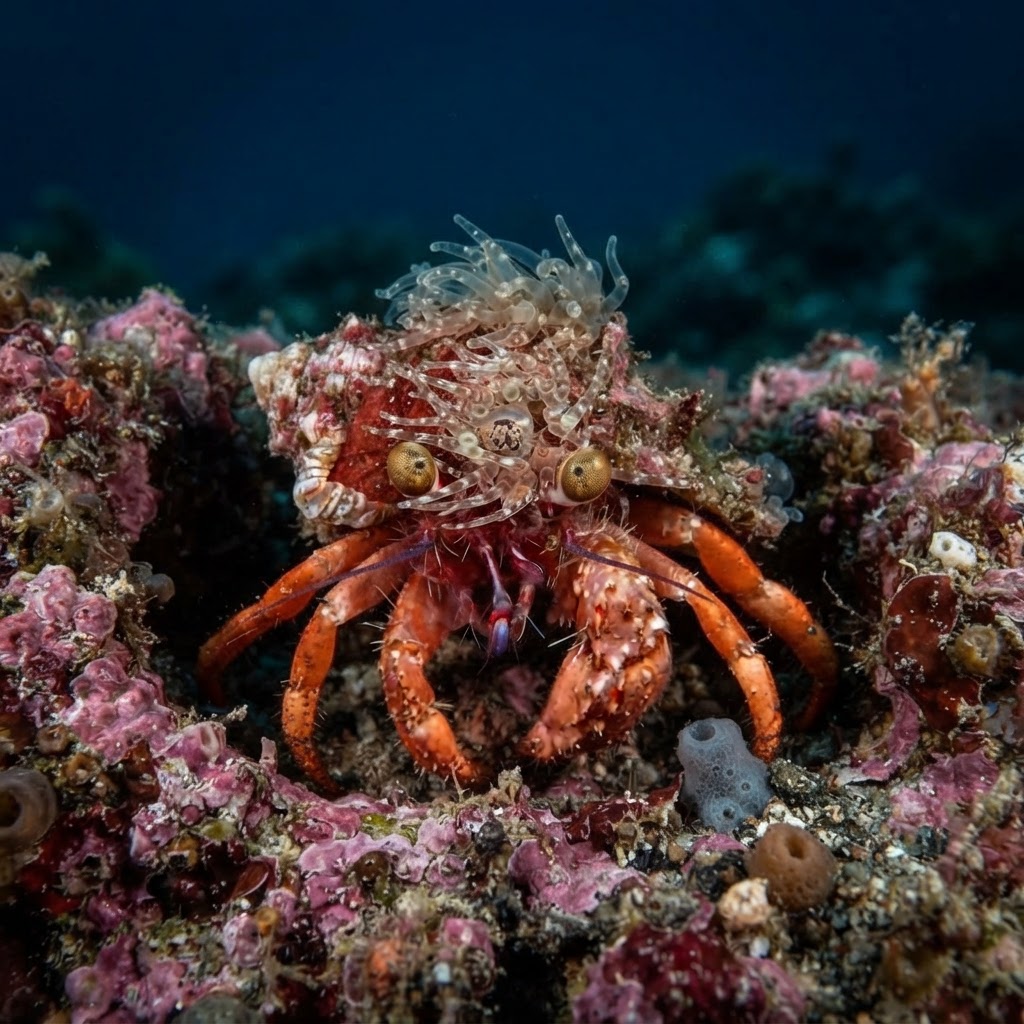
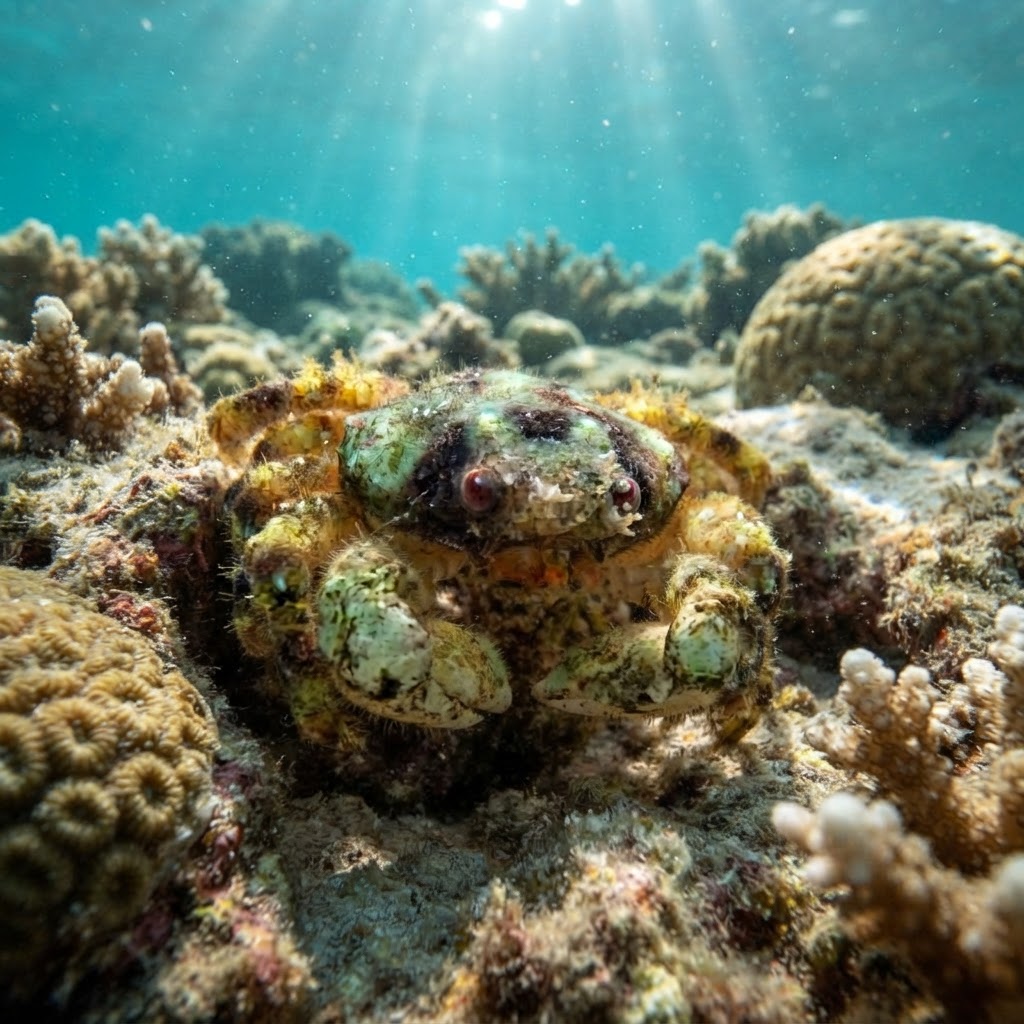
Grows to around 14 cm across a squat, rounded shell that's often hard to spot because it's carrying a chunk of living sponge on top like a hat, held in place by its rear pair of legs. Look for the mismatch: a lumpy, irregular sponge shape sitting slightly askew on a crab-shaped body, usually wedged into a crevice or resting on rubble. The exposed legs and claws are pale to mottled brown, but the sponge itself does the camouflage work, so the crab often reads as a random blob until it moves.
Spends most of daylight hours tucked motionless into reef crevices or under ledges, relying on its sponge disguise rather than fleeing when divers approach. Night dives improve your odds since it becomes more active after dark, picking through rubble and sand for food. It rarely reacts to torch light or divers unless directly disturbed, which is part of why it's so easy to swim straight past.
It actively trims and shapes a live sponge to fit its own carapace, then carries that same piece around for life, regrowing and re-trimming it as it moults and grows.
No clear seasonal pattern in the sightings, and its comfort range of 22.4 to 28.4C spans typical reef temperatures year-round in Okinawa, Hawaii and Sulawesi, so any month is fair game.
Reef neighbours a diver could mistake it for. Use the identification notes above to tell them apart.
Most consistently logged in Okinawa and the wider Ryukyu Islands in Japan and around Hawaii in the United States, with a scattering of sightings from Sulawesi, Indonesia. Across all these sites it's logged as uncommon to rare, so it's a find for divers who slow down and check crevices rather than a species you'll swim past regularly.
Mapping where Sleepy Sponge Crab is logged…
It turns up most reliably in Okinawa and the Ryukyu Islands in Japan and around Hawaii in the United States, with occasional sightings in Sulawesi, Indonesia. Even in these spots it's logged as uncommon to rare, so treat any sighting as a bonus.
There's no detectable seasonal pattern in sightings, and its 22.4 to 28.4C temperature range covers reef conditions year-round in its known regions, so it can turn up on any dive.
Look for a lumpy, mismatched sponge sitting on top of a roughly 14 cm crab body, held on by the rear legs. The giveaway is the shape not quite matching the reef around it, often wedged in a crevice rather than out in the open.
They reach around 14 cm across the shell, though the sponge they carry can make them look noticeably bulkier than that underwater.
It trims a live sponge to fit its own shell shape and carries it as portable camouflage, keeping the same piece for life and reshaping it after every moult. The disguise is so effective that most divers overlook the crab entirely.
No, they pose no threat to divers. They're slow-moving, defensive rather than aggressive, and rely entirely on camouflage instead of confrontation.
Site and sighting data is aggregated from diver logs, iNaturalist and GBIF. For taxonomy and conservation status:
European Green Crab
2,469 sites