Dromia personata
Uncommon but reliable find in the French Riviera and Istria, this crab wears a living sponge as a hat in 14-20 C water.
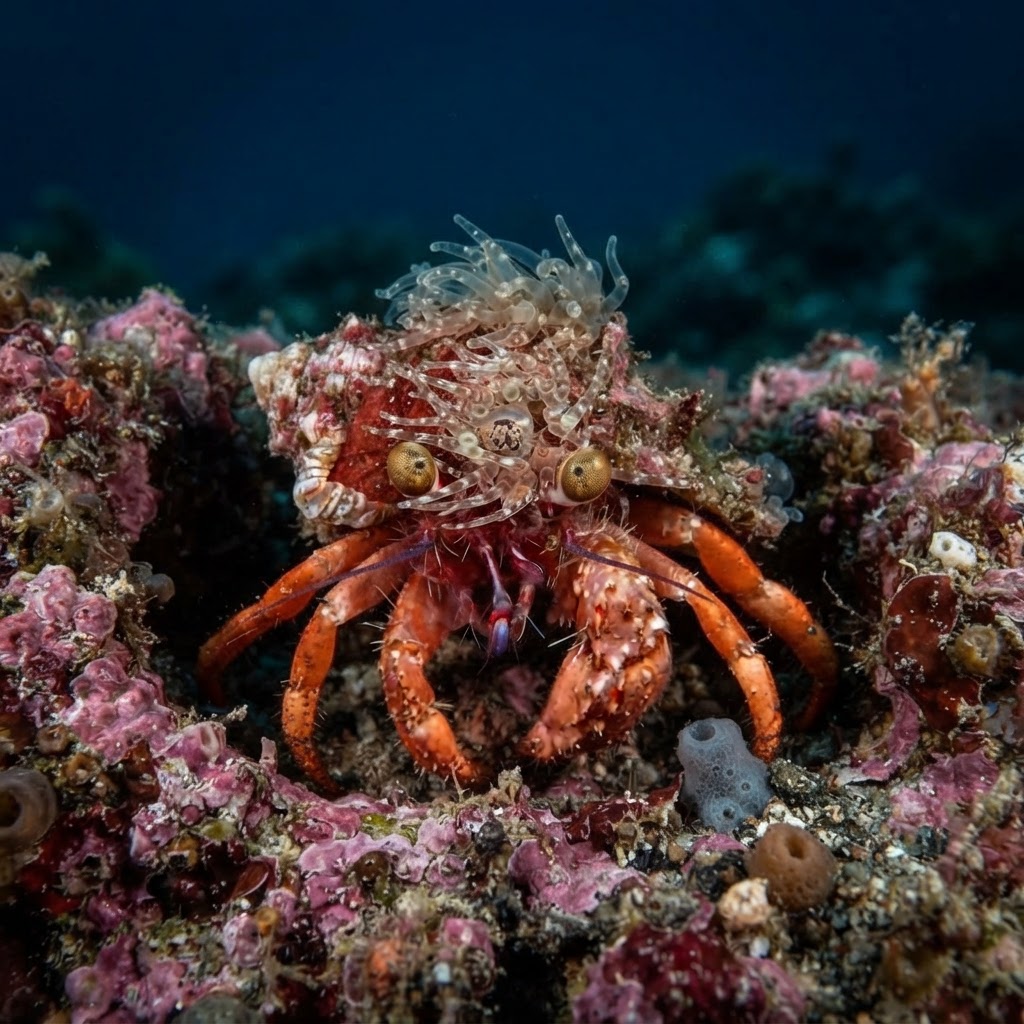
Look for a chunky, roughly 4 cm crab that seems to be wearing a lumpy grey or brownish sponge like a backpack, often making it near invisible against the rock. The claws are short, thick and often tucked under the sponge mass, and the back two pairs of legs curve upward to grip the sponge in place rather than being used for walking. Most of what you spot underwater is the sponge itself moving slightly out of place, not the crab.
Divers typically find it wedged into a crevice or sitting still on rock and rubble, using its rear legs to hold a trimmed piece of sponge over its shell as camouflage and cover. It rarely moves much when approached, relying on the disguise rather than fleeing, so a slow scan of ledges and boulder fields is the best way to pick one out. Most sightings happen during the day on rocky reef rather than sand or seagrass.
It actively cuts and shapes a living sponge to fit its own carapace, then carries that same sponge for life, trimming it as it grows so the disguise always matches its size.
Sightings show no clear seasonal pattern, and with a comfortable range of 14 to 20 C it can be found across the year rather than in one narrow window. Treat it as a year-round possibility on any dive in its range.
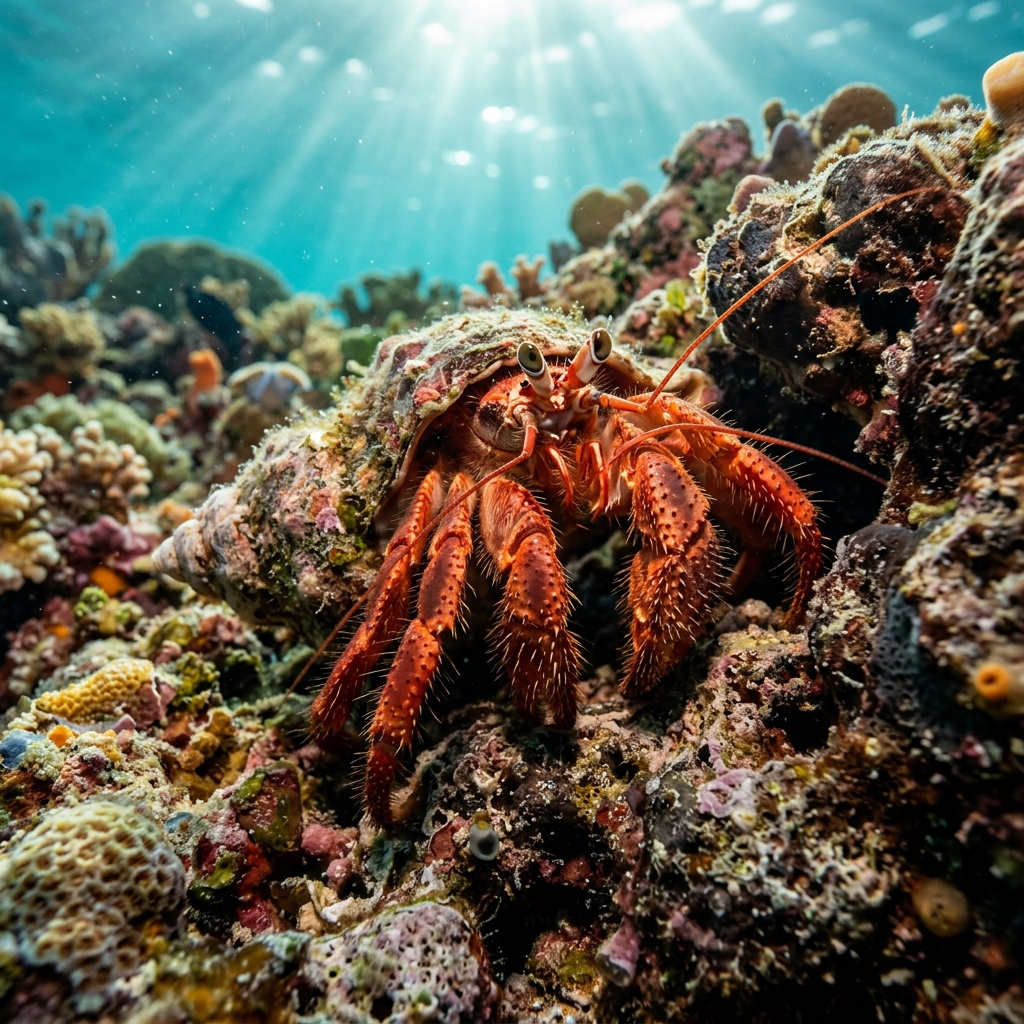
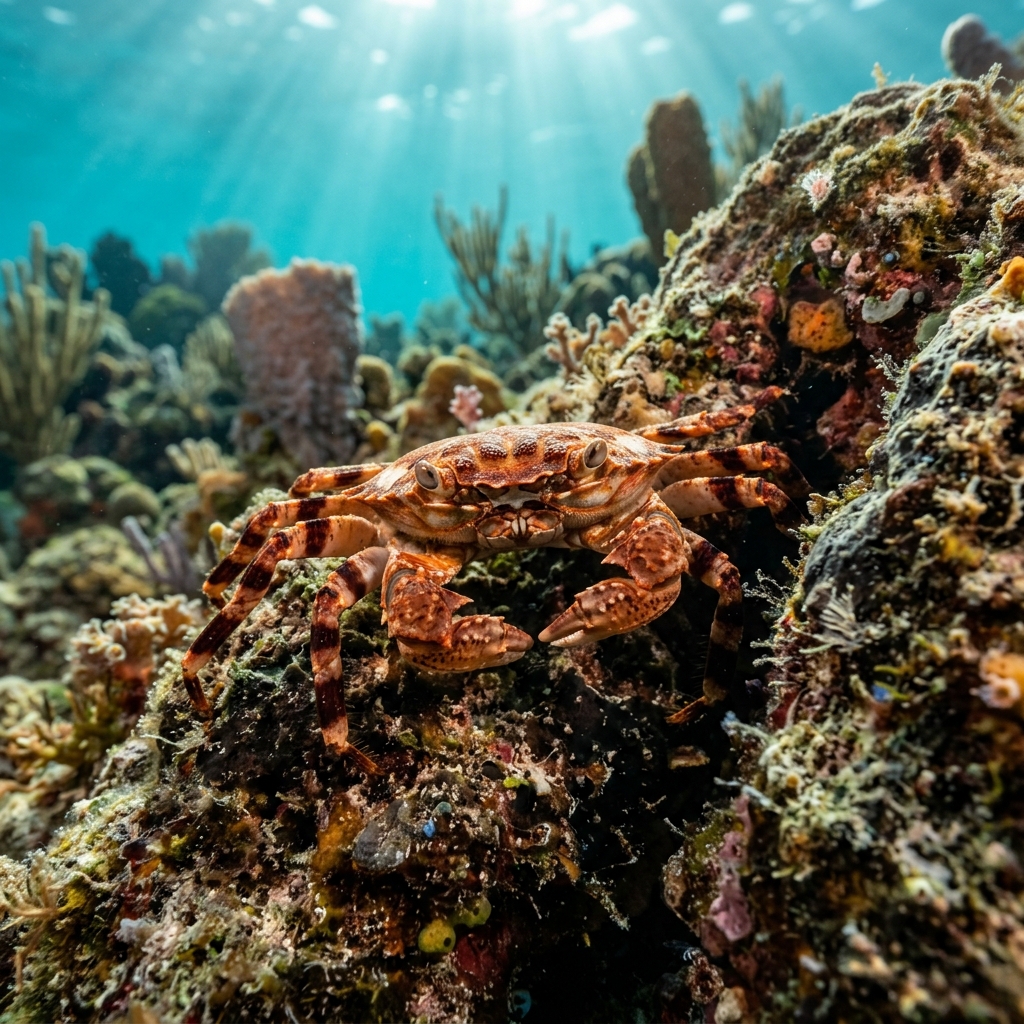
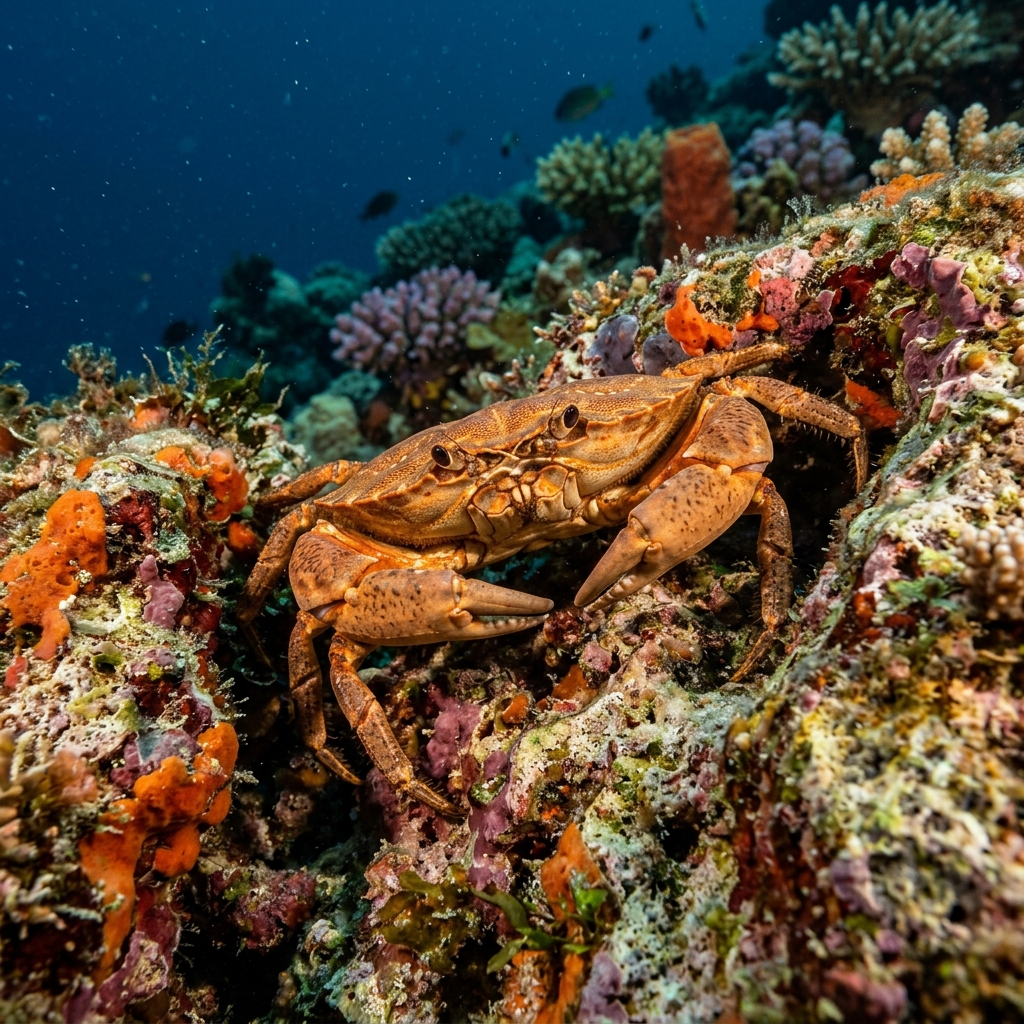
Reef neighbours a diver could mistake it for. Use the identification notes above to tell them apart.
Most commonly logged along the French Riviera and Provence coast and in Istria, Croatia, with further solid records in Sardinia, Kvarner, Murcia, Corsica and Catalonia. It also turns up around the United Kingdom and the Azores, making it a wide-ranging Mediterranean and near-Atlantic find rather than a regional specialty.
Mapping where Sponge Crab is logged…
It is most reliably logged along the French Riviera and Provence and in Istria, Croatia, with good numbers also reported from Sardinia, Kvarner, Corsica, Catalonia and Murcia. It also shows up in the United Kingdom and the Azores, so it is not limited to warm Mediterranean water alone.
There is no strong seasonal pattern in the sighting data, and it tolerates a fairly wide temperature range of 14 to 20 C, so it can be found on rocky reefs throughout the year.
Rather than the crab's own colour, look for a lump of sponge sitting on a rock that shifts slightly or has legs peeking out underneath. The crab itself is only around 4 cm and usually hidden almost entirely by the sponge it carries.
They are small, typically reaching around 4 cm across the shell, so the sponge they carry often looks bigger than the crab itself.
It cuts a piece of living sponge to size and holds it in place with its rear legs, wearing it as permanent camouflage and trimming it to keep pace as it grows. This sponge disguise is the main reason it is so easy to overlook on a dive.
No, they pose no threat to divers. They stay still under their sponge cover when approached and have no venom or aggressive defence worth worrying about.
Site and sighting data is aggregated from diver logs, iNaturalist and GBIF. For taxonomy and conservation status:
European Green Crab
2,469 sites