Charybdis (Charybdis) hellerii
An uncommon find on Florida reefs and Hong Kong's Sai Kung coast, this swimming crab hides in rubble year-round between 23 and 29 C.
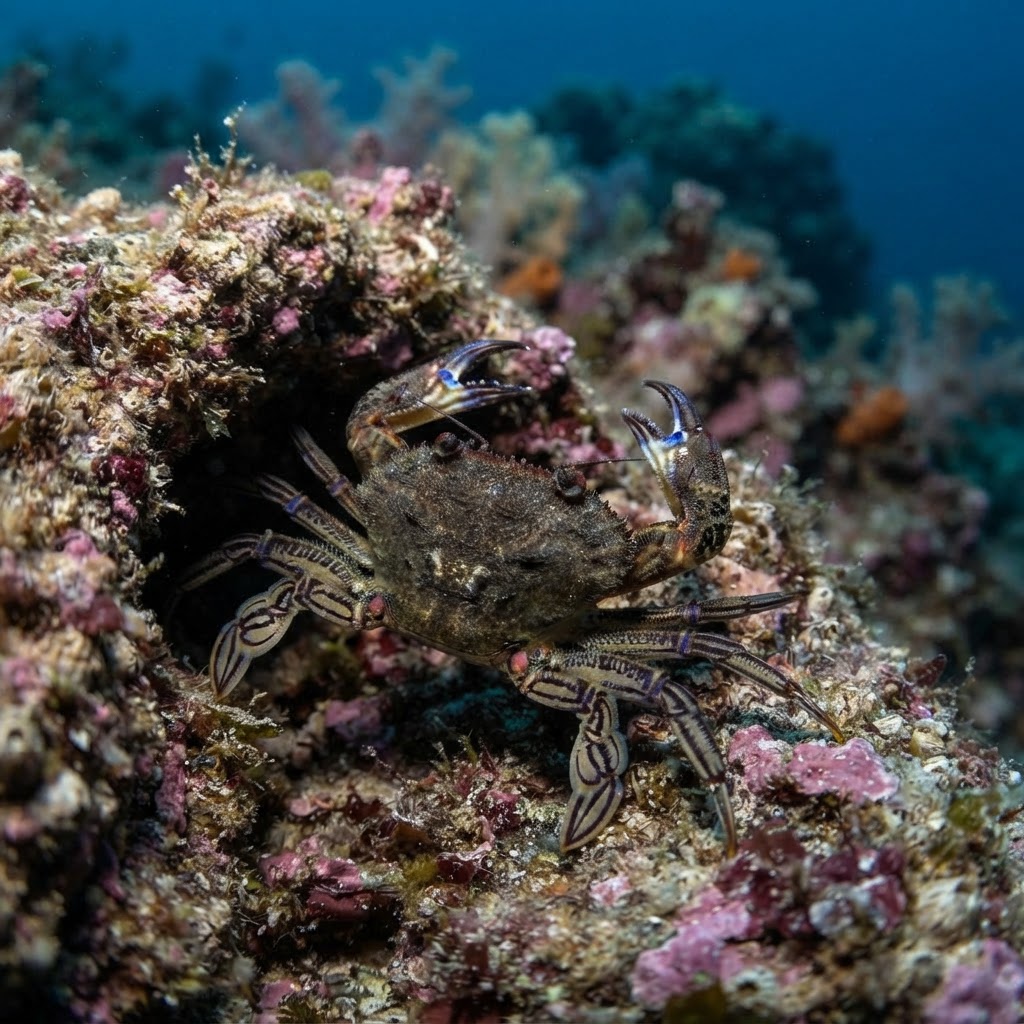
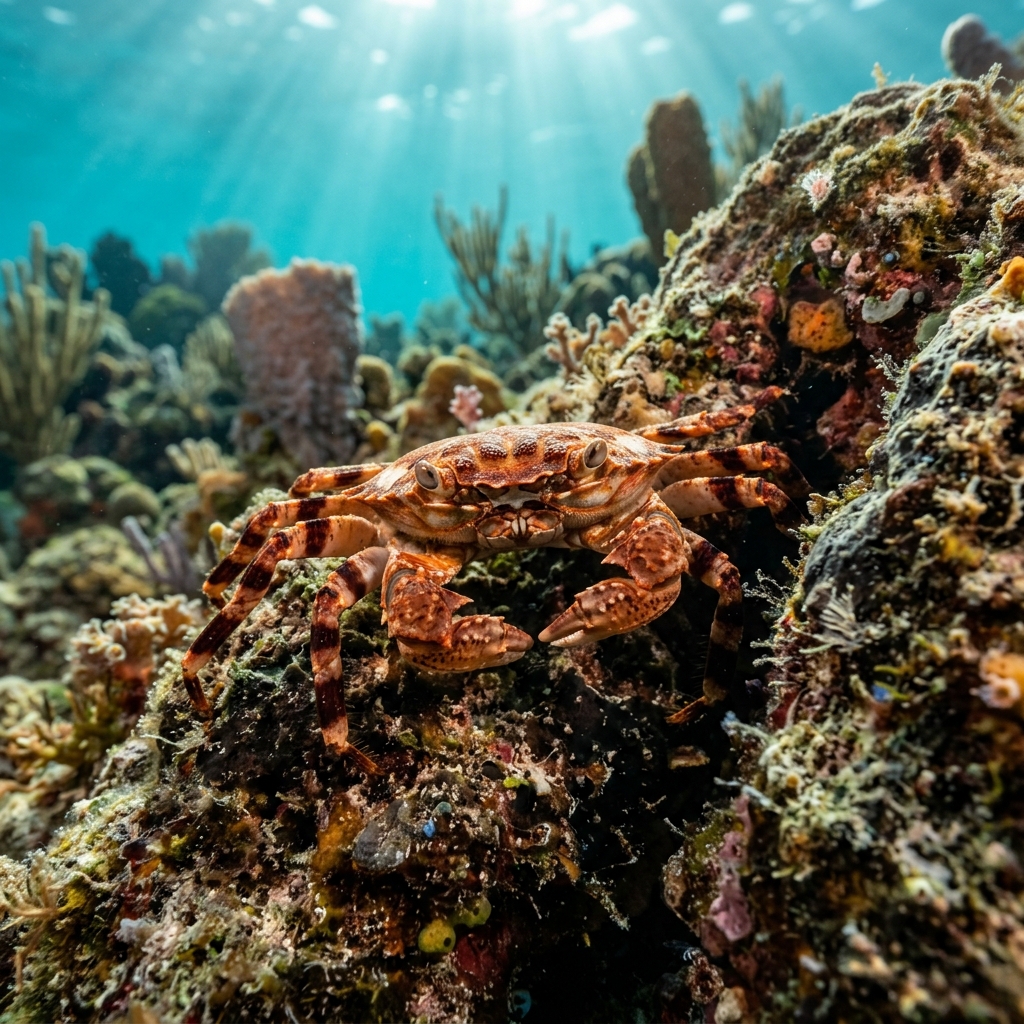
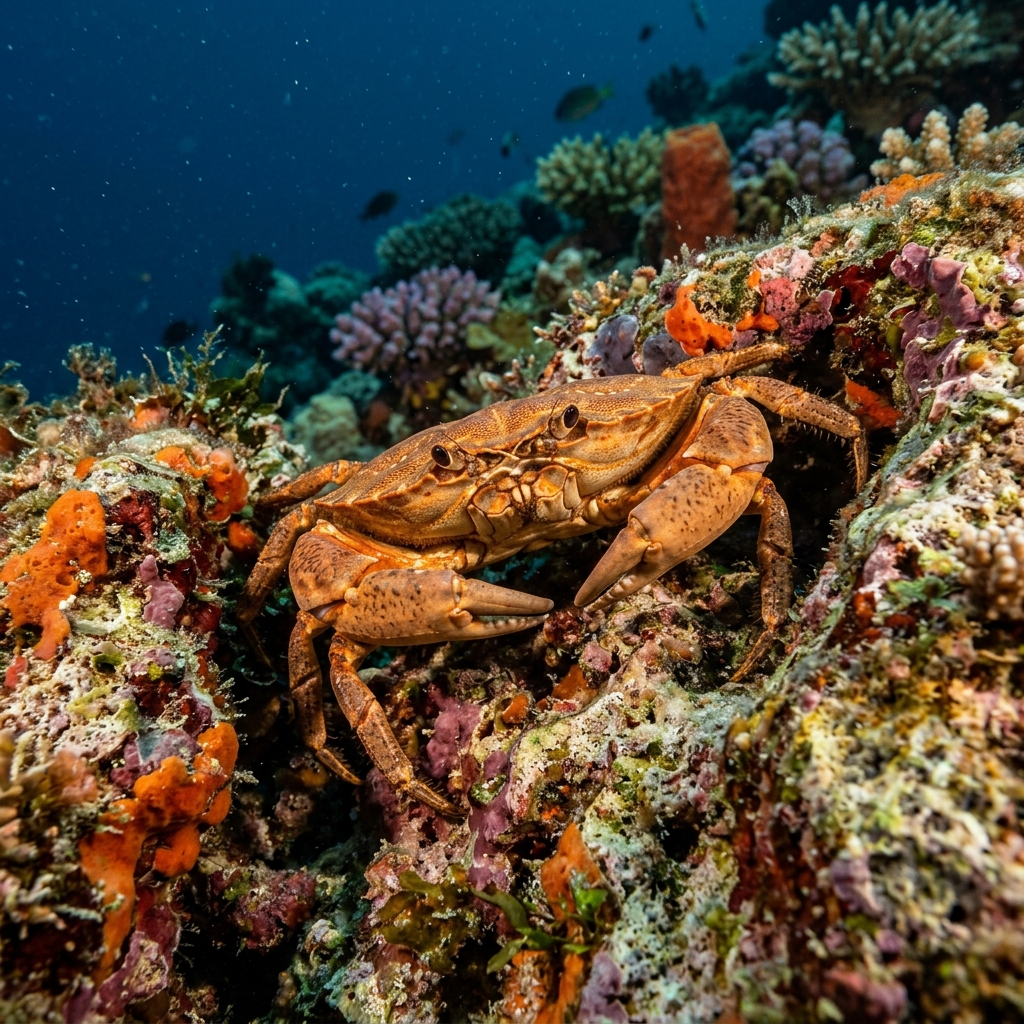
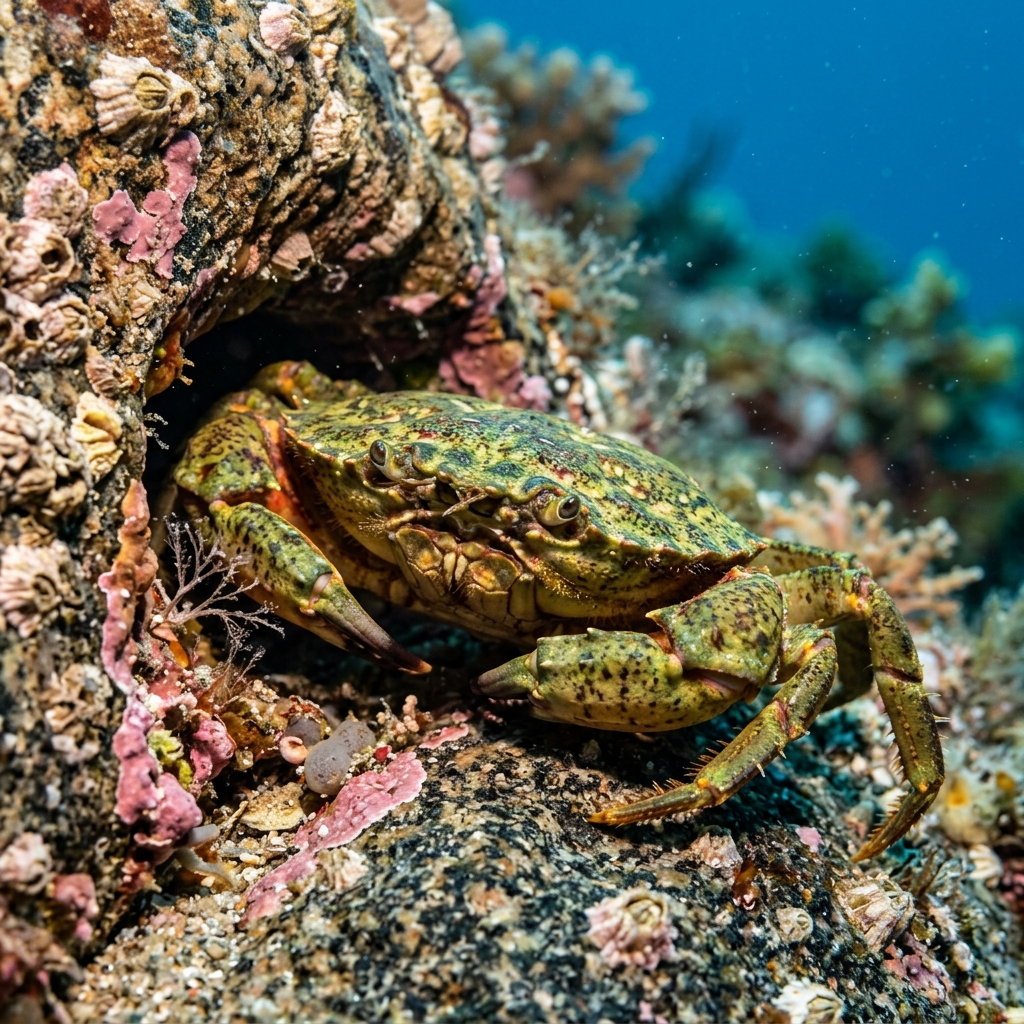
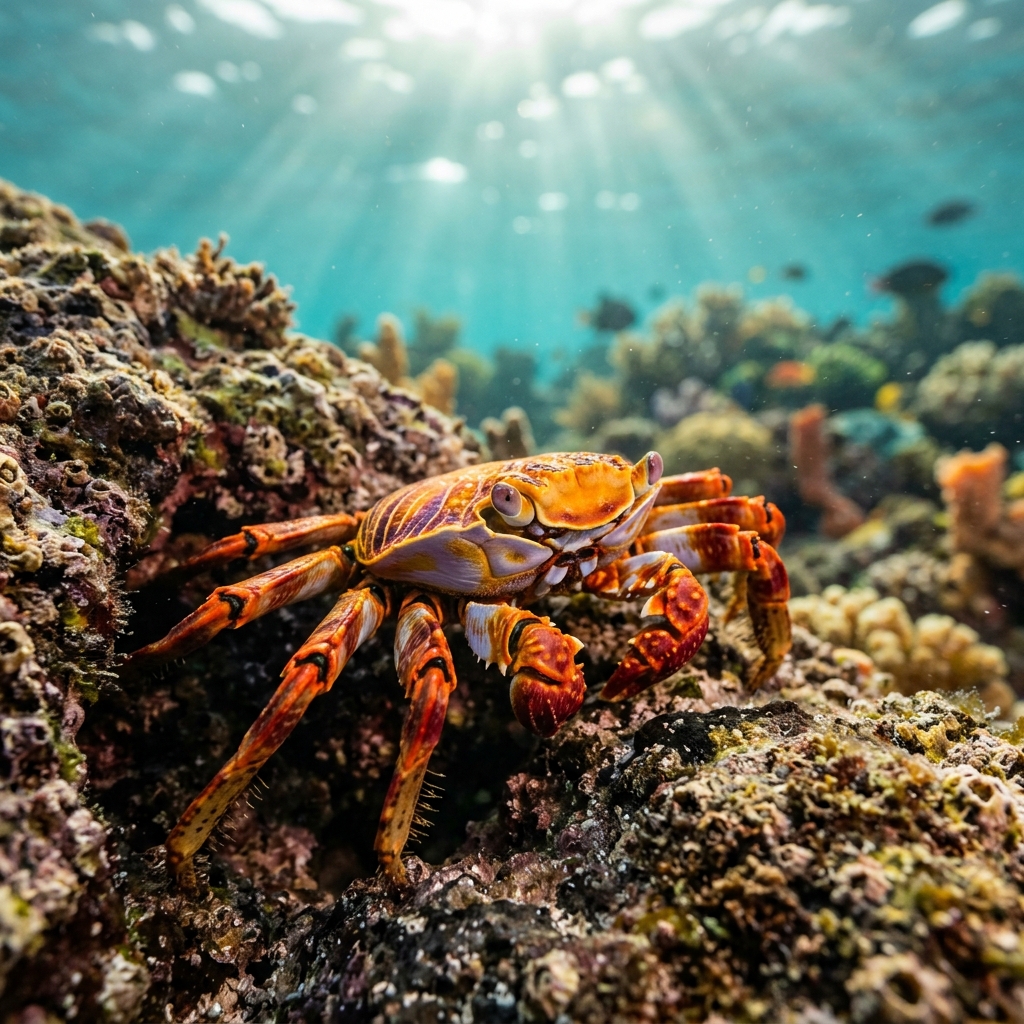
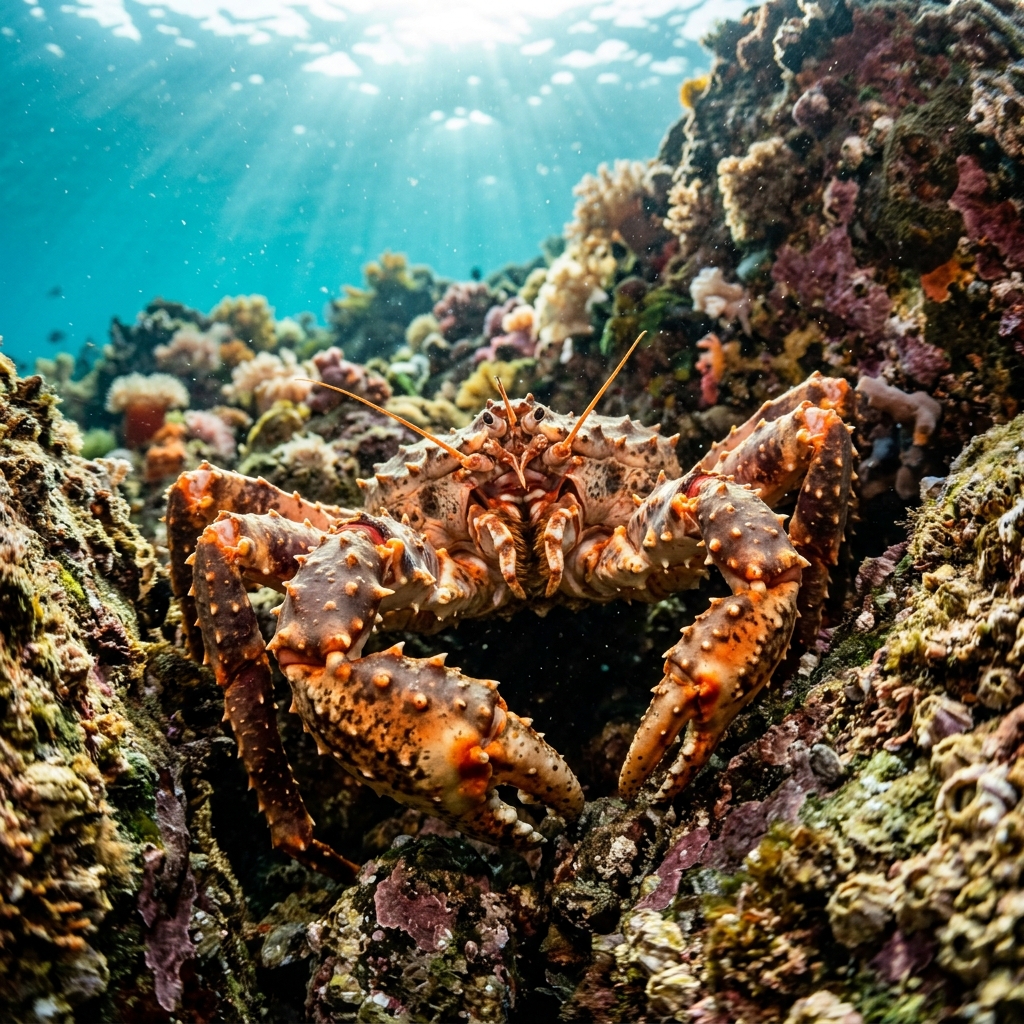
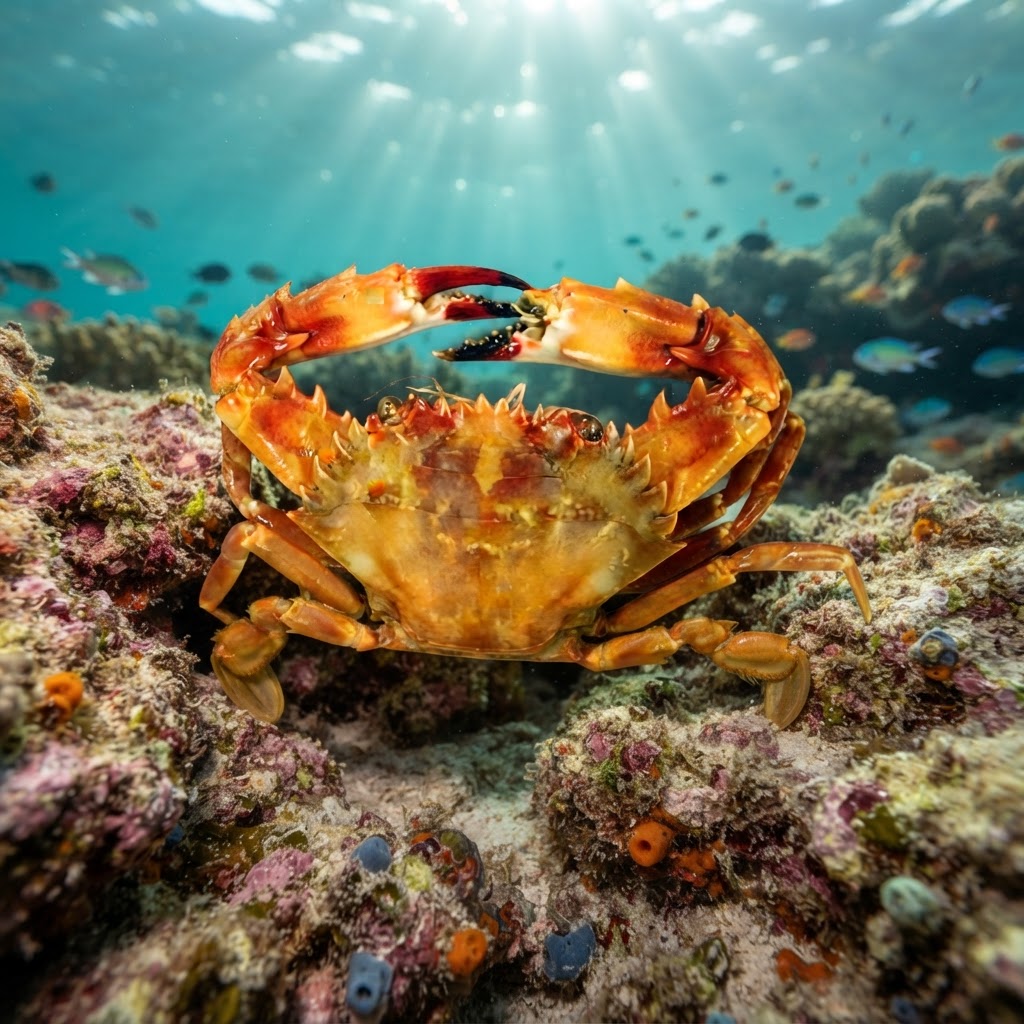
A mottled brown to olive swimming crab with a broad, fan-shaped carapace edged with sharp spines along each side, giving the species its common name. Look for the flattened last pair of legs, used as paddles for swimming, and a pair of pincers held forward when disturbed. Most individuals seen underwater are small enough to tuck into a fist-sized gap in rubble or rock, and they tend to sit low and still until approached.
Divers typically find this crab wedged into crevices, under rubble, or pressed against rocky substrate rather than out in the open on sand or coral. It reacts to a close approach by raising its pincers or backing deeper into its shelter, and it is capable of a quick sideways swimming dart if it feels cornered. Most logs describe single individuals rather than groups, consistent with a solitary, shelter-dependent lifestyle.
This is an Indo-Pacific native that has established itself well beyond its original range, including the western Atlantic and Mediterranean, likely via ballast water transport on ships.
There is no detected seasonal pattern in the data, and the observed temperature range of 23.2 to 29.2 C spans most of the year on the reefs where it is found, so it is best treated as a year-round sighting rather than something tied to a particular month.
Reef neighbours a diver could mistake it for. Use the identification notes above to tell them apart.
Sightings cluster heavily around Florida in the United States, which accounts for the bulk of logged encounters, with a smaller but steady presence around Sai Kung in Hong Kong and the Southern Islands of Singapore. Divers in these three countries have the best odds, though even there it is logged as uncommon rather than a given on any single dive.
Mapping where Spiny Hands is logged…
Florida in the United States has by far the strongest record of sightings, with additional logs from Sai Kung in Hong Kong and the Southern Islands of Singapore. Outside these three countries, confirmed diver sightings are sparse.
There is no clear seasonal pattern in the sighting data, and the species tolerates a wide temperature range from about 23 to 29 C, so it turns up year-round rather than in a specific season.
No. It poses no danger to divers and will typically retreat into shelter or swim away if approached too closely rather than confront a diver.
Look for a mottled brown carapace with sharp spines along the side edges and flattened paddle-like rear legs used for swimming. It usually sits tucked into rubble or rocky crevices rather than out in the open.
It is native to the Indo-Pacific but has spread widely into the western Atlantic and Mediterranean, most likely carried in ship ballast water, making it one of the more successful crab invaders logged by divers today.
Site and sighting data is aggregated from diver logs, iNaturalist and GBIF. For taxonomy and conservation status:
European Green Crab
2,469 sites