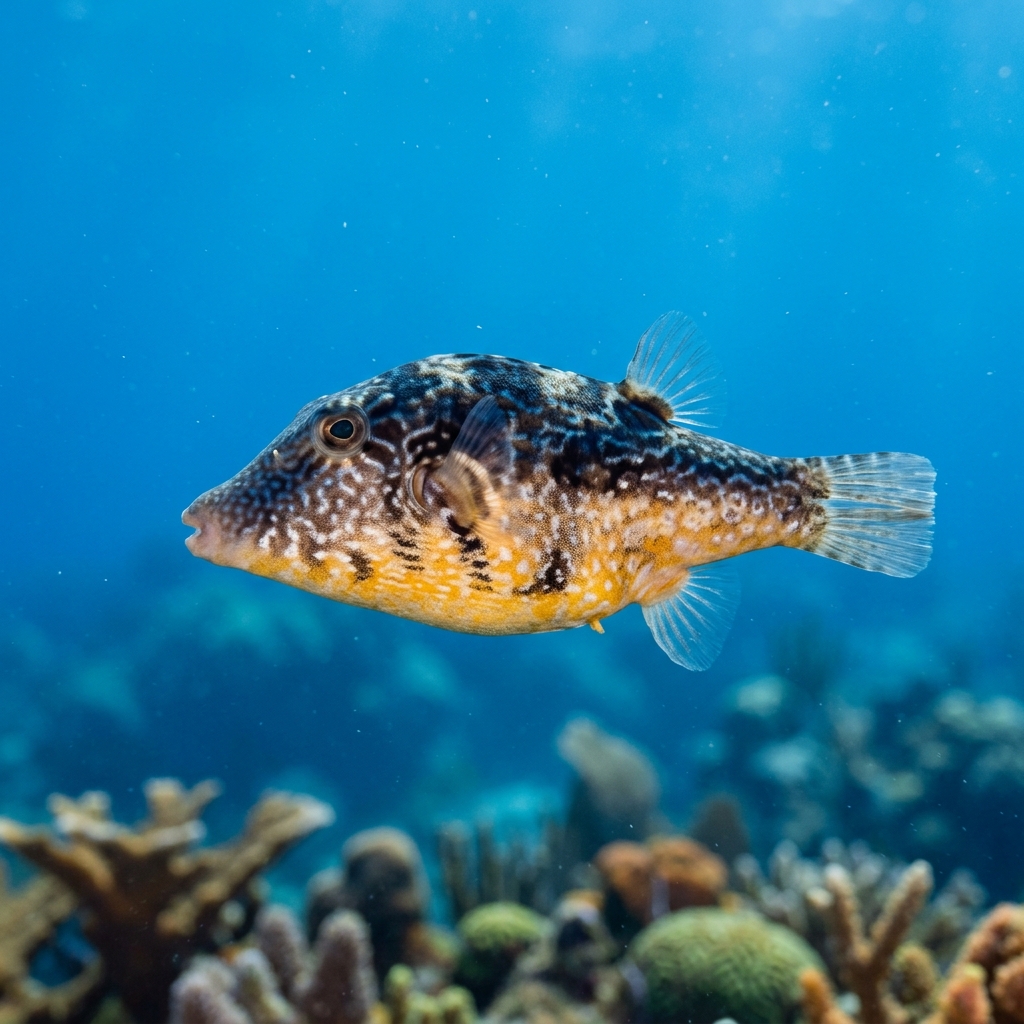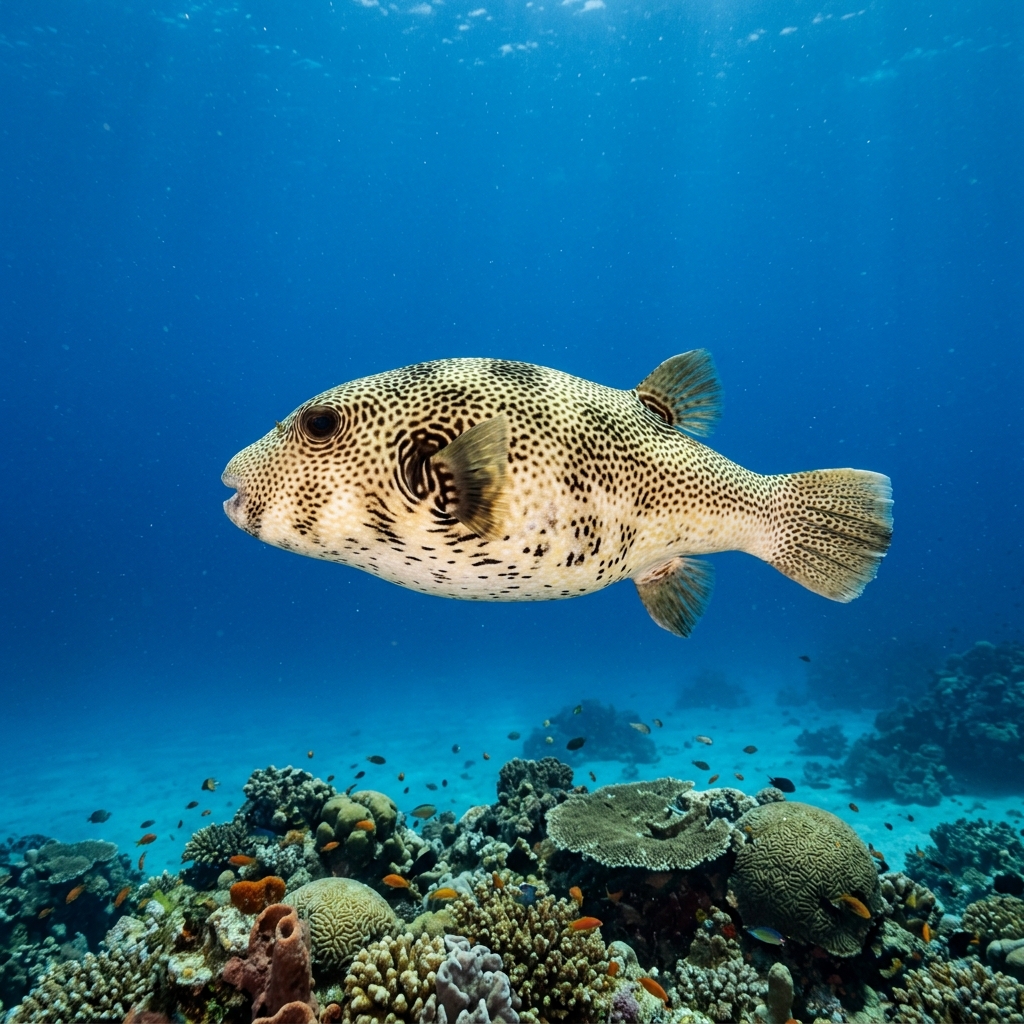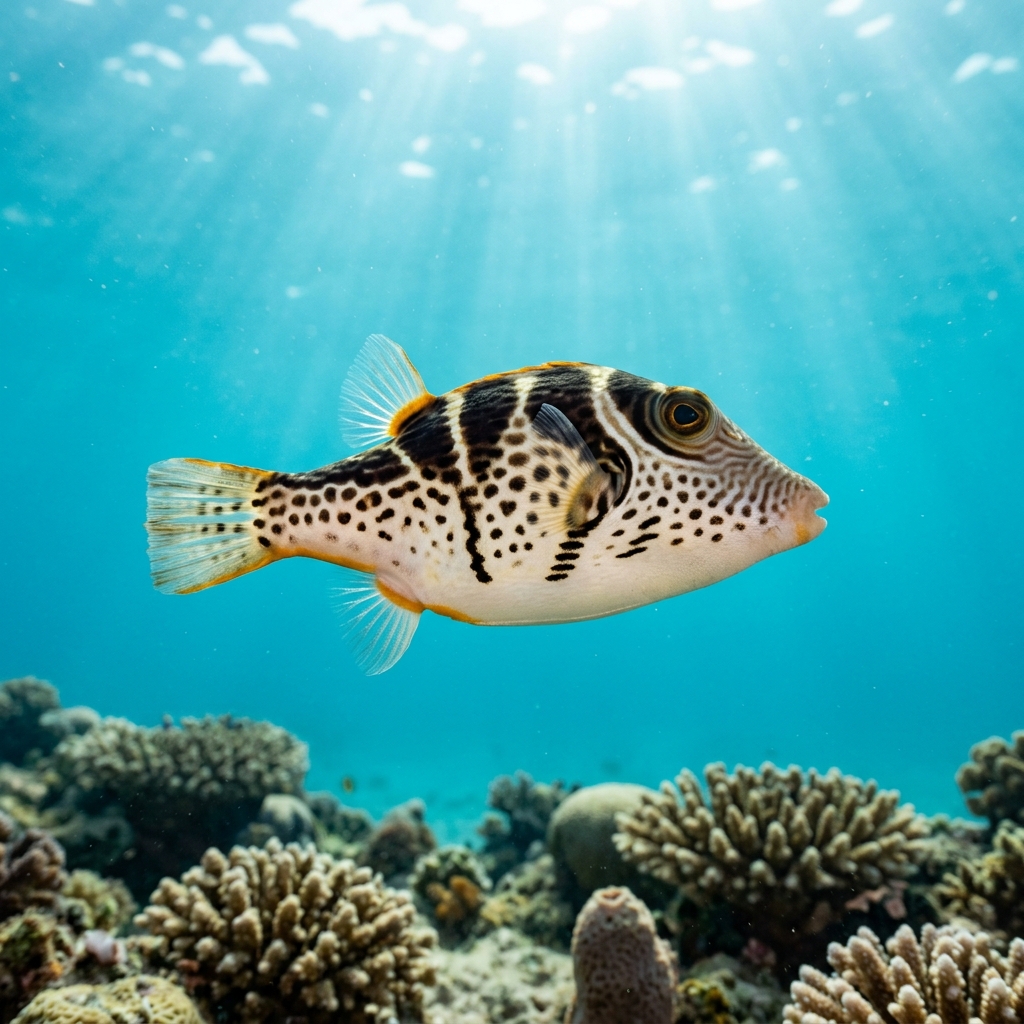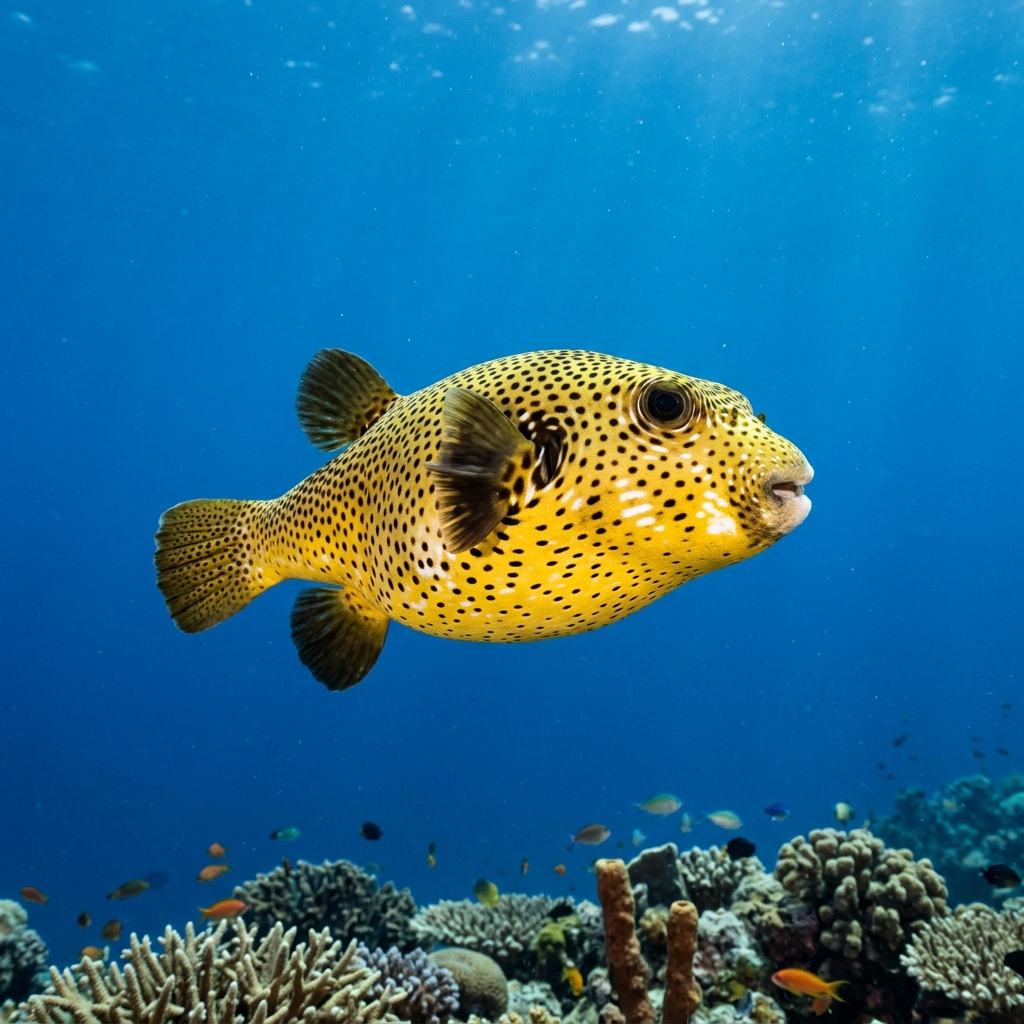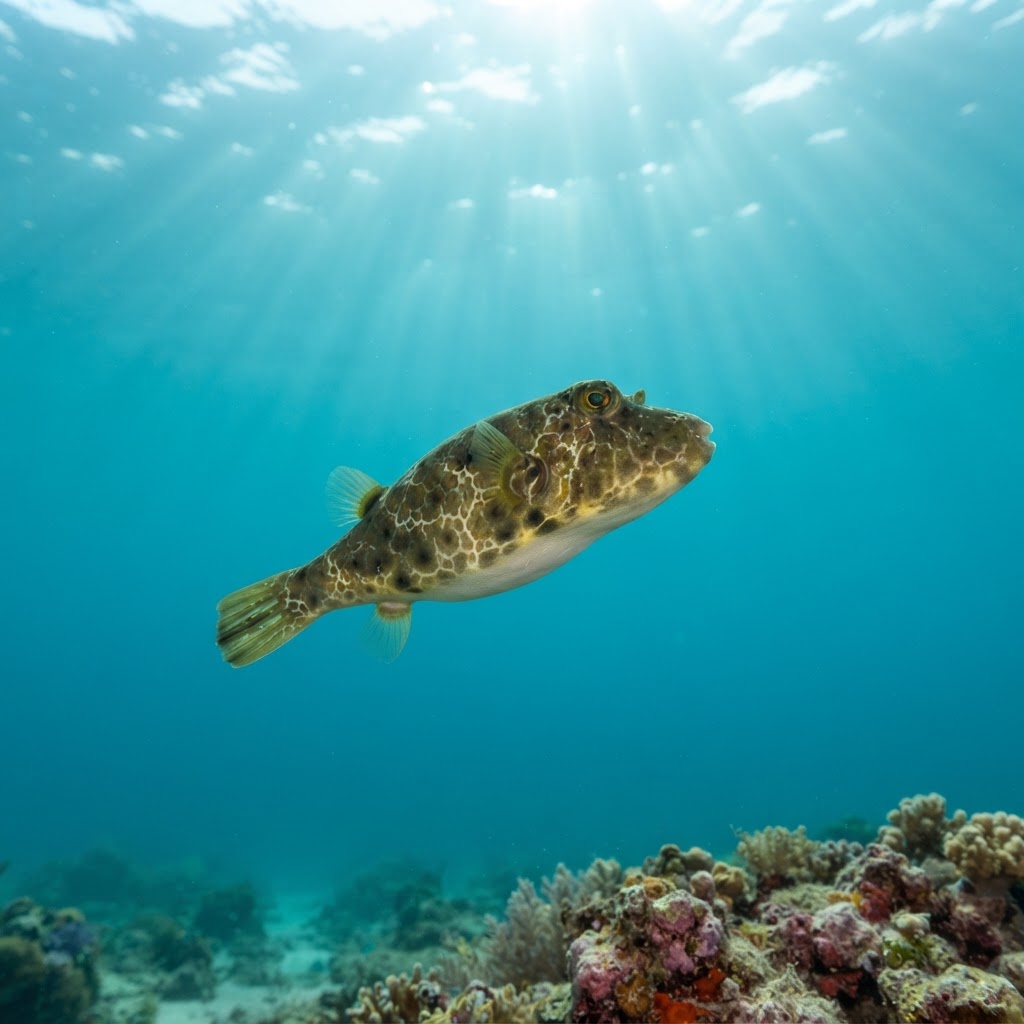
Sphoeroides nephelus
Mottled brown puffer logged across Florida dive sites, comfortable in 24-28C water and seen year-round on shallow reefs.
Rounded, inflatable body with a mottled brown-to-olive back fading to a pale, often yellowish belly, scattered with faint dark spots and short dark bars around the eyes. Grows to roughly 21cm, so it reads as a chunky, slow-moving fish rather than anything streamlined. Small pectoral fins beat quickly to hover and hold position, and the blunt, beaked mouth is a giveaway up close.
Usually spotted hovering just above sand or rubble patches close to the reef, hanging almost motionless before drifting off with slow beats of its pectoral fins. It tends to hold its ground rather than bolt when divers approach, giving a decent window for a photo before it eases away. Most logs describe it as an occasional find rather than something schooling or displaying, fitting its solitary, low-key habits.
Like other pufferfish, it can gulp water to balloon its body when threatened, a last-resort defence that makes it awkward for predators to swallow.
Sightings show no clear season, and with a water-temperature niche of roughly 24 to 28C it stays comfortable on Florida reefs through the year, so any month is fair game.
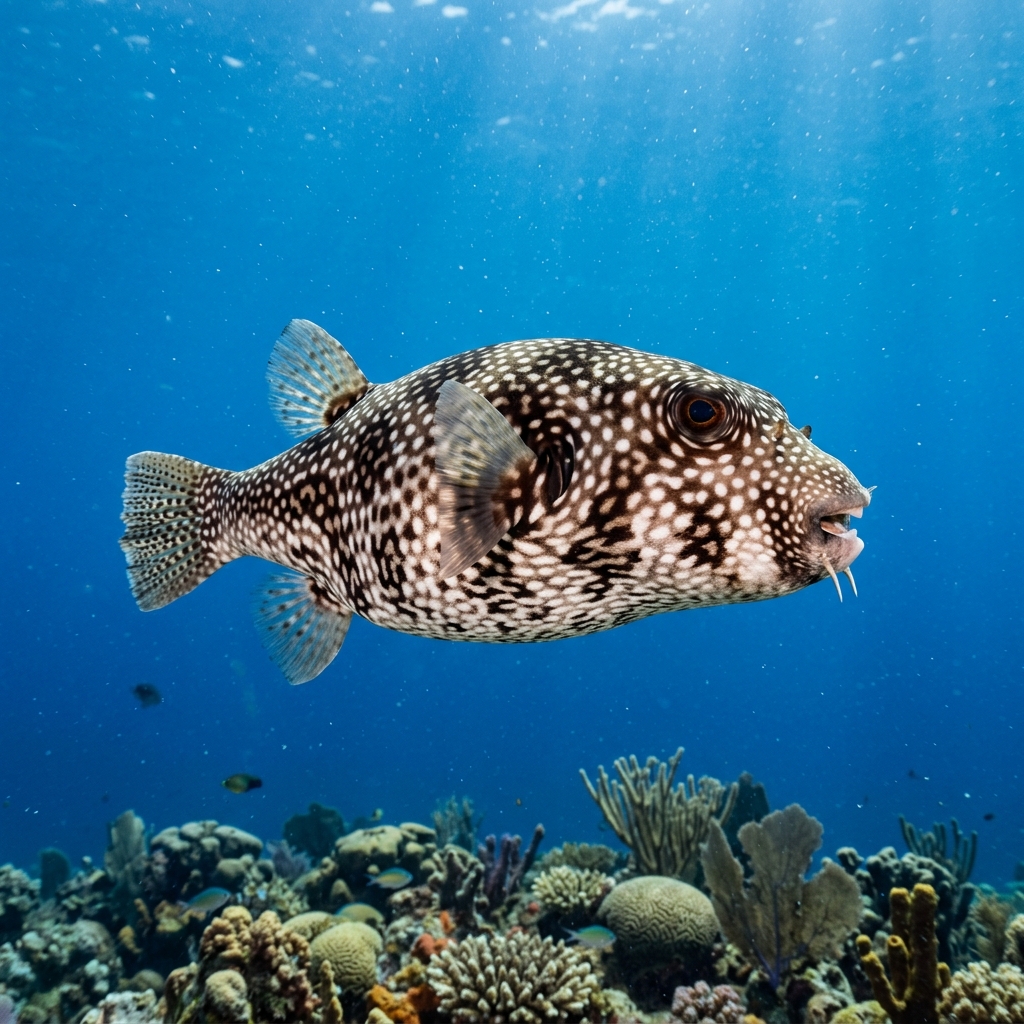
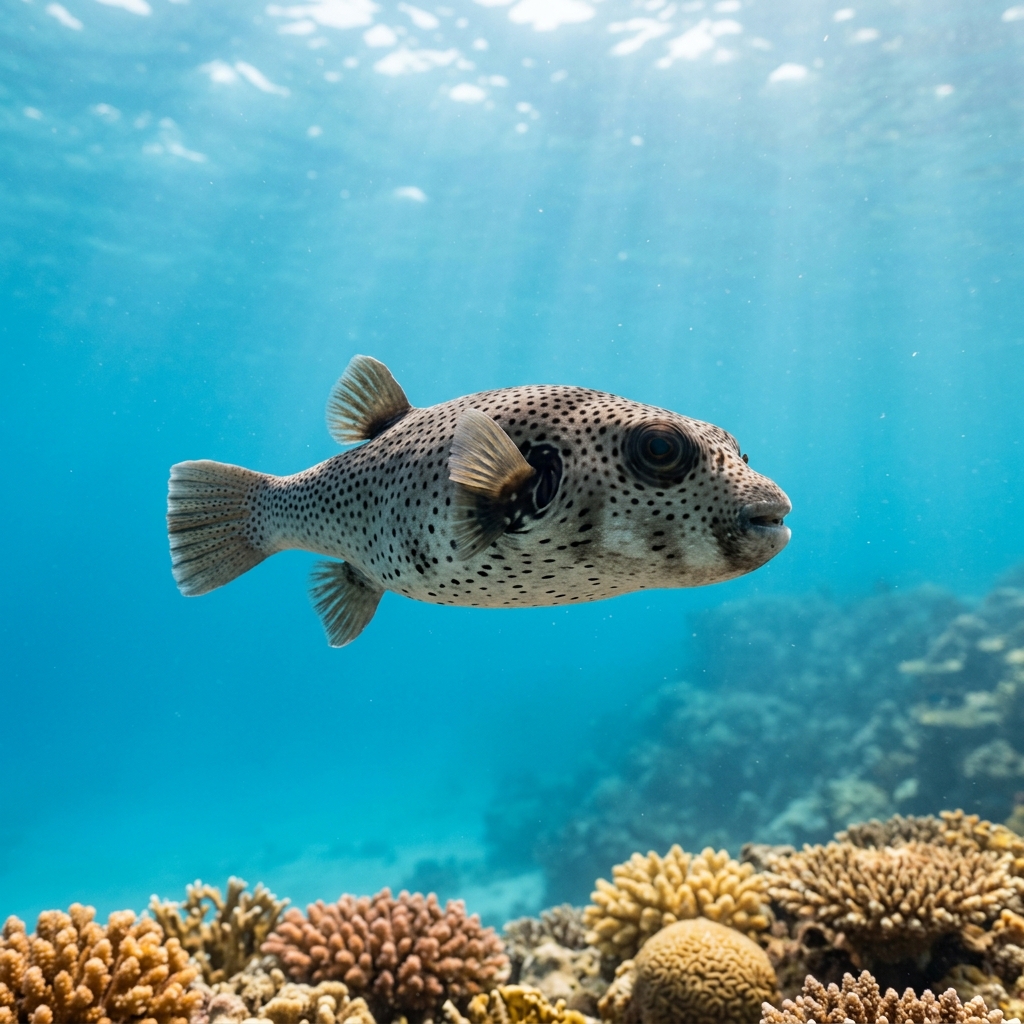
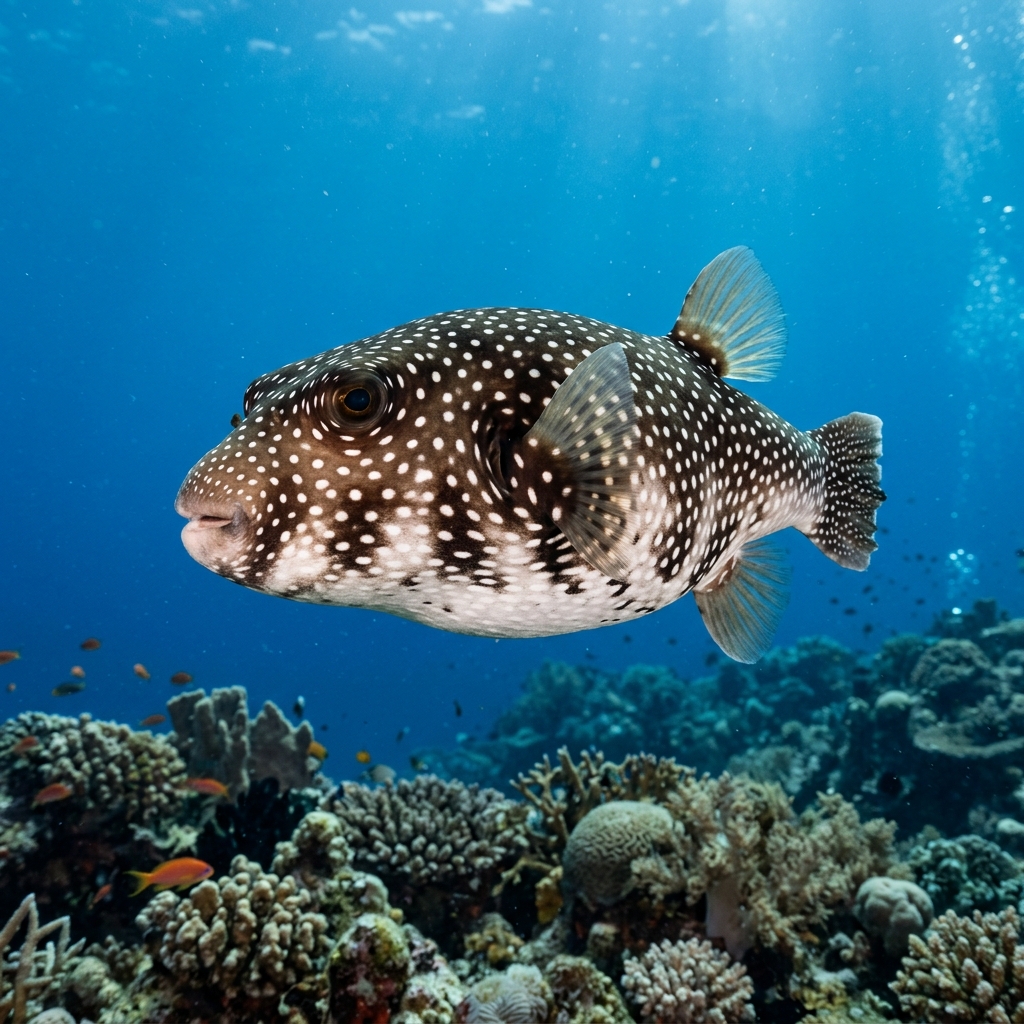
Reef neighbours a diver could mistake it for. Use the identification notes above to tell them apart.
Logged sites sit entirely in Florida, United States, making it the region to look for this one. It turns up on nearshore and patch reefs around the state rather than being a wide-ranging Caribbean regular in the data.
Mapping where Southern Puffer is logged…
All logged sightings come from Florida, United States, where it shows up on nearshore and patch reefs. It is not reported as a regular find outside that region in current dive data.
There is no strong seasonal pattern in the sighting data, and it tolerates a comfortable 24 to 28C range, so it is a year-round possibility on Florida reefs rather than a seasonal special.
Look for a rounded, mottled brown-and-tan body around 21cm long, a pale belly, faint dark spotting, and a blunt beaked mouth. It hovers low over sand rather than swimming actively through open water.
They typically reach around 21cm in length, making them a small-to-medium reef fish rather than a large puffer species.
No, they pose no threat to divers and will simply drift away if approached. Like all pufferfish their internal toxin is only a concern if handled or eaten, not a diving risk.
Site and sighting data is aggregated from diver logs, iNaturalist and GBIF. For taxonomy and conservation status:
Valentini Pufferfish
2,830 sites