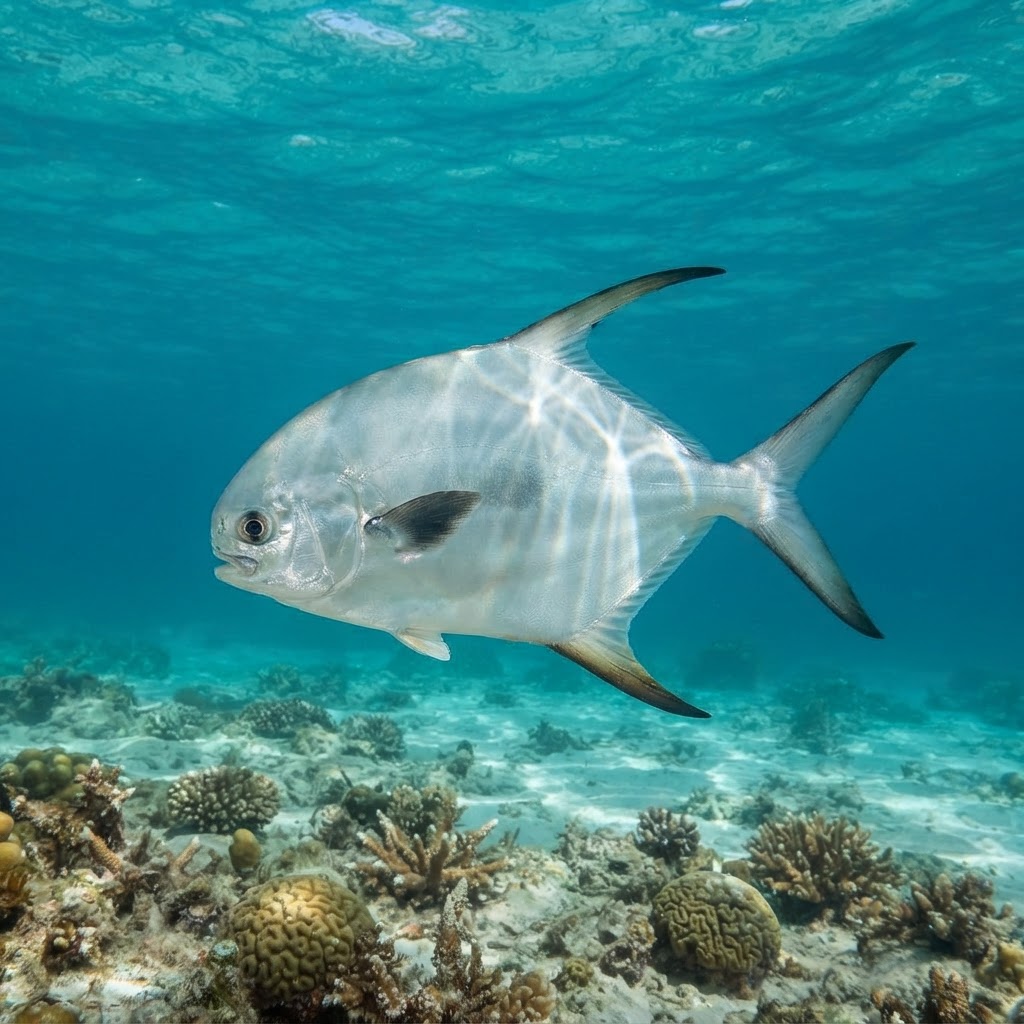
Trachinotus blochii
Silver, deep-bodied and blunt-nosed, this jack turns up on shallow reefs across the Maldives and Seychelles year-round.
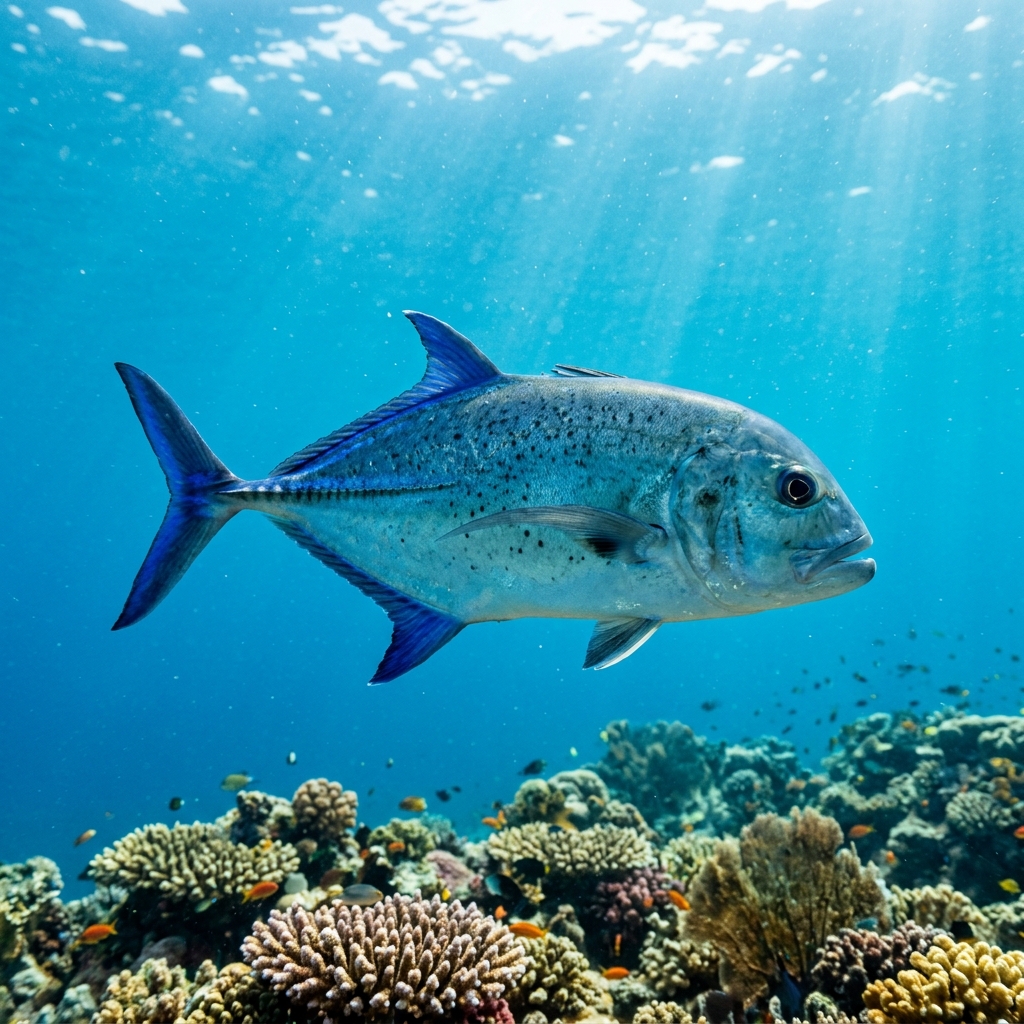
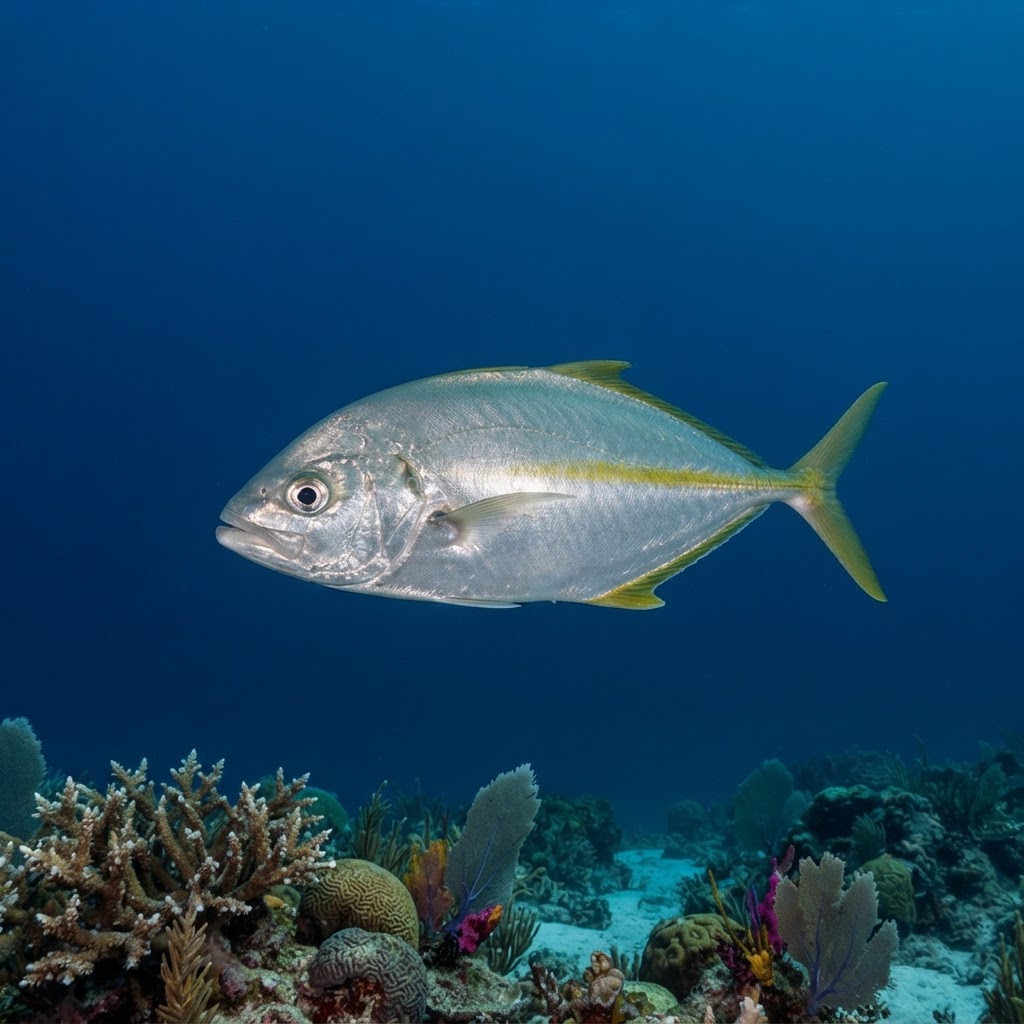
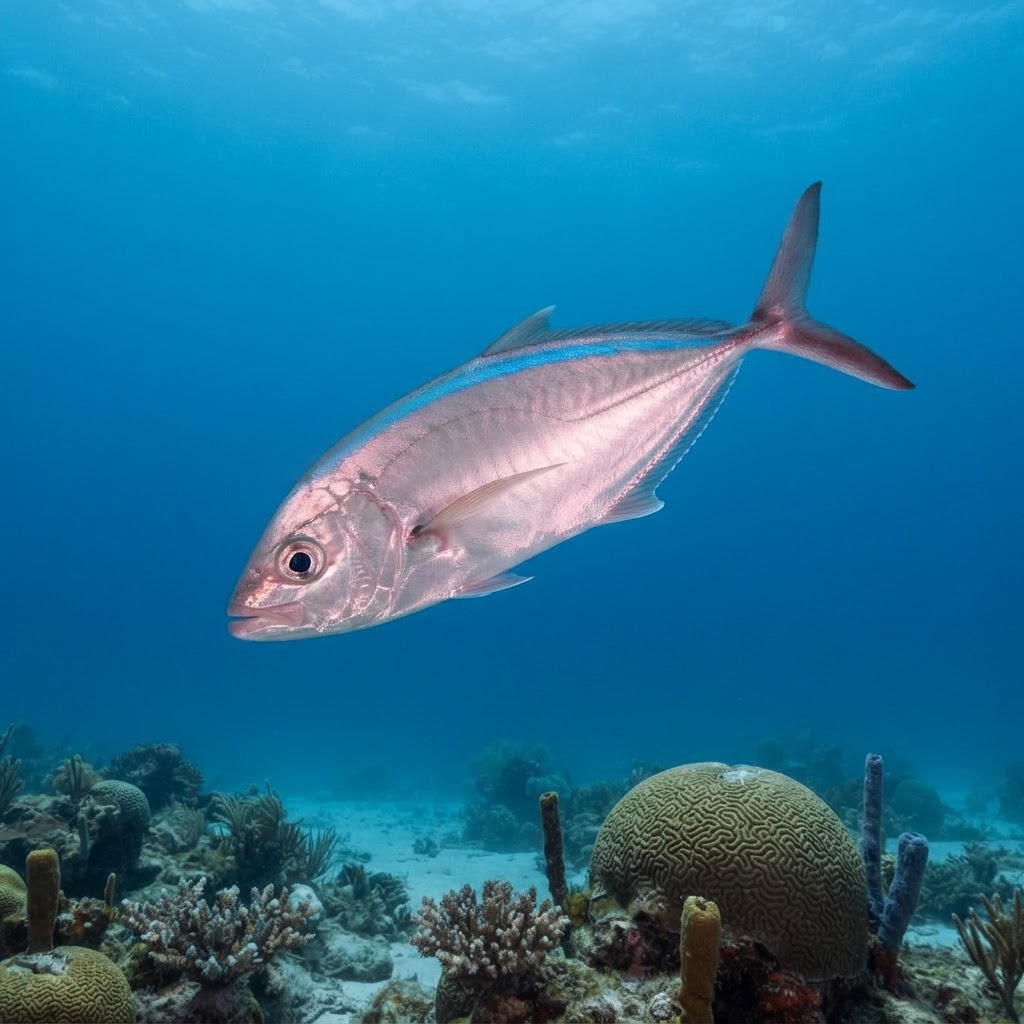
Look for a deep, laterally compressed silver body with a distinctly blunt, rounded snout that gives the fish its name. It sits close to reef flats and sandy patches in the 1 to 7 metre range, often alone or in small loose groups rather than tight schools. The dorsal and anal fins trail slightly, and the body has a faint yellowish wash on the fins that separates it from flatter, more elongated jacks nearby.
Divers usually find it cruising alone or in twos and threes over sand patches and shallow reef flats, often close to the surface in that 1 to 7 metre band. It tends to keep a steady, unhurried pace and will hold some distance from divers rather than bolt, making it an easy fish to watch but not always easy to approach closely. Look for it working sandy margins where it hunts small invertebrates rather than sitting still on the reef itself.
That blunt, almost squared-off snout is a real feeding adaptation, it lets the fish root through sand for buried crustaceans and molluscs rather than chasing prey in open water like most of its jack relatives.
There is no strong seasonal pattern in the sightings, and with a comfortable range of roughly 25 to 29 C it holds station on shallow tropical reefs all year. Plan the dive around the site rather than the calendar.
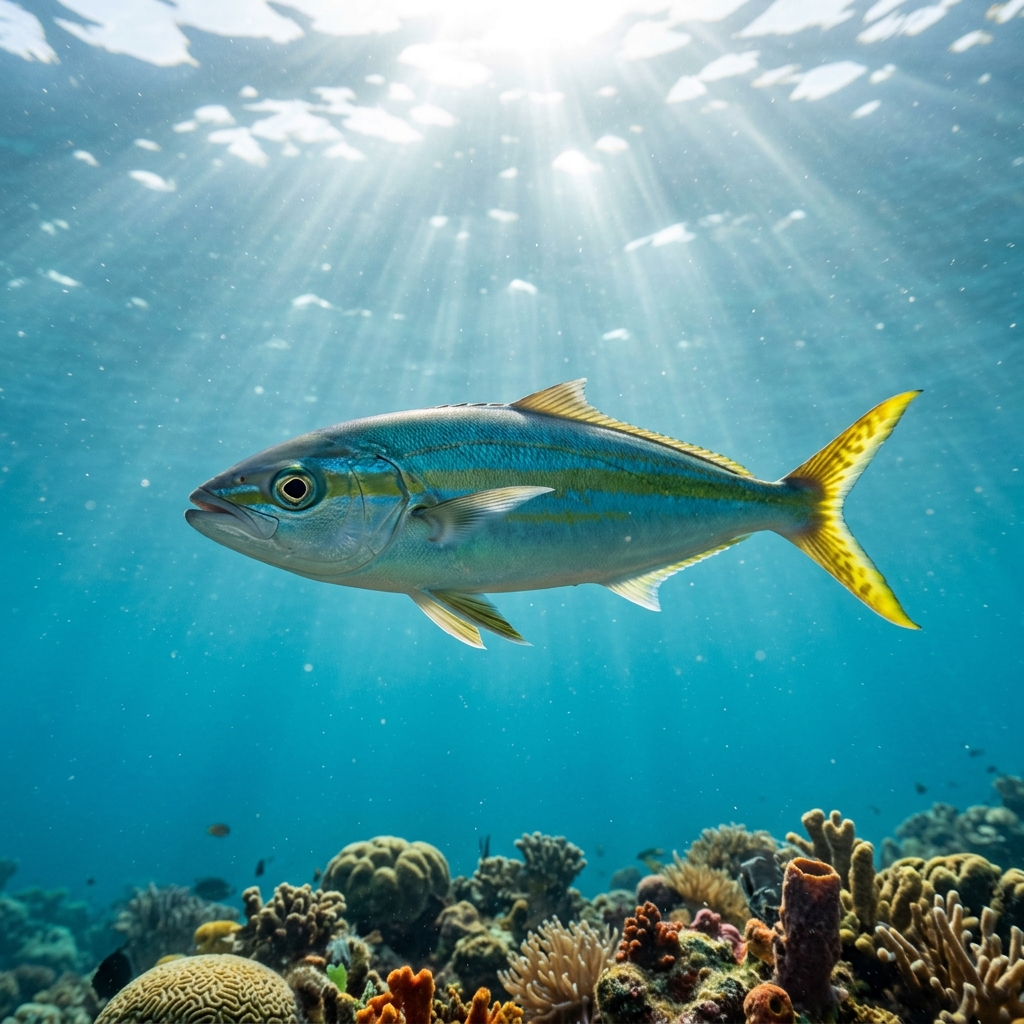
Reef neighbours a diver could mistake it for. Use the identification notes above to tell them apart.
Most reliably logged in the Maldives, especially across the Central Atolls, and in Seychelles' Inner Islands, where it turns up on shallow lagoon and reef-flat dives. Smaller but steady numbers come from Hikkaduwa in Sri Lanka, Western Australia and Queensland, and Shimoni in Kenya, with occasional sightings in New Caledonia, Guam and India.
Mapping where Snubnose Pompano is logged…
The most consistent sightings come from the Maldives' Central Atolls and Seychelles' Inner Islands, with smaller but regular numbers in Sri Lanka's Hikkaduwa, Western Australia, Queensland and Kenya's Shimoni.
There is no clear season in the sightings data, and its comfortable temperature range of about 25 to 29 C means it is present on shallow tropical reefs throughout the year.
Look for a deep, silver, laterally flattened body with a short blunt snout, usually seen alone or in small groups over sand patches and shallow reef flats between 1 and 7 metres.
They can reach around 77 cm, giving them a noticeably deep, broad-bodied profile compared to slimmer jacks on the same reef.
No, they are not considered a threat to divers and typically keep a comfortable distance while feeding over sand.
Site and sighting data is aggregated from diver logs, iNaturalist and GBIF. For taxonomy and conservation status:
Bigeye Trevally
2,591 sites