Tetrosomus reipublicae
A rare, angular little boxfish logged off Western Australia in waters around 20 to 28C. Here's how to spot one and where.
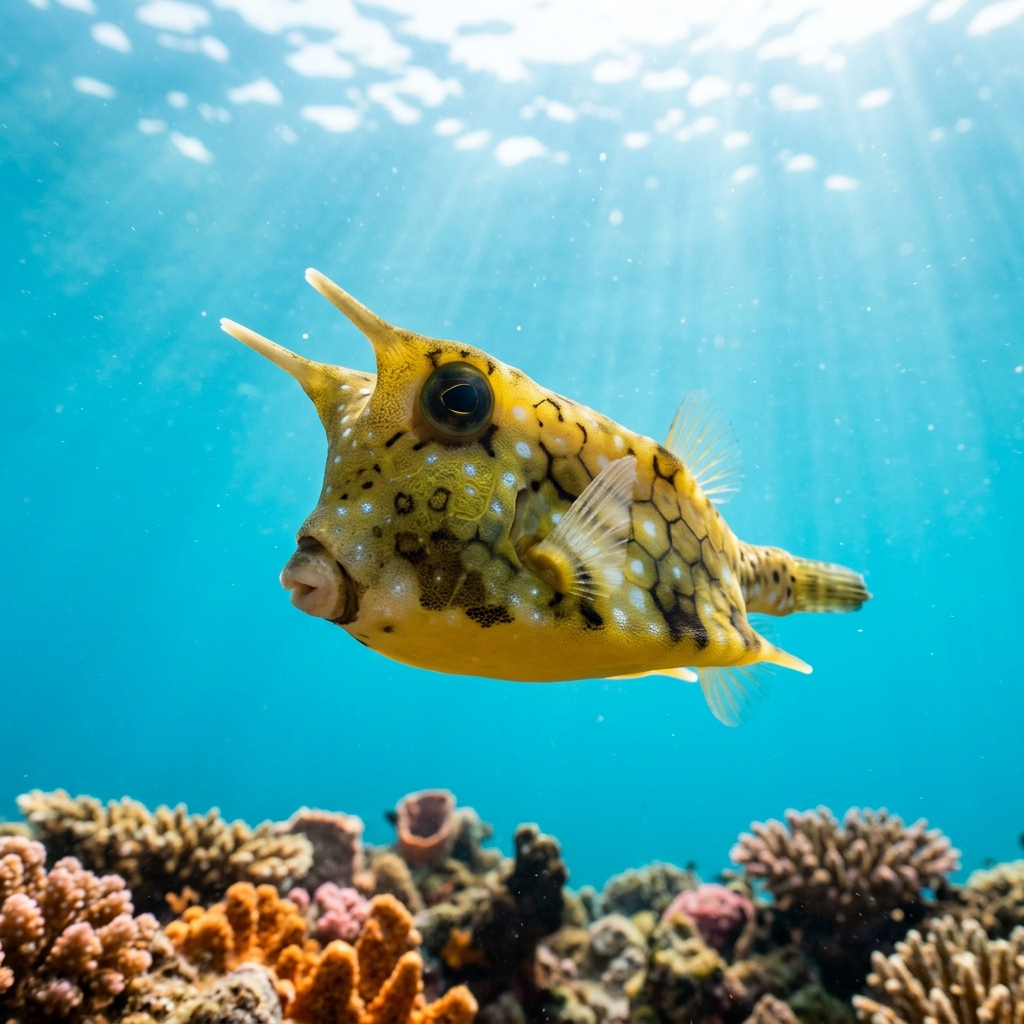
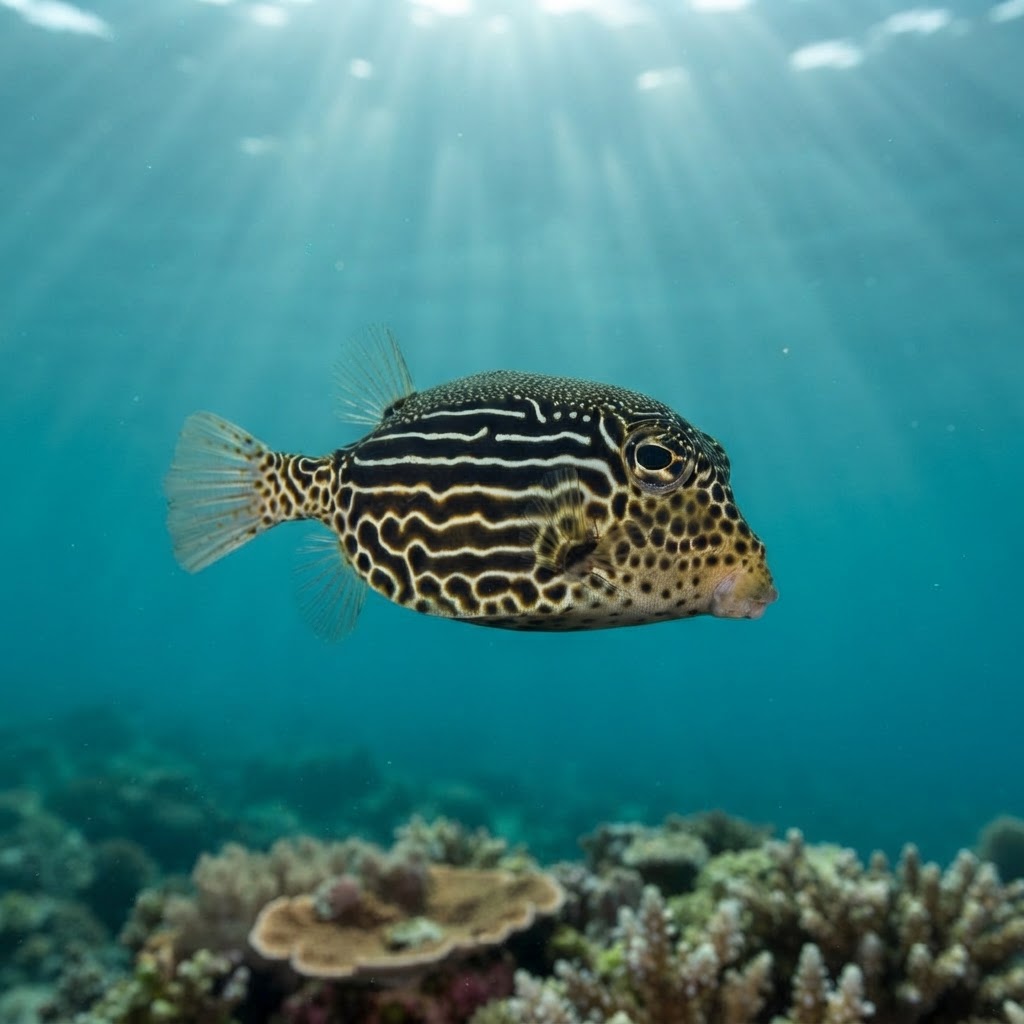
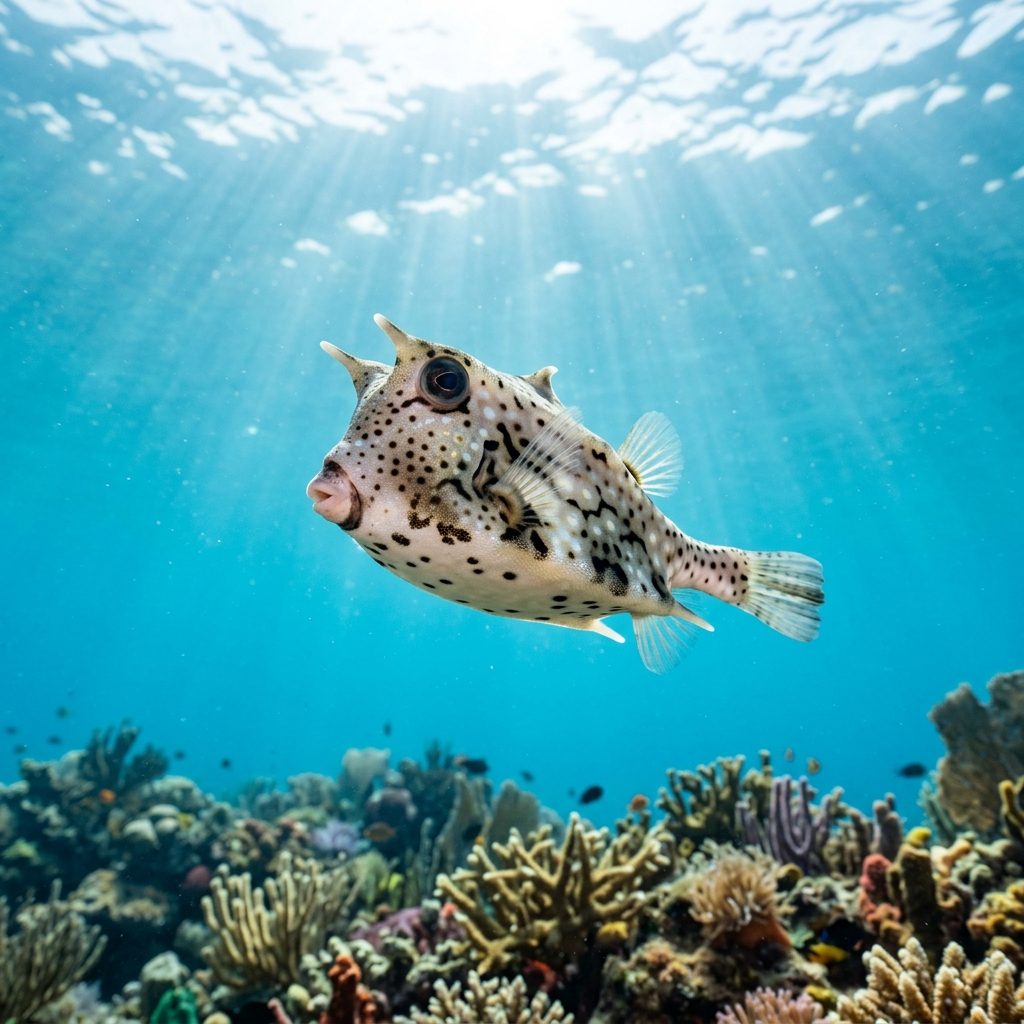
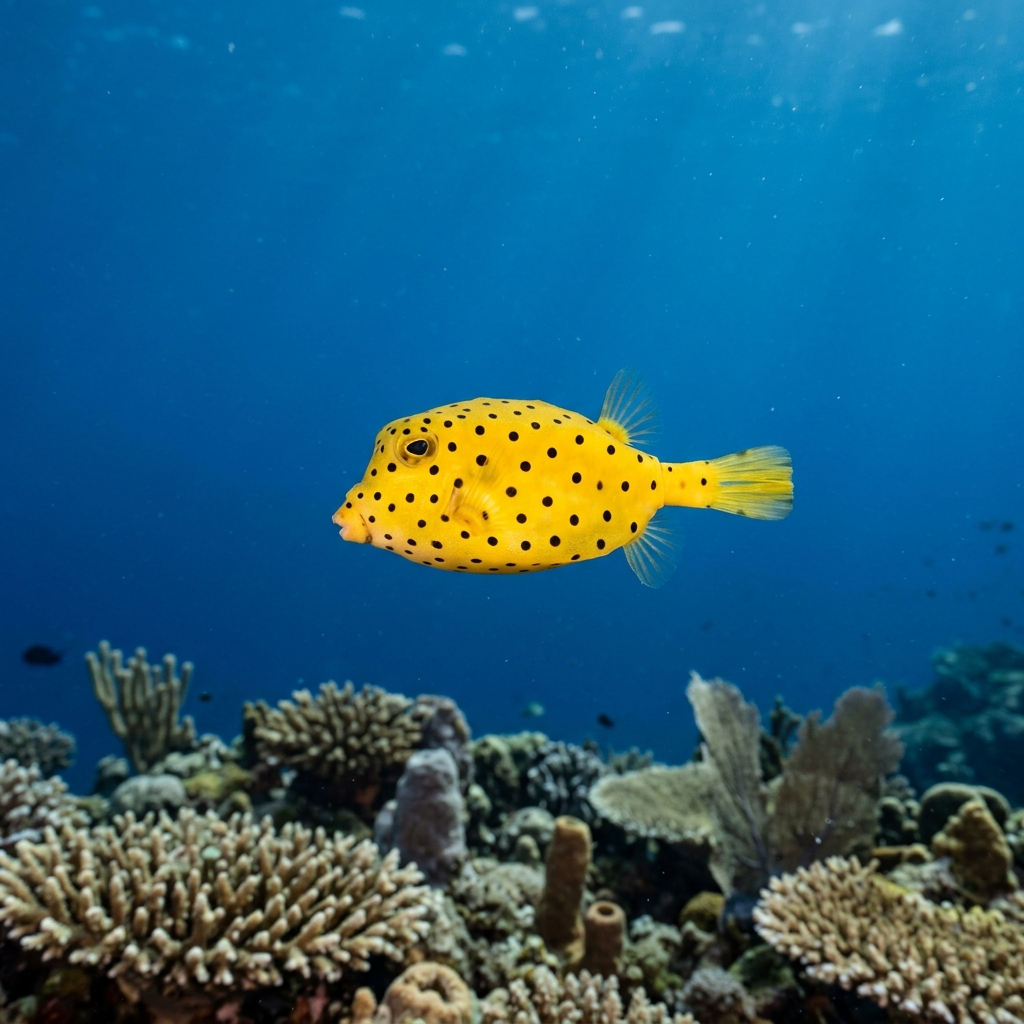
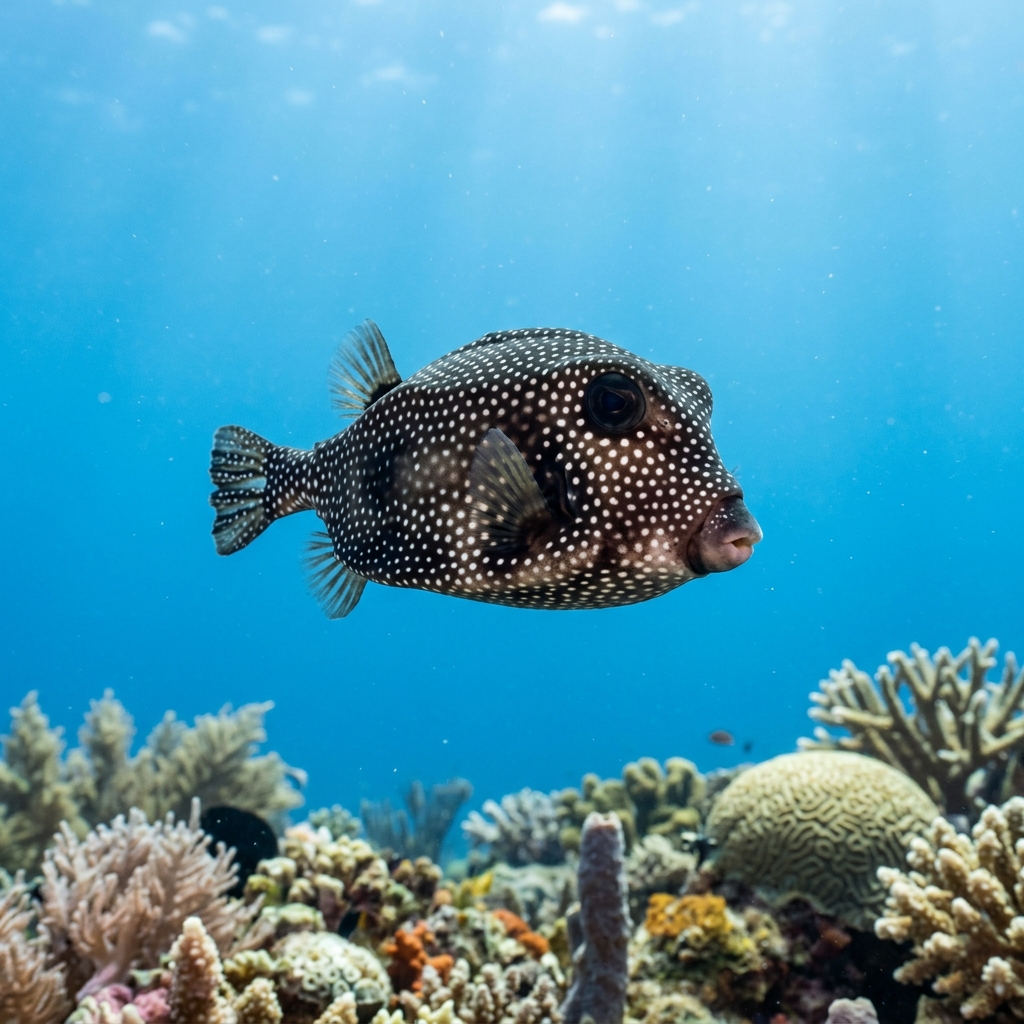
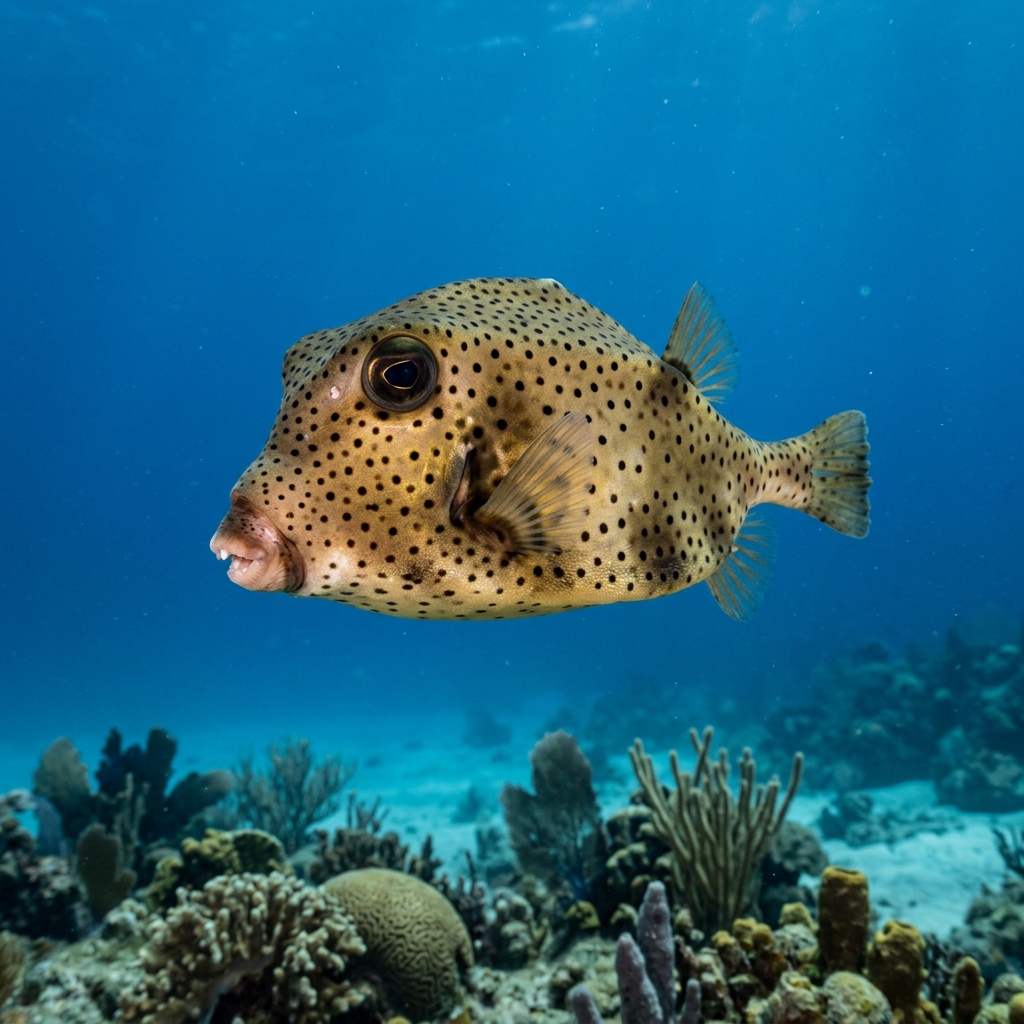
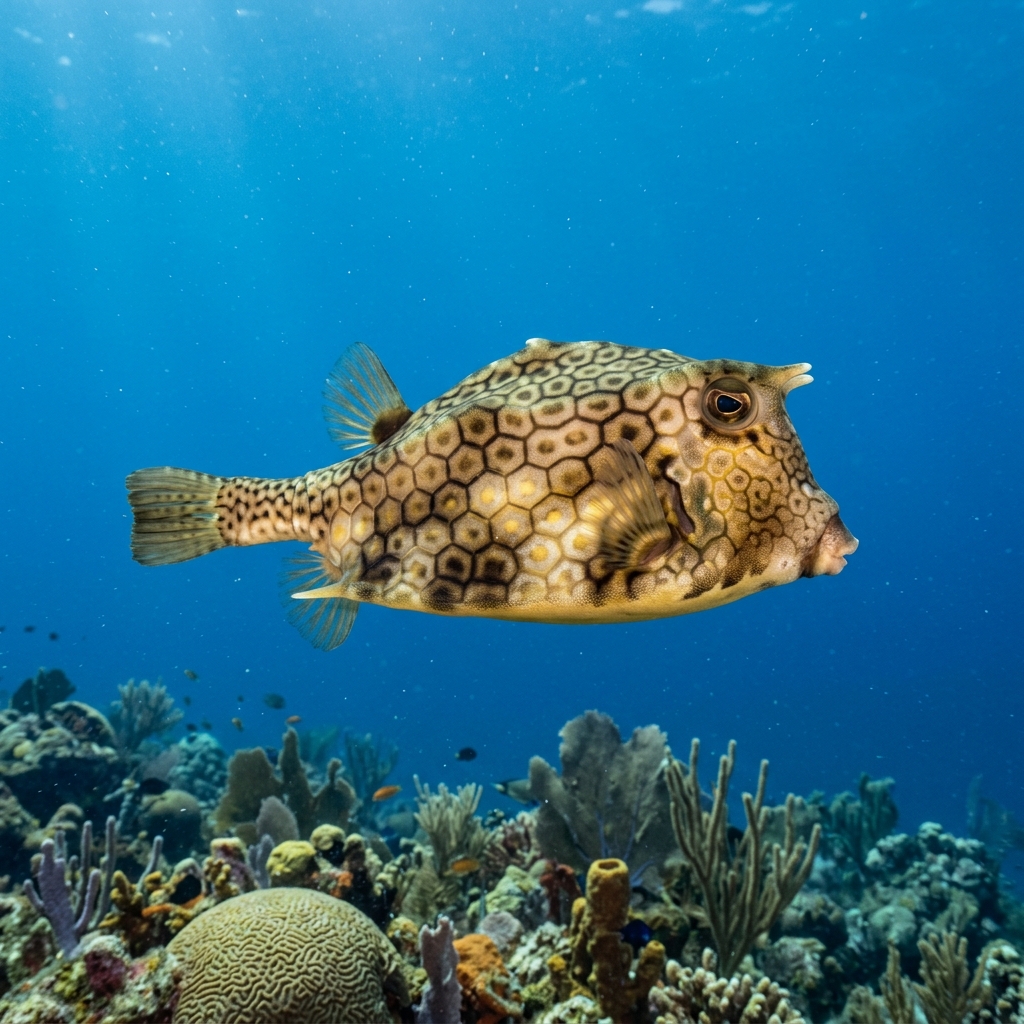
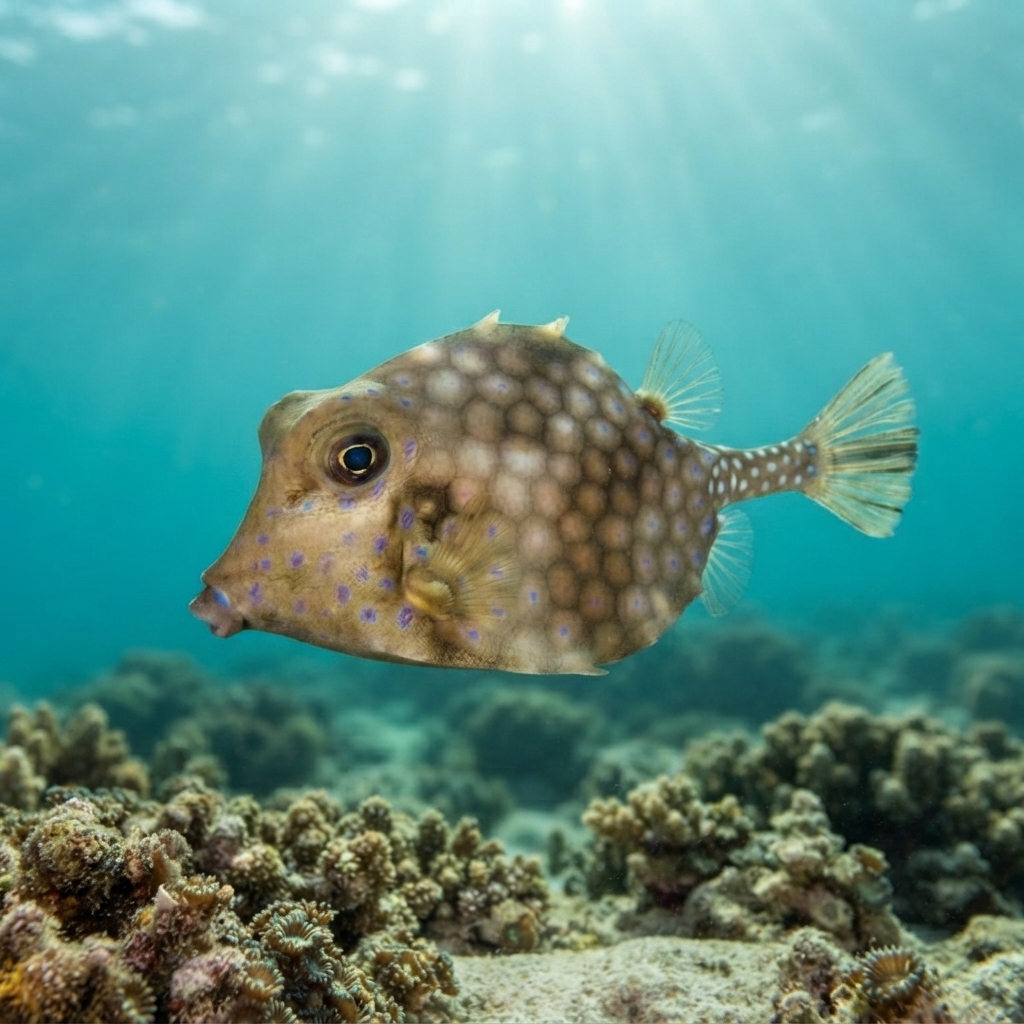
A boxy, angular body encased in a rigid bony shell gives this fish an almost origami look underwater, with a triangular cross-section that narrows toward a small tail. Sits around 21cm, pale to olive or sandy in tone with faint mottling that helps it blend against rubble and low reef. Look for the raised, ridge-like carapace and the small spines near the base of the tail that give the species its name, though these are subtle and easy to miss without a close look.
Divers who find one usually spot it hovering low over rubble or sand patches near reef structure, moving with the slow, deliberate hover typical of boxfish rather than darting away. It tends to hold still or drift when approached rather than bolt, which helps if you get a chance to look closely, but it's logged as rare to uncommon, so most dives in the area won't turn one up at all.
Like other boxfish, its rigid bony shell replaces the flexible spine most fish rely on, so it swims almost entirely by fanning its small fins while the body stays stiff, a slow but effective way to dodge predators too big to bite through the armour.
No clear seasonal pattern shows up in the sighting data, so treat it as a year-round possibility. It's been recorded in water from 20.4 to 28.2C, a range that spans most of the diving calendar in its known range.
Reef neighbours a diver could mistake it for. Use the identification notes above to tell them apart.
Sightings so far are concentrated in Western Australia, making it the region to target if you want a shot at this one. It's currently a distinctly Australian find in the logged data, with no other countries reporting it yet.
Mapping where Smallspine Turretfish is logged…
The strongest records come from Western Australia, where it's been logged at a couple of dive sites. It hasn't turned up elsewhere in the diver-reported data yet, so it currently reads as a Western Australian specialty.
There's no detected season, so it's best treated as a year-round possibility rather than a specific window. It's been recorded across water temperatures from 20.4 to 28.2C.
Look for a small, boxy fish around 21cm with an angular, ridged shell and pale, mottled colouring. The small spines near the tail base are the giveaway feature, though they take a close look to spot.
They typically reach around 21cm, a compact size in line with other small boxfish species.
No, they pose no danger to divers. Like other boxfish, their defence is a rigid shell rather than any aggressive behaviour.
Site and sighting data is aggregated from diver logs, iNaturalist and GBIF. For taxonomy and conservation status:
Honeycomb Cowfish
1,691 sites