Lactoria fornasini
Spot the Thornback Cowfish in Queensland, the Philippines, or Zanzibar. Tips on ID, best seasons, and how it differs from the Longhorn Cowfish.
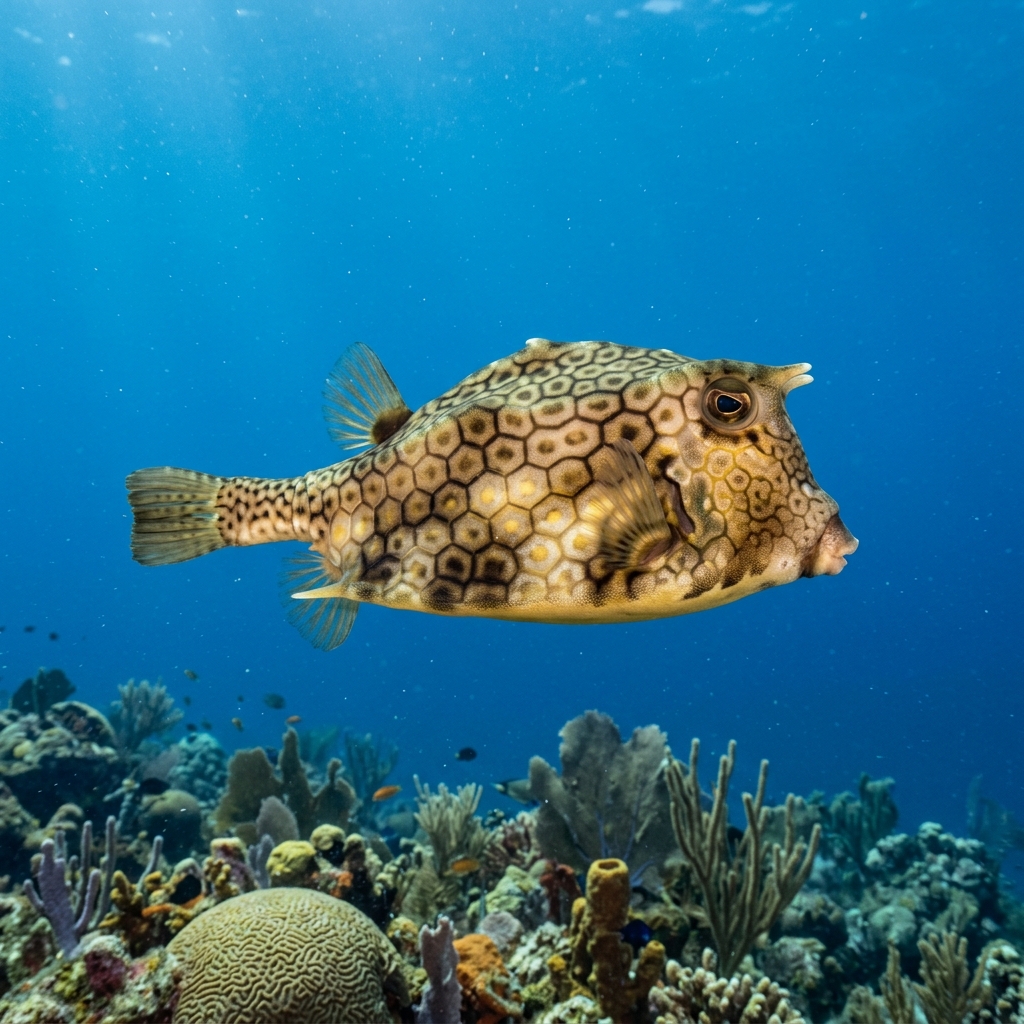
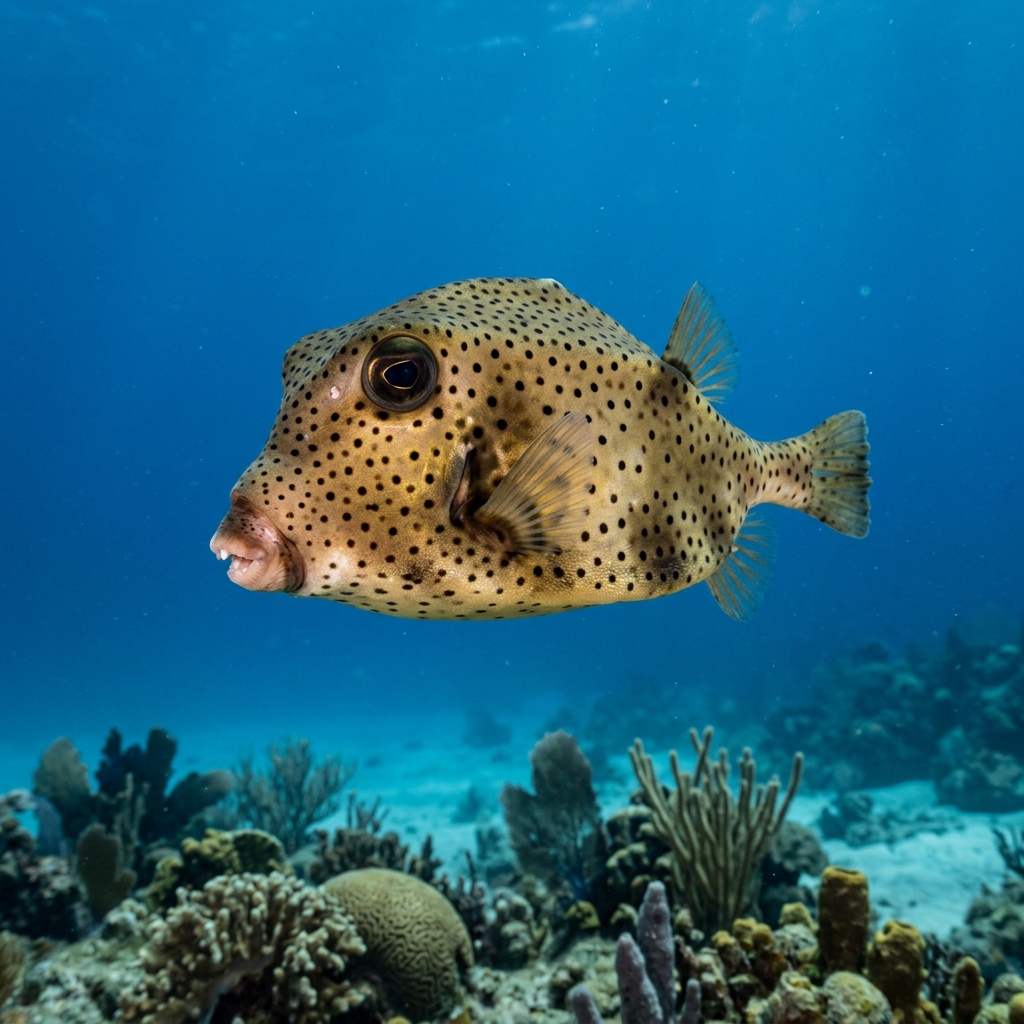
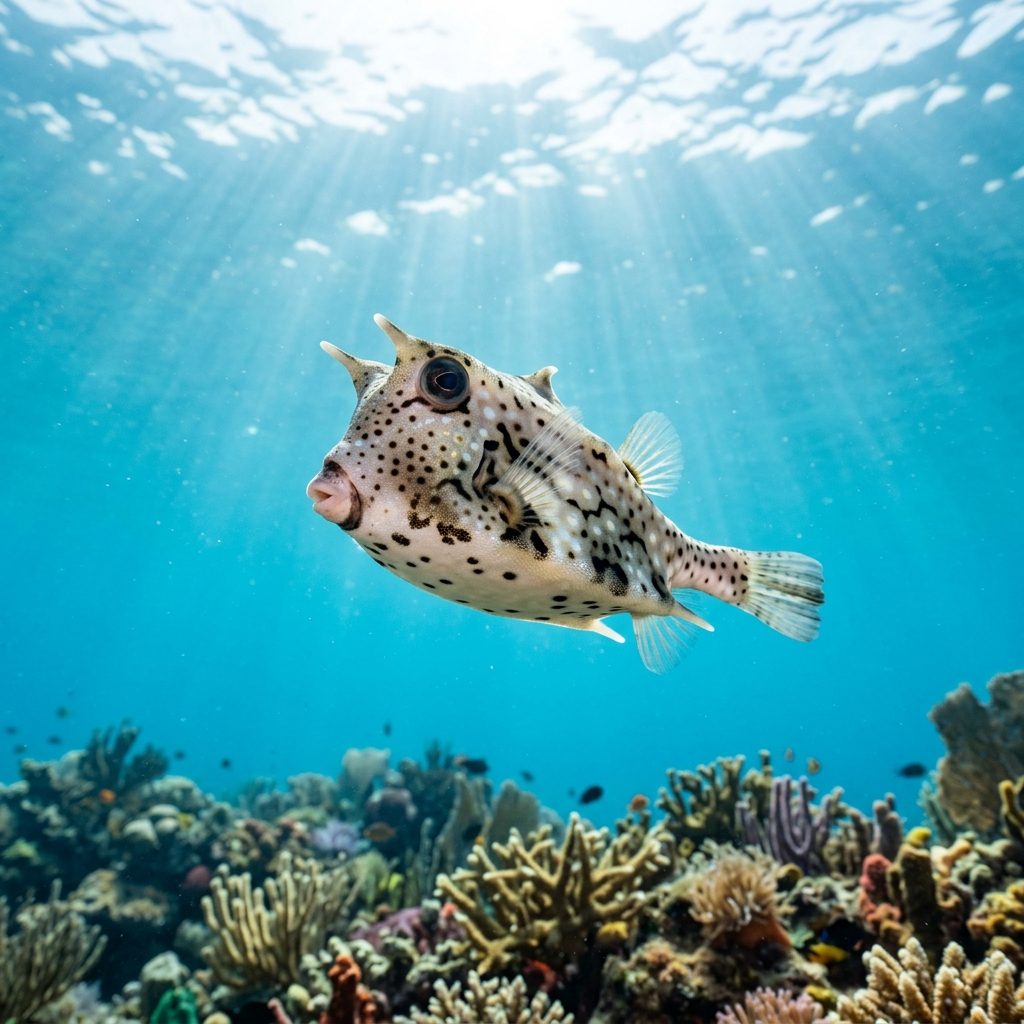
A boxy, rigid body encased in a fused shell-like carapace (the bony armour that gives boxfish their name) immediately marks this as a member of the cowfish family. Look for two short but distinct spines projecting from the top of the head above the eyes and, on adults, a pair of shorter spines at the rear of the carapace near the tail. Colouration is typically brown to olive, covered in a net-like pattern of pale hexagonal markings. It is a small fish, and the combination of rearward spines plus that reticulated (net-pattern) body sets it apart from its relatives.
Thornback cowfish are slow, deliberate swimmers that paddle around with their pectoral fins rather than using their tail for propulsion, making them easy to track once spotted. They tend to stay close to the reef structure, picking over rubble and coral for small invertebrates. They are generally unfazed by divers at a respectful distance, but will quietly manoeuvre away if approached too closely.
Like other boxfish, the thornback cowfish can release a toxic skin secretion called ostracitoxin when severely stressed, which is harmful to other fish in an enclosed space but poses no meaningful risk to a diver in open water.
In the Northern Hemisphere, sightings concentrate from December through April, so winter into spring is the window to target destinations like Hawaii or the Philippines. In the Southern Hemisphere, sightings spread broadly from July through April, covering most of the year for Queensland and East African sites.
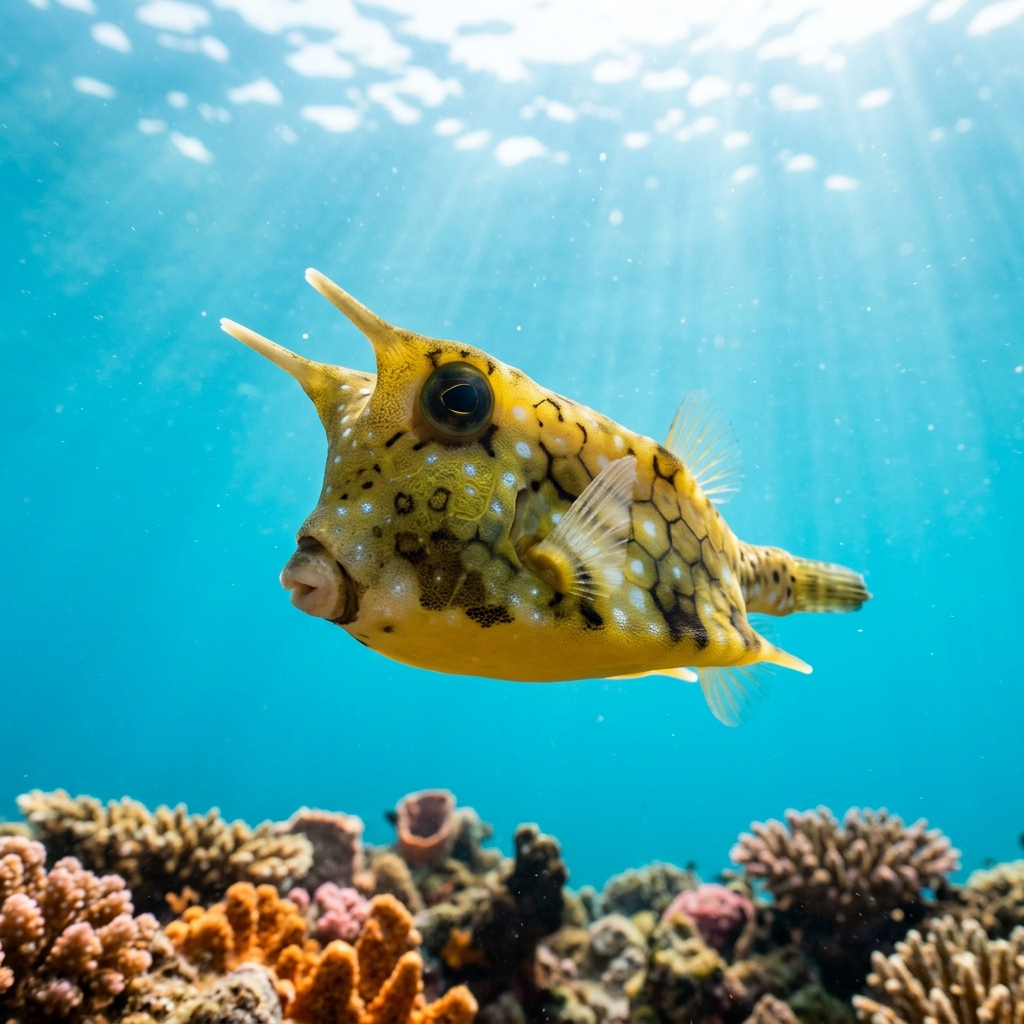
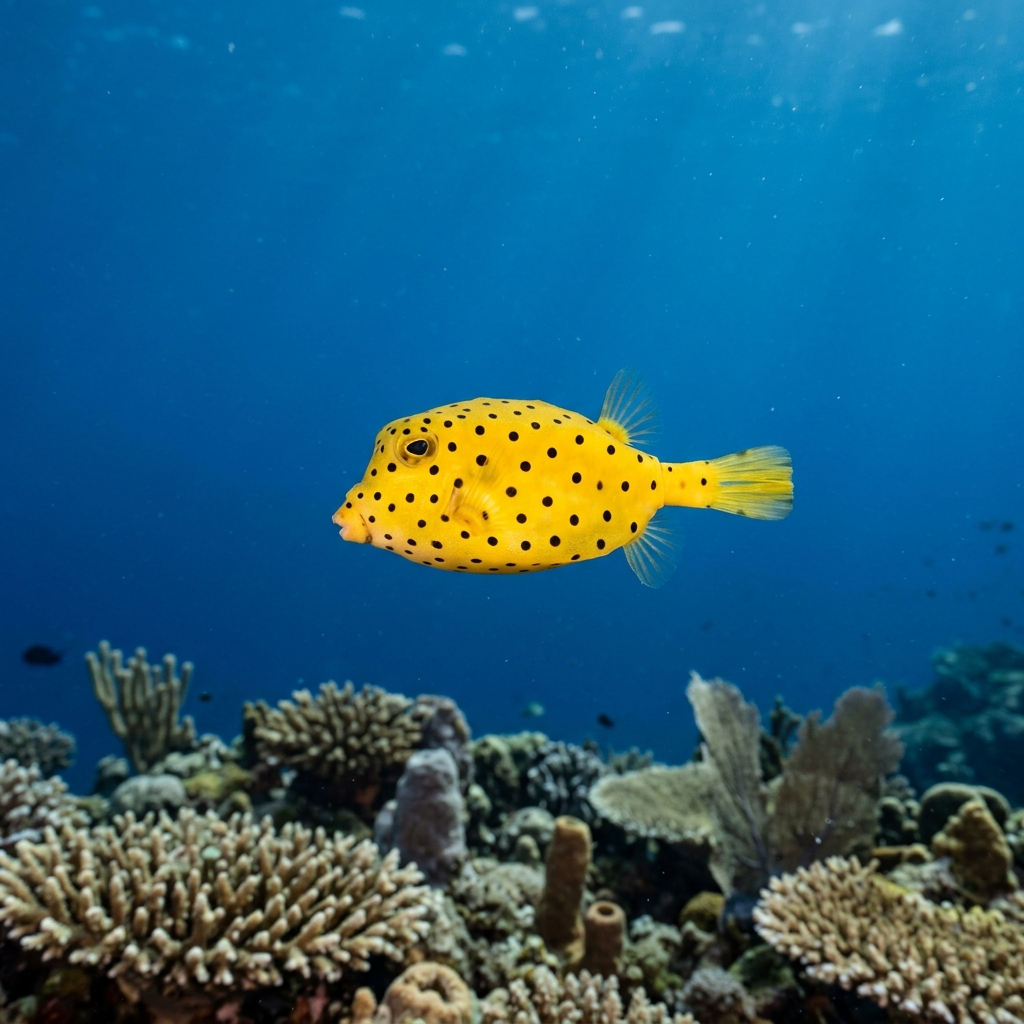
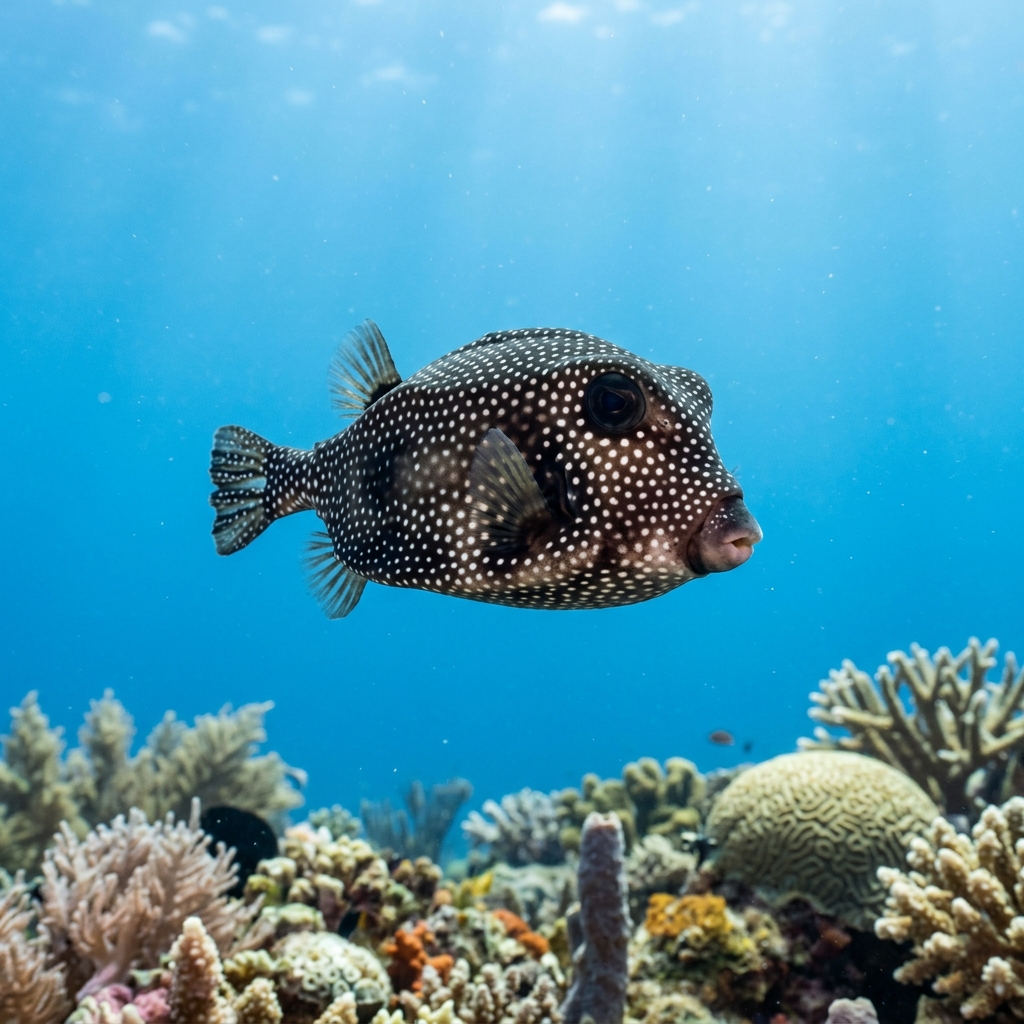
Reef neighbours a diver could mistake it for. Use the identification notes above to tell them apart.
Most reliably logged in Australia, particularly across Queensland, and in the Philippines, where sightings span both the Luzon & North and Visayas East & North regions. Strong populations are also recorded in Bali, Lombok & Java in Indonesia, around Praslin and La Digue in the Seychelles, and along Zanzibar and the Diani South Coast of Kenya and Tanzania. Hawaii rounds out the Indo-Pacific spread with solid sighting records as well.
Mapping where Thornback Cowfish is logged…
The thornback cowfish is most commonly logged in Queensland, Australia, and across the Philippines, particularly in the Visayas and around Luzon. It is also well recorded in Bali and Lombok in Indonesia, around the Seychelles islands of Praslin and La Digue, along the Tanzanian coast near Zanzibar, and in Hawaii.
For Northern Hemisphere destinations such as Hawaii and the Philippines, December through April is the peak period. For Southern Hemisphere sites like Queensland and East Africa, sightings are spread across July through April, giving you a wide window.
Look for the rigid boxy body covered in a pale hexagonal net pattern on a brown or olive background. Two short spines project from the top of the head, and there is a second pair of smaller spines at the rear of the carapace near the tail. That rear spine pair is the key feature distinguishing it from similar species.
It is typically uncommon at the sites where it appears, with a smaller number of sites reporting it as common. Patience and slow, attentive reef exploration give you the best chance, as it tends to move quietly along the substrate rather than out in open water.
No, they pose no direct danger to divers. Like other boxfish they can release a toxic skin secretion if severely stressed, but in open water this is quickly diluted and has no effect on a diver. Simply observe without harassing the animal and there is nothing to worry about.
Site and sighting data is aggregated from diver logs, iNaturalist and GBIF. For taxonomy and conservation status:
Honeycomb Cowfish
1,691 sites