Lactoria cornuta
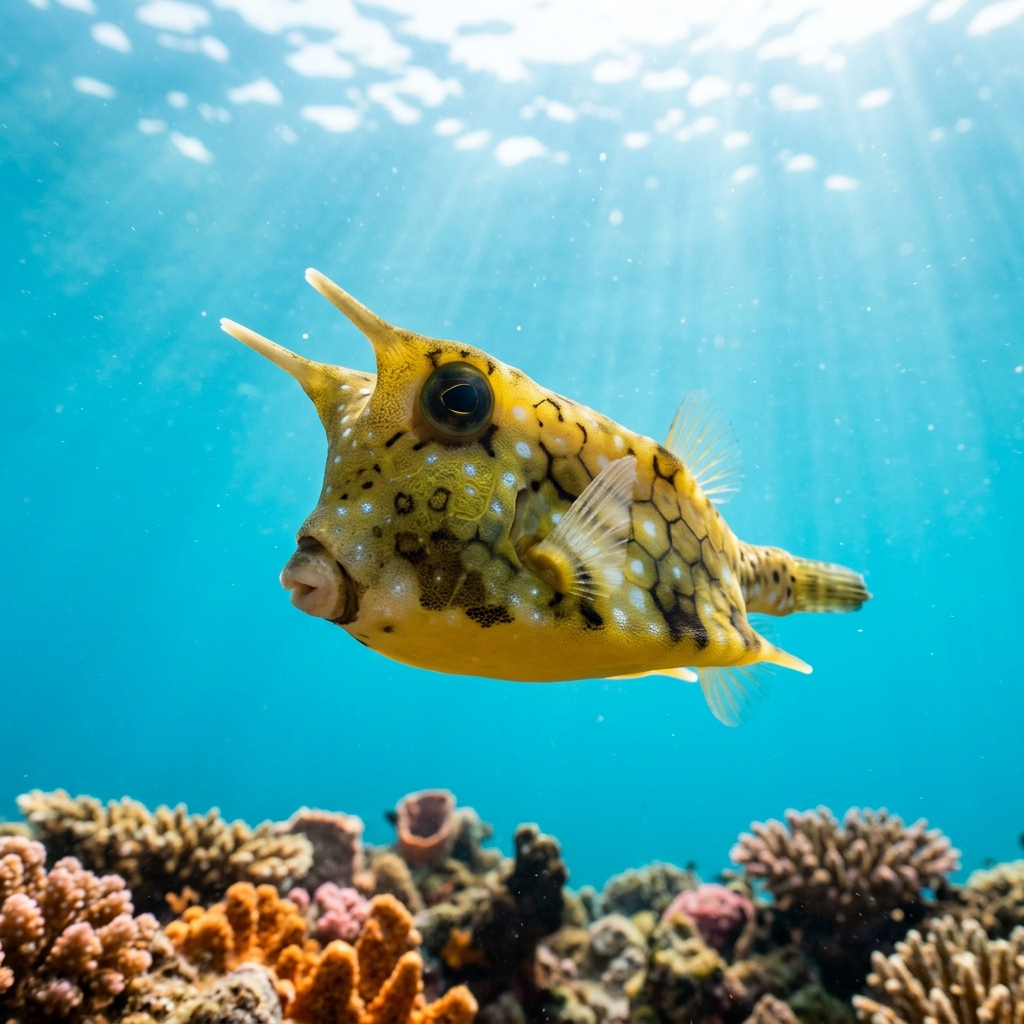
Spot the Longhorn Cowfish by its unmistakable brow horns. Most commonly logged in the Philippines, Maldives and Australia in waters from 22 to 28°C.
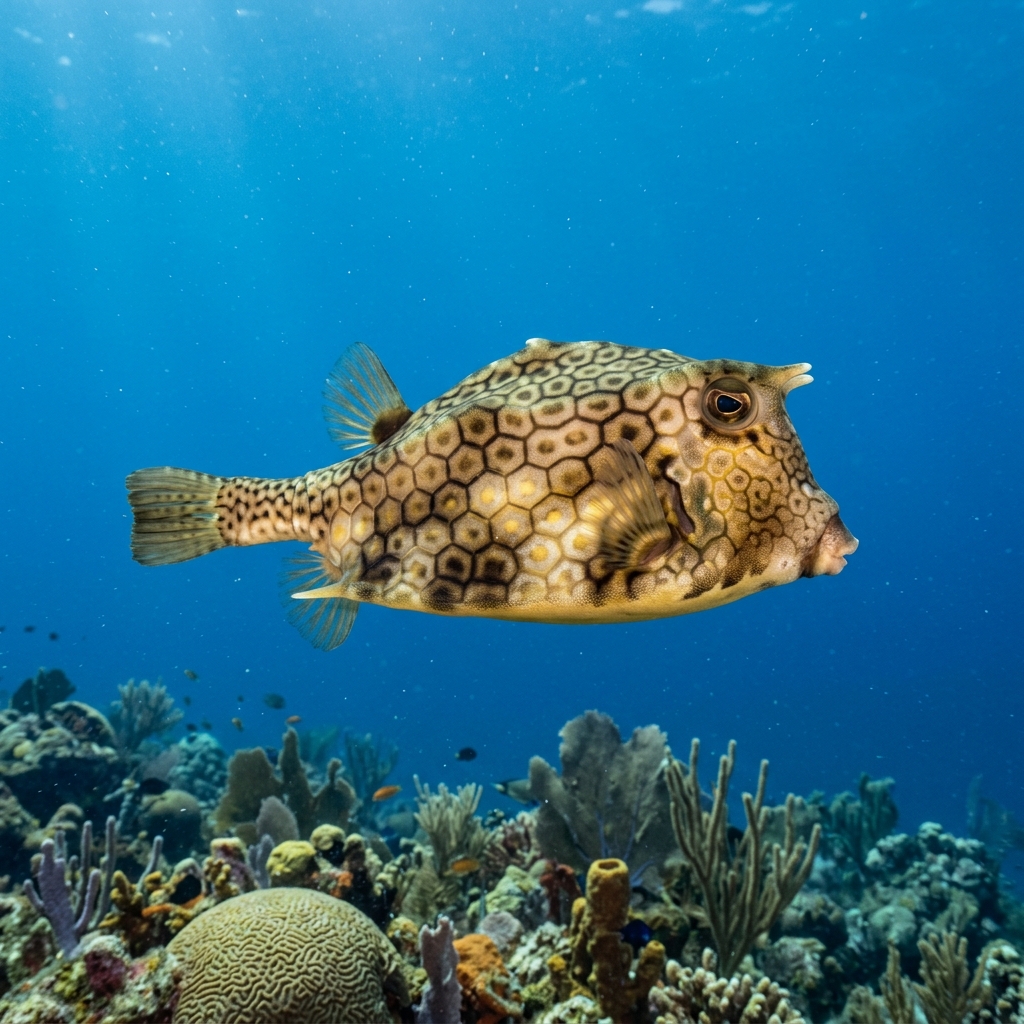
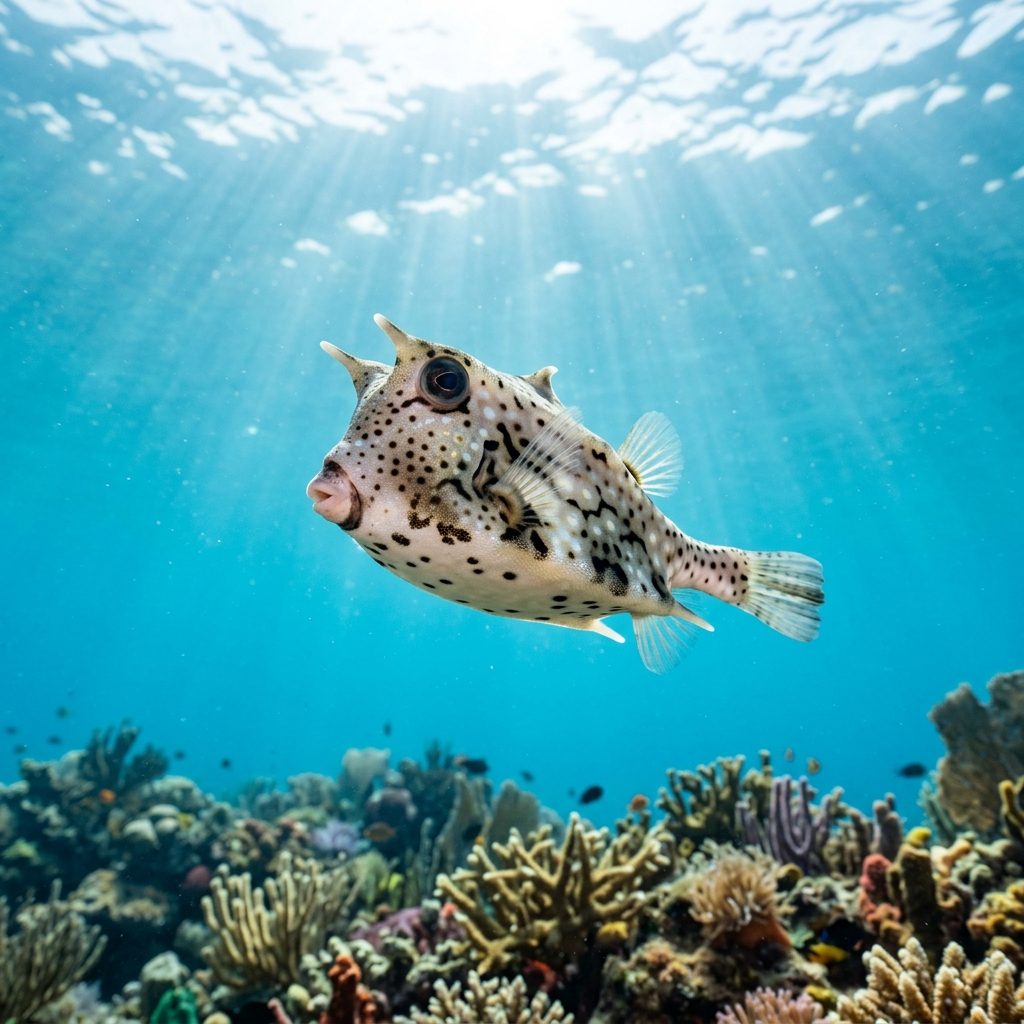
Two long, forward-pointing horns projecting from above the eyes are the clincher, no other reef fish looks quite like this underwater. The body is enclosed in a rigid bony carapace (a fused armour-like shell), giving it an angular, box-like silhouette. Colouration is typically yellowish to olive-brown with small blue or white spots scattered across the sides. A matching pair of shorter horns also protrudes from the rear base of the carapace.
Longhorn cowfish are slow, deliberate movers, they scull along using their pectoral fins rather than their tail, which makes them easy to watch but surprisingly hard to corner for a photo. They're typically seen close to sandy or rubble patches near the reef base, picking at small invertebrates and algae with their pursed lips. They tend to be shy; approach slowly and at depth to avoid them turning tail.
When stressed or killed, longhorn cowfish release a potent skin toxin called ostracitoxin from glands in their skin. This toxin can affect other fish in a confined space, which is why they're considered risky in home aquaria, though this poses no threat to divers in open water.
No clear seasonal peak has emerged from the data, so it can be treated as a year-round resident wherever it occurs. Its observed temperature range of roughly 22 to 28°C fits the warm, stable conditions of tropical reef systems in all seasons.
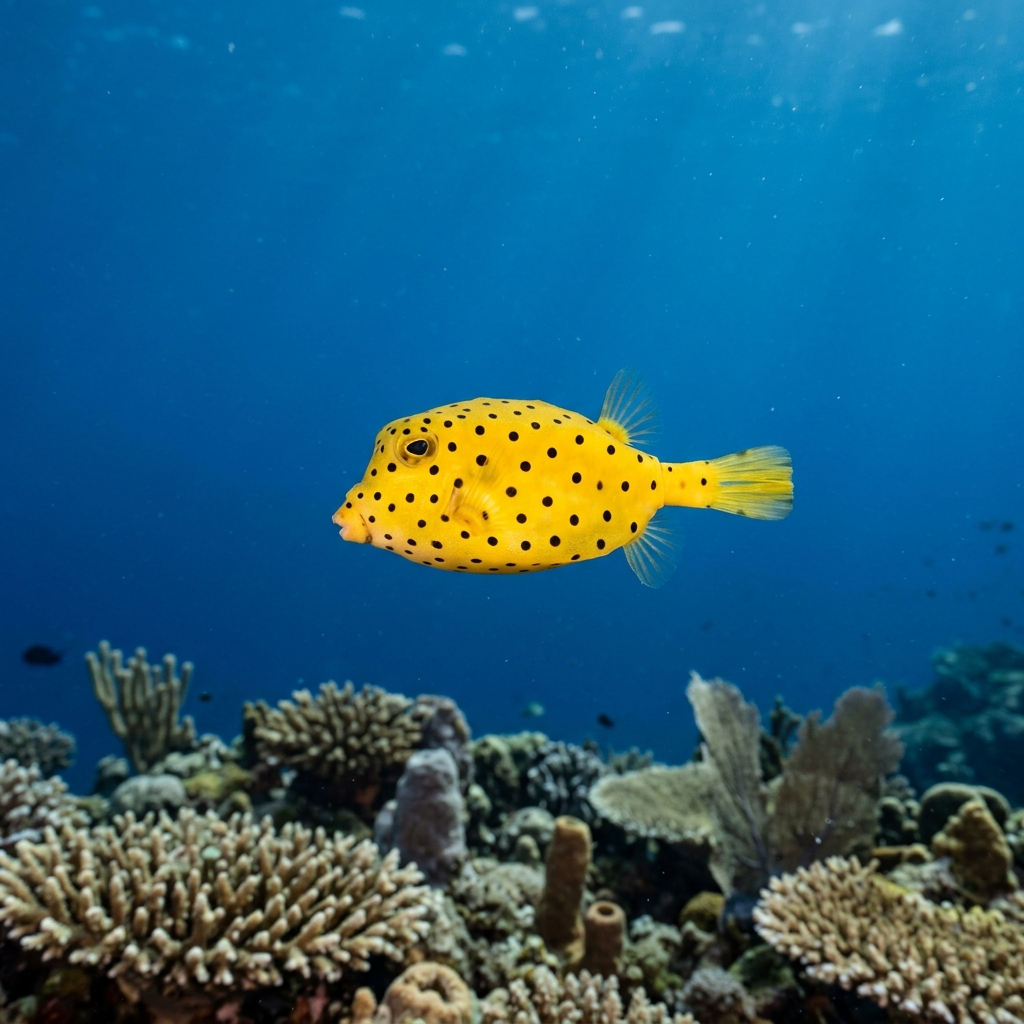
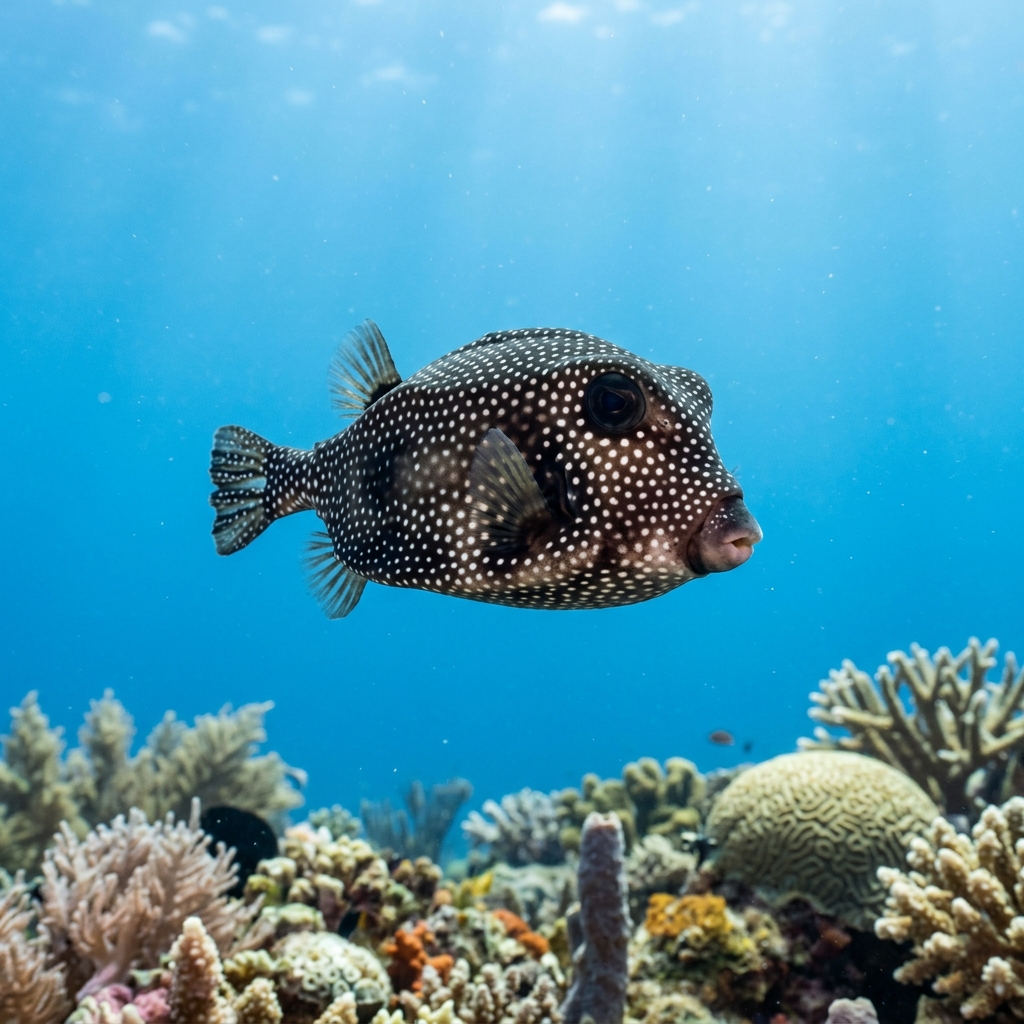
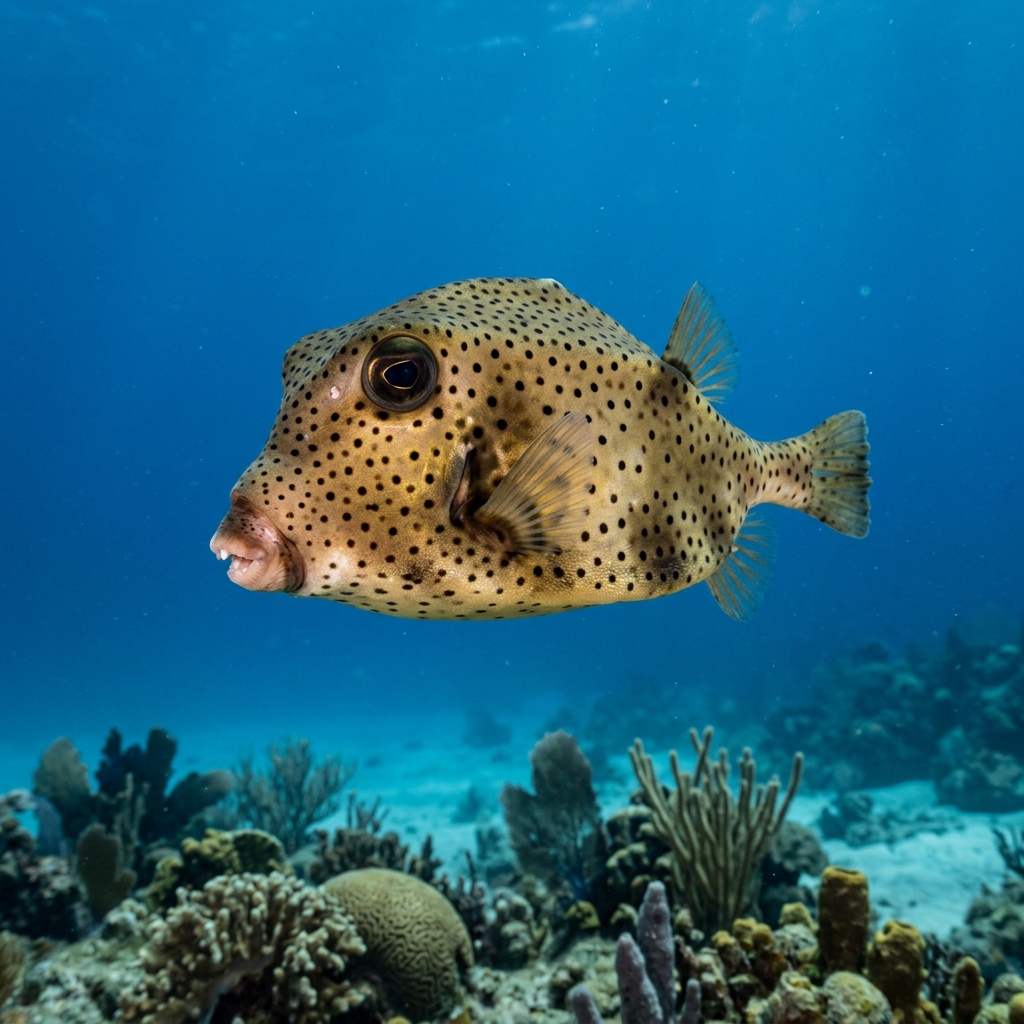
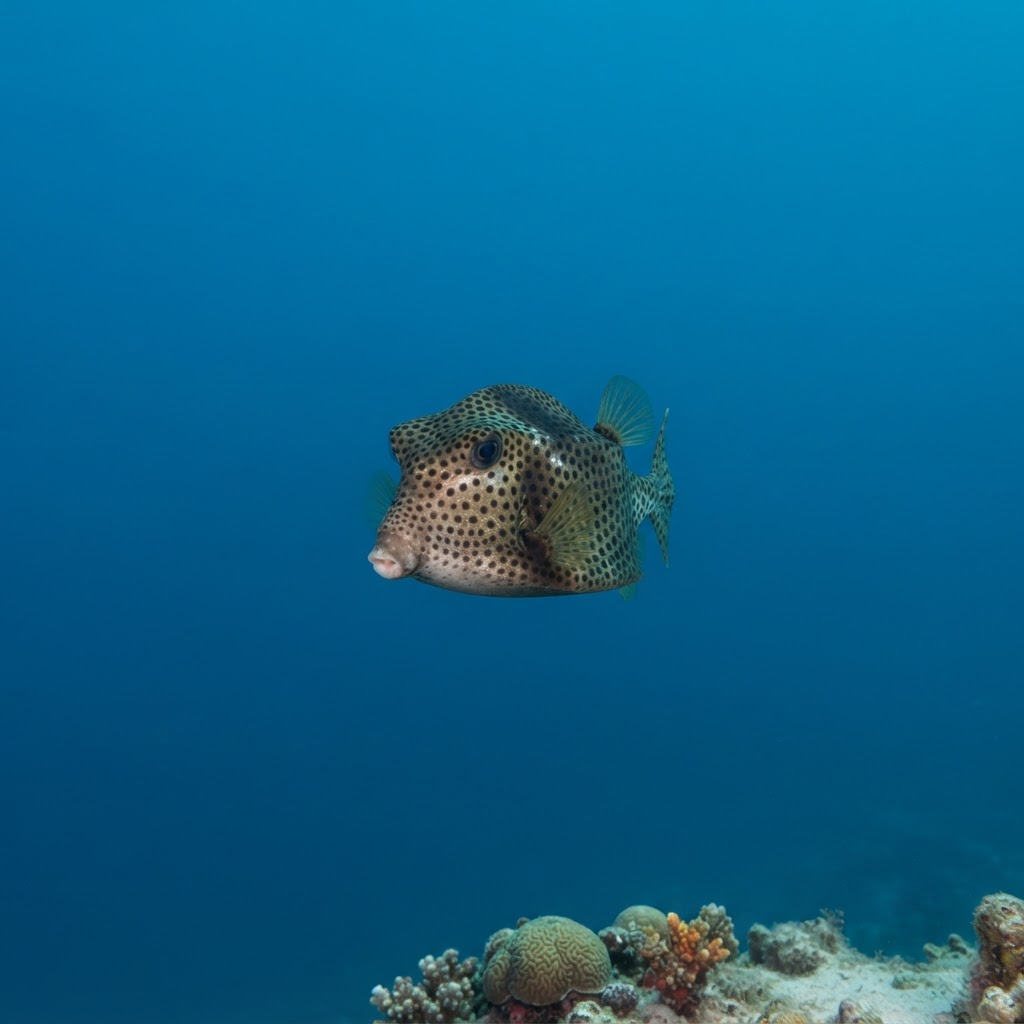
Reef neighbours a diver could mistake it for. Use the identification notes above to tell them apart.
The longhorn cowfish is most commonly logged across the Philippines, particularly in the Visayas and Palawan regions, and throughout Queensland and Western Australia. Strong populations are also recorded in the Maldives' North and Central Atolls and across Indonesia. Japan and French Polynesia round out the range for Indo-Pacific divers looking for this species.
Mapping where Longhorn Cowfish is logged…
The Philippines is the strongest hub, especially the Visayas and Palawan. The Maldives' North and Central Atolls, Queensland and Western Australia, and Indonesia are also reliable areas. Japan and French Polynesia sit at the edge of the documented range.
No seasonal pattern has been detected in diver sightings, so they appear year-round on tropical reefs. They're comfortable in water temperatures between roughly 22 and 28°C, which covers most of their Indo-Pacific range all year.
Look for the two prominent bony horns projecting forward from above the eyes, this is the standout feature. Pair that with a stiff, boxy carapace body shape and yellowish colouration covered in small blue or white spots and you have a positive ID. A second pair of shorter horns at the rear of the shell confirms it.
Adults typically reach around 40 to 46 cm in length, though most individuals encountered on the reef are noticeably smaller. The rigid carapace means there's no mistaking the body shape regardless of size.
No, they pose no threat to divers in open water. They are slow-moving and shy. They do produce a toxic skin secretion called ostracitoxin when stressed, but this disperses harmlessly in the open ocean and is only a concern in closed aquarium environments.
Site and sighting data is aggregated from diver logs, iNaturalist and GBIF. For taxonomy and conservation status:
Honeycomb Cowfish
1,691 sites