Ostracion meleagris
Male spotted boxfish dazzle with blue and yellow flanks on reefs from Indonesia to Hawaii. Here's where to find them and what to expect.
Safety warning
The risk is not to divers in open water but worth understanding: spotted boxfish can secrete a potent skin toxin called ostracitoxin when stressed. Avoid handling or cornering them, both for your own caution and for the fish's welfare. Normal observation at a respectful distance carries no meaningful risk.
Handle with care
Toxic if handledGeneral first-aid guidance, not a substitute for professional medical care. In an emergency, call your local emergency number.
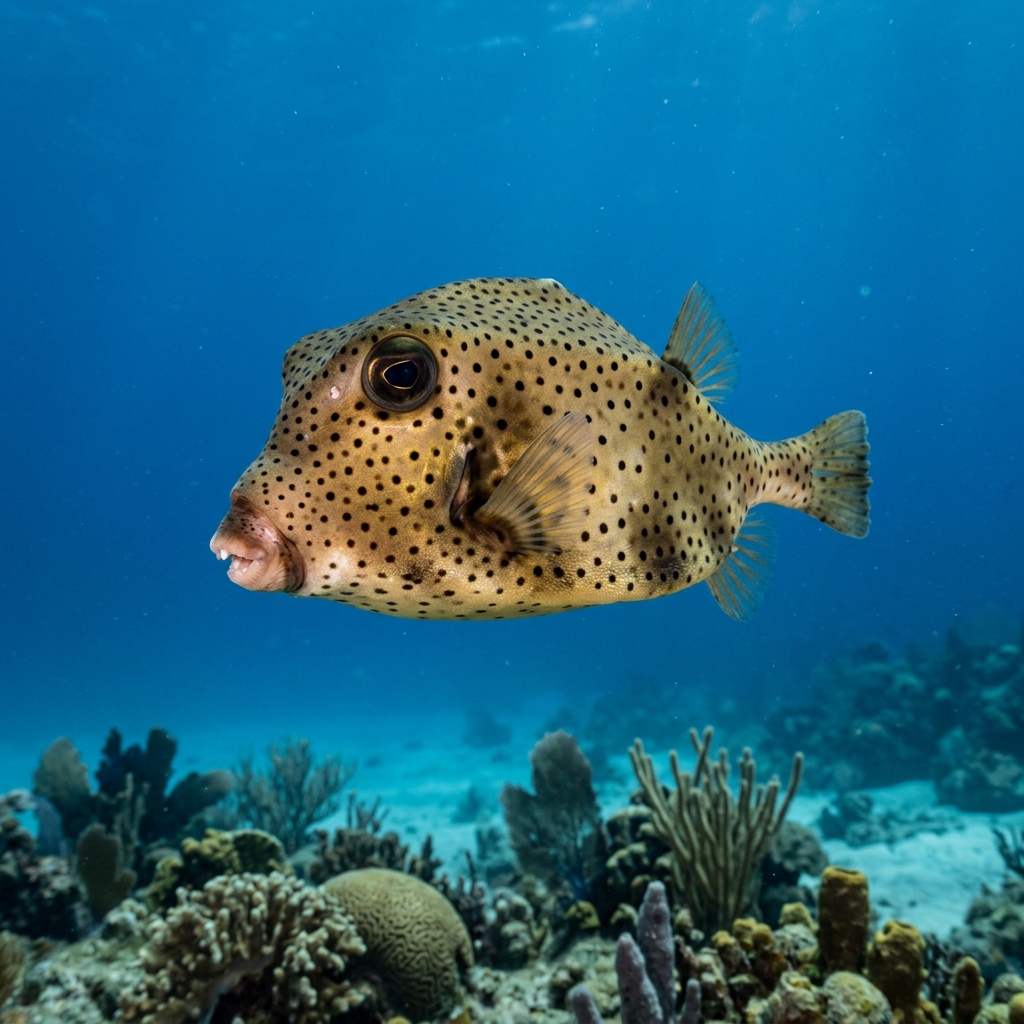
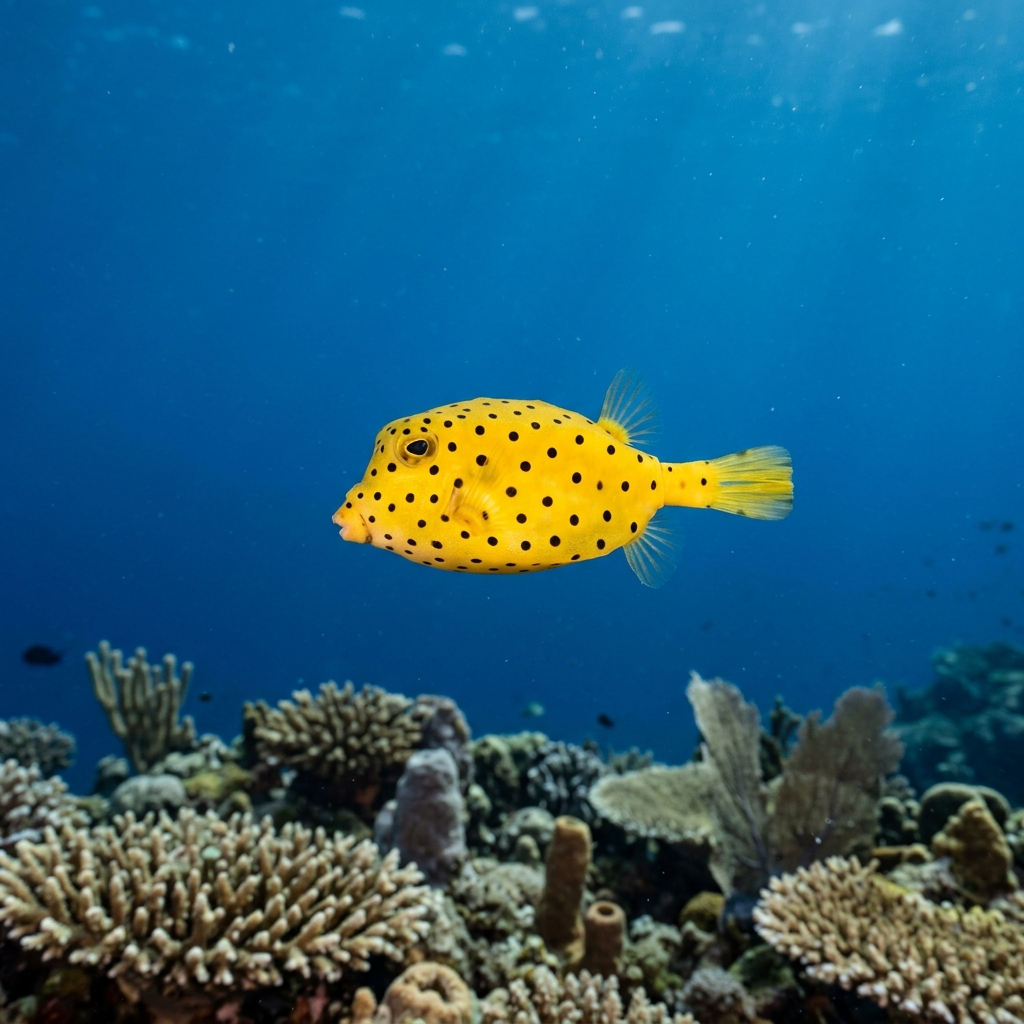
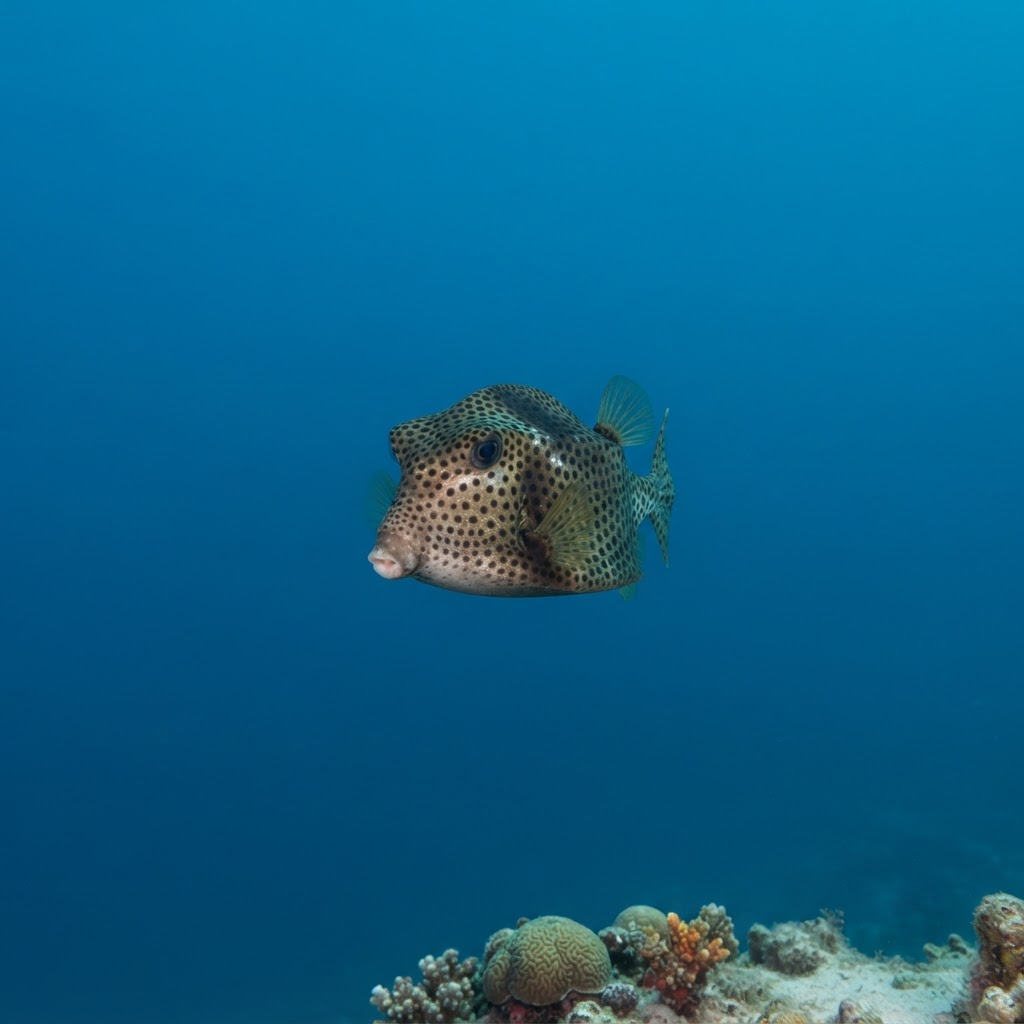
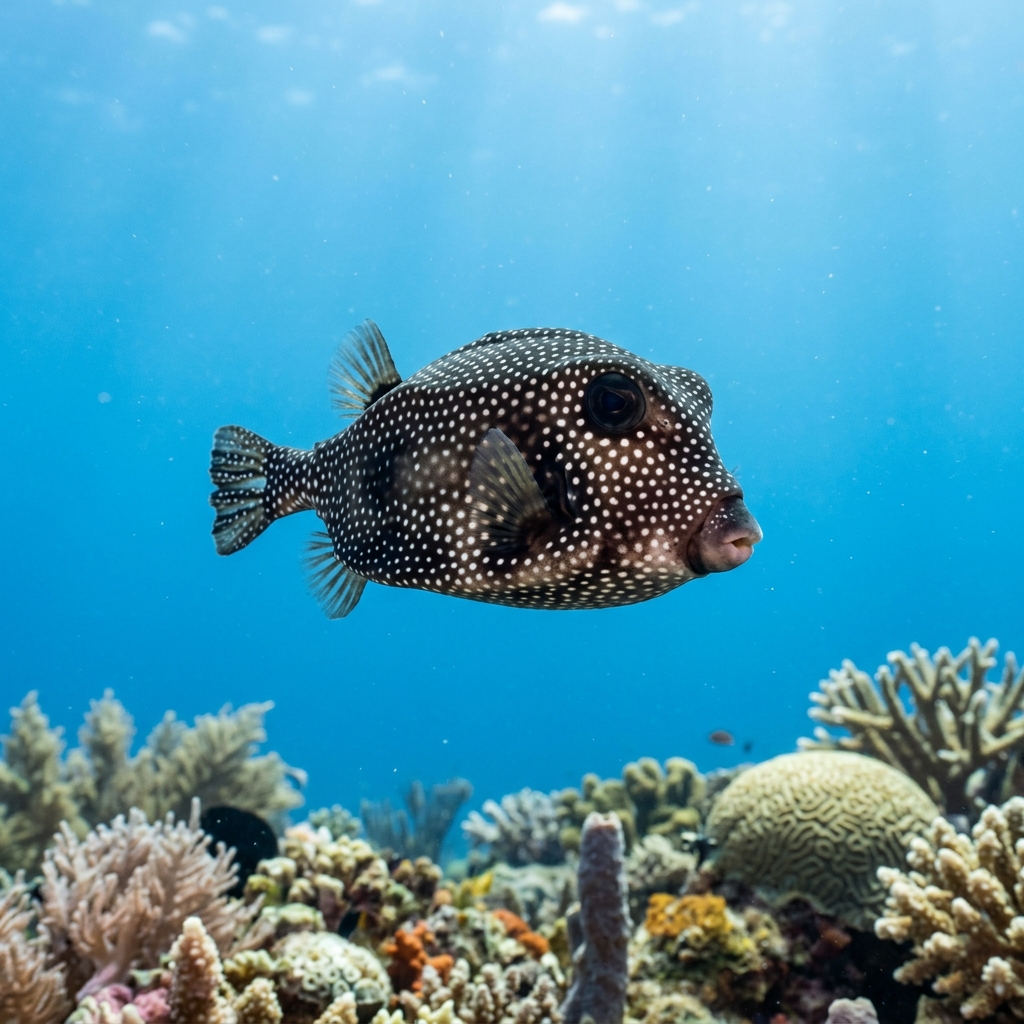
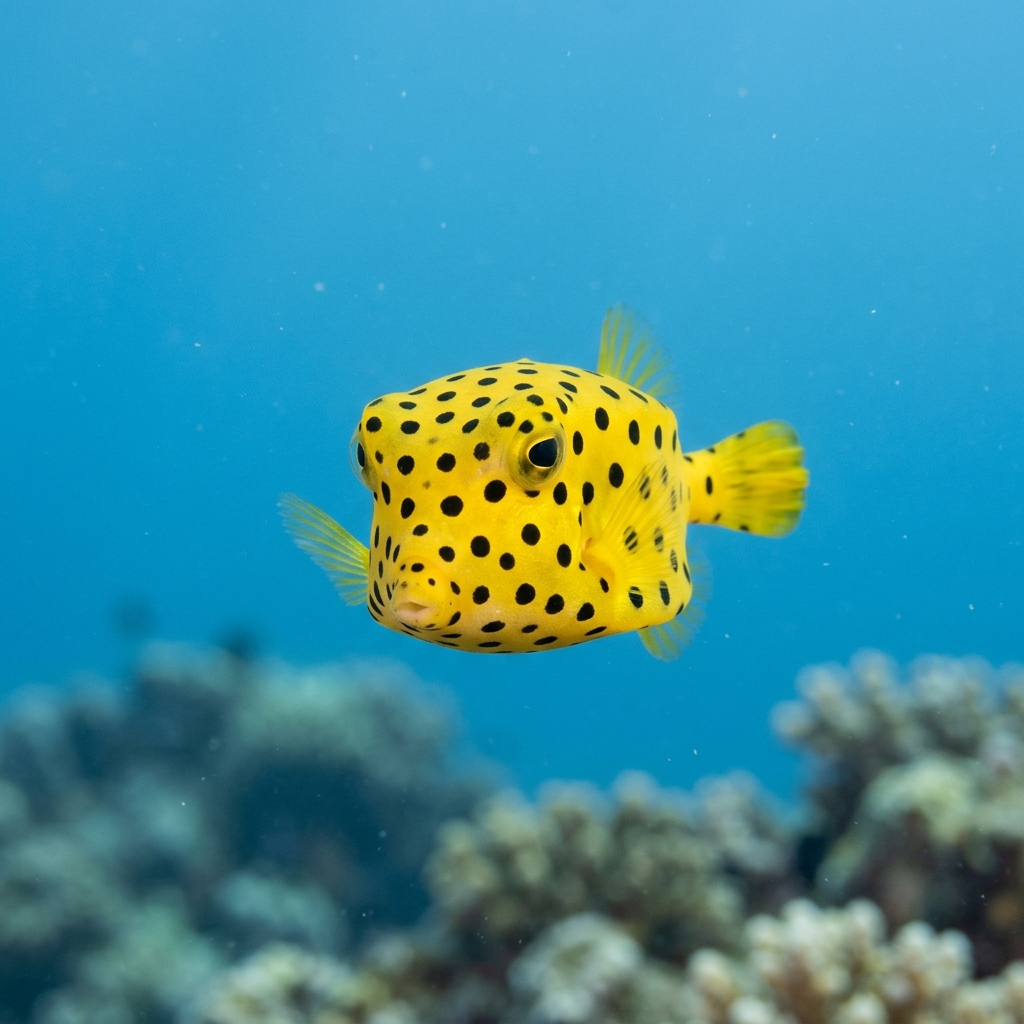
A small, box-shaped fish around 17 cm long with a rigid, armoured body that gives it an almost mechanical swimming action. Males are dark with vivid blue sides patterned in white or pale yellow spots, and orange-yellow faces; females are uniformly dark brown to black with evenly spaced white spots across the entire body. The boxy silhouette and lack of a conventional tail-fin taper set it apart from nearly anything else on the reef. Juveniles are bright yellow with neat black spots, looking almost like a different species entirely.
Spotted boxfish are daytime foragers, picking over rubble and coral in shallow to mid-water reef zones, nibbling at algae and small invertebrates. They tend to be cautious around divers and will ease back into the reef structure if approached too quickly, so a slow, unhurried approach gives you the best chance of watching them feed naturally. During breeding season males become notably territorial towards other males, so you may occasionally see two males squaring off in open water.
When stressed or injured, spotted boxfish release a toxic mucus called ostracitoxin from their skin, which can harm other fish in a confined space. In the open ocean this is not a risk to divers, but it is the reason they are considered dangerous to keep in aquaria.
In the Northern Hemisphere it appears year-round with no concentrated peak, which matches its preference for warm tropical water between roughly 25 and 29°C. Southern Hemisphere sightings concentrate from May through February, so those months are the better window for destinations like Queensland.
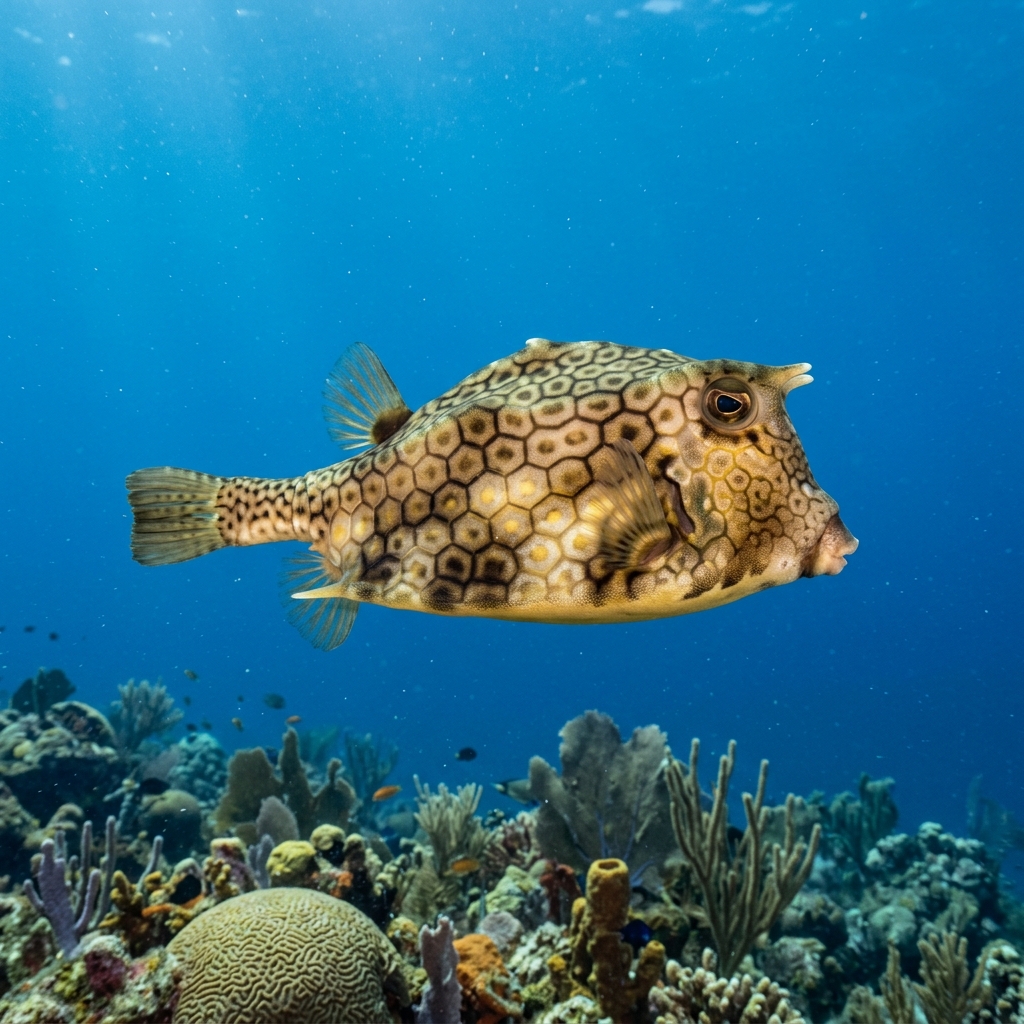
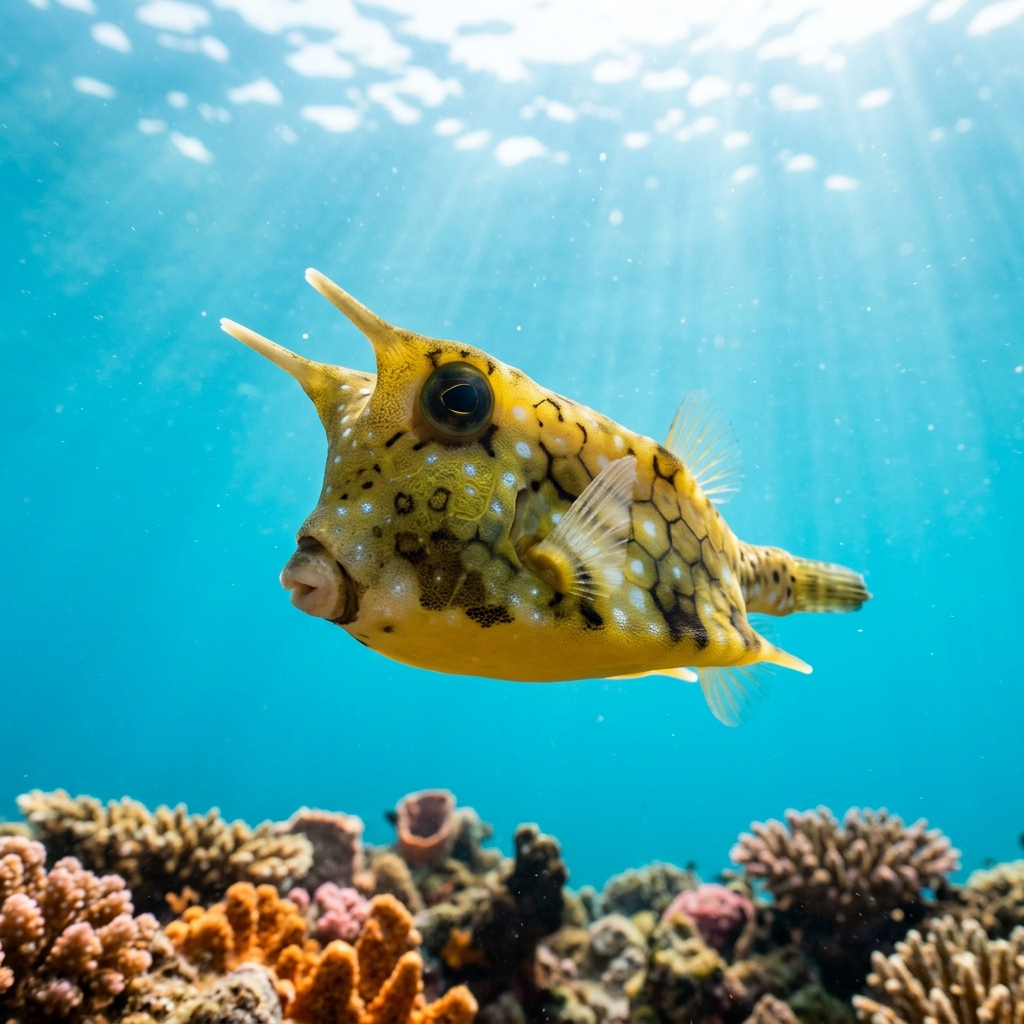
Reef neighbours a diver could mistake it for. Use the identification notes above to tell them apart.
Most commonly logged in Indonesia, the Maldives, and the Philippines, with particularly strong representation around Bali and Lombok, the North and Central Atolls of the Maldives, and throughout Sulawesi. Hawaii is the standout region in US waters, and Queensland and Phuket round out the list of reliable destinations.
Mapping where Spotted Boxfish is logged…
They are most reliably found across the Indo-Pacific, with Indonesia, the Maldives, and the Philippines holding the greatest number of logged sightings. Strong regional hotspots include Bali and Lombok, the Maldivian atolls, Sulawesi, Hawaii, and Phuket. Australia's Queensland coast and French Polynesia are also solid bets.
In the Northern Hemisphere they are present year-round on suitable tropical reefs, so there is no single best season. For Southern Hemisphere destinations like Queensland, sightings are more concentrated between May and February.
Look for the rigid, box-shaped body and stiff, flapping fin movement that sets all boxfish apart. Males show striking blue and yellow spotted flanks against a dark body; females are dark brown or black with white spots all over. A juvenile looks completely different: a tiny, bright yellow cube with neat black spots.
Not in any direct way. They are small, shy, and non-aggressive towards divers. However, they can release a toxic skin secretion called ostracitoxin when severely stressed or injured, which is harmful to other fish nearby. In open water this poses no real hazard, but you should avoid handling or harassing them.
They typically reach around 17 cm in length. Their compact, armoured build makes them appear even smaller in the water, which is part of why they are easy to miss when they tuck into reef crevices.
Site and sighting data is aggregated from diver logs, iNaturalist and GBIF. For taxonomy and conservation status:
Scrawled Cowfish
1,431 sites