Acanthostracion polygonium
Spot Honeycomb Cowfish year-round across Florida, the Yucatán, and Bonaire. Know the box-shaped body and honeycomb pattern that make it unmistakable.
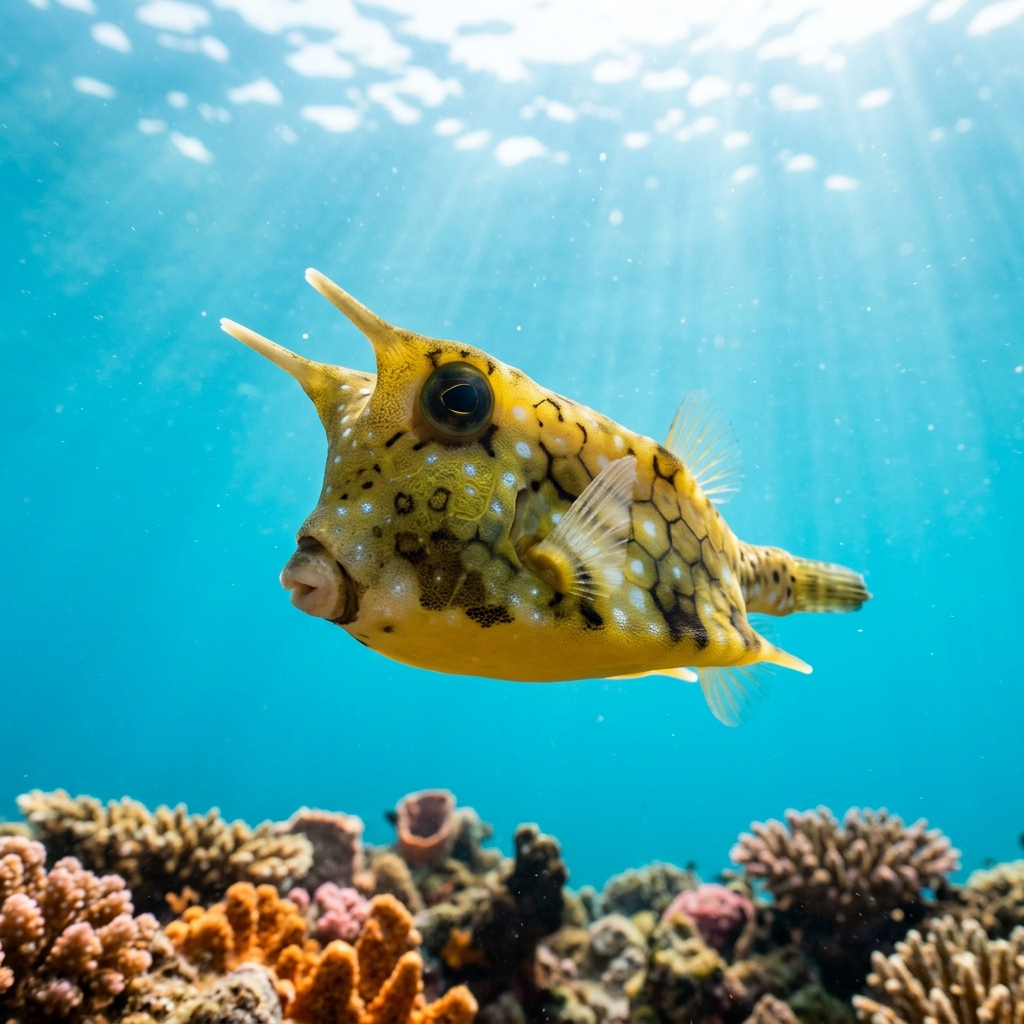
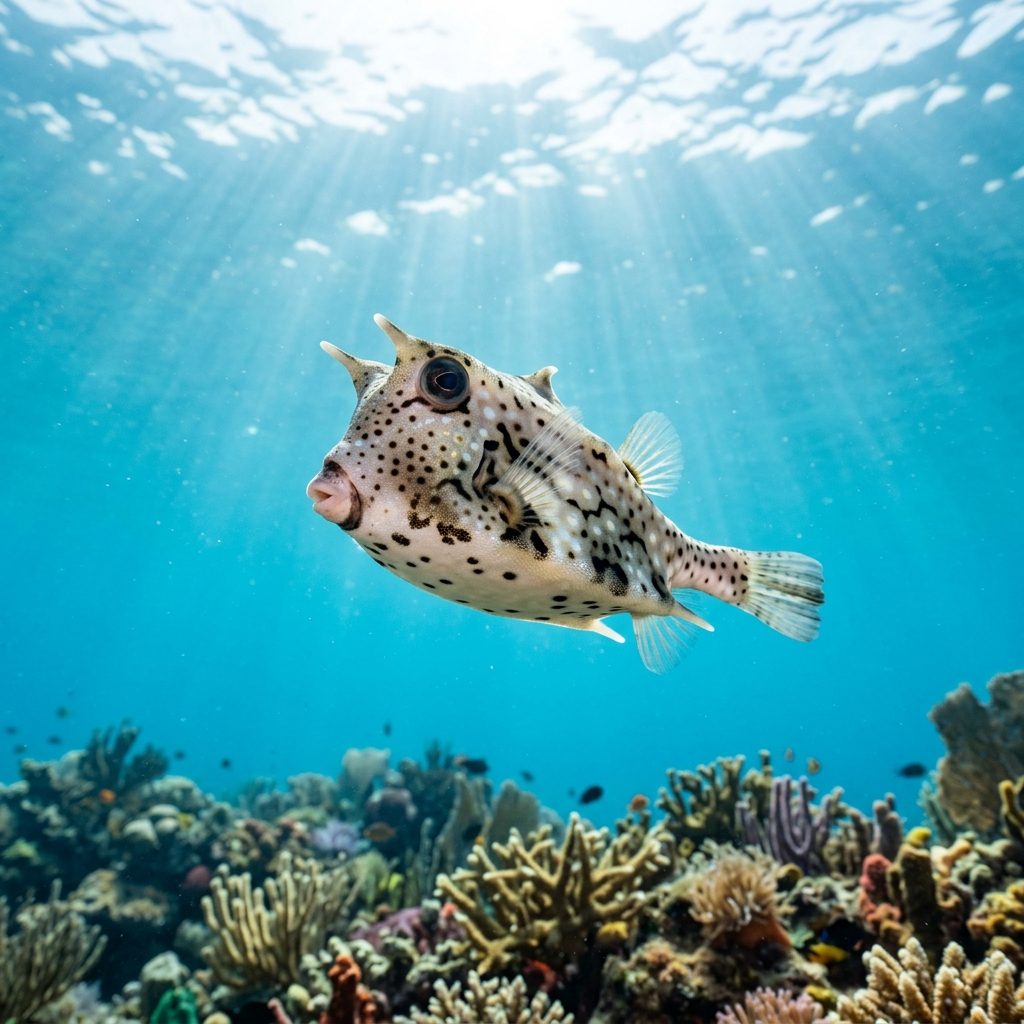
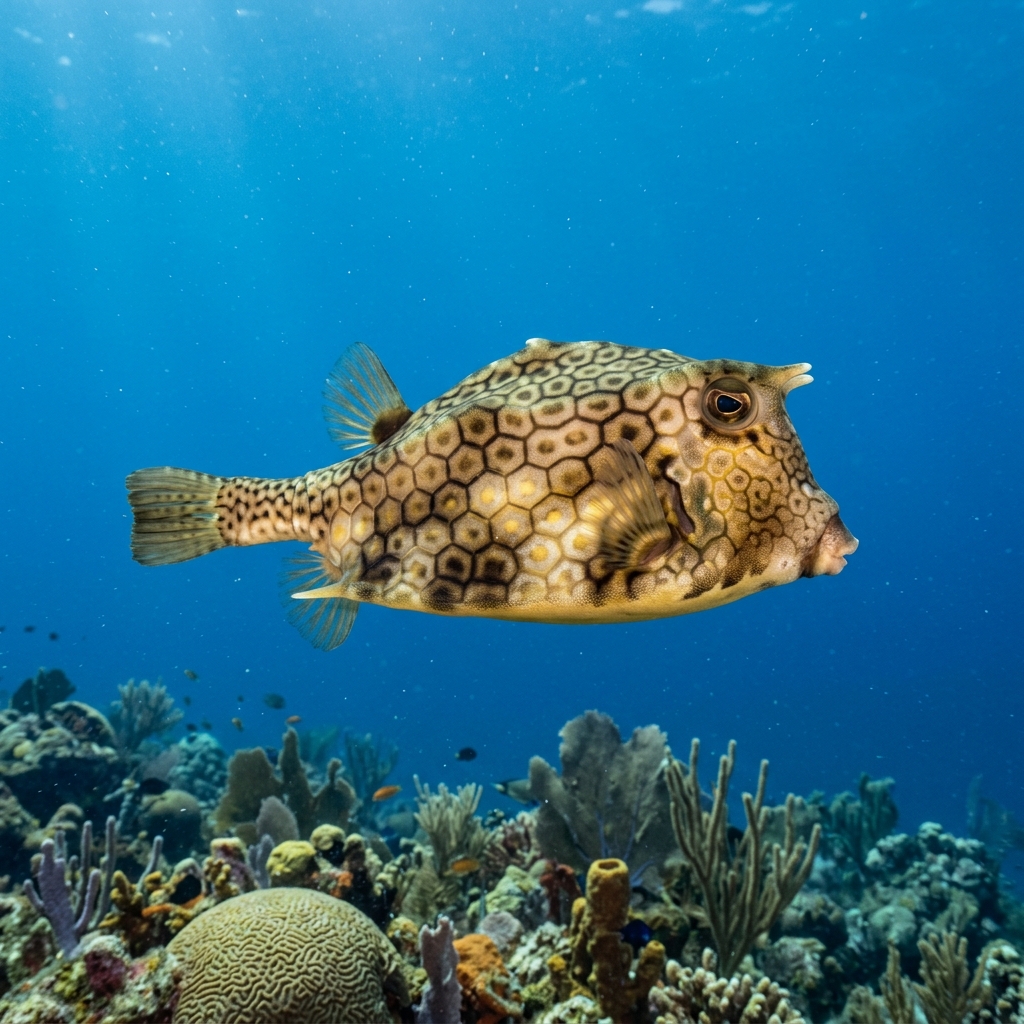
A rigid, box-shaped body roughly 35 cm long gives this fish away immediately, it moves like a square peg, using only its fins rather than flexing its body. The skin is covered in a tight mesh of hexagonal (honeycomb) markings that shift from yellowish-brown to olive-green depending on the light, and a pair of small forward-pointing horns above the eyes is the clincher. Look for a small, pursed mouth angled slightly downward, useful for probing the substrate.
Slow and deliberate, it spends most of the day picking over the reef, probing crevices and under ledges for small invertebrates, you'll often find it almost stationary while it works a patch of rubble or coral. It generally ignores divers entirely, carrying on foraging even when you get close, which makes for relaxed observation. If you want a good look, check shaded overhangs and gaps in the reef rather than open water.
Like other boxfish, the honeycomb cowfish can release a toxic skin mucus called ostracitoxin when severely stressed or injured. While this poses no direct threat to divers, it can be lethal to other fish nearby.
In the Northern Hemisphere it appears year-round with no concentrated season, which fits its comfort in the 21-28 °C water typical of Caribbean and subtropical Atlantic reefs. Southern Hemisphere sightings (mainly Brazil) concentrate between January and May.
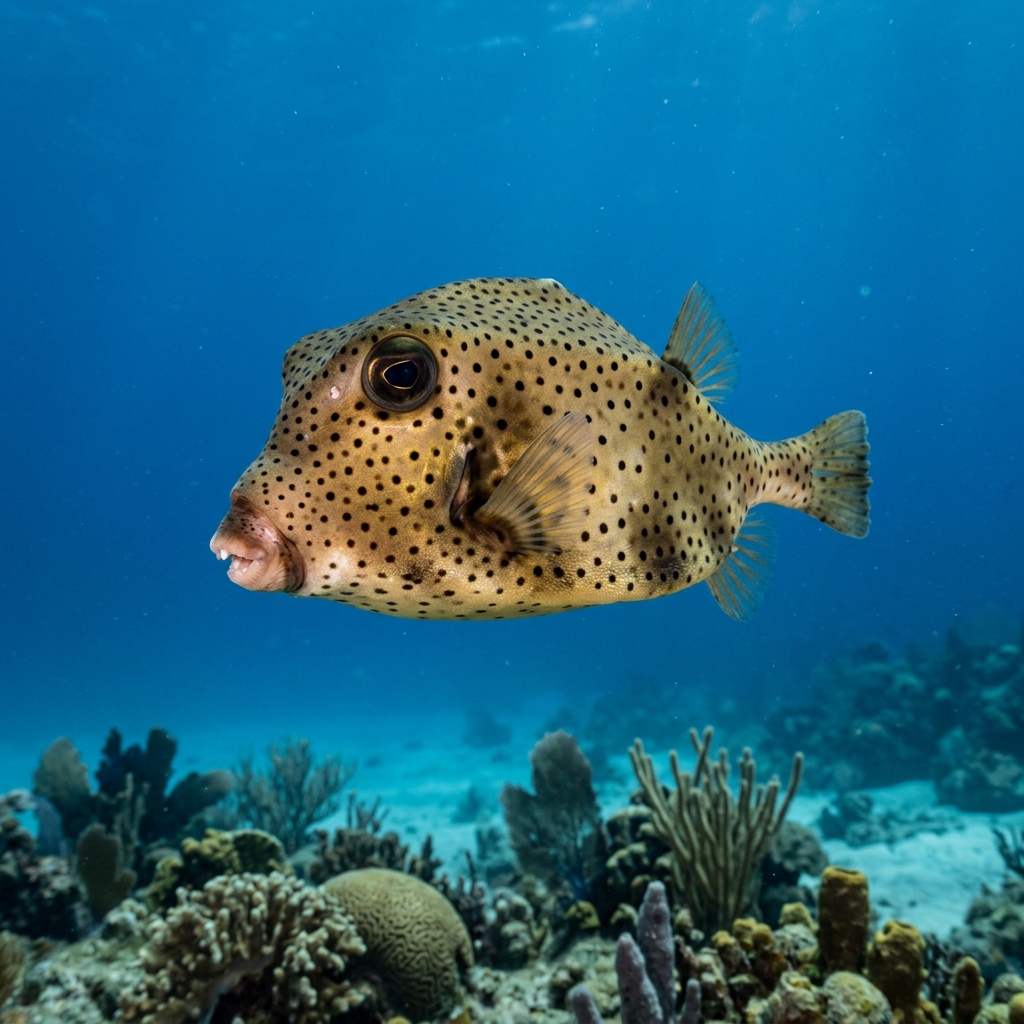
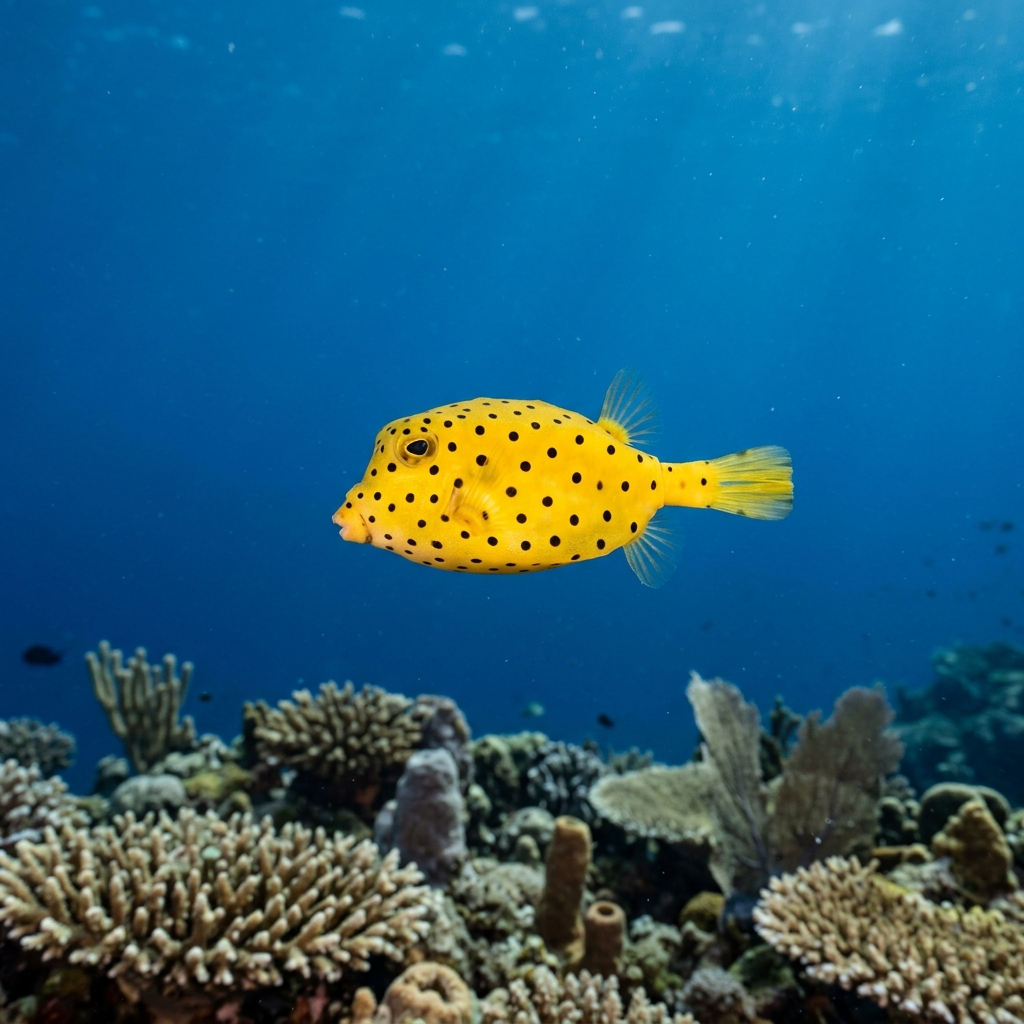
Reef neighbours a diver could mistake it for. Use the identification notes above to tell them apart.
Most commonly logged in Florida and the broader US Southeast coast, followed by the Yucatán Peninsula in Mexico and the reefs around Roatán, Honduras. Strong populations are also recorded across the wider Caribbean, particularly in Bonaire, Grenada, Cuba, and the Bahamas, as well as along the Northeast coast of Brazil.
Mapping where Honeycomb Cowfish is logged…
They are most reliably found across Florida and the US Southeast, the Yucatán Peninsula, Roatán in Honduras, and throughout the Caribbean including Bonaire, Grenada, and the Bahamas. Brazil's Northeast coast is a key spot in the Atlantic South. The species is widespread but typically uncommon at any single site.
In the Caribbean and the rest of the Northern Hemisphere they are present all year with no peak season, so any visit to a suitable reef can produce a sighting. Divers targeting Brazilian reefs in the Southern Hemisphere have the best luck between January and May.
Look for the rigid, box-shaped body and the distinctive hexagonal mesh pattern across the skin, the name really is the ID tip. Two short horns projecting forward above the eyes and a small downward-angled mouth confirm the species. It moves by fluttering its fins while the body stays completely stiff, which is hard to mistake for anything else.
They typically reach around 35 cm in length. Because the body is enclosed in a hard bony shell (the carapace), they look bulkier than many fish of similar length, which can make them appear larger than they are underwater.
No, they pose no direct risk to divers. They are calm and largely indifferent to human presence. The only caveat is that, like all boxfish, they can release a toxic skin secretion if badly stressed, but this affects fish in the water around them, not divers.
Site and sighting data is aggregated from diver logs, iNaturalist and GBIF. For taxonomy and conservation status:
Scrawled Cowfish
1,431 sites