Acanthostracion quadricornis
Blue squiggle-covered box body over reefs in Florida, Cuba and the Bay Islands, in water 21-29C, spotted year-round at an uncommon rate.
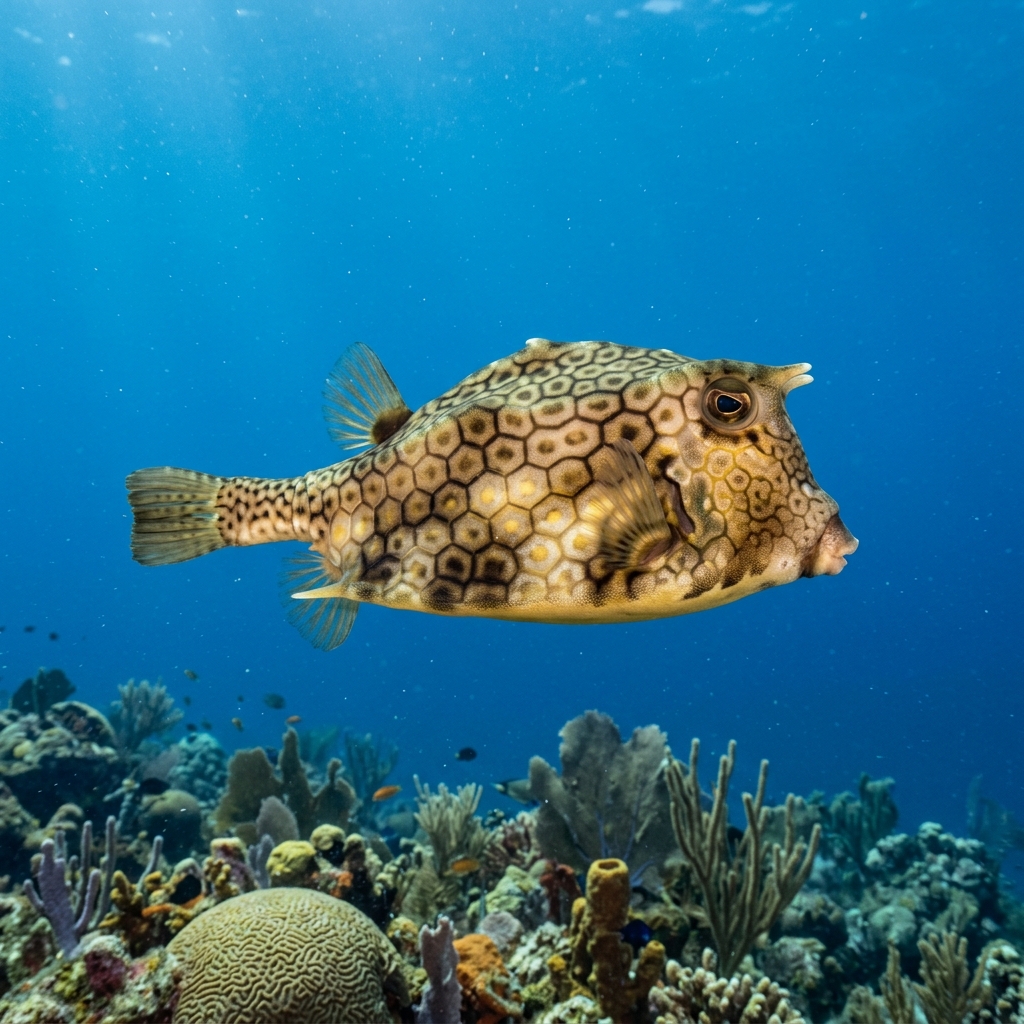
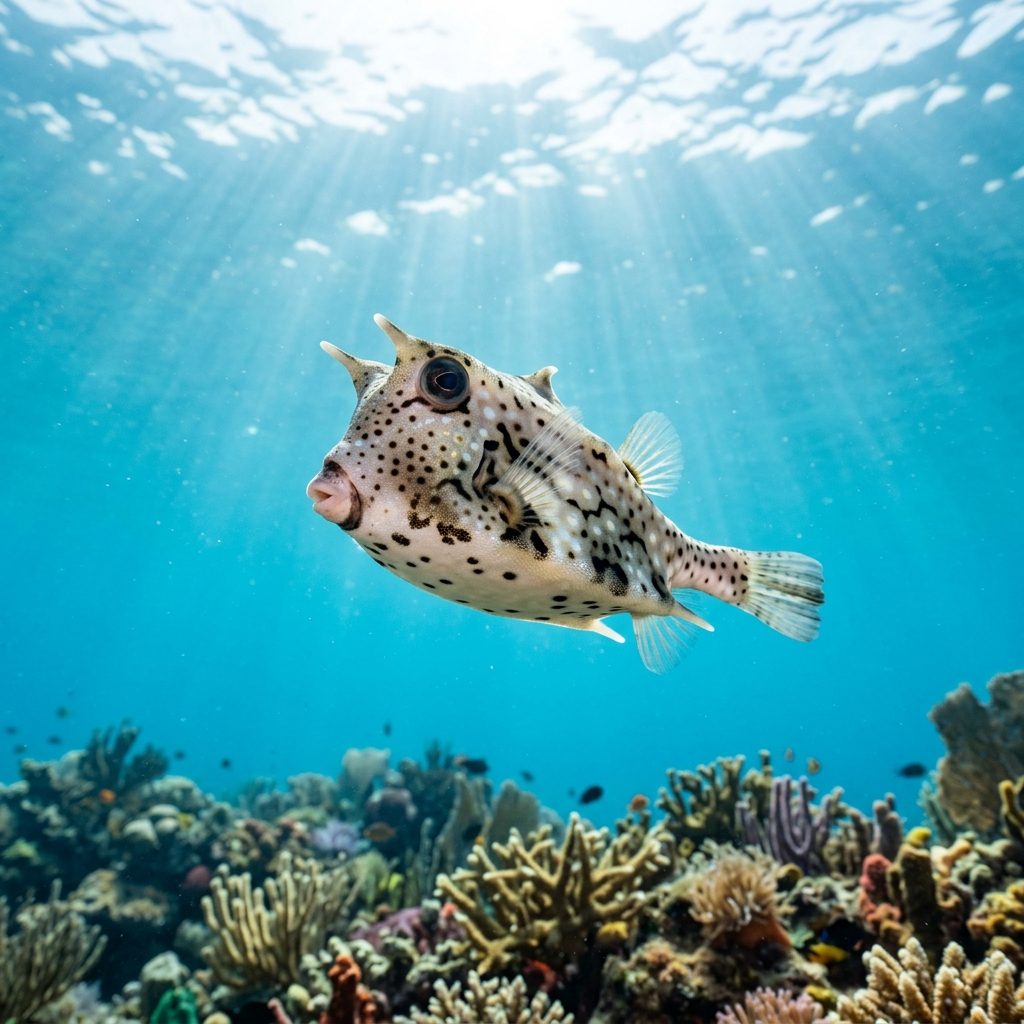
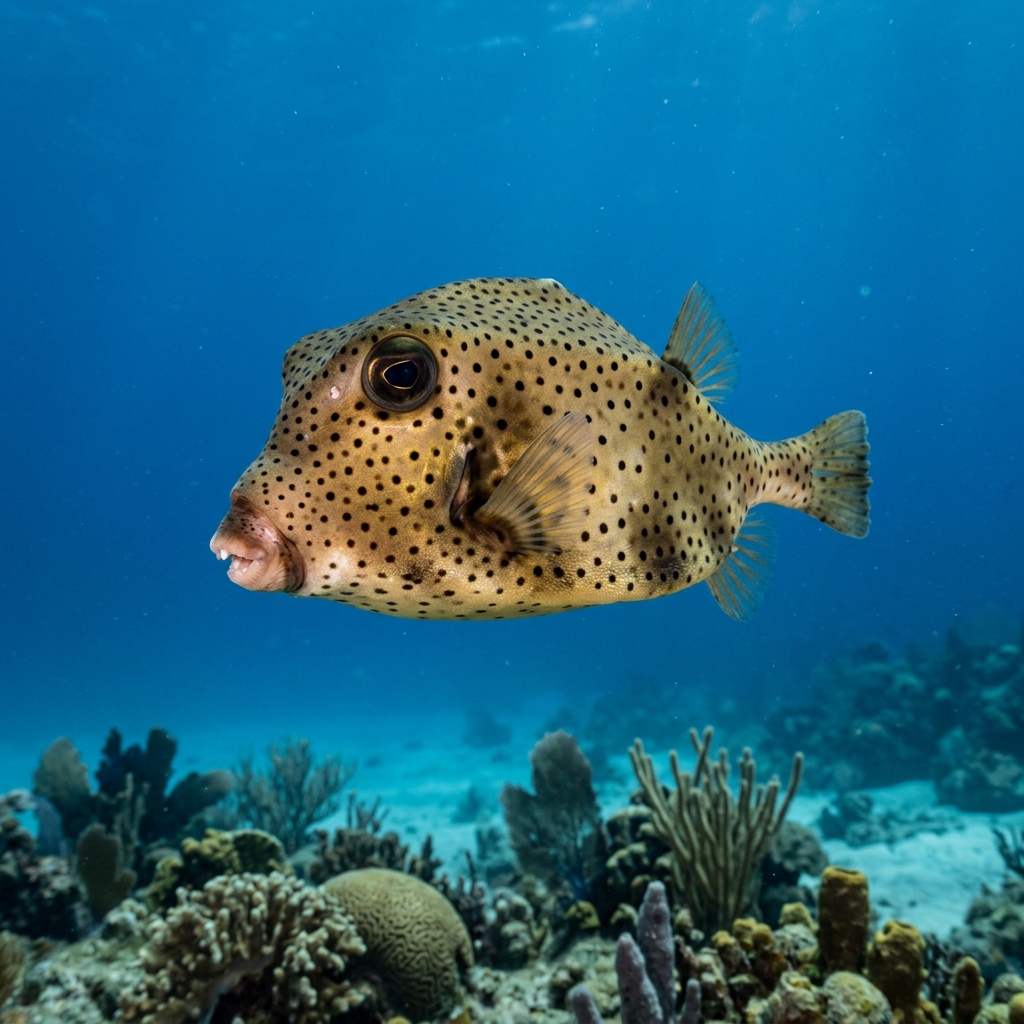
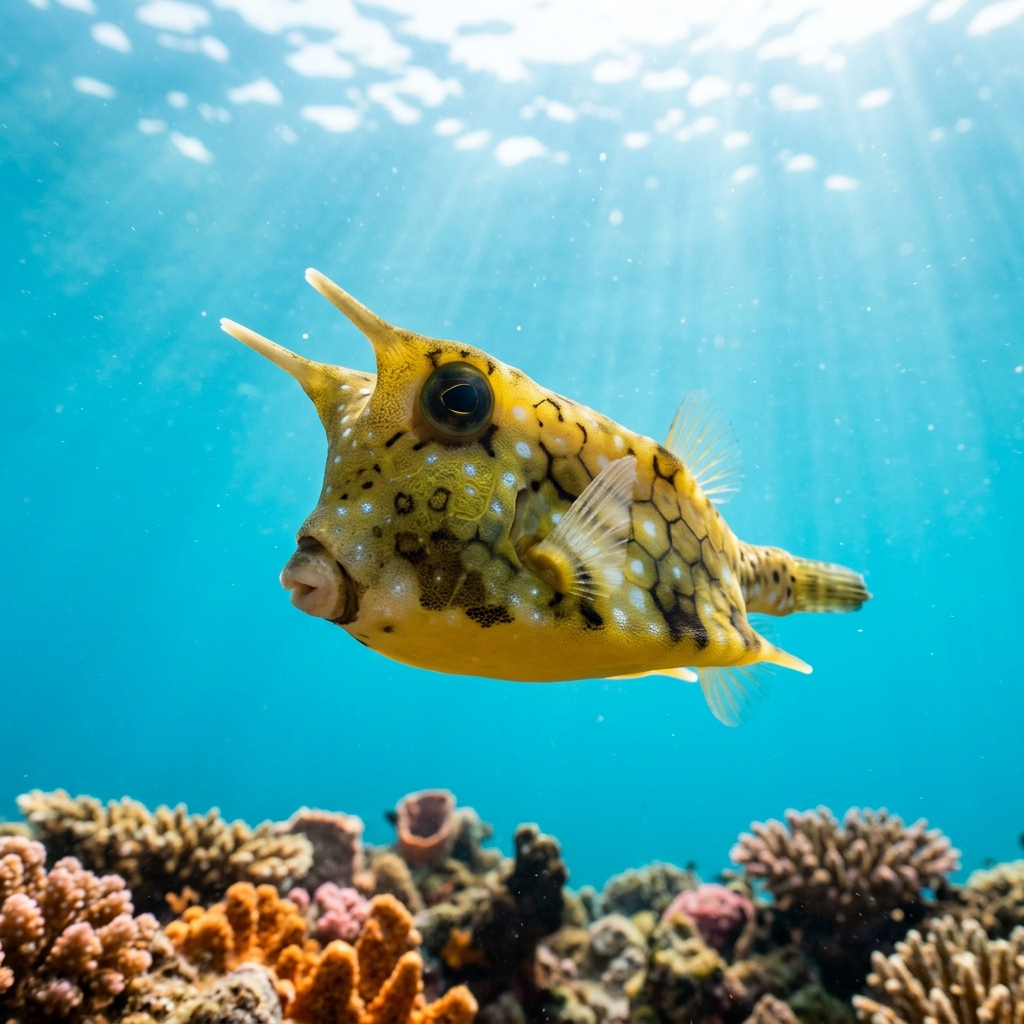
Boxy, angular body encased in a rigid shell with two small horn-like spines above the eyes and two more near the tail base. Pale yellowish to olive skin covered in fine blue squiggly lines and scattered blue spots, which is where the name comes from. Moves with a stiff, almost mechanical swimming style, using small fins rather than body flexion, and tops out around 38 cm. Juveniles tend to show brighter, more contrasting blue markings than the duller adults.
Divers usually find it hovering low over sand patches or picking around sponges and rubble near the reef, unbothered by a slow approach. It feeds by blowing jets of water at the substrate to flip over debris and expose small invertebrates, a habit worth watching if you can hold still for a minute. Most sightings are logged as uncommon rather than common, so a close look is a decent find rather than a given.
That rigid box-shaped shell is fused bony plates rather than scales, which is why it swims with such a stiff, paddling motion instead of the usual fish undulation.
No clear seasonal pattern in the data, so treat it as a year-round sighting. It sits comfortably in water from 20.9 to 29.2C, which covers most Caribbean and western Atlantic reefs through every month.
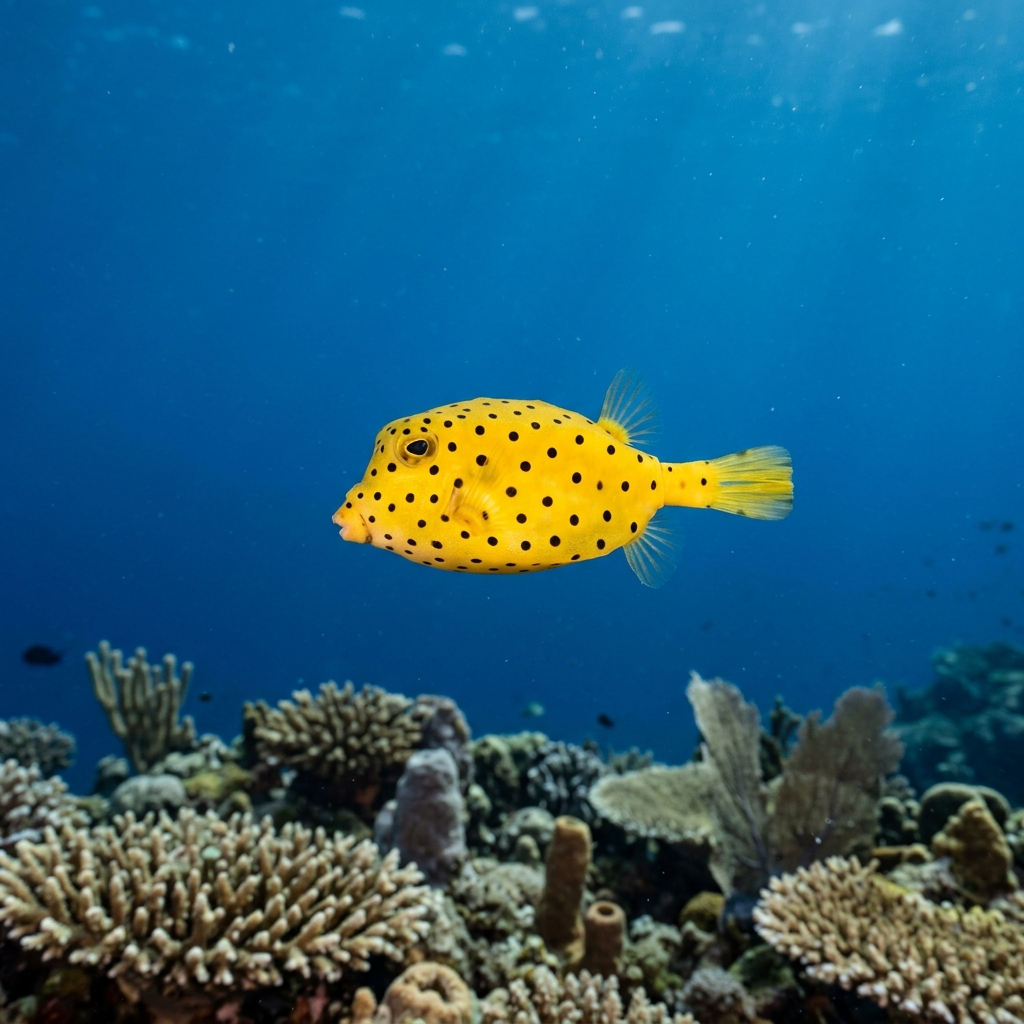
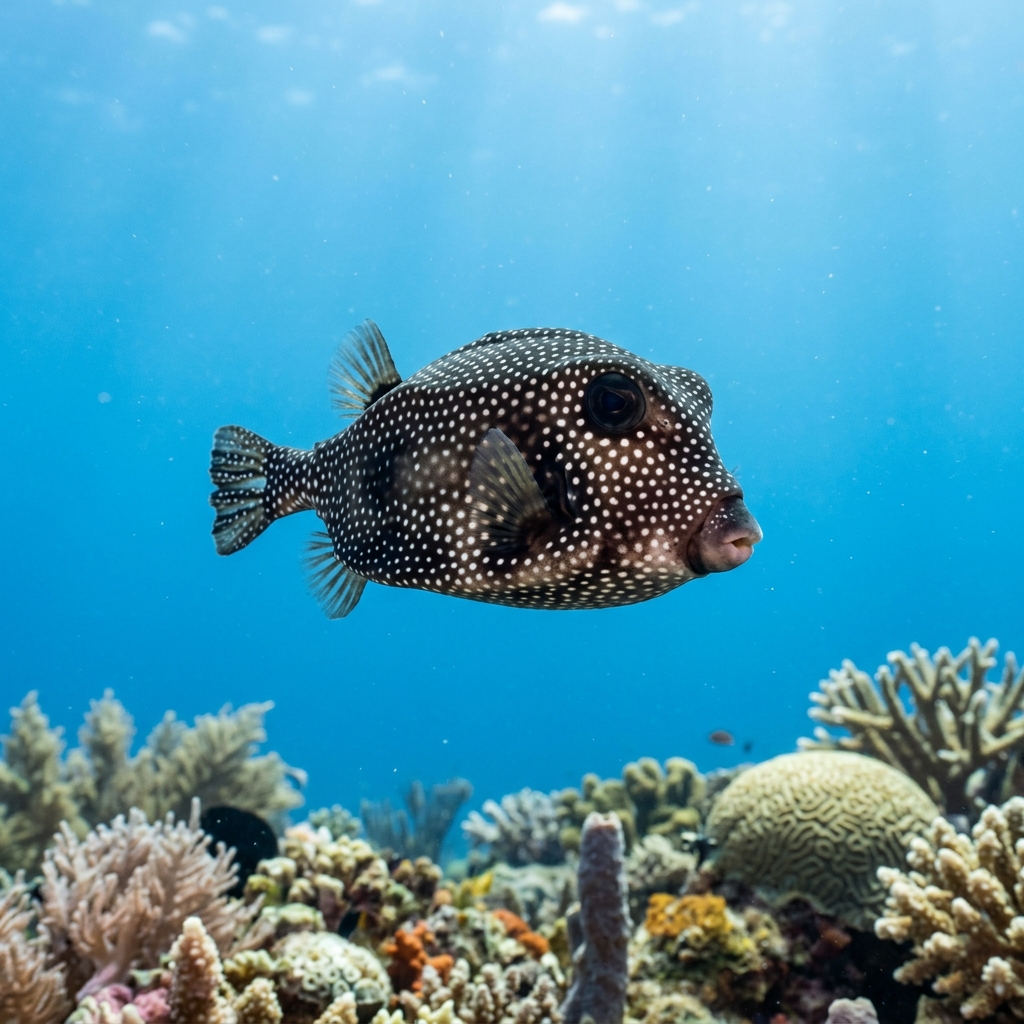
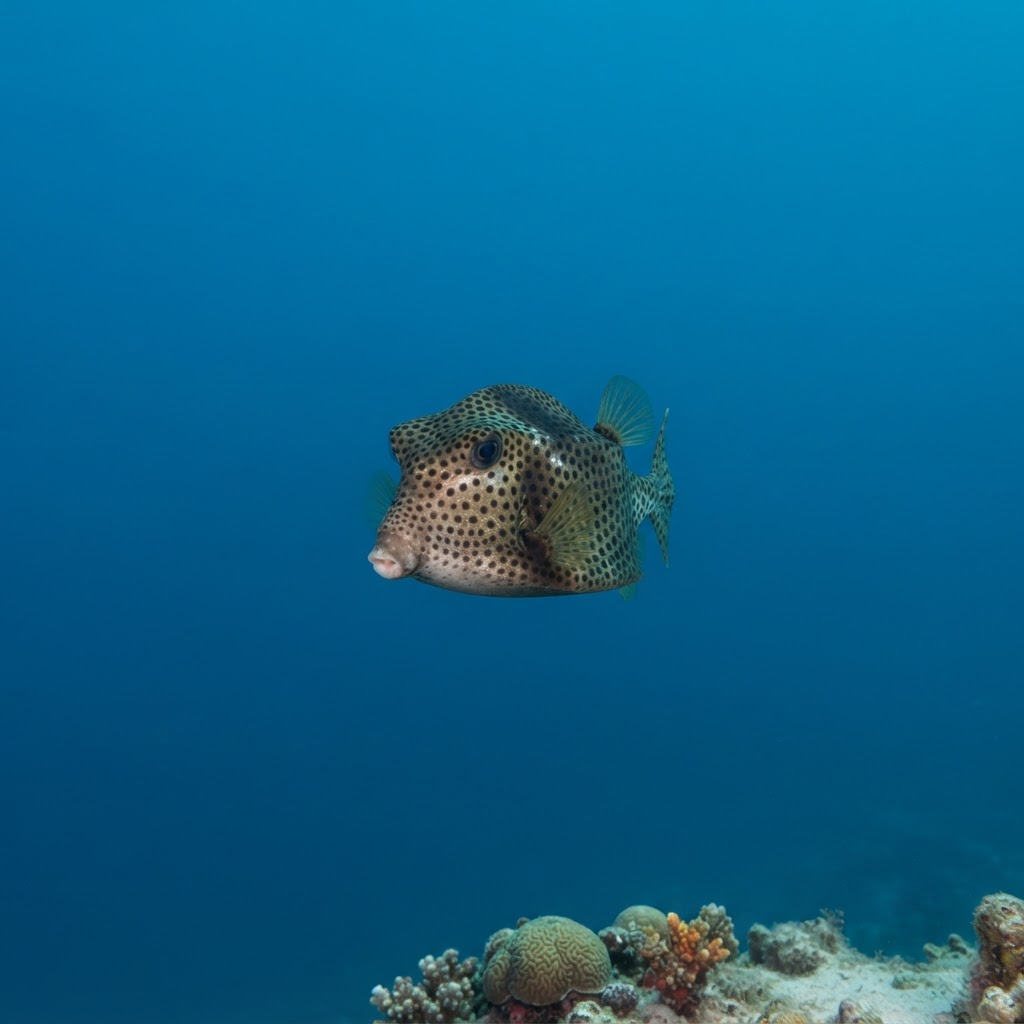
Reef neighbours a diver could mistake it for. Use the identification notes above to tell them apart.
Most reliably logged in the United States, especially Florida and the Carolinas, with strong populations also reported across Cuba, Mexico's Yucatán Peninsula, and the Bay Islands of Honduras. Also a regular find on reefs in Colombia's Caribbean coast, Venezuela, the Bahamas, and Grenada.
Mapping where Scrawled Cowfish is logged…
Florida and the Carolinas in the United States are the most reliable spots, alongside Cuba, Mexico's Yucatán Peninsula, and the Bay Islands of Honduras. Colombia's Caribbean coast, Venezuela, the Bahamas, and Grenada also produce regular sightings.
There's no strong seasonal signal in the sighting data, so they're considered a year-round find. Warm reef temperatures between roughly 21 and 29C stay suitable across most of the year in their range.
Look for a boxy, hard-shelled body in pale yellow to olive covered in blue squiggly lines, plus a pair of small horns above the eyes. It swims stiffly with small fins rather than a flexing body, and grows to around 38 cm.
They typically reach around 38 cm in length, making them a medium-sized member of the boxfish family that's easy to spot once you know the shape.
They blow directed jets of water at the sand to uncover buried invertebrates, a technique worth watching for if you spot one hovering low over a sand patch.
Site and sighting data is aggregated from diver logs, iNaturalist and GBIF. For taxonomy and conservation status:
Honeycomb Cowfish
1,691 sites