Diogenes pugilator
Sand-dwelling hermit crab logged around Ayia Napa, Cyprus and Tuscany, Italy in cool 14-20C water. Here's how to spot one.
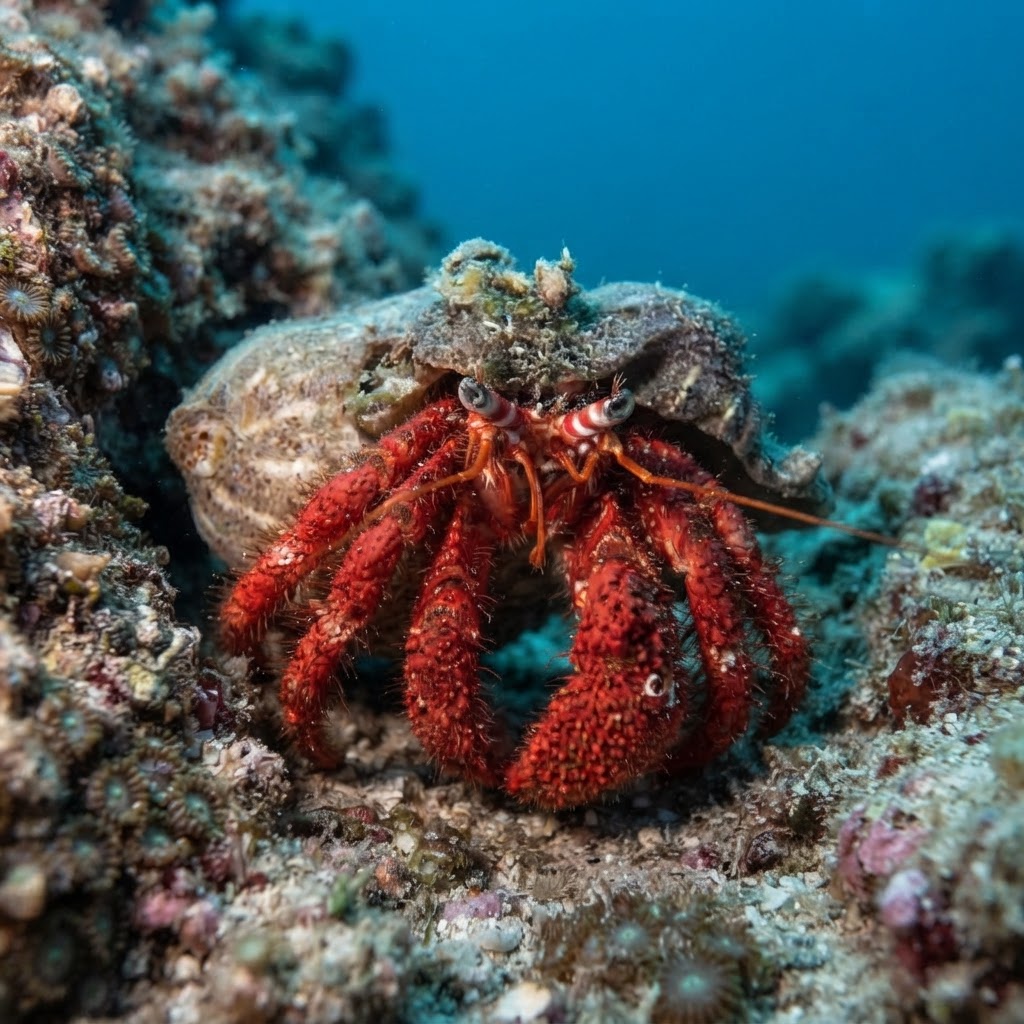
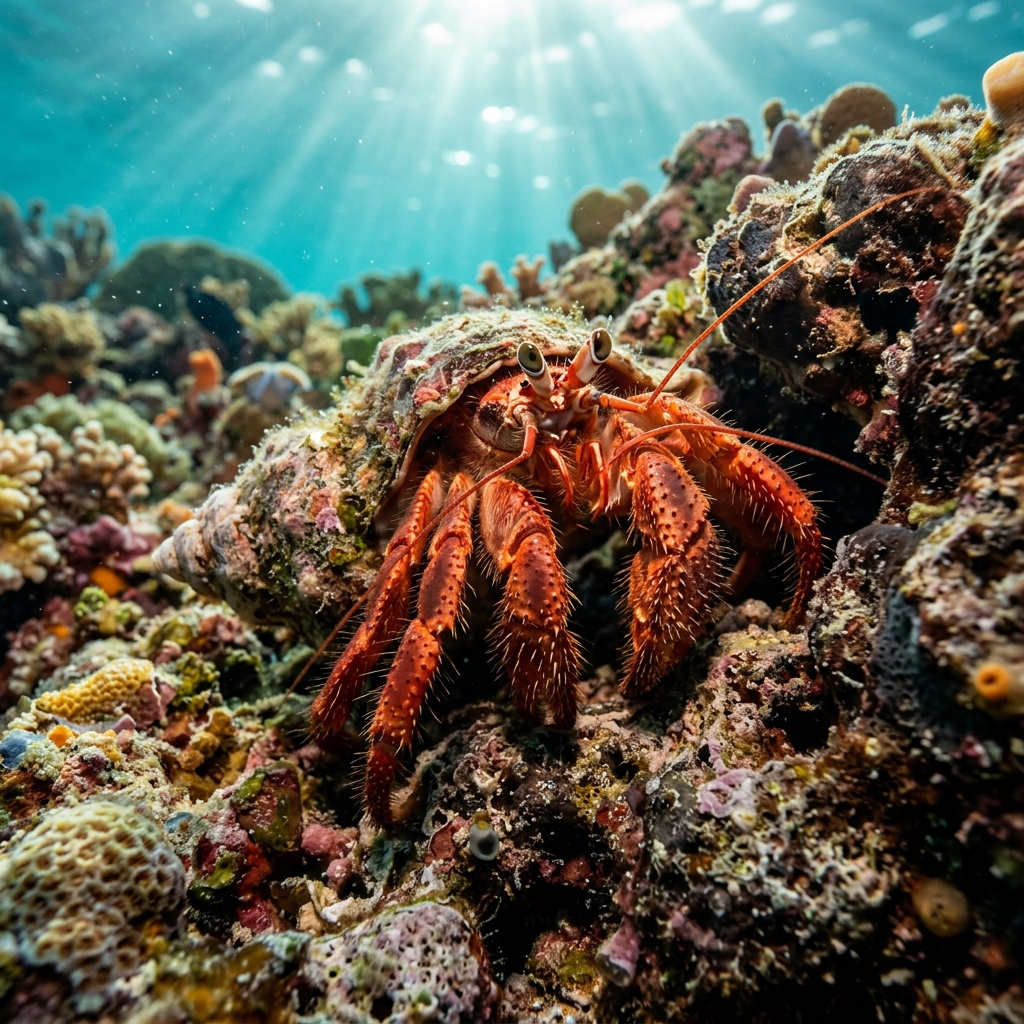
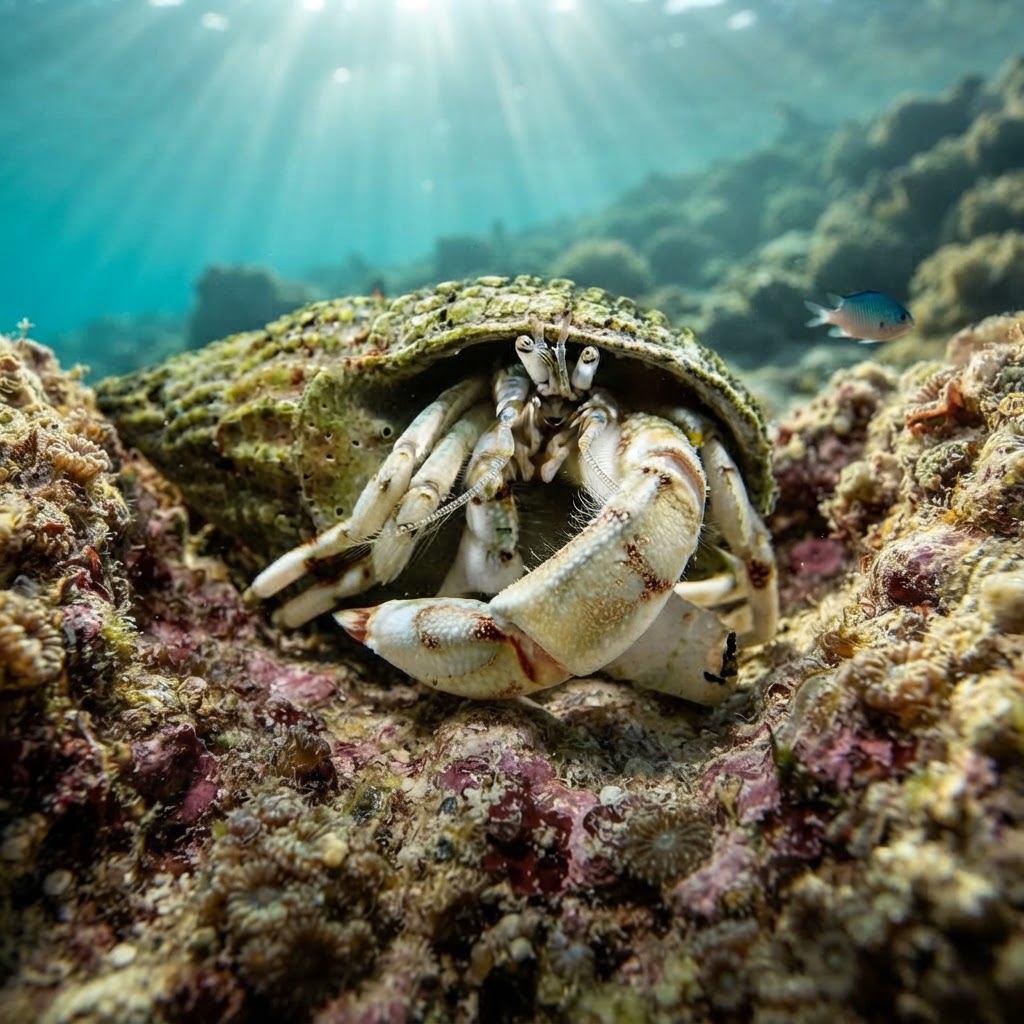
Small enough to miss on a sandy or muddy seabed, this hermit crab lives in a scavenged snail shell it drags around as portable armour. Look for a pair of longer, hairy antennae and unequal claws, with the right claw noticeably larger and used to plug the shell opening when it retreats. Body colour tends toward pale grey or sandy brown, blending into the substrate it favours, so divers usually spot the movement of the shell before the crab itself.
Divers mostly catch this one shuffling across sand or fine sediment near the seabed, often in the shallower stretches of a dive rather than deep water. It tends to hunker down and withdraw into its shell if a light or hand comes close, rather than dash off. Because it's small and cryptic, most sightings come from divers actively scanning the sand rather than spotting it mid-water.
As it grows, this crab has to abandon its shell for a larger one, and finding the right size and fit on a crowded seabed is a constant task, so you'll sometimes see it inspecting empty shells before committing to a move.
Sighting data doesn't show a clear seasonal peak, so treat it as a year-round find within its observed 13.8 to 19.8C temperature range, which covers most of the diving season across the Mediterranean and even some UK sites.
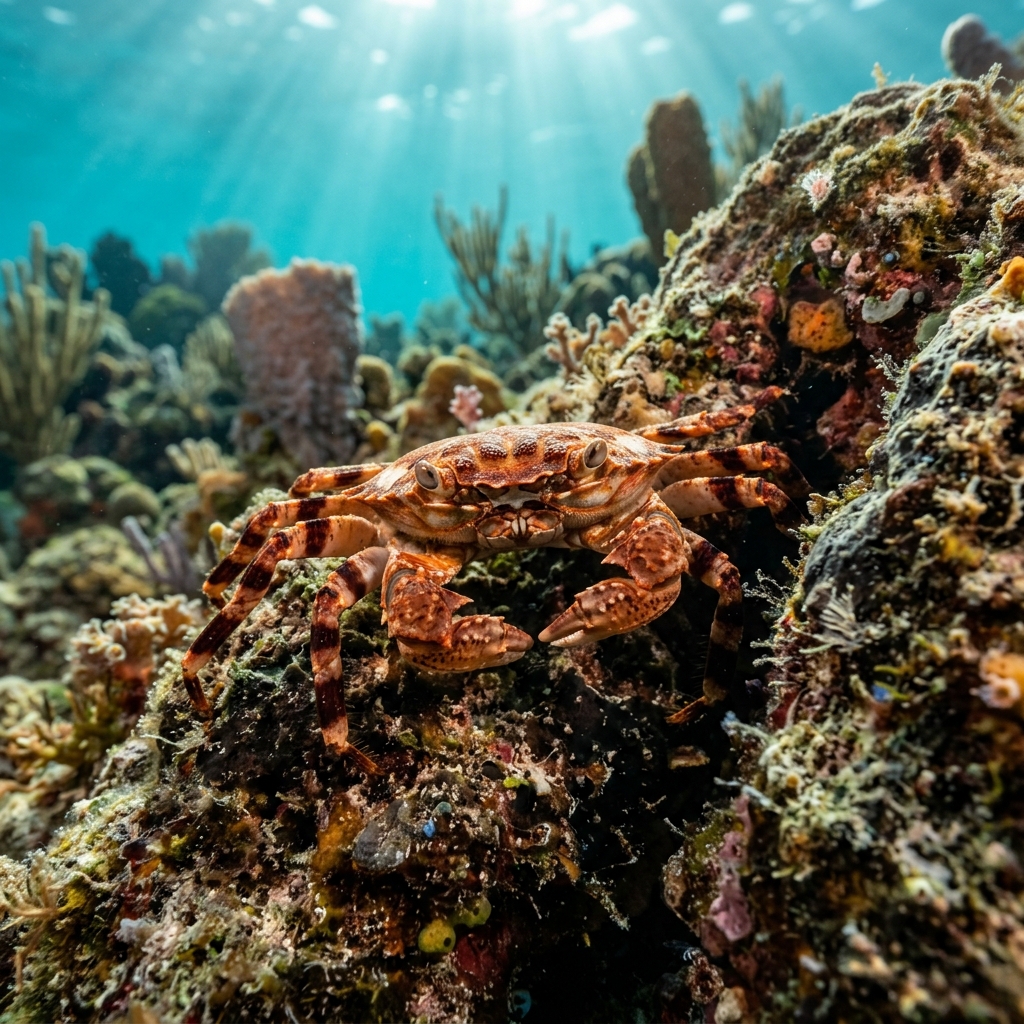
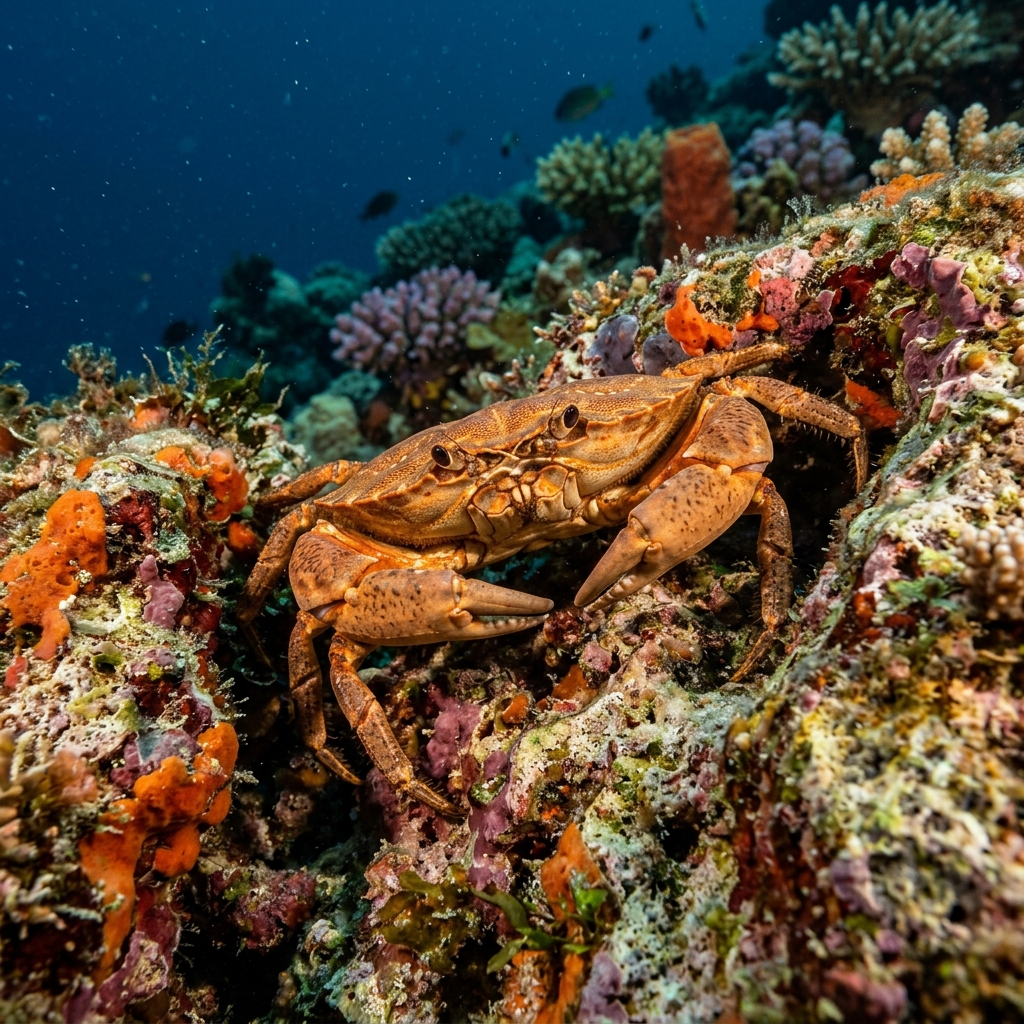
Reef neighbours a diver could mistake it for. Use the identification notes above to tell them apart.
Most reliably logged around Ayia Napa and Protaras in Cyprus, and a strong showing in Tuscany, Italy. Smaller numbers turn up along the French Riviera and Provence and in Occitanie in France, the Dodecanese in Greece, and single sites in England and Southern Dalmatia, Croatia.
Mapping where Small Hermit Crab is logged…
The most consistent sightings come from Ayia Napa and Protaras in Cyprus and Tuscany in Italy, with additional records from the French Riviera, Provence, and Occitanie in France, the Dodecanese in Greece, and sites in England and Croatia.
There's no strong seasonal pattern in the sightings, so it's a year-round possibility on sand and sediment patches wherever water sits in its comfortable 13.8 to 19.8C range.
Look for a small crab dragging a scavenged snail shell across sand, with long hairy antennae and one claw larger than the other used to seal the shell entrance. Its pale, sandy colouring makes it easy to overlook unless you're watching for movement.
Exact size data isn't available for this species, but as its common name suggests it's on the smaller end of hermit crabs typically found on Mediterranean and nearby Atlantic dive sites.
No, this species poses no danger to divers. It's a small, retreating scavenger that will withdraw into its borrowed shell rather than interact with anyone nearby.
Site and sighting data is aggregated from diver logs, iNaturalist and GBIF. For taxonomy and conservation status:
European Green Crab
2,469 sites