Scyllarides aequinoctialis
Flattened, armour-plated and easy to miss at Lighthouse Reef, Belize or Bonaire's Leeward Coast, this odd lobster hides in plain sight.
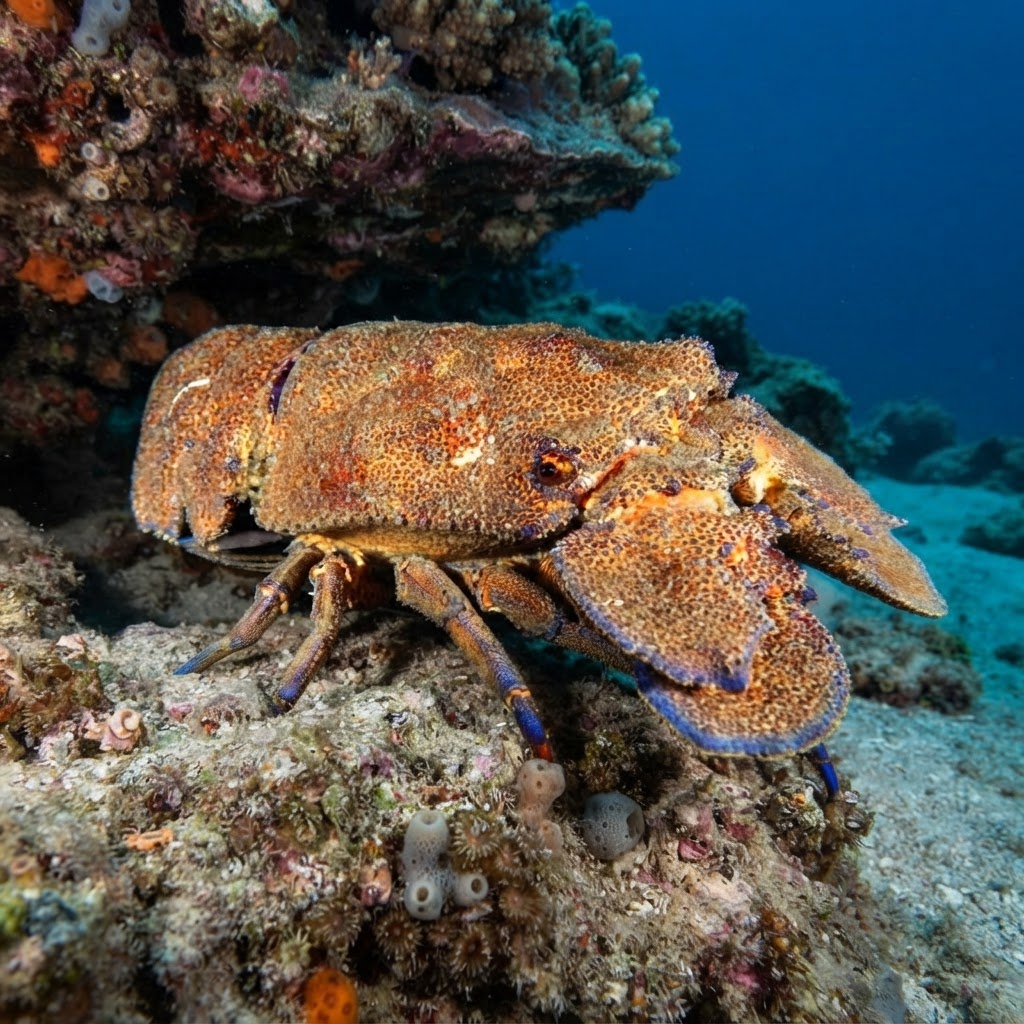
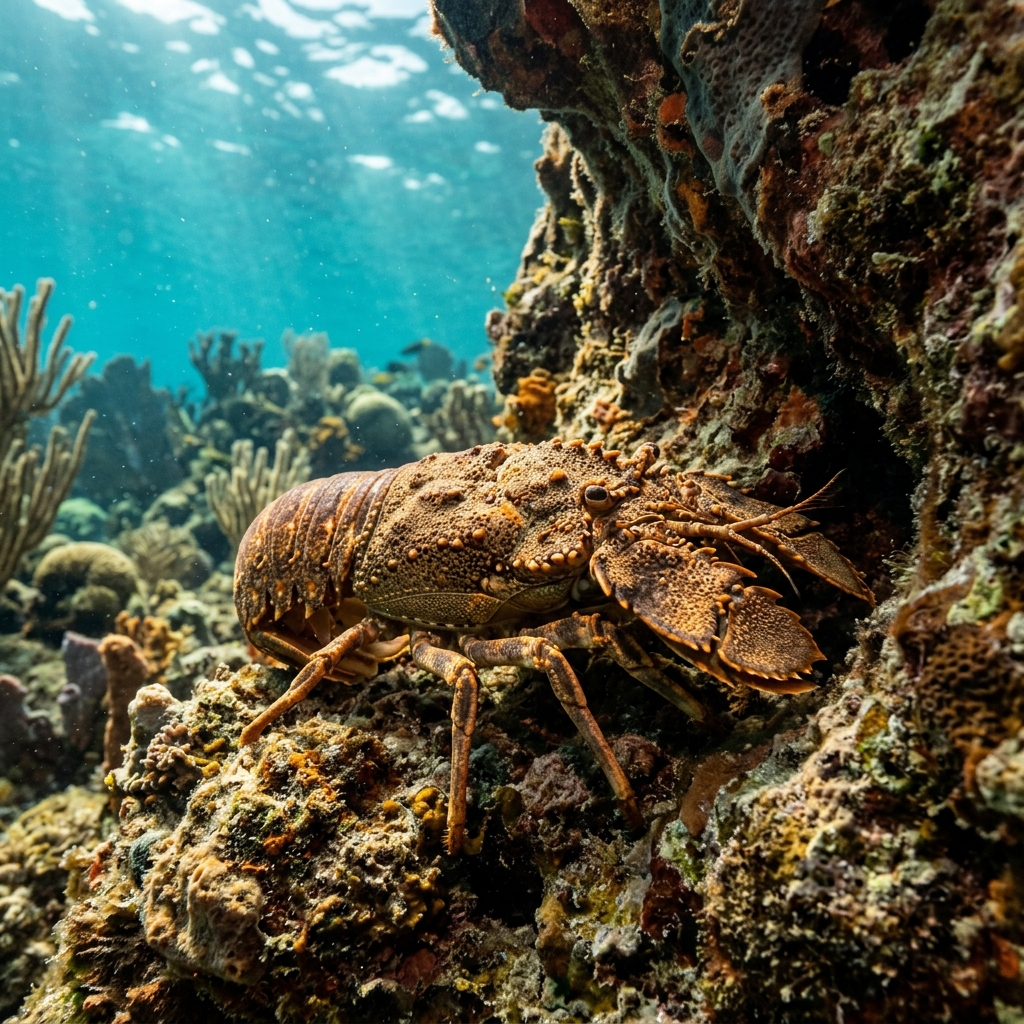
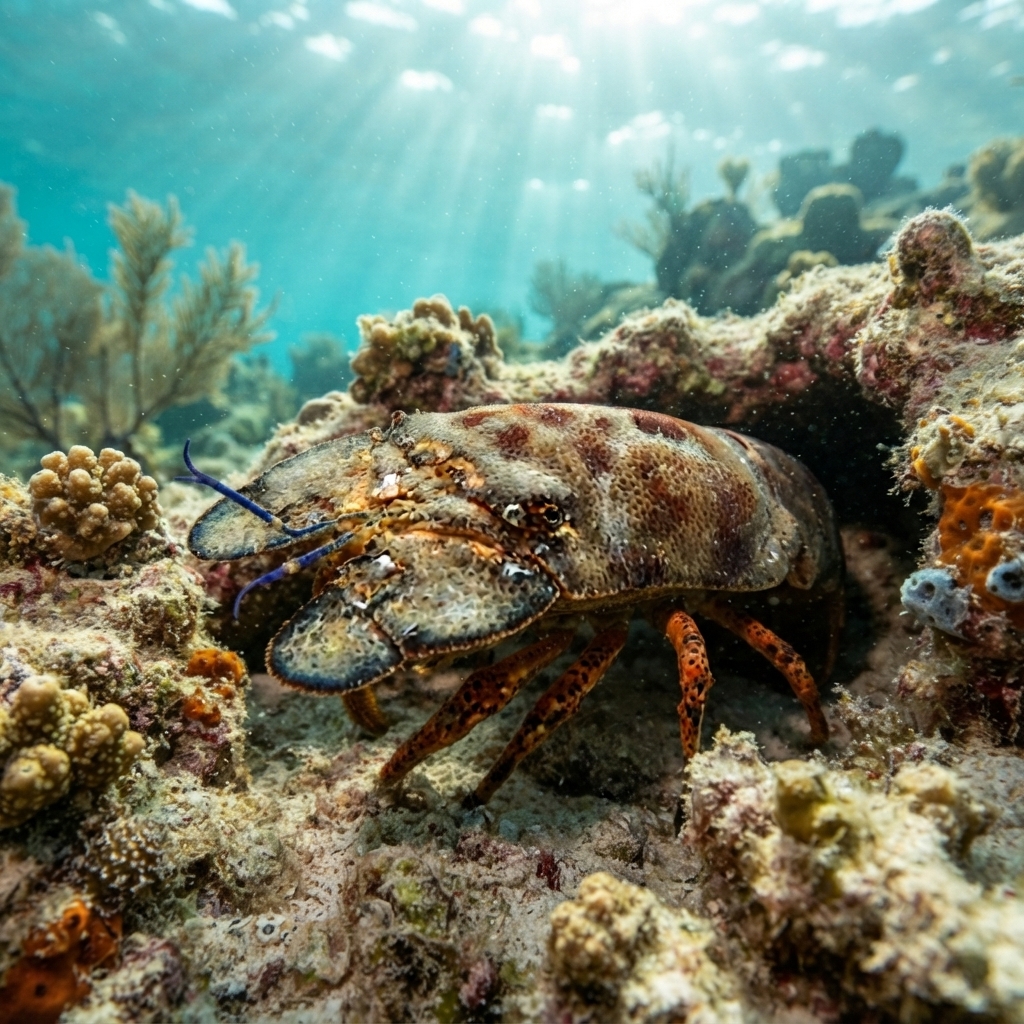
Flattened and shield-shaped rather than tubular like a typical lobster, growing to around 21 cm with a mottled brown-and-tan shell that mimics rubble and dead coral. It has no long antennae; instead its head is fringed with broad, plate-like antennal flaps that look almost like a fan glued to its face. Divers usually spot only the rear half poking out from a crevice, since the front tucks tight against the reef.
By day it wedges itself under coral ledges and rock overhangs, often with just the rear of its flattened shell visible, and it will sit still even as divers pass close by. At night it emerges to forage across the reef floor for small molluscs and worms, moving slowly and low to the substrate. It has no claws to defend itself with, so its main response to a torch or a curious diver is to freeze or shuffle back into cover.
It lacks claws entirely and instead of grabbing prey it uses the underside of its flattened body to pin and pry open small snails and clams, cracking shells that would stop a diver's fingers.
No clear seasonal pattern shows up in the sightings, and with water in the 25 to 31 C range across its range it stays active on these reefs year-round. Any month is fair game, though night dives improve your odds since it feeds after dark.
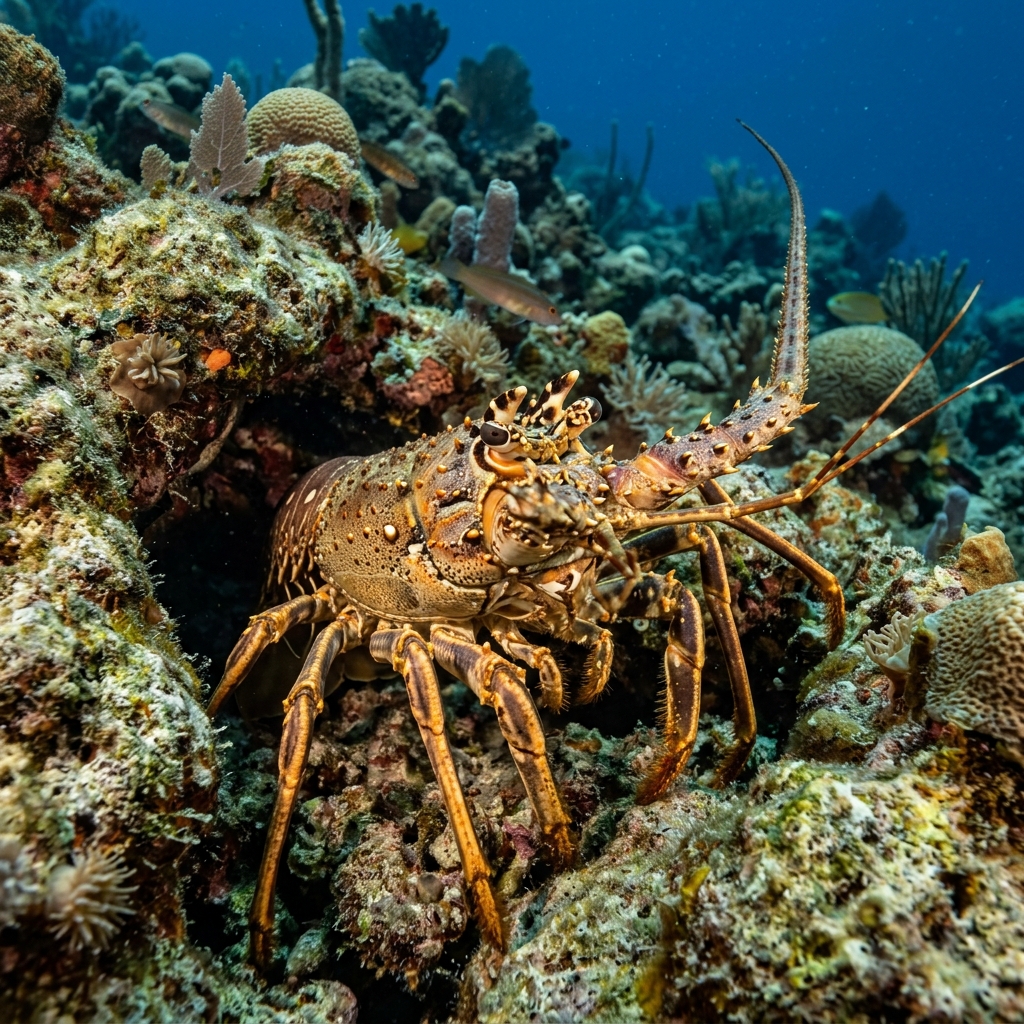
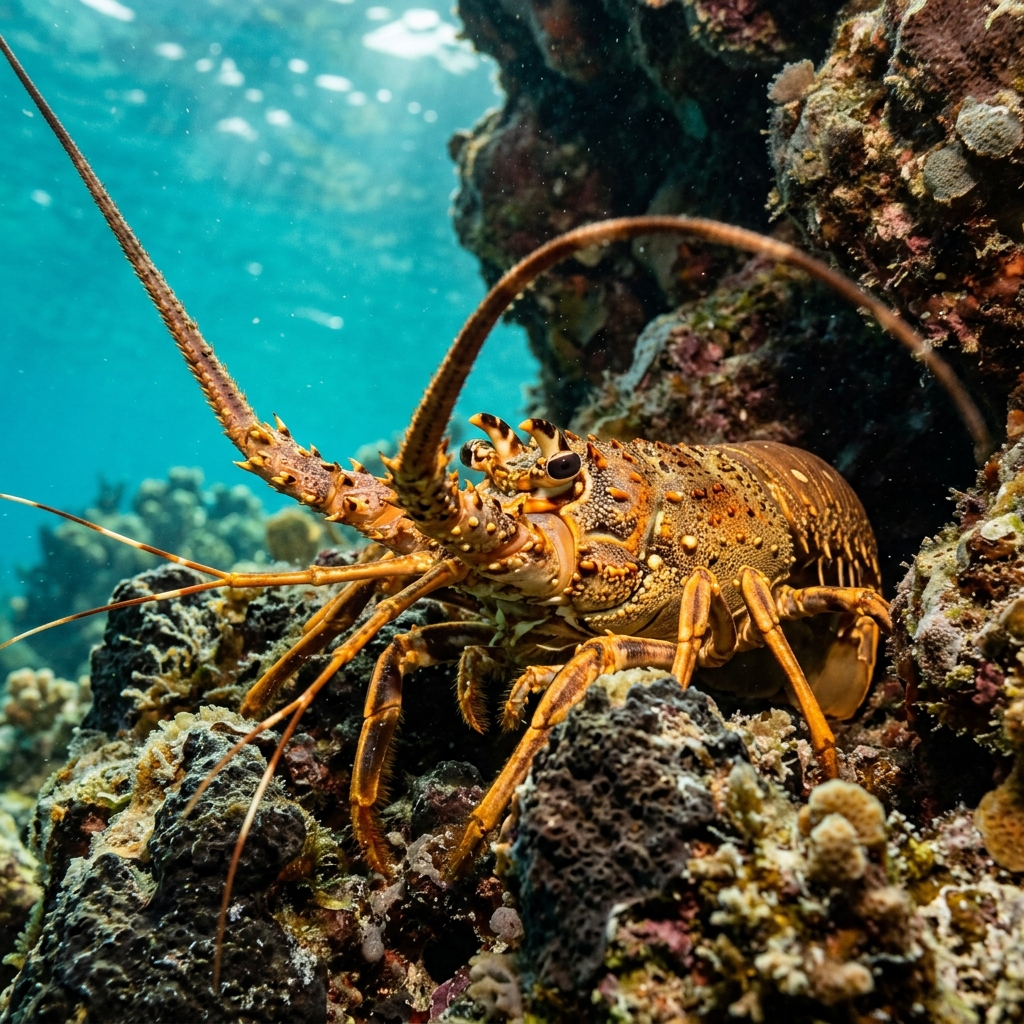
Reef neighbours a diver could mistake it for. Use the identification notes above to tell them apart.
Most reliably logged at Lighthouse Reef in Belize, with strong showings around Grand Cayman in the Cayman Islands and the Leeward Coast of Bonaire. Bermuda turns up sightings too, though less often, and at nearly every site where it's found divers rate it uncommon to rare, so finding one takes a proper look under ledges rather than a swim-by.
Mapping where Spanish Slipper Lobster is logged…
Lighthouse Reef in Belize is the most consistent spot, with Grand Cayman in the Cayman Islands and Bonaire's Leeward Coast also producing regular sightings. It's been logged in Bermuda as well, though less frequently.
There's no strong season in the data, and warm water year-round on these Caribbean reefs keeps it active in every month. Night dives are your best bet since it forages after dark and hides by day.
Look for a flattened, shield-shaped shell in mottled brown and tan tucked under a ledge, with no long antennae, just broad flap-like plates on the head. It grows to about 21 cm and usually shows only its rear half from a crevice.
They typically reach around 21 cm in length, making them a mid-sized reef crustacean, noticeably flatter and broader than a spiny lobster of the same length.
It has no claws, so it uses the flattened underside of its body to pin down and crush small snails and clams instead of grabbing them. This unusual feeding method is one of the clearest ways to tell it apart from other lobsters.
Site and sighting data is aggregated from diver logs, iNaturalist and GBIF. For taxonomy and conservation status:
Caribbean Spiny Lobster
2,209 sites