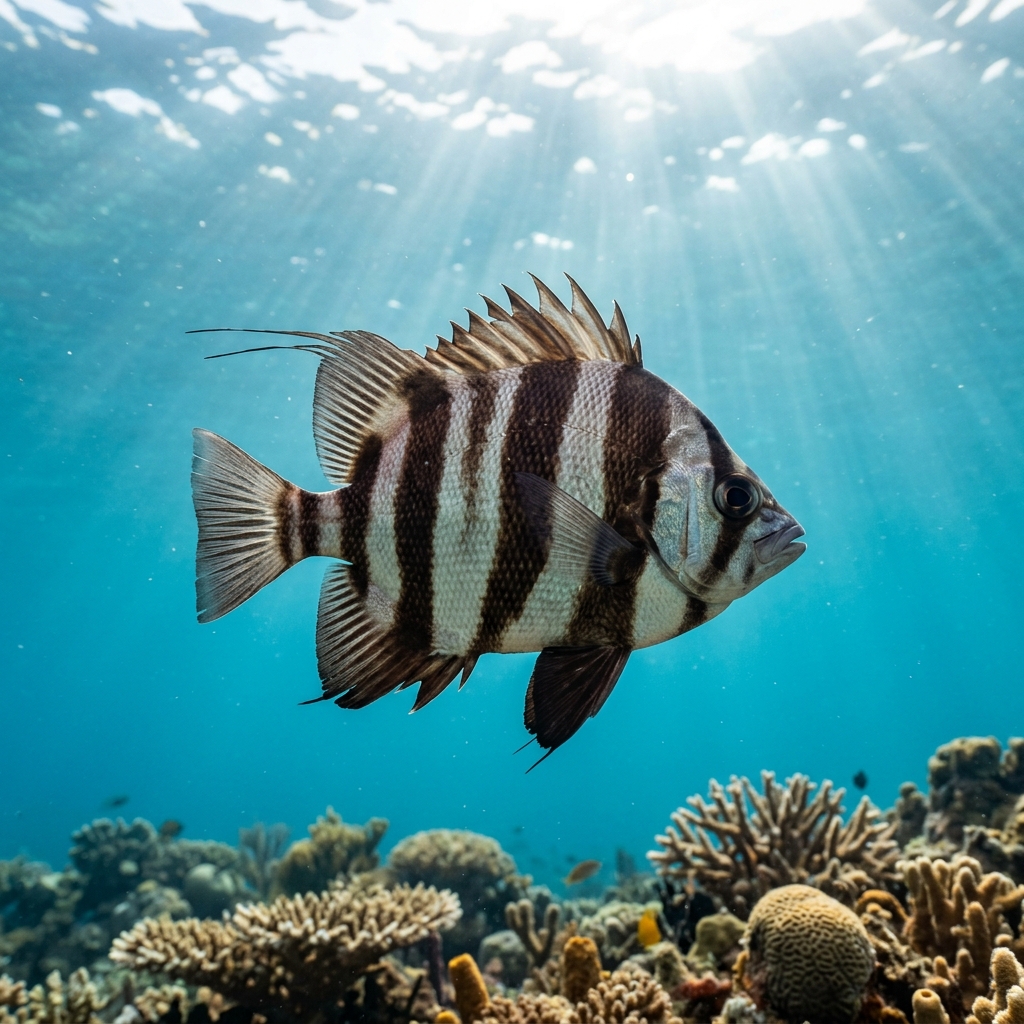
Umbrina ronchus
Grey-brown reef fish logged mostly in Gran Canaria and Lanzarote, uncommon year-round in 13.7-25.8C water. Here's where to find it.
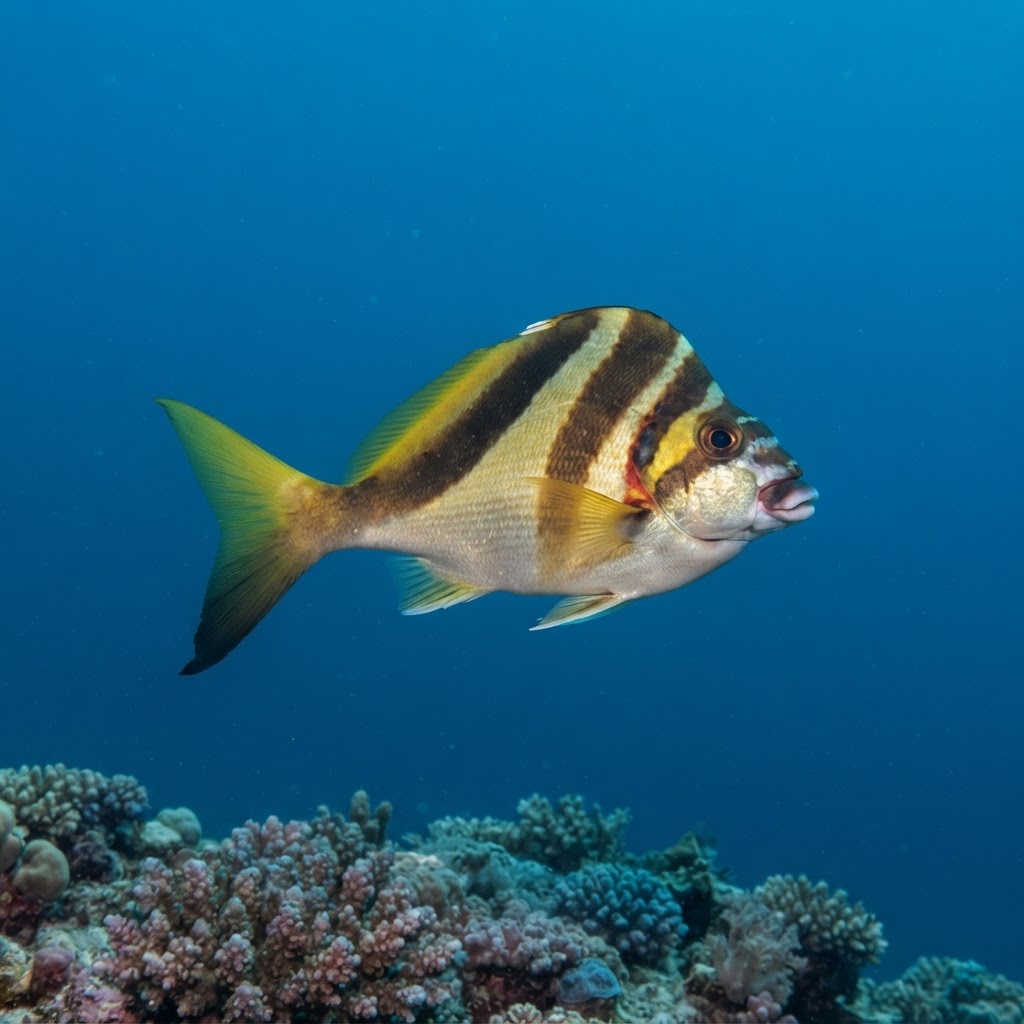
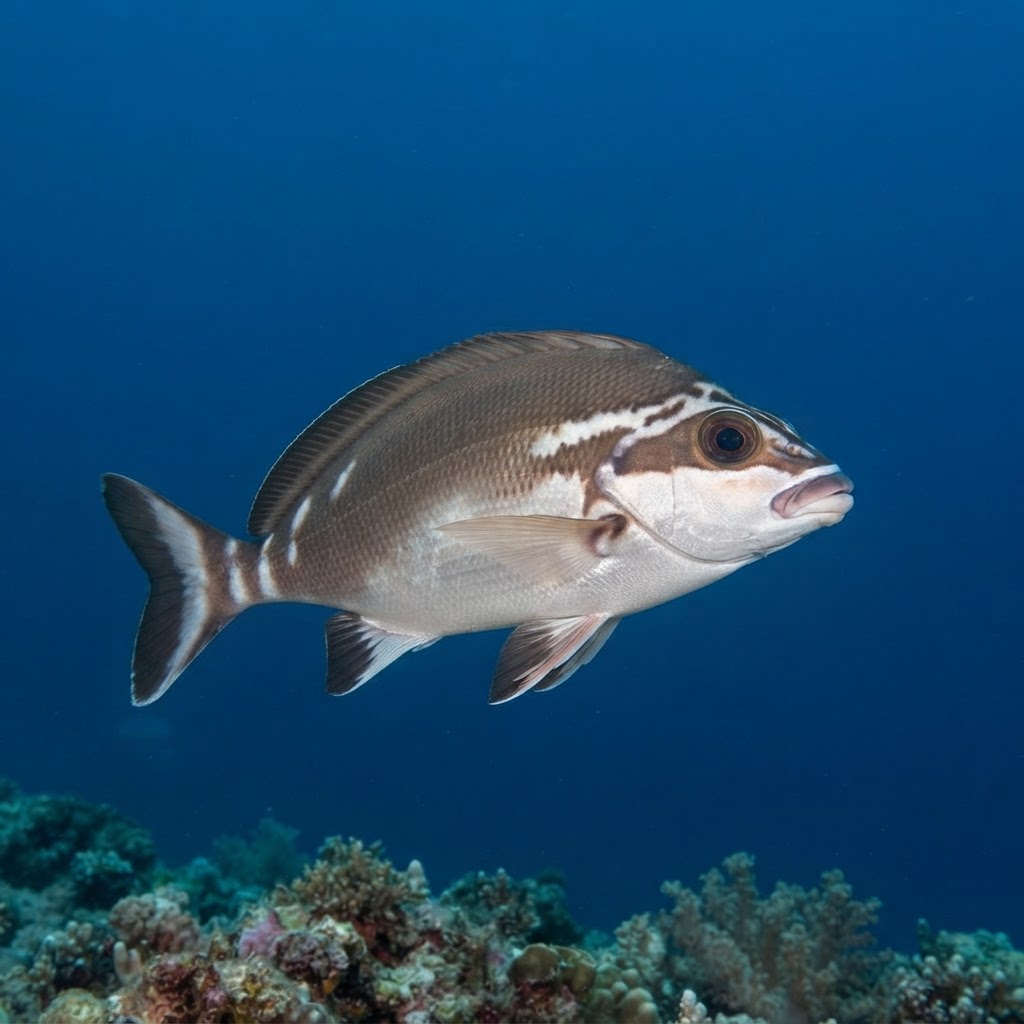
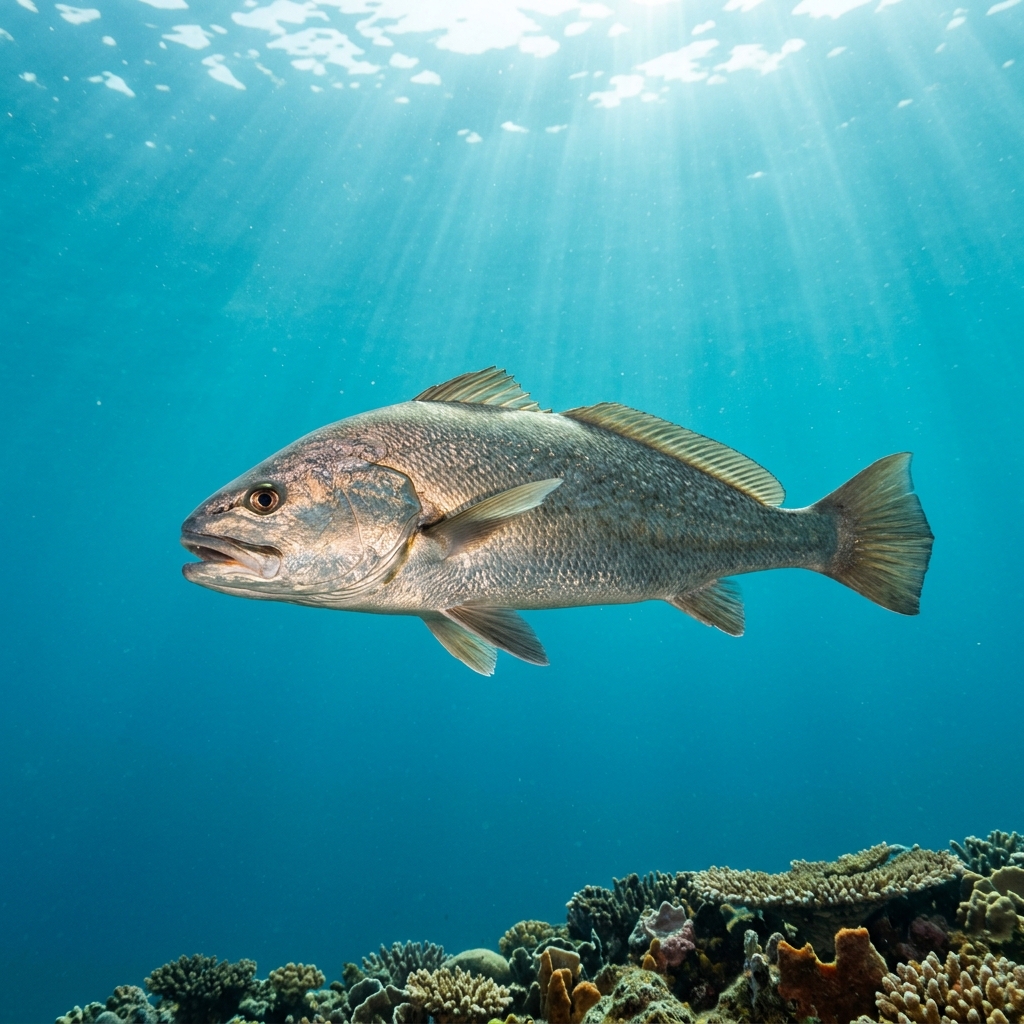
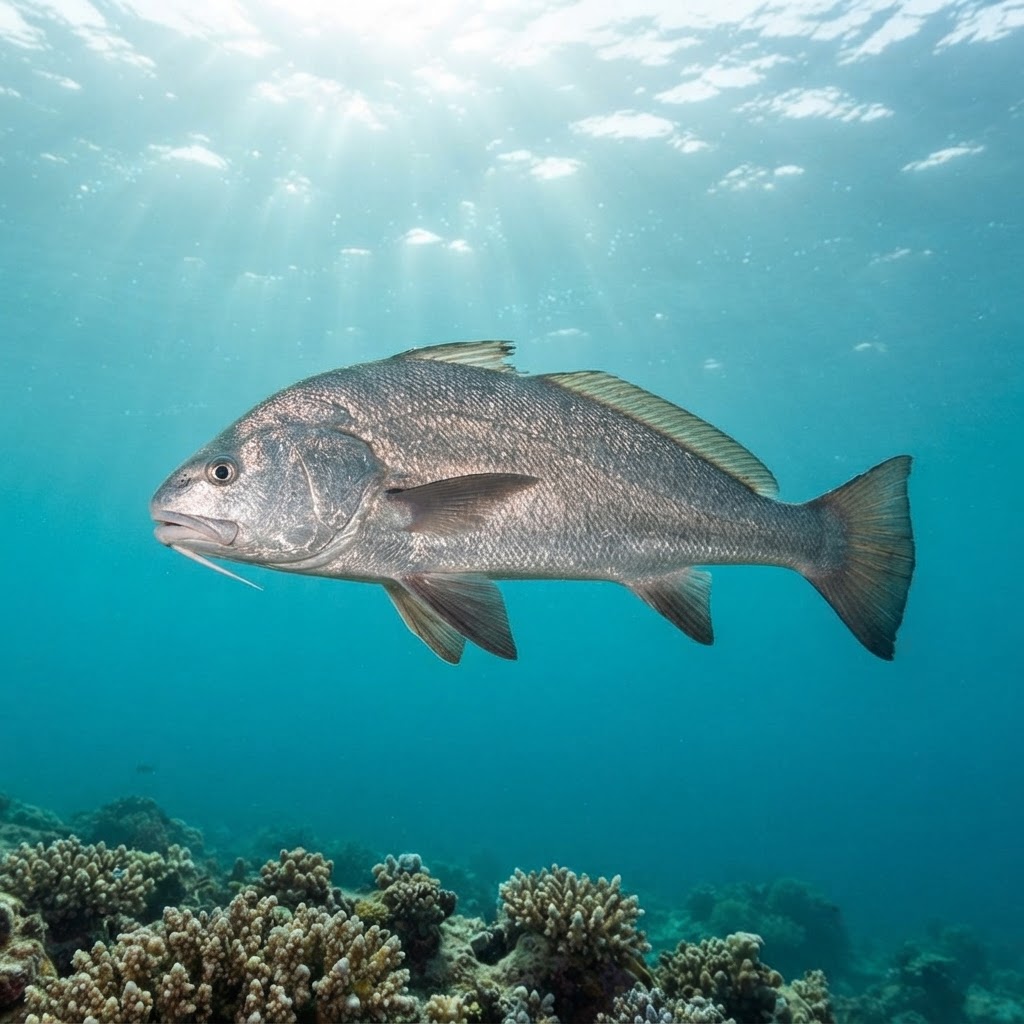
Grows to around 70cm, with an elongated, slightly compressed grey-brown body that tapers to a forked tail. Look for a slightly downturned mouth typical of croakers, a single chin barbel (whisker-like sensory organ), and faint dusky mottling along the flank rather than bold bars or spots. It tends to sit low over reef and rocky substrate, so its muted colouring reads as camouflage more than a standout pattern.
Divers typically find it hovering or resting close to rocky reef structure rather than out in open water, often near ledges or crevices where its mottled body blends into the background. It's logged as uncommon rather than rare, so it's not a guaranteed sighting, but it doesn't appear to be especially shy when encountered at these sites. Look for it during normal daytime reef dives rather than expecting a specific nocturnal or crepuscular pattern.
That chin barbel isn't decorative, croakers and their relatives use it to detect prey buried in sand and rubble, which is why you'll often see this species working close to the substrate rather than mid-water.
No clear seasonal peak shows up in the sighting data, so treat it as a year-round species. Its recorded temperature range of 13.7 to 25.8C spans winter and summer conditions in both the Canaries and South Africa, which fits a fish that doesn't need to migrate with warmth.
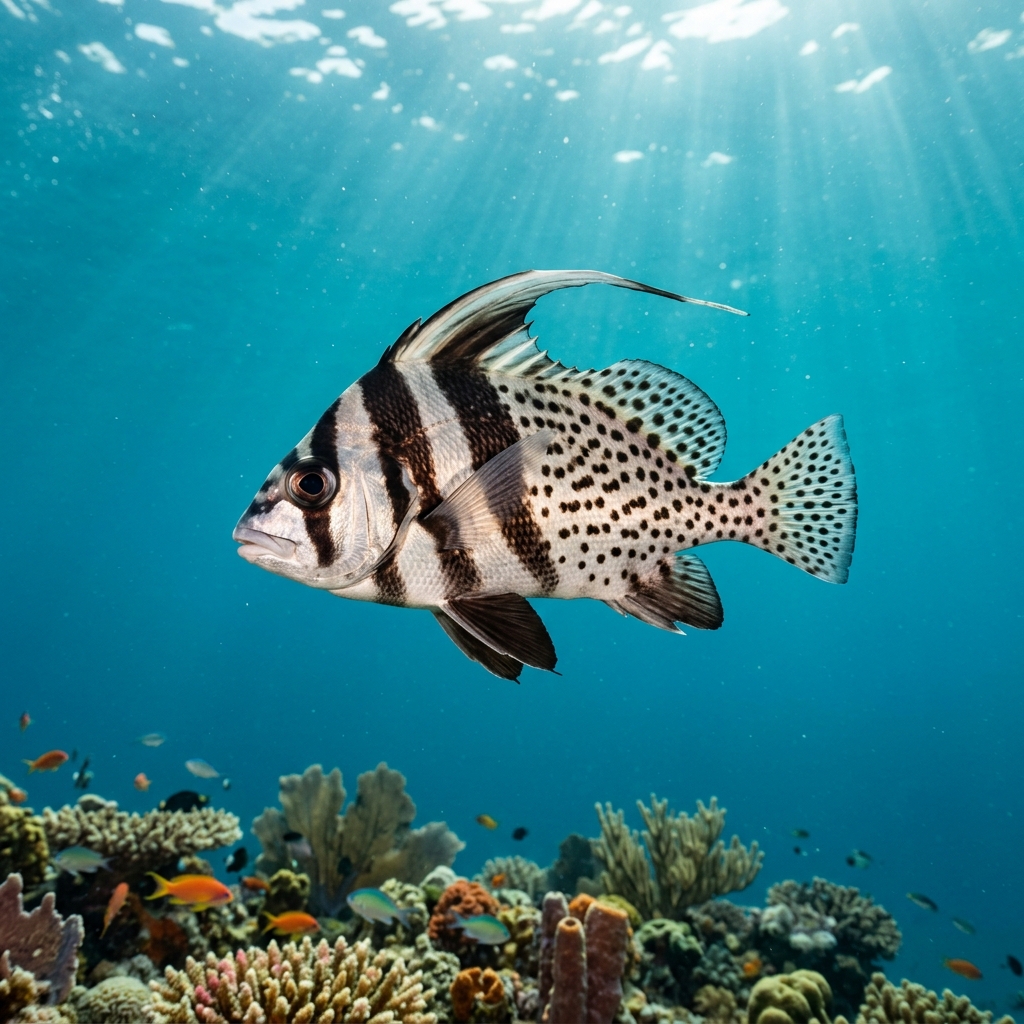
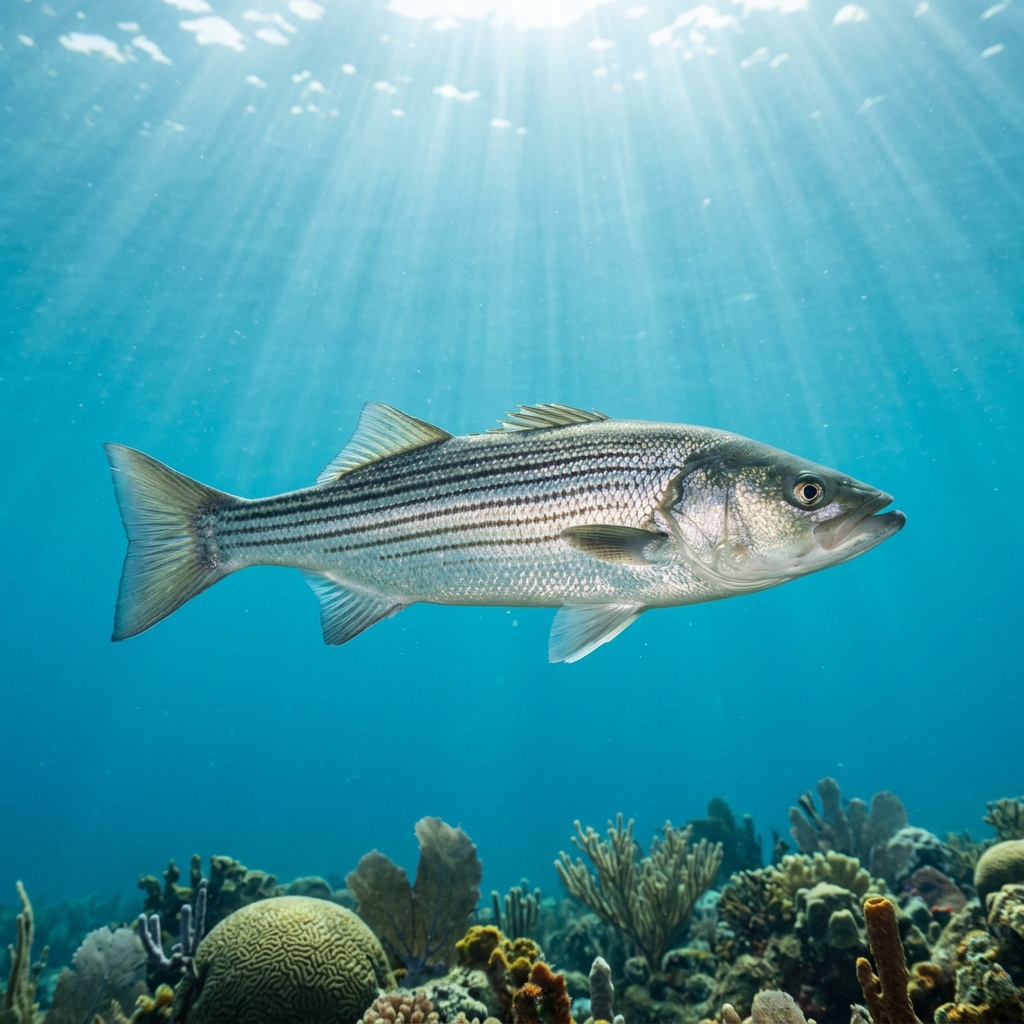
Reef neighbours a diver could mistake it for. Use the identification notes above to tell them apart.
Most reliably logged around the Canary Islands, with Gran Canaria and Lanzarote the strongest spots for it, and a smaller but consistent presence in South Africa's Western Cape and KwaZulu-Natal. Divers should treat any Canary Islands rocky reef dive as a reasonable chance, with South African sites a secondary option.
Mapping where Slender Tasselfish is logged…
The strongest sightings come from the Canary Islands, especially Gran Canaria and Lanzarote. South Africa's Western Cape and KwaZulu-Natal also produce sightings, though less frequently.
There's no detected seasonal pattern, so it's considered a year-round sighting. It has been recorded across a wide temperature range from 13.7 to 25.8C, so cooler and warmer months both work.
Look for an elongated grey-brown body up to 70cm, a downturned mouth with a single chin barbel, and faint mottled patterning rather than bold markings. It's usually seen resting near rocky reef structure rather than swimming in open water.
They typically reach around 70cm in length, giving them a noticeably elongated profile compared to smaller reef fish sharing the same habitat.
No, they pose no known danger to divers and are simply worth a calm, observant look if you spot one near the reef.
It's a sensory organ used to detect prey hidden in sand or rubble, a trait shared with other croakers and drums in the sciaenidae family.
Site and sighting data is aggregated from diver logs, iNaturalist and GBIF. For taxonomy and conservation status:
Meagre
1,159 sites