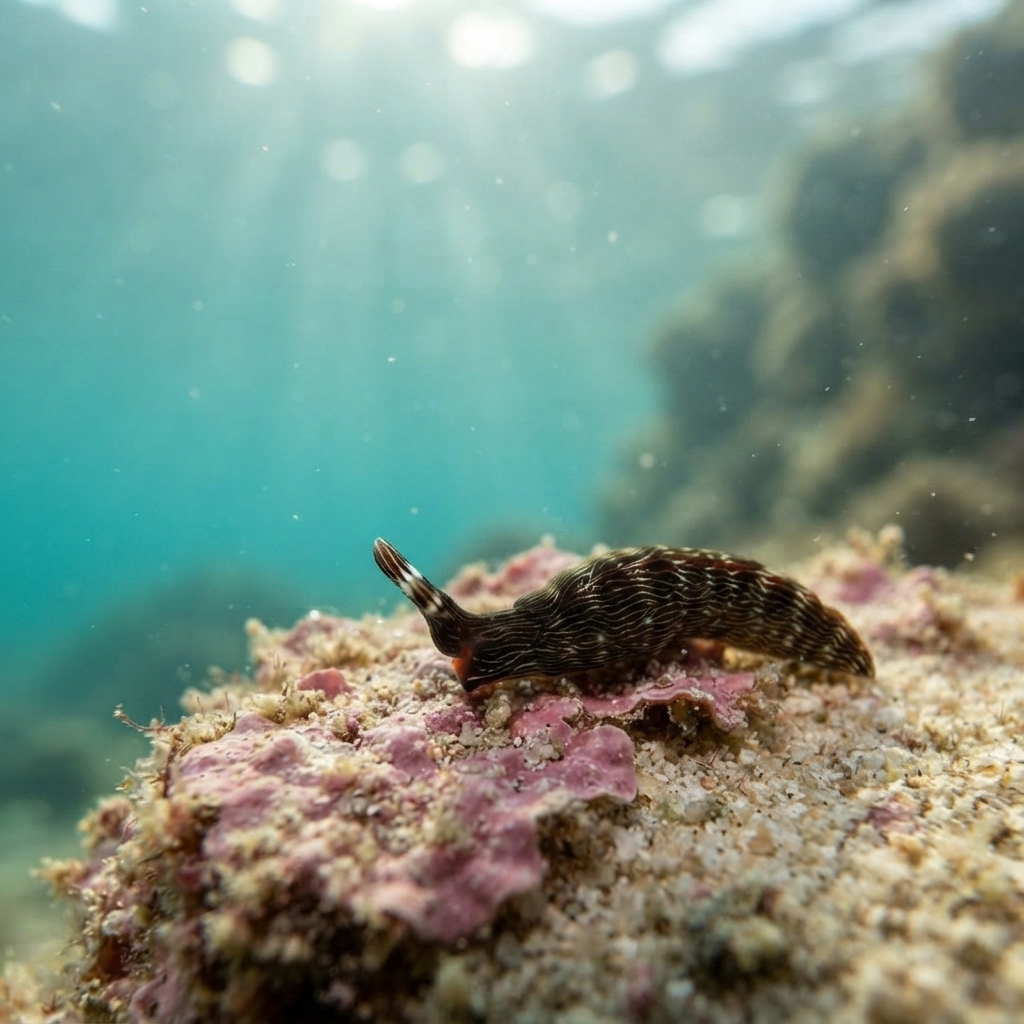
Thuridilla gracilis
A 1cm sea slug logged in Saipan, Malaysia's East Coast and Luzon, easiest to spot in warm 24-30C reef water.
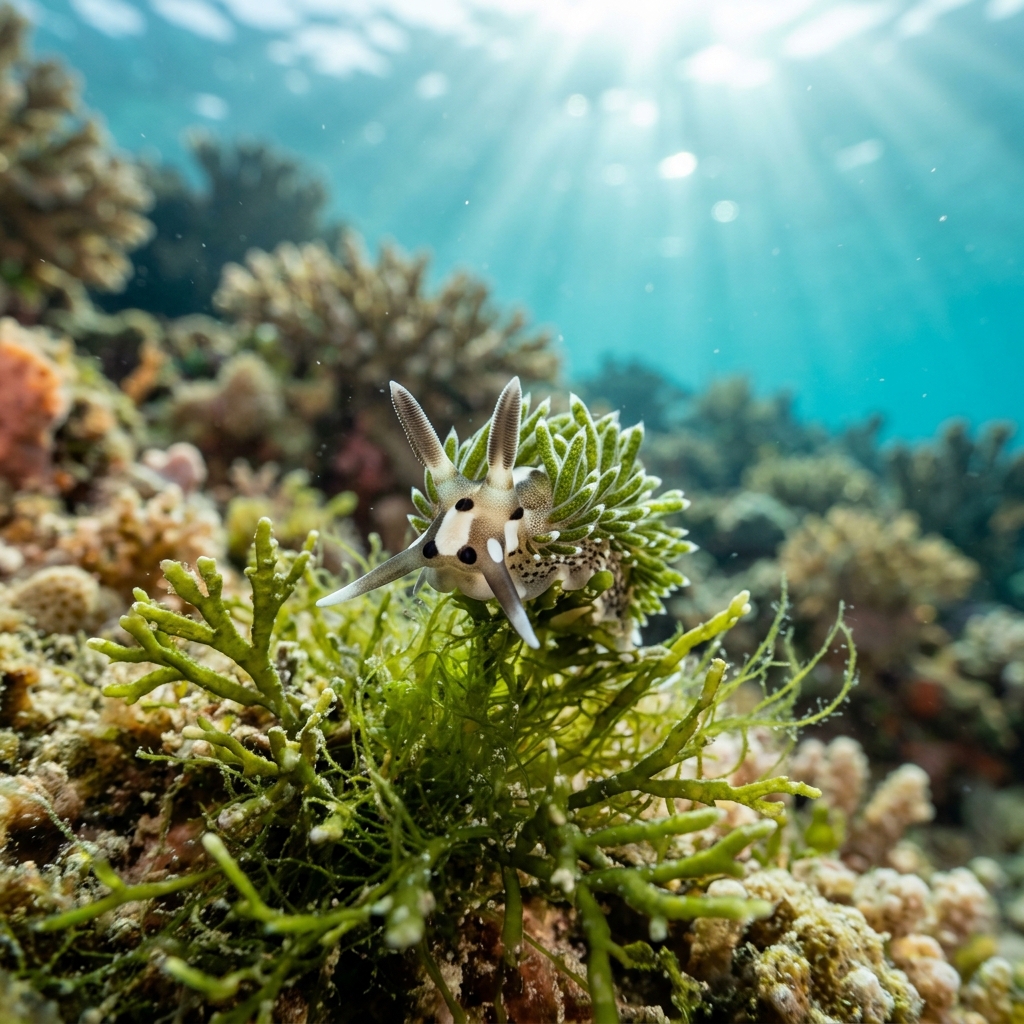
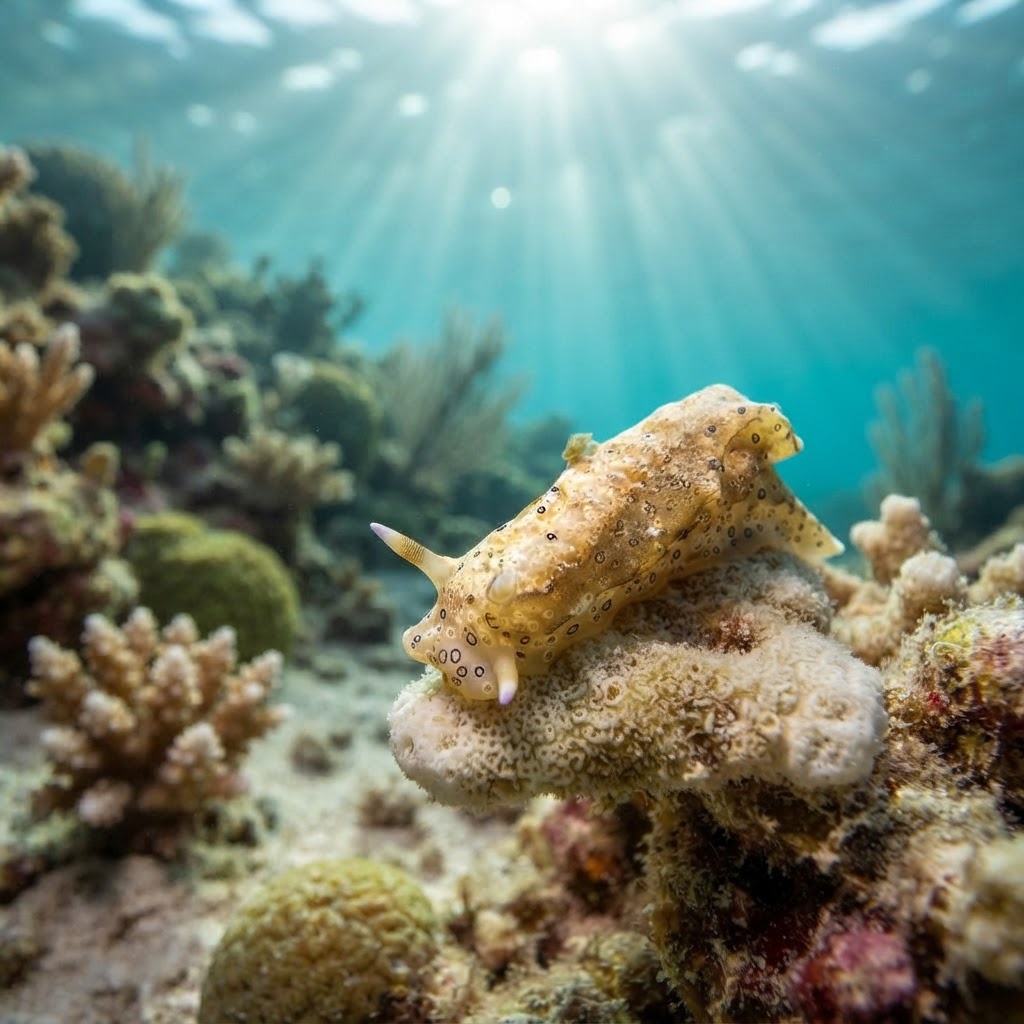
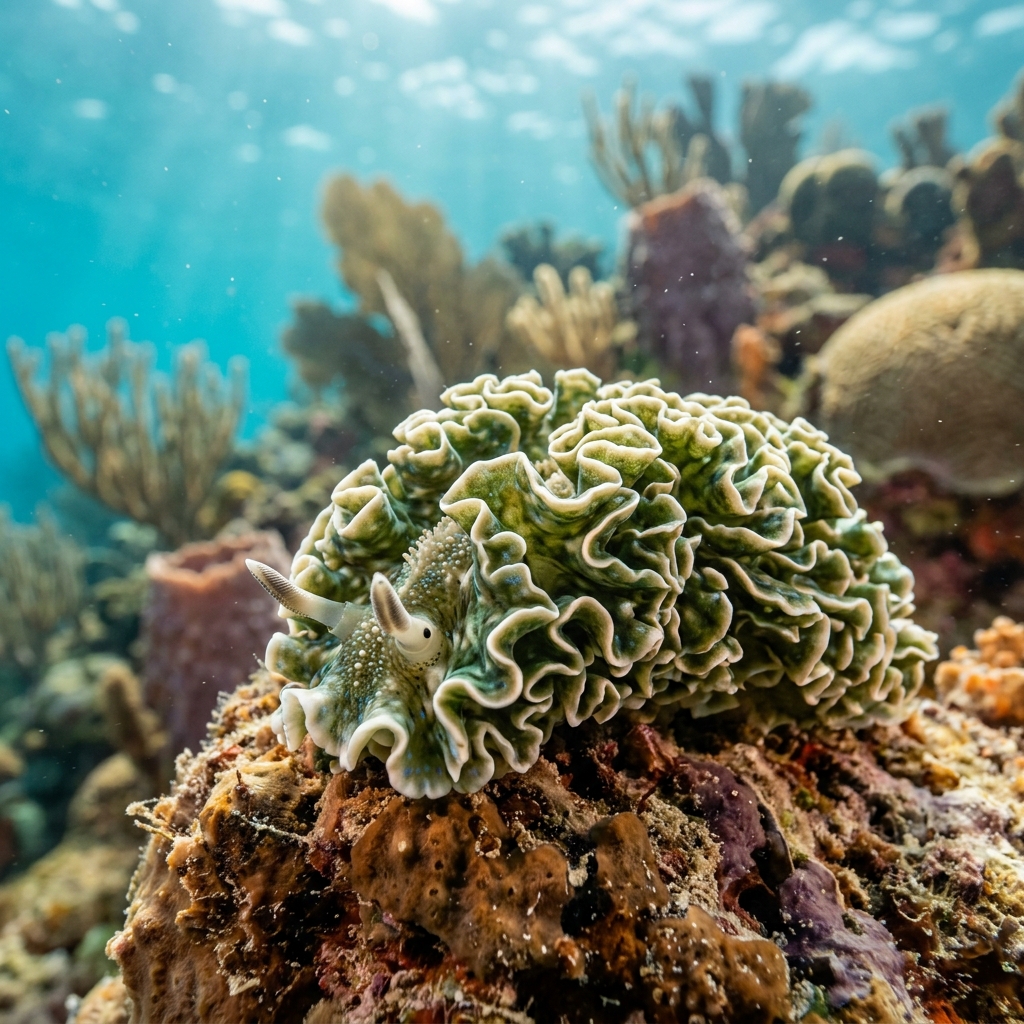
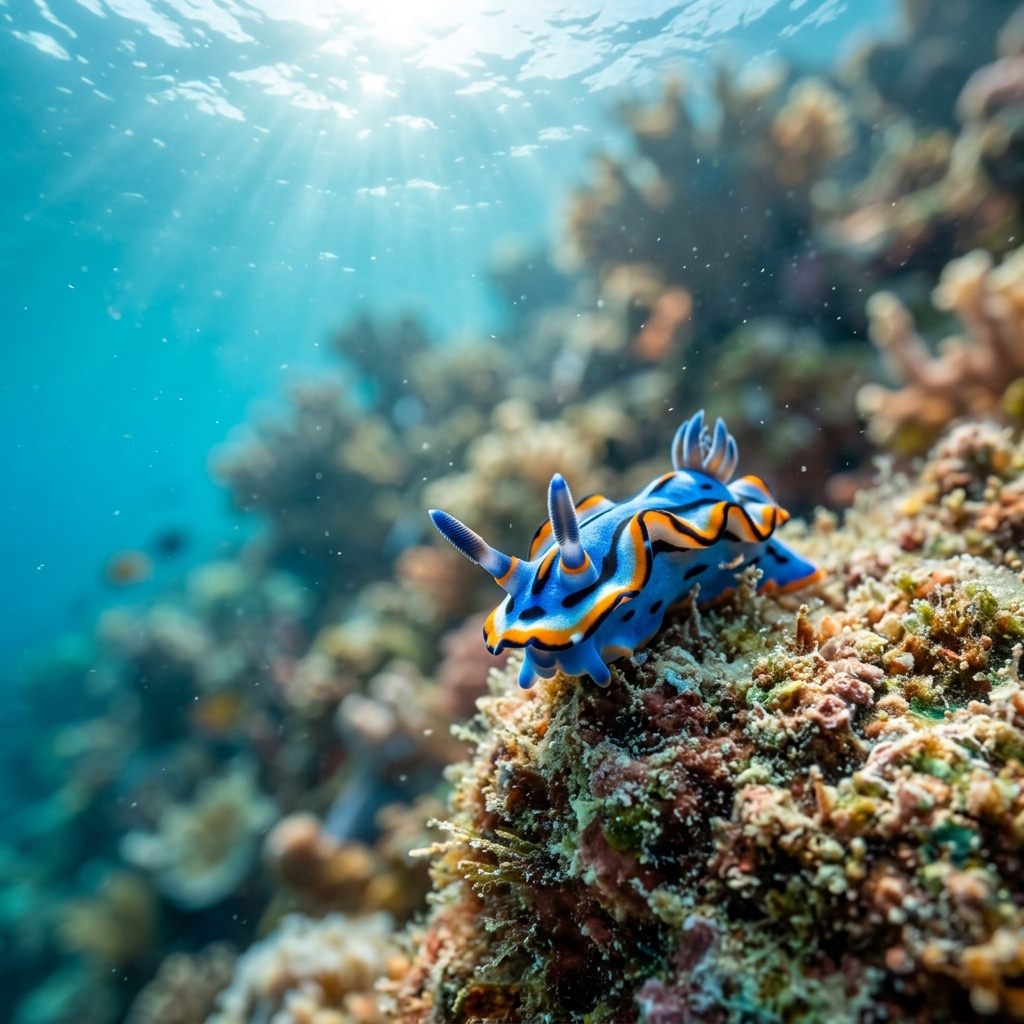
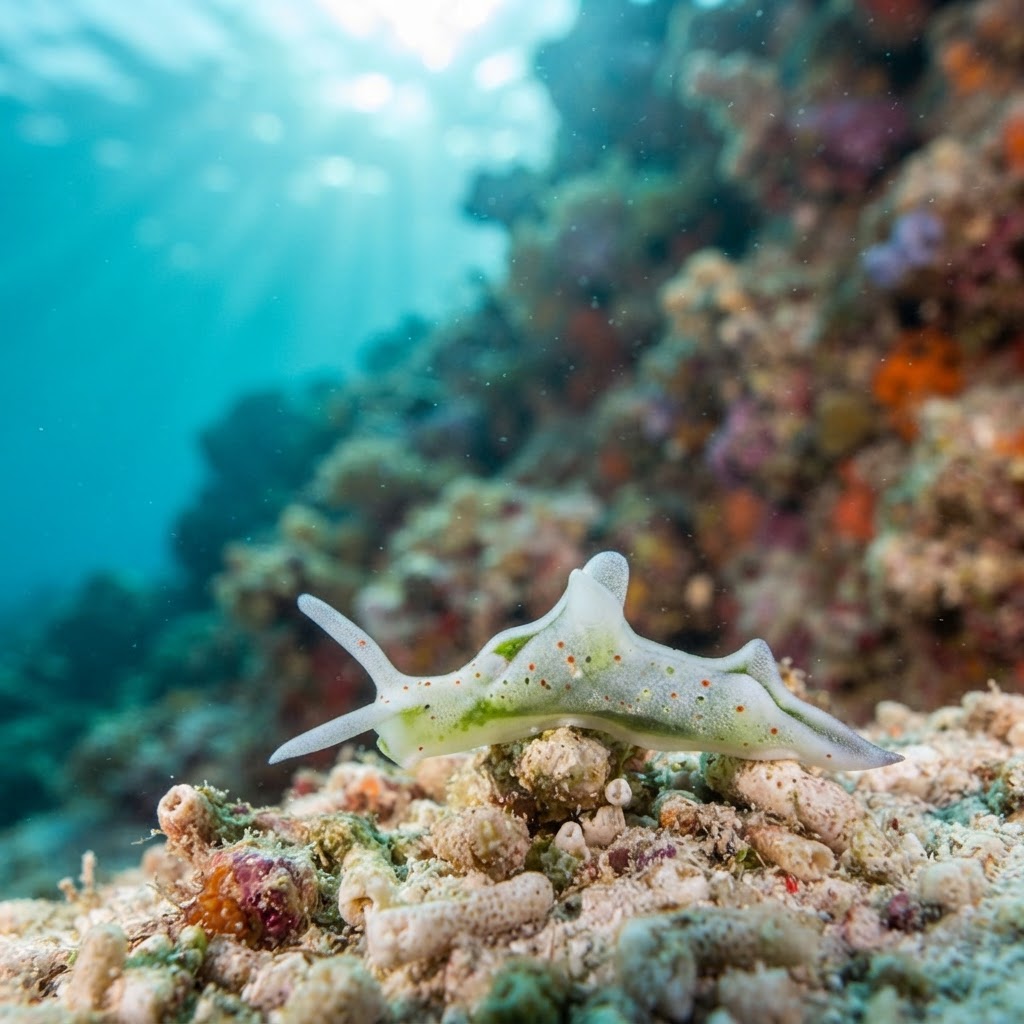
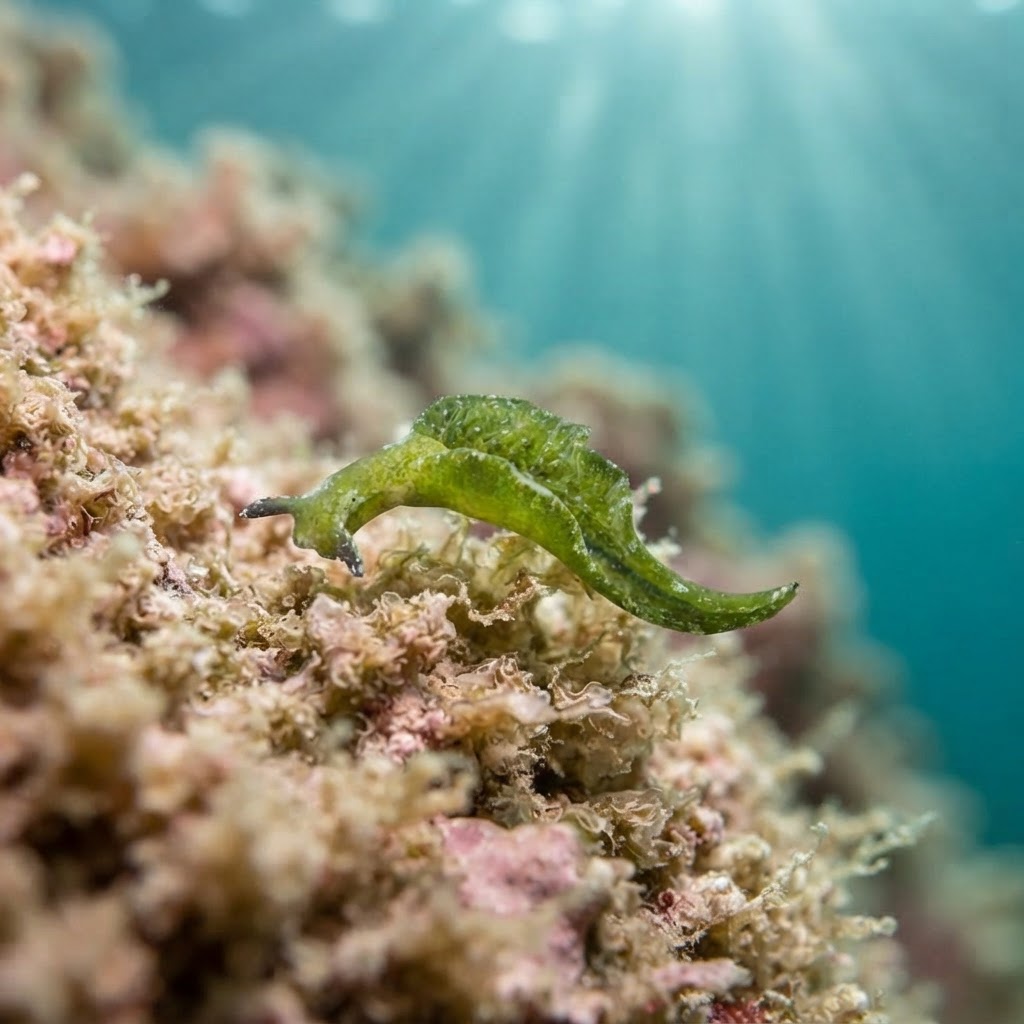
At barely a centimetre long, this is a slender, elongated slug you have to slow down and search for on the reef substrate. Look for a streamlined body with longitudinal stripes running down its length, rather than a rounded or bubble-shaped profile. Its small size and slim shape are the main clues that separate it from the many chunkier or more oval slugs sharing the same reef.
This is a slow-moving grazer, usually found creeping over algae-covered rock or rubble rather than out in open water. It shows little reaction to divers, which is helpful given how easily it is overlooked, and a slow careful scan of likely substrate is the best way to find one. Most sightings come from divers deliberately hunting small stuff on a macro-focused dive rather than spotting it in passing.
Like other sacoglossan slugs, it feeds on algae and can retain functioning chloroplasts from its food in its tissue, giving it a degree of solar-powered nutrition alongside grazing.
Comfortable across a 24 to 30C range, so it turns up year-round on tropical reefs without a clear seasonal pulse in the data. Plan around good visibility and calm conditions for close-focus searching rather than around a particular month.
Reef neighbours a diver could mistake it for. Use the identification notes above to tell them apart.
Saipan in the Northern Mariana Islands is the strongest area for this species, with several sites logging it, making it the most reliable base for a search. Peninsular Malaysia's East Coast and Luzon in the Philippines both offer a realistic chance as well, though sightings at any single site tend to be uncommon to rare.
Mapping where Slender Sap Sucking Slug is logged…
Saipan in the Northern Mariana Islands has the most logged sightings, with additional records from Peninsular Malaysia's East Coast and Luzon in the Philippines.
There is no strong season in the data. It tolerates water from about 24 to 30C, so it is present on tropical reefs throughout the year.
Look for a slim, elongated body only about a centimetre long with longitudinal stripes, found crawling slowly over algae-covered substrate rather than swimming.
They stay tiny, typically around 1cm long, so they are best found with a slow, close search of the reef surface rather than a casual glance.
As a sacoglossan slug it can incorporate chloroplasts from the algae it eats into its own tissue, letting it draw some nutrition from light in addition to grazing.
Site and sighting data is aggregated from diver logs, iNaturalist and GBIF. For taxonomy and conservation status:
Elysia Timida
573 sites