Cephalopholis sexmaculata
Deep red with pale blue spots, this small grouper turns up in reef crevices from Palau's Rock Islands to the South Sinai in the Red Sea.
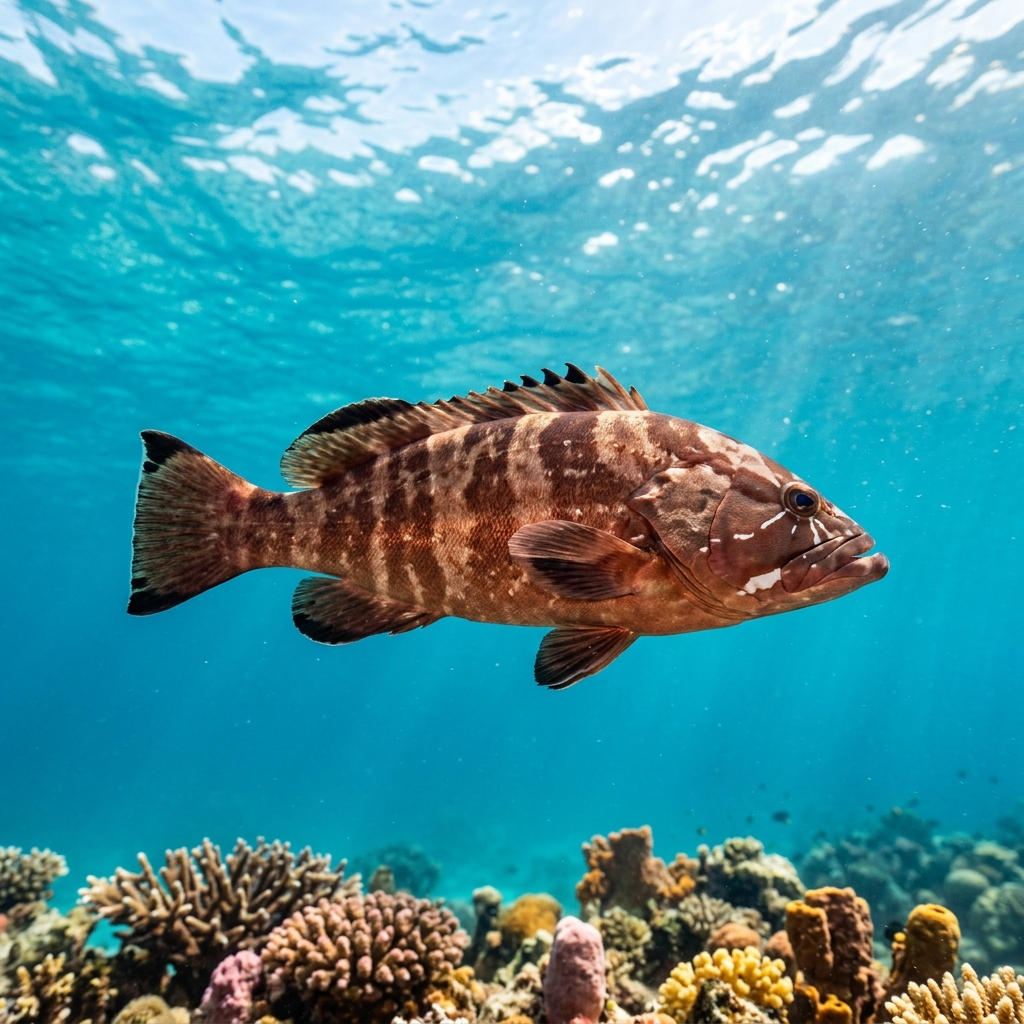
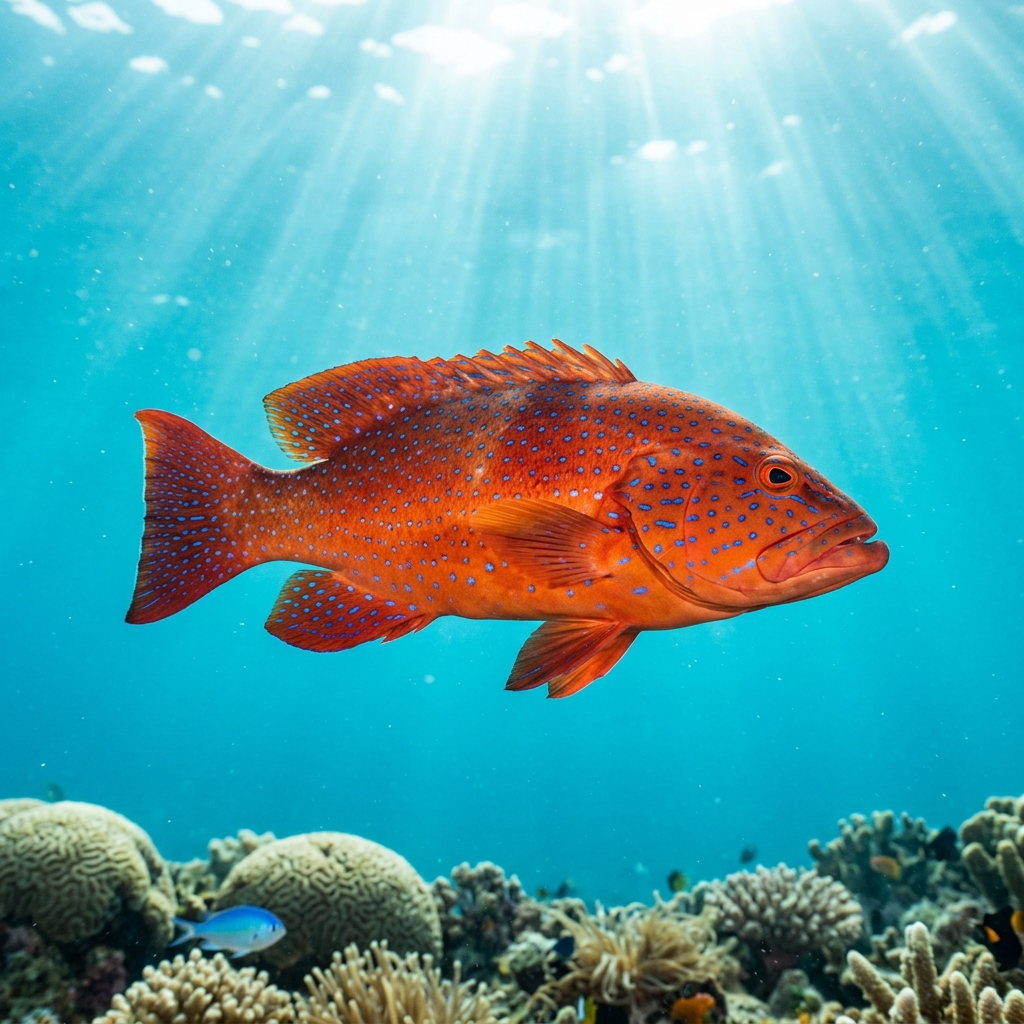
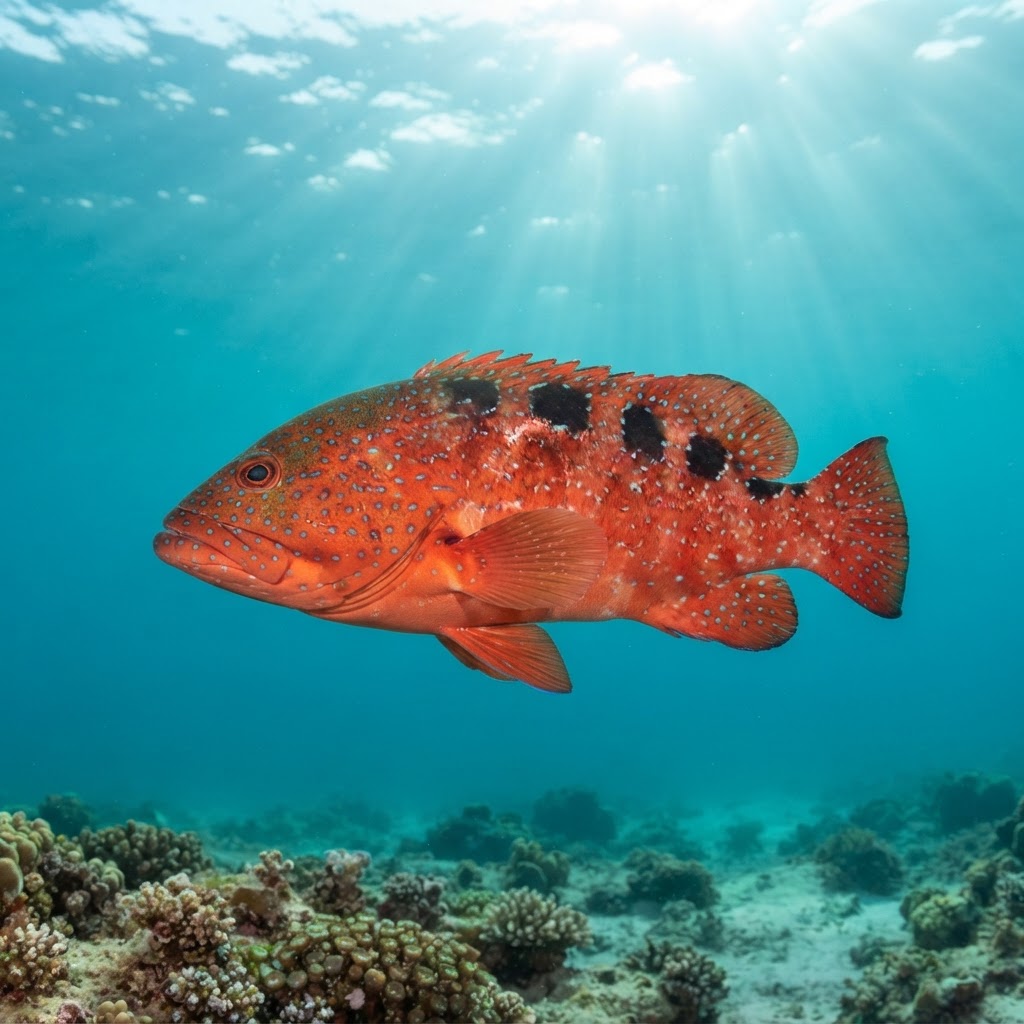
A compact, deep-bodied grouper around 35 cm, easy to pick out by its rich red to orange body scattered with small pale blue spots that run head to tail. Look for a rounded tail edge and the way it perches on or near a ledge rather than swimming in open water. The blue spotting is denser and more uniform than on most similarly sized reef groupers, which is the main giveaway at a glance.
Divers typically find it tucked into a crevice or hovering close to an overhang rather than out over open reef, often holding still enough to get a good look before it slips back into cover. It's logged as uncommon everywhere it appears, so a sighting tends to be a case of checking ledges and small caves carefully rather than expecting one to swim past. Like other small groupers it seems to hold a fairly fixed home patch on the reef.
Groupers in this genus are protogynous hermaphrodites, meaning individuals start life as females and some later change into males, a trait shared across most Cephalopholis species.
No clear seasonal pattern shows up in the data, and its comfort range of roughly 24 to 28.5 C matches tropical reefs year-round, so any month is a fair bet at these sites.
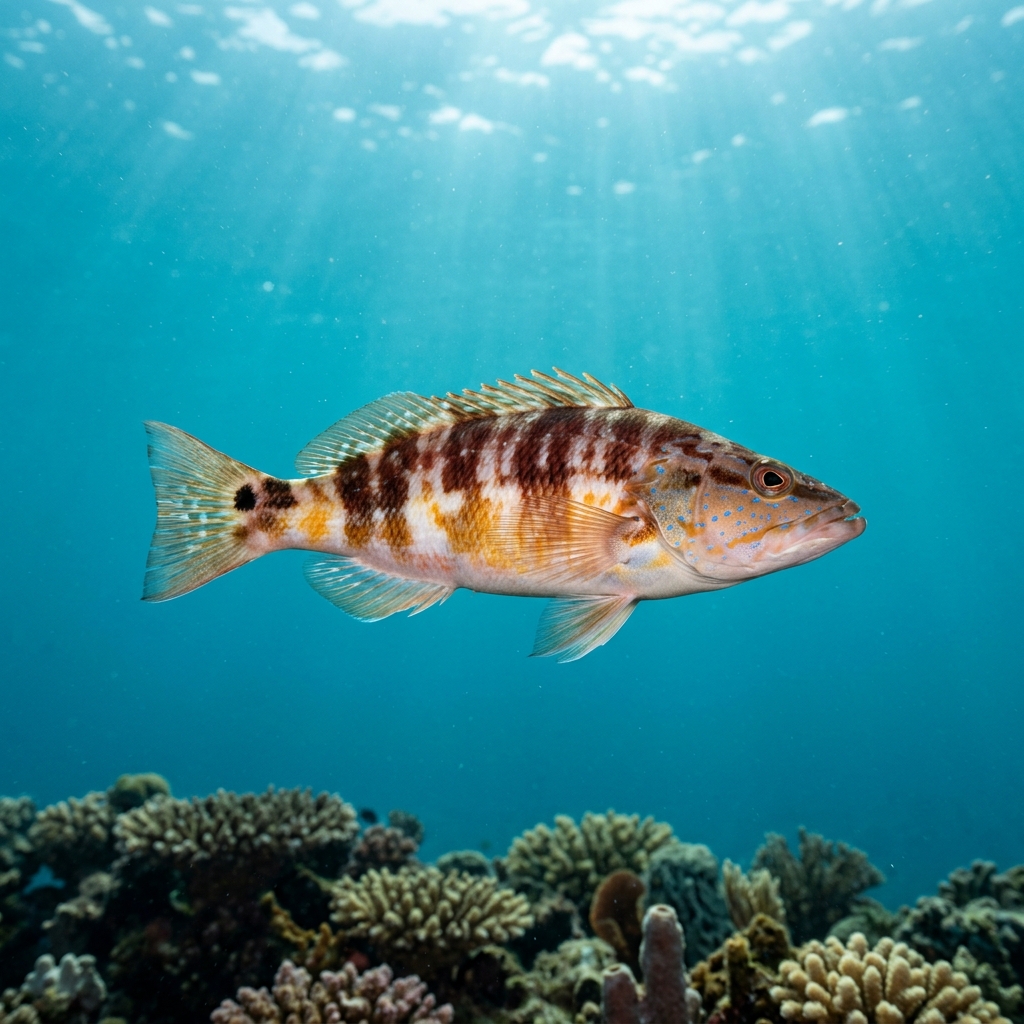
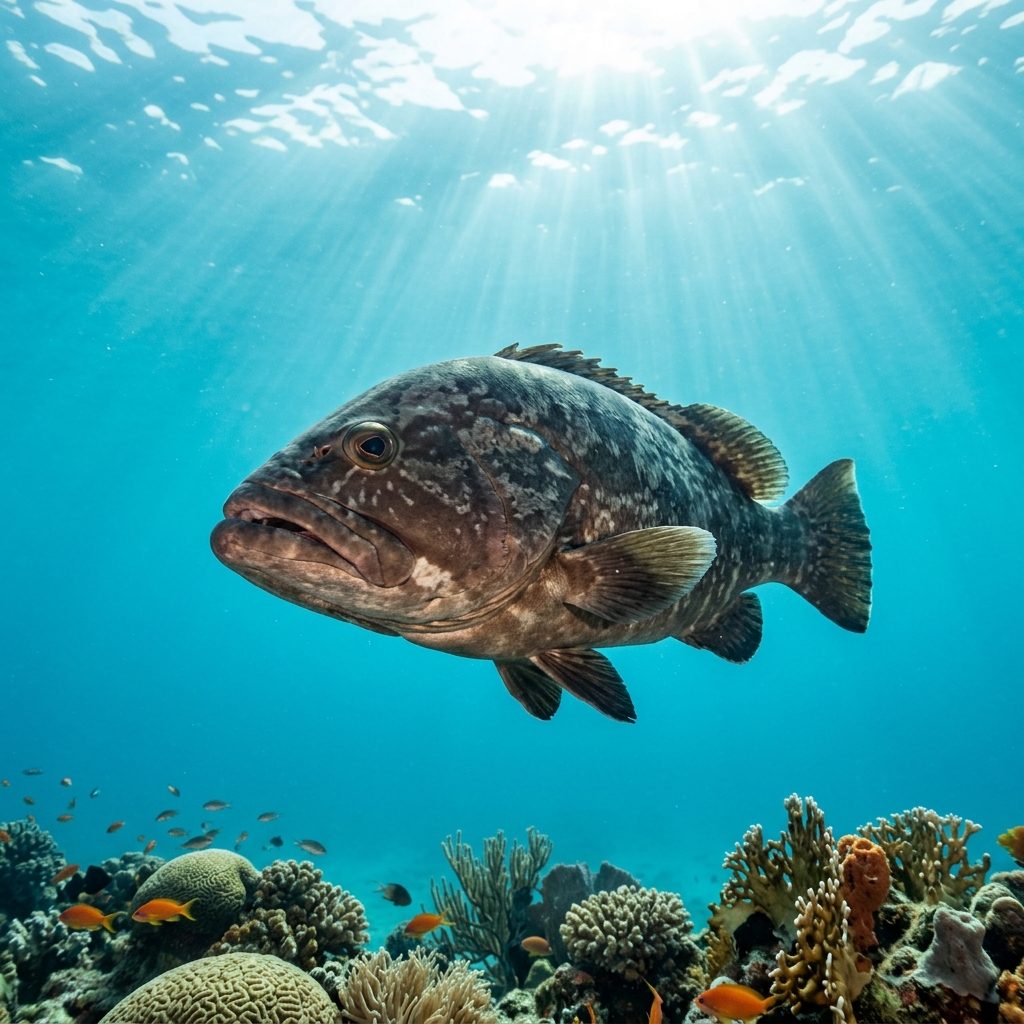
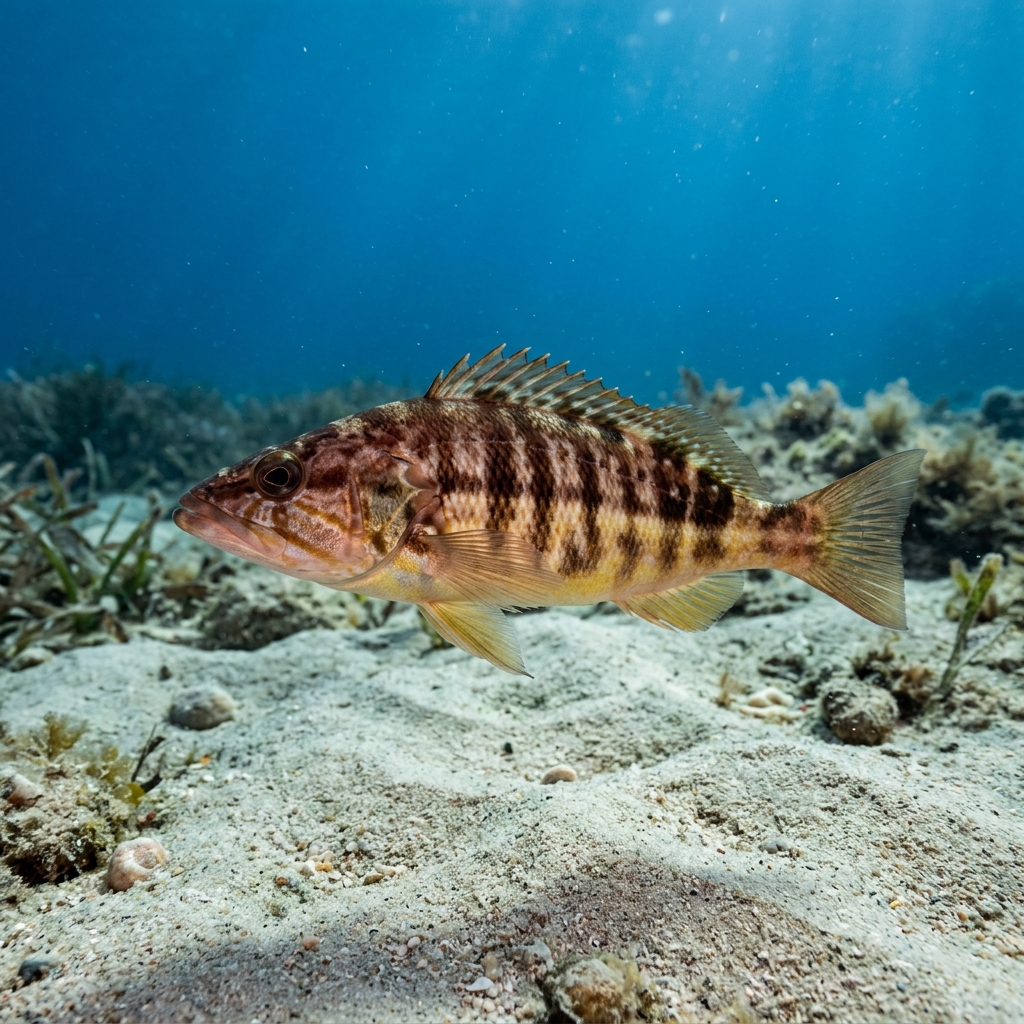
Reef neighbours a diver could mistake it for. Use the identification notes above to tell them apart.
Most reliably logged in Palau's Rock Islands and Egypt's South Sinai, with further sightings around Marsa Alam in the Egyptian Red Sea. Indonesia turns up a fair share too, particularly Raja Ampat and Sulawesi, and it's also been recorded in Milne Bay in Papua New Guinea, the Visayas in the Philippines, Saipan, and the Red Sea coast of Saudi Arabia.
Mapping where Sixspot Grouper is logged…
Best chances are in Palau's Rock Islands and Egypt's South Sinai, with additional sightings in Raja Ampat and Sulawesi in Indonesia, Milne Bay in Papua New Guinea, and the Visayas in the Philippines.
There's no strong season in the sighting data, and its preferred water temperature of roughly 24 to 28.5 C holds year-round on these reefs, so it can turn up on any dive at the right sites.
Look for a deep red to orange body covered in small pale blue spots, a compact shape around 35 cm, and a habit of resting near ledges or crevices rather than cruising open water.
They typically reach around 35 cm, making them one of the smaller groupers a diver is likely to encounter on a reef.
No, they pose no threat to divers and will typically retreat into a crevice or ledge rather than approach.
Site and sighting data is aggregated from diver logs, iNaturalist and GBIF. For taxonomy and conservation status:
Blacktip Grouper
2,726 sites