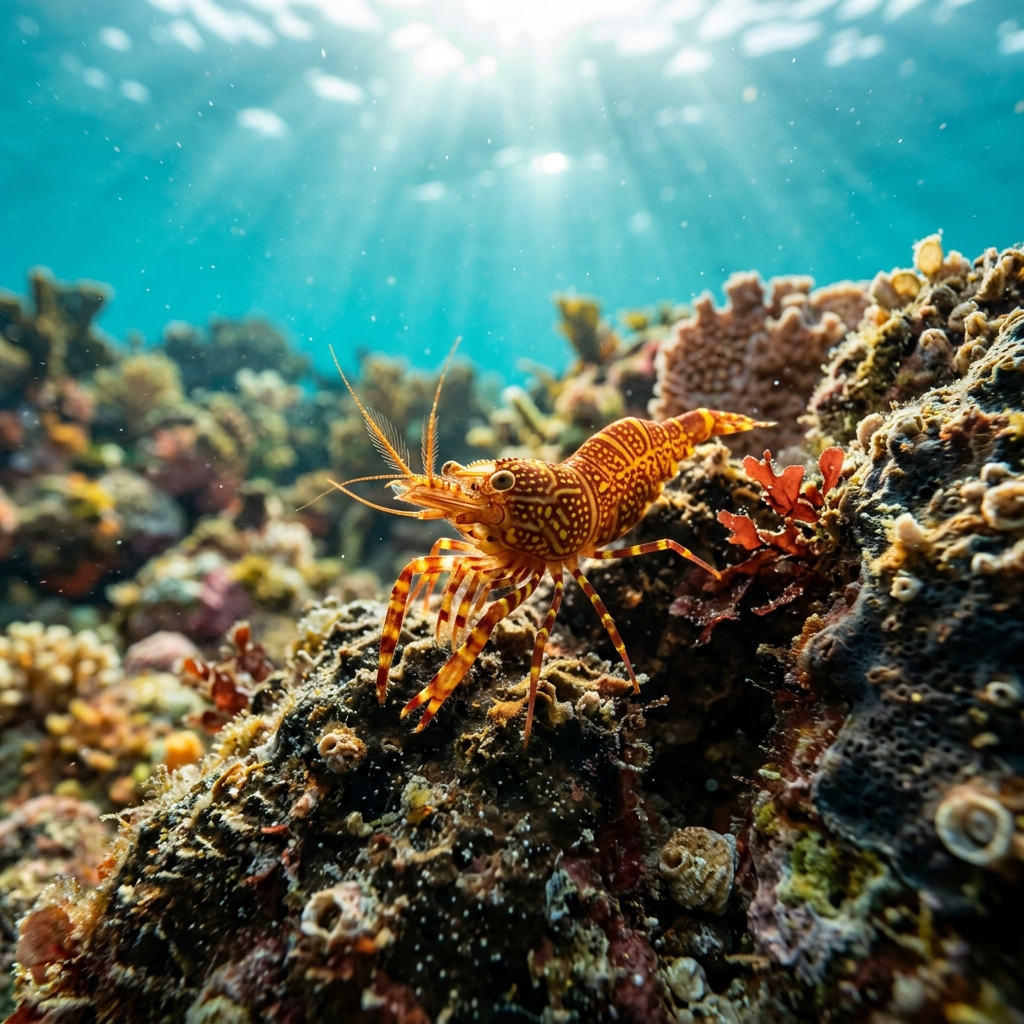
Gnathophyllum elegans
Spot the golden-spotted shrimp across the Canary Islands, French Riviera and Caribbean. Here's how to ID it and what to expect underwater.
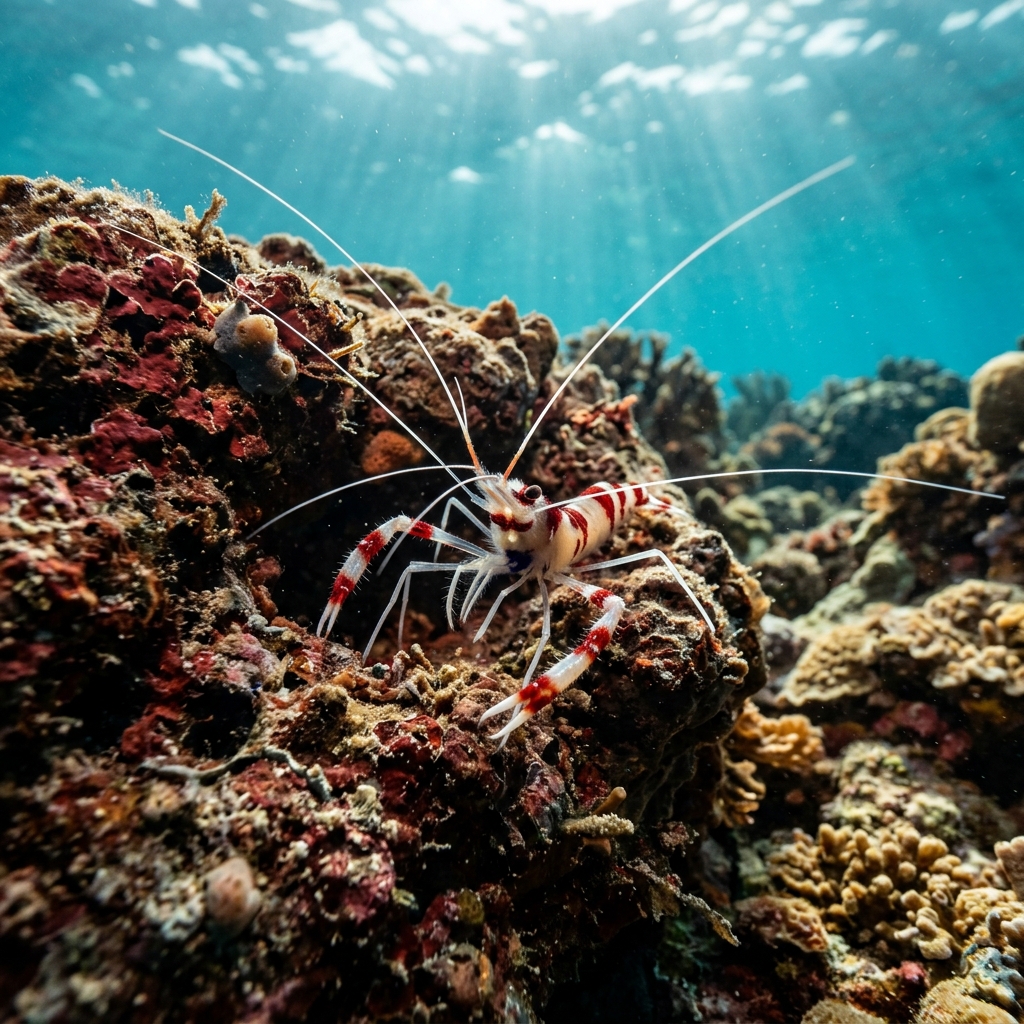
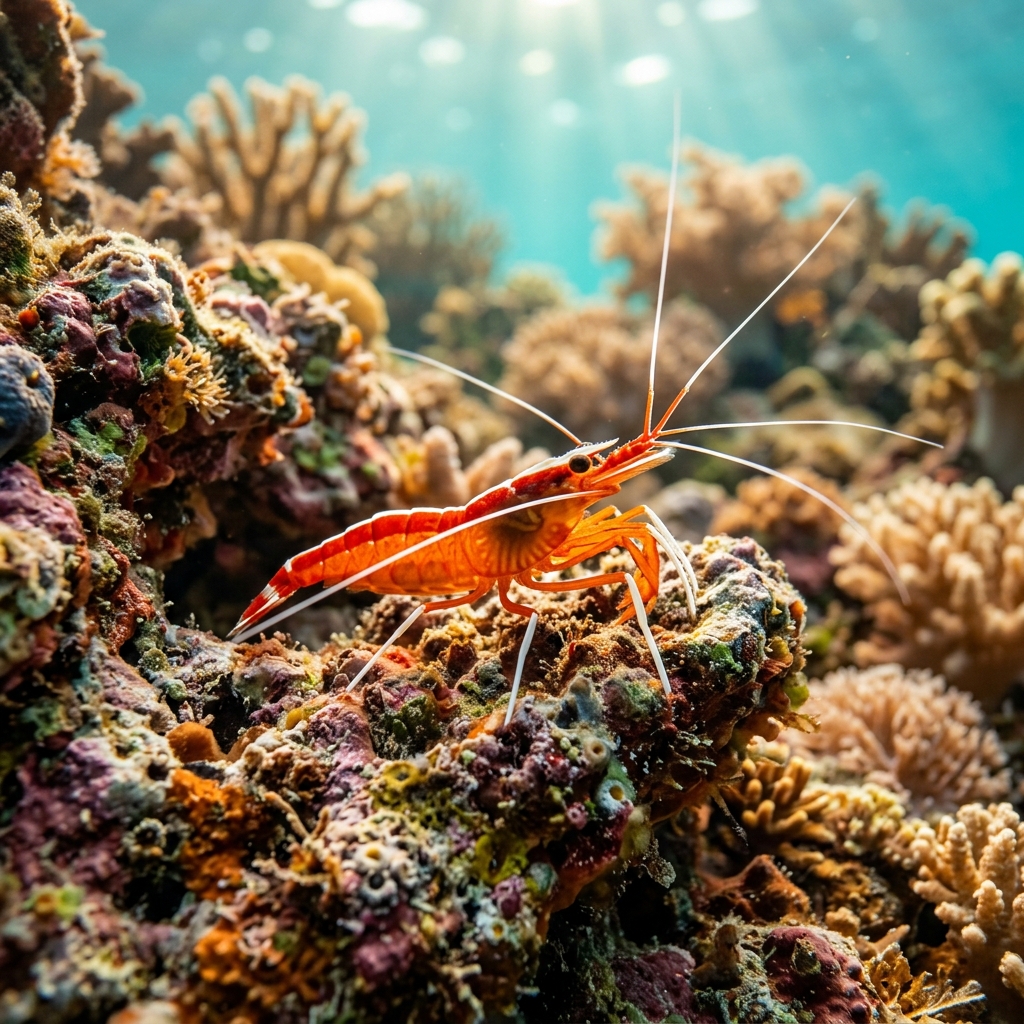
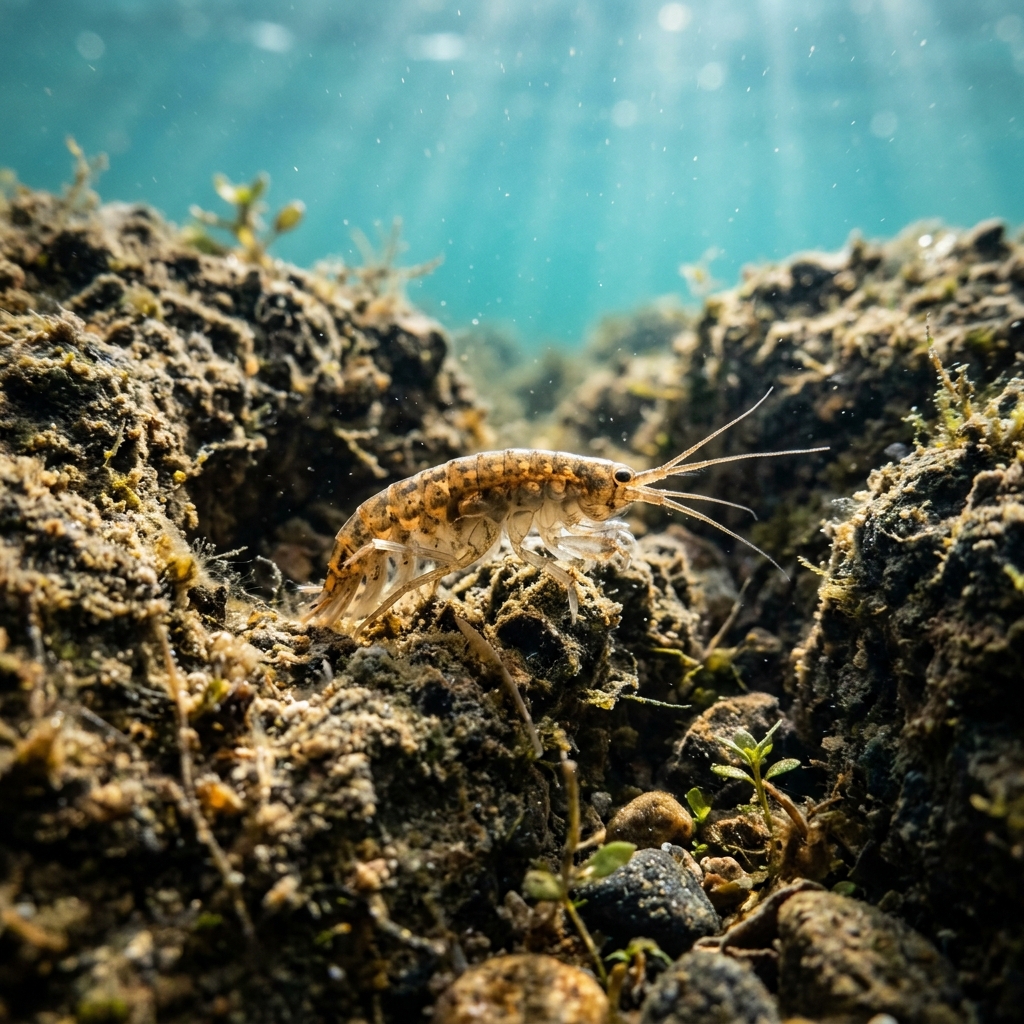
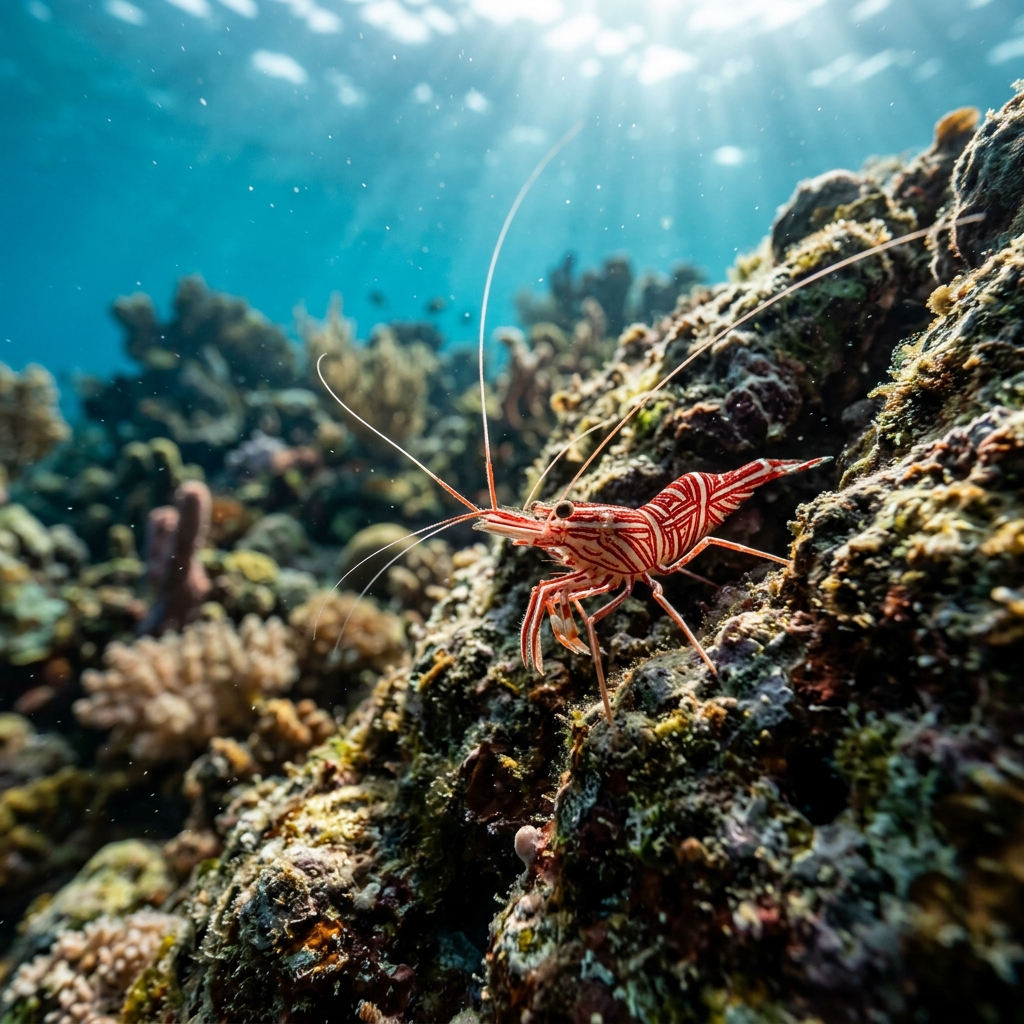
A small shrimp with a strikingly dark, almost black or deep blue-brown body scattered with vivid golden-yellow and white spots, making it look almost jewelled against the reef. The spots are irregular and bold enough to catch the eye even on a cursory glance. It tends to press itself tightly against rocky or coralline surfaces, which is its main camouflage strategy despite the conspicuous colouring.
Divers most often find it pressed motionless against rocky substrate, ledges, or coralline algae, relying on its position and complex body patterning to avoid notice. It tends to be solitary and slow-moving, shuffling only slightly when approached rather than darting away. Night dives and low-light conditions can make searching under ledges and in crevices more productive, as with most small crustaceans.
Gnathophyllum elegans is known to feed on the tube feet and soft tissue of sea urchins, living directly alongside them rather than in open water. Finding a sea urchin on the reef is often the best clue to look closer for one of these shrimp.
No clear seasonal peak emerges from the data, so it is treated as a year-round resident at its known sites. Its observed water-temperature range of roughly 15 to 29 °C reflects the broad thermal spread of Mediterranean and Atlantic reefs where it lives.
Most consistently logged in the Canary Islands, particularly around Lanzarote and Tenerife, and across the French Riviera and Provence, which together account for a large share of recorded sightings. Strong populations are also known from Sicily and Lampedusa in Italy, Grande-Terre in Guadeloupe, and sites throughout Florida. The Cayman Islands and Cape Verde round out the spread, pointing to a wide Atlantic and Mediterranean range.
Mapping where Golden-spotted Shrimp is logged…
They are most reliably logged in the Canary Islands (especially Lanzarote and Tenerife), the French Riviera, Sicily and Lampedusa, Guadeloupe, and Florida. The Cayman Islands and Cape Verde also have recorded sightings, reflecting a broad Atlantic and Mediterranean distribution.
There is no single peak season in the available data, so encounters are possible year-round. Its presence across both tropical Caribbean and cooler Mediterranean sites suggests it tolerates a wide temperature range, roughly 15 to 29 °C.
Look for a small shrimp with a dark body, nearly black or deep brownish-blue, covered in bold golden-yellow and white spots. It sits very still against rocky surfaces and can be easy to overlook until the spots catch the light. No other commonly dived Atlantic or Mediterranean shrimp shares quite this combination of dark base colour and vivid yellow spotting.
Typical size is not well established from diver observations, but this is a small shrimp species, generally a few centimetres in body length. Because of their size and cryptic behaviour, they are easy to miss without a close, slow search of rocky surfaces.
It is specialised to feed on sea urchins, picking at their tube feet and soft exposed tissue. This association means divers searching near sea urchins on a rocky reef have a better chance of spotting one nearby.
Site and sighting data is aggregated from diver logs, iNaturalist and GBIF. For taxonomy and conservation status:
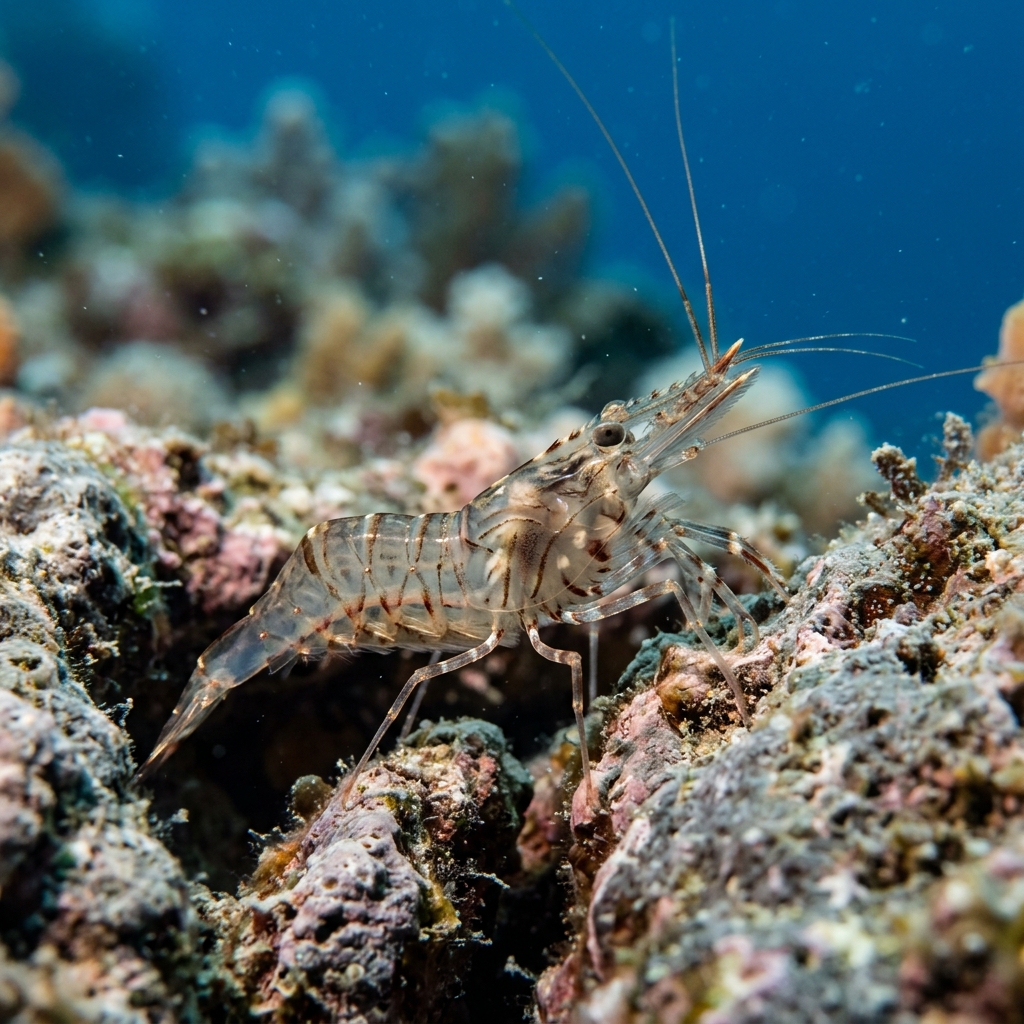
Rockpool Prawn
2,179 sites