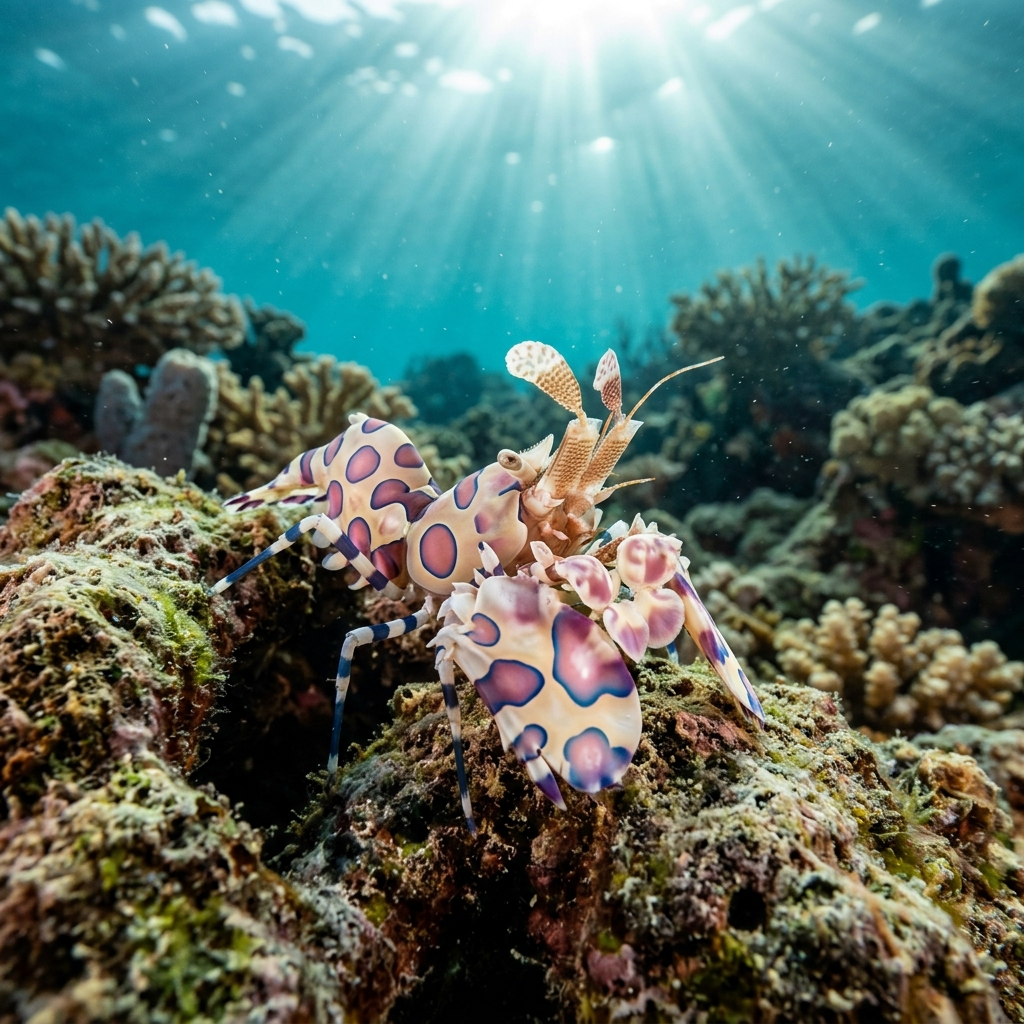
Hymenocera picta
Spot harlequin shrimp in the Maldives, Indonesia and Mozambique. Know what to look for on the reef in 24-29 °C tropical water.
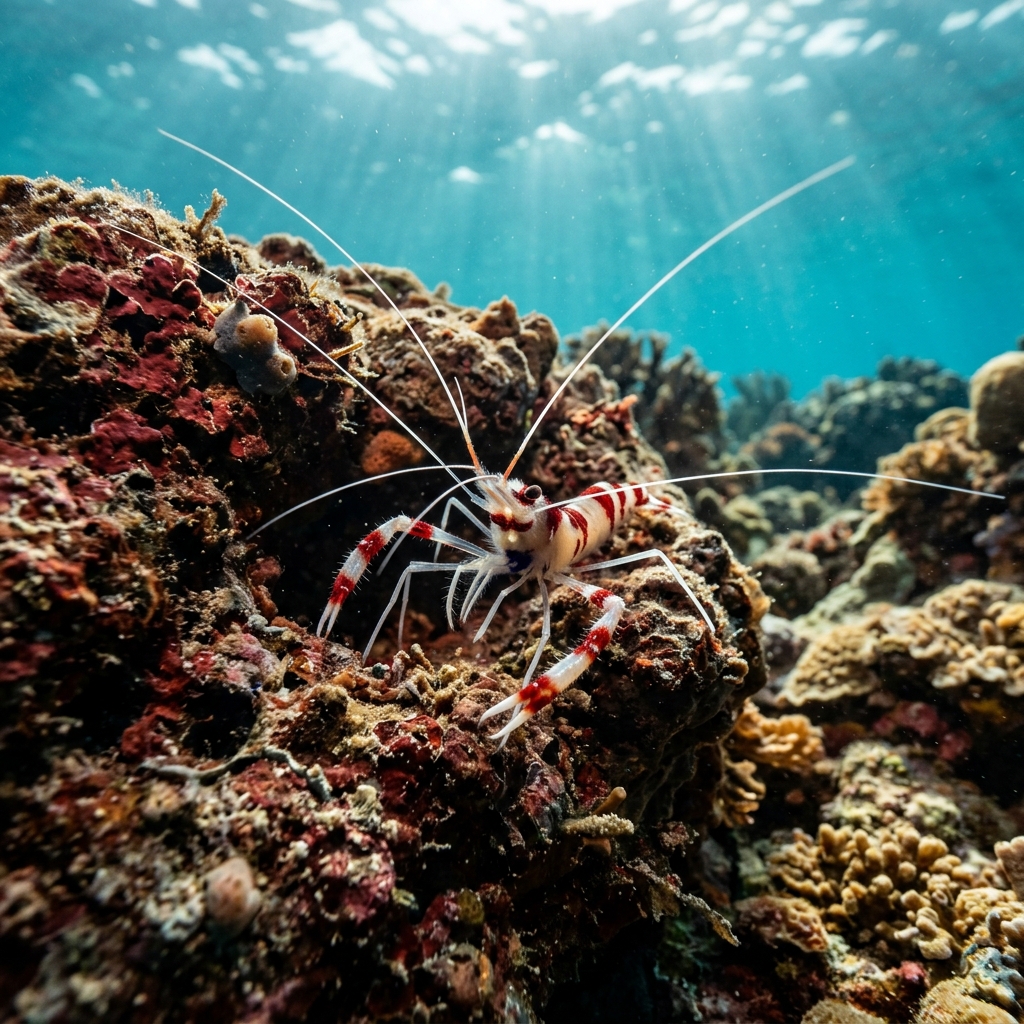
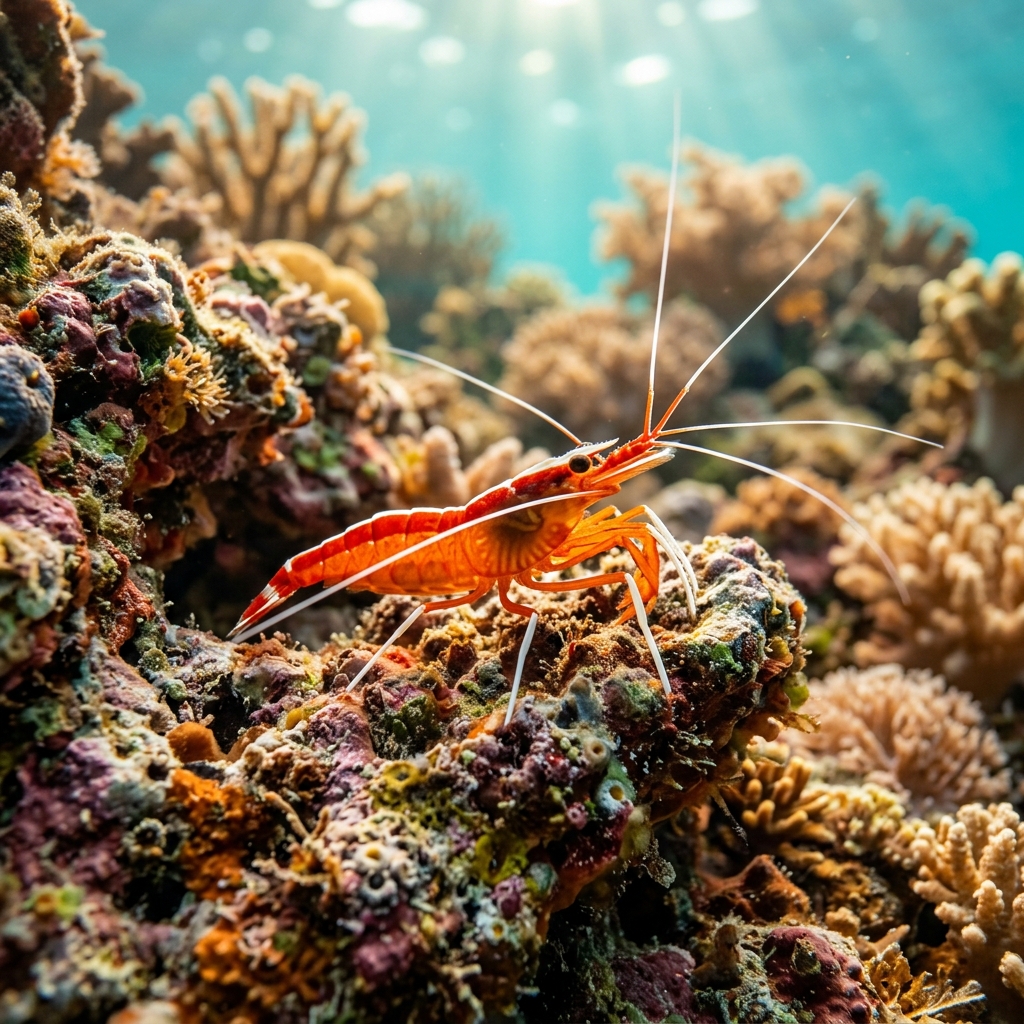
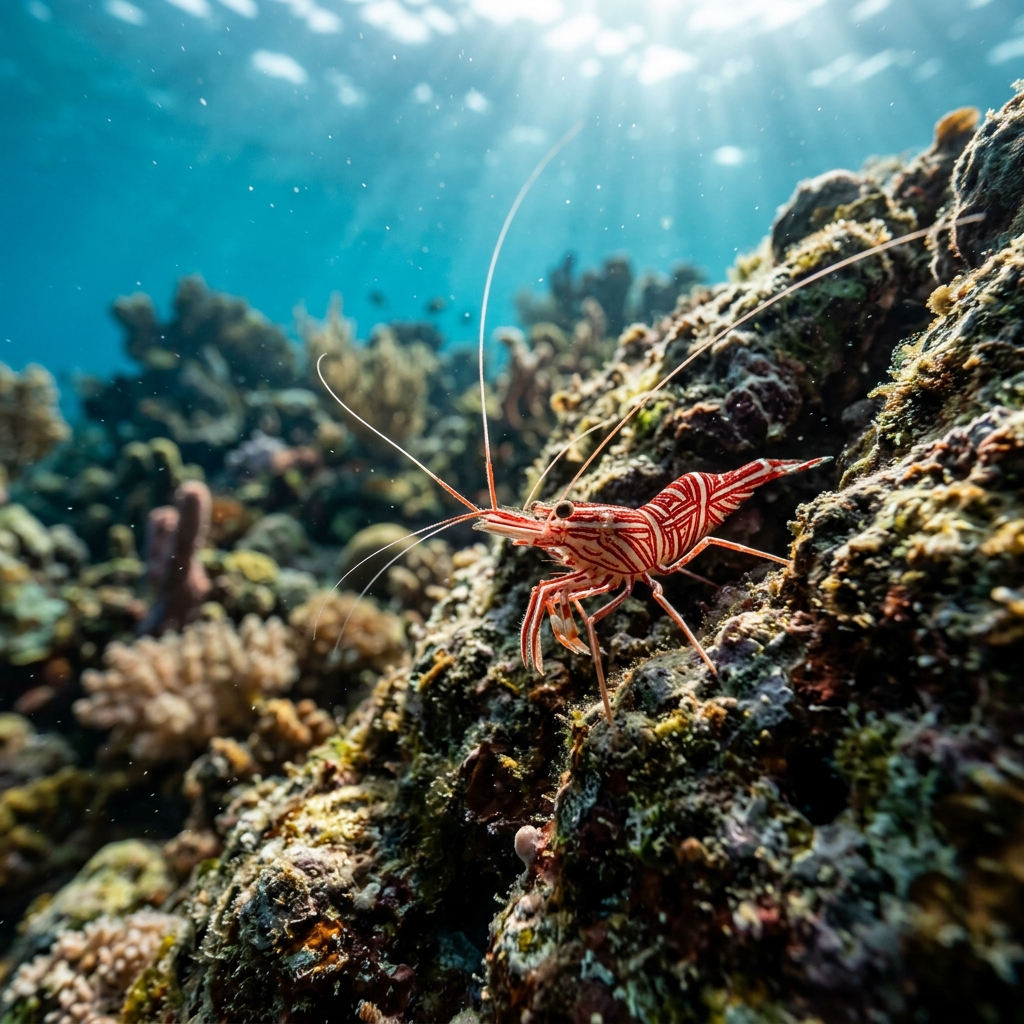
At around 3 cm, harlequin shrimp are tiny but unmistakable: a white body splashed with vivid pink, purple, and orange spots, and a pair of flattened, leaf-like claws (chelipeds) held out in front like paddles. Those oversized claws are the single best field mark, no other small reef shrimp carries them in that shape. Females tend to be slightly larger and show more intense, extensive colour patterning across both body and claws, which can help you identify a pair when they are together.
You will almost always find harlequin shrimp in pairs, tucked under plate corals, inside crevices, or sheltering beneath rubble in the shallows down to around 20 m. They move slowly and deliberately across the reef, usually in search of starfish, which they hunt and feed on. When approached by a diver they tend to freeze or retreat further into cover rather than bolt, so slow, steady movements give you the best chance of a close look.
Harlequin shrimp feed exclusively on echinoderms, mostly starfish, and a bonded pair will work together to flip and immobilise prey many times their own size, then feed on it systematically over several days. They have been observed storing live starfish arms as a kind of larder.
Harlequin shrimp live comfortably in water between 24 and 29 °C, so on tropical reefs across the Indo-Pacific they can be found throughout the year. The limited Southern Hemisphere data available points to sightings concentrating between August and November, which is worth bearing in mind if you are diving Mozambique or similar destinations.
Most sightings come from the Maldives, particularly the North and Central Atolls, Felidhoo and Mulaku, and Huvadhoo and Laamu, making the Maldives by far the strongest destination for this species. Indonesia (especially Bali, Lombok and Java), Thailand's Andaman North sites, and the Tofo area of Mozambique are also solid bets. Costa Rica's Papagayo Gulf and Madagascar round out the wider range for divers planning trips around this animal.
Mapping where Harlequin Shrimp is logged…
The Maldives is the standout destination, with strong records across the North and Central Atolls, Felidhoo and Mulaku, and Huvadhoo and Laamu. Indonesia, Thailand's Andaman sites, and Mozambique's Tofo area are also reliable spots. Costa Rica's Papagayo Gulf and Madagascar have notable records too.
On most tropical reefs they are present year-round, given their preference for water in the 24-29 °C range. In the Southern Hemisphere, particularly Mozambique, sightings appear to peak between August and November, so that window is worth targeting if you are planning a dedicated trip.
Look for those distinctive flat, paddle-shaped claws held out in front, no other small reef shrimp has them in that form. The white body covered in pink, purple, and orange spots makes them bold for their size. At around 3 cm they are easy to overlook, so check under plate corals and inside crevices.
They reach about 3 cm as adults, making them one of the smaller species divers actively seek out. Females tend to be slightly larger than males. Their small size means you need to slow down and search carefully in likely hiding spots.
They feed exclusively on echinoderms, primarily starfish. A bonded pair hunts cooperatively, flipping starfish onto their backs and feeding on the tube feet and soft tissue over several days. They sometimes keep a live starfish in their shelter as a food source.
Site and sighting data is aggregated from diver logs, iNaturalist and GBIF. For taxonomy and conservation status:
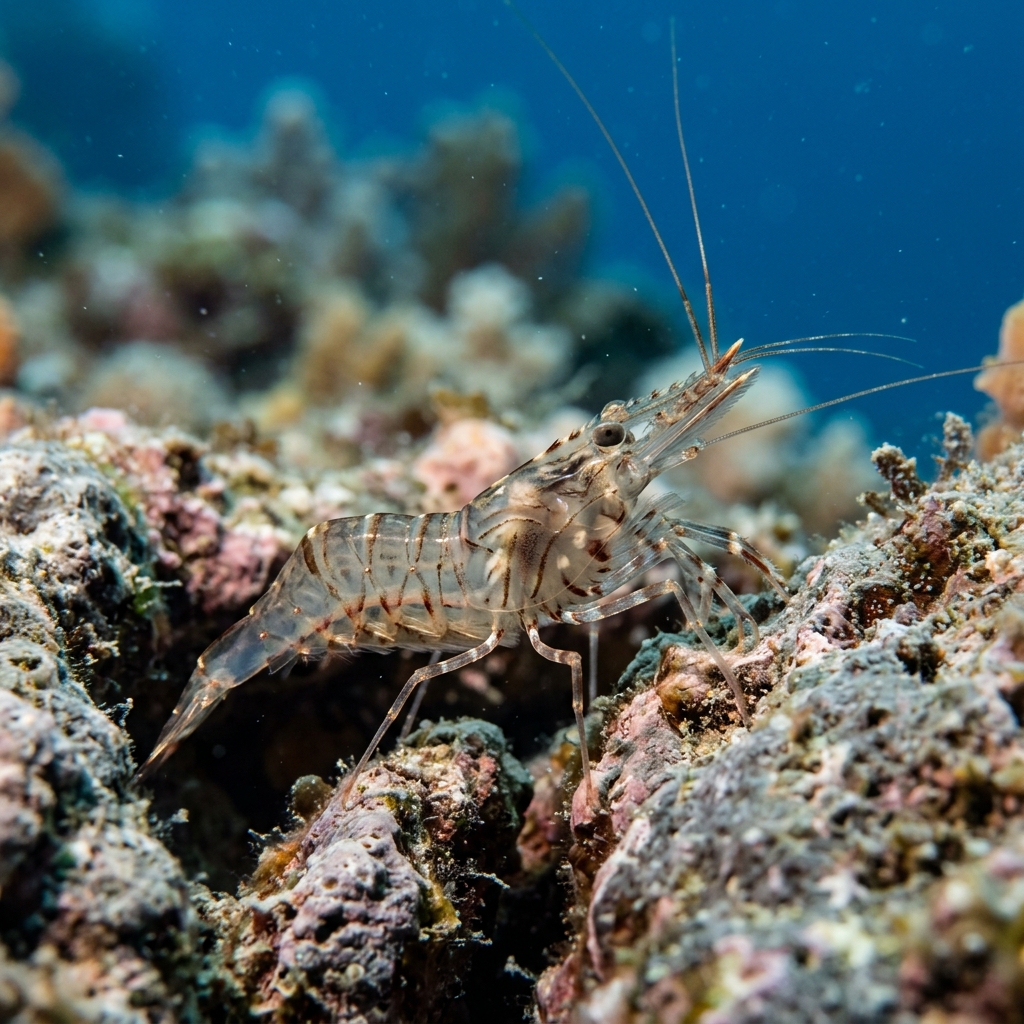
Rockpool Prawn
2,179 sites