Nembrotha aurea
Rare golden-gilled nudibranch turning up on KwaZulu-Natal reefs at 22-28C, year-round if you know where to look.
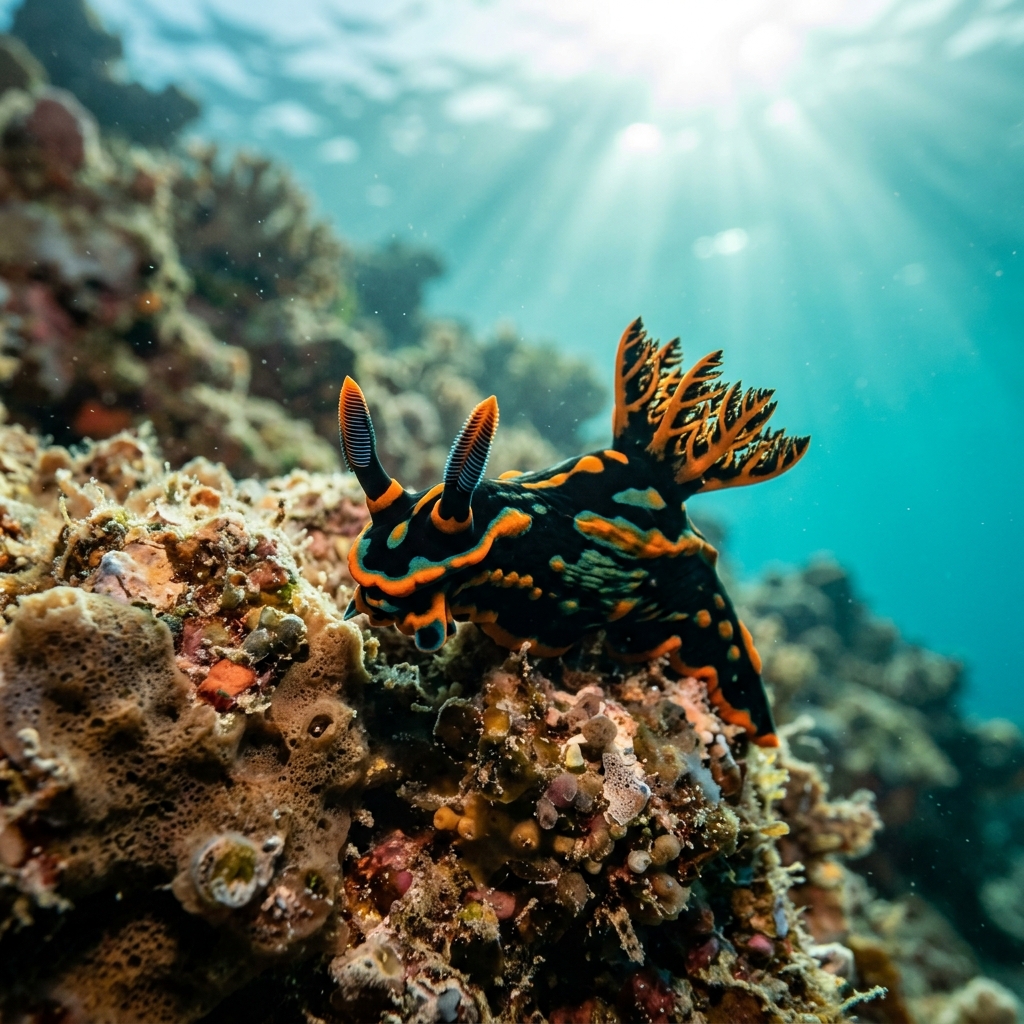
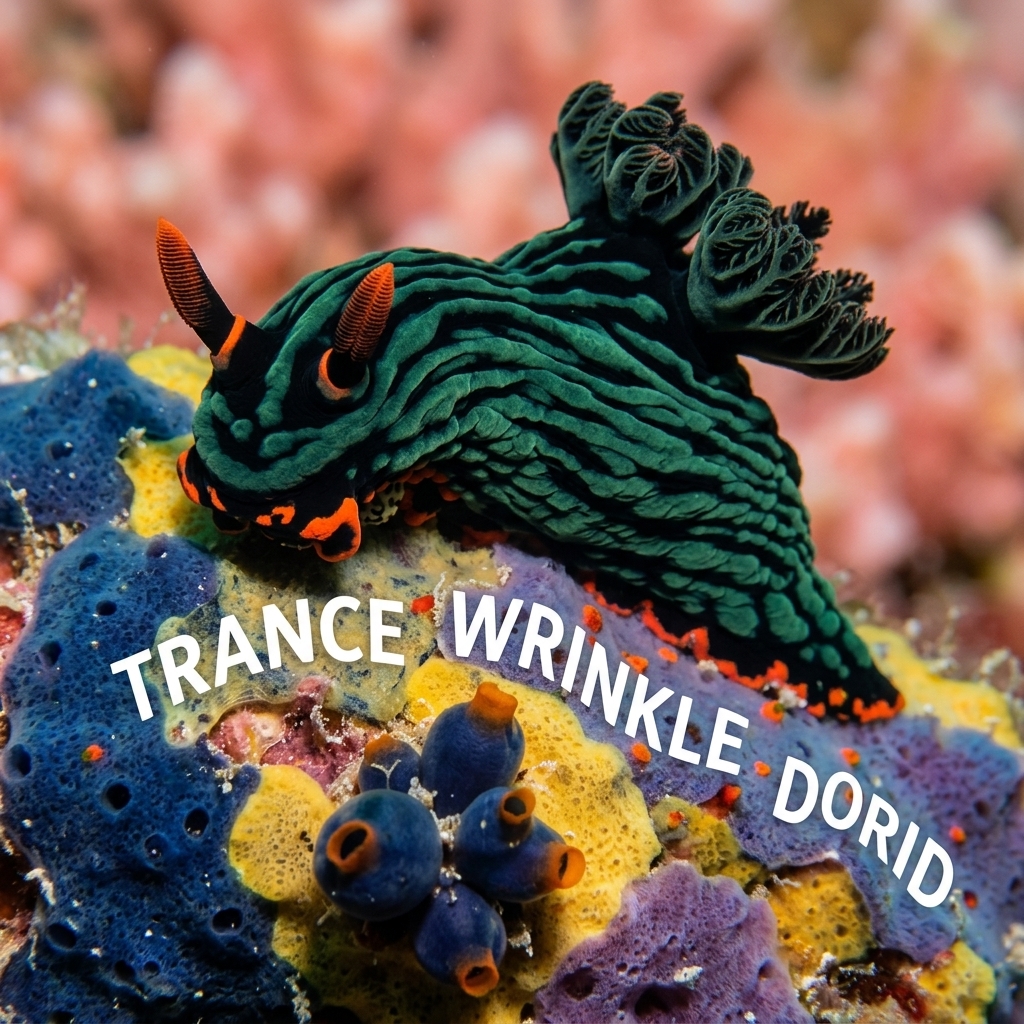
A sleek, elongated sea slug with a dark green to black body overlaid with a network of bright golden-yellow ridges and spots, giving it a wrinkled, jewelled look. Look for the orange-tipped rhinophores (the paired sensory horns on the head) and gill plume at the rear, both usually tipped in the same warm orange-gold. Most individuals seen underwater are small, a few centimetres long, and move slowly enough to photograph without a chase.
Divers typically find it grazing slowly over rock and reef surfaces, often tucked into crevices or moving across sponge-encrusted substrate where it feeds. It pays little attention to divers and won't flee or hide when approached, making it a solid subject for macro photography if you spot one. Like most nudibranchs in this genus, sightings tend to be one-off encounters rather than groups.
Members of the Nembrotha genus feed on sea squirts (tunicates) and are thought to store or repurpose chemical compounds from their prey as a defence against predators.
There's no clear seasonal pattern in the sightings logged so far, and its comfortable range of 21.8 to 27.8C spans most of the year on KwaZulu-Natal reefs, so it's best treated as a year-round find rather than a seasonal target.
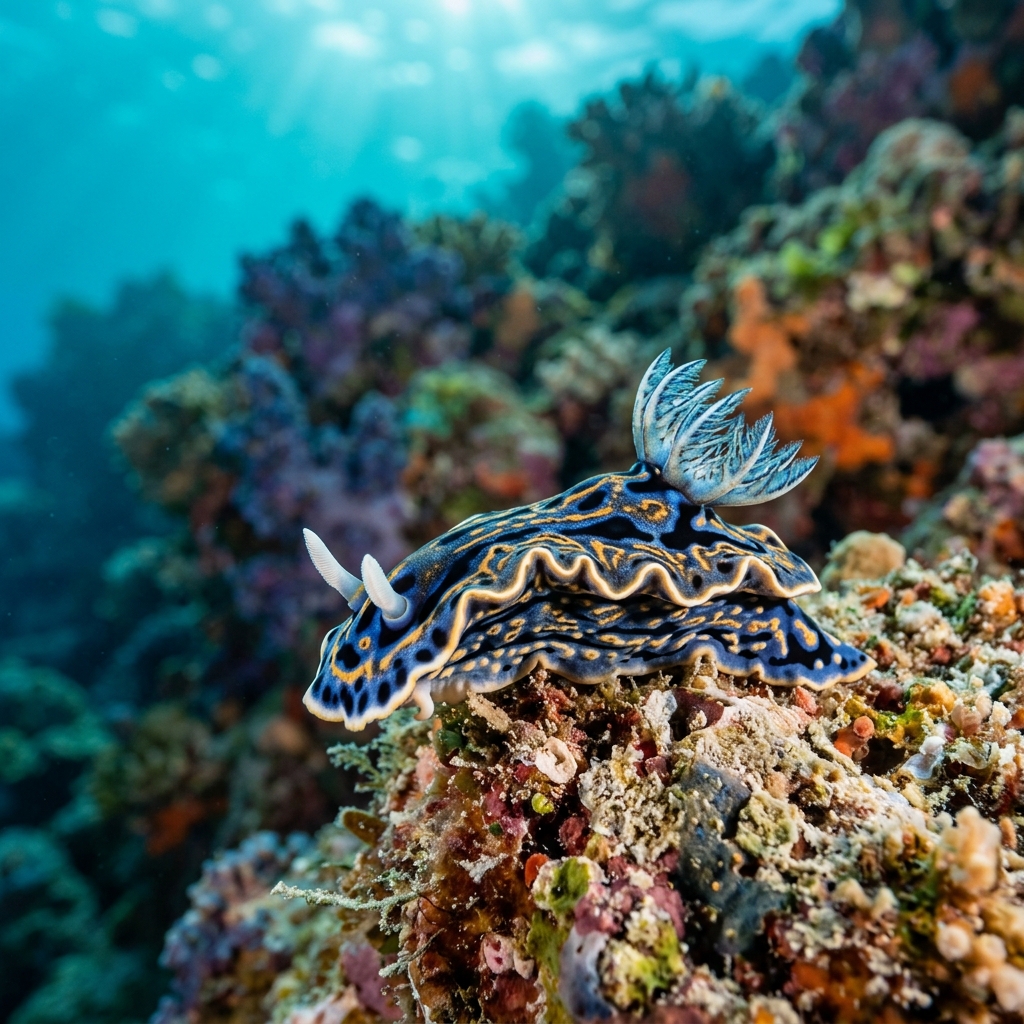
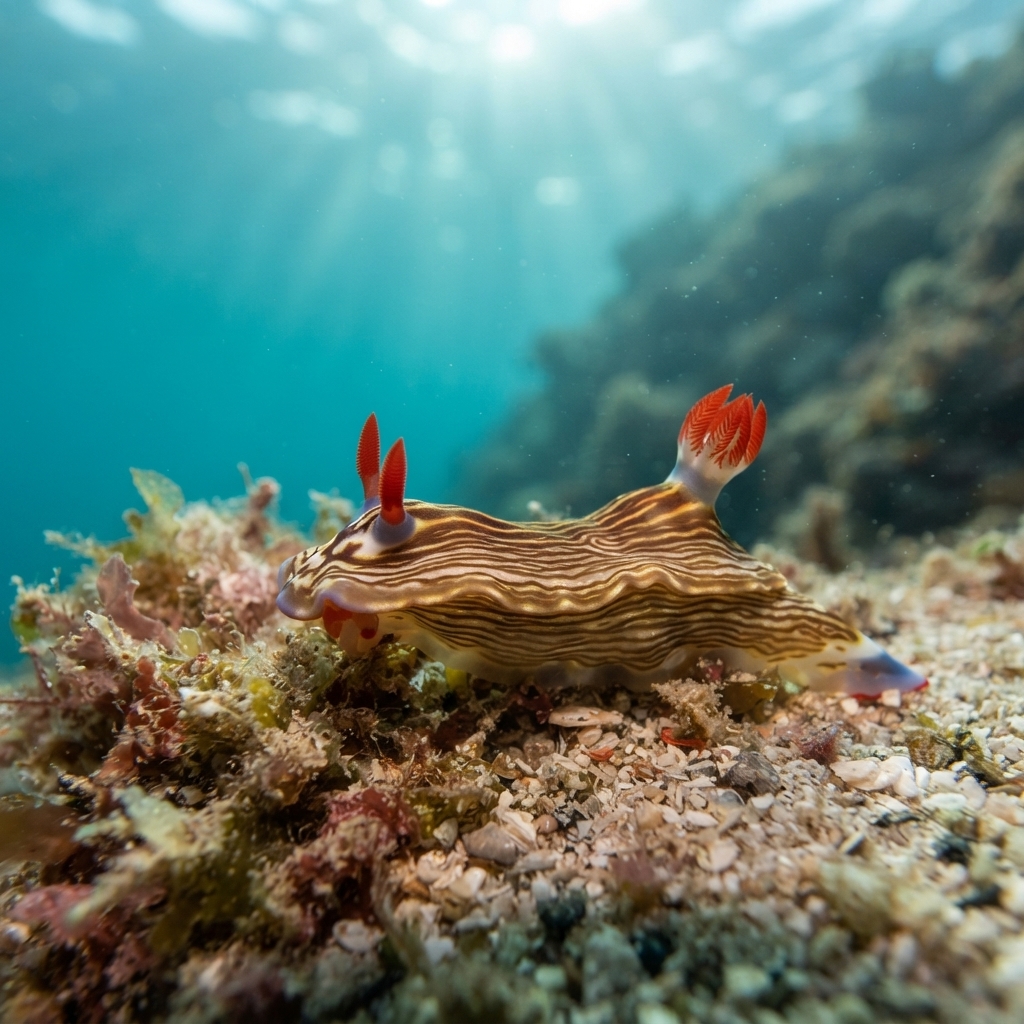
Reef neighbours a diver could mistake it for. Use the identification notes above to tell them apart.
KwaZulu-Natal in South Africa is by far the most reliable place to find this one, with sightings spread across several sites there. It also turns up occasionally off Mayotte's Passe en S and in Mozambique's Inhambane region, though in much smaller numbers.
Mapping where Showman Wrinkle Dorid is logged…
KwaZulu-Natal in South Africa is the most consistent region, with scattered additional sightings in Mayotte and Mozambique's Inhambane area.
There's no strong seasonal signal in the data, and its temperature range of 21.8 to 27.8C is present on KwaZulu-Natal reefs most of the year, so any season is worth a look.
Check for a dark green to black body covered in golden-yellow wrinkled ridges, with orange-tipped rhinophores and gill plume. It moves slowly over reef and rock, rarely more than a few centimetres long.
Exact size data isn't confirmed, but divers typically log individuals at just a few centimetres long, consistent with other nudibranchs in the Nembrotha genus.
No, it poses no threat to divers. Like other nudibranchs it can carry chemical defences against predators, but these are not a hazard to people.
Site and sighting data is aggregated from diver logs, iNaturalist and GBIF. For taxonomy and conservation status:
Blue Dragon
3,163 sites