Hippocampus hippocampus
Look for it clinging to eelgrass in Zeeland or volcanic reefs in Sao Miguel, Azores, in water from 11 to 27C year-round.
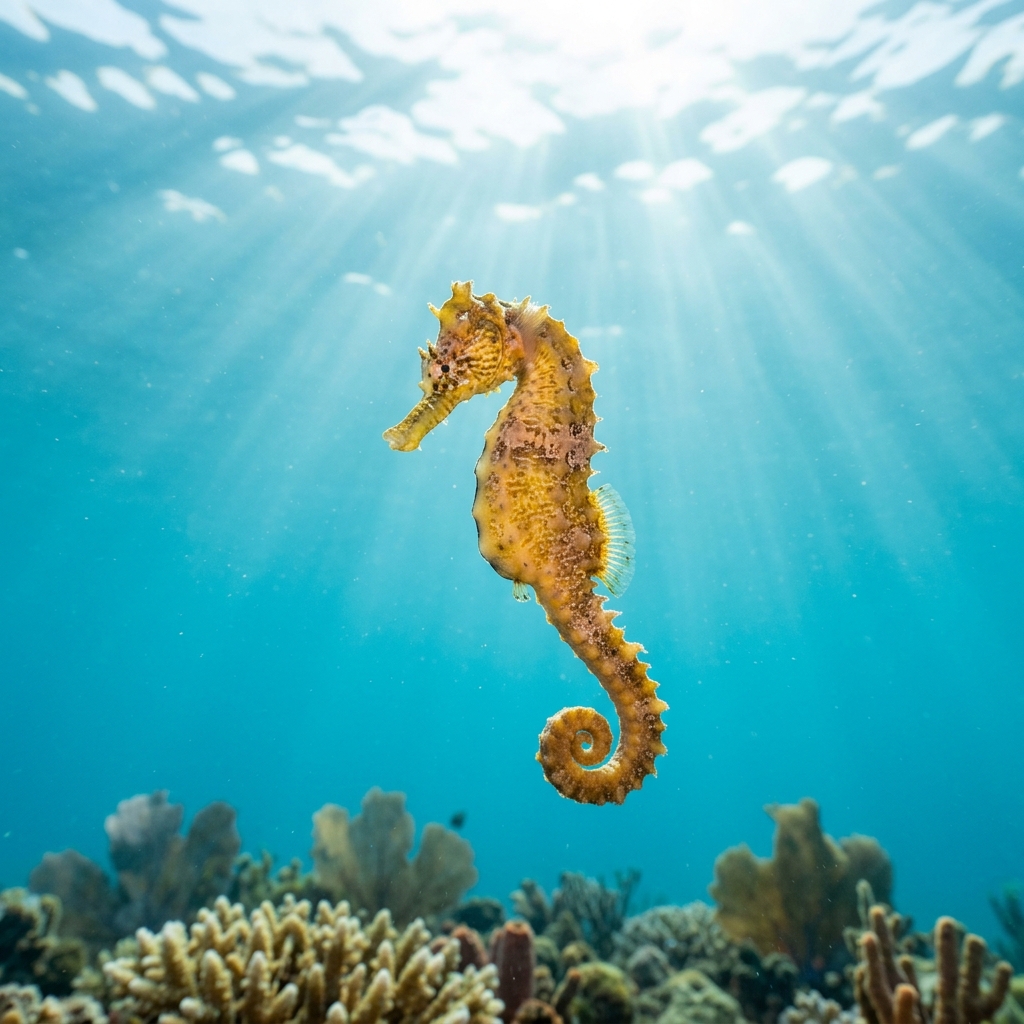
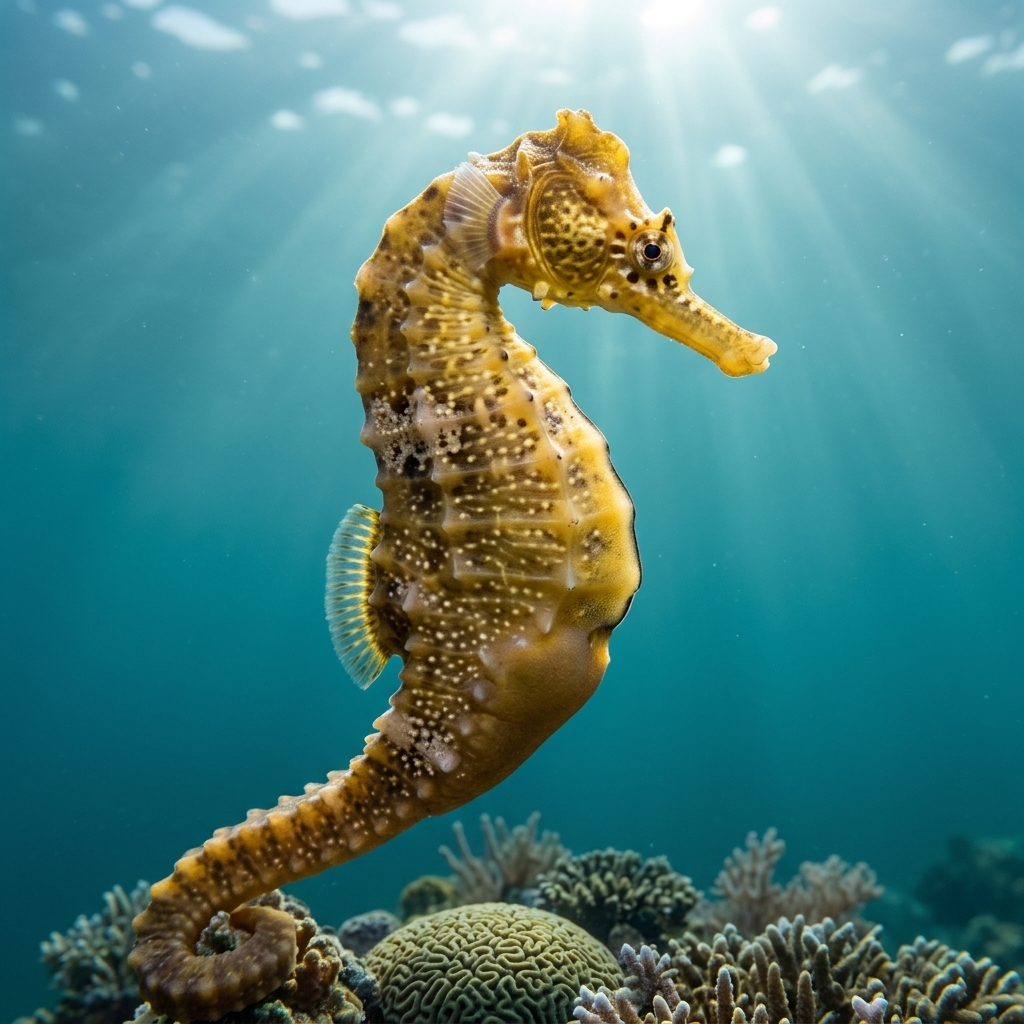
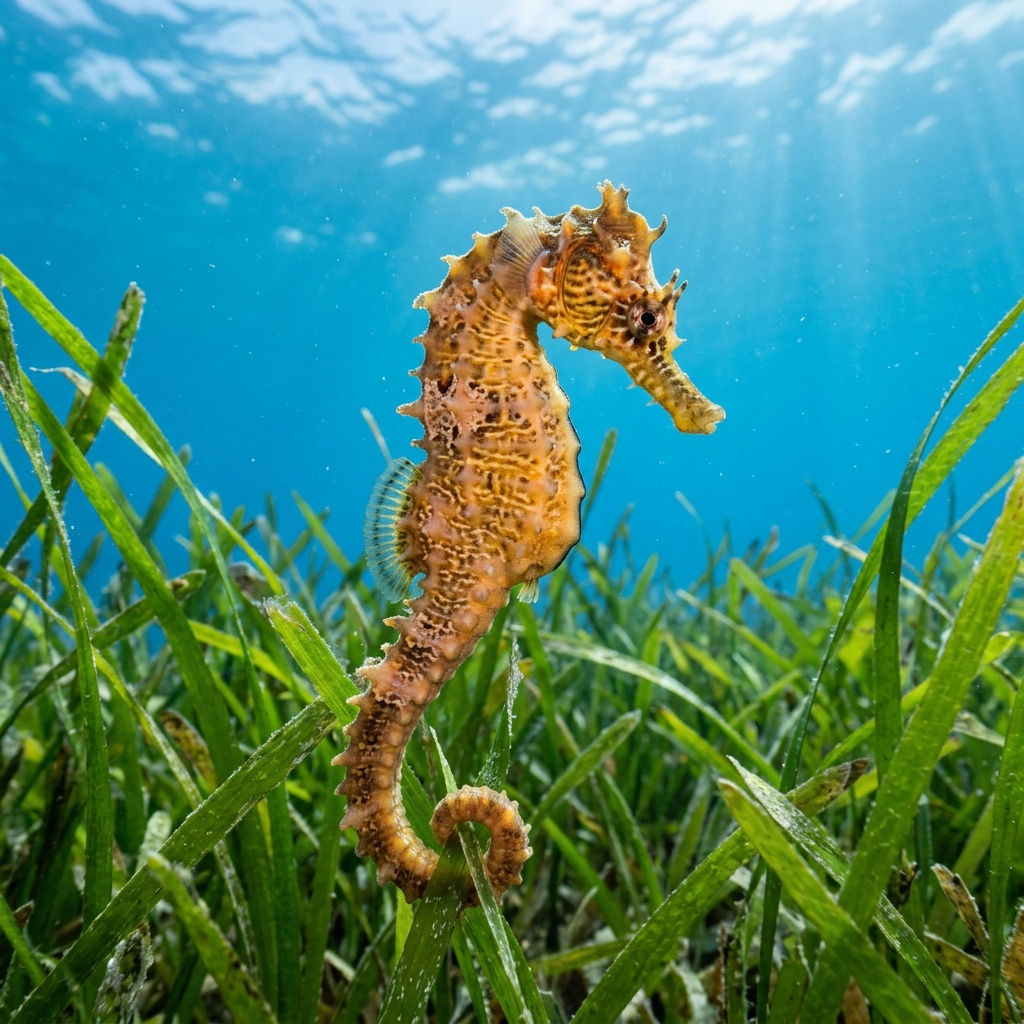
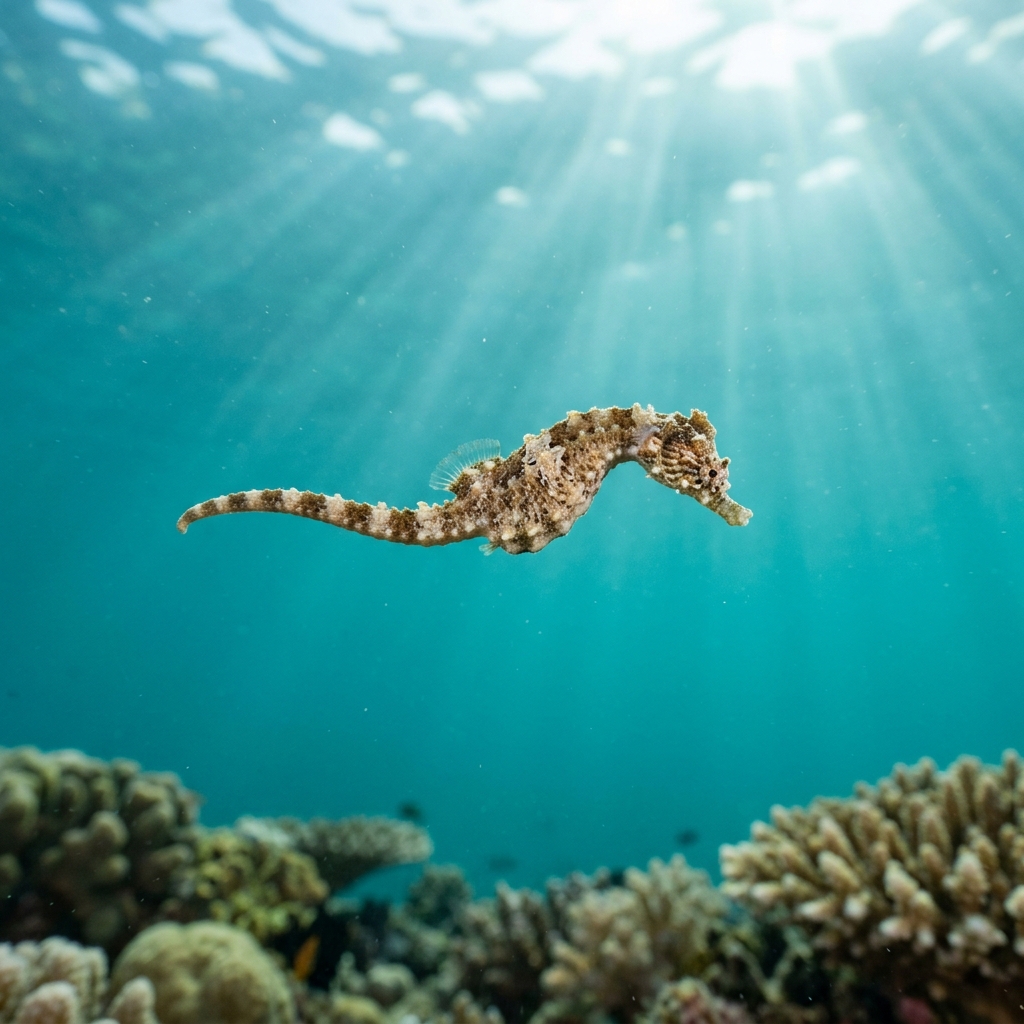
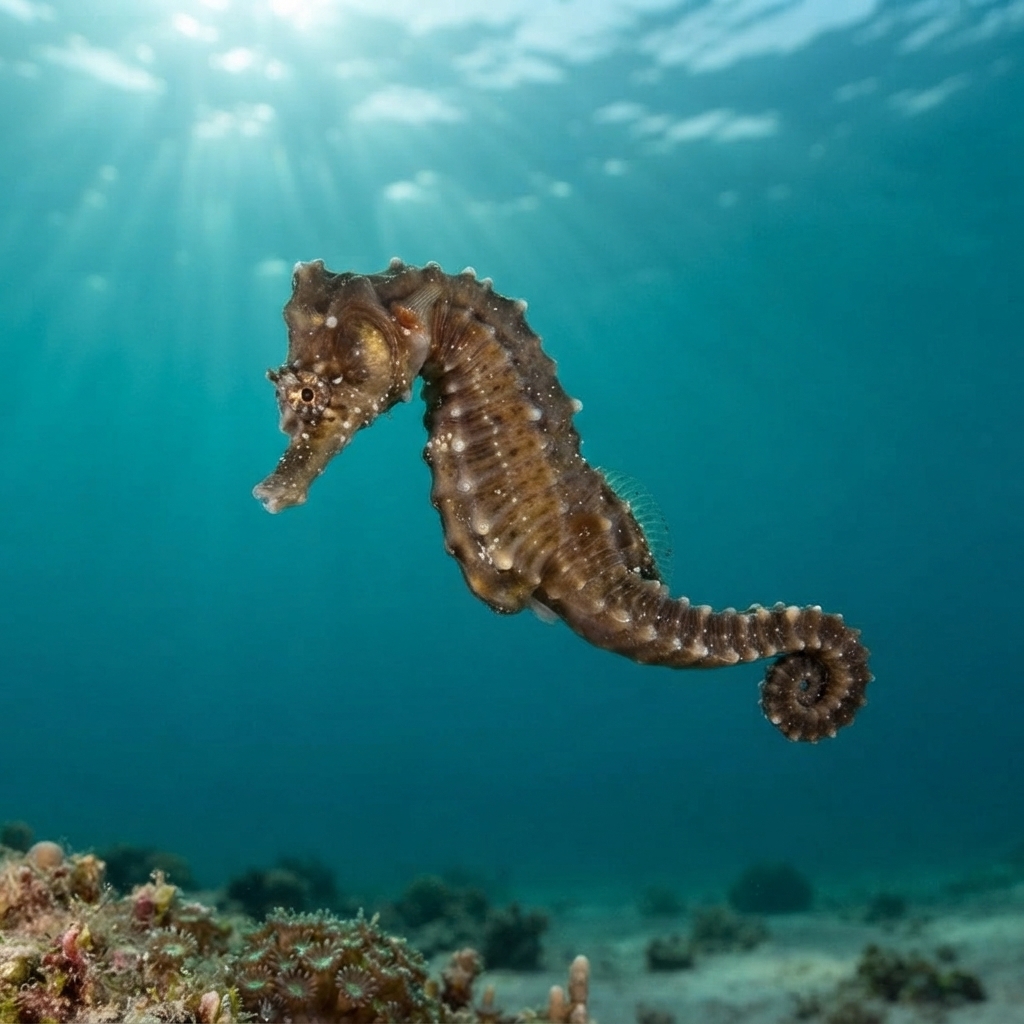
A small, stocky seahorse growing to about 10 cm, usually mottled brown, grey or olive to match the weed or sponge it grips. The snout is notably short and thick compared with other seahorses, which is the single best field mark. Look for a low, bumpy crown (coronet) on the head and a curled tail wrapped tight around a holdfast rather than drifting free.
Expect to find it holding still, tail hooked around a blade of eelgrass, a bit of sponge, or a piece of debris, often low down and easy to swim straight past. It relies on camouflage rather than fleeing, so divers who slow down and scan holdfasts close to the bottom have the best luck. Most logs describe single animals rather than groups, and it is rated uncommon at the great majority of sites where it has been recorded.
Males carry the fertilised eggs in a belly pouch and give birth to fully formed young, one of the reasons seahorses are treated as a reproductive oddity among fish.
Sightings show no clear seasonal spike, and the species tolerates a wide range from about 11 to 26.5C, so it is logged across the year in both the Azores and the Netherlands. Plan around calm, clear conditions for spotting it rather than a specific month.
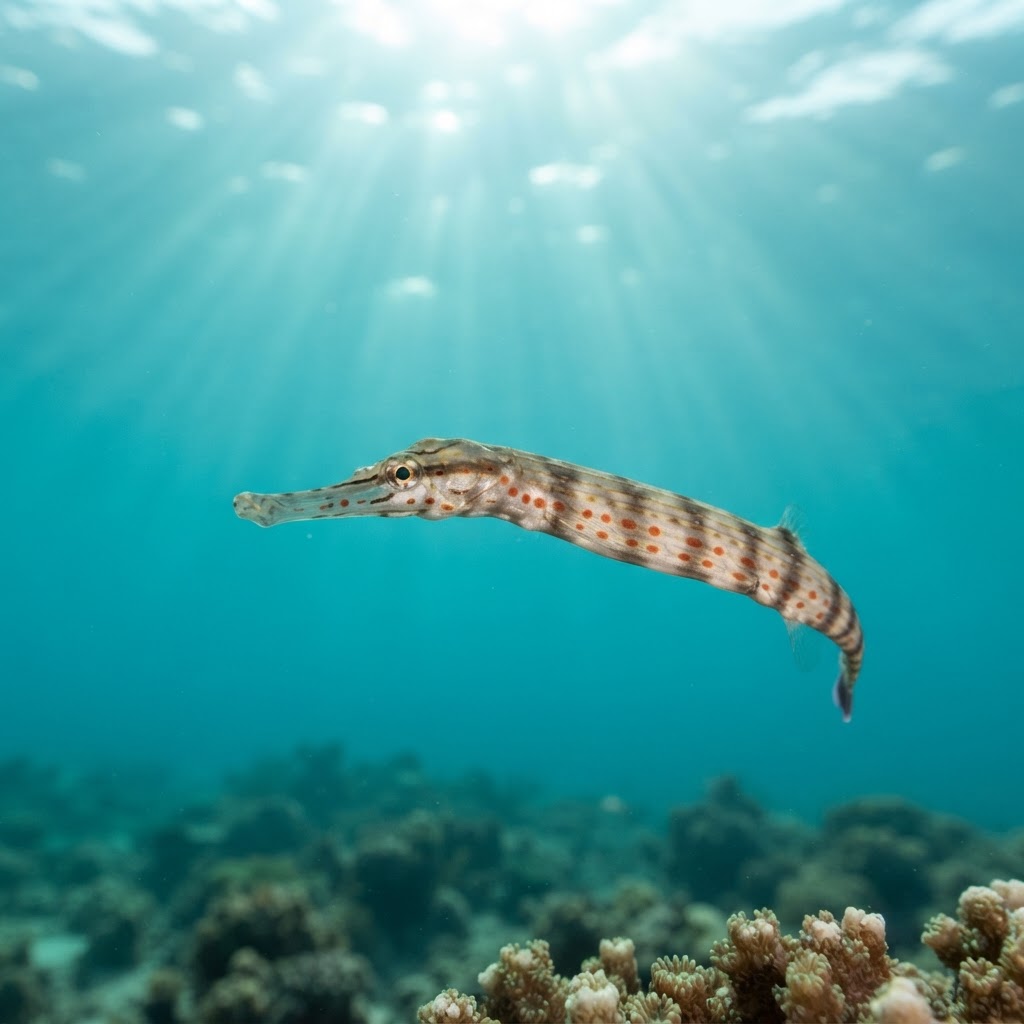
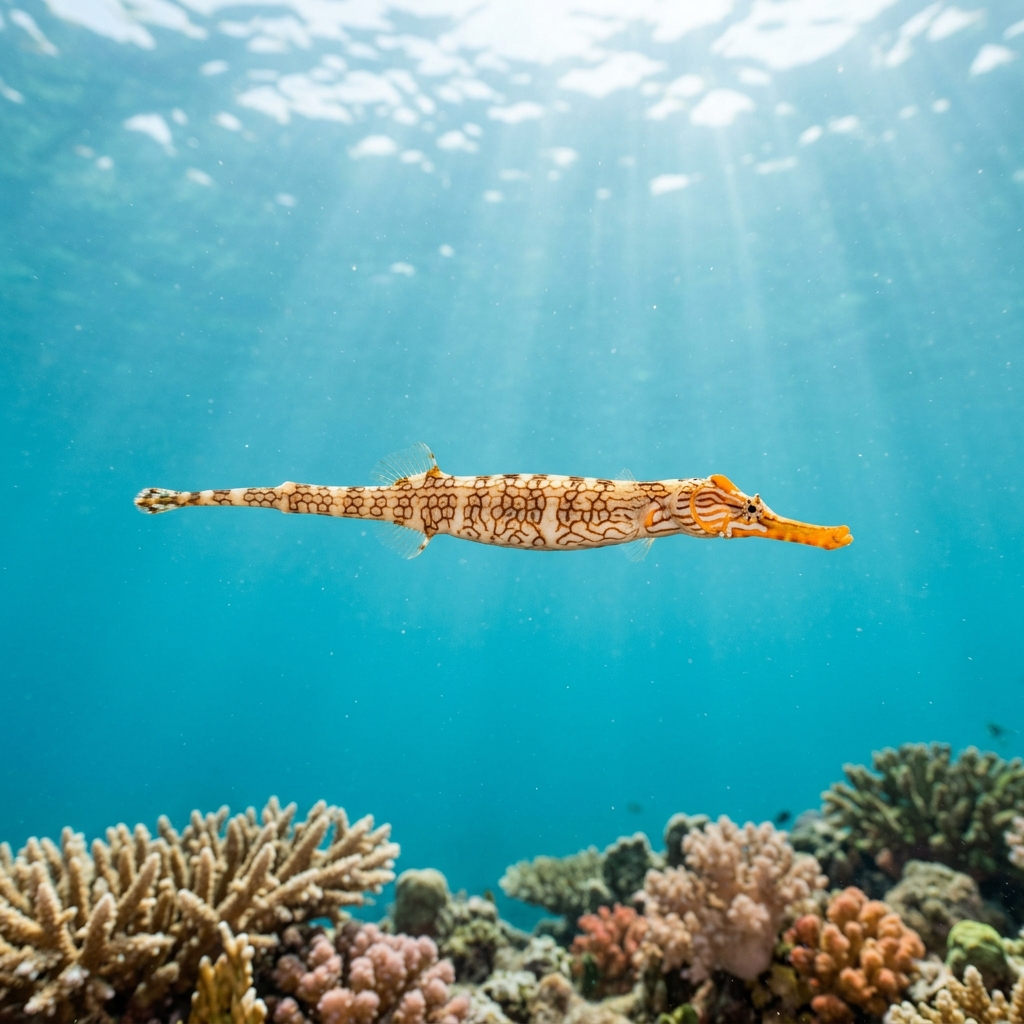
Reef neighbours a diver could mistake it for. Use the identification notes above to tell them apart.
Most reliably logged in Zeeland in the Netherlands, where it turns up on muddy and eelgrass-lined sites, and across Sao Miguel, Santa Maria, Faial and Sao Jorge in the Azores. Smaller numbers are reported from Occitanie in France and Lanzarote in the Canary Islands, so any of these regions is worth a slow, patient look.
Mapping where Short-snouted Seahorse is logged…
Zeeland in the Netherlands and several islands in the Azores, including Sao Miguel, Santa Maria, Faial and Sao Jorge, are the strongest areas. It has also been logged in Occitanie, France, and Lanzarote in the Canary Islands.
There is no strong season in the data, so it is seen year-round across its range. It tolerates water from around 11 to 26.5C, which helps explain the lack of a sharp seasonal pattern.
Check for a stocky 10 cm seahorse with a distinctly short, thick snout and a bumpy low crown on the head. Colour is usually mottled brown or grey to match its holdfast, and the tail is curled tightly around eelgrass or sponge rather than free-swimming.
They typically reach around 10 cm in length, making them one of the smaller seahorse species divers encounter in temperate and Macaronesian waters.
No. They have no venom or defence relevant to divers and rely entirely on camouflage and stillness to avoid attention.
Males, not females, carry the developing eggs in a specialised belly pouch and give birth to free-swimming young, a role reversal unique to seahorses and their pipefish relatives.
Site and sighting data is aggregated from diver logs, iNaturalist and GBIF. For taxonomy and conservation status:
Seahorse
1,346 sites