Scyra acutifrons
A tiny decorated crab found on cold-water reefs in British Columbia, usually spotted rare to uncommon in water around 8.5 to 14.5 C.
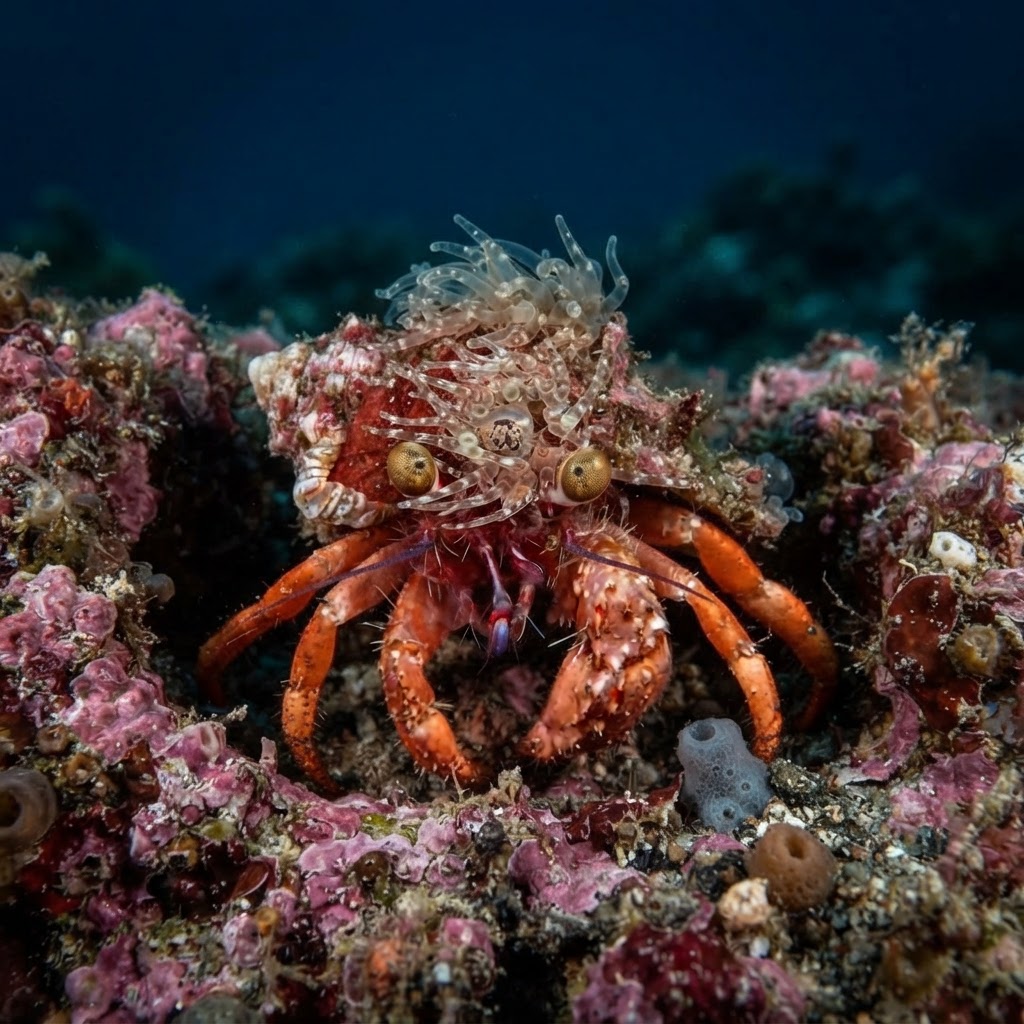
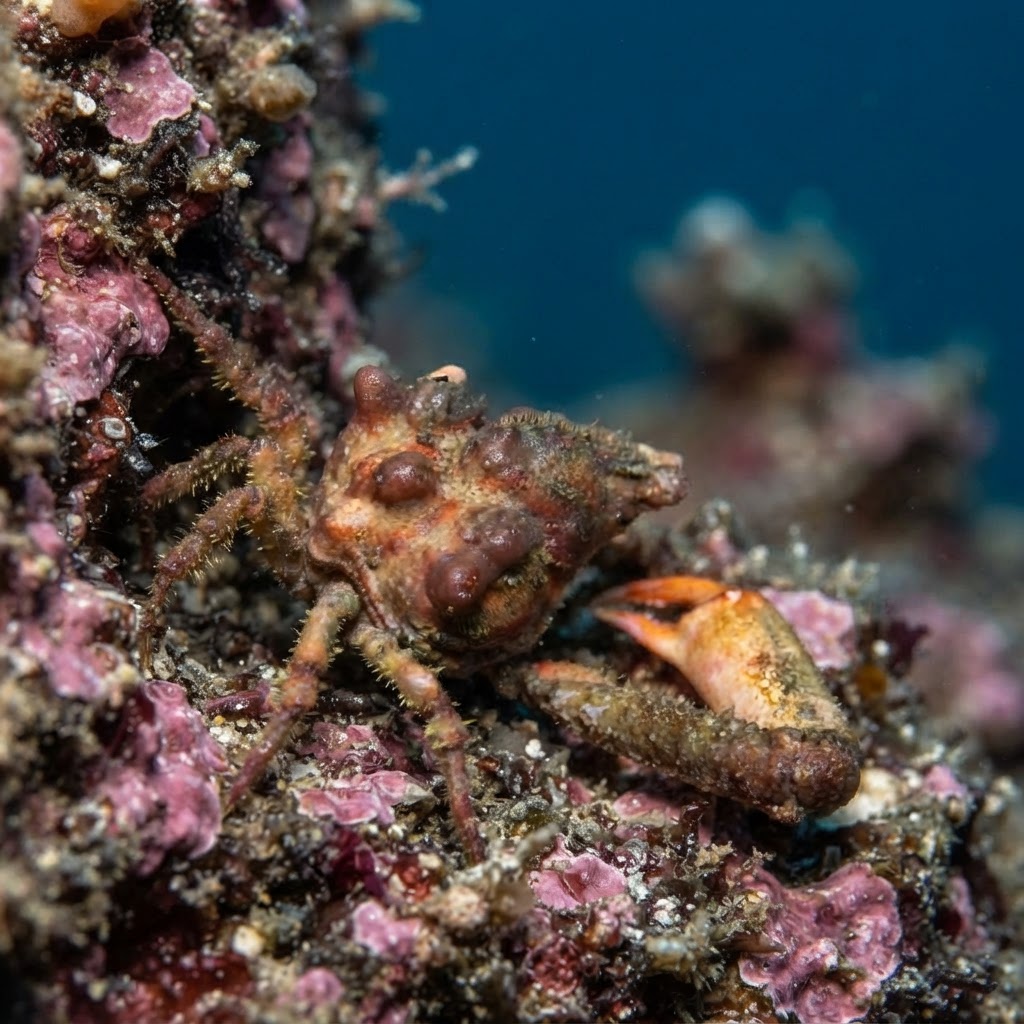
A tiny crab, only about 2 cm across, with a triangular carapace (shell) that tapers to a pointed snout, which is where the name comes from. The shell is often dusted with algae, sponge or debris it has deliberately attached, making it look more like a scrap of reef than an animal. Look closely at rocky or rubble-strewn surfaces rather than scanning open water, since it sits still and relies on camouflage rather than movement to avoid notice.
Divers typically find it sitting motionless on rock, rubble or mixed substrate, often coated in bits of algae or sponge that it has picked and fixed to its shell as camouflage. It shows no real reaction to divers since its whole strategy is to be overlooked rather than to flee, so patience and a slow, close scan of the bottom is what actually turns one up. Most logs describe it as rare to uncommon at a given site, so treat any sighting as a small win rather than something to expect on every dive.
Like other decorator crabs in its family, it actively attaches living material such as algae and sponge to hooked bristles on its shell, building a personal camouflage that grows and changes with it over time.
Sightings show no clear seasonal pattern, and with a temperature niche of 8.5 to 14.5 C this crab is present on the reefs of British Columbia and the Pacific Northwest year-round, so any month works for a dedicated look.
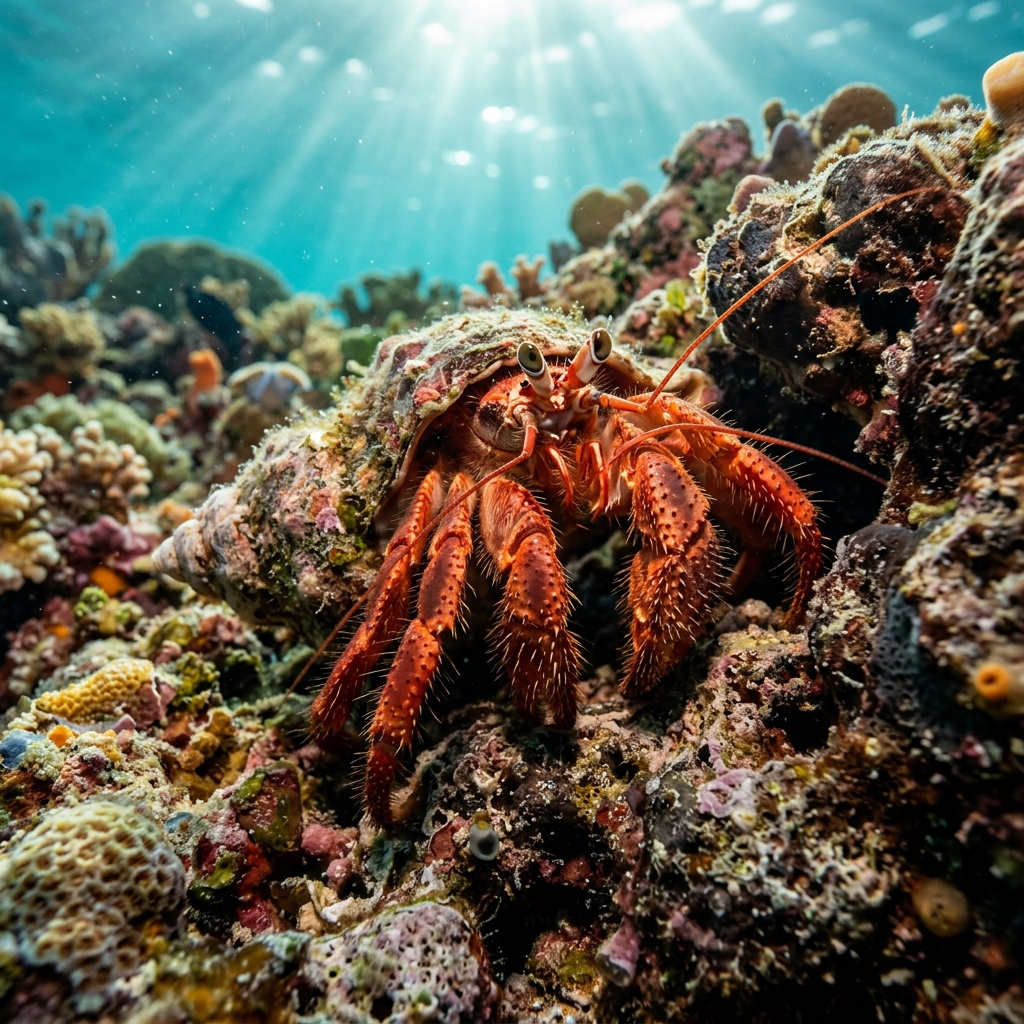
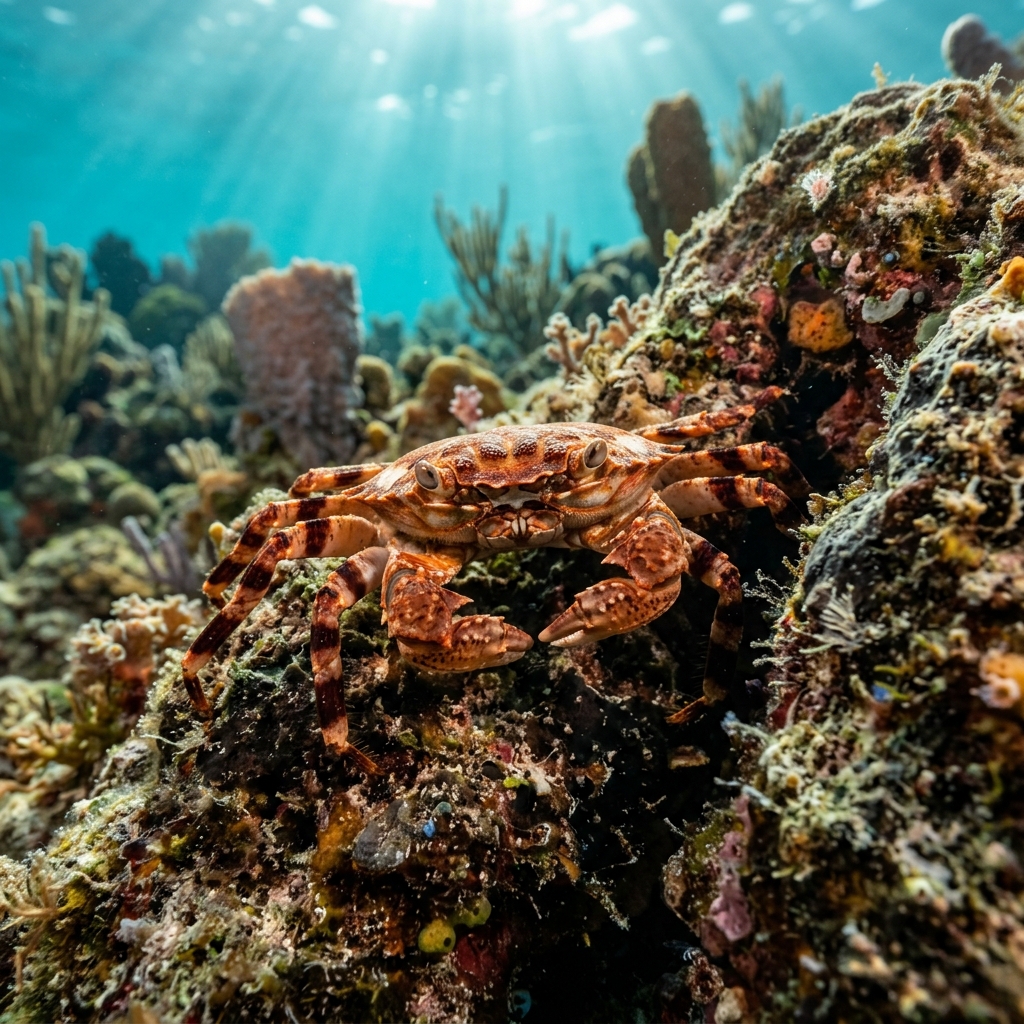
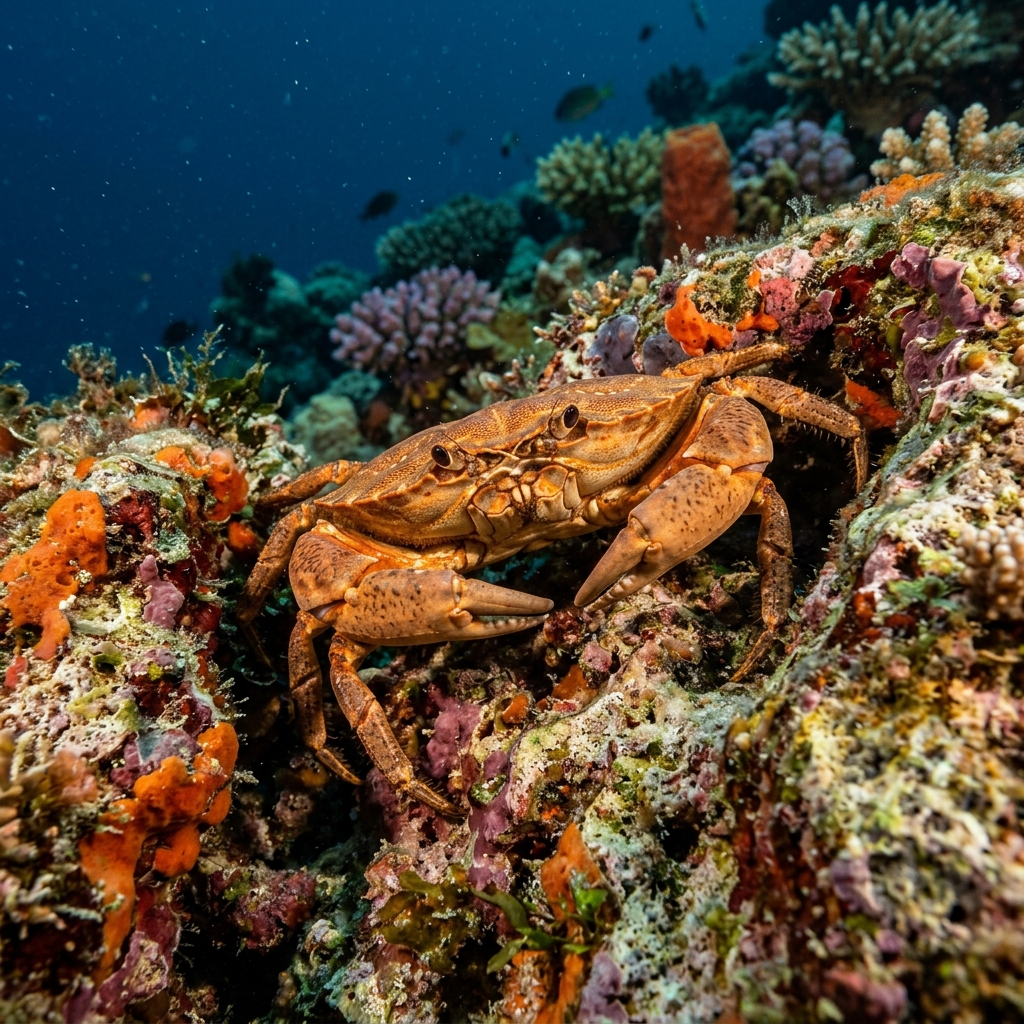
Reef neighbours a diver could mistake it for. Use the identification notes above to tell them apart.
This is a cold-water species most reliably logged in British Columbia, Canada, which accounts for the vast majority of recorded sightings, with a smaller but steady presence in the Pacific Northwest region of the United States and occasional records from California.
Mapping where Sharpnose Crab is logged…
British Columbia in Canada is the strongest area for this species, with additional records from the Pacific Northwest and California in the United States. Look on rocky reef and rubble bottoms rather than in open water.
There is no strong recorded season for this species, and it tolerates a wide cold-water range of 8.5 to 14.5 C, so it is considered a year-round find on British Columbia and Pacific Northwest reefs.
Look for a tiny, roughly 2 cm crab with a triangular, pointed shell that is usually covered in bits of algae or sponge it has attached itself. It sits still on rock or rubble, so it is easier to spot by scanning textured surfaces closely than by looking for movement.
They stay small, reaching around 2 cm across the shell, which is part of why they are easy to miss on a dive.
No, they pose no danger to divers. They are small, slow-moving and rely entirely on camouflage rather than any defensive behaviour toward divers.
They are decorator crabs, meaning they deliberately attach living algae and sponge to hooked bristles on their shell to build a camouflage covering that can change as the material grows.
Site and sighting data is aggregated from diver logs, iNaturalist and GBIF. For taxonomy and conservation status:
European Green Crab
2,469 sites