Parablennius marmoreus
A 5cm reef-goer you'll find perched on rubble and coral in Florida, Saint John and Bonaire, year-round in warm 23.5-28.2C water.
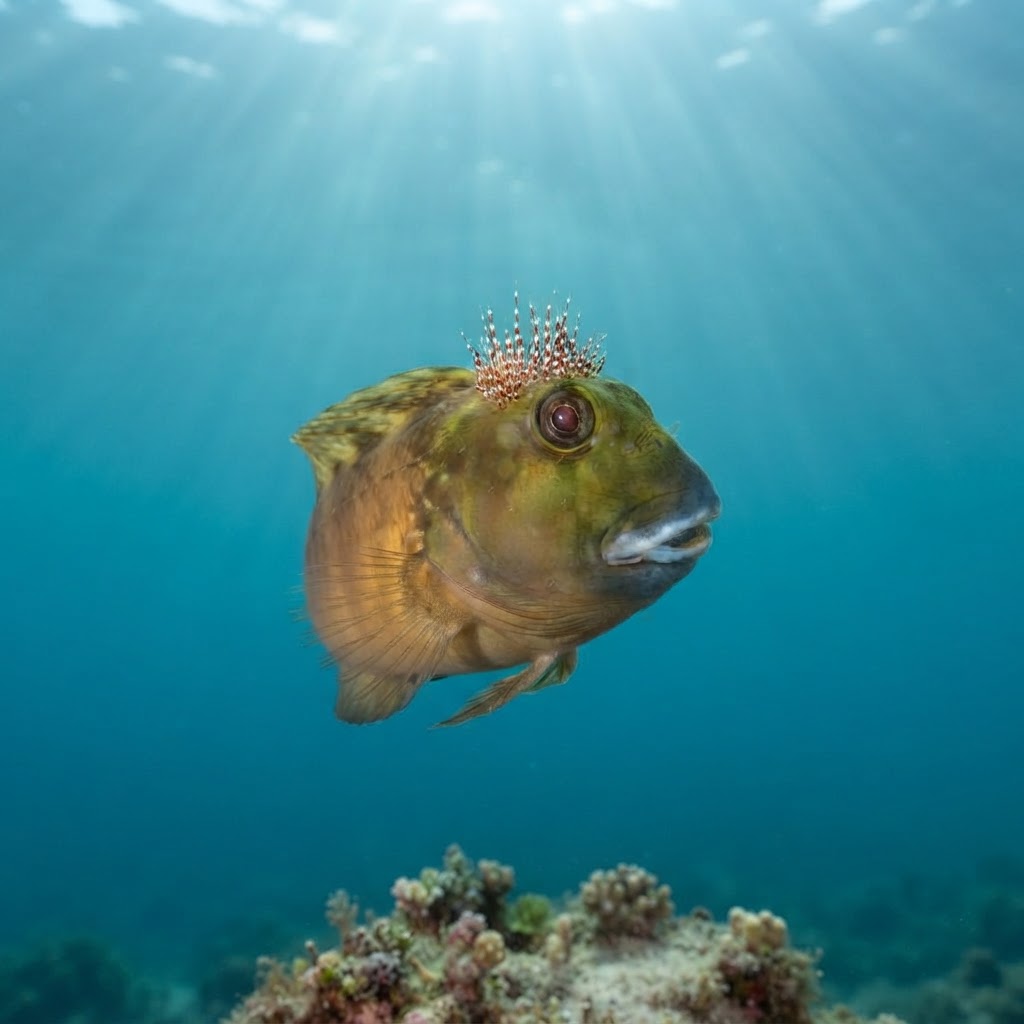
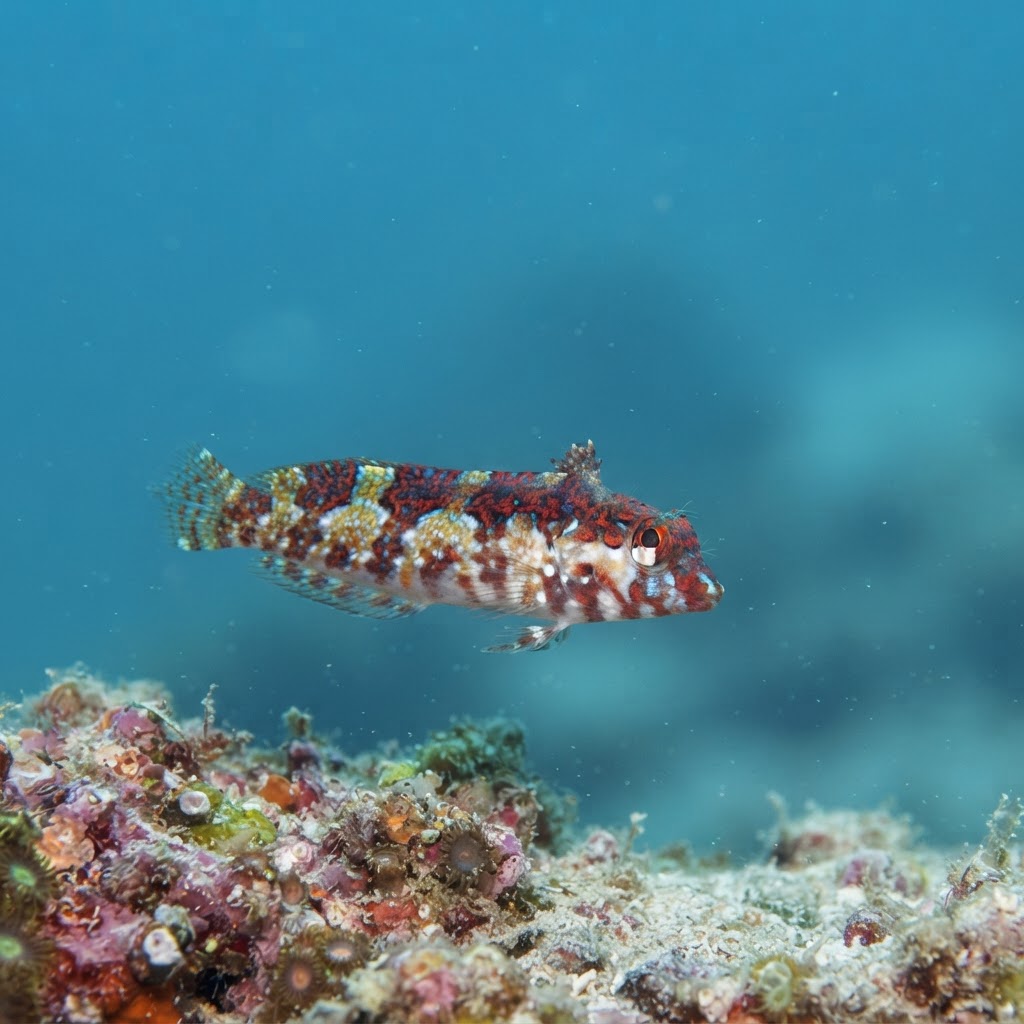
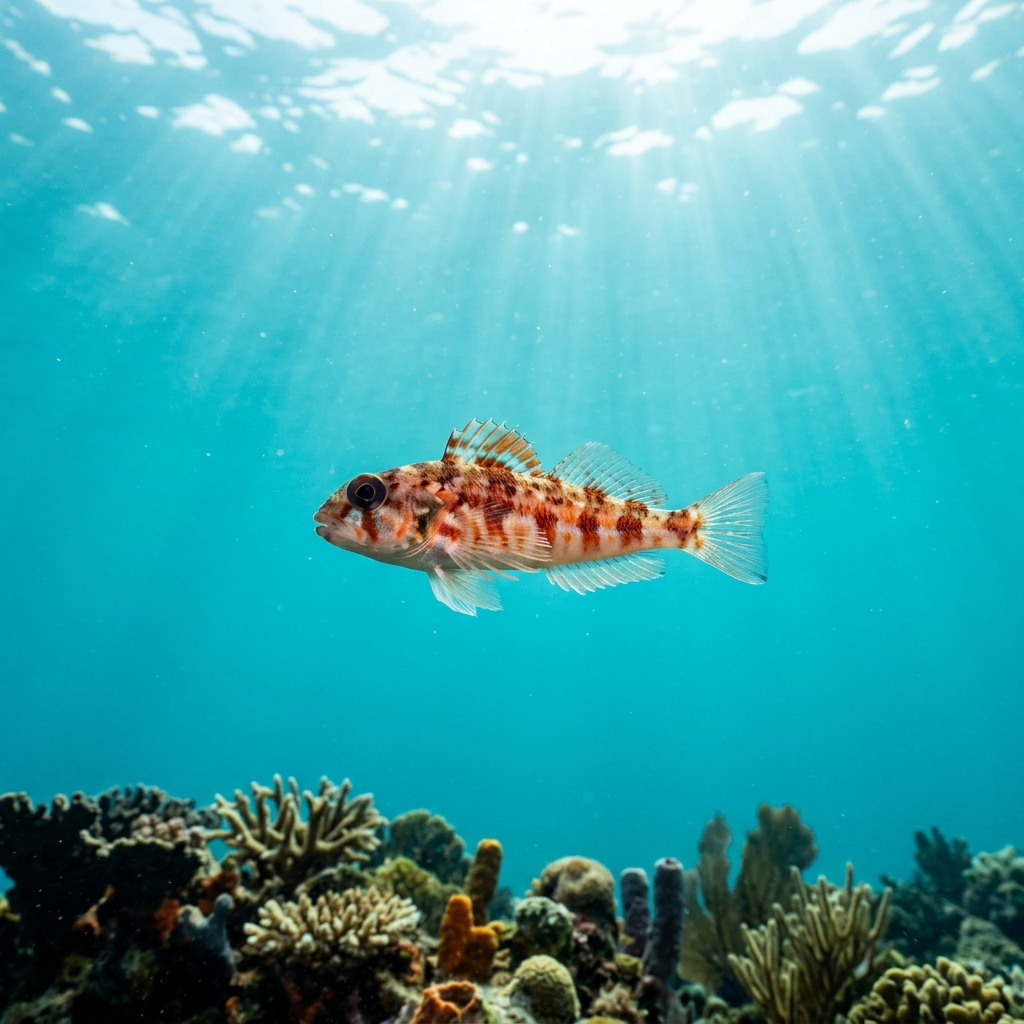
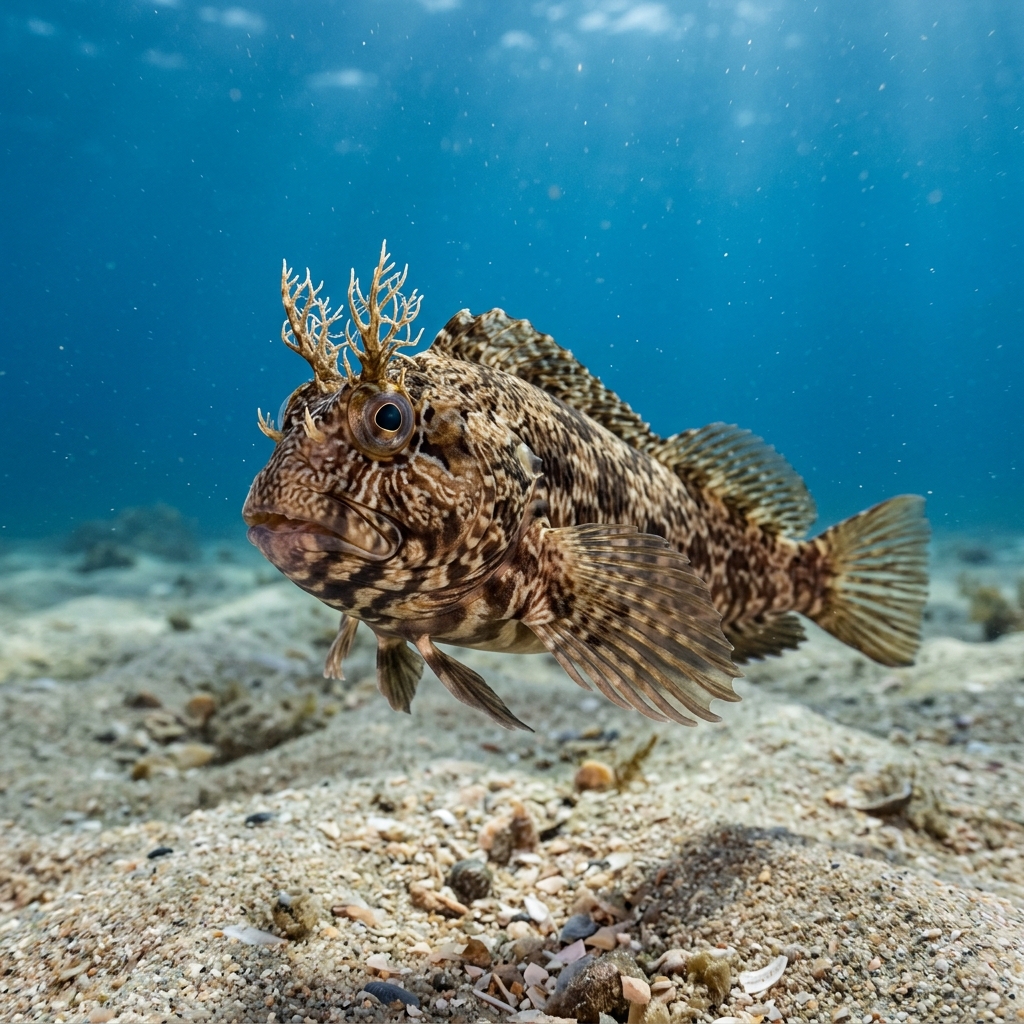
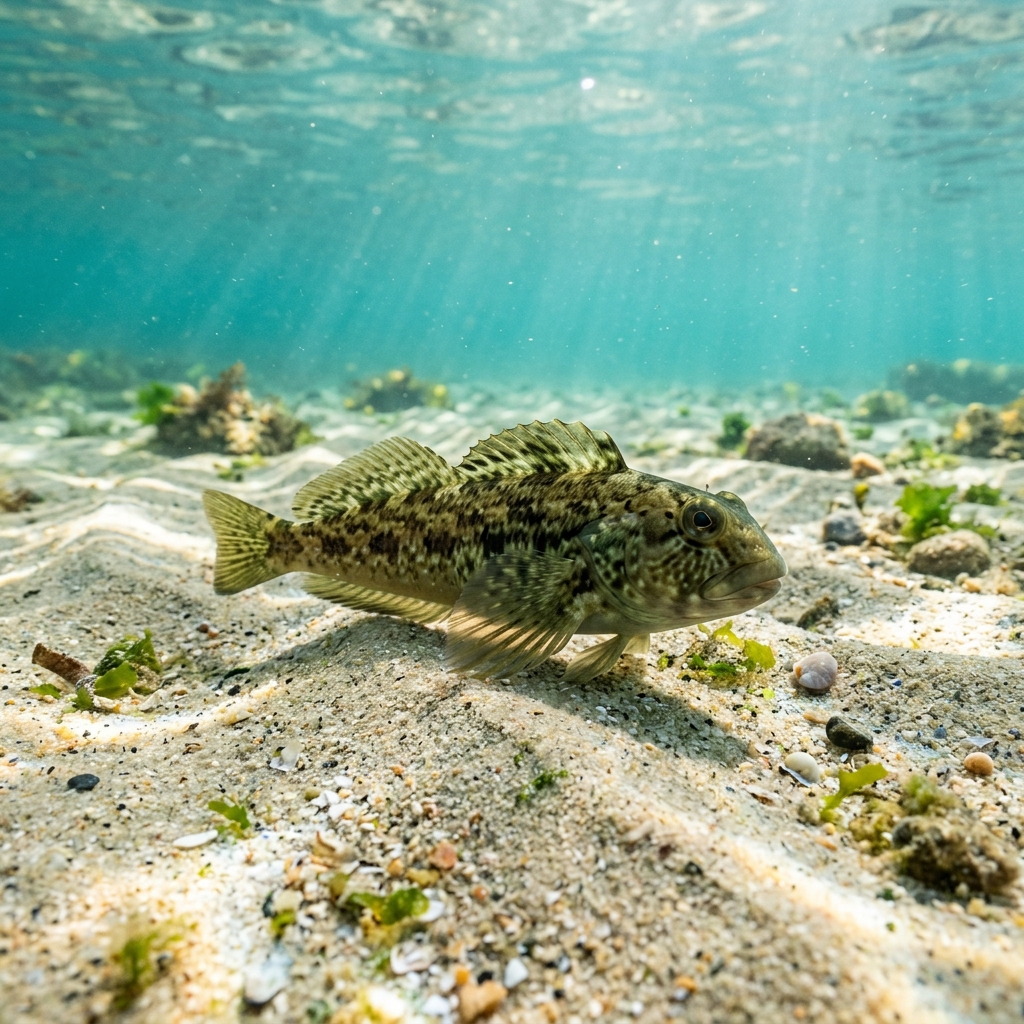
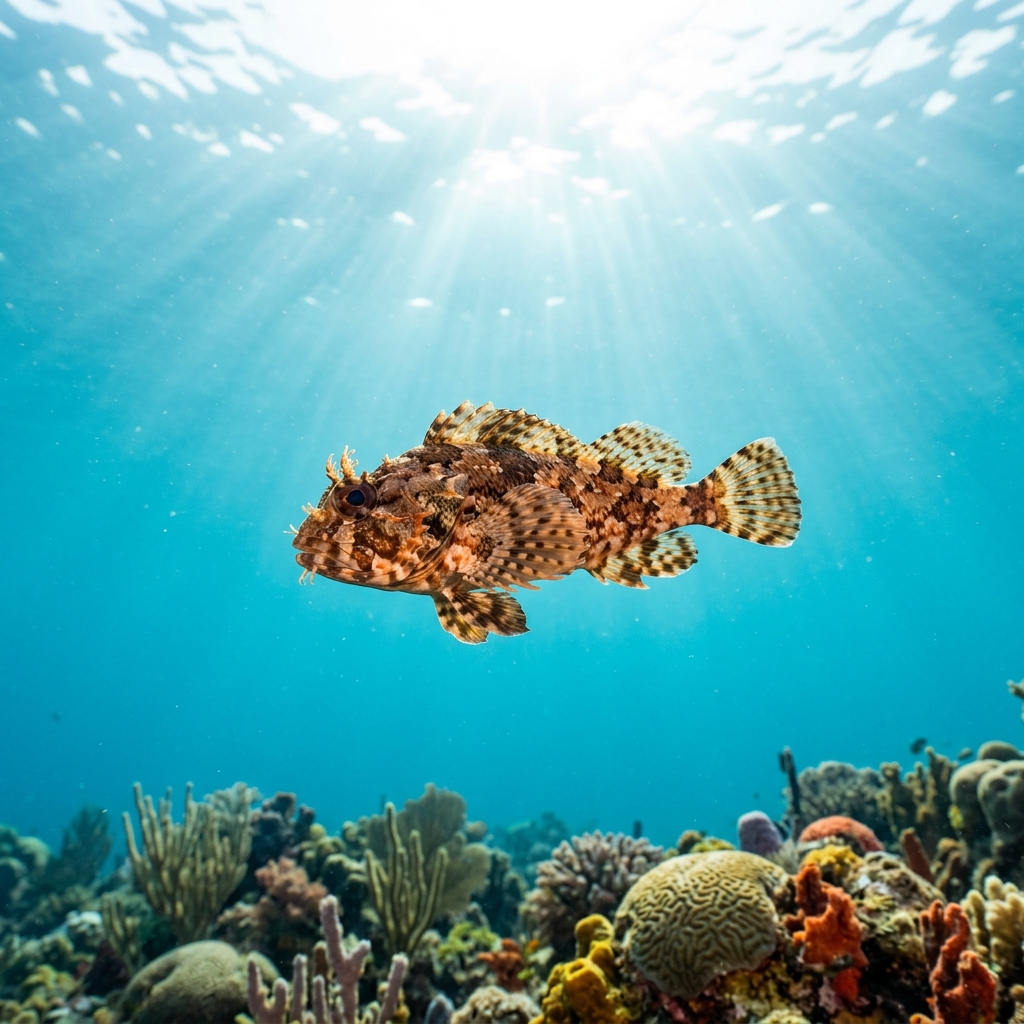
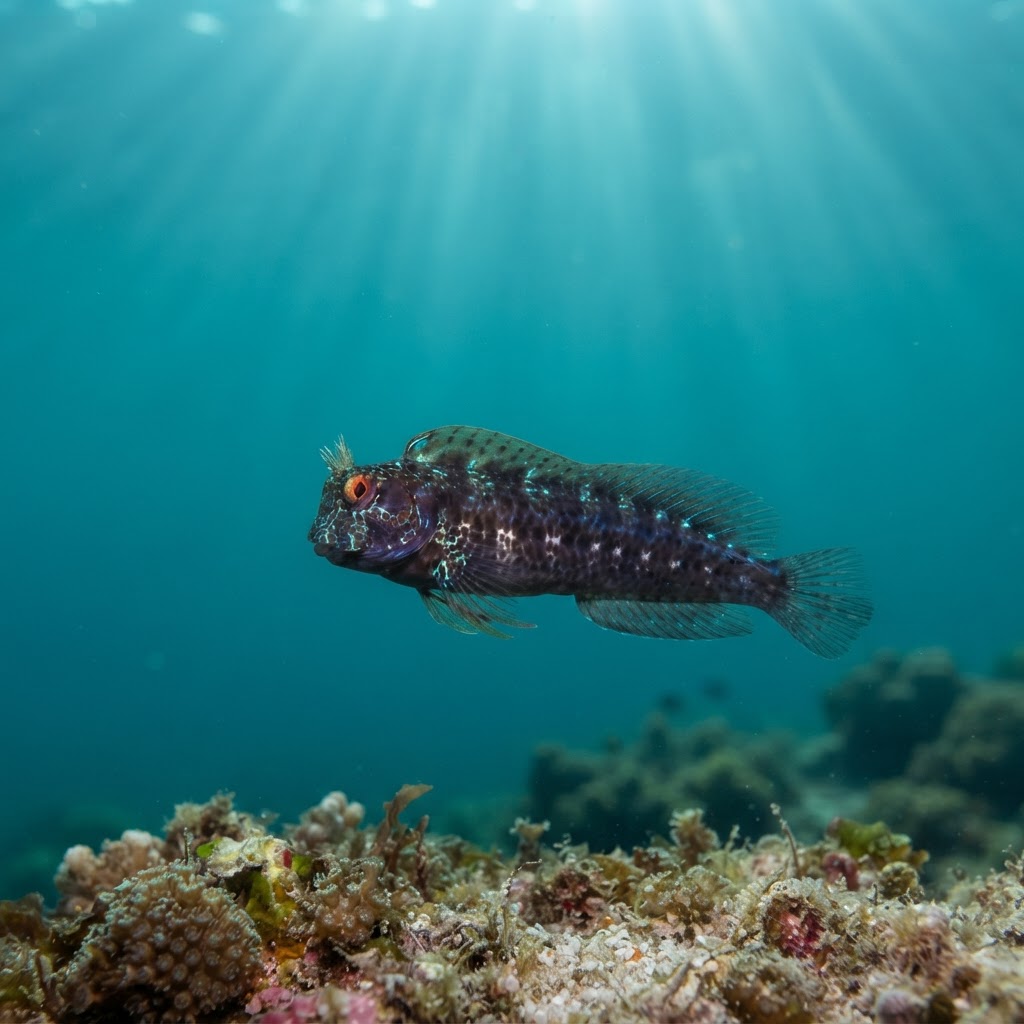
A tiny fish, rarely more than 5cm, with a mottled brown, olive or grey body covered in fine dark speckling that gives it a marbled look. It has a blunt head, large eyes set high, and small fleshy tabs (cirri) above each eye, and it perches propped on its pectoral fins rather than swimming freely mid-water. Look for it sitting motionless on coral rubble, sponges or algae-covered rock, blending into the background until it darts a few centimetres to a new perch.
Expect to find it wedged into a crevice, sitting on a sponge, or resting on algae-covered rubble in shallow water, usually under 10 metres. It holds still for long stretches, relying on camouflage rather than fleeing, then flicks a short distance to a new perch if you get too close. Most sightings come from slow, close-focus looks at the reef substrate rather than open-water encounters.
As a herbivore it spends much of its time grazing algae directly off rock and rubble, which is part of why it stays so tightly tied to a small home patch rather than roaming the reef.
No clear seasonal pattern shows up in the data, and its comfort range of 23.5 to 28.2C matches warm reef conditions year-round across its range, so any month is fair game.
Reef neighbours a diver could mistake it for. Use the identification notes above to tell them apart.
Most reliably logged in Florida, which accounts for the bulk of sightings, with strong follow-up populations around Saint John and Saint Thomas in the US Virgin Islands. Divers also log it consistently in Santa Catarina, Brazil, and across the British Virgin Islands and Bonaire's Leeward Coast, making it a widespread find across the wider Caribbean and western Atlantic.
Mapping where Seaweed Blenny is logged…
Florida is the most consistent place to find it, with good numbers also logged around Saint John and Saint Thomas in the US Virgin Islands, Santa Catarina in Brazil, and sites across the British Virgin Islands and Bonaire.
There's no strong seasonal pattern in sightings, and it favours warm water between about 23.5 and 28.2C, so it turns up on reefs at any time of year.
Look for a small, mottled brown and cream fish under 5cm perched motionless on rubble or algae, with fleshy tabs above its eyes and a habit of resting propped on its fins rather than swimming.
They're small, typically around 5cm long, which is one reason divers often miss them unless they slow down and scan rubble and algae patches closely.
No, they pose no threat to divers. They're tiny, sedentary and simply dart away or hold still if approached.
Site and sighting data is aggregated from diver logs, iNaturalist and GBIF. For taxonomy and conservation status:
Rusty Blenny
2,605 sites