Echinoecus pentagonus
Spot the sea urchin crab wedged inside urchin spines on Mindanao reefs, an uncommon find year-round in warm Philippine waters.
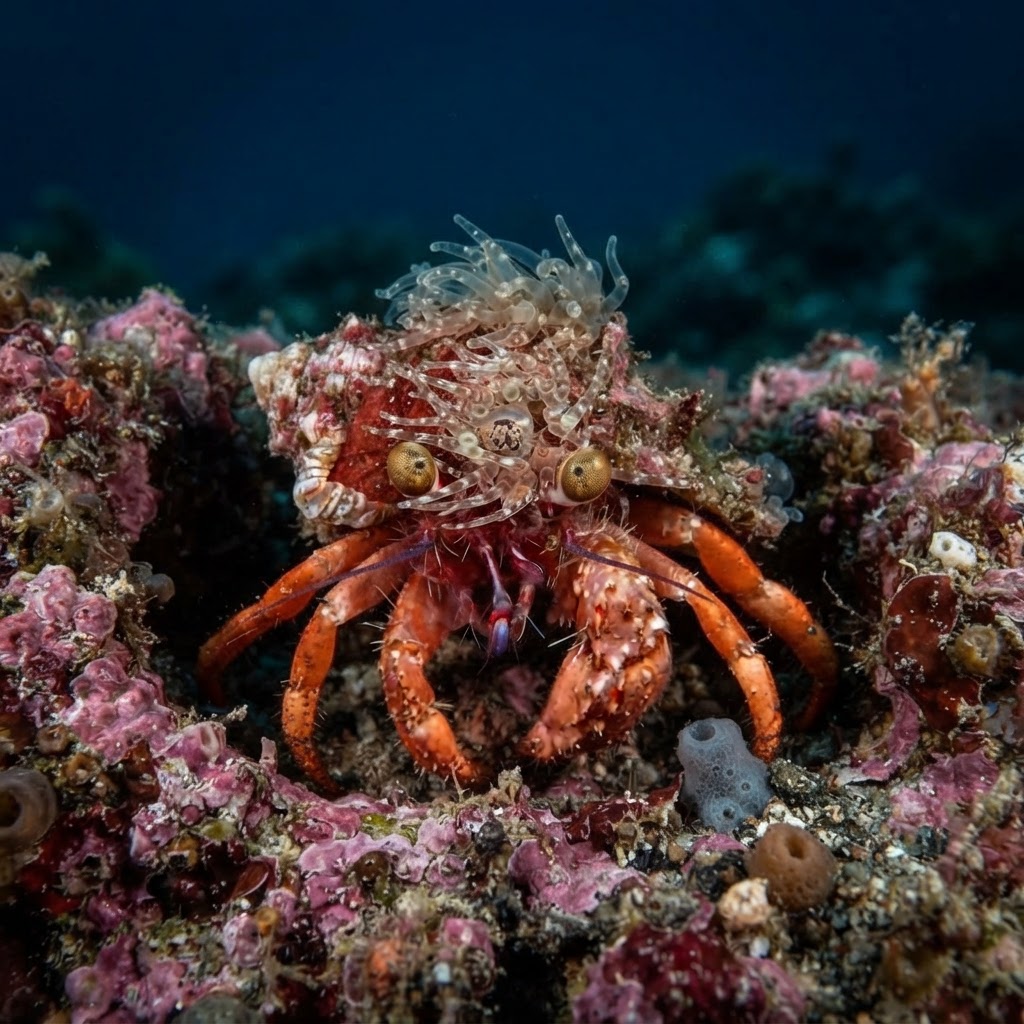
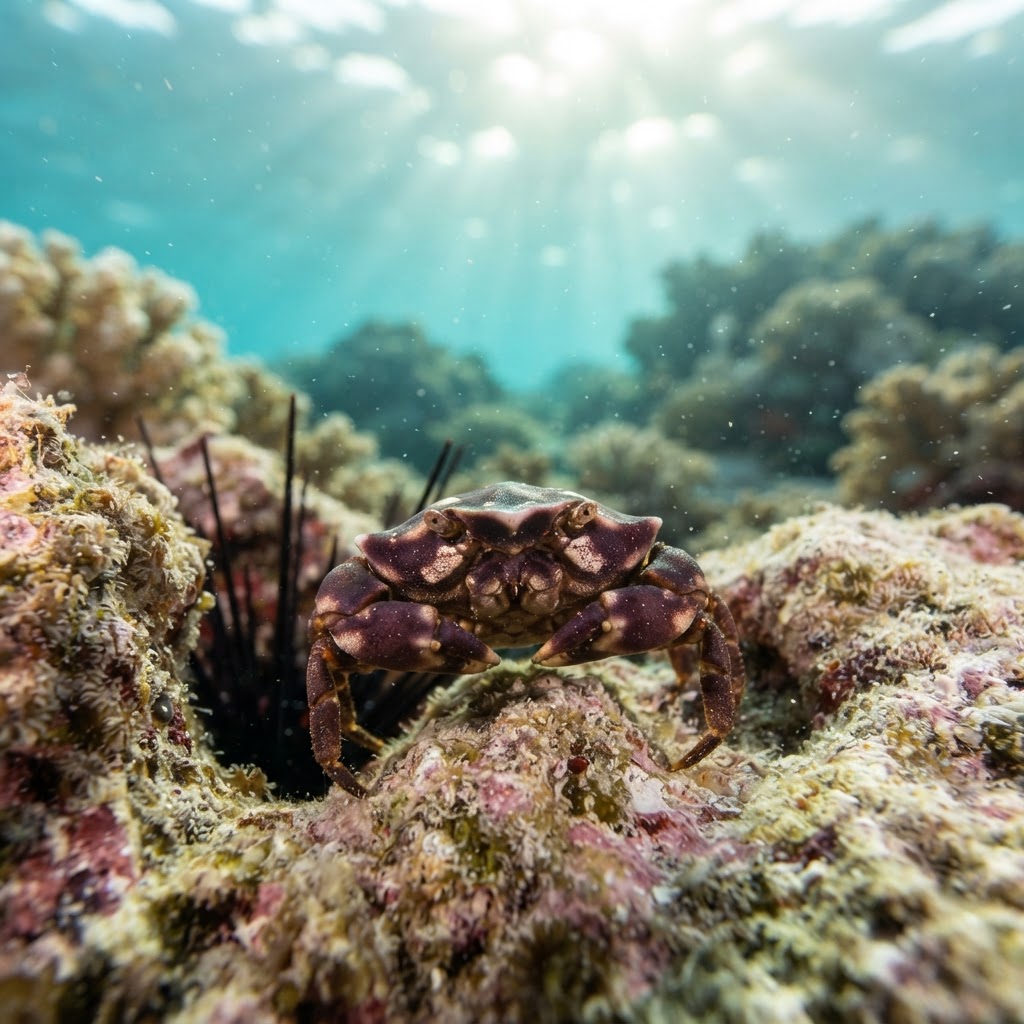
A tiny, flattened, pentagon-shaped crab that lives tucked between the spines of its host sea urchin, so most of the time you are looking for a shape rather than the crab itself. Its shell is mottled brown or reddish to match the urchin's body and spine bases, giving it near-total camouflage against the host. Adults rarely exceed a couple of centimetres across, and the smooth, rounded carapace with squared-off front edges is the giveaway once you spot it.
Divers find this crab motionless among the spines of its host urchin, using the urchin's own defences as cover rather than fending for itself. It shows little reaction to divers since it rarely leaves the host, and most sightings happen during slow, close-focus muck or macro dives where someone is deliberately scanning urchins spine by spine. Because it stays put on one host, finding it is really a matter of checking urchins rather than searching open reef.
This crab spends essentially its entire adult life on a single host sea urchin, relying on the urchin's spines and toxins for protection rather than developing its own defences.
Sightings sit in warm water between roughly 22 and 28 degrees Celsius with no detected seasonal pattern, so this is a year-round find on tropical reefs rather than a seasonal target. Look whenever conditions suit diving in the region rather than planning around a particular month.
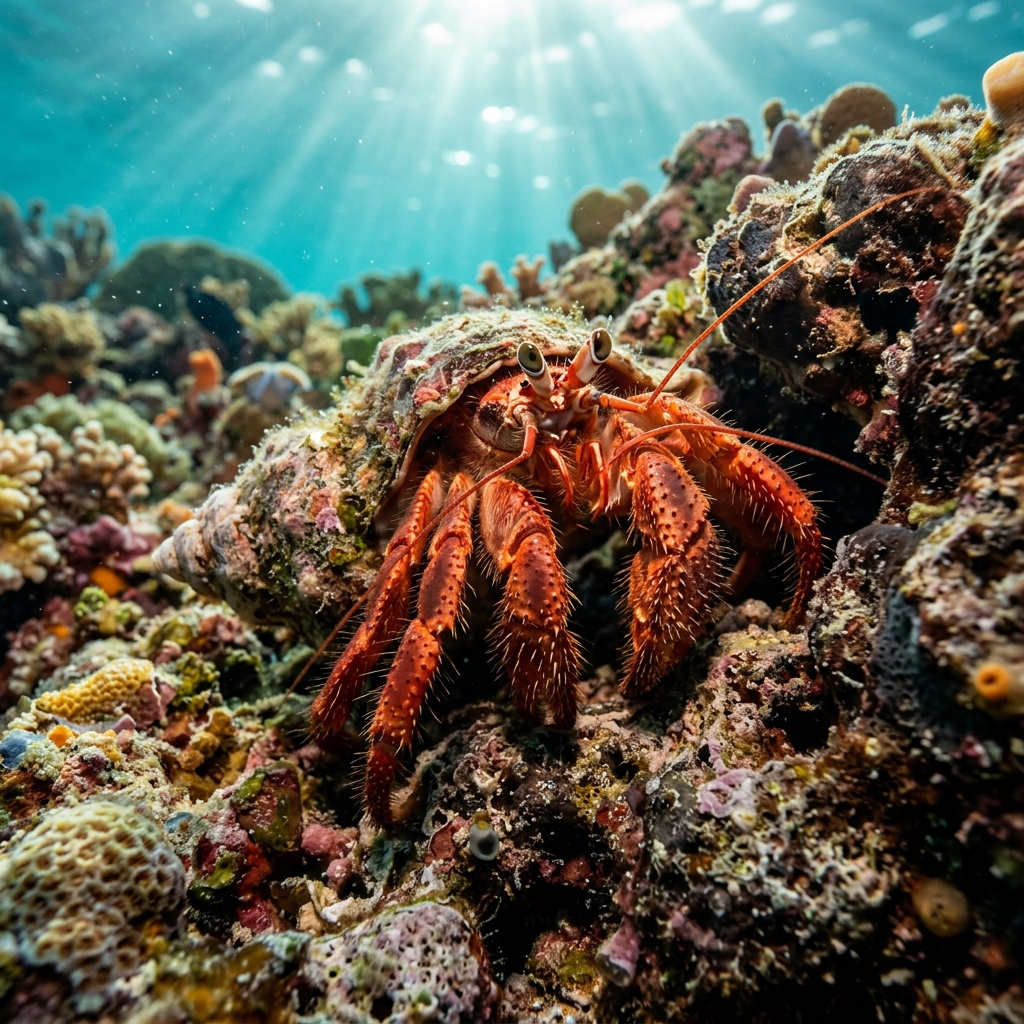
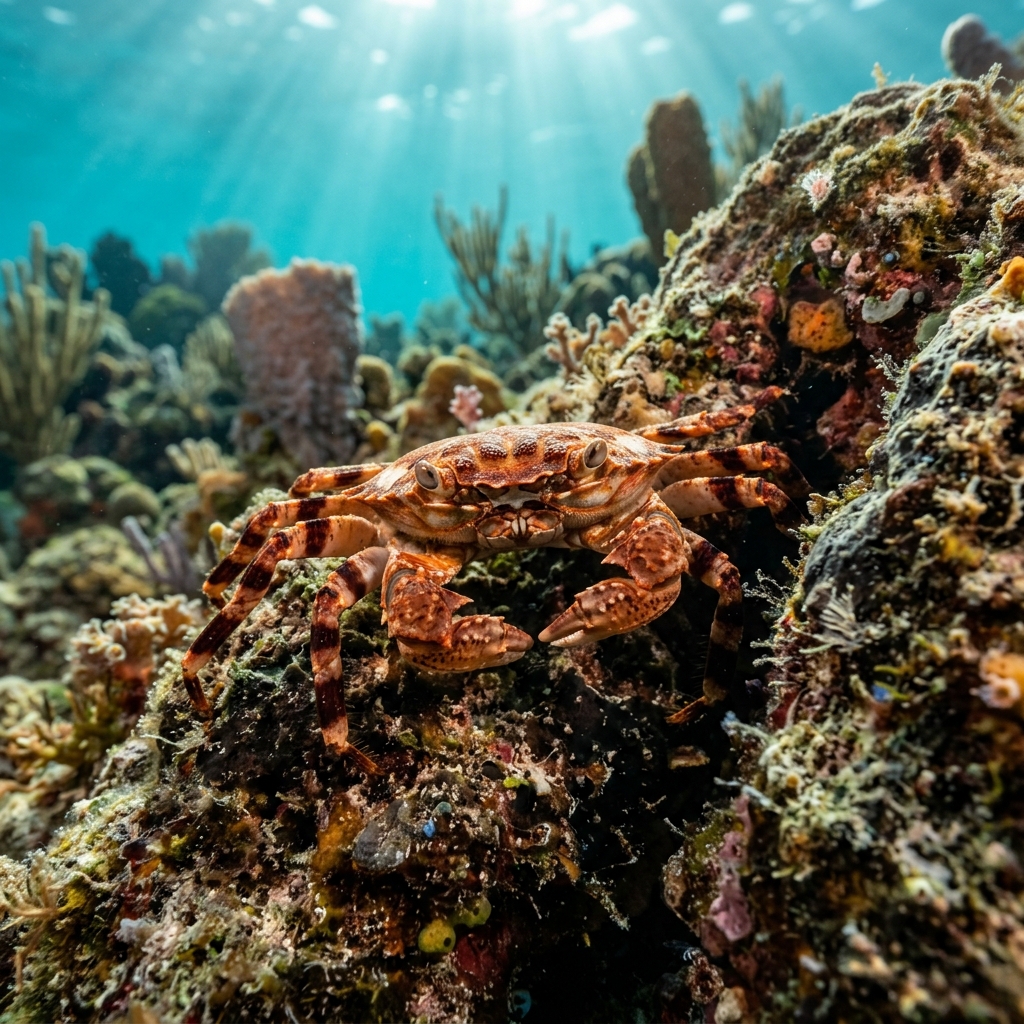
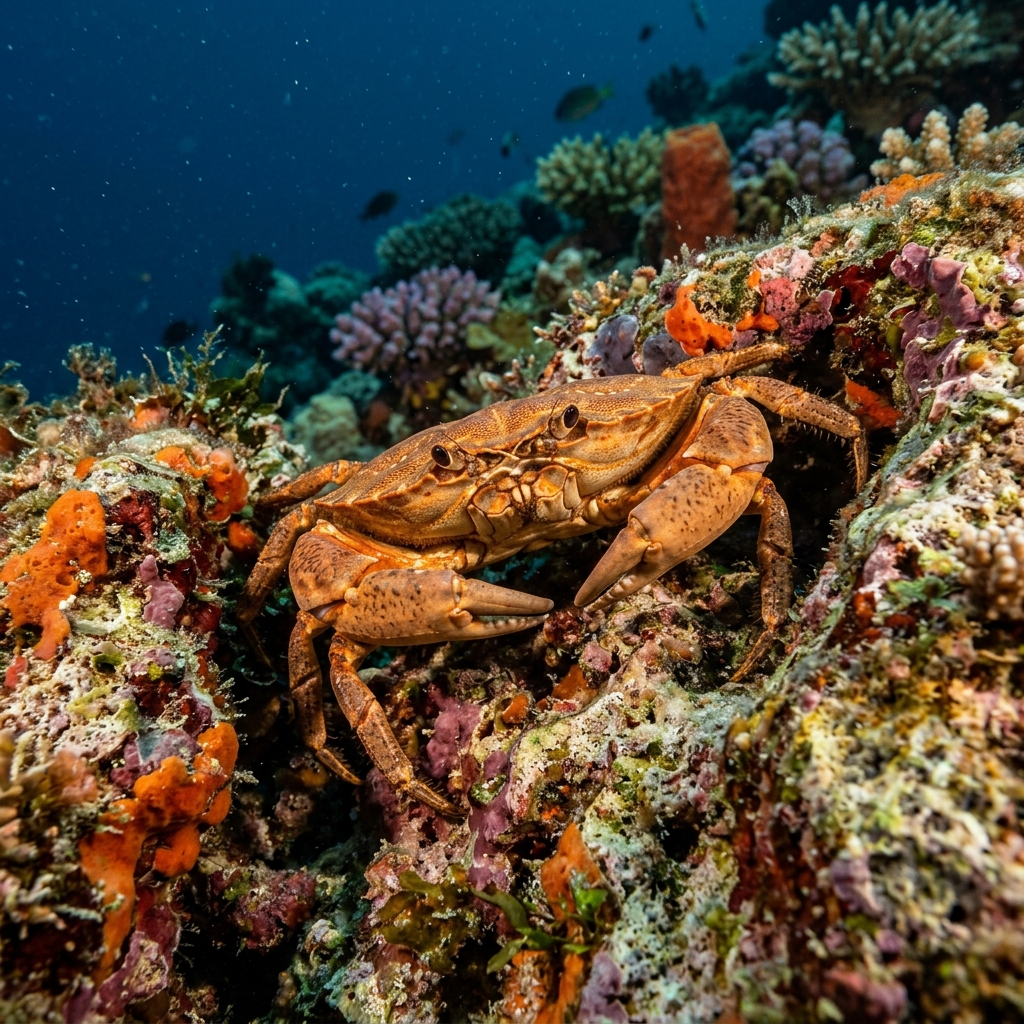
Reef neighbours a diver could mistake it for. Use the identification notes above to tell them apart.
Most records come from Mindanao in the Philippines, which stands out as the strongest area for logging this crab, with a single confirmed sighting from Hawaii in the United States rounding out the known range. If you are hunting for one specifically, Philippine reefs with healthy urchin populations are the better bet.
Mapping where Sea Urchin Crab is logged…
Mindanao in the Philippines is the strongest known location, with reefs there producing the majority of logged sightings. A single record also exists from Hawaii, but Philippine sites are the more reliable place to look.
There is no clear season for this species, and it turns up year-round in water between about 22 and 28 degrees Celsius. Any time conditions are good for diving Mindanao reefs works.
Look for a small, flattened, pentagon-shaped crab wedged between the spines of a sea urchin, coloured to blend with the host. It is easiest to spot by checking urchins closely rather than scanning open reef.
Exact size data is not well documented for this species, but individuals are small, generally only a centimetre or two across, matching the scale of the urchin spines they live among.
This crab lives its whole adult life attached to a single sea urchin host, sheltering among the spines and relying on the urchin's own defences instead of developing strong ones of its own.
No, this species poses no threat to divers. It is tiny, sedentary, and stays tucked against its host urchin rather than interacting with people.
Site and sighting data is aggregated from diver logs, iNaturalist and GBIF. For taxonomy and conservation status:
European Green Crab
2,469 sites