Scuticaria tigrina
Spot the boldly patterned Tiger Reef Eel in Oman's Muscat reefs or Hawaii. Present year-round in warm 24-29 °C waters, but not easy to find.
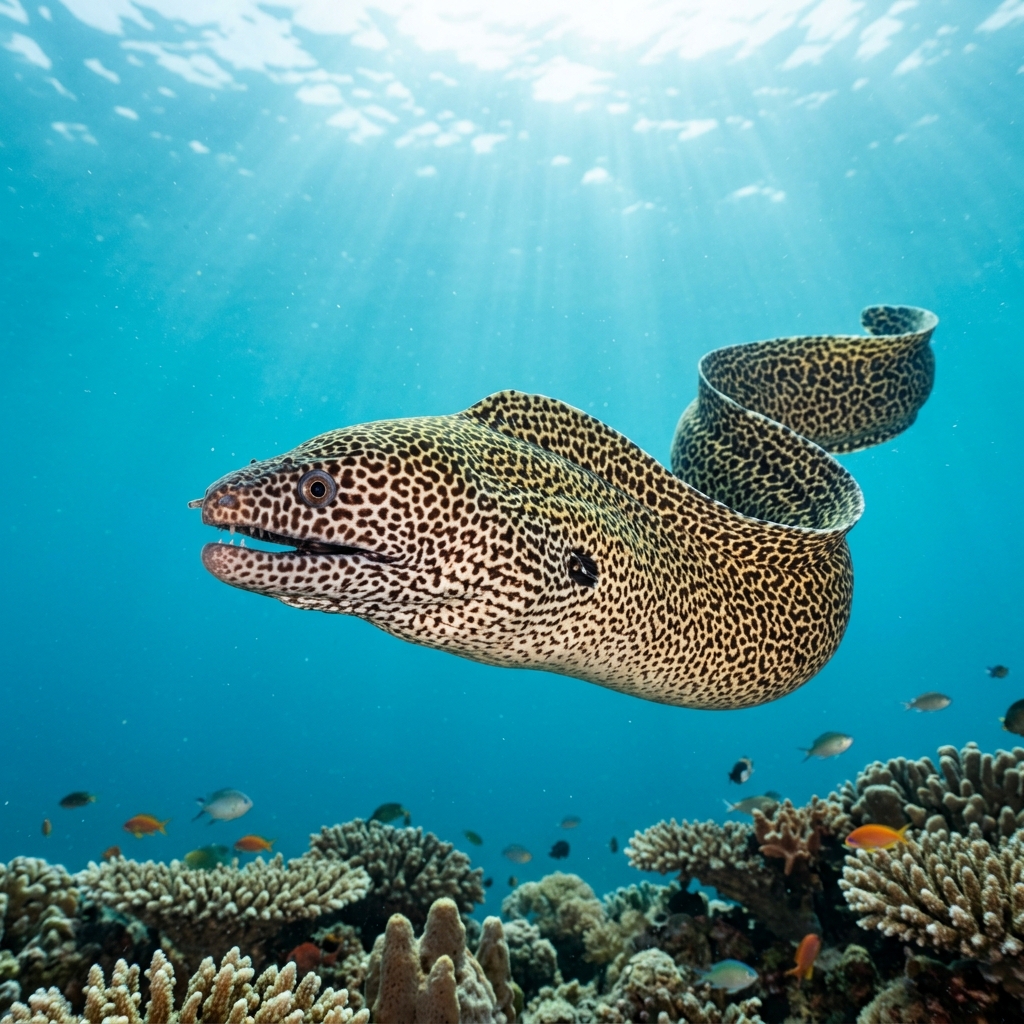
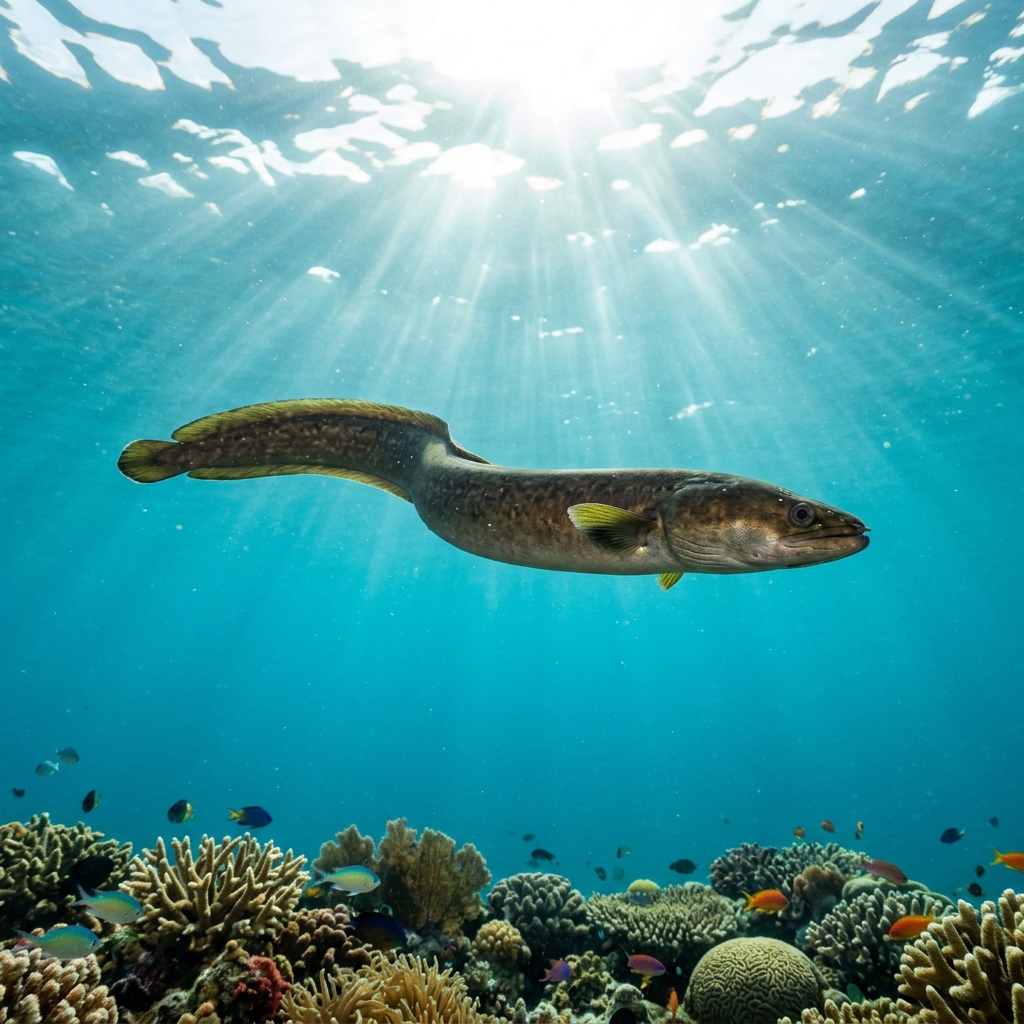
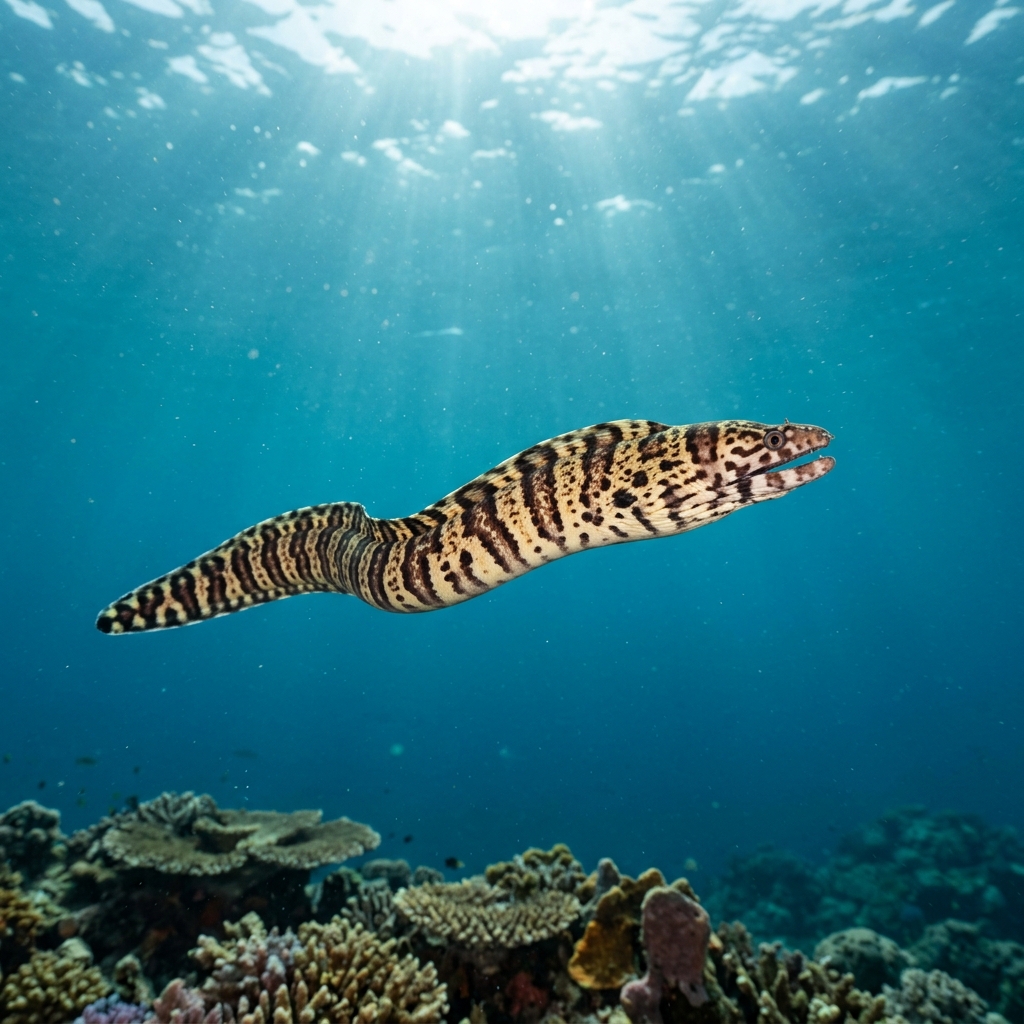
A thick-bodied moray with a distinctively round cross-section and bold, irregular dark-brown blotches or rings on a pale yellowish background, giving it the tiger-like pattern its name describes. The head is relatively short and rounded compared with many morays, and the body stays noticeably cylindrical all the way to the tail rather than tapering to a blade-like fin. Look for that stocky, almost rope-like silhouette tucked into reef crevices or rubble as the key underwater clue.
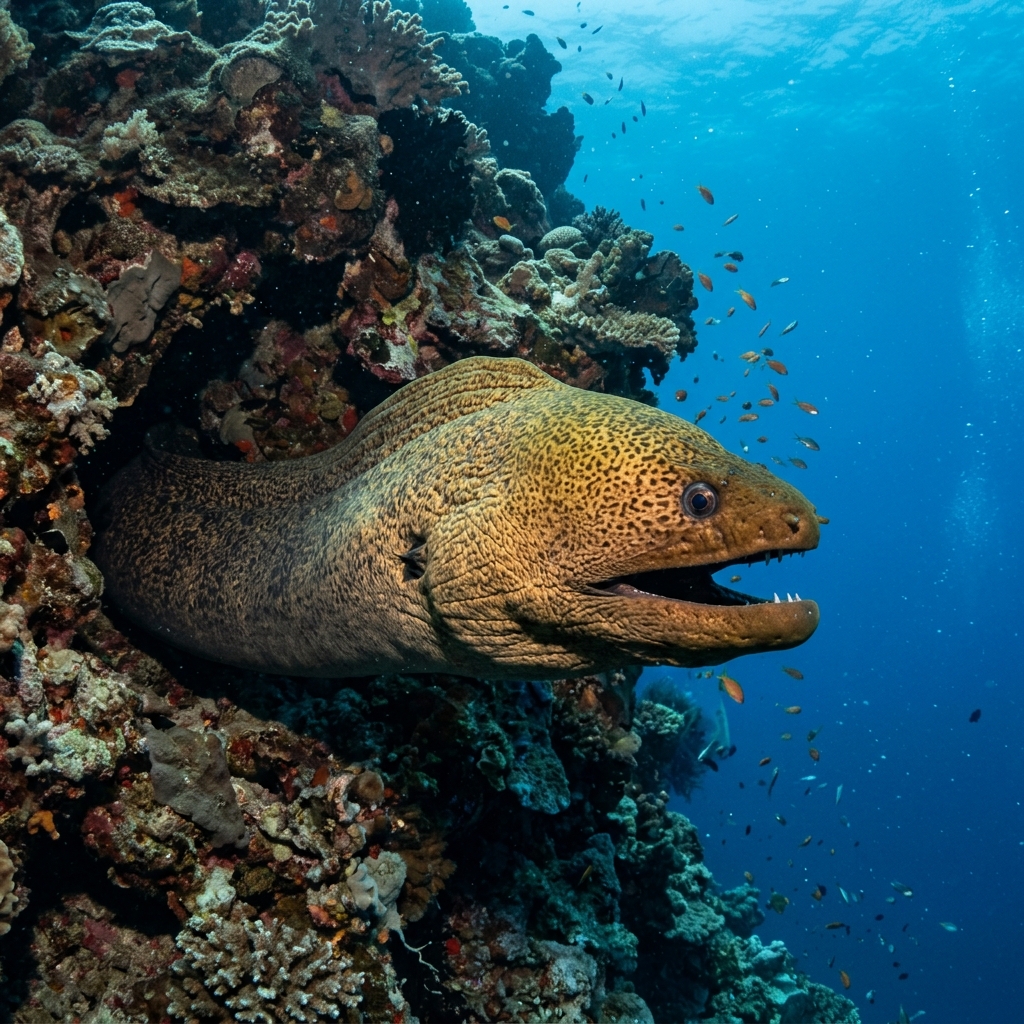
Like most morays, this eel is encountered motionless or very slowly moving inside reef crevices, rubble patches, or coral heads, with just its head or forepart of the body visible. It is not aggressive toward divers who keep a respectful distance, though, as with any moray, reaching into gaps without looking is unwise. Sightings are most often passive encounters where the eel watches from its den rather than retreating.
Unlike the flattened, ribbon-like tails of many morays, the tiger reef eel's nearly cylindrical tail appears adapted for pushing through tight, rubble-filled burrows rather than open-water swimming, which may explain why it so often seems to vanish completely into the reef.
No clear seasonal peak has emerged from the available data, so it is treated as a year-round resident. It is observed in waters between 24 and 29 °C, consistent with the warm, stable reef temperatures found across its known range throughout the year.
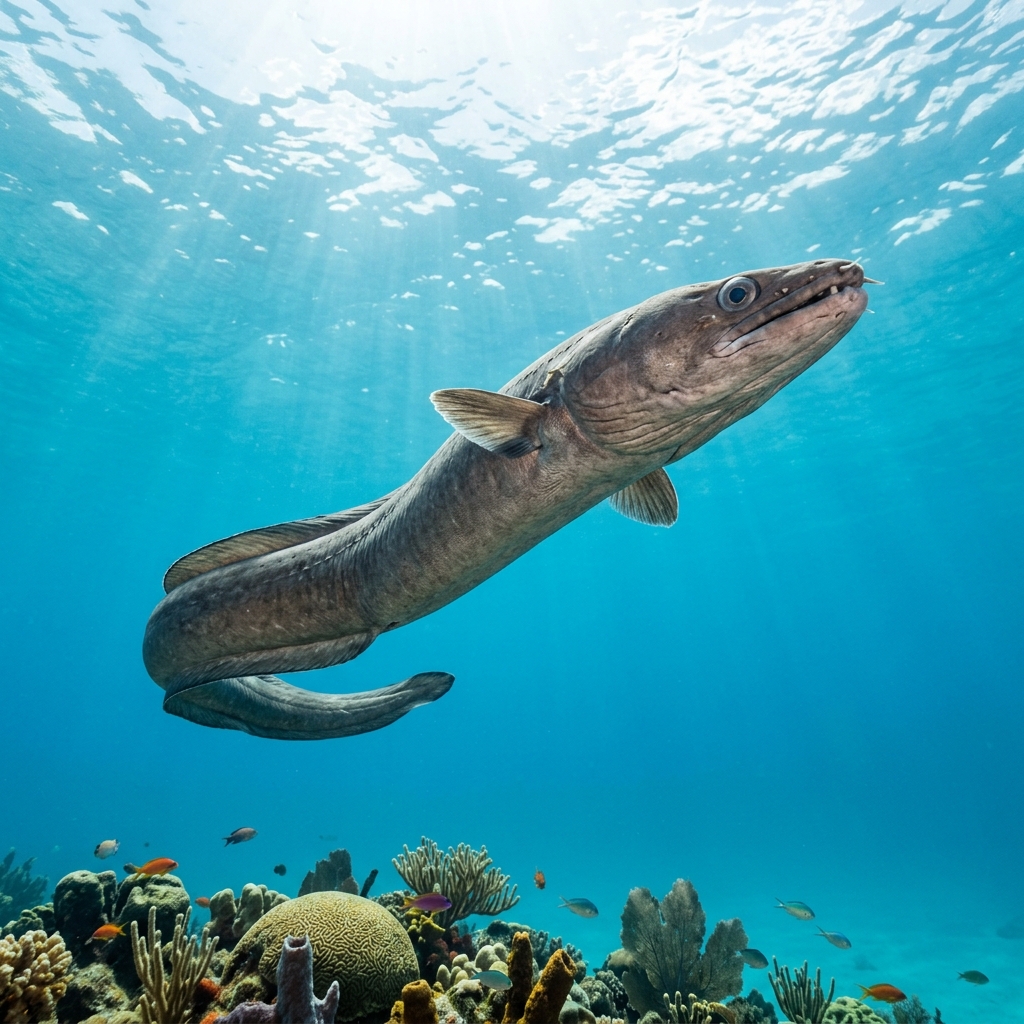
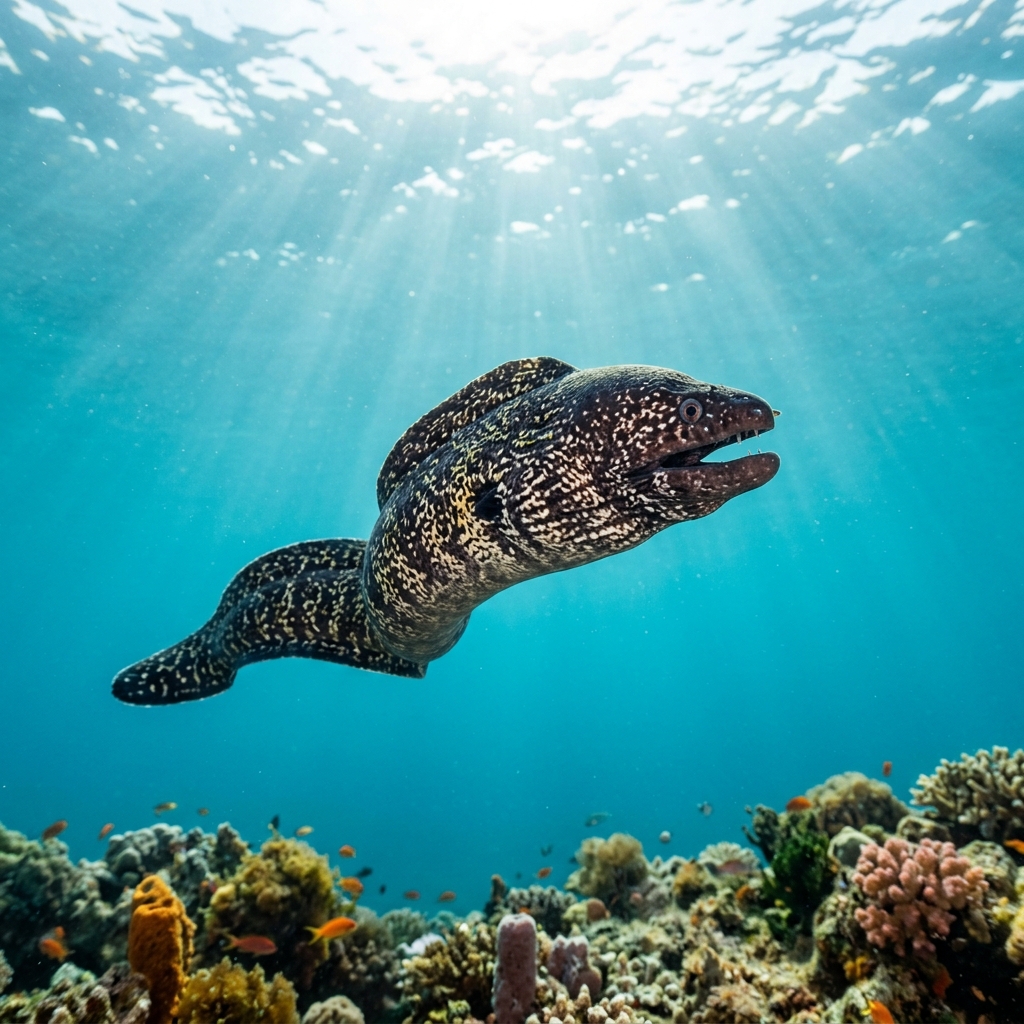
Reef neighbours a diver could mistake it for. Use the identification notes above to tell them apart.
By far the most logged region is Muscat, Oman, which accounts for the overwhelming majority of recorded sightings and is the most reliable place to search for this eel. A smaller set of records comes from Hawaii in the United States, with additional scattered sightings along the Pacific Coast of Mexico, Isla del Caño in Costa Rica, and the Diani and South Coast region of Kenya.
Mapping where Tiger Reef Eel is logged…
Muscat, Oman is by far the strongest location, with sightings spread across a large number of local sites. Hawaii is the next most represented area, followed by scattered records from the Pacific Coast of Mexico, Isla del Caño in Costa Rica, and the Diani and South Coast of Kenya.
There is no identified seasonal peak, so dives can be planned year-round. The species is found in warm reef waters roughly between 24 and 29 °C, which are stable conditions across its known tropical and subtropical range throughout all months.
Key on the unusually stocky, cylindrical body and the bold, irregular dark blotches on a pale base that create the tiger-like pattern. Most morays have flattened, fin-edged tails; this species stays round and thick to the tip. It is almost always seen partially hidden in a crevice or rubble gap.
Exact size data for this species is limited, but individuals recorded by divers give a rough impression of a moderately sized moray, typically appearing shorter and stockier than large species such as the Giant Moray. Published references suggest the species can reach around 120 cm, though most diver encounters are with animals that look considerably smaller.
No, tiger reef eels are not considered dangerous to divers. Like all morays, they can bite if cornered or if a hand is pushed into a crevice they occupy, so the sensible rule is to observe without touching or reaching into reef gaps. Under normal dive conditions they are passive and will retreat further into the reef if approached too closely.
Site and sighting data is aggregated from diver logs, iNaturalist and GBIF. For taxonomy and conservation status:
Garden Eel
2,448 sites