Parribacus antarcticus
Look for its mottled, plate-like shell wedged in reef crevices from Hawaii to Grenada and Fernando de Noronha, any month of the year.
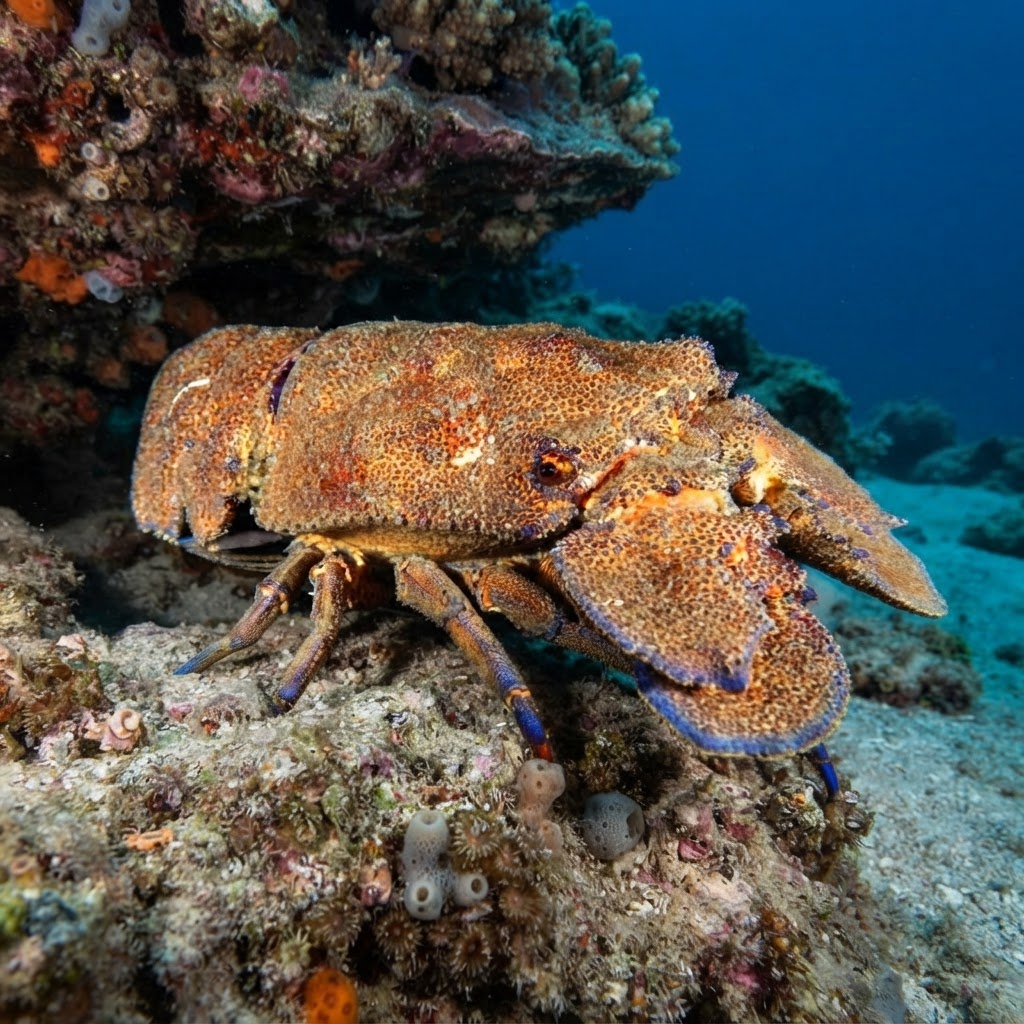
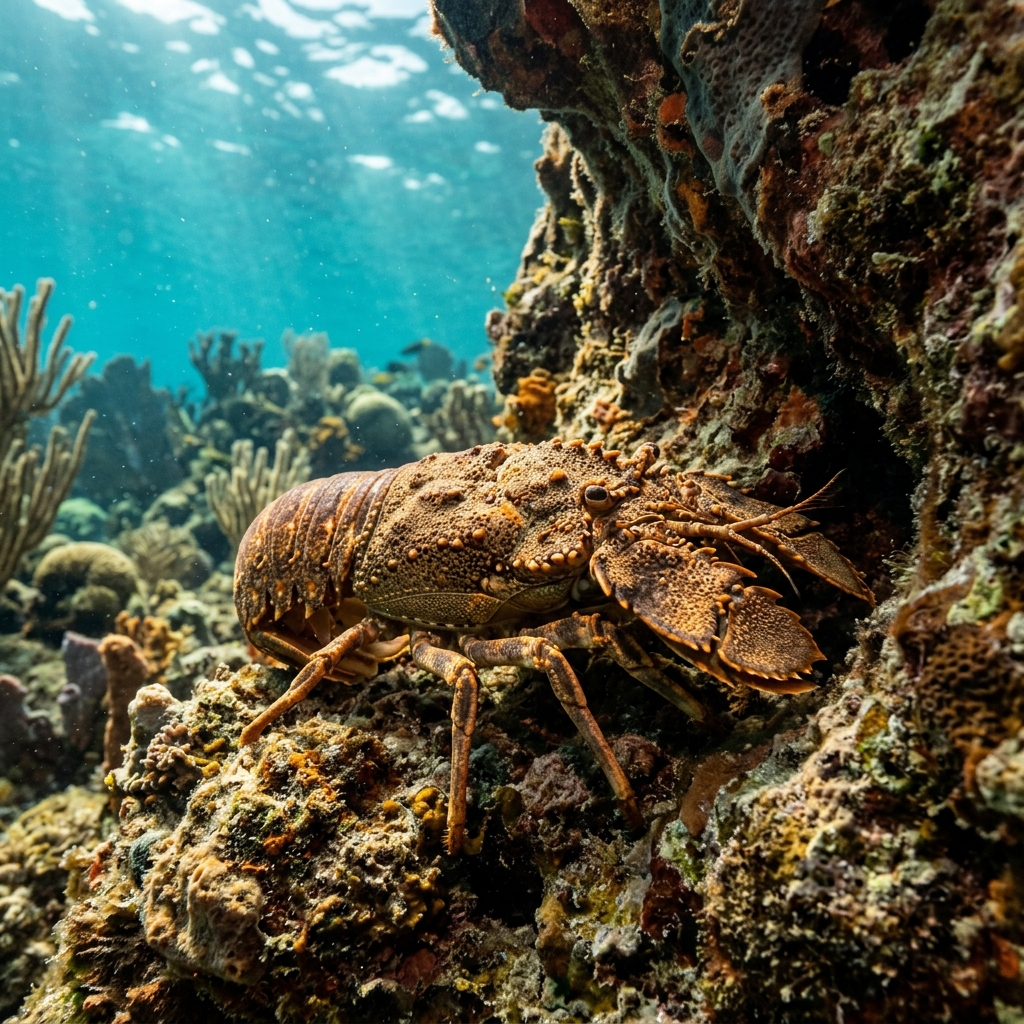
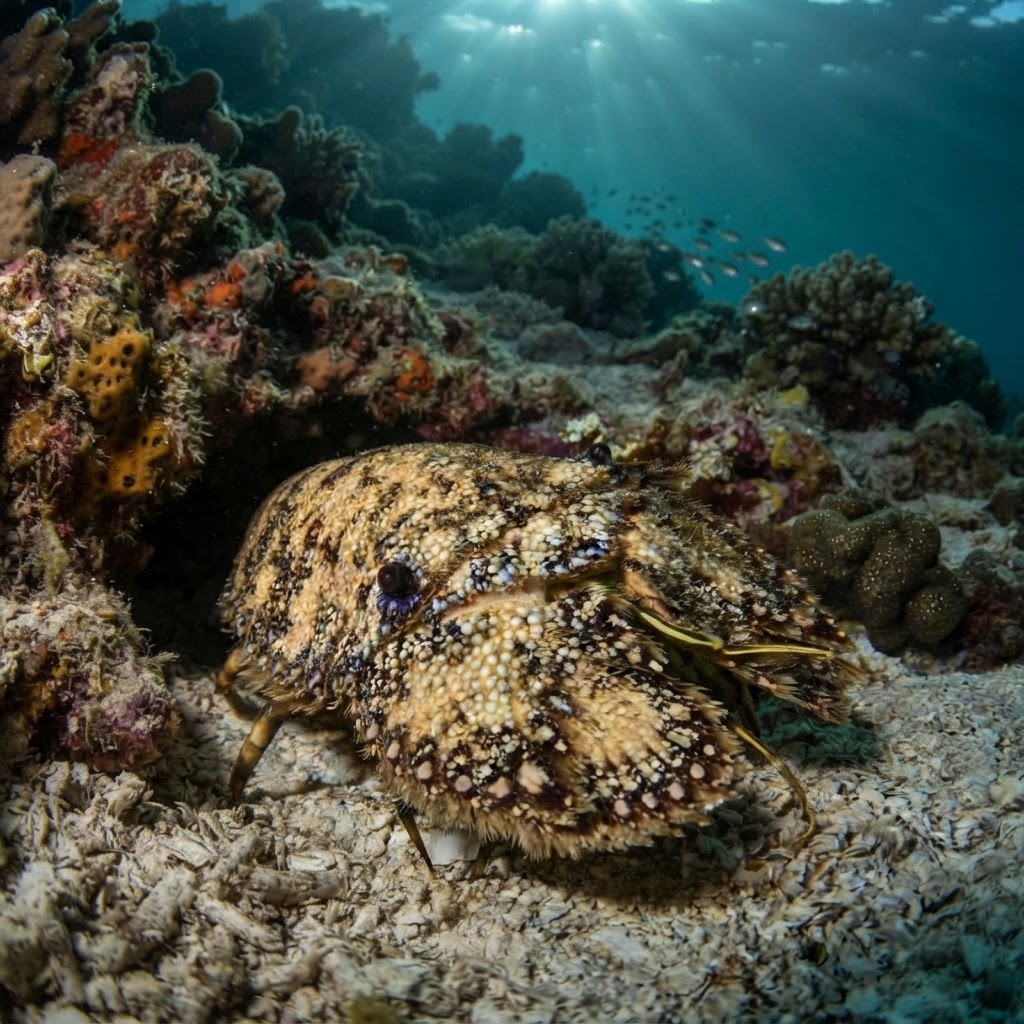
Flattened, oval body covered in a mottled brown and cream shell that looks more like armour plating than a typical lobster, with no long antennae to key on. Instead of claws it has broad, scalloped front plates that give the whole animal a shield-like outline, and it grows to around 14 cm. It sits low against rock or coral, usually tucked into a crevice, so the shell's rough, sculpted texture is the main giveaway against the smoother profiles of true lobsters.
Expect to find it wedged into a crevice, under a ledge, or pressed flat against rock or rubble during the day, relying on its camouflaged, textured shell rather than flight to avoid attention. Divers most often log it as a still, easy-to-miss shape rather than something on the move, and it tends to hold position even when a torch passes over it. Night dives tend to turn up more activity as it forages across the reef floor.
That plate-armour shell isn't just for looks: slipper lobsters use their flattened, shovel-like front end to wedge themselves so tightly into rock crevices that predators struggle to pry them out.
Sightings run year-round with no strong seasonal pattern, which fits a species comfortable across a wide 23.8 to 29.8 C range on tropical and subtropical reefs. Any month works at the sites above, so plan around your destination rather than a calendar window.
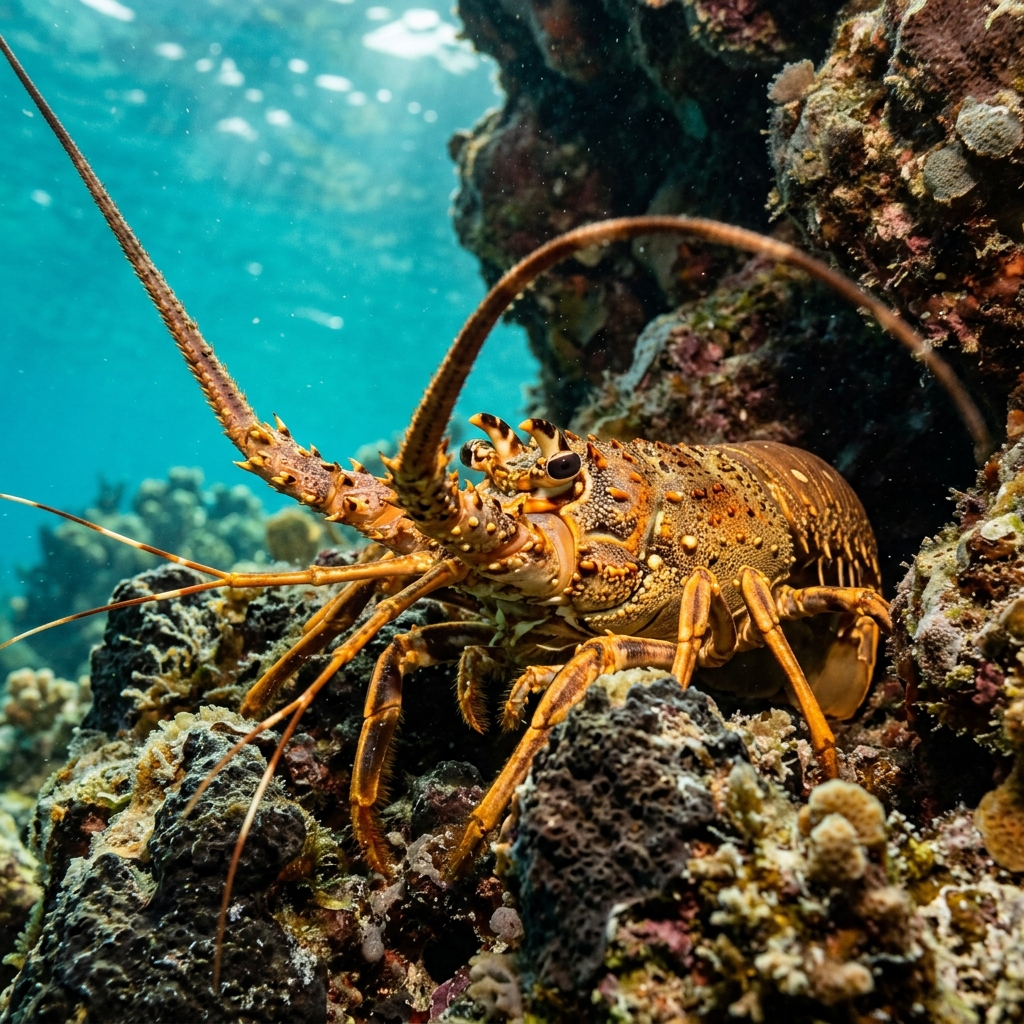
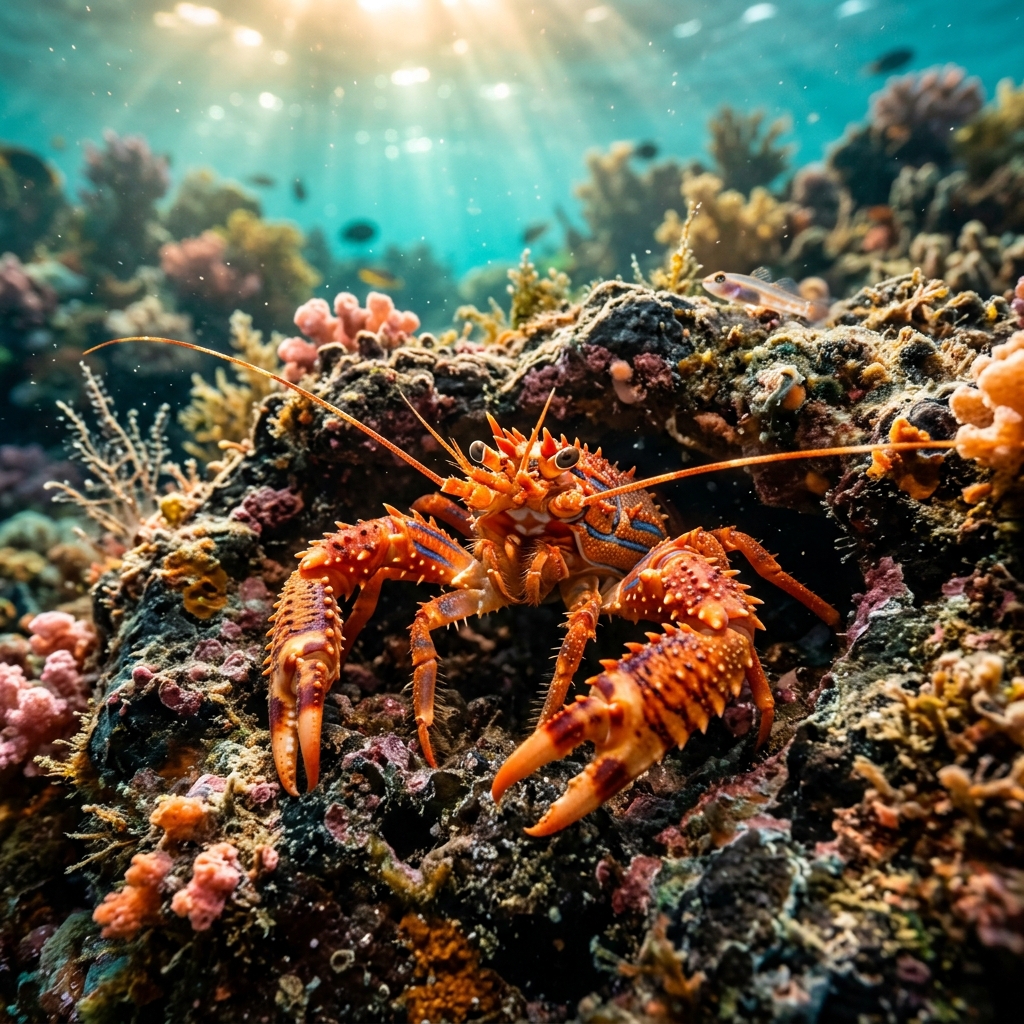
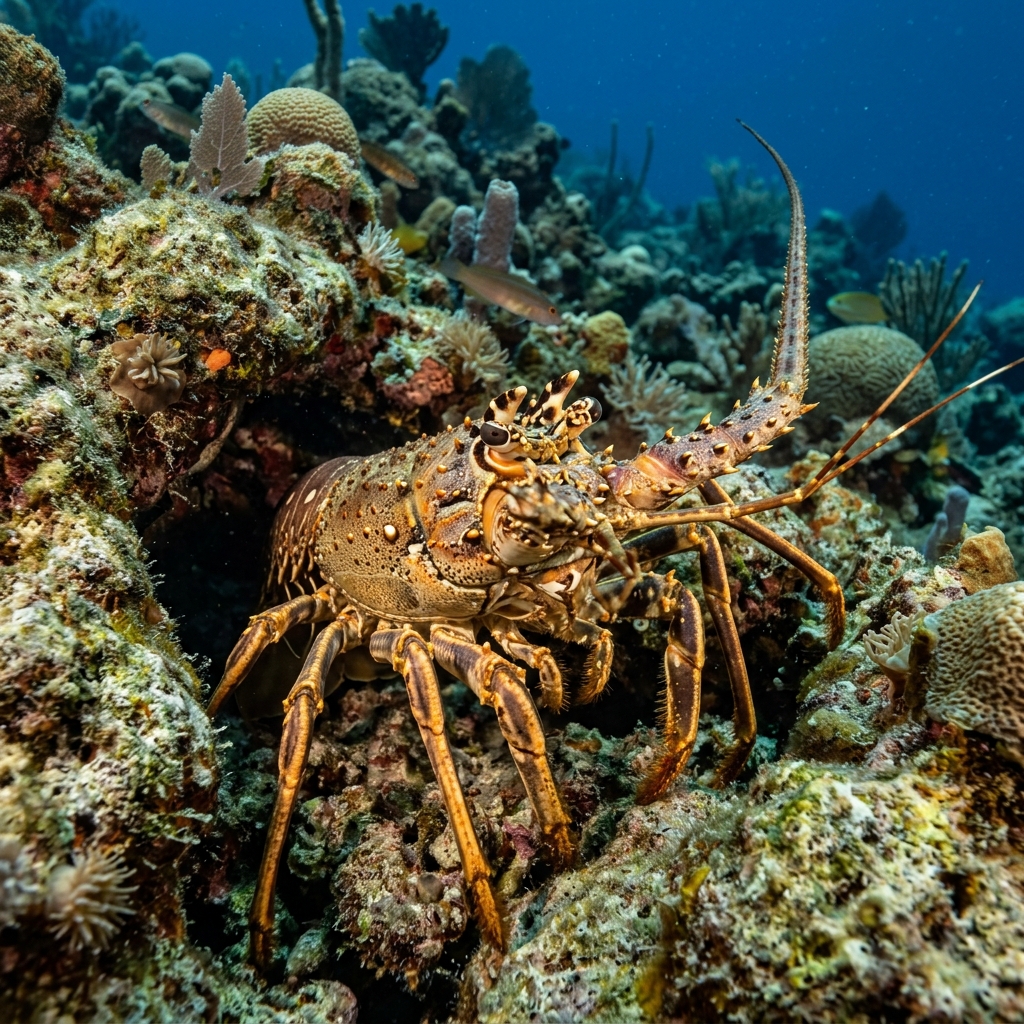
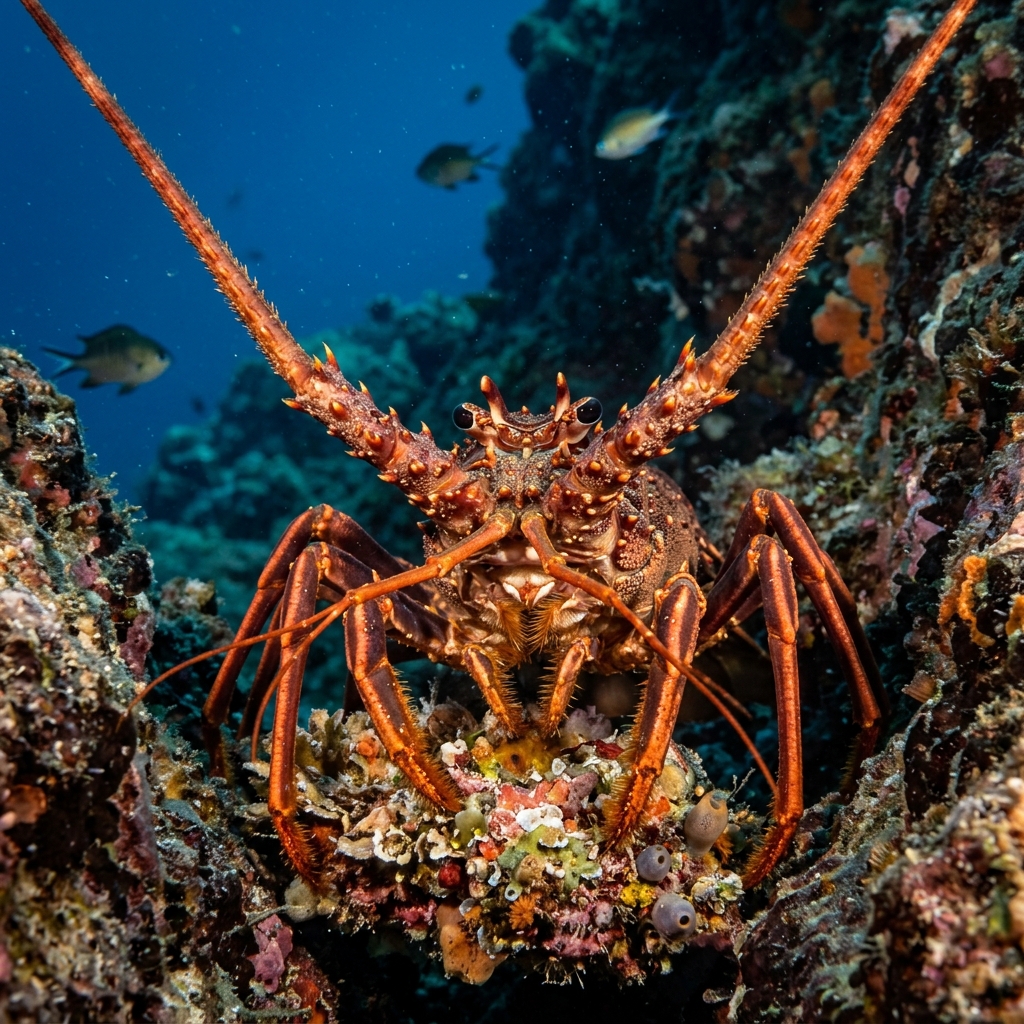
Reef neighbours a diver could mistake it for. Use the identification notes above to tell them apart.
Most reliably logged in Hawaii in the United States, with strong numbers also coming out of Carriacou in Grenada and the Grenadines in Saint Vincent and the Grenadines. Fernando de Noronha in Brazil and the Visayas in the Philippines are other solid bets, with further sightings from Sint Eustatius, Kalimantan in Indonesia, and Orchid Island in Taiwan.
Mapping where Sculptured Slipper Lobster is logged…
Hawaii is the most reliable spot, followed by Carriacou in Grenada and the Grenadines in Saint Vincent and the Grenadines. Fernando de Noronha in Brazil, the Visayas in the Philippines, and Sint Eustatius also turn up regular sightings.
There's no clear season in the data, so it's a year-round sighting. It tolerates a wide temperature range from around 24 to 30 C, which keeps it present on tropical reefs throughout the year.
Look for a flat, oval, armour-plated body in mottled brown and cream, wedged into a crevice or pressed against rock. It has no visible long antennae and its front end is broad and scalloped rather than clawed, unlike a spiny lobster.
They typically reach around 14 cm in length, making them a modest-sized find best spotted by scanning ledges and crevices closely rather than looking for something large.
No, they pose no danger to divers. They have no claws or spines to worry about and simply hold still in their crevice when approached.
Instead of claws or long antennae like other lobsters, it has a flattened, shield-shaped body built for wedging into tight rock crevices, using armour and grip rather than speed to stay safe.
Site and sighting data is aggregated from diver logs, iNaturalist and GBIF. For taxonomy and conservation status:
Caribbean Spiny Lobster
2,209 sites